Volume 18, Issue 21 - Friday, May 22, 2020
|
Texas allows more businesses to open
Texas entered the second phase of its reopening plan on May 18 that allows more types of businesses to open and expands capacity for establishments that opened in the first phase.
Child care centers, massage and personal care centers, and youth clubs such as Scouting were allowed to reopen immediately under certain guidelines.
Restaurants may increase their occupancy from 25 percent to 50 percent on May 22, the same day that bars, including wine tasting rooms, craft breweries, and similar businesses, may reopen at 25 percent occupancy.
Rodeo and equestrian events, bowling alleys, skating rinks, and bingo halls also are allowed to reopen on May 22, as are aquariums and natural caverns.
Zoos may reopen on May 29, and day and overnight youth camps and youth sports activities may resume May 31. Professional sports will be allowed starting May 31 but without in-person spectators.
Public schools may provide in-person summer school beginning June 1 and using social distancing practices established by the Department of Health and Human Services.
Several counties experiencing surges in COVID-19 cases will have the start of their second phase of reopening delayed to May 29. These counties are El Paso, Randall, Potter, Moore, and Deaf Smith.
|
Census data shows many Texas cities growing faster than most in U.S.
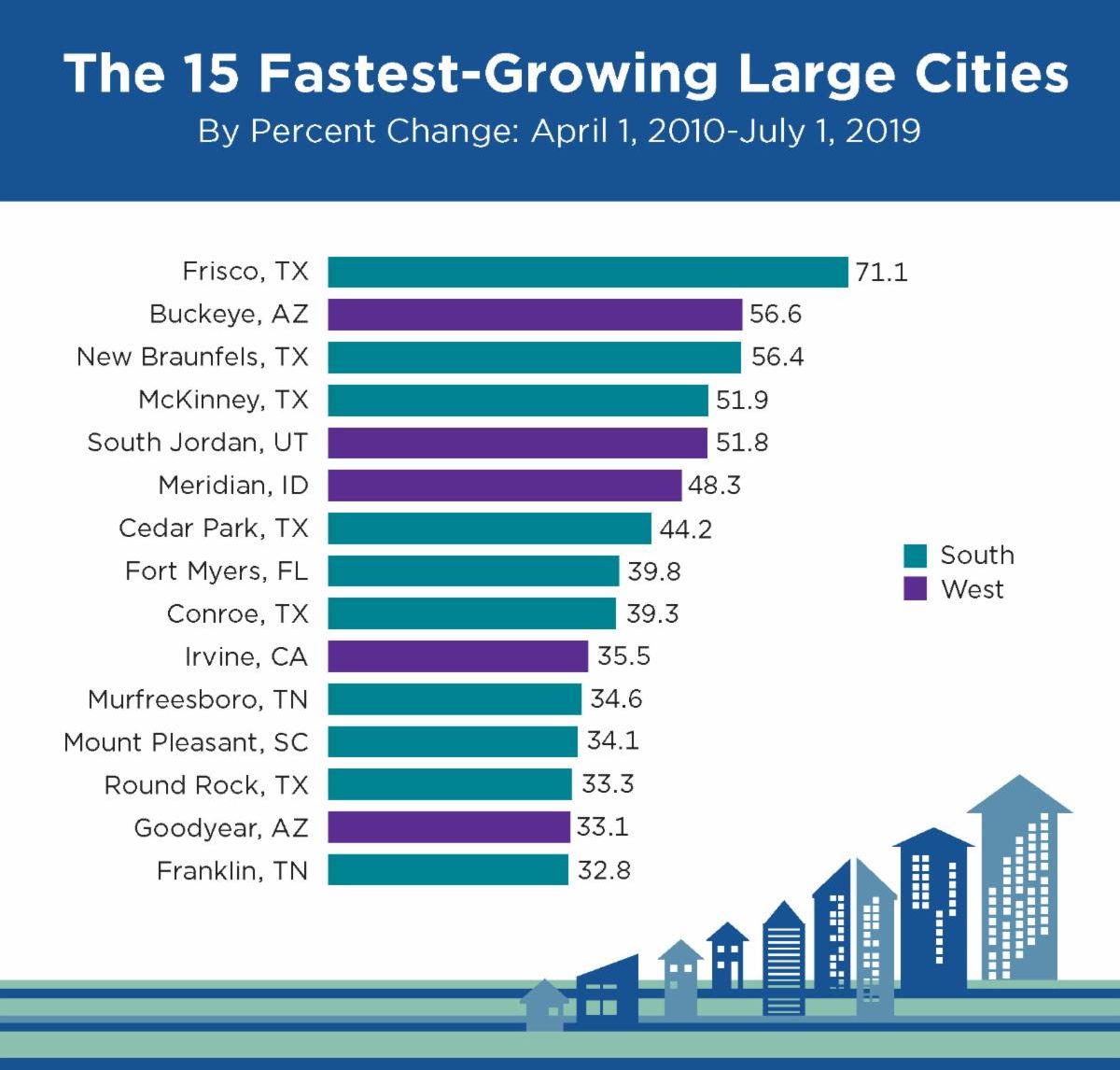
The U.S. Census Bureau released data on May 20 that are evidence of Texas' surging population in cities large and small.
From 2010 to 2019, Frisco led the nation's cities in terms of population percentage growth for cities with greater than 50,000 persons with a 71.1 percent increase. The city grew from 116,989 residents in the 2010 Census to 200,490 residents as of July 1, 2019.
Other Texas cities joining Frisco in the top 15 fastest-growing large cities by percentage change were New Braunfels as the third-fastest at 56.4 percent, McKinney as the fourth fastest at 51.9 percent, Cedar Park in seventh with 44.2 percent, Conroe in ninth with 39.3 percent growth, and Round Rock in 13th at 33.3 percent.
Smaller cities in Texas also stood out nationwide for their population growth.
Leander's addition of 35,320 new residents resulted in a 129.4 percent surge, which placed it second for cities with populations of 10,000 or more. It also was the fastest-growing city in the country from July 1, 2018 to July 1, 2019 with a 12 percent growth rate, which was 24 times faster than the nation's growth rate of .5 percent during that time.
Little Elm grew 105.2 percent from 2010 to 2019 with 27,234 new residents, which placed it third in the nation. Forney came in fourth in the U.S. with a 97.1 percent increase, an increase of 13,417 new residents.
Kyle was 13th in the country with a 71.3 percent increase owing to its population boost of 20,146. Frisco was 14th when included with smaller cities, and Boerne was 15th with a 71 percent increase of 7,571 new residents.
Hutto placed 16th with 11,486 new residents, which accounted for a 69.8 percent increase. Georgetown came in 18th with 32,121 new residents, which resulted in a 67.6 percent increase, and Farmers Branch was 19th with 19,017 new residents, a 65.3 percent increase.
Based on total numeric population gains from 2018 to 2019, San Antonio recorded the second highest total in the country with 17,237 new residents - second only to Phoenix's 26,317.
Austin was third with 16,439 new residents from 2018 to 2019 and Fort Worth was fourth with 16,369 new residents. Frisco was sixth with an increase of 12,038 people, and McKinney was 17th with 7,429. Leander recorded 6,684 new residents in that timespan to place 21st, and New Braunfels was 24th with 5,714 new residents.
Texas claimed five of the 15 most populous cities in the nation as of July 1, 2019, with Houston's population of 2.32 million taking it to fourth largest, San Antonio ranking seventh with 1.55 million, and Dallas placing ninth with 1.34 million. Austin took 11th with 978,908, and Fort Worth came in 13th with 909,585 residents.
|
Abbott, state leaders direct agencies, higher ed institutions to trim budgets
Gov. Greg Abbott, Lt. Gov. Dan Patrick, and House Speaker Dennis Bonnen instructed state agencies and higher education institutions to submit plans for reducing their budgets by 5 percent for the 2020-2021 biennium.
In a May 20 letter, the leaders directed state agencies and institutions of higher education to pursue cost savings that would not affect the state COVID-19 response.
Such expenses included forgoing capital expenditures that can be deferred, avoiding non-essential travel expenditures, eliminating any administrative expenses that are not mission critical, and keeping unfilled any open positions that are not essential to Texas' COVID-19 response.
In the coming weeks, the Legislative Budget Board and the Office of the Governor will issue instructions for the Legislative Appropriations Request that each state agency and institution of higher education will submit for the 2022-2023 biennium.
|
UT proposes new terms in talks with Austin City Council for school tracts
Austin councilmembers reviewed several opportunities for collaboration and partnership with The University of Texas System (UT) after a lawyer with the university submitted an updated proposal letter to the city on May 4.
UT's new terms cover several of the university's Austin properties under consideration by the city for development. In his letter, UT's attorney urged the two parties to reach a conceptual agreement before the departure of outgoing UT President Greg Fenves.
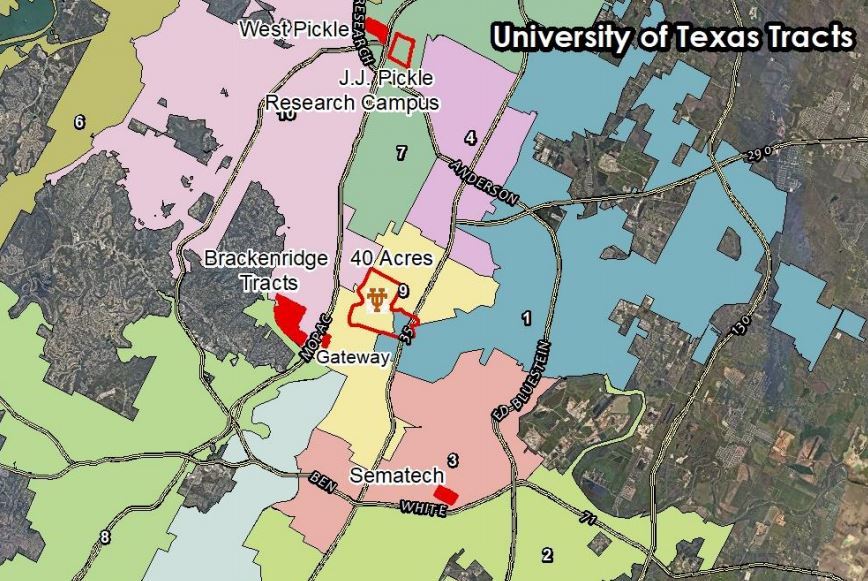
The letter seeks to remove the Lions Municipal Golf Course (Muny) on Lake Austin Boulevard from the existing Brackenridge Development Agreement (BDA), which envisions 2 million square feet of developable land for mixed-use zoning that could include residential, commercial, civic, and limited industrial. In return, the university is proposing a guarantee of 40 percent open space based on all of the Brackenridge Tracts, which total 345 acres.
To facilitate development at the Brackenridge tract, the university is planning to negotiate the purchase of 14.5 acres from the West Austin Youth Association (WAYA).
In addition to amodified permitting and platting process similar to that used for the BDA, UT also requested North Burnet Gateway zoning with a commercial mixed-use sub-district at its Pickle Research Campus (PRC) West.
Significant proposed changes to the university's Sematech tract include the creation of a possible tax increment financing (TIF) district and high-density zoning at the East Riverside Corridor District, along with a BDA permitting and platting process.
Per the letter, UT is seeking inclusion of its Gateway tract in the Brackenridge TIF for area infrastructure and commercial or limited industrial zoning, as well as BDA-style permitting and processing.
|
Cedar Park contributes part of $75M for frontage road project on 183A Toll
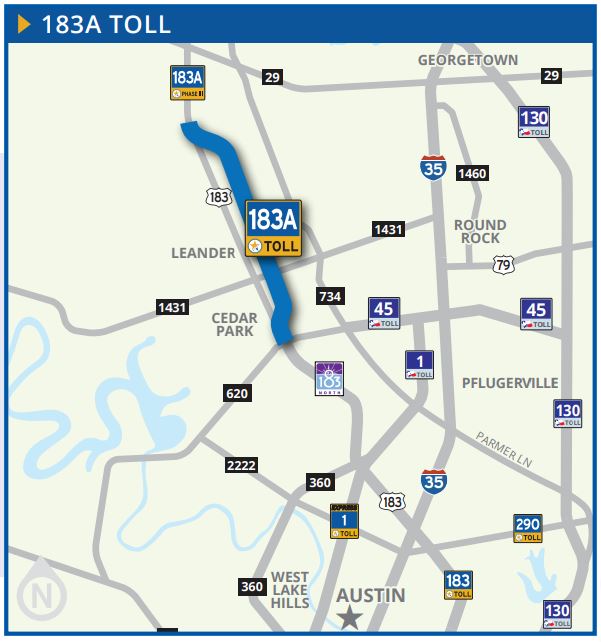
Cedar Park councilmembers approved an interlocal agreement with Williamson County on May 14 in which both parties will contribute local funding to the 183A Frontage Road Project.
The city committed $4.7 million and Williamson County was set to contribute $2.8 million to the Capital Area Metropolitan Planning Organization (CAMPO) project that will build new 183A frontage toll roads between Avery Ranch Boulevard and RM 1431. Total estimated project cost is $75 million.
CAMPO board members recently placed the project on a list of proposed deferred projects.
The board's action was part of its efforts to shift funds to the I-35 Capital Express Project, but Austin and Travis County board members asked sponsors of unscored projects on the list to submit formal project applications.
Cedar Park worked with the Texas Department of Transportation (TxDOT) to prepare and submit an application on the April 30 deadline.
According to City Council meeting materials, CAMPO staff and their consultant will review and score applications and compare them to other scored projects for deferral consideration. CAMPO staff will make project deferral recommendations to the Transportation Policy Board (TPB) with a vote anticipated on June 8.
City staff stated the interlocal agreement would enhance the city and county's chances of keeping the project off the deferred list.
Before the CAMPO vote, TxDOT engineers told councilmembers in February that construction was scheduled to begin in fall 2023 with a 24- to 36-month timeline.
|
Aledo moves ahead on school designs
 |
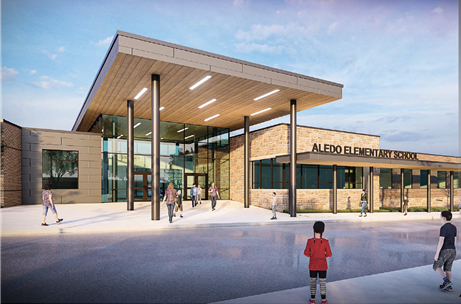
| | Rendering of Aledo Elementary School No. 6 |
Aledo ISD (AISD) is preparing solicitations for several school construction projects approved in the district's November 2019 bond election.
Design of the district's sixth elementary school at $35.85 million is anticipated for completion in July, with bidding for subcontracts set to open in August. Construction will begin in September with the 1,200-student capacity school ready to open for the fall 2021 semester.
Renovation and expansion of Aledo Middle School is projected to cost $33.47 million. The campus will feature a new library, fine arts wing, cafeteria space, and a field house. Design work is scheduled to be finished in October, and bidding for the subcontracts is set for November. Construction will begin in January 2021 in time to open for the fall 2022 semester.
AISD is working on the Middle School No. 2 project that is expected to cost $62.5 million. Preliminary platting is underway, and a pre-development meeting will be held at a date to be determined. Design is set for completion in October, bidding is scheduled to open for subcontracts in November, and construction will begin in January 2021. The school is scheduled to open in fall 2022 with a capacity of 1,200 students.
|
Fulshear plans new wastewater plant
The city of Fulshear is planning a new wastewater treatment plant to address population growth that is projected to jump from 29,090 residents in its wastewater service area in 2021 to an estimated 88,794 by 2036.
In his State of the City address on May 18, Fulshear's mayor said the city is establishing a partnership with the Gulf Coast Water Authority and Gulf Coast Authority to build the regional facility.
Engineers recommended in the city's 2018 Water and Wastewater Plan to relocate and build a new 3.5 million gallons per day (MGD) regional wastewater treatment plant by 2026. The consultants recommended building the new plant in the southern area of the city with the ability to expand it to 6.5 MGD treatment capacity by 2036.
Estimated construction cost of the new plant is $44.46 million in 2018 dollars.
They also recommended a $37.44 million expansion of the city's Cross Creek Wastewater Treatment Plant capacity to 4 MGD, as well as construction of three new $16.02 million water plants and three new $3.12 million water storage tanks by 2036.
|
UT-San Antonio to lead public-private cybersecurity manufacturing institute
The U.S. Department of Energy (DOE) on May 20 announced The University of Texas-San Antonio (UTSA) to lead the Cybersecurity Manufacturing Innovation Institute (CyManII), a public-private consortium formed to bolster U.S. manufacturing, energy efficiency, and innovation.
UTSA is home to the National Security Collaboration Center (NSCC), which has been dedicated as the home base for CyManII. The NSCC houses the Center for Infrastructure Assurance and Security, the Institute for Cyber Security, and the Cyber Center for Security and Analytics - and is in close cross-collaborations with the Open Cloud Institute (OCI) and the Texas Sustainable Energy Research Institute (TSER).
CyManII will lead a national consortium with partners from industry, universities, and DOE's Idaho, Oak Ridge, and Sandia national laboratories. The consortium will focus on making U.S. manufacturing more energy efficient and cyber secure by addressing two key manufacturing challenges: securing automation and securing supply chain networks.
The institute will leverage up to $70 million, over five years, in federal funding, subject to appropriations, and will be matched by over $40 million in private cost-share commitments.
|
TWDB approves $30M for water, wastewater projects across Texas
The Texas Water Development Board (TWDB) approved nearly $30.41 million in financial assistance for several water and wastewater system projects around the state on May 21.
More than $11.8 million from the Drinking Water State Revolving Fund will go to the city of San Antonio, acting by and through the San Antonio Water System (SAWS) to build an elevated storage tank. The funds also will help the city install water lines to incorporate two pressure zones for better water service reliability in the project area.
Rio Grande City will receive almost $7.5 million from the Clean Water State Revolving Fund to rehabilitate aging equipment at its wastewater treatment plant and double capacity from 1.5 million gallons per day (MGD) to 3 MGD.
The board authorized $4.75 million from the Clean Water fund to go to the city of Bertram to replace its 144,000-gallon per day lagoon wastewater treatment system with a 200,000-gallon per day conventional wastewater treatment plant that can expand up to 300,000 gallons per day. The funding also will help Bertram create and implement an asset management plan.
Aledo will receive $4.23 million from the Clean Water fund to build a new interceptor sewer system and upgrade its Old Tunnel Lift Station to increase system capacity.
Westwood Shores Municipal Utility District will use $1.4 million from TWDB's Drinking Water fund to construct four drinking water wells, replace all inoperable valves throughout the system, make improvements to the existing groundwater storage tank, and extend the water main line.
|
Cy-Fair school district buys property for elementary school in Bridgeland
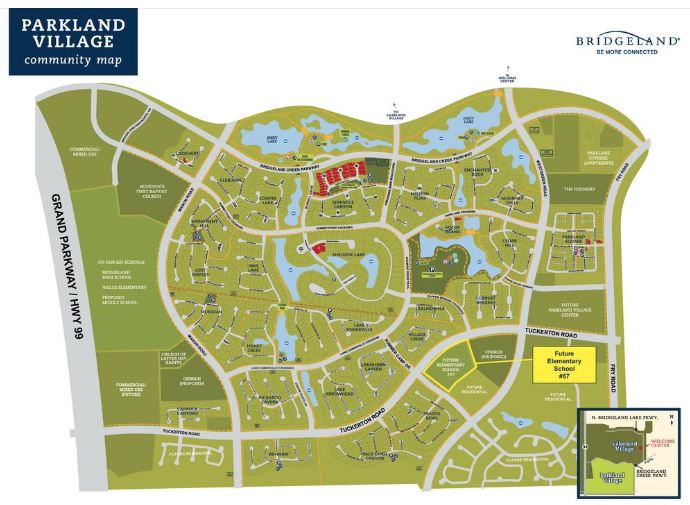
Cy-Fair ISD (CFISD) recently purchased 16.7 acres to construct a new two-story elementary school campus in the Bridgeland community.
Elementary No. 57 will be about 120,000 square feet with a capacity of 1,092 students.
Voters approved funds to construct the new school as part of a $1.2 billion bond election in 2014. The school will join Bridgeland High School and Pope and Wells as CFISD schools in the Bridgeland community. CFISD plans to open a middle school in the community in 2024.
The district has selected a design firm. Once designs are finished, the district will let a request for proposals (RFP) for the construction contract. CFISD will select a name for the new elementary school after construction has begun.
|
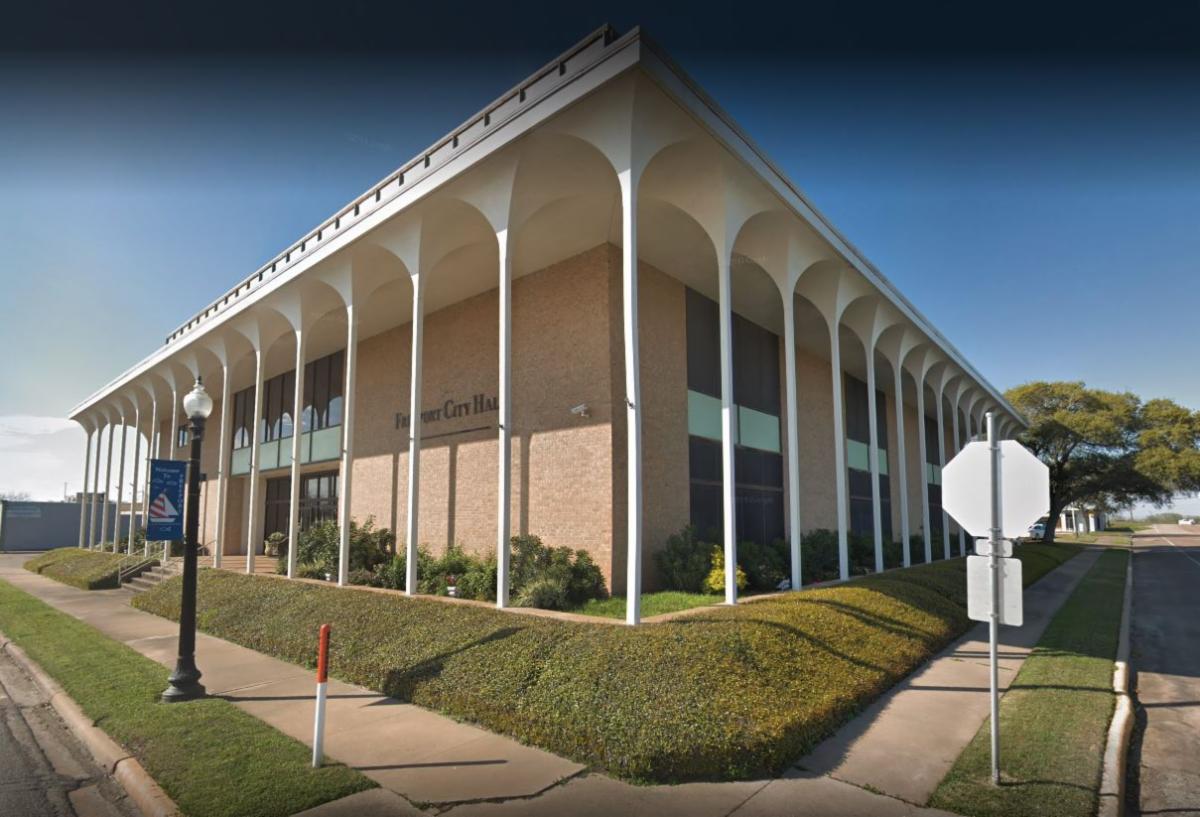
Freeport mulls $7M bond issuance for street, drainage, City Hall projects
|
| | | Freeport City Hall | |
City of Freeport leaders are considering a $7 million bond issue to pay for street and drainage infrastructure projects as well as City Hall and Dow Freeport Heritage House renovations.
Street and drainage projects would constitute 86 percent of the certificates of obligation (COs), which would not require an election unless at least 5 percent of the registered voters submit a valid petition in protest.
A list of specific street and drainage projects will be developed through the budget process each year, according to a staff report by Freeport's assistant city manager and finance director.
In February, the City Council discussed City Hall renovations to consolidate operations, improve safety, and enhance accessibility.
Based on the city's existing debt service rate and property taxes, it has capacity to fund $7 million in capital projects after paying off its CO bonds from 2003 and advancing some of its debt service payments from 2008.
The city must publish a notice of intent, which City Council is set to review in June.
|
Frisco seeks firm to retrofit former senior center into municipal court
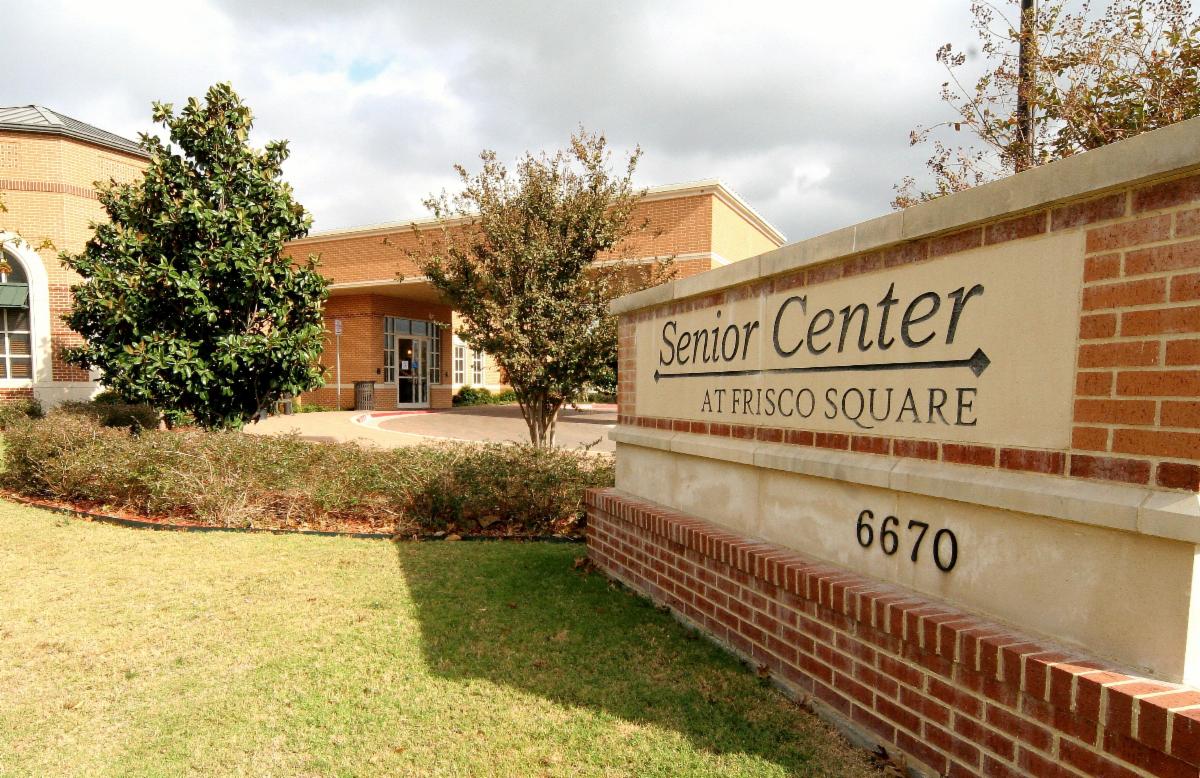
The city of Frisco is seeking competitive sealed proposals (CSPs) for an $8 million adaptive reuse project to convert the former Senior Center at Frisco Square into a municipal court facility.
Current square footage is 17,395. Estimated square footage to be added is 6,320.
New construction will include an expansion with space for entry and private exit vestibules, security check area, main lobby, work space for court clerks, administrative offices, supply area, storage closet, money room, and restroom.
A non-mandatory pre-proposal meeting and site visit is scheduled for 10 a.m. May 28 at the building site, 6670 Moore St., in Frisco.
Proposals are due by 2 p.m. CST on June 11.
|
|
Check out our social media links!
|
|
|
By Mary Scott Nabers, CEO of Strategic Partnerships, Inc.
As the country reopens for business and citizens strive to find normalcy, many critical issues must be addressed. Every region, citizen, and employer in America has been impacted by COVID-19, and getting back to normalcy and prosperity will require bold leadership.
Decisions loom large, and how they are made will impact every region's economic future as well as every citizen's well-being. Best to watch the following regional decisions because these are the ones that will result in positive results:
- What will be done to reboot the economy?
- How will local officials prioritize immediate needs while struggling with extremely constrained budgets?
- What will educators do to make up for lost time and also prepare for potential closings in the future?
- What initiatives will be taken to prioritize broadband expansion?
- How will local health care districts and hospital systems support telehealth, testing, and rural health shortages?
- Will elected leaders finally recognize that the country's infrastructure is crumbling and begin to address the problem?
- What will state legislators do to restore trust related to voting security?
- Will politicians rein in the rampant and continual political bickering?
Normalcy in the future actually will be quite different. Big changes have occurred, businesses have been disrupted, people have been displaced, and regulations have morphed. Citizens throughout the country will experience different types of leadership that will impact their well-being. Economic vitality will hinge on good decision making. No matter what any citizen believes about the cause of climate change, everyone agrees that the changes have left us vulnerable. We have entered 'hurricane season' and there is no doubt that over the next few months parts of the country will experience destructive storms. Many regions have spent months preparing and bracing for hurricanes and flooding. Other regions have done nothing.
The possibility of another flare up with COVID-19 is a threat that must be met head-on. Some areas of the country are preparing for the worst and hoping for the best. Other regions have done nothing and are obviously relying on luck.
Some visionary officials are working diligently to make broadband available in rural areas. They recognize how critical that issue is, but several states have no champions for this cause.
Resources and equipment are now available in most hospital systems, but thousands of medical clinics that were once convenient and abundant have been shuttered for many months. Not all will reopen. Nonprofit organizations that once provided citizen services and assistance are out of funds. A few, and maybe more, will not survive COVID-19. Visionary leaders are making health care services a high priority.
No standardization exists about how the education of students will be handled. It's impossible to know now which path will be most productive, but collaborative initiatives are required. Workforce training must be jump-started in spite of the fact that all workforce resources have been consumed with unemployment insurance for quite some time. Training and retraining is always more successful when done through collaboration with industry and government.
|
 |
|
Senate confirms Ratcliffe as director of U.S. intelligence
|
| | John Ratcliffe |
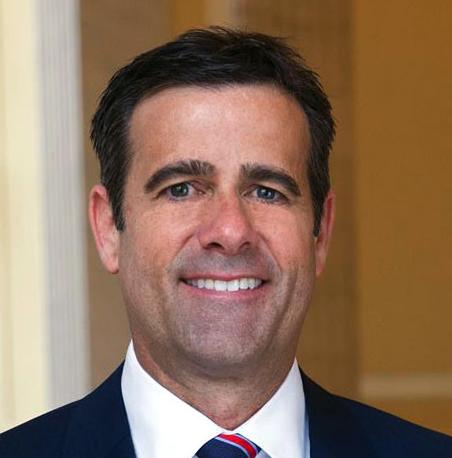
The U.S. Senate confirmed Rep. John Ratcliffe, R-Texas, to be the next director of national intelligence on May 21. He succeeds Daniel Coats who resigned in 2019.
As a member of the U.S. House of Representatives, Ratcliffe serves on the intelligence, judiciary, and ethics committees.
He previously was chief of anti-terrorism and national security for the Eastern District of Texas and mayor of Heath, Texas.
|
Trainor to serve as federal election commissioner
|
| | James Trainor III |
The U.S. Senate confirmed James "Trey" Trainor III as a commissioner of the Federal Election Commission on May 19.
Trainor is an Austin election law attorney.
He previously served as a special assistant to Secretary of Defense James Mattis in the Office of General Counsel. His prior government service includes positions as general counsel to the Texas Secretary of State and counsel to the Texas House Committee on Regulated Industries and various other state legislative roles.
|
Abbott taps Burrow for criminal justice board appointment
|
| | Rodney Burrow |
Gov. Greg Abbott appointed Rodney Burrow to the Texas Board of Criminal Justice on May 19.
Burrow is the director of medical affairs and associate director of primary care for a Mount Pleasant medical center and is a board certified family physician at a family care center. He previously served as chair of the state's Correctional Managed Healthcare Committee.
|
Williams named finance director for TREC, TALCB
|
| | Ranada Williams |
The Texas Real Estate Commission (TREC) and Texas Appraiser Licensing and Certification Board (TALCB) recently named Ranada Williams as director of finance.
Williams previously served as chief financial officer at the Texas Military Department. She also is a U.S. Army veteran.
|
Boerne selects Thatcher for city manager position
|
| | Benjamin Thatcher |
The city of Boerne named Benjamin Thatcher as city manager on May 12. He will succeed Ron Bowman who is retiring on June 12.
Thatcher is an assistant city manager for the city of Southlake, Texas. Prior to that position, he was assistant to the city manager.
|
Marlin ISD names Henson as new superintendent
|
| | Darryl Henson |
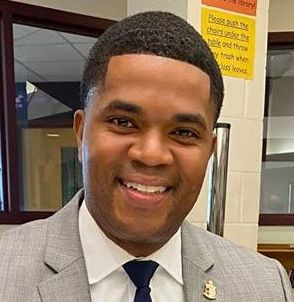
Marlin ISD board of managers appointed Dr. Darryl Henson as the district's superintendent on May 20. He will take over for interim Superintendent Jean Bahney who filled the position after Michael Seabolt resigned in August 2019.
Henson is the assistant superintendent of school leadership at Cedar Hill ISD (CHISD). Prior to joining CHISD, he served as the principal of North Forest High School in Houston ISD and principal of Parkland High School in Ysleta ISD.
|
Harris County taps Hollins for interim county clerk post
|
| | Christopher Hollins |
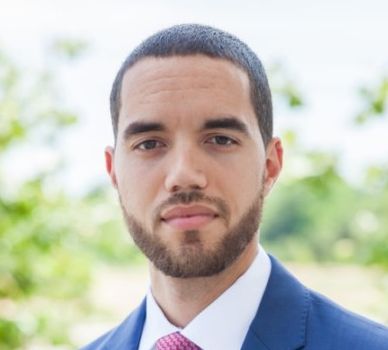
Harris County Commissioners Court appointed Christopher Hollins as interim county clerk on May 19. He will succeed Diane Trautman who resigned because of health issues.
Hollins owns a personal injury law practice. He previously was a senior manager at a consulting firm.
|
Liberty Hill names Graeter police chief
|
| | Royce Graeter |
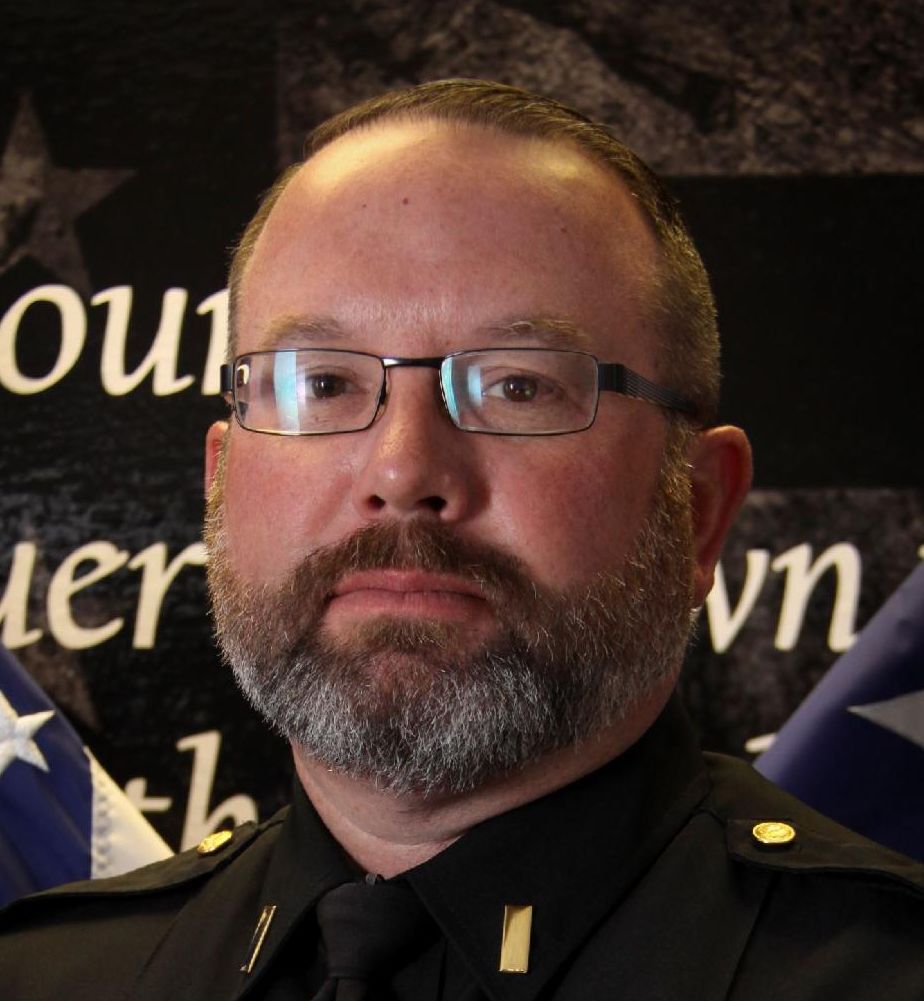
The city of Liberty Hill named Royce Graeter as its police chief on May 11. He succeeds former chief Maverick Campbell.
Graeter had been serving as the city's interim police chief. He previously was a lieutenant in the Liberty Hill Police Department where he oversaw operations services.
|
In case you missed it!
 Read Mary Scott Nabers' latest column in SPI's Government Contracting Pipeline newsletter.
|
Gov. Greg Abbott has announced these appointments from May 15-21:
Robert Greenberg - Belton, Correctional Managed Health Care Committee (chair) |
Dozens of public-sector jobs are available. Click here to view all job openings and guidelines for job submissions to SPI. New jobs added this week:
- Office of the Texas Governor - Appointments Manager (Program Specialist IV)
- Texas Comptroller of Public Accounts - IT Administrative Applications -Section Manager
- Texas Comptroller of Public Accounts - Continuous Integration/Continuous Delivery - Team Lead
- Texas Comptroller of Public Accounts - Senior DB2 Database Administrator
- City of Dallas - Information Technology Manager
- City of Dallas - Information Technology Manager (Risk & Compliance Manager)
- City of San Antonio - Assistant City Attorney
- Alamo Area Council of Governments - Accountant
|
View our Texas Government Insider and Government Contracting Pipeline newsletter archives
|
Help us share this message.
To ensure delivery and proper formatting of the newsletter, be sure to add editor@spartnerships.com to your safe senders list. Otherwise, the newsletter may be flagged as spam and automatically routed to your junk e-mail folder.
|
Texas Government Insider is a free weekly newsletter detailing important happenings throughout the state and summarizing current political issues relevant to individuals interested in government.
Publisher: Mary Scott Nabers
Editor: Devin Monk
TGI is published by Strategic Partnerships, Inc. (SPI), a research and consulting firm. Founded in Texas in 1995 by former government executives and public sector experts, SPI has developed a national reputation as the premier marketing partner dedicated to helping companies secure contracts in the $1.5 trillion state and local government marketplace.
To learn more about SPI services, click here or contact our sales department at 512-531-3900.
Barton Oaks Plaza One, Suite #100
901 S. Mopac Expressway Austin, Texas 78746
|
|
|
|