|
While the federal government faces historic changes and contracting disruptions, local governments continue to offer abundant opportunities for public-private collaborations. Many upcoming projects have been vetted after several years of planning and community outreach initiatives. The following examples represent significant commonality with others still in the design and planning stages.
State officials in Delaware will soon have a new parking garage adjacent to the capitol complex in Dover. This $30 to $33 million project is part of a broader $150 million renovation effort to enhance accessibility and functionality within the state capitol complex.
The new three-story facility will address persistent parking shortages, and it will be designed to complement the historic Legislative Hall. Approximately 350 parking spaces will be made available, along with advanced security including controlled access points and an integrated surveillance system.
Extensive site preparation will be necessary to comply with stormwater management regulations, and the project will call for the relocation of sanitary sewer lines and the implementation of drainage solutions to prevent flooding. Solicitation documents are expected soon, as construction is slated to begin in July of 2025.
Recently, city leaders in South Fulton, Georgia, approved a plan to develop a $17 million recreation facility. It will include an indoor gymnasium, fitness center, multipurpose rooms and an outdoor sports field.
It will also include an indoor swimming pool capable of accommodating year-round aquatic activities. The 40,000-square-foot facility will be designed to provide an abundance of adaptable multiuse space to accommodate community events, classes and gatherings.
Click here for more
| |
The Texas General Land Office (GLO) will allocate $97.6 million to support regional mitigation projects across the state. The funds will empower four counties and 13 cities and ports to advance critical water systems, drainage and infrastructure projects.
The following are a selection of the projects receiving support:
Montgomery County will be the largest recipient, receiving $60.4 million to improve floodwater conveyance and increase emergency services access. Plans include improving roadways, starting by removing and replacing surfacing along Westhoff Street. Atzenhoffer Road will have its roadway leveled, compacted and resurfaced. The county will further support by installing culverts and complete associated appurtenances.
Port Lavaca will receive the second largest allocation—$9.1 million—to build a stormwater pond facility and upgrade the Harbor of Refuge’s shoreline. The port will buy land in the Corporation Ditch and use the acquired site for an upcoming stormwater pond. Additional work will involve upgrading the area’s storm drain system and replacing and regrading the ditch. For the Harbor of Refuge’s drainage system, the port will excavate the site and shoreline and install erosion control.
Jim Wells County will use $7.3 million to improve the water system and drainage infrastructure across four precincts:
- In Precinct 1, the county will extend the waterline of County Roads 117 and 111. The project vision will prioritize buying land and installing the waterline, fire hydrants, services and meters. An associated drainage project along San Fernando Creek Crossing will buy easements, remove and replace culverts and install headwalls, wingwalls, guardrails, fences and pavement.
- In Precinct 2, plans revolve around improving drainage systems in Mesquite Forest. The project will buy land, repair driveways and streets, regrade ditches and install pipes, inlets and outlets.
- In Precinct 3, the county will extend the waterline in Meadow Ridge and Oak Meadow. The project calls for buying land, repairing driveways and pavement and installing waterlines, fire hydrants, services and meters. Drainage work in Southwest Orange Grove will be similar, including land acquisition, regrading and improving ditches, removing and replacing pavement and repairing driveways.
- Green Acres in Precinct 4 will have its drainage systems improved. Similar to the other projects, the work will include repairing driveways and streets, regrading ditches, buying land and installing pipes, inlets and outlets and culverts.
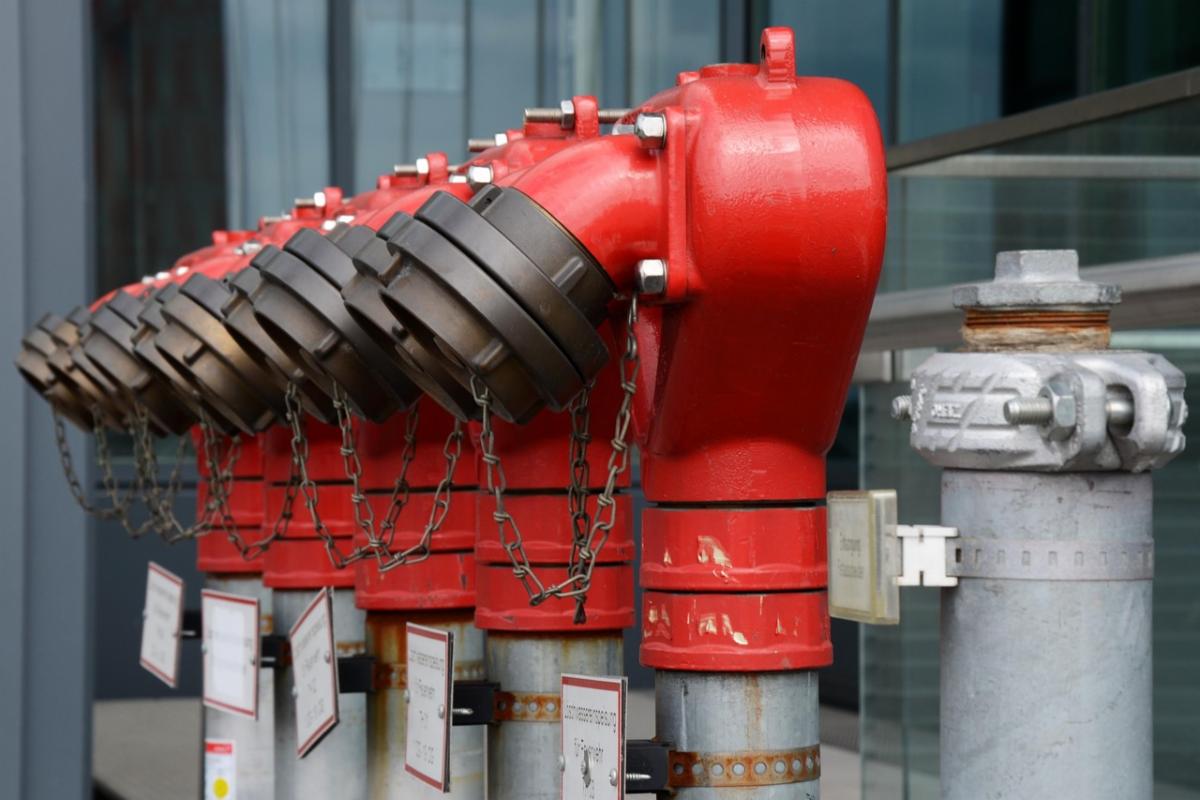
(Photo courtesy of wobogre on Pixabay.)
| |
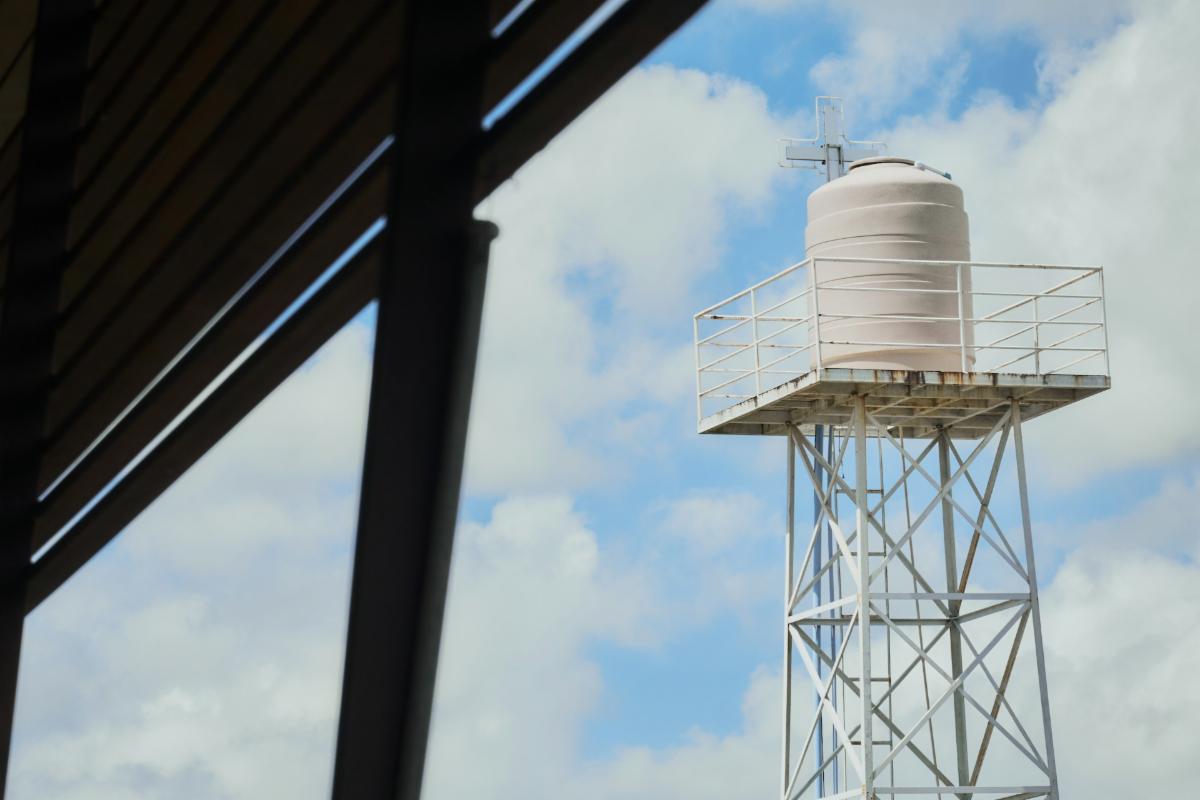
The Texas A&M University System RELLIS Campus is soliciting a design firm for a $27.6 million project to build a water tower and well. Construction is expected to begin in September 2026.
University officials have determined that the RELLIS Campus will need a new water tower to supplement the existing one, ensuring that all campus facilities have adequate pressure for fire control and irrigation. A new domestic well, along with associated infrastructure, will play a key support role to supply and transmit water where it's needed.
The water tower will be designed to hold 1.5 million gallons of water and provide 80 psi to the system, greatly expanding existing capacity and pressure. The storage tank will be approximately 185 feet above finished grade and connect to a 12-foot domestic water line. The designer will help identify old parts of the system that will need to be replaced to mitigate line breaks.
The supplementary water well portion of the project will also incorporate a new 16-foot water transmission main, cooling tower and a 1-million-gallon ground storage tank facility. The well will be approximately 3,200 feet deep.
The university will install electric and communication duct banks as part of the water well project. Once completed, the well will pump more than 1,900 acre-feet of water at a rate of 2,800 gallons per minute.
(Photo courtesy of set.sj on Unsplash.)
| |
Gov. Greg Abbott is laying out a five-year blueprint focused on Texas’s economic future. The Bigger. Better. Texas. Economic Development Strategic Plan pushes for job creation and continued growth with targeted efforts toward specific sectors and regions.
The plan was created through a year-long collaboration with state agency partners, business and community leaders, economic development organizations and industry associations.
To drive workforce development and strengthen the economy, the document focuses on four pillars: business and industry, innovation and entrepreneurship, workforce and infrastructure. Over the next five years, Texas will set out to achieve specific objectives and implement actions directed at advancing these pillars as part of the state’s economic expansion blueprint.
For business and industry, the state will prioritize accelerating growth in specific sectors, expanding global economic leadership and promoting local development. Efforts to support statewide innovation and entrepreneurship will exemplify research and development, support innovation in target sectors and ensure entrepreneurs have access to necessary resources.
In addition, the state will work toward building a skilled workforce pipeline, promote education and training opportunities and improve workforce development systems. Infrastructure will be a critical focus, receiving support for regional infrastructure development, target sector infrastructure needs and assurance of improved connectivity and resilience.
Several sectors are expected to drive strategic economic growth and job creation:
Advanced Manufacturing contributes $64 billion to Texas’s Gross Domestic Product (GDP). With strong growth forecast for the sector, the state is prioritizing investments in high-tech manufacturing, technology innovation, workforce development, semiconductor industry expansion and supply chain strengthening.
Energy Evolution is a massive economic driver, with a $390 billion GDP contribution. Electric power generation and transmission; oil and gas extraction, production, and transportation; and renewables will be prioritized.
The Hospitality, Tourism and Culture sector is responsible for $5 billion in foreign exports and has seen steady employment growth—11% from 2011 to 2021. The governor’s plan targets film, music and culture, as well as hospitality and tourism, with strategic investments in brand marketing and promotion.
Information Technology boasts a $71 billion GDP contribution and is expected to grow by 67% from 2022 to 2032. The strategic plan emphasizes artificial intelligence, particularly in central Texas, the Dallas-Fort Worth area and San Antonio.
Life Sciences and Biotechnology make up another sector with tremendous growth, with 62% GDP growth and 65% employment growth from 2011 to 2021. The report finds agriculture science and technology can be strengthened by supporting companies through the entire product lifestyle—from research and testing to commercialization—all within the state.
Petroleum Refining and Chemicals are seeing positive post-pandemic growth projections through 2032. This sector accounts for $38 billion in foreign exports. The plan supports infrastructure enhancements at pipelines, supply chain integration, research and innovation through university programs, workforce development and expansion of international trade relationships.
Professional Services and Corporate Operations saw 65% GDP growth and 44% employment growth from 2011 to 2021. With 11 schools placing in the U.S. News Top 100 Business Schools list, officials believe the state holds a distinct advantage. The strategic plan positions Texas to build on its already impressive growth in these sectors by maintaining its business-friendly environment and technological competitiveness by developing the specialized talent and innovation infrastructure needed for success.
Rare Earth Elements and Mineral Mining has shown mixed performance. The report focuses on Texas’s regional strengths and pushes efforts for sustainable mining practices so as not to exhaust resources. Officials push for innovation and technology advancement through university research initiatives.
Transportation and Logistics are responsible for $303 billion in GDP contribution with a 34% growth rate from 2011 to 2021. Infrastructure enhancement, technology and innovation support, global connectivity and workforce development are all listed as strategic investment priorities.
(Photo courtesy of Romain Dancre on Unsplash.)
| |
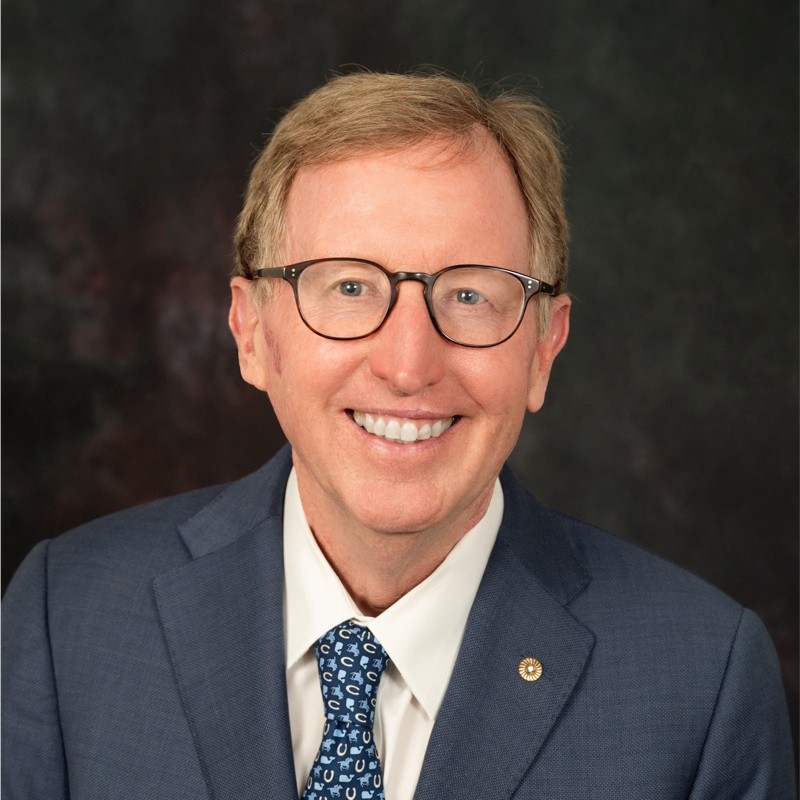
Gov. Greg Abbott has appointed Patrick Frost to serve as a member of the Employees Retirement System of Texas (ERS) Board of Trustees. His term will conclude Aug. 31, 2030. The ERS Board is responsible for maintaining a public pension system for Texas state agency employees and retirees. The system also offers health insurance coverage for select employees and retirees.
Frost’s career spans four decades. He retired in December 2023 after serving as a banking institution’s president for 31 years. Other roles he held with the bank include retail banking manager, marketing director, commercial loan officer and credit analyst.
He is a member of several associations, including the Philosophical Society of Texas, Texas Cultural Trust Board of Directors, San Antonio Independent School District Foundation Advisory Council, Phi Beta Kappa Society and The University of Texas (UT) at San Antonio Roadrunner Foundation Board.
In addition, Frost is chairman of the Greater San Antonio Chamber of Commerce, president of the San Antonio Livestock Exposition and chairman of the National Collegiate Athletic Association Men’s Final Four Local Organizing Committee.
He currently serves as a board member for CHRISTUS Santa Rosa Children’s Hospital and is the former president of San Antonio Rotary Club. Frost received a master’s degree in business administration from UT Austin and a bachelor’s degree in economics from Vanderbilt University.
| |
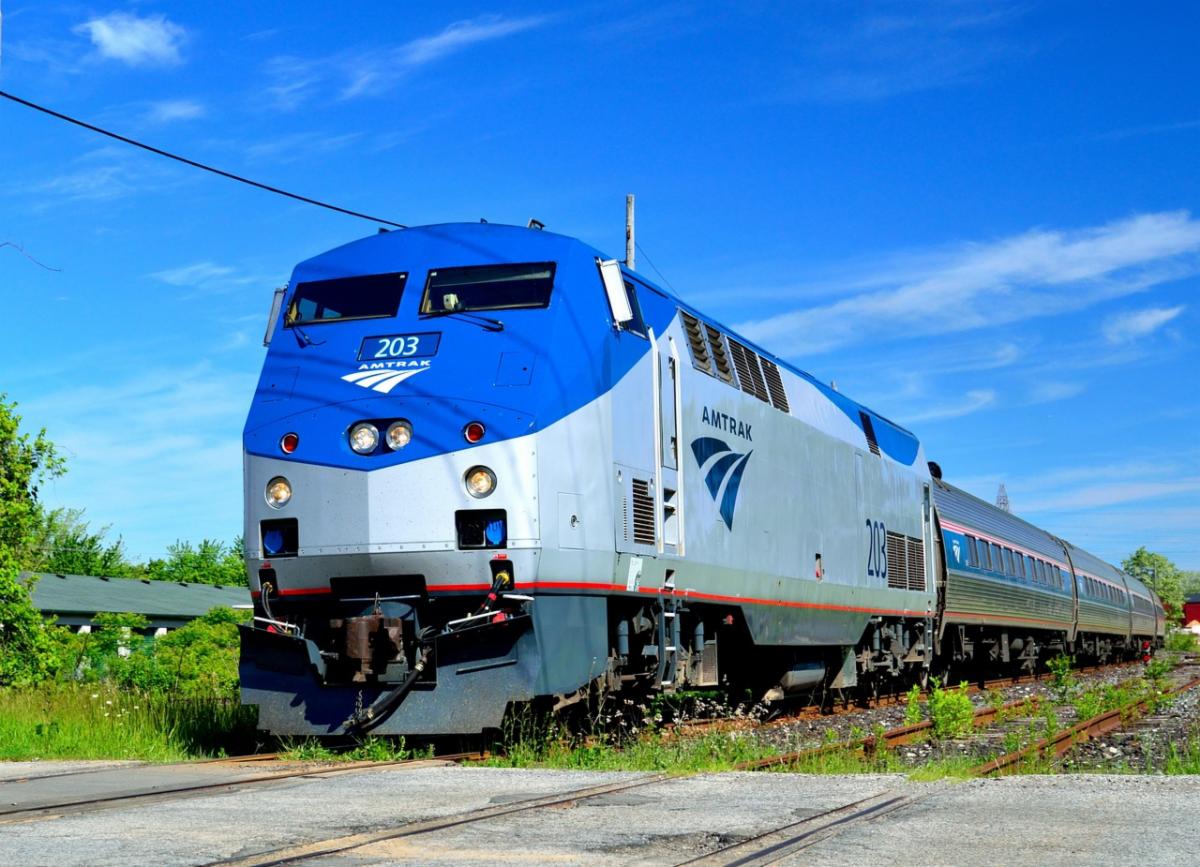
Amtrak has released an advance notice to initiate procurement for a project partner to bring a 240-mile high-speed rail line to connect Dallas and Houston. The company is expected to publish a Request for Qualifications (RFQ) in late March or early April soliciting a delivery partner to help manage the program, design work, construction, quality management and procurement.
The project highlighted in the notice will build a grade-separated, high-speed rail system between the fourth and fifth most populated urban centers in the country. Once completed, the rail will provide 90-minute trips across the intercity region with an intermediate stop in Brazos. Designs estimate the train will reach top speeds of up to 205 mph.
The state has been without a dedicated train route between Dallas and Houston for nearly three decades after the original line was closed down. Plans to create a new high-speed route have been in the works intermittently for years, briefly falling to the sidelines before Amtrak revived it in 2023.
The prospect of a high-speed rail connecting metropolitan areas has been of significant interest to Texas lawmakers for years. House Bill 483 was introduced in November 2024 advocating for state funding to support the development of high-speed rail lines along the Interstate 35 Corridor, connecting major hubs including Dallas, Austin and San Antonio.
Once issued, the RFQ will be the first of a two-step procurement process to receive Statement of Qualifications from prospective companies. Amtrak plans to create a shortlist of responders that will be allowed to submit to an upcoming Request for Proposals.
(Photo courtesy of Pixabay.)
| |
Trey Duhon
County Judge
Waller County
| |
Public career highlights and education: I obtained a BS in Economics from Texas A&M and my law degree from University of Houston Law Center. I’m currently in my 3rd term (11th year) as County Judge of Waller County. I was recognized in 2011 as a "Star of Texas" by Texans Uniting for Reform and Freedom (TURF) for protecting private property rights in Texas, and in 2012 I was recognized as “Citizen & Volunteer of the Year” by the Waller Area Chamber of Commerce for my efforts during the 2011 Tri-County wildfires. I most recently served as chairman of the Houston Galveston Area Council (13-county council of government representing 7.5 million people) in 2023.
What I like best about my public service is: Being blessed with the honor of having a position where I am tasked with making decisions that can actually impact and improve the lives of thousands of people on a daily basis and more so - having the trust of the people to do so.
The best advice I've received: Best advice I ever received, which is especially true in the age of social media, is to not “wrestle with the pigs.” Because in the end, you both get dirty, and the truth is, the pig likes it.
People might be surprised to know that: I’m somewhat of an adrenaline junkie. I am an avid scuba diver with advanced certification. I also did skydiving during college and I’ve driven cars in multiple demolition derbies (but now retired).
One thing I wish more people knew about Waller County is: That Waller County invented “social distancing.” In all seriousness – that Waller County is an incredible place to live and work. One of the fastest growing counties in Texas, but one that still has ideals and principles based on a rural and agricultural heritage and some of the best people in Texas as well. But I think that secret is starting to get out based on our rate of growth.
| |
Provincial governments across Canada have launched measures to hit back at the tariffs that have been placed on their country. U.S. businesses will be impacted as governmental entities banned American contractors from their procurement processes after President Donald Trump’s announcement of 25% tariffs on most Canadian goods.
President Trump on Thursday postponed the implementation of some tariffs on Canadian goods, but many American businesses may already be experiencing the effects of Canada’s retaliatory measures. From coast to coast, provincial leaders have established restrictions on government contracts, removed American products from stores and created financial aid packages for impacted businesses.
Click here for the latest updates on international trade conditions
(Photo courtesy of Dietmar Rabich.)
| |
Dekalb County, Georgia, is making the largest investment for water and sewer infrastructure in county history, upgrading critical water systems, improving distribution and enhancing quality-of-life for residents.
The county’s Board of Commissioners is proposing a new Water and Sewer Capital Improvement Plan (CIP) for Fiscal Years 2025-2034, seeking to guide Dekalb’s infrastructure spending over the next 10 years. Approved by the board last month, the new CIP will invest $4.27 billion to address decades of underfunding for aging water distribution and sewer systems while improving the county’s financial position.
Click here for more information about the county’s upcoming ambitious water and sewer plans
(Photo courtesy of Manuel Schmitt on Pixabay.)
| |
A major transportation investment in New Mexico is another step closer to approval. The legislation authorizing $1.5 billion in transportation bonds easily cleared the House Appropriations and Finance Committee, as well as the Transportation, Public Works and Capital Improvements Committee, before securing unanimous approval from the House of Representatives.
The proposed legislation addresses the state’s $5.6 billion road funding shortfall through a comprehensive bond program.
Click here for more information about the future of transportation in New Mexico
(Photo courtesy of Dougtone.)
| |
A New York state project to further artificial intelligence technology research has received $165 million in new funding and is expected to gain three new university participants.
The Empire AI Consortium received $90 million in new funding in Gov. Kathy Hochul’s fiscal year 2026 budget. An additional $25 million will come from the State University of New York System and $50 million in matching funds from the University of Rochester, the Rochester Institute of Technology and the Icahn School of Medicine at Mount Sinai, which are all expected to join the program pending legislative approval.
Click here to learn more about the Empire AI Consortium
(Photo courtesy of Argonne National Laboratory's Flickr page.)
| |  |
|
The Texas A&M University (TAMU) System Board of Regents has unanimously voted to appoint Glenn Hegar to succeed John Sharp as the system’s chancellor.
Glenn Hegar currently serves as the Texas comptroller, originally elected to the role in November 2014. As comptroller, Hegar operates as Texas’ chief financial officer, treasurer, check writer, tax collector, procurement officer and revenue estimator. Hegar was critical in establishing the Texas Broadband Development Office (BDO) and the Texas Opioid Abatement Fund Council in 2021.
Prior to taking on the comptroller title, Hegar served in the Texas House of Representatives and Senate over the span of 11 years. As chancellor, Hegar will oversee 11 universities, eight state agencies and more than 157,000 students. He was selected for the role over four other candidates:
- Texas A&M Foundation President Tyson Voelkel.
- University of Alabama President Stuart Bell.
- State Rep. Trent Ashby.
- U.S. Rep. Michael McCaul.
Hegar graduated from TAMU in 1993 and earned a master’s degree and a law degree from St. Mary’s University. He also holds a Master of Laws degree from the University of Arkansas. Chancellor Sharp announced his retirement earlier this year. Hegar will officially assume his duties after John Sharp vacates his seat in June.
| Gov. Greg Abbott has announced multiple new appointments and reappointments to river authority boards of directors along the Guadalupe River. The Upper Guadalupe River Authority (UGRA) oversees the control, storing, preservation, distribution and management of water in the Upper Guadalupe River and its tributaries. Similarly, the Guadalupe-Blanco River Authority (GBRA) is responsible for managing water resources in its 10-county district. All new terms will expire Feb. 1, 2029. | |
Dick Eastland has been reappointed to the UGRA. Eastland currently serves as the authority’s treasurer. He is a former member of the Hunt Independent School District (ISD) Board and coach for baseball and basketball teams. Eastland earned a bachelor’s degree in business management from The University of Texas (UT) at Austin.
| |
Jeanne Stacy is the second reappointment to the UGRA. Stacy is the current director of a camp in Hunt, a member of the America Camp Association, the Society for Human Resource Management and the Camping Association for Mutual Progress. She received a bachelor’s degree from Brown University.
| |
Jonathan Letz is the first of two new appointments to the UGRA. He is the current president of Texas Wildlife Association, director of Grace Christian Academy and vice president of Kerr Economic Development Corporation. Letz has bachelor’s degrees in business administration andpetroleum land management from UT Austin.
| |
Weir Labatt— the final appointment to the UGRA—previously served on the Texas Water Development Board, originally appointed in 2002 and reappointed in 2006. He also served as chairman of the Western States Water Council and was a member of the Schreiner University Board of Trustees. He received a bachelor’s degree in business administration from UT Austin.
| |
Steve Ehrig was reappointed to the GBRA Board of Directors. He is a founder of an animal feeds store and a ranch and currently serves as director of the Houston Livestock Show and Rodeo. He is also a member of several organizations representing farmers, agricultural leaders and cattle raisers. Ehrig is the former vice president of the Gonzales Chamber of Commerce Board of Directors, president of the Gonzales County Farm Bureau and president of the Gonzales County Appraisal District Agriculture Advisory Board.
| |
Jennifer Storm is the only new appointment to the GBRA Board of Directors. She currently serves as CEO of the Buda Economic Development Corporation, as well as board member of the Hays Caldwell Economic Development Partnership and the Greater Buda Chamber of Commerce. Storm is also a sitting member of the Texas Economic Development Council and the International Development Council. In years past, she was assistant director for external affairs at UT San Antonio and interim marketing director for the Corpus Christi Islander Athletic Department at Texas A&M.
| Attorney General Ken Paxton has made a selection of new appointments to round out his executive leadership team. | |
Austin Kinghorn will take over as deputy attorney general for civil litigation, transitioning from his most recent role as deputy attorney general for legal strategy. Kinghorn has been with the attorney general’s office since 2020, starting as assistant attorney general for the General Counsel Division before serving as general counsel and associate deputy attorney general for legal counsel.
Kinghorn’s career has taken him across multiple leadership roles in the public sector, including staff attorney for the Texas Supreme Court for more than six years, assistant attorney general for the Civil Medicaid Fraud Division and a litigator in the Healthcare Program Enforcement Division. He has a law degree from Baylor Law School and earned his undergraduate degree from The University of Texas at Austin.
| |
Ryan Walters has been promoted to deputy attorney general for legal strategy. He most recently served as associate deputy attorney general for civil litigation. Prior to his most recent role, he spent four years in the Special Litigation Division, starting as special counsel and later being appointed chief.
Walters has worked in several legal capacities throughout his 23-year career. Before joining the Office of the Attorney General, he was an attorney with the Texas Public Policy Foundation for more than four years and an assistant attorney general for the Employment Law Section of the Office of the Ohio Attorney General. Walters has a Master of Laws in Constitutional Law from the University of California, Berkeley School of Law, a law degree from the University of Michigan Law School and a Bachelor of Arts in Economics and Political Science from The Ohio State University.
| |
Billy Cole has been appointed principal deputy solicitor general. Cole has been with the Office of the Attorney General since 2021, starting as an assistant solicitor general. He was promoted to deputy solicitor general in February 2024.
Prior to joining the office, Cole worked as an associate attorney and summer associate for a law firm for more than four years and as a law clerk to a judge on the 5th U.S. Circuit Court of Appeals. He has a law degree from the University of Pennsylvania Carey Law School and a Bachelor of Arts in Political Science and Government from Pepperdine University.
| |
Dr. Wendy Elmore will step into her new role as president of Lamar State College Orange (LSCO). Dr. Elmore serves as the college’s executive vice president and provost. She has been in her current position since 2020. Before joining LSCO, Dr. Elmore worked at Trinity Valley Community College in several capacities for more than 13 years. She will succeed Dr. Tom Johnson on June 1, 2025.
| |
The Texas Department of Public Safety (DPS) has selected Brian Dismukes to take over as assistant chief of the Infrastructure Operations Division. He previously served as human resources director for the division, the culmination of a three decade-long career with DPS.
| |
The Amarillo Independent School District (ISD) has officially signed Dr. Deidre Parrish as its next superintendent. Dr. Parrish currently serves as superintendent of Sweetwater ISD and previously served in the same role for Darrouzett ISD. She has also worked as assistant superintendent of curriculum and instruction for Decatur ISD, director of professional learning at Frisco ISD and adjunct processor for The University of North Texas. She will officially succeed Doug Loomis on March 18.
| |
Kimberly Olivares has been named chief financial officer for the city of Austin. Olivares will retain her current role as deputy chief financial officer (CFO), which she has held since June 2021. She rejoined the city since 2007 after a nearly two-year break, serving in numerous capacities including public information specialist senior, senior business process consultant, capital improvement program manager, deputy budget officer and chief performance officer.
| |
Gov. Greg Abbott announced these appointments and reappointments from Feb. 28 through March 6:
Texas Division Of Emergency Management
(both reappointed)
Aaron Negherbon - McKinney
Patricia Rigney - Edinburg
Texas Council For Developmental Disabilities
Edward Baffoe, Ph.D. - Forney
Abigail Maddux - North Richland Hills
Wendy Maurer - Conroe
Ashley Sattler - Beaumont
Andrew Crim - Fort Worth
Eric Shahid - Somerville
Governor’s Committee On People With Disabilities
Juan Lopez - Edinburg
Chelsea Elliott - Austin
Ronald “Ronnie” Browning - Spring
Lisa Treleaven, Ed.D. - Montgomery
(all reappointed)
Ellen M. Bauman - Joshua
Neva Fairchild - Flower Mound
Kristie Orr, Ph.D. - College Station
Upper Guadalupe River Authority Board
Jonathan Letz - Comfort
Weir Labatt - Kerrville
(both reapopinted)
Dick Eastland - Hunt
Jeanne Stacy - Ingram
Texas State Board Of Acupuncture Examiners
Ahmed Sheikh, D.O. - Frisco
(both reappointed)
Elisabeth Carlson, D.A.O.M. - Garland
Sheri Davidson - Houston
Guadalupe-Blanco River Authority Board Of Directors
Jennifer Storm - Buda
Steve Ehrig - Gonzales (reappointed)
250th Judicial District Court
Cory Liu - Austin
Employees Retirement System Of Texas Board Of Trustees
Patrick “Pat” Frost - San Antonio
Inspector General For Health And Human Services
Raymond Charles “Ray” Winter - Austin (reappointed)
| |
Texas Government Insider is a free weekly newsletter detailing important happenings throughout the state and summarizing current political issues relevant to individuals interested in government.
Publisher: Mary Scott Nabers
Editors:
Adam Rollins
Candace Barnette
| |