
Washington State Ferries (WSF) is advancing a $40 million passenger overhead loading project at the Clinton ferry terminal on Whidbey Island, with planning underway and construction targeted to begin in summer 2029.
The overhead loading work is moving alongside a separate WSF electrification effort at the same terminal, which will install shoreside charging infrastructure to support a new hybrid-electric vessel on the Mukilteo-Clinton route by 2030. Together, the two projects mark the largest capital investment at Clinton terminal since WSF began service on the route in 1951.
The overhead loading project will deliver an elevated walkway that allows walk-on passengers to board the ferry at the same time vehicles load and unload. The new structure is intended to end the bottleneck when walk-on passengers and vehicles share the same loading space.
WSF will use the pre-design phase to weigh options for both the loading structure and a new second-level passenger waiting area. The waiting area would allow riders to wait under cover and at deck level with the vessel.
WSF expects the project to improve safety and accessibility for walk-on and roll-on passengers. Vessels currently idle while passengers and vehicles cycle through the slip in sequence, and separating the two flows is expected to shorten wait times and cut fuel use.
According to a recent WSF report, the broader scope of work at the Clinton site extends beyond the loading structure itself. Additional elements include Americans with Disabilities Act (ADA) compliance upgrades, an expanded park-and-ride lot and pedestrian sidewalk improvements connecting the terminal to surrounding streets.
The state Legislature has fully funded the overhead loading project at $40 million, including $5.5 million for design and $34.5 million for construction. The project is currently in the pre-design phase, which is expected to finish by early 2027.
WSF’s separate electrification effort at the Clinton terminal under its System Electrification Program includes a new power line, conduits, vaults, transformers, switchgear and a ship-to-shore connection that will recharge a new hybrid-electric Olympic class (HEOC) vessel during its scheduled 20-minute dock dwell time. WSF is partnering with Puget Sound Energy (PSE), which will design and install the shoreside electric service infrastructure.
The electrification work is also in the pre-design phase, with construction expected to begin in 2027 or 2028 and the system planned for operation in 2029. A 2023 Federal Transit Administration (FTA) grant of $4.9 million covered about a quarter of the $19.3 million estimated cost outlined in a 2022 WSF grant application, with state funds covering the remaining balance.
The Mukilteo-Clinton crossing carried 3.7 million riders in 2025, ranking among the busiest routes in the WSF system. The Mukilteo terminal opened in late 2020 with overhead passenger loading already in place, leaving Clinton as the route’s remaining gap in the larger WSF modernization effort.
Adding overhead loading at Clinton has been on WSF’s agenda for more than a decade. WSF dropped earlier iterations from previous terminal redesigns over budget pressures, then revived the upgrade in the agency’s 2040 Long Range Plan, which calls for it to improve service efficiency and operational resilience.
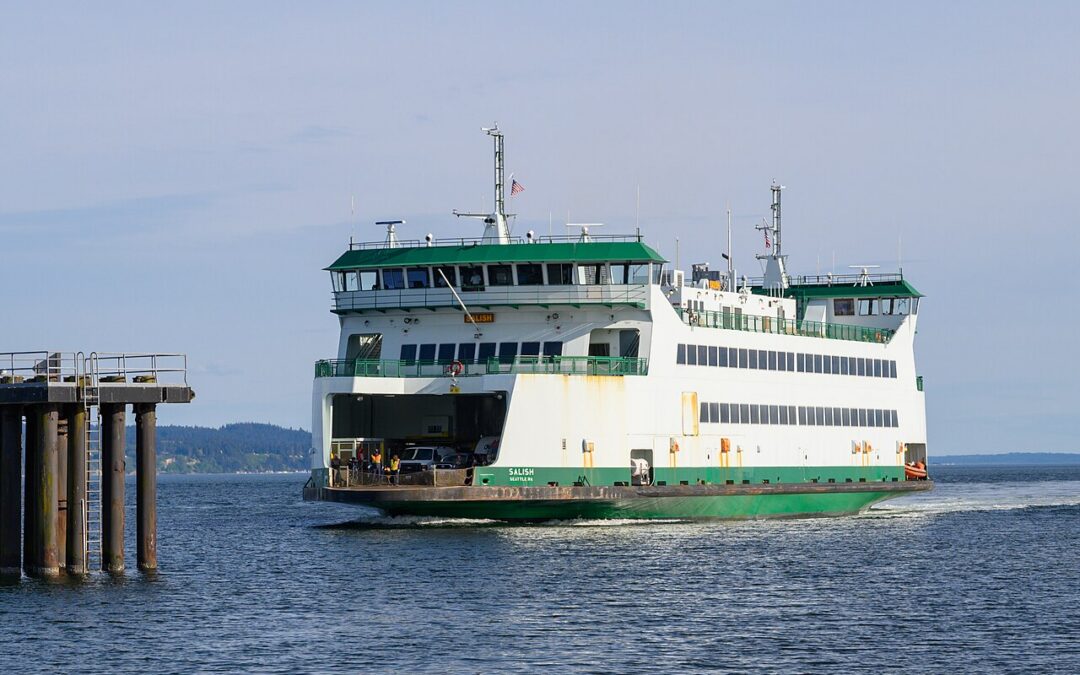
Photo by Gordon Leggett / Wikimedia Commons from Wikimedia Commons
For more of the latest from the expansive government marketplace, check Government Market News daily for new stories, insights and profiles from public sector professionals. Check out our national contracting newsletter here.