Volume 22, Issue 42 - October 25, 2024 | |
|
The historic effort that has been made to upgrade and stabilize America’s infrastructure over the past several years has moved the country into a safer and more resilient state. But there’s more that must be done. The effort is not ending, and new funding has just been announced for America’s power grid infrastructure.
The U.S. Department of Energy will allocate almost $2 billion for 38 projects that will directly focus on hardening the U.S. power grid. The objective of each effort will be to protect against the escalating threats of extreme weather and to increase the grid’s capacity so that the needs of manufacturing, data center operations, electrification and citizen safety are met.
The 38 projects to be funded will span 42 states and the District of Columbia. Six initiatives will be in Florida to help the state recover from the recent damage caused by back-to-back hurricanes. This new funding comes from the Bipartisan Infrastructure Law that was passed by Congress, and a total of $10.5 billion is available for grid stabilization efforts.
The Massachusetts Department of Energy Resources will lead a major grid modernization project that has a projected cost of $888 million. An allocation of $389 million from the federal program will support the project, which is designed to increase the points of interconnection in Massachusetts, Connecticut and Rhode Island to enhance grid resilience. When completed, the project will deliver 4,800 megawatts of offshore wind energy and provide enough clean energy to power 2 million homes. It will also include components that allow for energy storage and grid flexibility. Construction is slated for 2028 due to the time that will be required for permitting and approvals.
A $176 million project in Northern California will be overseen by the Redwood Coast Energy Authority. It will be designed to provide more energy independence and enhance grid resilience for tribal communities. Components of the project will include the construction and installation of advanced microgrids for the distribution circuit that provides electricity to three tribal nations. The microgrids will not only improve grid reliability, but they will also provide stability, efficiency and cost savings.
The project will integrate 20 MW of renewable energy which will be sourced from local solar and hydroelectric power. Construction is slated to begin in 2025, and the project’s completion date is 2030.
Click here for more
| |
After years of delays, Texas Department of Transportation (TxDOT) officials have broken ground on a monumental $13 billion highway improvement project in Houston. The North Houston Highway Improvement Project (NHHIP) will reconstruct Interstate 45 North between the city’s downtown and the North Sam Houston Tollway. The project is estimated to take 18 years to complete.
Houston’s current highway network cannot handle the city’s growing level of traffic demand. City officials estimate that daily traffic volumes will increase by up to 40% along the designated corridor from levels seen in 2015 through 2040. As traffic congestion remains a pressing issue, the NHHIP will help expand roadway capacity to accommodate the city’s growing population, provide a safe evacuation route, enhance mobility, increase safety and meet design standards.
The NHHIP is divided into Segment 1, Segment 2 and Segment 3. The groundbreaking was held to launch the start of construction for Segment 3B-1 in the East Downtown area and 3B-2 in the Midtown and Third Ward areas. This phase of the project will cover 12.3 miles of the city’s highway system.
The first phase will prioritize stormwater management, centering around installing 12-foot box culverts to direct stormwater and enhance flood resilience. TxDOT will spend $121 million to complete Segment 3B-1 by 2027. Work on Segment 3B-2 is set to begin in January 2025, with completion by 2030. The state will invest $695.5 million to build mainlanes, frontage roads and enhanced bike and pedestrian infrastructure along I-69.
TxDOT will spend an additional $5 billion to complete the remaining sections of Segment 3. These other sections will reconstruct portions of the downtown Houston loop system. The projects will involve building bike and pedestrian infrastructure, depressed main lanes, cap structures, arch bridges, realigned roadways and express lanes.
The state will invest approximately $1.6 billion in Segment 2 and $907.2 million in Segment 1. Plans for the NHHIP will include:
- Adding four non-tolled managed lanes from Beltway 8 North to downtown Houston.
- Reconstructing mainlanes and frontage roads.
- Rerouting 1-45 in the downtown area to be parallel with I-10 on the north side and US 59/I-69 on the east side.
- Building downtown connectors to increase access to the west side of the downtown area.
- Realigning both I-10 and US 59/I-69 to remove the current roadway curvature.
- Adding four I-1 express lanes.
- Reconstructing an interchange to improve sight distances on direct connectors and replace outdated left-lane exits.
- Connecting frontage roads with new intersections in Segment 2.
- Building a frontage road lane in each direction in Segment 1.
- Adding full-width shoulders.
- Incorporating bicycle and pedestrian amenities on frontage roads and cross streets.
- Building trails next to bayous.
As of now, Segments 1 and 2 are still involved in community meetings. Construction is not expected to begin for several years.
(Photo courtesy of Agsftw.)
|  | |
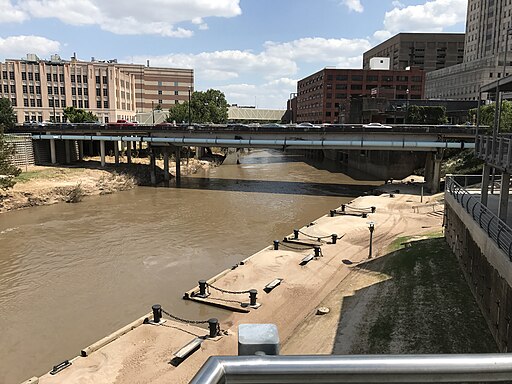
The General Land Office (GLO) will exhaust the remaining program funds from current disaster recovery grants from 2008 to 2019. The office has requested entities across Texas submit infrastructure and housing projects to receive grants before time runs out to allocate them. The Disaster Recovery Reallocation Program (DRRP) call for projects will end Nov. 21, 2024. Eligible entities have until April 3, 2025, to apply.
Over an 11-year span, Texas established six action plans to help communities prepare for and recover from disasters. However, $135 million has not been distributed from these programs. The DRRP enables the GLO to reallocate de-obligated and unutilized funds. The action plans featured in the program include:
- Hurricane Harvey $5.6 billion 2017 - $84.5 million.
- Hurricanes Ike and Dolly 2008 - $20.5 million.
- 2019 Disasters - $14.5 million.
- 2018 South Texas Floods - $6 million.
- 2016 Floods and Storms - $5.5 million.
- 2015 Floods and Storms - $4 million.
Eligible entities include cities, counties, tribes and public housing authorities. The action plans for Hurricanes Ike, Dolly and Harvey have a maximum award of $20 million. The remaining plans have a maximum $2 million award. Each entity can submit up to three projects to receive funds.
Applicants may receive funds for qualifying activities, including improving flood, drainage, water, wastewater and streets. Recipients may also use funds to permanently affix emergency communications equipment and rehabilitate, reconstruct and build affordable multifamily projects. All projects must benefit low- and moderate-income people and address urgent needs.
The DRRP funds come from the Community Development Block Grant Disaster Recovery (CDBG-DR) program. The U.S. Department of Housing and Urban Development (HUD) administers the program to help communities recover from major disasters.
(Photo courtesy of urban.houstonian.)
| |
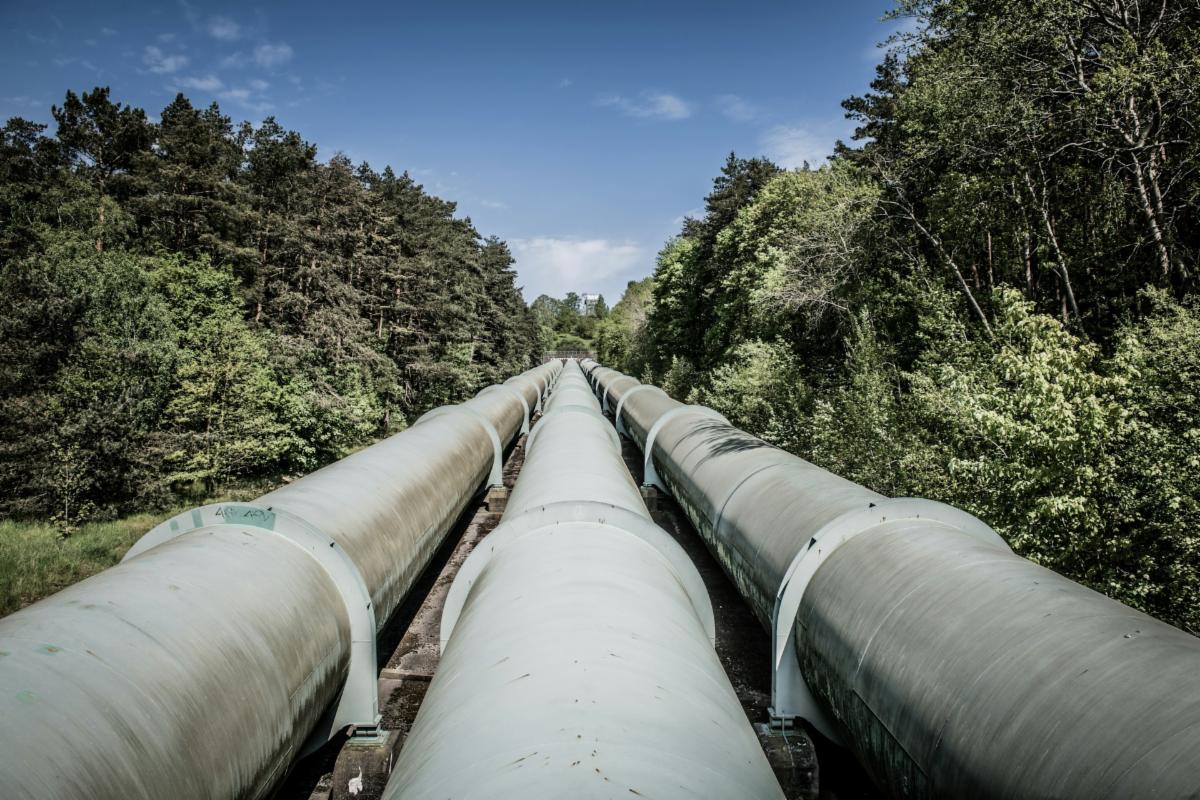
The North Texas Municipal Water District (NTMWD) will invest approximately $1.1 billion in Fiscal Year 2025 to expand and maintain essential services as part of its ongoing capital improvement plan.
The NTMWD Board of Directors approved the water district’s fiscal year 2025 budget of $820 million during a Sept. 26 meeting. The budget includes approximately $435 million in debt service for capital improvements projects.
The district will invest $390 million to ensure a safe, reliable water supply, including multi-year water capacity expansion projects at the Wylie and Leonard Water Treatment Plants.
A total of $447 million will be invested in regional wastewater and smaller sewer systems projects, including $100 million to increase the peak wastewater flow capacity across systems.
Nearly $200 million will be invested to maintain existing critical water infrastructure, including water and wastewater pipelines.
The capital improvement plan includes $40 million to meet state emergency preparedness requirements and maintain operations in the case of an extended power outage.
The water district serves some of the fastest-growing counties in the U.S. with more than 55,000 people moving to the service area annually. This influx of new residents and commercial interests to the North Texas region requires new infrastructure and the maintenance of existing systems to provide essential services such as water, wastewater and solid waste services.
The FY 20205 budget is a 10.3% increase from the previous year. More than 90% of the budget increases will support capital spending.
The NTMWD funds the annual budget through the wholesale rates charged for its services. The district leverages long-term debt to finance most of its capital improvement projects.
(Photo courtesy of Wolfgang Wiser on Unsplash.)
| |
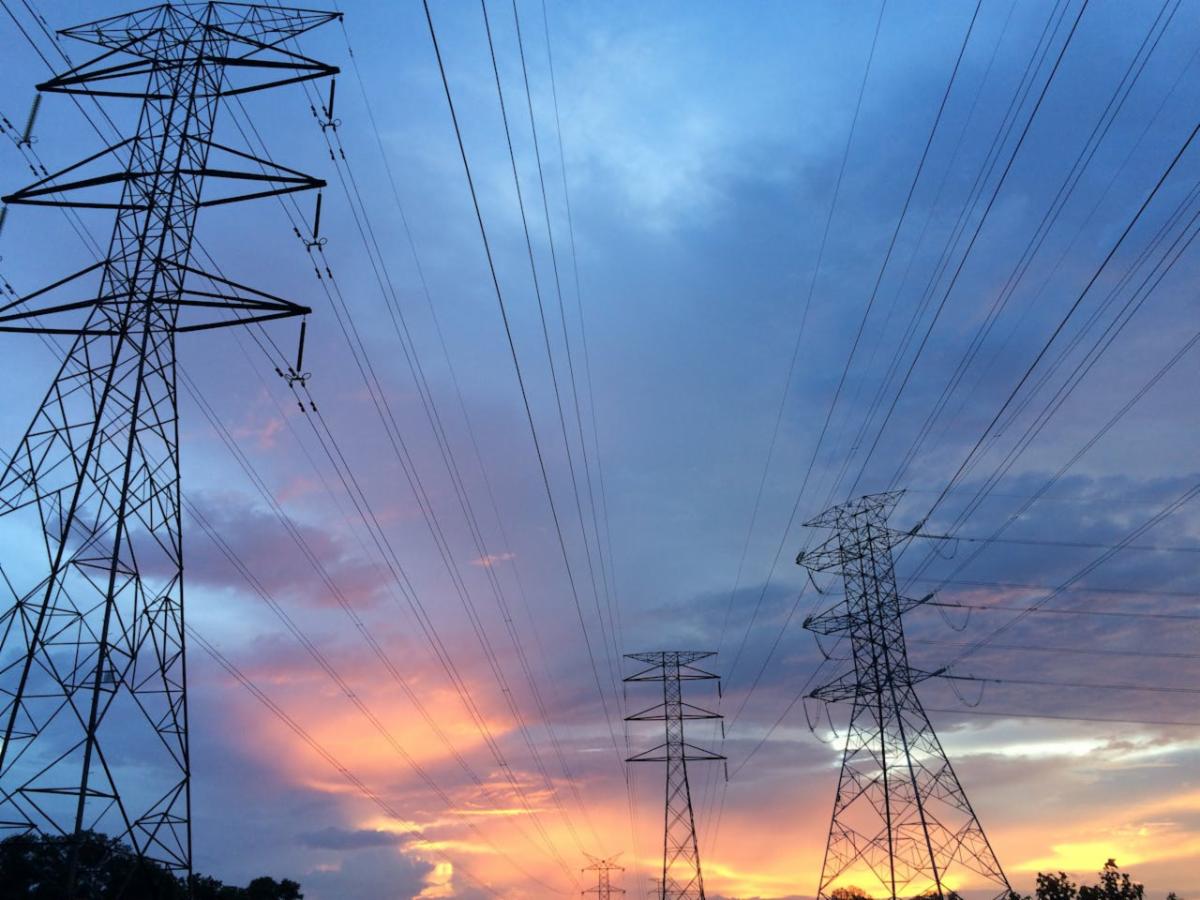
An electric utility company has been chosen to receive $53.8 million from the Department of Energy (DOE) to improve grid resilience for disadvantaged communities in Port Arthur.
The company will fortify critical infrastructure to withstand extreme weather events, including hurricanes and winter storms. These events have historically caused major power disruptions, leaving between thousands and millions without energy for days. Once completed, these Port Arthur communities will be able to maintain reliable power when it's needed most.
The project will harden both distribution and transmission systems to maintain operations during inclement weather. In addition, the company will deploy advanced technologies – such as a 6.2-megawatt (MW), self-healing, battery-enabled microgrid – to ensure the city can support a continuous power supply during outages.
Plans include strengthening 57 transmission structures and hardening or burying 950 distribution structures. These enhancements are anticipated to reduce the duration of power outages by 257 million minutes. In addition, customers may save approximately $74 million over the next five decades due to reduced power interruptions and restoration costs. The company will also install 14 devices to expedite power outage response.
Enhancing Port Arthur’s power distribution infrastructure has wide-ranging benefits for surrounding cities, counties and states. For example, Port Arthur is a critical hub for the liquefied natural gas and petroleum industries. With fewer power disruptions, the city can help prevent large-scale power outages that disrupt national energy distribution. The project will also support infrastructure improvements for a major storm shelter.
The DOE allocated the funds through the Grid Resilience and Innovation Partnerships (GRIP) program. The program helps communities across the nation enhance grid flexibility and power system resilience against extreme weather and climate change. Awarded projects will implement projects to improve power structure resilience, lower costs for communities and increase grid capacity.
The Texas project is one of 39 receiving a portion of the recently awarded $2 billion in GRIP funding. The most recent round will support projects that deploy innovative transmission and distribution infrastructure and technology upgrades. These projects will enable more than 7.5 gigawatts (GW) of grid capacity, accelerate clean energy project interconnection and mitigate damages caused by extreme weather.
(Photo courtesy of Pok Rie on Pexels.)
| |
Gabriel Reaume
City Manager
City of Saginaw
| |
Public career highlights and education: I am a proud Master of Public Administration graduate of the University of North Texas, where I serve on the Public Administration Alumni Advisory Board. I have served the cities of Denton, Sugar Land and Denison in varying capacities. I have served as Saginaw’s city manager since January 2018.
What I like best about my public service is: The people. Public servants have the opportunity to serve as professional “good neighbors” each and every day.
The best advice I've received: Love everyone you meet.
One thing I wish more people knew about the city of Saginaw is: Tremendously important products are made and built in Saginaw, like millions of pounds of wheat flour milled in the city as well as rail cars fabricated to ship goods across the nation.
|  | |
Texas will receive $12.2 million from the Environmental Protection Agency (EPA) to replace older diesel engines with cleaner, zero-emission alternatives.
The state will divide the award among five recipients, supporting the transition to vehicles that run on fuels that emit fewer greenhouse gases (GHG), reduce air pollution and safeguard public health. Entities receiving funds include:
- The Port of Houston Authority will receive $3 million to retrofit eight diesel rubber tire gantry cranes with hybrid diesel-electric motors.
- The North Central Texas Council of Governments (NCTCOG) will use $2.9 million to replace two diesel short-haul trucks with new versions of the same model. In addition, NCTCOG will replace four diesel refuse haulers with four low nitrogen oxides certified utility refuse haulers and one diesel refuse hauler with an all-electric powered utility refuse hauler.
- Fort Bend County will spend $2.9 million to replace 22 diesel heavy-duty, on-road trucks with electric, heavy-duty, on-road trucks.
- The Coalition for Sustainable Initiatives Inc. will receive $2.7 million to replace 57 vehicles with compressed natural gas trucks.
- The Texas Department of Transportation (TxDOT) will use $535,850 to replace six heavy-duty, on-road legacy diesel short-haul dump trucks with modern ultra-low sulfur diesel trucks.
The EPA allocated the funds Diesel Emissions Reduction Act (DERA) National Grants Program. The program directs financial support to remove harmful emissions from diesel engines, protecting human health and improving air quality. Awarded projects will replace outdated equipment and vehicles with zero-emission solutions. Recipients will prioritize distribution to disadvantaged communities disproportionately impacted by poor air quality and GHG emissions.
The Texas projects are a selection out of 70 receiving a portion of the recently awarded $125 million in DERA funding. These projects cover activities including retrofitting or replacing existing diesel engines, vehicles and equipment with certified engine configurations and verified idle reduction technologies. Examples include replacing and upgrading school buses, port equipment, construction equipment, terminal tractors, drayage trucks and providing shore power to marine vessels.
(Photo courtesy of rauschenberger on Pixabay.)
| |
Rice University (RU) and Texas A&M at Galveston (TAMG) are collaborating to develop an AI technology that will improve the safety and resiliency of coastal communities frequently impacted by severe weather events. The developers anticipate adapting the software to service other regions facing similar challenges to better protect residents across the country against climate-driven hazards.
The Open-Source Situational Awareness Framework for Equitable Multi-Hazard Impact Sensing using Responsible AI (OpenSafe.AI) will enhance situational awareness and scenario exploration during inclement weather. The AI framework is designed to sense current conditions and forecast potential hazards and infrastructure impacts. This provides communities with a reliable source of information to remain informed during emergencies.
The software uses AI, hazard and resilience models and multimodal urban data to support both emergency response organizations and communities throughout coastal storm events. It accounts for variables such as high-speed winds, storm surges and compound flooding. That information enables OpenSafe.AI to predict how the conditions affect the built environment, such as where roadway performance has been hampered or where hazardous material spills may be located.
The deployed product will advance ways to detect and overcome systemic bias, scarce information and equity issues in models and data. Underserved coastal communities are often underrepresented in these models, and the lack of resources and real-time data during extreme weather makes decision-making and response difficult.
The project recently received a $1.5 million award from the National Science Foundation (NSF) to support development. Once deployed, OpenSafe.AI will provide practical, real-time data to inform response and recovery actions and overcome dangers imposed by climate change, aging infrastructure and urbanization.
(Photo courtesy of SPC STEVEN L. PHILLIPS, US Army.)
| |
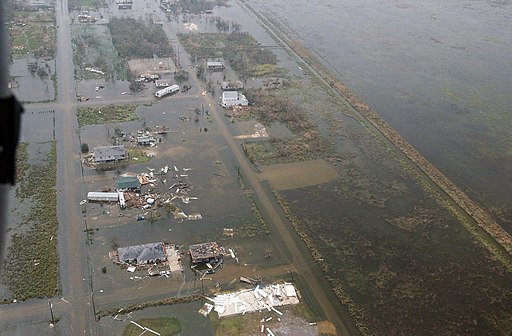
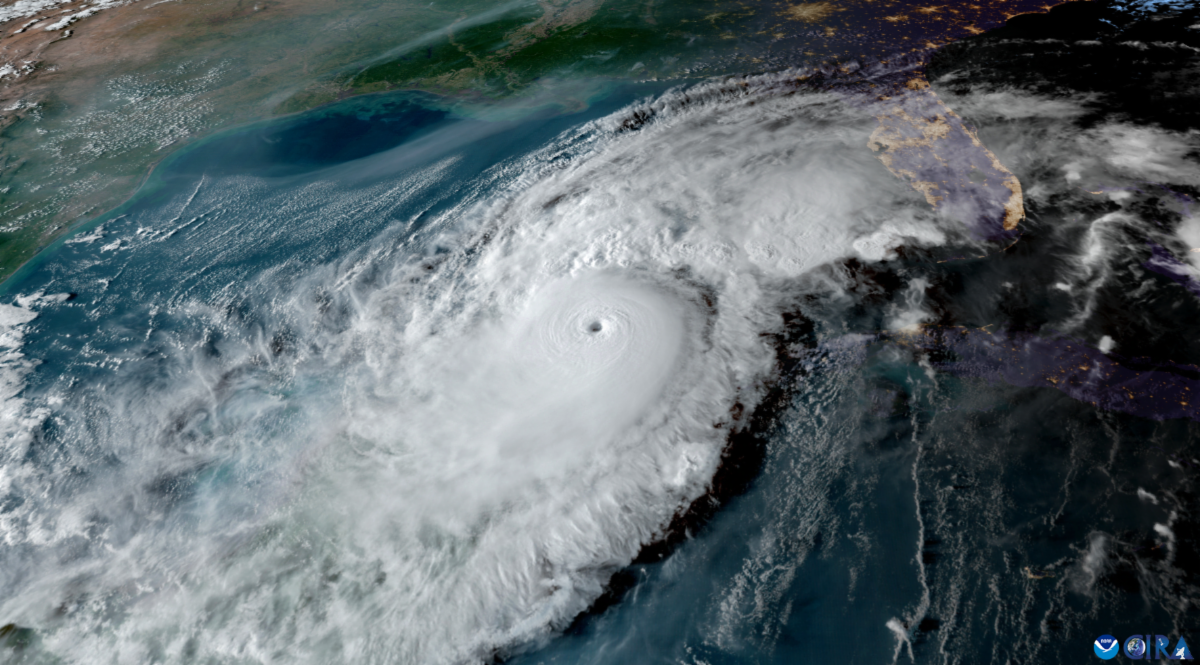
The U.S. Department of Energy (DOE) is announcing $600 million in funding to bolster utility resilience in communities that have been affected by Hurricanes Helene and Milton. The funding will support these communities in their rebuilding efforts and harden electrical infrastructure across several regions of the U.S.
Funding will go to projects that applied for federal support through the Grid Resilience and Innovation Partnerships (GRIP) Program. The $10.5 billion program offers funding opportunities for entities to enhance grid flexibility and power system resilience in light of extreme weather events and climate change’s growing threat. Allocated funding under the Bipartisan Infrastructure Law of 2021, the DOE will oversee the GRIP investment.
Click here to learn more about how the nation will prepare for future extreme weather
(Photo courtesy of NOAA.)
| |
The Federal Aviation Administration (FAA) is announcing $970 million in grants to upgrade airport terminals across the country. With funds spanning 46 states, Guam and Palau, these grants will support airport modernization efforts, reinforce economic growth, spark job creation and improve travel experiences for passengers.
This latest round of funding is part of the $5 billion Airport Terminal Program, established under the Bipartisan Infrastructure Law, that offers funding opportunities to enhance and upgrade airport terminals nationwide.
Click here for more information about airport receiving funds for modernization
(Photo courtesy of Rocker Sta on Unsplash.)
| |  |
 | |
Texas will receive $198.5 million from the Environmental Protection Agency (EPA) to reinforce statewide drinking water infrastructure for Fiscal Year 2025. The Texas Water Development Board will distribute the funds to help replace lead pipes across the state.
The EPA recently approved a final ruling requiring nationwide replacement of legacy lead pipes within the next decade. The agency will also allocate $2.6 billion to support the initiative and state efforts to identify and replace lead pipes.
Texas’ anticipated funding share will predominantly affect communities disproportionately affected by outdated lead pipe infrastructure. The state will allocate 49% of the funds – approximately $97.3 million - to disadvantaged communities as grant funding or principal forgiveness they won’t have to repay. Texas will receive the second-largest apportionment behind California’s $268.6 million share.
Texas will extensively inventory its water system service to identify where lead pipes are located. The updated ruling requires all regulated water systems to continually update their inventories and create a service line replacement plan. These strategies will prioritize replacement depending on which communities have been most heavily impacted by contaminated pipelines. The water systems will make all inventories and plans publicly available.
The final ruling implements best practice changes to improve drinking water sampling requirements. The rule also lowers the threshold enforcing authorities to take action when lead sampling exceeds a certain level of safety. All water systems that have exceeded this level multiple times will need to reduce drinking water lead exposure by adjusting treatment, providing consumers with filters and conducting community outreach.
The EPA is also making $35 million available to help impacted communities reduce lead in drinking water. Applicants can apply for up to $10 million for projects that improve water treatment, replace lead service lines and reduce lead exposure to children in schools and childcare facilities. Participants must submit an application by Dec. 30, 2024. Eligible entities include:
- Community water systems.
- Tribal water systems.
- Non-transient, non-community water systems.
- Nonprofit organizations services public water systems.
- Municipalities.
- State, interstate or intermunicipal agencies.
(Photo courtesy of jasongillman on Pixabay.)
|  | 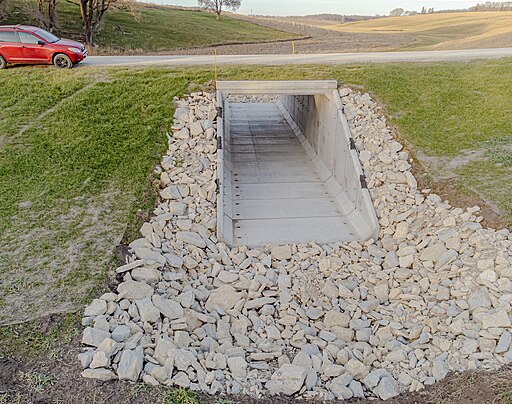 | |
San Antonio will spend $24 million to enhance drainage infrastructure and reconstruct roads as part of its Hazard Mitigation Action Plan. All projects are currently in the design phase, and construction is expected to start in 2025.
The city will spend $11.4 million to update stormwater drainage systems, improve channels and rework associated roadways for the Eisenhauer-Northwood-Devonshire Phase 1A. The roadway's existing conditions have a low water crossing, limited or nonexistent sidewalks and insufficient curbs. The improvements will address the road’s undersized storm system and channel, remove vegetation and replace concrete panels.
The project will install sidewalks on each side of the road with associated curbs and gutters. Plans include installing storm drain inlets and raising the street above the low water crossing. The city will also replace utility lines as needed and reconstruct driveways impacted by roadwork. To improve stormwater drainage, the project will install a box culvert under the channel, plant a grass and artificial turf swale above it and build a connected maintenance ramp with gate.
San Antonio will invest $8.2 million to improve the drainage system and reconstruct the roadway for Phase 4 of the Seeling Drainage project. The road currently suffers from extensive pavement fatigue, drainage problems and outdated pedestrian amenities.
The project will install an underground storm drain system and upgrade utilities in the area. The city will reconstruct and resurface the street and build additional sidewalks on either side of the road with curbs. Plans also include making the street ADA-accessible with wheelchair ramps and rebuilding driveway approaches.
$4.4 million will be allocated to improve channels, replace culverts and adjust roadways for the Brookside Outfall project. The current infrastructure can’t provide enough drainage for the local neighborhood, causing flooding issues and overtopping that affects residences. The project will install 23 box culverts across four locations in the area. The city will also install a 20-foot-, 30-foot- and 40-foot-wide channel at three separate streets.
(Photo courtesy of Wikideas1.)
|  | |
Developers are planning to transform acres of land near Dallas Fort Worth International Airport into a transit-oriented entertainment, retail and housing development situated between Fort Worth and Grand Prairie.
The River Central development will have a 56,000-square-foot concert venue, 140-room hotel and over 1,300 multifamily housing units. The site will also feature retail, restaurants, 120,000 square feet of office space, and 50 acres of open green space and hike and bike trails along three miles of the Trinity River.
Click here to learn about the $2 billion development
(Rendering courtesy of Gensler.)
|  | |
The U.S. Department of Transportation (DOT) is announcing $4.2 billion in funding to advance transportation initiatives around the country. This funding will be used to advance large-scale and complex transportation projects poised to improve the safety, efficiency and reliability of the nation’s roadways, ports and bridges.
The DOT will deliver this round of grants through the National Infrastructure Project Assistance (MEGA) program and the Nationally Significant Multimodal Freight & Highway Projects (INFRA) programs. Designed to fund large transportation projects, the two programs will support multimodal transportation initiatives throughout the nation.
Click here for more information about the MEGA and INFRA awards
(Photo courtesy of Denys Nevozhai on Unsplash.)
| |
The city of Weatherford has officially appointed Chad Marbut as assistant city manager. Marbut most recently served as the city’s director of public works since 2022. He has been with the city for nearly a decade, also serving as director of capital projects and a civil engineer.
| |
On Oct. 21, Kenneth Fraga, Ed.D., assumed his responsibilities as superintendent of the Onalaska Independent School District (ISD). Dr. Fraga most recently served as assistant superintendent of Onalaska ISD since 2022. Over the course of his 18-year-long career in education, Dr. Fraga has served as a principal, assistant principal and teacher.
| |
The Hudson City Council has appointed Rodney McCarty to take over as city administrator. McCarty has been with the city since 2002, most recently serving as public works director. He replaced James Freeman on Sept. 23, 2024.
| |
Rae Ann Patty has been selected as superintendent of the Gladewater Independent School District (ISD). Patty currently serves as superintendent of Waskom ISD. She has been in the education sector for 28 years, serving as principal, assistant principal, curriculum coordinator, superintendent and assistant superintendent. Her first day will be Dec. 2, 2024.
| |
Gov. Greg Abbott announced these appointments and reappointments from Oct. 18 through Oct. 24:
Advisory Council On Emergency Medical Services
Donald “Donny” Booth - Andrews
(all reappointed)
Sharon Malone, M.D. - Van Alstyne
Taylor Ratcliff, M.D. - Belton
Shawn Salter - Bullard
Alan Tyroch, M.D. - El Paso
Cameron County Regional Mobility Authority
Frank Parker, Jr. - Brownsville (reappointed)
Lavaca-Navidad River Authority Board Of Directors
Bryan Churan - Palacios
| |
Texas Government Insider is a free weekly newsletter detailing important happenings throughout the state and summarizing current political issues relevant to individuals interested in government.
Publisher: Mary Scott Nabers
Editors:
Adam Rollins
Dave Doolittle
| | |
| |
| |
|
|
Check out our
social media links!
|
|
Help us share this message.
To ensure delivery and proper formatting of the newsletter, be sure to add editor@spartnerships.com to your safe senders list. Otherwise, the newsletter may be flagged as spam and automatically routed to your junk e-mail folder.
| | | | |