 This week Senate lawmakers called for total defense spending in fiscal 2018, which begins Oct. 1, of $700 billion. A total of $696.5 billion was proposed by the House committee Monday, which was approved by the House Appropriations Committee Thursday. This week Senate lawmakers called for total defense spending in fiscal 2018, which begins Oct. 1, of $700 billion. A total of $696.5 billion was proposed by the House committee Monday, which was approved by the House Appropriations Committee Thursday.
The Senate committee's summary of the bill stated that it backed a $640 billion base budget for the Defense Department and the national security programs of the Energy Department. The bill would also authorized $60 billion for Overseas Contingency Operations to fund operations in Iraq, Syria and Afghanistan.
The House committee's summary of the bill stated that it backed a defense budget of $631.5 billion with an additional $65 billion to fund current wars in the Overseas Contingency Operations account.
The actual defense budget cap imposed by the Budget Control Act (BCA) for 2018 is $549 billion. The BCA of 2011 was signed into law five years ago on Aug. 2, 2011. The BCA reinstates budget caps for a 10-year period ending in fiscal year 2021 with separate caps for the defense and nondefense parts of the discretionary budget.
The House and Senate will need to make a final decision on the defense budget before the September deadline to avoid a sequestration, which last took place in 2013. This isn't the only way officials are looking at cuts to the armed forces. In 2016, Pentagon officials released a report to Congress on the need for another Base Realignment and Closure (BRAC). The report stated that the Army's excess capacity is 33 percent, the Air Force's is 32 percent, the Defense Logistics Agency's is 12 percent and the Navy's is 7 percent.
Click here for more
|
 |

|
Houston mayor considers $538M bond election
 The mayor of Houston is pondering asking voters to approve $538 million in bonds in November to pay for upgrades to parks, community centers, libraries, health clinics, police stations and fire stations. A political action committee, Lift Up Houston, was created to support the November bond vote, but names the amount of the proposed bond as $490 million. The city's five-year Capital Improvement Plan calls for $538 million to improve city facilities and build more hike and bike trails, with plans to use bond funds to pay for most of the capital improvement projects, but to also use tax revenue and private contributions to help fund some of the capital projects. The mayor of Houston is pondering asking voters to approve $538 million in bonds in November to pay for upgrades to parks, community centers, libraries, health clinics, police stations and fire stations. A political action committee, Lift Up Houston, was created to support the November bond vote, but names the amount of the proposed bond as $490 million. The city's five-year Capital Improvement Plan calls for $538 million to improve city facilities and build more hike and bike trails, with plans to use bond funds to pay for most of the capital improvement projects, but to also use tax revenue and private contributions to help fund some of the capital projects.
City officials also plan to use revenue from user fees to pay for $6.7 billion in projects to upgrade the airport and utilities, said Kelly Dowe, the finance director for the city. One of the largest projects for the bond proposal is building a $47 million multi-purpose facility in Alief with construction to begin in about two years, if voters approve the bond. Another major project proposed for the bond ballot if expanding Moody Library to 12,000 square feet and replacing the structure built in 1969 at a cost of about $9.5 million for design and construction to begin in 2018. Council members are currently prioritizing capital projects to decide which to include in a November bond election and will decide later this summer whether to schedule a bond election this year.
|
Amarillo group approves lease agreement for $45M venue
The Amarillo Local Government Corp. approved a lease agreement with a developer for a proposed $45 million downtown multi--purpose event venue with a goal of attracting a minor league baseball team to the area. The proposed redevelopment project also includes a hotel, retail establishments and a new headquarters for an energy company, according to Deputy City Manager Bob Cowell.
The agreement specifies that the stadium should be in operation by April 2019 and permits city officials to pay for $2.6 million in design plans as the contract stipulates that the sports group will pay for all costs incurred if the city and sports group fail to agree on terms of the lease, Cowell said. The company designing the new sports venue previously designed Marlin Park in Miami, Petco Park in San Diego and the Security Bank Ballpark in Midland. To meet the timeline, the city plans to begin immediately on related projects, such as relocating water and storm sewer lines as construction on the new event venue is expected to begin in January 2018. City officials expect to issue a proposal soon to hire a construction manager to help in completing the design of the new multi-purpose facility.
|
Bastrop County allots $2M for emergency management center
 Bastrop County Commissioners agreed to spend $2 million to buy an existing, 18,000-square-foot building in a business and industrial park easily accessible from State Highway 71 and State Highway 95. County officials plan to use part of $10 million in certification of obligation bonds issued in May to purchase the one-story office building. They plan to spend about $7.5 million of the remaining bond funds to build a communications building. Those funds include $500,000 for design and engineering and $5 million to renovate the building after the purchase is finalized at the end of July. Bastrop County Commissioners agreed to spend $2 million to buy an existing, 18,000-square-foot building in a business and industrial park easily accessible from State Highway 71 and State Highway 95. County officials plan to use part of $10 million in certification of obligation bonds issued in May to purchase the one-story office building. They plan to spend about $7.5 million of the remaining bond funds to build a communications building. Those funds include $500,000 for design and engineering and $5 million to renovate the building after the purchase is finalized at the end of July.
Part of the renovations are installing a 175-foot radio tower to allow 911 dispatch to communicate with fire, emergency medical services and police throughout the county. The communications department is now located in the county jail and the Office of Emergency Management operates from a building on Loop 150. The county's information technology department also will relocate to the new emergency management complex. Current plans are to begin construction on the new communications building and renovations to the existing building in July 2018 and complete the project within a year.
|
Lubbock County discusses funding for new outer loop, other upgrades
 Texas Department of Transportation (TxDOT) representatives and Lubbock County Commissioners began discussions on the best way to fund Lubbock County's share of the project to extend Loop 88 to the south and to the west. The county and the city of Lubbock are responsible for paying an estimated $7.25 million each, or 10 percent of the cost of right-of-way acquired for the loop that will follow Farm-to-Market Road 1585 from U.S. Highway 62 near Wolfforth to U.S. 87. Texas Department of Transportation (TxDOT) representatives and Lubbock County Commissioners began discussions on the best way to fund Lubbock County's share of the project to extend Loop 88 to the south and to the west. The county and the city of Lubbock are responsible for paying an estimated $7.25 million each, or 10 percent of the cost of right-of-way acquired for the loop that will follow Farm-to-Market Road 1585 from U.S. Highway 62 near Wolfforth to U.S. 87.
The goal is to begin construction on Loop 88 in October 2019 and complete purchase of the right-of-way prior to beginning construction of the proposed four-lane, divided highway, said Kylan Francis, an engineer with TxDOT. That gives county officials about four months to secure a funding source. County officials are considering seeking a low-interest loan from the state infrastructure bank, as did city officials, or using about $3 million in county funds already saved and set up as a payment schedule with TxDOT. Commissioners also discussed the need to widen Woodrow Road as more traffic will be using it when work on Loop 88 begins. That project is estimated to cost between $20 million and $30 million, which could be paid for through a state loan or possible bond election.
|
$98M budgeted for road improvements in Smith County
 Smith County Commissioners plan to hold a series of public hearings to help prioritize nearly $98 million in road improvements identified in a 2015 study of the condition of 1,904 roads maintained by the county. Smith County Commissioners plan to hold a series of public hearings to help prioritize nearly $98 million in road improvements identified in a 2015 study of the condition of 1,904 roads maintained by the county.
The study and a later evaluation of county roads by county employees indicate that 38 percent of residential and rural roads are in poor condition and would cost about $54.5 million to bring into good or excellent condition, according to County Engineer Frank Davis. Of the 117 collectors roads that connect with the rural roads, 29 percent are in poor condition and would cost about $30.7 million to upgrade, according to the study. About 29 percent of the 49 arterial roads that tie into state roads are in poor condition and would cost about $12.8 million to improve, bringing the total to about $97.9 million to upgrade all roads in the county rated as in poor condition.
Commissioners have scheduled three open houses, two in Tyler and one in Lindale, during July and August in addition to requesting residents to provide their opinions and suggestions on proposed road improvements by responding to an e-form found on the county's web site at www.smith-county.com. Citizen feedback along with information from the 2015 Road and Bridge Inventory Analysis and the evaluation by public works employees will be used by commissioners to decide and vote on the road improvement projects to be funded and included in the new Strategic Road and Bridge plan.
|
Capital Metro initiates study on bus transport on I35
 Capital Metro board of directors agreed to initiate a study on whether using buses with priority transit on Interstate 35 in Travis County or installing light rail for high capacity transit would be the best solution to improve mobility in the Austin metropolitan area. Capital Metro board of directors agreed to initiate a study on whether using buses with priority transit on Interstate 35 in Travis County or installing light rail for high capacity transit would be the best solution to improve mobility in the Austin metropolitan area.
The study is part of Project Connect, which began again in March 2016 after Austin voters rejected a bond proposal to add light rail in downtown Austin. As part of its early efforts, the Project Connect program instituted bus service to Round Rock and Georgetown in Williamson County to increase mobility. The renewed efforts will focus on adding bus service to I-35 on a new set of lanes planned by the Texas Department of Transportation as part of its $4 billion plan to improve mobility on the busy interstate that cuts through the downtown area. The plan could involve riders accessing buses from stations on I-35 using pedestrian bridges or elevators to reach the elevated stations that would be located from Tech Ridge in the north to State Highway 45, south of the downtown area, noted Todd Hemingson, vice president of strategic planning and development for Capital Metro.
The next goal is to create a system to designate corridors that might receive priority treatments and circulator routes, Hemingson said. Project Corridor also may explore the possibility of building a second MetroRail line to Manor and Elgin, using existing tracks owned by Capital Metro, but population growth would be needed to create the density needed to operate a second rail line, he added. Capital Metro currently operates a commuter rail line from north of the city to the downtown area.
|
Strategic Partnerships salutes Texas' Lone Stars
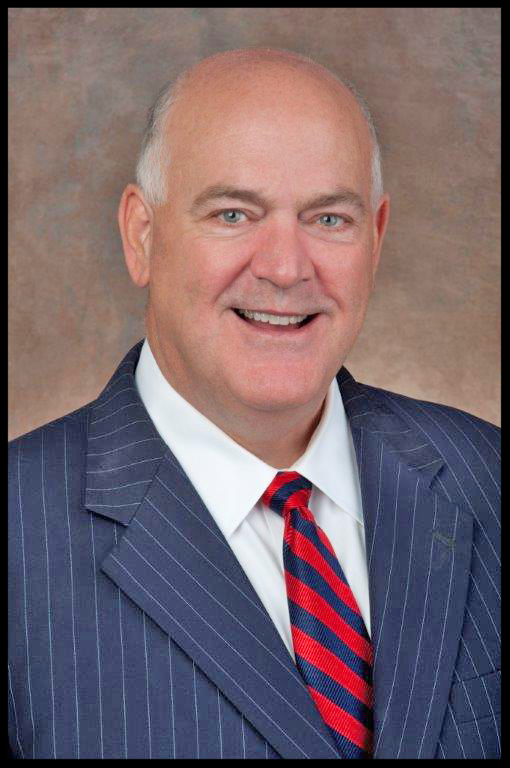
Jim Yarbrough, Mayor, City of Galveston
 |
| | Jim Yarbrough |
Career highlights and education: I am a proud Longhorn with a steep history in the public arena. Having started my political career in 1990 where I served on the GISD School Board, I was elected to serve as the Galveston County Judge in 1995. As a graduate of Ball High School here on the Island, I feel I have been able to bring a good mix of institutional knowledge as well as government background to my tenure as Mayor.
What I like best about my job is: For years, I sat on the sidelines and watched the potential that the Island has lost in the political shuffle. The thing I like best about this job is watching long time dreams of progress become a reality that will be here for generations to come.
The best advice I've received for my current job is: Don't let the past hold you back from the future. Galveston is a city rich in history and blessed with diversity. My predecessors have paved the road we are on today, learning from their challenges and focusing on our core mission is what has inspired the path forward for us.
Advice you would give a new hire in your office: Raise your expectations and you will see staff work to achieve it.
If I ever left work early, I could probably be found: On my ranch in Schulenburg. It's my home away from home and a nice escape when I want to unplug for the weekend.
People would be surprised to know that: Never wanted to be in politics. For years I was in the banking business and a contract management consultant, a background that I still use today. It was by happenstance, and a position on the School Board that the opportunity to run for County Judge presented itself.
One thing I wish more people knew about my city: Galveston is not like any other city you will ever visit. The revitalization that is occurring on the Island is noticeable on every front. From improved infrastructure, to the efforts being made with arts and historic preservation, to the resiliency of the people of Galveston, you wouldn't recognize us if you haven't visited since Hurricane Ike in 2008.
|
Texas Facilities Commission considers street closures to expand Capitol Complex
 The Texas Facilities Commission is considering a plan to create a pedestrian mall that will be located between Martin Luther King, Jr. Blvd. and 15th Street in downtown Austin. The plan to create a campus-style mall is included in the first phase of the 2016 Capital Complex Master Plan. State officials previously requested that Austin city officials waive $7 million in fees for easements and right-of-way usage for the proposed $581 million project that calls for building new office buildings in the capitol complex in order to consolidate state agencies that are now scattered throughout the city in leased space, according to the executive summary of the master plan. The Texas Facilities Commission is considering a plan to create a pedestrian mall that will be located between Martin Luther King, Jr. Blvd. and 15th Street in downtown Austin. The plan to create a campus-style mall is included in the first phase of the 2016 Capital Complex Master Plan. State officials previously requested that Austin city officials waive $7 million in fees for easements and right-of-way usage for the proposed $581 million project that calls for building new office buildings in the capitol complex in order to consolidate state agencies that are now scattered throughout the city in leased space, according to the executive summary of the master plan.
About 5,000 state employees are housed in 22 leased facilities located throughout the city. Consolidating these employees would provide modern and efficient office environments, improve operation efficiencies and benefit those who wish access to state agencies by having them in close proximity, according to the master plan. The first phase calls for adding three blocks of mall landscaping and streetscaping, 4,840 parking spaces, most likely under the mall, and infrastructure upgrades to allow the construction of buildings.
|
Pleasanton city manager supports new water well and system upgrades
 Pleasanton City Manager Johnny Huizar urged city council members to consider replacing the city's 20-year-old water well, add more ground storage and upgrade pump stations to improve its water and sewer system when adopting the city budget for 2017-2018. The existing well is receiving its last repair as is reaching the end of its life expectancy, according to Public Works Director David Alviso. Pleasanton City Manager Johnny Huizar urged city council members to consider replacing the city's 20-year-old water well, add more ground storage and upgrade pump stations to improve its water and sewer system when adopting the city budget for 2017-2018. The existing well is receiving its last repair as is reaching the end of its life expectancy, according to Public Works Director David Alviso.
Alviso recommended replacing water mains, fire hydrants and valves in addition to building a new 250,000 gallon ground storage facility at the Crestline water well site, replace valves and fire hydrants throughout the system and sandblast and paint the inside of ground storage tanks to address deteriorating water system infrastructure. The city manager and public works director also asked council members to approve a feasibility study to expand and upgrade the wastewater treatment plan, begin the design phase for a lift station and sewer at the wastewater treatment plant and continue manhole rehabilitation and replacement programs.
|
Austin group provides recommendations for downtown parking
 The Downtown Austin Alliance outlined results of a year-long study of downtown parking with 19 recommendations to tackle parking problems from both the demand and the supply side. The recommendations, unveiled in a 79-page study to members of the Mobility Committee, range from adding to the parking supply as well as reducing demand. The downtown area has 6,405 on-street parking spaces, 71,504 parking spaces in public and private garage facilities and parking lots. The Downtown Austin Alliance outlined results of a year-long study of downtown parking with 19 recommendations to tackle parking problems from both the demand and the supply side. The recommendations, unveiled in a 79-page study to members of the Mobility Committee, range from adding to the parking supply as well as reducing demand. The downtown area has 6,405 on-street parking spaces, 71,504 parking spaces in public and private garage facilities and parking lots.
Around 12,000 residents, people who work downtown, tourists, shoppers, those seeking nightlife and patrons of restaurants compete daily for those spaces. This causes peaks and ebbs at different times, according to the study. Among the recommendations are instituting a pilot program in which the city or another entity manages private parking and public parking; work with stakeholders to streamline parking technology platforms; identify any shared parking agreements that could be made with private owners of parking facilities; increase enforcement; and, implement higher parking rates and new regulations.
|
Jersey Village seeking public input on flood prevention study
Jersey Village City Council members are seeking public feedback on an almost-completed flood prevention study that offers four options for flood control projects, along with cost estimates and a timeline for each option. Citizens can provide feedback on the city's web site through July 12 and the final recommendations will be presented to council members on July 17.
The first option is a $4.6 million plan to make channel improvements along White Oak Bayou within the city limits that would reduce flooding in the city. The Harris County Flood Control District would oversee the project that will depend on federal funding which seems to have stalled. The second option is to modify Jersey Meadow Golf Course at a cost of about $750,000. The plan calls for creating earth berms around the course to retain more water that could be released after flood levels are reduced. The study urges city officials to pursue the golf course modification before tackling street drainage problems.
Increasing the size of storm sewer pipes and increasing the number of inlets to streets and sewers, along with improvements to the bayou and golf course, would help remove 62 homes from the 100-year floodplain. Funding would total $2 million for sewer upgrades and $3.75 million to improve drainage on streets on a timeline decided by city officials, according to the study. The fourth option, estimated to cost between $10.5 million and $11.5 million, calls for 58 elevations with no buy-outs and 32 elevations and 26 buyouts for the more expensive option. The study urged city officials to work with the Federal Emergency Management Agency on nonstructural solutions to flooding concerns. .
|
Amarillo holds public meeting on the future of senior citizen centers
 Amarillo city officials hosted a meeting with interested senior citizens as part of a study by a consultant on the future of senior citizen centers. The six-month study will explore what other cities are doing to address the needs of older citizens and interviewing local residents on the type of senior center activities they support. Amarillo city officials hosted a meeting with interested senior citizens as part of a study by a consultant on the future of senior citizen centers. The six-month study will explore what other cities are doing to address the needs of older citizens and interviewing local residents on the type of senior center activities they support.
Three senior citizens center now operate in the city, including the Amarillo Senior Citizens Association that meets at Amarillo College, the Hilltop Senior Citizens Association in the northern area of the city and the Wesley Community Center, which is operated by a church. These centers attract about 400 senior daily, mostly in their 70s, who are offered a mid-day meal as well as activities such sewing, line dancing, games and socializing. Most of the centers, however, have asked the city for more financial help to continue offering and improving services as private financial support has decreased.
While more traditional senior citizen seniors have focused on traditional types of activities such as arts and crafts, more senior centers are being developed that also serve as wellness centers with fitness rooms as well as, emotional, spiritual, intellectual and environmental programs to attract younger seniors, the consultant noted. Some of the centers that focus on lifelong learning are affiliated with colleges, school districts and local organizations and are funded by fees paid by those attending. More public meetings and town halls are scheduled throughout the summer to gather information for the study, which should be presented to city council members in January 2018.
|
|

|
|
|
|
By Mary Scott Nabers, CEO of Strategic Partnerships, Inc.

Who owns the public infrastructure assets in the U.S.? If your answer was - the federal government - you would be wrong.
There's lots of talk about infrastructure today and both parties in Congress are advocating for the funding, incentives and support that will be required to repair and expand the nation's crumbling infrastructure. But, interestingly enough, the Bureau of Economic Analysis (BEA) says the majority of the country's infrastructure is not owned by the federal government. Most of the country's infrastructure assets are owned by state and local governments. That is where about 87 percent ownership is held. The federal government can claim only 13 percent ownership. And interestingly enough, one recent research report from the Cato Institute proclaims that state and local governments and the private sector have funded almost 94 percent of the country's infrastructure. That claim, however, begs the question of what is included in the category of infrastructure. Most economists content that infrastructure covers all public assets, but a few also include privately owned assets such as electric utilities. Whatever assets are included when referring to infrastructure, there is almost universal agreement that elected officials, taxpayers and citizens must focus on rebuilding and expanding the country's infrastructure.
|
Brownsville ISD allots $100M to fund facility, maintenance projects
 Brownsville Independent School District board members approved an increase in its tax rate to pay for facility and maintenance projects expected to cost an estimated $100 million over the next five years. Brownsville Independent School District board members approved an increase in its tax rate to pay for facility and maintenance projects expected to cost an estimated $100 million over the next five years.
The capital improvement projects include the first phase of a new performing arts center, a new gymnasium at a high school, improving access for the disabled at a football stadium, and replacing roofing, heating, air conditioning and lighting at schools throughout the district. Trustees also plan to expand the pre-kindergarten program as part of the capital improvements. A finalized list of approved capital improvement projects will be released soon.
|
Celina agrees to help fund $23M in upgrades to Frontier Parkway
 After three years of discussion, the Celina City Council agreed to pay from $2 million to $3 million toward a $23 million bridge on Frontier Parkway that is located in the neighboring city of Prosper. Celina city officials previously opposed building a bridge or overpass on Frontier parkway, also known as Farm to Market Road 1461 that links the two cities because it is located within the city limits of Prosper. After three years of discussion, the Celina City Council agreed to pay from $2 million to $3 million toward a $23 million bridge on Frontier Parkway that is located in the neighboring city of Prosper. Celina city officials previously opposed building a bridge or overpass on Frontier parkway, also known as Farm to Market Road 1461 that links the two cities because it is located within the city limits of Prosper.
North Central Texas Council of Governments and Prosper officials, however, determined the grade separation is needed to ensure safety for vehicles from both cities and approved the bridge project. City officials have not decided on how to fund the bridge project that is expected to begin in 2020, but are exploring the possibility of using grant funding from development agreements rather than selling bonds to pay for the new bridge that connects the two communities, the mayor of Celina said.
|
Hutchison nominated as ambassador to NATO
|
| | |
Kay Bailey Hutchison
| |
President Donald Trump has nominated former U.S. Sen. Kay Bailey Hutchison to be his ambassador to the North Atlantic Treaty Organization (NATO). Trump made the nomination of Hutchison official on Thursday, following weeks of speculation that she was the leading contender.
In 1993, Hutchison became the first woman to represent Texas on the senate and remained in that position through 2013. In February 2013, Hutchison joined a prominent law firm as senior counsel. She is a graduate of The University of Texas at Austin and earned an L.L.B. from The University of Texas School of Law.
|

|
Legislators approve $8.4M to rebuild dam at Bastrop State Park
The Texas Legislature approved $8.4 million in state funding to rebuild a dam and roads at Bastrop State Park that were destroyed in a flood in May 2015. The funding is part of the $48.5 million legislators approved to repair seven state parks heavily damaged by floods and fires since 2011. Construction on the new dam will restore a lake that was once a popular feature at Bastrop State Park. The lake could be ready for visitors as early as next year as engineering work on the dam has already begun, said the park superintendent, Jamie Creacy.
The dam should be completed by 2020, he added. An 8-mile running trail at the park that was closed after the wildfire in 2011 is expected to reopen by the end of this summer, he said. Other state parks that received a portion of the total $48.5 million in funding for weather-related repairs include Cedar Hill, Ray Roberts, Lake Somerville, Stephen F. Austin, Lake Whitney and Mother Neff state parks.
|
Fort Worth ISD superintendent proposes new elementary campus
 Superintendent Kent Scribner of Fort Worth Independent School District urged board members to build a new campus for kindergarten through fifth grade students and improve the existing campus of Tanglewood Elementary School to ease overcrowding. Superintendent Kent Scribner of Fort Worth Independent School District urged board members to build a new campus for kindergarten through fifth grade students and improve the existing campus of Tanglewood Elementary School to ease overcrowding.
The new campus should be built within the attendance zone of Tanglewood Elementary and reflect the same culture and commitment as the campus that was built in 1960 and was located near Texas Christian University, Scribner said about a new districtwide facilities master plan he expects to soon present to trustees. Currently the school, which was designed for 584 students, has 870 students enrolled by using seven portable buildings, but parents have complained about the limited access students have to the library and long lunch lines, he said.
|
 The offices of Strategic Partnerships, Inc. will be closed on Monday, July 3 and Tuesday, July 4, in observance of Independence Day. The offices of Strategic Partnerships, Inc. will be closed on Monday, July 3 and Tuesday, July 4, in observance of Independence Day.
Our offices will reopen at 8:30 a.m. on Wednesday, July 5. Have a safe and happy 4th of July.
|
Victoria County hospital board approves $8.2M upgrade
Board members of Citizens Medical Center, the county hospital in Victoria, approved a $156 million annual budget that includes $8.2 million in capital improvements in the fiscal year beginning in July.
Among the upgrades approved are to expand the neo-natal care unit, upgrade labs and food service area and purchase new monitoring equipment, said Duane Woods, the chief financial officer of the medical center. The upgrades also include renovations to patient floors and the purchase of a hyperbaric oxygen therapy chamber, Woods said.
|
Travis County approves study of historic Palm School
 Travis County Commissioners approved a budget amendment that allows spending as much as $140,964 to pay for a historical assessment of the Palm School building, located near downtown Austin. The study, which includes a $15,000 laser survey, should be able to determine which sections of the county-owned building located at Interstate 35 and Cesar Chavez Street are original and what was added on since it was built in the late 1800s, according to Mark Gilbert of the Planning and Budget office. Travis County Commissioners approved a budget amendment that allows spending as much as $140,964 to pay for a historical assessment of the Palm School building, located near downtown Austin. The study, which includes a $15,000 laser survey, should be able to determine which sections of the county-owned building located at Interstate 35 and Cesar Chavez Street are original and what was added on since it was built in the late 1800s, according to Mark Gilbert of the Planning and Budget office.
Feedback provided by one commissioner was an objection to the expense if the county intended to donate the building and land to become a museum as supported by those wishing to preserve culture. The county judge said county officials have not yet made a determination on what to do with the property. County staff members plan to draft a request for proposals from developers on their ideas for using the highly desirable property to provide commissioners with a baseline of information about the property.
|

|
Hale County agrees to join Plainview to fund airport study
Hale County Commissioners agreed to join with the city of Plainview to pay for a $63,800 study to help decide the next step in bringing all of the Plainview/Hale County Airport under public ownership. Currently, the hangars and terminal office buildings are owned by a private company after being constructed over the years by previous fixed base operators at the airport.
To be eligible in the future for more state and federal grants, however, all fixed assets of the airport must be publicly owned, according to Jeffrey Snyder, the city manager of Plainview. The Plainview City Council also is expected to vote on approval of the study of airport management, he said. City and county officials could expect to receive about $150,000 over four years in grant funding from the aviation program of the Texas Department of Transportation.
|
Amarillo ISD unveils plans to build new tennis centers
 Amarillo Independent School District board officials are planning to build two new eight-court tennis centers to replace existing tennis courts at Caprock and Palo Duro high schools. The new courts will replace six existing tennis courts with cracked surfaces, drainage issues and a shortage of space for athletes and fans, said Brent Hoover, chief operations officer for the district. The proposed $3.2 million tennis center at Caprock High School will include dressing rooms, coaches' offices and court lighting. Amarillo Independent School District board officials are planning to build two new eight-court tennis centers to replace existing tennis courts at Caprock and Palo Duro high schools. The new courts will replace six existing tennis courts with cracked surfaces, drainage issues and a shortage of space for athletes and fans, said Brent Hoover, chief operations officer for the district. The proposed $3.2 million tennis center at Caprock High School will include dressing rooms, coaches' offices and court lighting.
The layout is similar to an eight-court complex built at a middle school in 2014 that is used by tennis programs at Amarillo High School and another tennis complex built at a middle school in 2016 that is used by Tascosa High School, Hoover said. As district officials are still negotiating on land for the new tennis complex at Palo Duro, no cost estimate is available yet for that project. Board members, however, voted to purchase 2.6 acres of land near Palo Duro.
|
City of Dickinson temporarily replaces city manager position
The Dickinson city council on Tuesday terminated City Administrator Julie Robinson and named Police Chief Ron Morales as her interim replacement.
The council also approved entering into negotiations on a severance package for Robinson, who assumed her post in March 2007. Morales' first day as interim city administrator was Wednesday. He has been Dickinson's police chief since October 1996 and will continue in that post.
|
Gutierrez chosen as superintendent at Seguin ISD
|
| | |
Matthew Gutierrez
| |
Matthew Gutierrez won selection as the lone finalist for superintendent at Seguin Independent School District.
Currently an assistant superintendent at Plano ISD, Gutierrez also was interim superintendent and the assistant superintendent at Little Elm ISD. Gutierrez earned a bachelor's degree from Angelo State University, a master's degree from Schreiner University and an Ed.D. from Texas Tech University.
|
|
Dozens of public-sector jobs are available. New jobs added this week:
|
 Check out these story headlines of the week on our website
|
|
View our other newsletter,
|
Help us share this message.
To ensure delivery and proper formatting of the newsletter, be sure to add editor@spartnerships.com to your safe senders list. Otherwise, the newsletter may be flagged as spam and automatically routed to your junk e-mail folder
|
Texas Government Insider is a free weekly newsletter detailing important happenings throughout the state and summarizing current political issues relevant to individuals interested in government.
Publisher: Mary Scott Nabers
Editor: Kristin Gordon
TGI is published by Strategic Partnerships, Inc. (SPI), a research and consulting firm. Founded in Texas in 1995 by former government executives and public sector experts, SPI has developed a national reputation as the premier marketing partner dedicated to helping companies secure contracts in the $1.5 trillion state and local government marketplace.
To learn more about SPI services, click here or contact our sales department at 512-531-3900.
Barton Oaks Plaza One, Suite #100
901 S. Mopac Expressway Austin, Texas 78746
|
|
|
|



 July 12-14
 Aug. 3-4
 Aug. 6-9
 The
The  Sept. 17-20
 Nov. 13-15