 According to an annual report card called "Quality Counts," from Education Week's Research Center, overall, Texas got a C-. It got the same grade for student achievement in grades K-12. It posted a C on students' chance for success later in life. But on school finance, Texas got a D. This year Texas, dropped slightly to 43rd place among all the states and the District of Columbia. Massachusetts won the top ranking again, earning a B+ overall. Nevada ranked the worst with a D. Overall, the nation received a C average. For Texas school districts that will be losing Additional State Aid for Tax Reduction (ASATR) funding this year, the grade might just be an F. When the Texas Legislature reduced property tax rates by one-third in 2006, they guaranteed that school districts would have the ability to maintain at least the same level of per-student funding for weighted average daily attendance (WADA) as they received for the 2005-2006 school year by creating ASATR, also referred to as a Hold Harmless provision. "When the state compressed the tax rate down to a dollar, that's when ASATR took place," said Executive Director Texas Rural Education Association Don Rogers. To make sure that districts would not lose revenue due to this legislation, they received state aid. Around 190 school districts fit into this formula for additional funding. Instead of funding schools based on the formulas school districts currently use, schools were simply guaranteed the same amount of funding they got in 2006. Click here for more
|
Texas to open bullion depository in Austin
 |
| |
Tom Smelker
|
Texas Comptroller Glenn Hegar announced this week that Tom Smelker would oversee a Texas Bullion Depository. Smelker has 30 years experience with the State Treasury and 10 years serving as director of Treasury Operations. Smelker currently heads treasury operations for the comptroller and will remain in that role while overseeing the depository. Austin-based Lone Star Tangible Assets will be the private vendor tasked with building and operating the Texas Bullion Depository. In 2015, the Texas Legislature passed House Bill 483, creating a gold depository in Texas. The bill stipulates that there would be no cost to the state by requiring a private vendor to operate the facility and charge fees.
Austin has been chosen as the location for the depository which will not only provide Texans a place to store precious metals, but will also serve cities, school districts, businesses, financial institutions and other countries. Hegar said that he foresees a network of licensed and insured depository agents to assist customers throughout the state sign up for services. Storage fees will be charged to generate revenue for the state. The new facility will be 35,000 to 75,000 square feet. The depository is projected to open in January, but the Austin facility won't be built and ready for storage until December 2018.
|
 Gov. Greg Abbott Thursday vetoed 50 bills passed by the 85th session of the Texas Legislature. Abbott has until Sunday at midnight to veto any bills passed by the House and Senate during the regular session that ended May 29. Gov. Greg Abbott Thursday vetoed 50 bills passed by the 85th session of the Texas Legislature. Abbott has until Sunday at midnight to veto any bills passed by the House and Senate during the regular session that ended May 29.
The governor has called a special session of the Legislature to convene July 18 to consider an agenda he has set of 20 items of unfinished business.Here is a list of the 50 bills Abbott vetoed and a link to the bill and the governor's remarks:
House Bill 61 Relating to consideration under the public school accountability system of performance on assessment instruments by certain students formerly receiving special education services and to the placement and use of video cameras in certain self-contained classrooms or other settings providing special education services. Governor's remarks
|
New website allows parents to better monitor STAAR Report Card
 Texas will be among the first states in the nation to offer a special tool to view information regarding the State of Texas Assessments of Academic Readiness (STAAR) Report Card, according to the Texas Education Agency (TEA). TEA Commissioner Mike Morath announced that a new, interactive website www.texassessment.com will provide parents that ability to view actual STAAR questions and answers to their student's questions. The site will also show how a student is progressing from the previous year and the level of reading difficulty a student can accomplish. STAAR performance labels will be provided for each student: Texas will be among the first states in the nation to offer a special tool to view information regarding the State of Texas Assessments of Academic Readiness (STAAR) Report Card, according to the Texas Education Agency (TEA). TEA Commissioner Mike Morath announced that a new, interactive website www.texassessment.com will provide parents that ability to view actual STAAR questions and answers to their student's questions. The site will also show how a student is progressing from the previous year and the level of reading difficulty a student can accomplish. STAAR performance labels will be provided for each student:
- Masters grade level (passing)- Performance in this category indicates that students are expected to succeed in the next grade or course with little or no academic intervention.
- Meets Grade Level (Passing) - Performance in this category indicates that students will have a high likelihood of success in the next grade or course but may still need some short-term, targeted academic intervention. Approaches
- Grade Level (Passing) - Performance in this category indicates that students are likely to succeed in the next grade or course with targeted academic intervention.
- Does Not Meet Grade Level - Performance in this category indicates that students are unlikely to succeed in the next grade or course without significant, ongoing academic intervention.
Parents can view their student's information by providing a student-specific access code which is available in the STAAR Report Card. Beginning this month, the new STAAR Report Card will be distributed to parents with children who took the STAAR assessments during the 2016-2017 school year. High school STAAR reports were available to parents on June 13. Grade 3-8 STAAR reports are available to parents beginning June 30.
|
 |

|
TxDOT to begin $7B project to improve I-45 in Houston
 Texas Department of Transportation (TxDOT) officials plan to begin the first phase of the North Houston Highway Improvement Project that involves updating Interstate-45 from Beltway 8 in North Houston to Spur 527 at US Highway 59 near downtown by 2020. Texas Department of Transportation (TxDOT) officials plan to begin the first phase of the North Houston Highway Improvement Project that involves updating Interstate-45 from Beltway 8 in North Houston to Spur 527 at US Highway 59 near downtown by 2020.
The estimated cost of the project that spans 24 miles includes replacing the existing elevated section of I-45 on both the west and south sides of downtown and providing connectors to allow access to more city streets, said Pat Henry, director of project development for the Houston district office of TxDOT.
The plan also calls for adding two express lanes in each direction on I-10 at a point west of I-45 to east of I-69 to allow through traffic on I-10 to bypass the downtown area. TxDOT officials also plan to add two managed express lanes in both directions from The Woodlands in the middle of I-45 as well as rebuilding the interchange at Loop 610 and I-45. Funding currently is available for the initial phase of the project on U.S. 59 from Spur 527 to Texas Highway 288. Current time line calls for completing the environmental analysis in 2018 and receiving a decision on or by the end of 2018 and acquiring right-of-way between 2018 and 2020. TxDOT officials are gathering public comments by mail and e-mail through June 27.
|
Katy ISD looks at $400M bond election in November
 A bond panel comprised of 150 community members, teachers and business leaders in Katy Independent School District are reviewing a list of possible projects to include in a bond election in November. District staff urged the bond panel to review the need for five new schools, including a new high school, renovations to older district facilities, and upgrading technology and security throughout the district with rapidly growing enrollment, noted Superintendent Lance Hindt. A bond panel comprised of 150 community members, teachers and business leaders in Katy Independent School District are reviewing a list of possible projects to include in a bond election in November. District staff urged the bond panel to review the need for five new schools, including a new high school, renovations to older district facilities, and upgrading technology and security throughout the district with rapidly growing enrollment, noted Superintendent Lance Hindt.
The estimated cost of the five new schools is estimated to be about $400 million, Hindt said. Staff members also urged the bond panel to ask voters to approve bond funding to purchase new buses and additional portable classrooms. The district last held a bond election in 2014 to pay for a controversial new football stadium estimated to open this fall that cost $72.1 million, or $14.1 million more than the original $58 million estimate for the stadium. Bond committee members are expected to receive the results of a community survey on the amount of bonds they would support, prioritize projects using this information and send their recommendation to board members later this summer who will decide whether to schedule a bond election in November.
|
Strategic Partnerships salutes Texas' Lone Stars
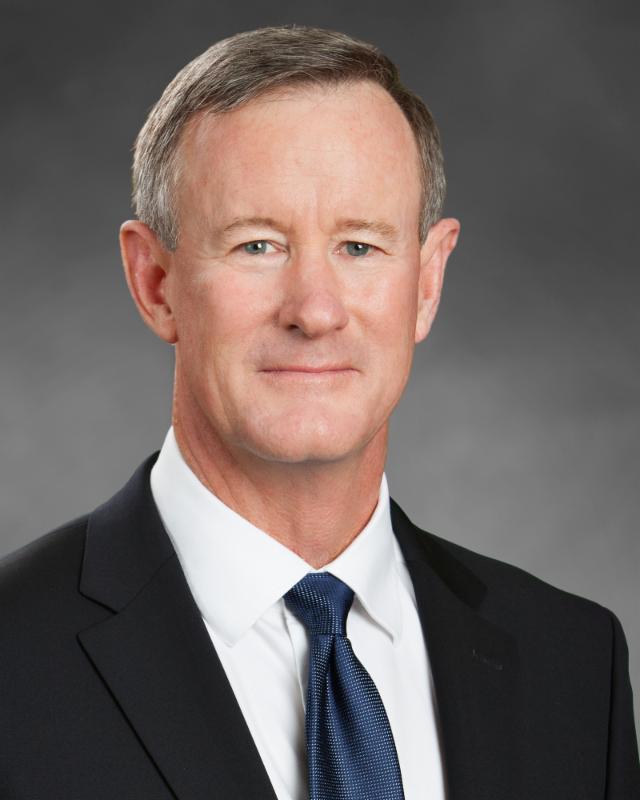
William H. McRaven, Chancellor, The University of Texas System
|
| | William H. McRaven |
Career highlights and education: Chancellor McRaven has led The University of Texas System for two-and-a-half years, serving as the System's chief executive officer. Prior to being named Chancellor, McRaven served nearly four decades in the U.S. Navy, retiring as a four-star admiral. His last assignment was commander of U.S. Special Operations Command, during which time he led a force of 69,000 men and women and was responsible for conducting counter-terrorism operations worldwide. McRaven also is a recognized national authority on U.S. foreign policy and has advised presidents George W. Bush and Barack Obama and other U.S. leaders on defense issues. His book, "Spec Ops: Case Studies in Special Operations Warfare: Theory and Practice," published in several languages, is considered a fundamental text on special operations strategy. McRaven is a graduate of The University of Texas at Austin and received his master's degree from the Naval Postgraduate School in Monterey.
What I like best about my job is: I'm honored to lead one of the finest public university systems in the country. I have witnessed firsthand that education has the power to transform lives and change the world. I often say that the quality of education available to young people in our country is the key to our nation's security - and I mean it. Working day in, day out on issues I feel passionately about, and working to improve the lives of students and provide our faculty and researchers with the resources they need to inspire minds and make breakthrough discoveries is absolutely the best part of my job.
The best advice I've received for my current job is: From my old boss, General Stan McChrystal: Building a Team of Teams is critical - it allows different units and organizations to derive strength from each other and work together to be successful.
Advice you would give a new hire in your office: Start each day by making your bed and never ring the bell. What else?
If I ever left work early, I could probably be found: On the UT Austin campus at Gregory Gym playing basketball with a bunch of kids who have no idea who I am.
People would be surprised to know that I: Love to sing in the car.....at the top of my lungs. Or, that I love a McDonald's Quarter Pounder with cheese, chocolate milkshake and lots of fries.
One thing I wish more people knew about the UT System: It is vast and complex. The UT System is 14 institutions, 228,000 students and 100,000 faculty. But it's more than that. At UT institutions, clinicians treat millions of patients a year, researchers are discovering breakthrough treatments and cures for deadly diseases, and entrepreneurs are developing new technology to make us stronger, safer and healthier. At UT System administration, we help provide the infrastructure and support necessary to make all of these incredible things happen.
|
UT System seeking new proposals to redevelop ITC in San Antonio
 The University of Texas System officials are asking again for developers and architects to submit a request for proposals (RFP) to establish a contract ground lease to develop 14.7 acres of property for the purpose of commercial and residential uses that would produce sufficient income to pay the lease from the university. The property is now occupied by the Institute of Texas Cultures (ITC), but the plan is to fully vacate the property no later than 240 days after the execution of the lease. The University of Texas System officials are asking again for developers and architects to submit a request for proposals (RFP) to establish a contract ground lease to develop 14.7 acres of property for the purpose of commercial and residential uses that would produce sufficient income to pay the lease from the university. The property is now occupied by the Institute of Texas Cultures (ITC), but the plan is to fully vacate the property no later than 240 days after the execution of the lease.
The previous RFP, issued in May of last year, described three options for developing the property. These were a grounds development only of the 12.63 acres while allowing space for parking at least 159 vehicles; a grounds and partial ITC facility that would include developing the property and using up to 50,000 square feet inside the existing museum that supports its mission; and, a full tract development that would involve developing and using the entire site. While the previous full tract option called for the developer to reimburse the university for the cost of relocating the museum, the new RFP now makes participation of the developer in the museum relocation process optional. University officials plan to use a public-private partnership to redevelop the property to produce more revenue and create a space compatible with the Hemisfair district and the downtown area. Deadline for submitting proposals is August 2.
|
Dallas ISD eyeing $2.5M plan to relocate students during repairs
 Dallas Independent School District trustees are reviewing a staff proposal to spend $2.5 million in bond funds to prepare the Village Fair building for relocating about 1,300 students from South Oak Cliff High school while the facility is undergoing a $52 million renovation project. The Village Fair building is less than a mile from South Oak Cliff High School and is now used for an alternative school program. Dallas Independent School District trustees are reviewing a staff proposal to spend $2.5 million in bond funds to prepare the Village Fair building for relocating about 1,300 students from South Oak Cliff High school while the facility is undergoing a $52 million renovation project. The Village Fair building is less than a mile from South Oak Cliff High School and is now used for an alternative school program.
Relocating the students would offer benefits such as providing a safer learning atmosphere while contractors repair or replace leaking ceilings and the heating and cooling system, remove mold, check for gas leaks, and exterminate pests, said Stephanie Elizalde, chief of school leadership for the district. Because relocating the students could reduce construction time, the bids for the renovation project could be lower, she said. The current schedule would send the students to the Village Fair campus during the second semester of the next school year and staff members now housed in the building could possibly move to the Nolan Estes campus, she added.
|
Kilgore approves contract for water system upgrades
 Kilgore City Council members approved a $289,000 contract with a consultant to design improvements to a water main and increase the water pressure plane system serving two neighborhoods. Kilgore City Council members approved a $289,000 contract with a consultant to design improvements to a water main and increase the water pressure plane system serving two neighborhoods.
The upgrades are necessary for the city to meet state mandates that require it to have more than 1.2 million gallons of elevated storage to serve the 6,208 water connections, many of which are located in elevated areas, said Clay Evers, the city engineer. Removing water connections located higher than 410 feet above sea level is estimated to cost $1.2 million, which is $2.4 million less than building another elevated storage tank, Evers said. That action, however, would provide the city more than 900,000 gallons of additional elevated water storage capacity, he added.
Another project calls for increasing the size of an 8-inch water line along Dudley Road to a 12-inch water line to produce improved water quality and more efficient movement of water, Evers said. Current plans call for the design to be completed in eight months and construction on the improvements to be completed within two years after ground is broken. The upgrades are expected to meet population projections for the city over the next 33 years, he added.
|
Midland moves to allocate funds from $4B tax to maintain sports complex
 City council members in Midland agreed to use funding remaining from the collection of a $4B tax to maintain and operate the Scharbauer Sports Complex. Council members also dissolved the Midland Football-Soccer and Baseball Complex Development Corporation as a result of an unsuccessful election in May to extend the quarter-cent sales tax that produces revenue to operate and maintain the sports complex and other parks improvements. City council members in Midland agreed to use funding remaining from the collection of a $4B tax to maintain and operate the Scharbauer Sports Complex. Council members also dissolved the Midland Football-Soccer and Baseball Complex Development Corporation as a result of an unsuccessful election in May to extend the quarter-cent sales tax that produces revenue to operate and maintain the sports complex and other parks improvements.
Until the city's sales tax returns to 8 percent on Oct. 1, the city will continue to receive about $3.7 million in revenue until the quarter-cent tax expires on Sept. 30, said Pam Simecka, the finance director. The city also has about $26.5 million remaining in funding for the sports complex, she said. Once the 4B board is terminated, the remaining funds will go to the city's general fund, Simecka said. Council members can then decide to transfer those funds to the Sports Complex Operating Fund or amend the budget to move that funding as part of the 2018 budget process, she said.
|
Upshur County conducts study to build loop around Gilmer
 Upshur County officials plan to use a $250,000 grant from the North East Texas Regional Mobility Authority (NET RMA) to fund a feasibility study into building a loop around Gilmer to relieve congestion and improve safety on U.S. Highway 271 and Texas Highway 154. Upshur County officials plan to use a $250,000 grant from the North East Texas Regional Mobility Authority (NET RMA) to fund a feasibility study into building a loop around Gilmer to relieve congestion and improve safety on U.S. Highway 271 and Texas Highway 154.
The goal is to complete the study within two years to determine the best route for the loop and whether it should be located east or west of town. In addition to improving safety in several school zones located on U.S. 271 and relieving congestion, the proposed new loop also could spur economic development in the county.
NET RMA will also be awarding funds to Kaufman County in the amount of $77,817 for intersection improvements at State Highway 243/Farm-to-Market Road 2727 and Wood County in the amount of $172,183 for the development of water, sewer and natural gas infrastructure in support of the Northeast Texas Poultry Complex.
|
TSTC releases RFQ for study on student housing improvements
 Texas State Technical College (THTC) officials are requesting qualifications (RFQ) from companies to perform a housing market study and financial analysis for renovating and modernizing student housing at their campus in Waco. The goal of the study is to upgrade the three existing housing units, study the housing available and demand for students, faculty and staff for housing located on campus, a cost analysis, financing options and timeline for delivering the project. Texas State Technical College (THTC) officials are requesting qualifications (RFQ) from companies to perform a housing market study and financial analysis for renovating and modernizing student housing at their campus in Waco. The goal of the study is to upgrade the three existing housing units, study the housing available and demand for students, faculty and staff for housing located on campus, a cost analysis, financing options and timeline for delivering the project.
The study also is to provide information to help regents make decisions on renovations in terms of tenant mix, construction specifications and anticipated rental rates. Properties included in the study are the Brazos Community, an area with 750 single-family and duplex units built between 1948 and 1960 that provides housing for both staff and students; Red River Apartments, which feature 56 two-bedroom apartments for students which was built in 1980; and Lavaca Hall, a student dormitory built in 1943. Deadline for submitting the RFQ is July 13.
|
Texas receives $27.4M grant to treat opioid addiction
The Texas Health and Human Services Commission (HHSC) has won a $27.4 million grant from the Substance Abuse and Mental Health Services Administration to prevent and treat addiction to opioids. The additional funding will be used for training, treatment, prevention, support during recovery and provide help to about 14,000 residents over a two-year period, according to HHSC officials. The grant will pay for HHSC officials to target high-risk individuals such as those who live in major metropolitan areas, pregnant women and those in postpartum and those with a history of misusing opioids prescriptions. Other populations that will receive focus for opioid addiction and prevention are people being treated for chronic pain, veterans and those who reside in rural areas with high rate of the use of opioids.
Other activities to be funded by the grant are expanding access to treatments sites and eliminate the current wait for treating opioid addition. Funding will also be used for improving training and technical assistance to providers and prescribers, improving recovery services, and enhancing outreach activities through coordination of state agency partners and crisis teams at local mental health authorities.
|
2017 Aging in Texas Conference
 July 12-14 July 12-14
Please visit the conference website to register.
|
|
|
By Mary Scott Nabers, CEO of Strategic Partnerships, Inc.

While the $1 trillion Trump Infrastructure Plan was being touted last week by the president and transportation officials, those of us at the annual meeting for the Association for the Improvement of American Infrastructure (AIAI) in New York were giving considerable attention to one particular aspect of that plan - "asset recycling."
Often misstated, misinterpreted or misunderstood, asset recycling is simply a practice that allows government entities to either sell or offer a long-term lease of public infrastructure to private-sector investors. Any public asset, such as an airport, toll road, utility or parking facility, if sold and repurposed, could generate its own revenue stream. That concept appeals to private-sector investors. And, in exchange for the sale or lease of those assets, governmental entities can receive a large up-front, lump-sum payment. The proceeds can then be used to finance new and critical infrastructure needs. It's important for taxpayers and the public at large to understand this concept because the Trump administration is considering paying a bonus to state or local governments that enter into asset recycling agreements.
|
Pottsboro ISD reduces bond proposal to $54M
Pottsboro Independent School District trustees in a five-hour special meeting reduced a proposed bond proposition from the $61 million in projects recommended by a facilities team of citizens down to $54 million after discussions with architects, school administrators and members of the facilities team. The $54 million bond proposal includes a new $27 million elementary school and renovation of a middle school estimated to cost $15.6 million, said Superintendent Kevin Matthews.
The proposed bond package also includes $2.8 million to renovate Pottsboro High School and technology upgrades throughout the district at a cost of $2.5 million. Board members are expected to decide in August whether to schedule a bond election in November. Even through district staff and board members were able to provide a $7 million reduction, they are still reviewing the architecture plans to find additional savings.
|
Round Rock releases RFQ for $20M library
 Round Rock city officials are asking architectural and engineering firms to submit proposals to design a new downtown library estimated to cost about $20 million. The proposal calls for a five-story, 60,000-square foot building with three floors for the library and a two-story parking garage to accommodate visitor parking as well as space for a bookmobile. The library building also must be designed to blend with the historic downtown area. Round Rock city officials are asking architectural and engineering firms to submit proposals to design a new downtown library estimated to cost about $20 million. The proposal calls for a five-story, 60,000-square foot building with three floors for the library and a two-story parking garage to accommodate visitor parking as well as space for a bookmobile. The library building also must be designed to blend with the historic downtown area.
City officials are interested in adding a black box theater component to the new library that will be located on North Mays Street near Brushy Creek. Deadline for a request for statement of interest and qualifications (RFQ) is July 6. A selection committee of community stakeholders will review the submissions and may interview up to five firms prior to making a recommendation to council members on Oct. 26. Council members set a goal to announce the winning proposal in November.
|
Allen approves contract to design intersection for appeal and flow
 The Allen City Council approved a contract with a McKinney-based firm to prepare a schematic design for a gateway and welcoming monument to be located at the intersection of U.S. Highway 75 and Allen Drive. The goal is to improve traffic flow, install public art at the bridge that establishes a community identity, said Chris Flanigan, director of city engineering. The Allen City Council approved a contract with a McKinney-based firm to prepare a schematic design for a gateway and welcoming monument to be located at the intersection of U.S. Highway 75 and Allen Drive. The goal is to improve traffic flow, install public art at the bridge that establishes a community identity, said Chris Flanigan, director of city engineering.
City staff have studied three options to restructure the intersection that include having it remain a three-way stop, installing a traffic signal or building a roundabout, Flanigan said. Allen city personnel will work with the firm throughout the process and the firm will be the technical experts that present the proposal to the Texas Department of Transportation (TxDOT), he added. The plan is to present the schematic design to TxDOT by the end of this summer and receive the approval by the end of Spring 2018.
|
Penitas seeks approval to maintain city water system
 Penitas City Council authorized City Manager Omar Romero to apply for a Water Certificate of Convenience and Necessity that would give the city exclusive rights to provide water and sewer services to the city. The Aqua Special Utility District now provides sewer and water services to that city, but city officials hope to offer those services at a lower cost to residents, Romero said. Penitas City Council authorized City Manager Omar Romero to apply for a Water Certificate of Convenience and Necessity that would give the city exclusive rights to provide water and sewer services to the city. The Aqua Special Utility District now provides sewer and water services to that city, but city officials hope to offer those services at a lower cost to residents, Romero said.
Council members also approved an agreement with an engineering and management consulting firm to perform a feasibility study for a water plant and evaluate the city's water system. Aqua SUD district officials have agreed to work with the city by helping provide water services or assisting the city in building a water plant for the area, Romero said. The city could wait as long as five years to win approval of the water certificate, but work on the feasibility study can begin as soon as city officials complete and submit the application for the water certificate.
|
Hearne appoints Naron as city manager
|
| | | John Naron | |
Hearne City Council members agreed to hire John Naron as the permanent city manager. Naron has served as the interim city manager since May 2016. He replaced Pee Wee Drake, who left that post in May 2006. Council members also approved a contract with Floyd Akers, a lawyer from San Marcos, to become the city attorney to replace an Austin-based law firm that unexpectedly resigned in December.
Naron, a native of Hearne, previously worked for a private company in Corpus Christi as a backflow operator and has owned and operated a backflow consulting company in Hearne since 2013.
|
Melancon to serve as Dayton city manager
|
| | | Theogene Melancon | |
Theogene Melancon, now the city manager in Gladewater, agreed to serve as the new city manager in Dayton effective on July 3.
Since receiving his bachelor's degree at the University of Louisiana in Lafayette in 2008, Melancon has worked as a program director and manager for Louisiana State University (LSU), an administrator for State of Louisiana in the Division of Administration, and as a city administrator in El Dorado and city manager in Gladewater. Melancon also earned a law degree from the Paul M. Hebert Law Center at LSU in addition to a master's degree in public administration from LSU in 2012.
|
Frost ISD taps Jackson as new superintendent
|
| |
| Mickie Jackson |
Trustees for Frost Independent School District tapped Mickie Jackson to serve as the new superintendent effective on May 31. A former teacher, principal and interim superintendent for the district, Jackson replaced Duane Limbaugh, who left that post in March.
She first joined the Frost district in 1997 as a teacher's aide and then completed her degree to become a teacher, counselor and elementary school principal for the district that has an enrollment of about 450 students.
|
Raymondville ISD names Roane as superintendent
|
| | | Stetson Roane |
|
Raymondville Independent School District board members named Stetson Roane as the lone finalist for superintendent only two months after failing to negotiate a final contract with a previous lone finalist selected earlier for the job. He will replace former Superintendent Johnny Pineda, who retired after 10 years in that post in January.
Roane resigned as superintendent of Seguin ISD earlier this year after joining that district as superintendent in 2015. He also was a superintendent for the Pecos-Barstow-Toyah ISD, an assistant superintendent at Aransas Pass ISD and a director at Cuero ISD. Roane has a master's degree from the University of Houston.
|
Ayers chosen as Sherman assistant city manager
Steve Ayers, who previously served as director of public services for Sherman, has agreed to serve as the new assistant city manager of that city. He replaces Don Keene, who resigned as assistant city manager to accept a new job as principal of a middle school.
First joining the city in 1990 as a police officer, Ayers won promotion during his 25 years of service and retired as the assistant police chief. He then became the director of community and support services in 2015 and director of public services earlier this year. Ayers also previously served in the U.S. Marines. Ayers graduated from the Law Enforcement Management Institute of Texas at Sam Houston University and the Institute of Law Enforcement Administration.
|
|
Dozens of public-sector jobs are available. New jobs added this week include:
Click here to view more. Send postings to editor@spartnerships.com |
 Check out these story headlines of the week on our website
|
Texas Sunset Advisory Commission Final Results of Sunset Review for 2016-2017 Review Cycle, 85th Legislative Session (all are pending governor action):
|
|
View our other newsletter,
|
Help us share this message.
To ensure delivery and proper formatting of the newsletter, be sure to add editor@spartnerships.com to your safe senders list. Otherwise, the newsletter may be flagged as spam and automatically routed to your junk e-mail folder
|
Texas Government Insider is a free weekly newsletter detailing important happenings throughout the state and summarizing current political issues relevant to individuals interested in government.
Publisher: Mary Scott Nabers
Editor: Kristin Gordon
TGI is published by Strategic Partnerships, Inc. (SPI), a research and consulting firm. Founded in Texas in 1995 by former government executives and public sector experts, SPI has developed a national reputation as the premier marketing partner dedicated to helping companies secure contracts in the $1.5 trillion state and local government marketplace.
To learn more about SPI services, click here or contact our sales department at 512-531-3900.
Barton Oaks Plaza One, Suite #100
901 S. Mopac Expressway Austin, Texas 78746
|
|
|
|




 June 18-20
 June 22-23
 Sept. 17-20
 Nov. 13-15