The Houston City Council has adopted the next iteration of its five-year Capital Improvement Program (CIP), budgeting $18 billion for infrastructure projects from Fiscal Year 2027 through 2031.
The CIP is composed of four main components:
- Enterprise Fund Program – $14.2 billion to support business-type entities, including the Combined Utility System (CUS), solid waste and the Houston Airport System (HAS).
- Build Houston Forward (ReBuild Houston) – $2.9 billion prioritizing storm drainage and street infrastructure.
- Component Units – $2.9 billion for legally separate organizations that are financially closely related.
- Public Improvement Program (PIP) – $865 million to cover general department funding for fire, health, housing, library, parks, police and general improvements.
Compared to the previous version, the updated CIP has allocated an additional $1.2 billion to support critical projects across the city over the next five years. The holistic budget’s numbers may change as initiatives are either added or removed over time.
Among the main investments in the Enterprise Fund Program category, Houston plans to invest $5.1 billion in its water utility system. Investments include spending $3.2 billion to build an east water purification plant and $681.9 million to replace and renew water mains.
Another $3.5 billion will support wastewater treatment facilities. These investments include $1.1 billion for wastewater treatment plant (WWTP) service areas, $896.2 million for WWTP improvements, $733 million to renew neighborhood sewers and $496.8 million to renew and replace lift stations.
The HAS will receive $2.7 billion across three airports. The George Bush Intercontinental (IAH) airport has the lion’s share of investment at roughly $2.1 billion to support the following projects:
- Terminal Modernization Program – $865 million.
- IAH Airfield Taxiway and Runways – $381 million.
- Infrastructure and Roadways – $256 million.
- Skyway Automated People Mover – $233 million.
- HVAC, Conveyances and Restrooms – $135 million.
- Central Utility Plan Improvements – $79 million.
- Terminal B Redevelopment Program – $24 million.
The William P. Hobby (HOU) airport will spend $4226 million to enhance airfield taxiways and runways. Additional investments include $114 million for infrastructure and roadways and $43 million for HVAC, conveyances and restroom projects.
For ReBuild Houston, the $2.9 billion allotment will be divided between street and traffic control projects and storm drainage infrastructure. Of the $1.6 billion slotted for streetwork, the budget include $790 million for citywide street and traffic rehabilitation and $512.7 million for thoroughfares and collectors. Additional investments include $153.7 million for local streets, $28 million for safe sidewalks and $27.5 million for the Council District Service Fund.
The $1.3 billion planned for storm drainage will predominantly go toward neighborhood drainage. Of the $858 million allocated for those projects, they will be split across four project categories:
- Reconstruction projects – $508 million.
- Storm Water Action Team – $128 million.
- Roadside ditch reestablishment – $125 million.
- Local Drainage Program – $97 million.
Additional investments include $139 million for regional stormwater detention, $128 million for Lake Houston dam spillway enhancements and $124 for the North Canal.
The city will also receive a combined $303 million in federal funding for transportation initiatives. Among these, $224 million will be delivered through the H-GAC Transportation Improvement Program, targeting the Greens Road, Frontage Road, Antoine Drive, Gessner Road and West Belt grade separations projects. The remaining $79 million will come from the US Department of Transportation (USDOT) and Federal Highway Administration (FHWA) for Telephone Road, Bissonnet and West Belt grade separations.
Another $182 million will support drainage mitigation initiatives. Houston will receive $110 million through the Hazard Mitigation Grant Program for the North Canal, Lake Houston Dam and Memorial City Detention projects. The remaining $72 million from the Community Development Block Grant – Mitigation will support various street and detention initiatives.
The budget includes several major projects planned for implementation and completion over the next five years through the PIP. This will include $292 million to support the city’s fleet of vehicles and $198.5 million for municipal courts and police facilities impacted by Hurricane Harvey. The city will spend an additional $26.5 million to build and renovate fire stations and $22.8 million to improve technology infrastructure.
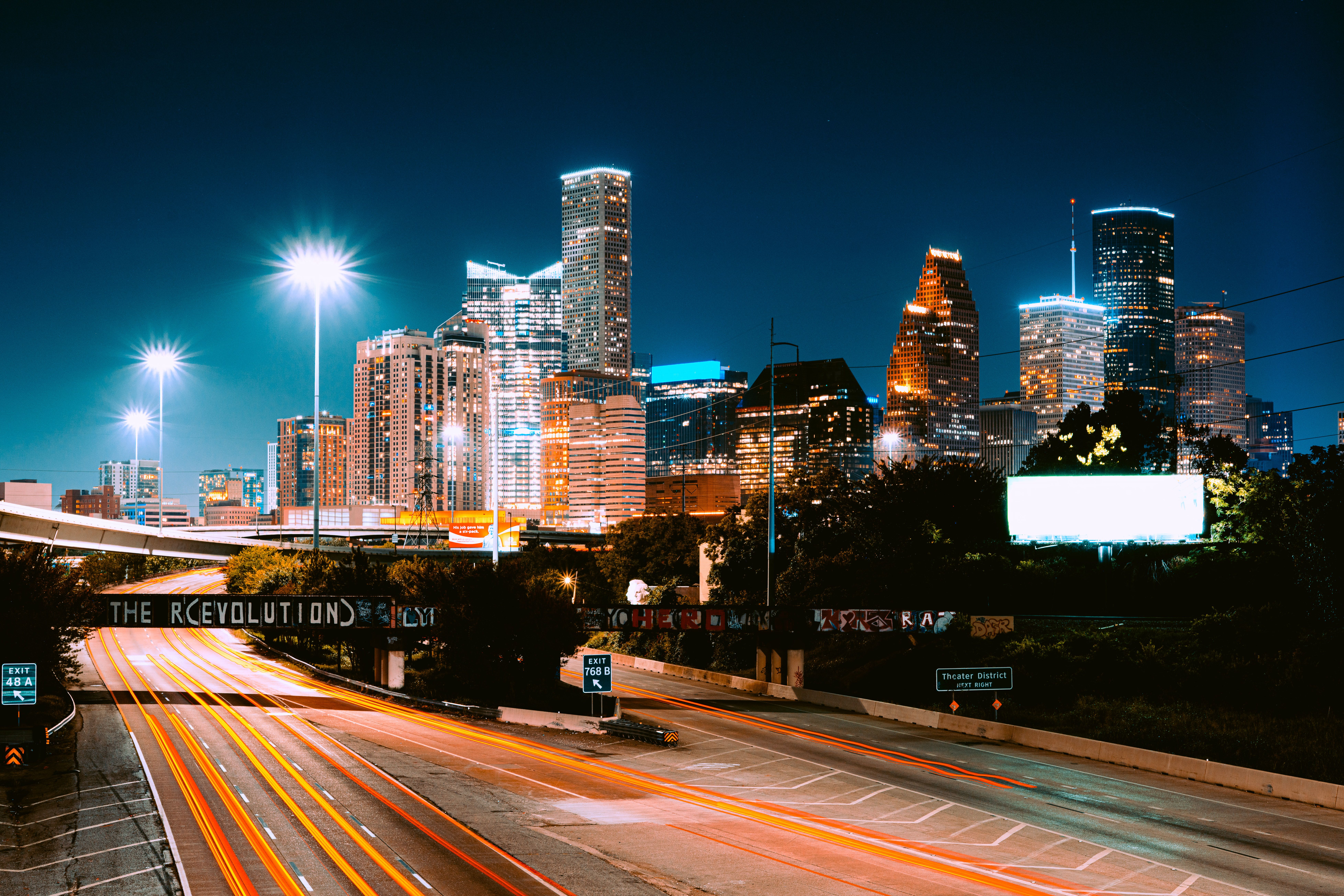
Photo by Adrian Newell from Pexels
This story is part of the weekly Texas Government Insider digital news publication. See more of the latest Texas government news here. For more national government news, check out Government Market News daily for new stories, insights and profiles from public sector professionals.