
The Fort Worth City Council has officially adopted its latest Master Transportation Plan (MTP), replacing its predecessor in guiding critical land use and infrastructure utility in tandem with transportation initiatives. The plan outlines delivering a roughly $343 million investment in related street and mobility projects by 2034.
The MTP prioritizes three major components driving the city’s long-range strategic planning efforts. These include a capital program that streamlines projects from policy to implementation, implementing strategic funding decisions and prioritizing safety, reliability and economic competitiveness within the city’s transportation system.
To accomplish the plan’s goals, city officials combined four key mobility initiatives under a singular document:
- The Transportation Investment Program (TIP) paves the way for delivering capital projects, prioritizing roadway, freight and active transportation improvements over a four-, 10- and 25-year period.
- The Master Roadway Network (MRN) is the city’s long-range plan for major transportation facility projects.
- The Active Transportation and Micromobility Network (ATMN) is a network plan for citywide multimodal and ADA-accessible transportation, including walking, cycling and public transit.
- The Vision Zero Safety Action Plan (SAP) advances the city’s efforts to reduce traffic fatalities and injuries to zero.
The following is a selection of the largest projects featured in the MTP.
The city plans to invest $269 million to extend Amon-Carter Boulevard from North Great Southwest Parkway to Trinity Boulevard. The city will build two travel lanes in each direction, a 4.5-foot buffer on each side of the road and a shared-use path on both sides. Additional enhancements include elevating a section of the roadway and creating an at-grade section.
Altamesa Boulevard has several projects slated for different roadway sections. The two highest cost sections will be the Campus Drive to Wichita Street and Anglin Drive to Dick Price Road, projected at $166 million and $137 million respectively.
The Campus Drive to Wichita Street section will be split across two phases to close a gap in the city’s roadway network. The first will build a travel lane in each direction, a two-way turn lane and a shared-use path on both sides of the road. The second phase will build three lanes in each direction, a median and a shared-use path on both sides. Construction is expected to begin in 2030.
The Anglin Drive to Dick Price Road portion will prioritize building a two-lane undivided roadway, a shared-use path on each side and a bridge. Future plans may include expanding the corridor to a four-lane divided roadway with shared-use paths, a raised median and a twin bridge. Construction is slated to begin in 2030.
Fort Worth will spend $118 million to build the North Beach Street Corridor between Keller Haslet Road and Eagle Parkway. Plans include building a four-lane divided roadway, featuring a raised median with turn bays and shared-use paths on both sides.
The Chapin School Road project – stretching between Interstate 20 and Rolling Hills Drive – will cost $115 million to expand. The project will widen a 1.2-mile section of the road to a four-lane highway. This will include a median and shared-use paths on either side. The city will also build a bridge over an intersection. Construction is slated for 2029.
Now that the City Council has adopted the plan, the Transportation and Public Works Department (TPWD) will initiative a speed study across the city and advance the initial four years of the Transportation Investment Cycle.
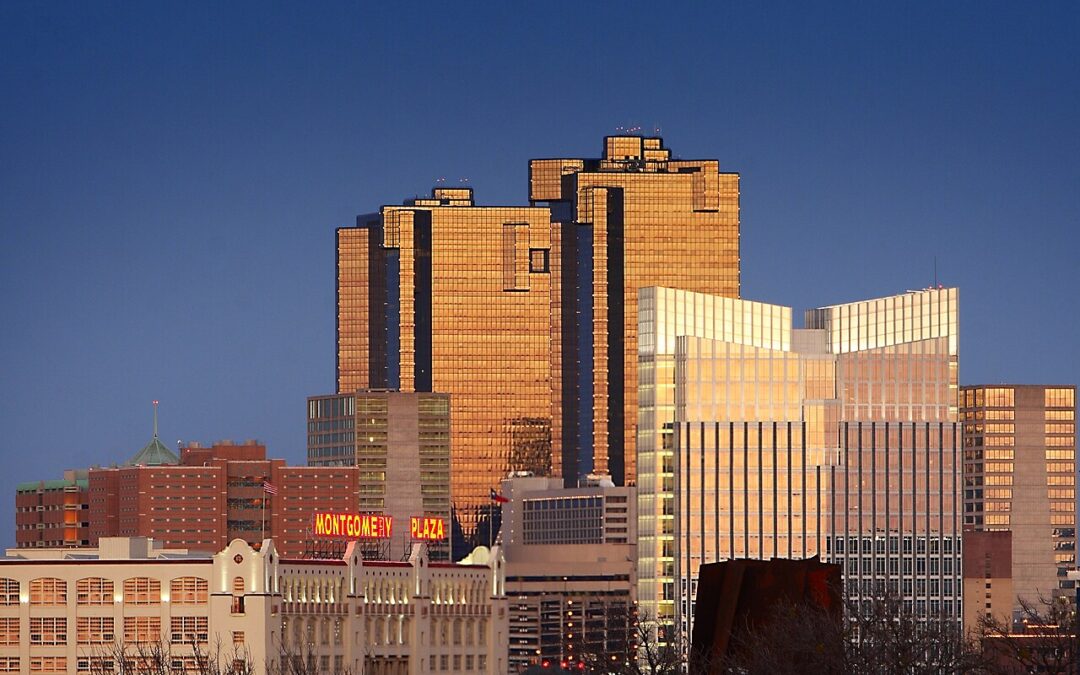
Photo by David, CC BY 2.0 <https://creativecommons.org/licenses/by/2.0>, from Wikimedia Commons
This story is part of the weekly Texas Government Insider digital news publication. See more of the latest Texas government news here. For more national government news, check out Government Market News daily for new stories, insights and profiles from public sector professionals.