
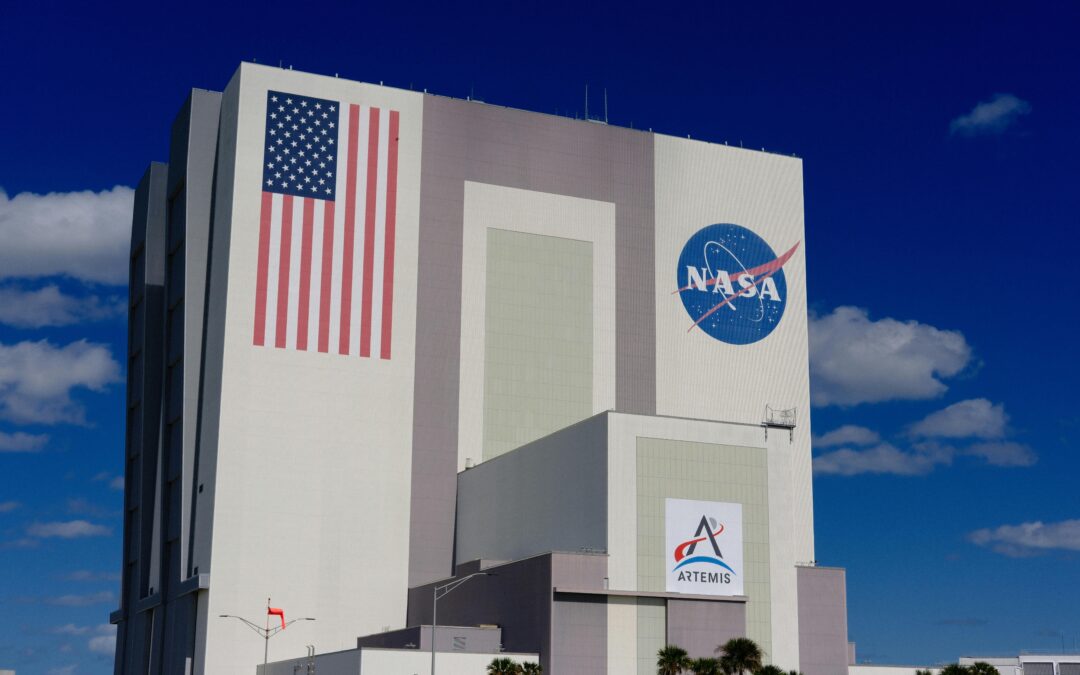
While four humans aboard Artemis II have now gone farther from Earth than ever, some of the ideas, technology and workforce leading up to this moment and preparing for what comes next are much closer to home.
Two Texas universities can boast alumni who played key roles in NASA’s quest for human spaceflight, whether in behind-the-scenes engineering or in their own astronaut experiences.
The University of Texas at Austin and Texas A&M University claim former students who have parlayed their academic endeavors into real out-of-this-world experience. Two from the Austin suburbs who are also Longhorn alums, Judd Frieling and Mackenzi Haub, have vital roles in the historic Artemis II mission.
Frieling, a 1996 graduate, managed the team launching Orion into space, ensuring all systems performed optimally, including core stage engines, solid rocket boosters and propulsion from liftoff through stage separation.
Haub, a 2023 graduate, continues to ensure that sensors on board Orion remain precise throughout the journey. Though they are not the only UT graduates with NASA connections, the pair also share the distinction of graduating from nearby Pflugerville High School.
The Burnt Orange engineering program’s graduates are in high demand with the Artemis mission. NASA Chief Flight Director Emily Nelson, a 1998 graduate, manages 31 flight directors who are either active or in training. Artemis is only one of many missions under her oversight.
Dave Kosemeyer, a 1988 graduate and deputy center director of NASA’s Ames Research Center, directs the team analyzing Orion’s heat shield after re-entry, along with lunar images collected during the journey around the far side of the moon.
Jack Brazzel, a 1989 graduate and acting division chief of the Aerospace and Flight Mechanics Division, supports Orion’s control systems as well as the mission’s design and flight path.
Nathan Vassberg, a 1991 graduate and acting chief of safety and mission assurance, oversees teams assessing risks and preparing for unpredictable incidents.
Edgar Rivera, a 1995 graduate and safety and mission assurance specialist, works on several NASA missions, including Artemis.
A less obvious academic pathway to NASA is food science, but recent Texas A&M graduate Claire O’Shoney used her degree to become a NASA food technician.
Another A&M graduate, Tyler Kaluza, has been at Johnson Space Center for three years and has already fulfilled a boyhood dream by working a console during launch, and soon, re-entry.
Stretching back beyond Artemis to previous human spaceflight missions, Aggie engineers have also served as astronauts on long-duration space shuttle missions. Bonnie Dunbar, a professor of aerospace engineering and director of the Aerospace Human Systems Laboratory, brings her experience full circle by engaging new students with the allure of space, particularly how astronauts and their habitats interact. When she joined NASA in 1978, engineering was conducted with slide rules instead of simulators. She flew on the mission that first docked with the Russian space station Mir and later served as a payload commander.
Michael Fossum, vice president and COO of Texas A&M University at Galveston, is also excited about this new phase of human spaceflight. A former space shuttle astronaut, Fossum served as commander of the International Space Station in 2011. He is watching with interest the technological changes required to move from orbital paths around Earth to deeper space travel. Radiation beyond Earth’s gravitational pull presents a greater safety threat, and newer systems include fail-safes designed to reduce human error while managing the dozens of switches aboard the craft.
Staying on top of these changes and developing new ones is part of Texas A&M’s mission for the future. The university has a unique opportunity with TAMU-SPIRIT to deploy experiments from various research fields aboard the International Space Station. The first round of eight experiments has been selected, and a new call for proposals is expected this spring.
In addition to SPIRIT, Texas A&M is constructing a $200 million, four-story Space Facility spanning 32 acres next to Johnson Space Center. Associate Director Robert Ambrose previously worked at NASA creating lunar and Martian surface simulations, but outdoor conditions in Houston were not favorable. This new facility will be the largest of its kind in the world when it opens this fall, and Ambrose predicts it will play a central role in space exploration for decades.
Meanwhile, at Texas State University, Brandon Hargis, a faculty of practice at the LBJ Institute for STEM Education and Research, is collaborating with NASA to manage the Spacesuit User Interface Technologies for Students program, or SUITS. The program is part of the Artemis Student Challenge and uses STEM strategies to create learning experiences through exploration and discovery tied to NASA’s mission. A recent SUITS webinar featured Chris Hansen, who described a dangerous extravehicular activity in 2013 when a helmet began filling with water and the team had to problem-solve quickly to avoid disaster.
Whether on the International Space Station, Artemis II or future trips to Mars, graduates from Texas universities have helped carry NASA from past to present, while continued investments in facilities and education are shaping the agency’s future.
Keep an eye out tonight for Artemis II’s reentry to Earth’s atmosphere and for Longhorns and Aggies contributing to NASA’s mission.
Photo by Lando Dong from Pexels
This story is part of the weekly Texas Government Insider digital news publication. See more of the latest Texas government news here. For more national government news, check out Government Market News daily for new stories, insights and profiles from public sector professionals.