
The Texas Space Commission (TSC) has issued two Requests for Information (RFI) probing the market for insight into testing facilities capable of handling space cargo as the state broadens its spacefaring aspirations for larger payloads in orbit.
Both RFIs have response due dates scheduled for early September.
The first requests information on mobile technologies for vibroacoustic, vibration and electromagnetic interference/compatibility (EMI/EMC) at existing facilities that could help test cargo for survival in outer space environments. Manufacturers that are capable of advanced specifications for testing spaceflight hardware will also be of interest.
The EMI/EMC RFI is prioritizing responses that center around facilities that are already able to or can be upgraded to replicate deep space conditions and how they may affect payloads. These environmental facilities should be able to replicate various conditions, including conducted emissions, vibration testing, radiated emissions, shielding effectiveness, measurement uncertainty, grounding and bonding, radiated susceptibility and other factors.
Useful information that responders should identify include:
- Existing EMI/EMC capability.
- Proposed shielded room, reverberant chamber, anechoic chamber, semi-anechoic chamber, ground plane, absorber, radio frequency door, filtered power or penetration upgrades.
- Frequency ranges, field strengths, receiver capability, amplifier capability, antenna inventory, line impedance stabilization networks (LISNs), probes, current injection equipment, electrostatic discharge (ESD) equipment, and transient equipment.
- MIL-STD-461 or equivalent capabilities where incorporated by NASA or customer requirements.
- Secure handling of proprietary, export-controlled, and customer test data.
- Final test reports suitable for spacecraft qualification or troubleshooting.
The document notes that responders should include pertinent experiments that provide insight into space hardware functionality. These evaluations should target hardware in extreme outer-space environmental variations needed for development, engineering evaluation, qualification and preflight conditioning of spacecraft components or subassemblies.
Responses to the EMI/EMC mobile test RFI are due Sept. 4.
The second RFI seeks to identify existing thermal-vacuum (TVAC) chamber facilities and investigate the potential of upgrading these sites into NASA-class facilities verified for large spacecraft. These TVAC facilities must either currently or be able to be upgraded to simulate vacuum conditions and extreme temperatures for spacecraft up to 25 feet in diameter and 45 feet in height.
Re-creating these environments would provide critical intelligence on the functionality of various mechanical and electrical components aboard spacecraft. Respondents must identify the following information:
- Existing TVAC chamber capability.
- Proposed chamber upgrades.
- Chamber internal dimensions and usable test volume.
- Test article mass and envelope limits.
- Vacuum level and pump-down capability.
- Thermal range, thermal uniformity, transition rates and dwell capability.
- Feedthroughs for power, data, radio frequency, fluids, purge, fiber, instrumentation and telemetry.
- Long-duration powered operation capability.
- Calibration and measurement traceability.
- Cleanliness and contamination-control approach.
- Functional test support at hot and cold plateaus.
- Test readiness review and final test report process.
- NASA-class verification standards, test matrices, or customer requirements the facility will support.
Responses to the TVAC RFI are due Sept. 11.
The TSC is looking for responders that are already experienced with NASA operations and functions. These include those who have worked with NASA before or on a NASA program or NASA-approved/accepted test campaign. Those projects should directly correlate with the topic areas included in the RFIs.
The requests do not indicate an immediate call for projects or business contracts. However, their release signals an increased TSC interest in pursuing future space operations. The feedback will help direct the commission’s course going forward, using existing labs, testing facilities and other associated structures that may support space-centric business ventures. Notably, the requests bar responses relating to:
- General aerospace infrastructure exercises.
- Greenfield construction.
- General commercial testing services.
- General real estate development.
- University research-only oriented objectives.
- Generic laboratory modernization tasks.
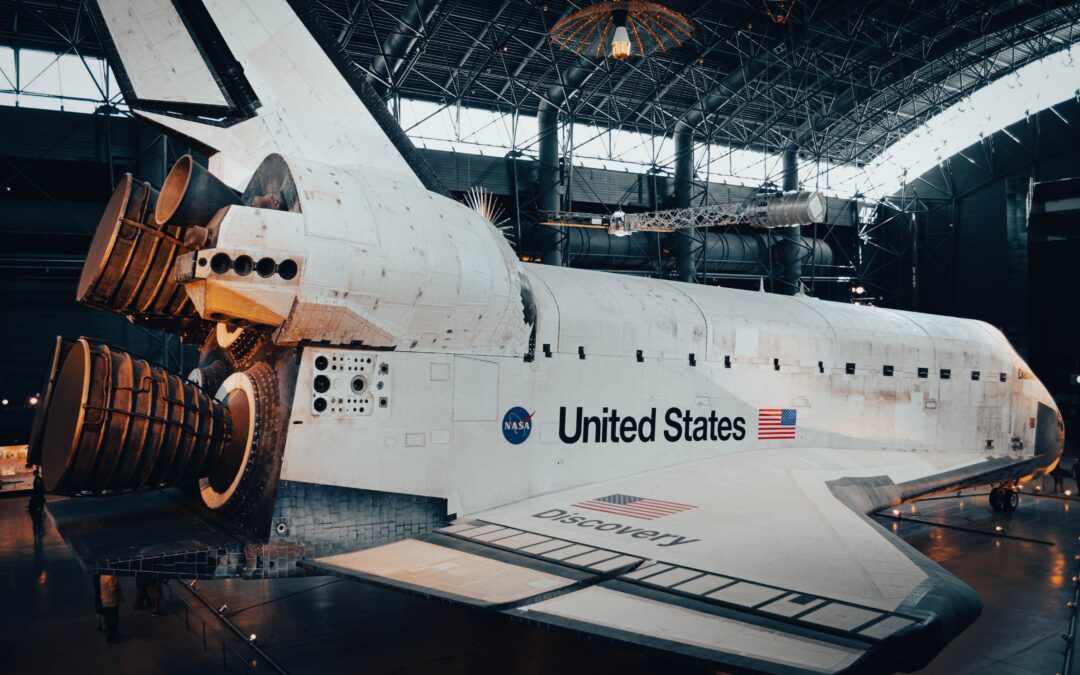
Photo by Eleanore Stohner from Pexels
This story is part of the weekly Texas Government Insider digital news publication. See more of the latest Texas government news here. For more national government news, check out Government Market News daily for new stories, insights and profiles from public sector professionals.