
The Texas Senate has released the second round of interim charges ahead of the next legislative session. Lt. Gov. Dan Patrick released an initial batch of five interim charges earlier this year with the promise to follow up with a comprehensive list of legislative priorities in March.
The previous round highlighted the following five priority interim charges:
- State Affairs Committee – make recommendations to prevent Sharia law in Texas.
- Finance Committee – build off the Homestead Exemption to further cut property taxes.
- Business and Commerce Committee – secure critical infrastructure and supply chain integrity.
- Health and Human Services Committee – address fraud and abuse cases.
- Education Committee – examine public school educational practices.
Since then, the priorities for these committees have been expanded on top of compiling recommendations from 10 additional committees. These other committees consist of criminal justice, economic development, homeland and broader security, local government, natural resources, religious liberty, transportation, veteran affairs, higher education and water, agriculture and rural affairs.
Among the new legislative points, the Transportation Committee will work toward potentially deploying autonomous vehicle technology across the state. The committee will make recommendations to ensure deployment emphasizes public safety and abides with rules adopted by state agencies. Additional considerations will go toward prioritizing public safety at rail-grade crossings and strengthening commercial driver license standards and oversight.
Interim charges for the Business and Commerce Committee were significantly expanded upon, including a directive to assess the state of the Electric Reliability Council of Texas (ERCOT) power grid. Notably, the committee will monitor rulemaking established by newly passed bills in the 89th Legislature and invest in solutions to strengthen the grid’s reliability and resiliency.
Additional efforts will consist of modernizing transmission to lower rising electricity costs. Consideration will be given to determine solutions to maximize existing transmission infrastructure and reduce congestion by integrating residential distributed energy resources, energy storage and other grid technologies. The committee will identify ways to strengthen regulatory oversight over insurance, manage data center growth, empower financial technology innovation and review management of the Broadband Development Office’s funding programs.
A big point of focus for the Economic Development Committee will revolve around preparing the workforce for AI integration and deployment. Plans will include studying AI’s impact and its economic competitiveness and evaluating strategies to enhance resiliency, guide educational pathways and promote private-sector-led innovation. The committee will also consider efforts to maintain accountability for the local hotel occupancy tax and strengthen oversight of project finance zones.
The Finance Committee will continue to examine options to prevent fraud, waste and abuse. This will include assessing prevention and recovery efforts through data analytics, reporting mechanisms, financial recoveries and prosecutions. The committee will offer solutions to improve oversight and protect public funds across high-risk areas.
Additional elements that the committee will consider include:
- Examining crime victims’ compensation and assistance funds.
- Data center investment and state fiscal effects.
- Higher education transparency.
- Rural fire protection funding.
- Evaluating transportation resources.
Aligning with both the federal and Texas government’s increased focus on immigration and border security, the Select Committee on Homeland and Border Security will prioritize expanded technology integration, increased security along ports of entry and secure exports. The docket includes a closer examination of Unmanned Aircraft Systems in conjunction with efforts to improve public safety and defend against hostile drones. The committee will make recommendations on which agencies would be best to coordinate with the federal government in drone mitigation, identify prohibitions that protect infrastructure and public events and strengthen penalties that close security gaps.
The committee will work to secure Texas land ports of entry (LPOE), starting with evaluating security measures and reviewing commercial inspection capacity of existing LPOEs. Among the listed interim charges, officials will review LPOEs that will open to commercial traffic, proposed projects to establish future LPOEs, determine the feasibility of inspections on southbound commercial traffic at all LPOEs and make recommendations to standardize state security procedures at these sites.
Plans include evaluating efforts to shore up the integrity of export fuel and combat corruption tied to fuel crimes. The committee will make recommendations to close statutory loopholes and prohibit the transloading or blending of export fuel after exploring the sector’s current structure and examining the impact of alteration or modification of export fuels on state revenue. Additional focus will cover solutions to end public corruption tied to stolen or laundered fuel and other transnational crimes. Notably, the committee will consider adding the Texas Border Prosecution Unity to the definition of “prosecuting attorney” under the Texas Public Integrity Unit to assist in corruption removal efforts.
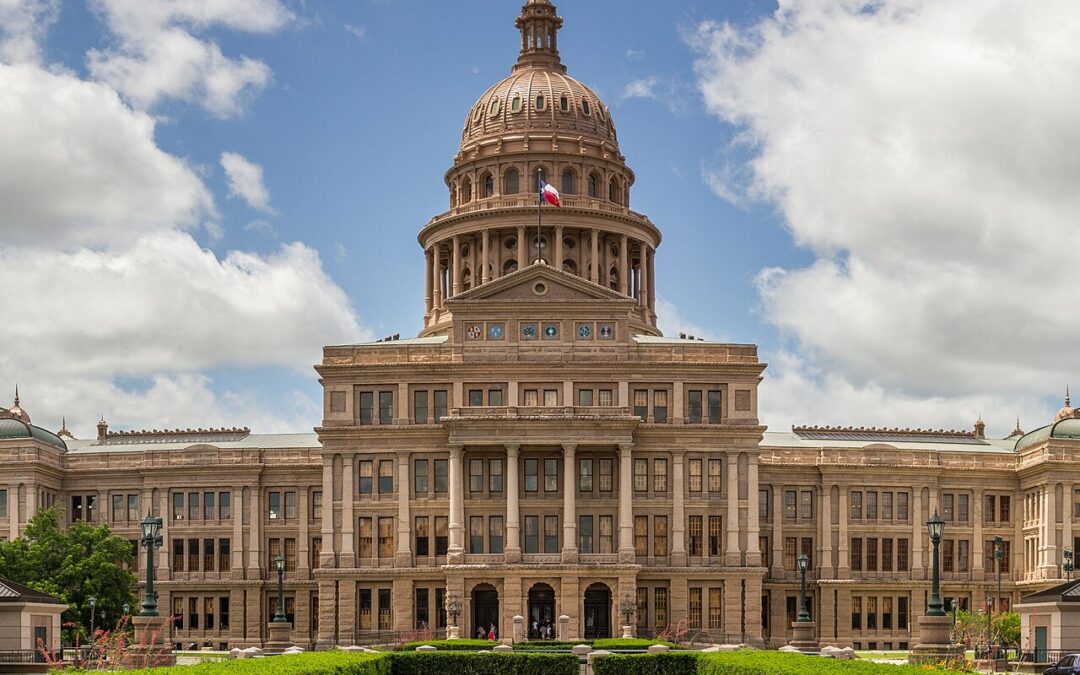
Photo by Jonathan Cutrer, CC BY 2.0 <https://creativecommons.org/licenses/by/2.0>, from Wikimedia Commons
This story is a part of the weekly Texas Government Insider digital news publication. See more of the latest Texas government news here. For more national government news, check Government Market News daily for new stories, insights and profiles from public sector professionals.