
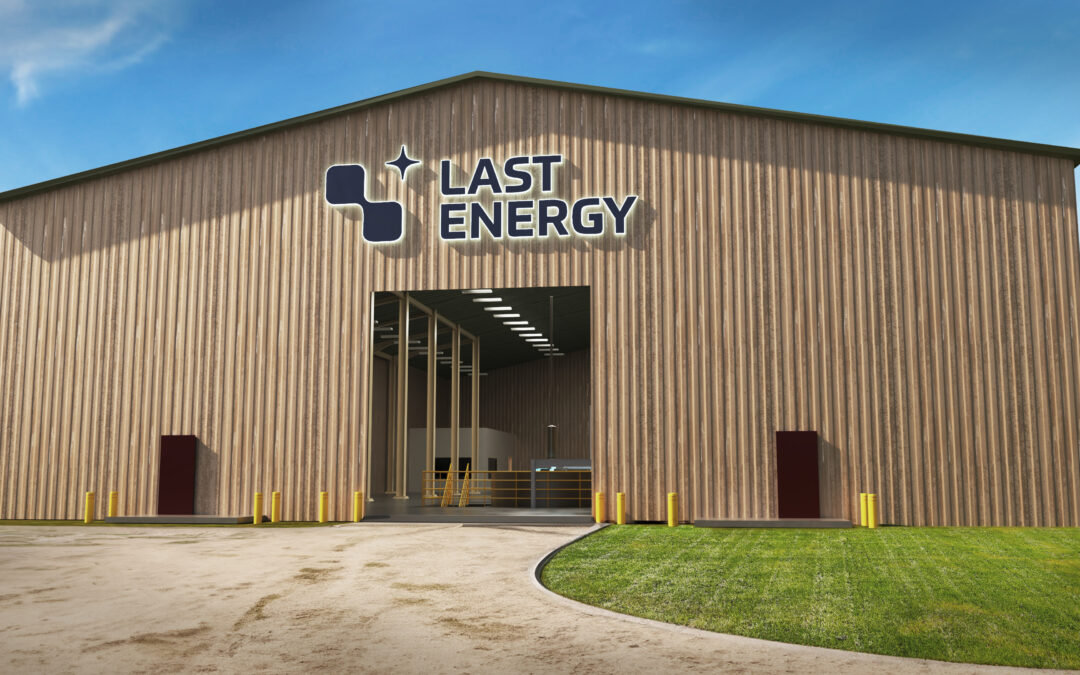
A new collaboration with The Texas A&M University System will bring a nuclear energy project to its applied research and testing campus. Answering a national call for pilot projects, the university system announced plans for the microreactor at Texas A&M-RELLIS in Bryan.
The project, a partnership between the innovation and tech campus and an energy startup, was selected in August as part of the Department of Energy’s (DOE) Nuclear Reactor Pilot Program. As one of 11 finalists for the program, the project will accelerate the DOE’s goal of deploying advanced reactor technologies nationwide and maintaining competitiveness in global energy markets.
Texas A&M-RELLIS will host a 5-megawatt pressurized water reactor (PWR-5), a scaled version of a larger, 20-megawatt reactor. The PWR-5 is designed as a modular, standardized unit that can be replicated and scaled to meet diverse energy demands. Its compact form and simplified design reduce construction timelines and operating costs compared to conventional nuclear energy systems.
The company has signed an Other Transaction Agreement (OTA) with the DOE, secured a land lease at the RELLIS campus and procured the low-enriched uranium fuel necessary to operate the plant, according to officials. Fully privately financed, the power plant will initially demonstrate safe, low-power criticality before connecting to the state grid. University officials anticipate testing to begin in summer 2026, aligning with federal deadlines.
“For the A&M System, the project reflects the original vision of the RELLIS campus — to serve as a proving ground for applied research that connects private-sector technology with academic expertise,” said Texas A&M-RELLIS Executive Director John Barton. “The partnership brings together engineers, researchers and policymakers to test new models for reliable, low-carbon energy production.”
The establishment of the RELLIS microreactor marks a significant step in positioning Texas as a national leader in nuclear energy generation. And, as other next-generation energy projects kick off nationwide, the Texas A&M microreactor could be used as a national model for energy generation under a sustained federal push for energy development and production.
Rendering provided by Last Energy