Volume 16, Issue 7 - Wednesday, February 14, 2024 | |
By Mary Scott Nabers, CEO of Strategic Partnerships, Inc. | |
|
Federal research and development are critical to global competitiveness, so Congress is committed to supporting and encouraging both. Federal programs prioritize funding for almost every type of research. The Infrastructure Investment and Jobs Act (IIJA) allocated a little more than $20 billion through 61 research programs. The Inflation Reduction Act (IRA) dedicated another $2.5 billion to support research for energy efficiency and climate change mitigation. The U.S. Department of Transportation funds infrastructure research. Other programs provide funding for healthcare, education, water, sustainability and disaster mitigation research, healthcare, social services, technology, military weapons, renewable energy, public safety and more.
Federally funded research projects create strong ecosystems that result in new products and services, new industries, policies, innovation and regulations. The White House recently released a memorandum outlining its research priorities for 2025. The list includes various types of cybersecurity, artificial intelligence, energy and transportation technology research.
The National Information Technology Research and Development (NITRD) program is a major funding support for coordinating cybersecurity-related IT research. For 2024, about $990 million is allocated for cybersecurity-related research to support broad efforts across multiple program sectors. Recent advances in cybersecurity include quantum-resistant encryption to safeguard against threats, enhanced intrusion detection systems that leverage machine learning. Such efforts reflect a strategic focus on foundational security, resilience against emerging threats and safeguarding critical data.
Another area that receives an abundance of research funding is artificial intelligence (AI). Support is especially strong for AI technologies that benefit society, guarantee safer usage, are developed ethically and are accessible across different sectors, platforms and networks.
The Emerging Frontiers in Research and Innovation (EFRI) program currently has $30 million in funding with an application deadline of late February 2024. The program supports projects that focus on merging the fields of biology, engineering and computer science to create living systems capable of processing data to provide insights for understanding brain function, enhancing computational models and developing new computing paradigms.
Click here for more.
| |
|
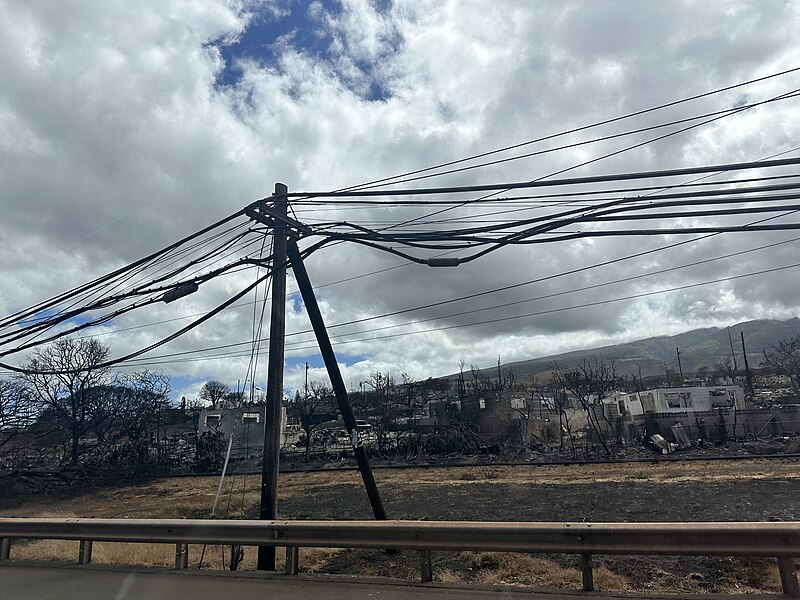
Hawaiian Electric will move forward with a $190 million, five-year resilience plan to harden electric grids and defend against wildfires on the islands of Oahu, Maui, Hawaii, Lanai and Molokai. The state’s Public Utilities Commission (PUC) recently approved the Climate Adaptation Transmission and Distribution Resilience Program application. Hawaiian Electric serves 95% of Hawaii’s 1.4 million residents.
The utility will use $95 million from the U.S. Department of Energy (DOE) to upgrade its transmission and distribution network. The funding comes from the Infrastructure Investment and Jobs Act (IIJA). The federal agency awarded the funds in the wake of the August 2023 Maui windstorms and wildfires. The state will contribute an additional $95 million as part of a 50% match.
Hawaiian Electric will replace and strengthen 2,100 utility poles and conductors on high-priority transmission lines under the first phase of the plan. The utility will also increase use of cameras and sensors in high-risk wildfire areas to lessen their severity.
The plan also includes removing weak, dead or otherwise compromised trees at risk of falling on power lines and potentially starting fires. Other key components of the utility’s program include hardening and replacing poles that support multiple circuits with fire-resistant materials. The utility will harden 1,200 across the islands of Oahu, Hawaii and Maui County.
Click here for more details on this opportunity
(Photo courtesy of State Farm.)
|  | |
|
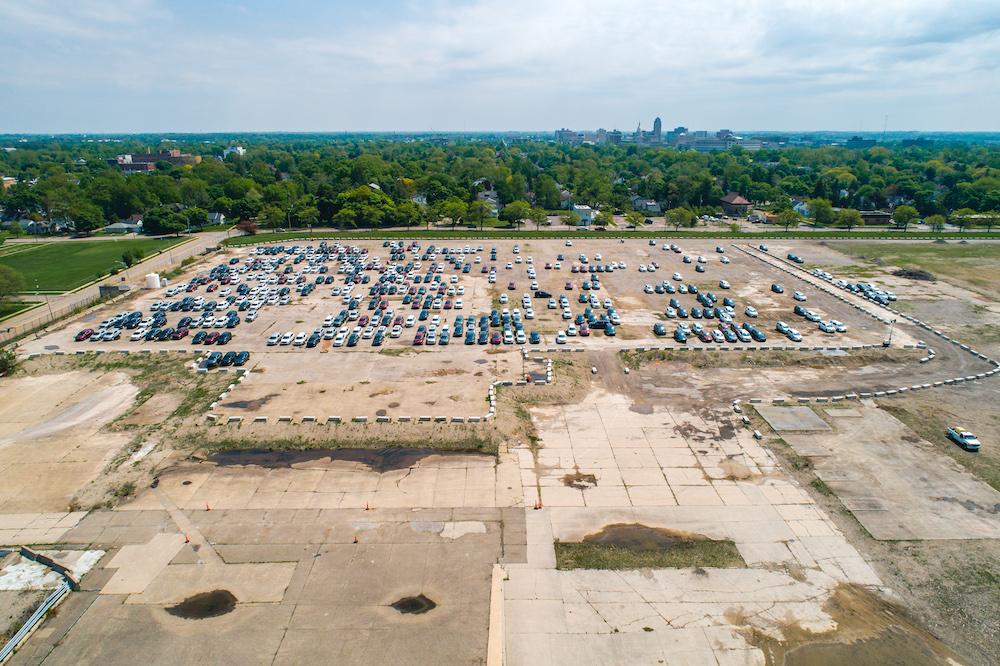
The state of Michigan will spend $87.5 million to clean up and prepare 18 sites statewide to bolster their attractiveness and add to the state’s portfolio of investment-ready sites.
Gov. Gretchen Whitmer recently announced a slate of awards that will help improve 10 brownfield sites – former industrial or commercial sites contaminated by hazardous materials. Conversely, the remaining eight sites are greenfields – areas that have not been developed, typically located away from urban settings.
Michigan’s Strategic Site Readiness Program (SSRP) provided the awards. State lawmakers created the program in 2021 and backed it with $100 million to support environmental remediation, construction and other site improvements to attract and promote investment in the state.
Click here to learn which projects are moving forward
(Photo: Lansing RACER Trust Plan 6. Courtesy of Racer Trust.)
| |
|
The Washington State Department of Commerce has announced an $85 million grant initiative designed to deploy nearly 5,000 new electric vehicle (EV) charging stations across the state.
The grants are a result of applications to the Washington State Electric Vehicle Charging Program, which provides $64 million of the project funding, with the remainder funded by the Climate Commitment Act. The program specifically targets nonprofits, electric utilities, tribes and public agencies, with a focus on locations that lack sufficient charging infrastructure and bear the brunt of environmental pollutants.
The awards will go to 565 locations, including:
- 213 multifamily properties.
- 211 fleets and workplaces, primarily among local government bodies and educational districts.
- 141 public spaces such as recreation areas, libraries, and grocery stores slated to receive charging stations.
The awarded projects include 4,710 Level 2 (L2) chargers and 271 direct current fast chargers (DCFC). L2 charging offers the capability to add 10-20 miles of range per hour of charging, making them ideal for day-to-day use and overnight energy replenishment. Alternatively, DCFC facilities can charge a 300-mile range battery up to 80% in 20 minutes, serving as an asset for longer-distance corridors and quick stop locations.
Click here to learn about federal EV charging opportunities
(Photo courtesy of the Washington State Department of Commerce.)
|  | |
|
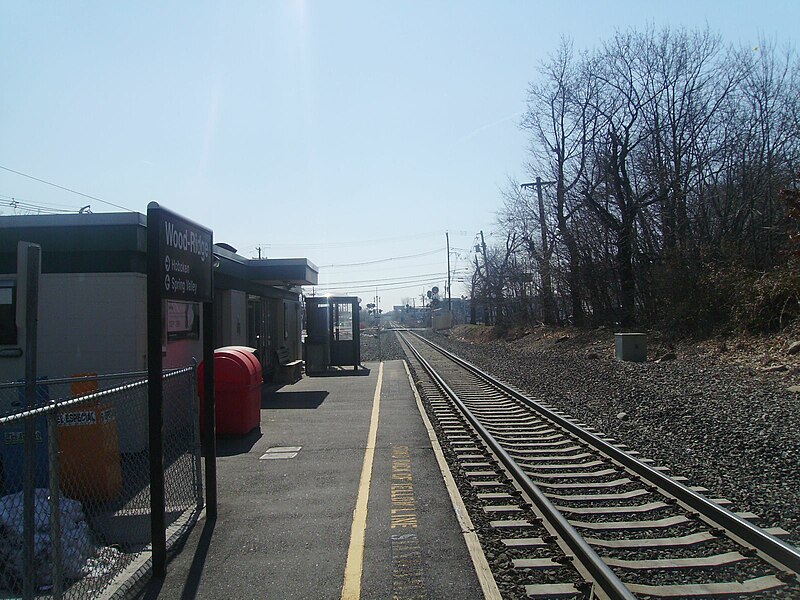
The state of New Jersey will use $75 million from the U.S. Department of Transportation (USDOT) to replace the Wood-Ridge Maintenace-of-Way (MOW) facility and reconstruct a state transit bridge, both damaged by Hurricane Ida in 2021. The project is currently in the design phase, with construction expected to start in 2025.
The Federal Transit Administration's (FTA) Emergency Relief Program is providing the funding to support New Jersey Transit’s (NJ TRANSIT) rail projects. The program provides public transit operators with funds to replace facilities damaged by natural disasters. The FTA recently announced $110 million in disaster relief aid to eight public transport providers, allocating the largest amount to NJ TRANSIT.
Plans call for replacing the 70-year-old and flood-prone Wood-Ridge facility with a larger, energy-efficient and modernized version on NJ TRANSIT property. The new facility will be built at a site with a higher elevation to mitigate risk for future floods. It will also provide more space for parking and vehicle storage.
The site will be large enough to support additional MOW equipment in addition to furnishing enough administrative space for the growing number of staff, according to a project overview by state lawmakers. The state will set aside $165 million to cover project costs.
Click here for more details about this project
(Photo courtesy of Adam Moss.)
| |
Andy Okoro joins SPI consultant team | |
|
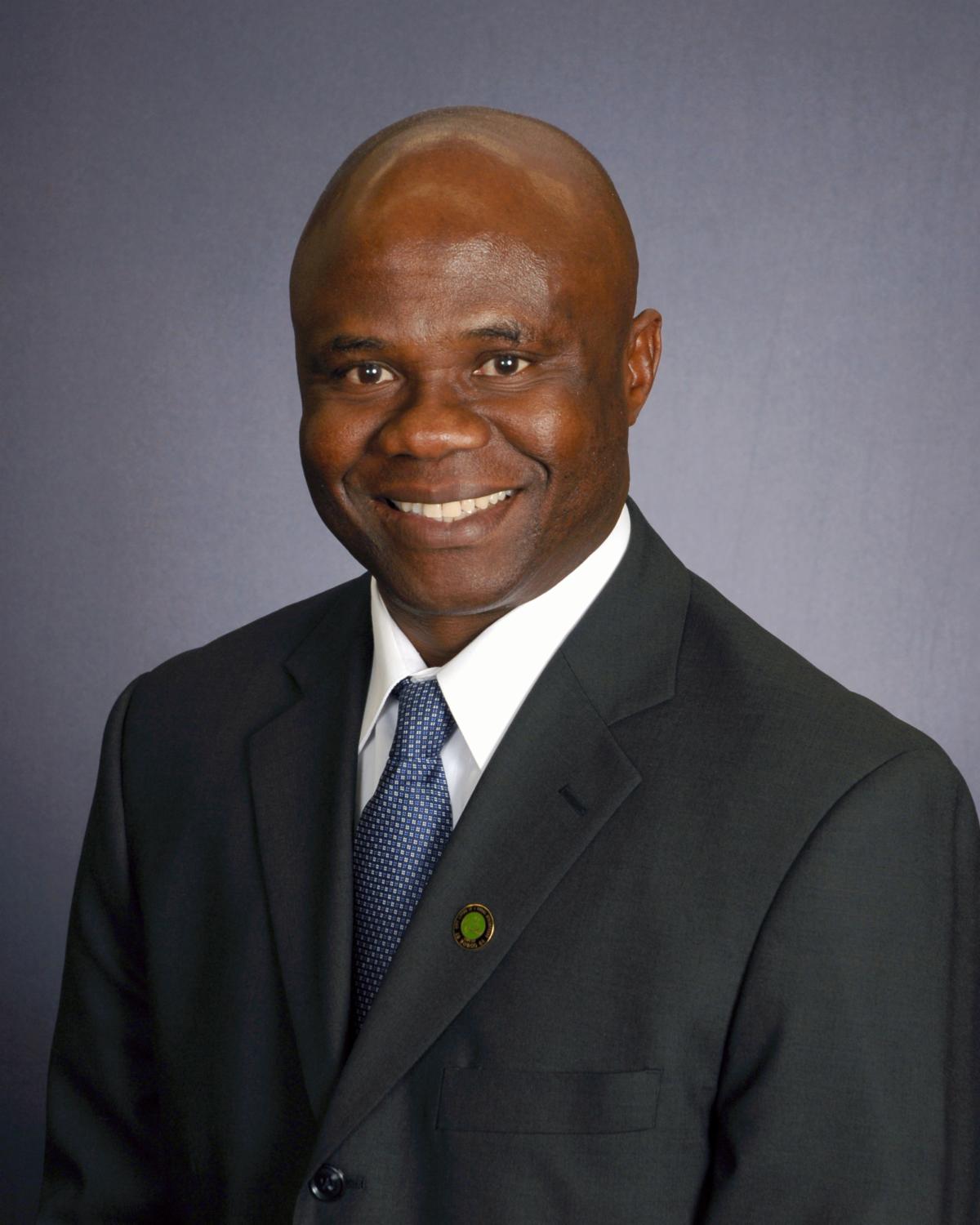
The SPI Team welcomes Andy Okoro as a consultant with over 32 years of diverse leadership experience in the administration and management of local governments with significant insights into the operation of county, regional, and state governments in California.
Andy spent 20 years with the city of Norco, serving as deputy city manager, director of fiscal and support services and city manager.
He supervised various programs to enhance city services such as administration, finance, public safety, infrastructure, community development, water and sewer operations, technology, recreation and leisure, economic development, intergovernmental relations, and communication. Additionally, he negotiated with contractors, developers, employee associations, and other governments while representing the city on special district boards and technical advisory committees.
Prior to joining the city of Norco, Andy held various high-level management positions with the city of Pasadena, Southern California Regional Rail Authority and Alameda Corridor Transportation Authority. Andy managed accounting, auditing, and procurement at the city of Pasadena. He also oversaw the budget for a $2.5 billion rail project in Southern California, which was completed on time and within budget thanks to his leadership.
Andy holds a CPA certificate in the state of California along with several awards of excellence in financial reporting from the Government Finance Officers Association of USA and Canada. Andy received his BBA with a major in Accounting from Wichita State University, Kansas, and his Master of Science in Accountancy from the University of Houston.
|  | |
|
Residents in Herkimer, New York, approved a $35.4 million bond Jan. 16 to renovate school facilities, improve site infrastructure and enhance health and safety measures. The Herkimer Central School District (HCSD) immediately moved the projects into the design phase. Bidding will open March 2025. Construction will begin June 2025.
The bond prioritizes four areas to improve the HCSD campuses: health and safety, aging infrastructure, accessibility and programmatic needs. The district will start by removing the Junior and Senior High School’s pool. They will then reconstruct the space, replacing it with a modern STEAM instructional area.
The district will reconstruct the auxiliary gym, install spectator seating and update the facility’s aging infrastructure. Other plans include renovating the auditorium and its entry area, improving the school’s chorus and band room, upgrading interior and exterior restrooms, relocating office space and making other general infrastructure upgrades. The district will also install emergency alert lighting and improve the outside public address system for large group assembly areas.
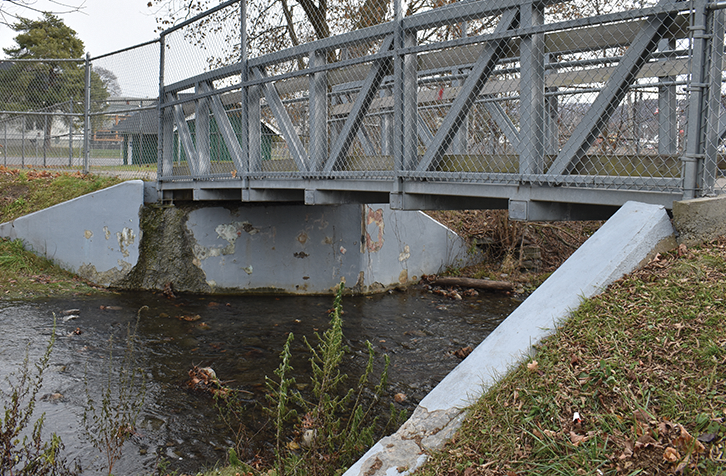
HCSD will perform site work at the Junior and Senior High School to repair a pedestrian bridge that serves as the school's secondary entrance and exit for students and first responders. In addition to building extra parking for the main gym, the district will improve the school’s sidewalk and parking lots. The district also will enhance Harmon Field’s safety by making general improvements.
Click here for more details about this opportunity
(Photo: Pedestrian bridge by the Junior and Senior High School. Courtesy of the Herkimer Central School District.)
| |
|
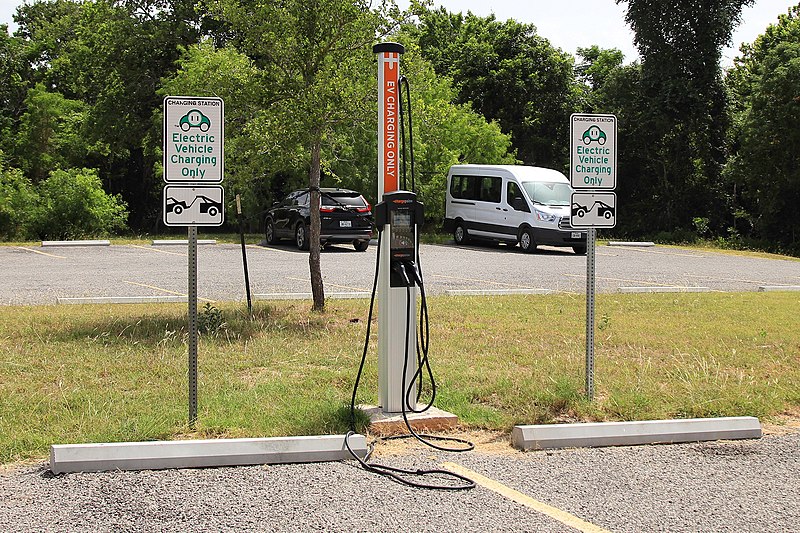
Tennessee will spend $21 million to build 31 electric vehicle (EV) fast-charging stations that will address gaps in the state’s EV charging grid. The funding comes from the U.S. Department of Transportation’s (USDOT) National Electric Vehicle Infrastructure (NEVI) Program. The state will install the stations within two years, state officials said.
The NEVI program will provide Tennessee $88 million over Fiscal Years 2022-2026 to install, operate and maintain EV charging stations. To be eligible for funding, the state must place stations along highways the Federal Highway Administration (FHWA) has designated as Alternative Fuel Corridors (AFCs). AFCs include a national network of major highways that support EV charging, hydrogen, propane and natural gas fueling infrastructure.
The Tennessee awards will go to 10 applicants who will be responsible for managing the fast-charging stations along the state’s AFCs. These corridors include Tennessee’s two-digit interstate routes and U.S. Highway 64.
Click here for more information about national EV charging opportunities
(Photo courtesy of Larry D. Moore.)
|  | |
|
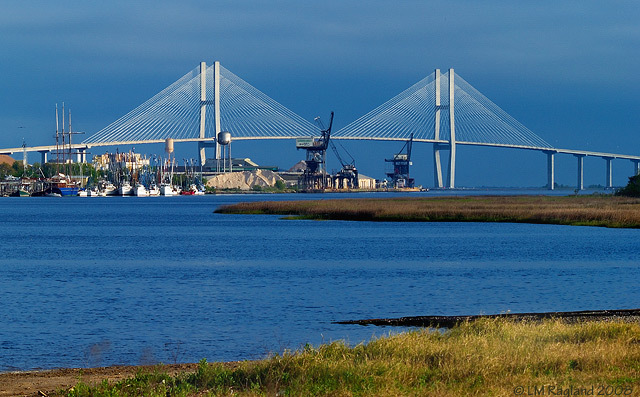
The state of Georgia will use $15 million from the U.S. Department of Transportation (USDOT) to upgrade a pair of berths in the port of Brunswick’s East River Terminal. The harbor is one of the Peach State’s most critical export hubs and the second-busiest hub for wheeled cargo in the nation, moving 650,000 units of vehicles and heavy machinery in 2021.
The harbor project is one of 28 projects supported by the Nationally Significant Multimodal Freight & Highway Projects program (INFRA) as part of the Bipartisan Infrastructure Law (BIL). The competitive grant program supports national or regional projects that improve safety, reliability and efficiency of movement of people and freight in urban and rural settings.
Currently, two of the terminal’s four berths are not fully operational, with Berths No. 2 and No. 3 listed in “marginal” and “condemned” conditions. Plans call for demolishing and replacing both berths. The port will rebuild Berth No. 3 at half of its existing 540-foot length to allow vessels carrying U.S. exports to use it in the long-term.
Other upgrades include building a continuous marine fender system for both berths and installing electrical and water utilities. Plans also call for dredging Berth No. 3’s vessel docking area.
Click here for more information on this opportunity
(Photo courtesy of Laura Ragland.)
| |
|
The Environmental Protection Agency (EPA) and Department of Energy (DOE) will make up to $1 billion in grants available to support efforts to reduce methane emissions from oil and gas operations and to monitor emissions across large geographic regions.
The grants will be awarded through the Methane Emissions Reduction Program as part of an ongoing effort to reduce greenhouse gas emissions nationwide. The EPA and DOE intend to open a 60-day application period in February or March, the departments said in a press release.
The funds are available through the Inflation Reduction Act (IRA), and distribution will be overseen by DOE’s Office of Fossil Energy and Carbon Management. The office works to help the U.S. minimize the negative environmental impacts of fossil fuels and industrial processes and to meet emissions reduction goals through research, development and implementation of technology.
Methane has been shown to heat the earth’s atmosphere at a rate about 80 times greater than carbon dioxide over a 20-year period. About 30% of climate warming can be attributed to methane emissions, and the oil and gas industry is the largest contributor to U.S. methane emissions.
The announcement comes after the EPA proposed rules regulating methane emissions by the oil and gas industry. The IRA requires oil and gas companies responsible for at least 25,000 metric tons of emissions be charged $900 per ton of methane they emit, with the charge increasing each year. The final rule, released in January, provides guidance to states and gives them two years to begin administering fees. This round of grants is intended to speed up the adoption of technology that will help reduce emissions.
Click here to learn more about the specific types of projects to receive funding
(Photo courtesy of Zoya Loonohod on Unsplash.)
| |
|
The National Highway Traffic Safety Administration (NHTSA) wants timely, standardized crash data from states, and it’s making $350 million in grants available to help them supply it.
States, territories and tribes are encouraged to apply for State Electronic Data Collection (SEDC) program grants to standardize state crash data collection systems to enable complete, consistent electronic data transfer to NHTSA.
State crash data helps NHTSA get a clear picture of what’s happening on U.S. roads and shapes its strategies, research, rulemaking and education campaigns, the agency said.
The SEDC grants are available through the Bipartisan Infrastructure Law (BIL) and are open to all 50 states, as well as the District of Columbia, Puerto Rico, the U.S. Virgin Islands, Guam, American Samoa, the Northern Mariana Islands and the Secretary of the Interior if acting on behalf of an Indian tribe.
Click here to learn how to apply for the grants
(Photo courtesy of Karl Callwood on Unsplash.)
| |
|
The White House expects to invest $5 billion in the next phase of its efforts to accelerate semiconductor research, development and production in the United States.
The plan includes bolstering the CHIPS For America Research and Development program by formally creating the National Semiconductor Technology Center (NSTC), the centerpiece of the $11 billion CHIPS R&D program.
The NSTC is expected to serve as a public-private consortium that lowers the barriers to participation in R&D and helps build the U.S. semiconductor workforce. The center has been formally established by the secretaries of commerce, defense, and energy; the director of the National Science Foundation; and Natcast, the NSTC’s nonprofit operator.
The center will help “speed up the pace of new innovations” by bringing together government, industry, labor, customers, suppliers, educational institutions, entrepreneurs and investors, the Department of Commerce said.
The plan includes investing hundreds of millions of dollars to create the NSTC Workforce Center of Excellence that will have a presence in several U.S. regions.
Click here for more information about the plan
(Photo courtesy of Anne Nygård on Unsplash.)
| |
|
Pennsylvania - Mayor Cherelle Parker appointed Debora Carrera and Sharon Ward to lead the city of Philadelphia’s Department of Education.
- Carrera was named chief education officer. Carrera worked for 27 years in the Philadelphia school district as a teacher and then as principal of William McKinley Elementary School and the Kensington High School of Creative and Performing Arts. She was also an assistant superintendent before becoming an official in the Pennsylvania Department of Education.
- Ward was named deputy chief education officer. Ward is an education advocate, previously serving in the Pennsylvania Department of Education. She has also been an adviser to the Philadelphia School District and a founder of the Pennsylvania Budget and Policy Center.
Florida - Mayor Buddy Dyer has appointed Michelle McCrimmon chief financial officer for the city of Orlando. McCrimmon comes to the position with 30 years of experience, including 13 years with Orlando. She most recently served as deputy chief financial officer.
Colorado - The Louisville City Council unanimously voted to name Tim Bierman as Ward 1 representative after a lengthy public comment period. Bierman replaced Chris Leh after he vacated the position to become mayor.
Ohio - Nikki Brandon has been appointed as the Central Ohio Transit Authority's (COTA) chief human resources officer. Brandon has more than 30 years of experience working in the field. Before joining COTA, she was the director of human resources for the city of Columbus.
Illinois - Des Plaines Assistant City Manager Dorothy Wisniewski has been tapped to succeed her longtime boss and become the suburb’s first female city manager. Wisniewski has served Des Plaines for 16 years.
Mississippi - The Tennessee Valley Authority (TVA) announced that Amy Tate will be the executive leader of the agency’s newly created Southwest Region, which will focus on serving customers and communities in Mississippi. Tate currently serves as a government relations manager for TVA.
South Dakota – Gov. Kristi Noem appointed Kristin Conzet to represent District 32 in the South Dakota House of Representatives, effective Feb. 10, 2024. The vacancy was created after Gov. Noem moved Rep. Becky Drury from District 32 to represent District 34. Conzet previously served in the South Dakota state legislature from 2010 to 2018.
Maine – Presque Isle has hired Tyler Brown to take over the city manager role. Brown, a former airline operations leader, officially took office Feb. 7. He replaced former City Manager Martin Puckett following his retirement in October 2023.
Vermont — The Newport City Council, following a unanimous vote, appointed Jonathan DeLaBruere as city manager. DeLaBruere has served as town administrator for Cambridge, Vermont, and as a fire instructor for Pittsford, Vermont. He has also worked as an emergency management planner for the Central Vermont Regional Planning Commission in Montpelier.
California - The Pomona City Council unanimously appointed Anita D. Gutierrez as city manager Feb. 5. Gutierrez is the first Latina to serve as Pomona city manager. With over two decades of government experience, Gutierrez has a track record of leading teams and communities in transformative work, development and growth.
Alabama - Finis St. John IV will leave his current role to serve as executive director of the Shelby Institute for Policy and Leadership at the University of Alabama. St. John takes over the role April 1. He previously served as chancellor at UAB system.
| | |
|
Connect with SPI
Check out our social media links!
| |
About Government Contracting Pipeline | |
|
Strategic Partnerships, Inc.
Publisher: Mary Scott Nabers
Editors: Adam Rollins
Dave Doolittle
www.spartnerships.com
| |
Government Contracting Pipeline, a publication of Strategic Partnerships, Inc., is a free, weekly newsletter detailing important happenings nationwide and the premier source for federal, state, and local government news and contracting opportunities.
| |
Help us share this message.
To ensure delivery and proper formatting of the newsletter, be sure to add editor@spartnerships.com to your safe senders list.
Otherwise, the newsletter may be flagged as spam and automatically routed to your junk e-mail folder.
| | | | |