Volume 16, Issue 45 - Wednesday, November 6, 2024 | |
By Mary Scott Nabers, CEO of Strategic Partnerships, Inc. | |
|
At-grade rail crossings – where roads intersect at the same level with railway tracks – are the second leading cause of rail-related fatalities in the U.S., with over 2,000 incidents and approximately 200 deaths annually.
The existing technology for grade crossing warnings has largely remained unchanged since the 1960s and more is obviously needed. The current standard includes flashing red lights, warning bells and gates that lower in advance of an approaching train.
Upgrading or eliminating at-grade crossings can greatly reduce the risk of vehicle-train collisions. The crossings inherently pose safety challenges, but grade separations and improved technology can significantly lower the potential for crashes. Communities nationwide are reconfiguring these types of intersections.
A $52 million, two-phase project in Pelham, Alabama, will deliver a bridge over two existing at-grade crossings near Lee Road. The project will also realign two county roads as well as widen and upgrade the road to meet current safety standards.
County Road 52, one of the intersecting roadways, is an important link between Pelham and Interstate 65—the major north-to-south highway in Alabama. The two current at-grade railroad crossings are often blocked by stalled trains for extended periods of time, restricting vehicle access and obstructing emergency vehicles. When completed, the project will significantly improve the safety and mobility of people and goods in the town just south of Birmingham.
Project details call for a proposed five-lane bridge,415 feet in length, with a multi-use path to accommodate pedestrians and cyclists. Two additional bridges will also be required: one over Buck Creek and another to replace an existing bridge built in the 1950s. Work is slated to begin in 2025.
Click here for more.
| |
Michigan to use $352 million to replace bridge, rehabilitate interstate | |
|
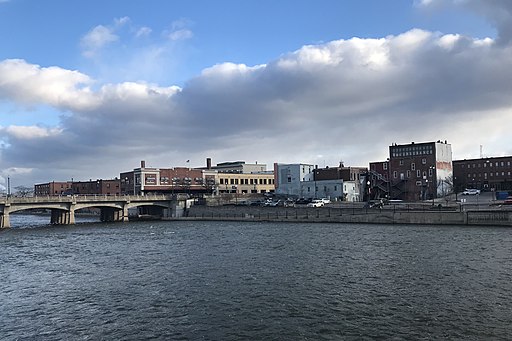
The Michigan Department of Transportation (MDOT), in collaboration with the city of Monroe, will spend $352 million to replace a major bridge and rehabilitate a critical section of Interstate 75.
The project will enhance critical transportation infrastructure to enhance mobility, safety and accessibility for local communities. Construction is expected to begin in 2028.
MDOT will replace the deteriorating River Raisin freeway bridge. The project will also rebuild three miles of I-75, improving both the nearby roads and the bridge’s resiliency and traffic capacity.
To help streamline traffic flow and protect drivers along the corridor, MDOT will reconfigure an interchange and remove another. In addition, the project will replace six structures along the corridor - including two separate bridges - and enhance the River Raisin Heritage Trail to provide amenities for bicyclists and pedestrians.
Plans include updating the drainage systems by replacing multiple culverts to control runoff into the river. MDOT will build ramps connected to the bridge to enhance mobility. Once completed, all project-centric bridges will have a 100-year service life.
(Photo courtesy of Weaponizing Architecture.)
| |
NYC MTA releases RFP for engineering phase of $5.5 billion rail project | |
|
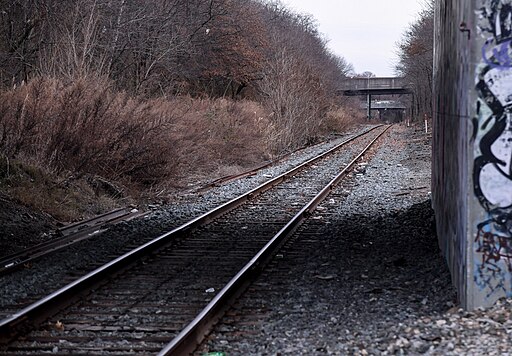
The Metropolitan Transportation Authority (MTA) of New York City is moving into the design phase for the $5.5 billion Interborough Express (IBX) project after putting out a call for engineering services. Although a timeline has not been announced, the authority’s 2025-2029 capital plan estimates construction will begin within the next four years.
The IBX will be a transformative project for New York City’s boroughs, connecting communities in Brooklyn and Queens with reliable, direct light-rail service. Once completed, the 14-mile rail line will significantly reduce travel times between the two boroughs and create access to 17 subway lines, 51 bus routes and the Long Island Rail Road.
The project is separated into two phases. The first phase will focus on ensuring the corridor will be ready for the rail line’s construction. The MTA will demolish existing structures and rehabilitate existing bridges. In addition, the authority will build above-grade and undergrade bridges, tunnel structures and retaining walls. The project will also reposition freight infrastructure, remediate environmental concerns, relocate utilities and conduct associated street-work.
Phase 2 of the project revolves around the light rail itself. The MTA will install the light-rail system, starting with building passenger trackwork, stations, a light-rail vehicle storage yard and an operations center. Plans also include procuring light rail rolling stock, installing traction power, signals and associated systems and testing the line.
The IBX will run along an existing freight line, using the established Bay Ridge Branch and Fremont Secondary to offset costs and streamline development. To accommodate simultaneous freight operations, the project anticipates shifting the freight-rail tracks to make room for the IBX light-rail line. The MTA estimates that it will build 19 stations in select locations and replace approximately 45 bridges. The completed project will provide an affordable transit option for 900,000 residents and service around 115,000 daily passengers.
(Photo courtesy of the MTA of the State of New York.)
| |
University of Wisconsin education center to undergo $35 million renovation | |
|
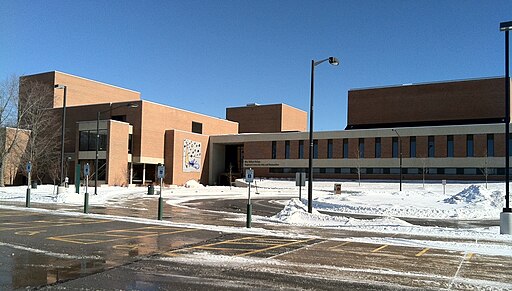
The University of Wisconsin at Parkside (UW-Parkside) will use $35.3 million to renovate three levels of a historical education facility to resolve maintenance issues, replace key utility systems and rebuild infrastructure. Construction is expected to begin in May 2026.
Wyllie Hall is a 52-year-old building with several utility and infrastructure systems that have exceeded their useful life expectancy. The university will complete work that was not finished during the project’s first phase, prioritizing Levels 1, 2 and 3 and the roof.
The project will replace the current roofing system with a durable rubber roofing system. After installation, UW-Parkside will consider installing photovoltaic solar arrays on select roof sections. The replacement roof will incorporate existing electrical conduits, mechanical equipment curbs and other roof appurtenances.
The university will replace the mechanical, electrical, telecommunications and plumbing infrastructure distribution systems. Plans also include replacing suspended acoustical ceiling systems, lighting fixtures, louvers, vents and modifying and relocating sprinkler system heads. The project will integrate direct digital controls with the building’s automation system to replace existing pneumatic controls.
UW-Parkside will renovate the building’s restrooms and replace all fixtures and floor drains to meet current accessibility standards. Plans include replacing and reconfiguring the library book and media ranges on all three levels to be ADA accessible. The university will also replace and terminate network cabling into closets that will be connected to emergency power. The project will replace the University Police’s radio transmitters, repeaters, equipment and central hub.
As part of the project, the university will relocate the administrative and service units in Tallent Hall to Level 3 of Wyllie Hall. Plans include reducing that level’s library space to accommodate the new units. In addition, UW-Parkside will reconfigure, modify and replace the administrative elevator to provide additional stops in the building.
(Photo courtesy of Tallisguy00.)
| |
Hawaii plans $55 million rehabilitation of key transportation corridor bridge | |
|
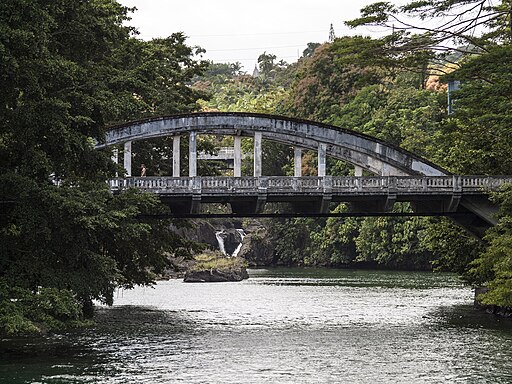
Hawai’i will spend $55 million to rehabilitate a river bridge in Honolulu. The Hawai’i Department of Transportation (HDOT) will put the project out for bid in fall 2026, with construction expected to begin in spring 2027.
The project will reinforce the Wailuku River Bridge’s superstructure and foundation. The 70-year-old bridge is currently in poor condition and has needed emergency repairs several times in recent years. As part of the project, HDOT will use bolted connections to replace the superstructure with steel girders and grating.
Plans include removing two piers near the abutments that are not needed to support the bridge’s overall structure. To maintain structural support, the project will reconstruct the remaining two piers and reinforce them with drill shafts.
HDOT will widen the bridge to ensure that it is ADA accessible. In addition, the project will upgrade the bridge railings to meet current safety standards and focus on retaining the bridge’s historic features.
(Photo courtesy of .)
| |
Towson University commits $25 million to renovate a fieldhouse, training facility | |
|
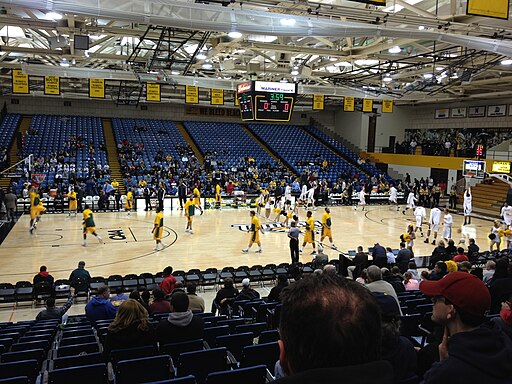
Towson University (TU) in Maryland will spend $25 million to renovate an athletics fieldhouse and training facility. The University System of Maryland Board of Regents approved the projects during its Oct. 30 meeting. A construction timeline has not been established.
The university will invest $19.25 million to renovate 10,000-square-feet of the existing fieldhouse and expand it by 12,920 square feet. The project will build multipurpose classrooms with operable partitions, provide additional office space and replace classroom and storage areas. Once completed, the fieldhouse will consolidate TU’s Academic Achievement Program under one roof.
In addition, the project will renovate the Athletic Sports Medicine Facility to modernize its hydrotherapy area and equipment and maintain its taping, treatment and rehabilitation spaces. Plans include improving the facility’s physician exam room, chiropractic and massage rooms, conference room and staff offices.
The remaining $5.75 million will enable the university to renovate the athletic training facility within the Towson Center. The project will expand the facility by an additional 3,200 square feet to overcome space and equipment limitations. TU will upgrade the treatment areas, expand hydrotherapy capabilities and increase functional space for trainers and athletes.
(Photo courtesy of Fuzzy510.)
| |
Arizona to spend $181.4 million implementing wildfire mitigation measures | |
|
An Arizona energy company will invest $181.4 million to modernize the energy grid to enhance resiliency and protect communities statewide from wildfires.
As the threat of wildfires grows due to climate change and dry conditions, Arizona will inject $121.2 million into a wildfire mitigation project to protect communities and electrical infrastructure from damage. The statewide effort emphasizes upgrading technologies, microgrids and communication to monitor and manage fire risk.
The company will install a network of wildfire prevention devices to effectively manage power distribution in anticipation of and during wildfire events. Plans include deploying 226 remote-controlled reclosers and 8,000 expulsion-limiting fuses to make real-time adjustments and precise power shutoffs. The network will help prevent sparks from damaging fuse operations and accelerating wildfires.
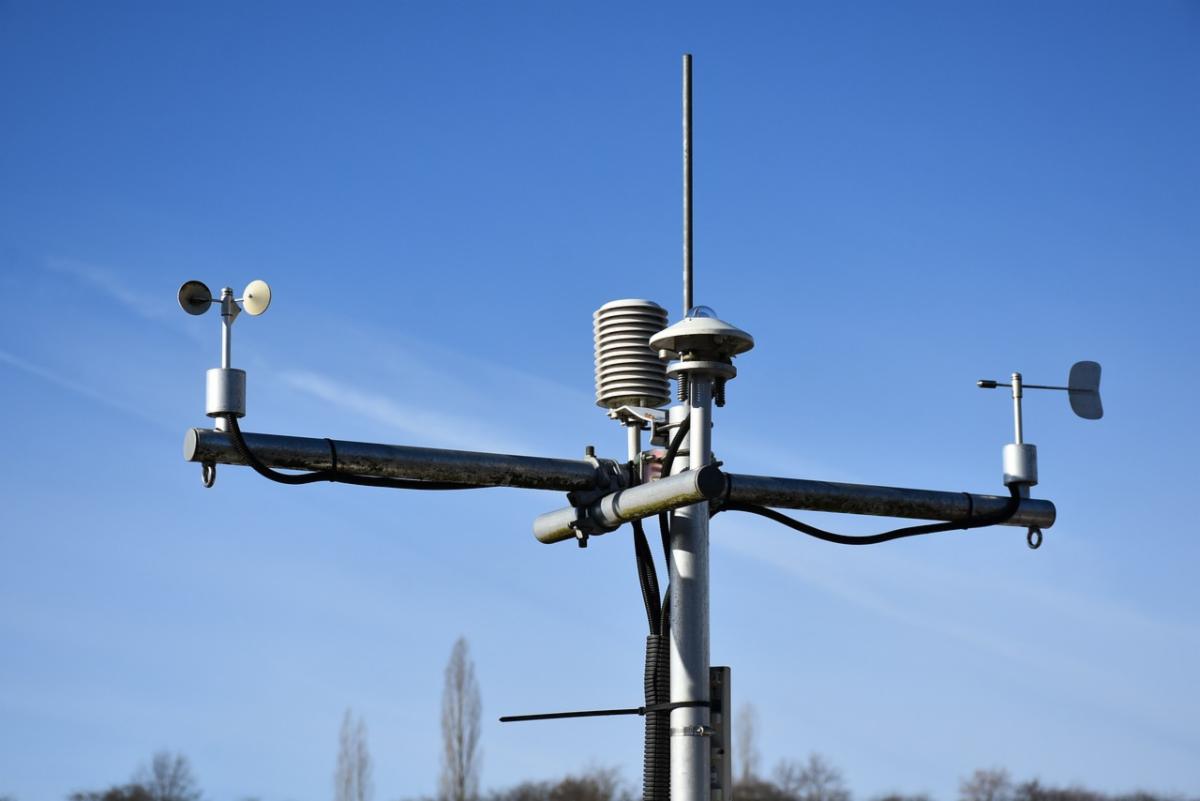
The project will also deploy 300 weather stations and 300 cameras equipped with fire-modeling software. These technologies will compile real-time data on weather conditions and fire risks, enabling monitors to predict fire spread, proactively harden the grid and make informed improvements to safety measures in advance. The company will also build microgrids in two vulnerable communities to provide reliable power during outages.
The remaining $60.2 million will go toward modernizing the state’s grid infrastructure to better address energy demands, adopt clean energy technologies and combat climate change. A major component of the project will involve installing 900 new or upgraded field devices to provide real-time data on grid capacity. Plans also include deploying additional technologies to broaden energy infrastructure visibility, including:
- Fault location, isolation and system restoration (FLISR).
- Volt/var optimization (VVO).
- Dynamic line rating (DLR).
The upgrades are expected to increase the amount of load that transmission lines can handle. By extension, the grid will become more reliable, capable of handling demand and capacity response efficacy, suited to use renewable energy sources and capable of managing assets.
(Photo courtesy of RitaE on Pixabay.)
| |
Michigan launches accelerator program to connect partners with clean energy funds | |
|
Michigan has launched a new program to advance development of clean energy projects throughout the state. The Michigan Department of Environment, Great Lakes and Energy (EGLE) will oversee the program.
The Michigan Climate Investment Accelerator will help scale up green lending to provide financial support for clean energy technologies, lower energy costs and implement the Michigan Healthy Climate Plan (MHCP). State officials expect the Accelerator to attract billions for clean energy projects, supporting the state’s economy and protecting valuable natural resources.
The program pulls from two initiatives to promote investment from federal and private sources: the Michigan Climate Investment Fund (MCIF) and the Michigan Climate Investment Hub (MCIH).
The MCIF is a funding opportunity supported by $11 million from the Make It in Michigan Competitiveness Fund. The program will provide matching grants to help local communities implement clean energy projects. The state will provide additional technical assistance for communities to build capacity to apply for Clean Communities Investment Accelerator (CCIA) funds.
The MCIH is a public-private partnership (P3) dedicated to establishing and cultivating relationships between state, municipal, private and nonprofit entities. The hub specializes in coordinating investments from federal programs to advance project deployment.
The Accelerator will primarily work to connect eligible clean energy project participants with Greenhouse Gas Reduction Fund (GGRF) grants. Partners will use funds to reduce greenhouse gas emissions and deliver projects that protect the environment and public health of low-income, disadvantaged communities.
(Photo courtesy of Cytonn Photography on Unsplash.)
| |
|
The Environmental Protection Agency is making $3.6 billion in funding available for projects to upgrade water infrastructure to improve access to safe drinking water across the United States.
The funding is on top of $2.6 billion that was announced earlier this year, bringing the combined investment in Fiscal Year 2025 water projects to $6.2 billion.
Click here for more information on where the billion-dollar funding will flow
(Photo courtesy of SHTTEFAN on Unsplash.)
| |
|
The New York capital city will be the site of the first CHIPS for America research and development flagship facility aimed at advancing semiconductor technology.
The National Semiconductor Technology Center’s new Extreme Ultraviolet (EUV) Accelerator will be supported by a federal investment of $825 million and will operate within NY CREATES’ NanoTech complex in Albany, a publicly-owned 300mm semiconductor R&D center, the Department of Commerce announced last month.
Click here to learn more about Albany’s upcoming semiconductor R&D facility
(Photo courtesy of Maxence Pira on Unsplash.)
| |
|
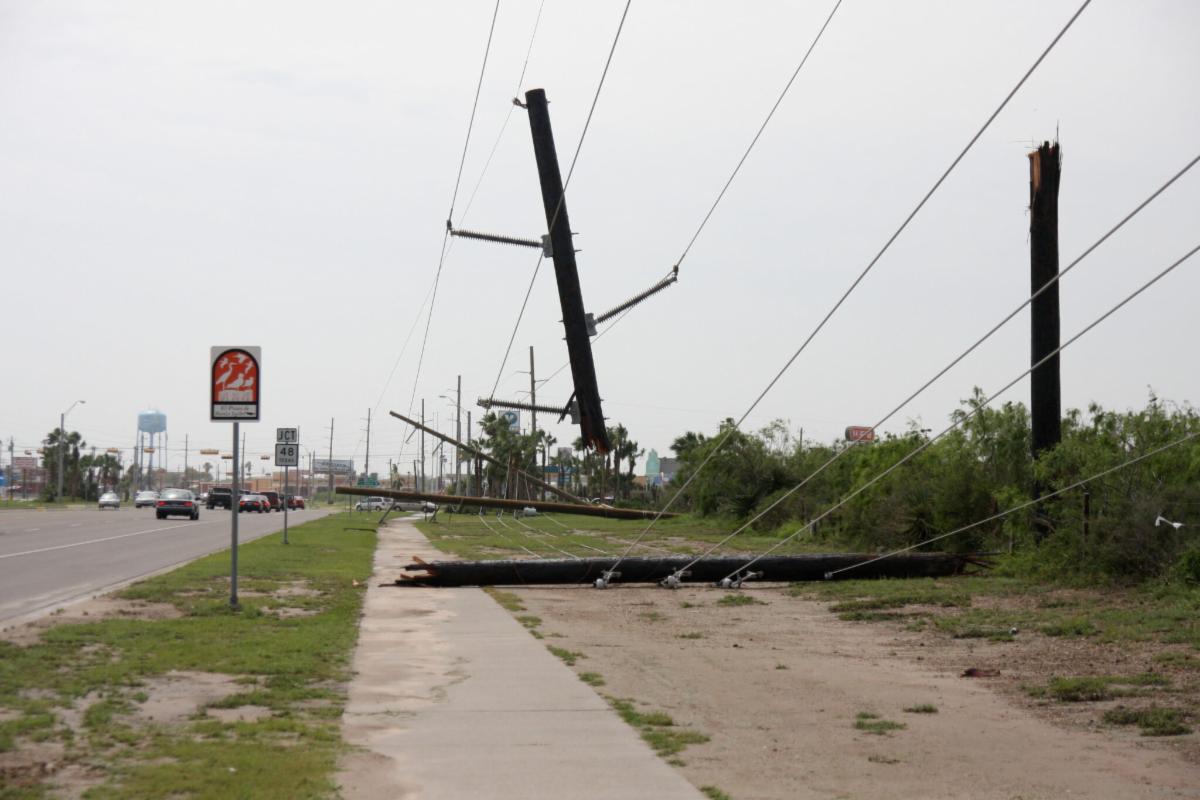
The growing threat of climate change is driving federal investments to strengthen electrical systems across the nation.
To that end, the U.S. Department of Energy (DOE) is unveiling $473.6 million in formula grants to modernize and improve the nation’s electrical grid and power sector’s reliability. To mitigate outages and damage caused by climate-induced natural disasters, the funding will support hundreds of state and tribal entities in strengthening the power grid across the nation.
These grants will be delivered to entities over five years, based on a formula that includes population size, land area, disruptive event probability and severity and historical mitigation initiatives.
Click here to learn more about the DOE’s grid resilience investment
(Photo courtesy of Jacinta Quesada.)
| |
|
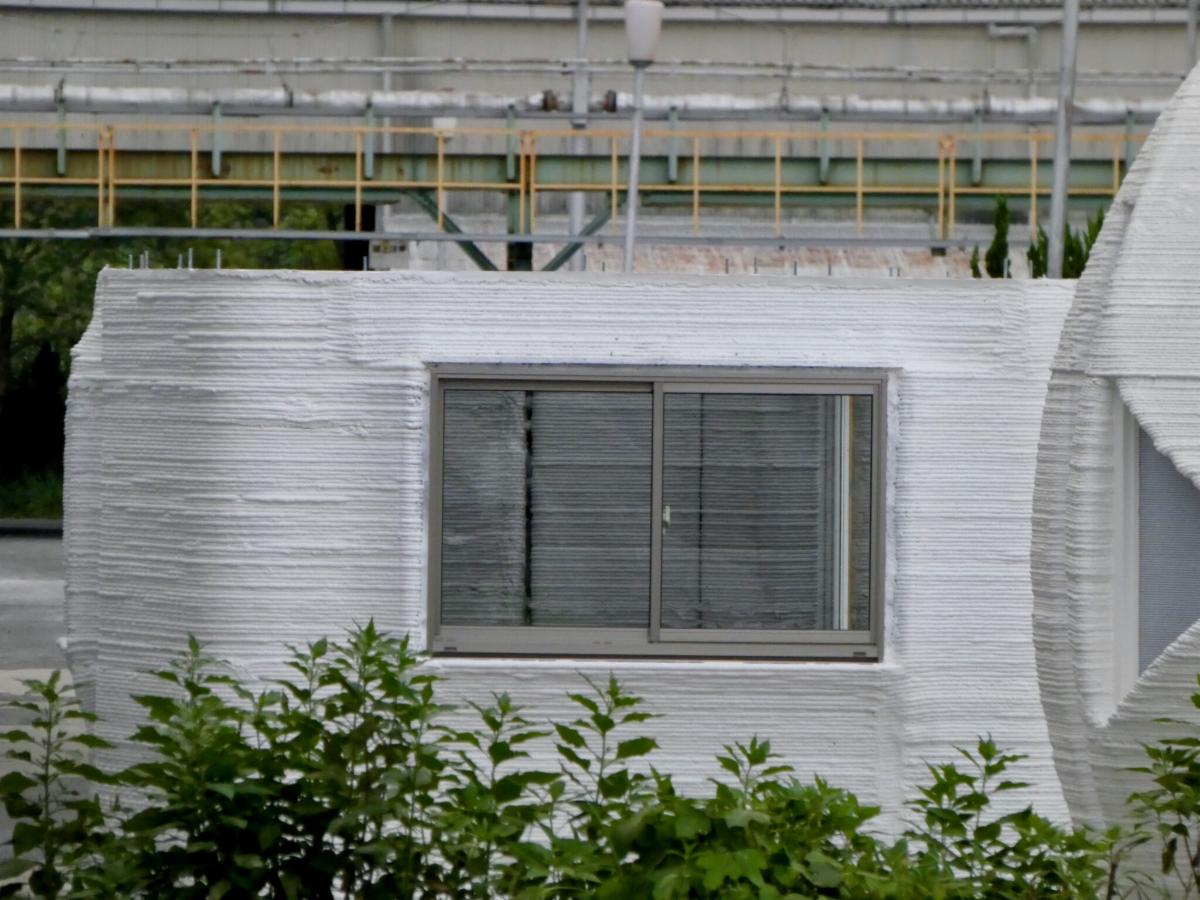
The 3D printing of concrete for construction already helps to minimize the environmental impact associated with the projects it’s used for, but there’s still more work to do to make the process more environmentally friendly.
Researchers at the University of Virginia are taking on that challenge by developing a more sustainable, printable cementlike composite.
Current 3D printable materials rely heavily on traditional concrete materials like Portland cement to fulfill the demands of the manufacturing process, ensuring requirements such as extrudability and buildability.
Click here to learn more about innovations in creating sustainable building materials
(Photo courtesy of Kyu3.)
| |
Bureau of Prisons to build $505 million federal correctional institution in Kentucky | |
|
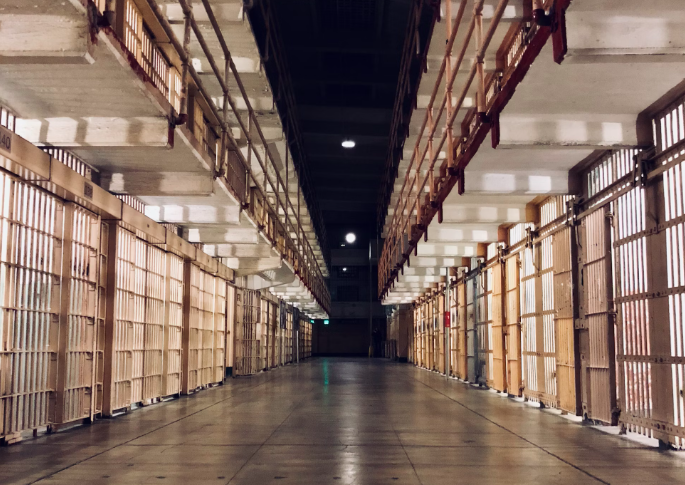
The Federal Bureau of Prisons (BOP) will build a $505 million federal correctional institution and prison camp in Letcher County, Kentucky. After the BOP approved development through its Record of Decision, the project entered the design phase with construction expected to begin in late 2025.
As part of the project’s approval, the BOP will buy approximately 500 acres to build a modern medium-security prison building, camp and ancillary facilities. The structures will house more than 1,400 inmates in total.
The BOP will design the facilities in a compact, campus-style arrangement to optimize space and minimize environmental impact. Plans include re-vegetating the nearby land after construction is concluded. The project will ensure all structures are no taller than two stories and will use low-reflective materials when feasible. The compound will include security areas, a parking lot and on-site electric vehicle (EV) charging stations for government vehicles.
The project’s ancillary facilities will include a central utility plant, garage, landscape building and an outside warehouse. The BOP will also build a staff training building and outdoor firing range, a water storage tank, an access drive and internal roadways. The site will feature a wastewater collection system.
While building the facilities, the BOP will ensure all practices align with green building design standards. The bureau will support conservation efforts by using low-volatile organic compound materials, eliminating greenhouse gas emission and using other proactive environmentally friendly measures. The facility will include additional infrastructure for future charging station expansion for employee and visitor EVs.
(Photo courtesy of Carles Rabada on Unsplash.)
| | |
|  |
|
|
Washington, D.C. - The American Association of State Highway and Transportation Officials (AASHTO) has chosen Garrett Eucalitto and Russell McMurry as president and vice president.
- Eucalitto, currently a commissioner of the Connecticut Department of Transportation (CTDOT), will take over as president of AASHTO for the next year. He most recently served as the organization’s vice president. Prior to serving as a CTDOT commissioner, Eucalitto was the transportation program director for the National Governors Association.
- McMurry has been promoted from his role as AASHTO treasurer to vice president. He is a commissioner on the Georgia Department of Transportation (GDOT). He has been with GDOT since 1990, starting as an engineering intern. He later advanced to chief engineer and the department’s planning director.
Florida – Catherine Givens has been chosen as Coral Springs’ city manager. The Coral Springs City Commission unanimously voted to promote Givens, who previously served as the city’s deputy city manager. She will officially replace Frank Babinec after he retires Jan. 6, 2025.
New York – The New Rochelle City Council has unanimously selected Wilfredo Melendez as city manager. Melendez has served as acting city manager since April 2024. Prior to joining New Rochelle, he worked as deputy director of the Bureau of Water Supply-Water Treatment Operations South at the New York City Department of Environmental Protection. His first day will be Dec. 1.
Michigan – Melia Howard has been named deputy mayor of Detroit. Howard most recently served as the city’s director of Community Engagement for two years. She will replace Todd Bettison in the role.
Washington – The city of Kennewick has welcomed Lisa Beaton as deputy city manager. Beaton has been with the city for 24 years, most recently as city attorney. She was appointed interim city manager in 2023. Her first day in the role was Oct. 1.
Minnesota – St. Louis County has appointed Jason Meyer director of the county’s Land and Minerals Department. Meyer most recently served as the department’s deputy director. He has been with the county since 1995. He replaced Julie Marinucci.
California – The city of Palms Springs has selected Nicholas Gonzalez as director of the Parks and Recreation Department. Gonzalez has worked as director of Recreation and Community Services for the city of Ontario since 2020, the latest in his 13 years of experience with the city. He will assume his responsibilities Dec. 9.
Tennessee – Alicia Summers has begun her role as Johnson City’s next assistant city manager. Summers brings more than 20 years of economic development to the position, most recently serving as Johnson City’s economic development director. She began her tenure Nov. 4.
Oregon – The city of North Plains has announced Bill Reid as its next city manager. Reid has been with the city since 2020, working as finance director. Before joining North Plains, he served as an adjunct professor of real estate for Portland State University for more than a decade. Reid replaced Andy Varner in the role.
Virginia – Richmond has appointed Jamie Atkinson director of revenue and Thomasena Gadson deputy director of finance.
- Atkinson brings 15 years of experience working with government agencies and nonprofits to the position. She most recently served as budget director for the Austin Transit Partnership. She began her new role in October 2024.
- Gadson was appointed deputy director of finance in September 2024. She brings more than 21 years of government and private sector experience to the role. She most recently served as a supervisory revenue officer for the Washington, D.C., Tax Collections and Enforcement Administration.
| | |
|
Connect with SPI
Check out our social media links!
| |
About Government Contracting Pipeline | |
|
Strategic Partnerships, Inc.
Publisher: Mary Scott Nabers
Editors: Adam Rollins
Dave Doolittle
www.spartnerships.com
| |
Government Contracting Pipeline, a publication of Strategic Partnerships, Inc., is a free, weekly newsletter detailing important happenings nationwide and the premier source for federal, state and local government news and contracting opportunities. | |
Help us share this message.
To ensure delivery and proper formatting of the newsletter, be sure to add editor@spartnerships.com to your safe senders list.
Otherwise, the newsletter may be flagged as spam and automatically routed to your junk e-mail folder.
| | | | |