Volume 16, Issue 40 - Wednesday, October 2, 2024 | |
By Mary Scott Nabers, CEO of Strategic Partnerships, Inc. | |
|
Cities and counties throughout the U.S. are benefitting from funding that is readily available for transit-oriented development (TOD). Economic development teams have seen the boost of economic vitality that this type of initiative brings to local communities, and the result is that private sector developers and public officials nationwide will be delivering housing, retail and new communities located near public transit stations for the next several years.
TOD projects, supported by federal funding, focus on building housing and mixed-use communities near public transit stations to encourage public transportation. This type of new commercial development with housing, retail, parkland and community gathering spaces is often linked to parks, trails and bicycle infrastructure. Some of the newly created communities have libraries, community centers and schools.
Federal funding support is available because TOD projects result in reduced greenhouse gas emissions, thereby contributing to the federal government's goal of net-zero emissions by 2050. Many planned TOD developments are scheduled to launch in 2025, but many others are set for launch before the end of 2024. The following examples of upcoming projects are similar to others that can be found throughout the U.S. currently.
One extremely large TOD initiative is being planned by Sound Transit of Seattle. This development will be designed to deliver new light rail lines with ample room to promote transit-oriented development near the new stations. The overall effort is expected to cost at least $100 million.
The new stations will help promote development in nearby residential areas and also create new TOD areas. Housing opportunities will be expanded to prioritize affordable housing options, and the overall effort will support attractive, walkable neighborhoods in communities along with retail and entertainment venues. This large initiative is currently in the design phase, and procurement is expected in 2025 or 2026.
In California, the El Cerrito Plaza transit station will soon benefit from a transformative urban project designed to create a pedestrian-friendly, transit-focused community with great access to the transit station has been announced. The California Strategic Growth Council made $39 million available to support Phase I, which will include the construction of 70 affordable housing units and the project has secured another $134 million in federal funding.
On-site amenities for family housing will include a community room, service provider offices, a mail room, on-site laundry, and landscaped open spaces for residents. Construction is scheduled to begin in the summer of 2025 and the project will also include various transit and infrastructure improvements. The overall project will include six buildings, with construction expected to commence on all buildings by 2027. The entire development has a completion date of 2029.
Click here for more.
| |
Four states collaborate to build $249 million zero-emission freight corridor infrastructure | |
|
The states of New Jersey, Connecticut, Delaware and Maryland will receive $249 million from the Environmental Protection Agency (EPA) to deploy electric vehicle (EV) charging infrastructure along the Interstate 96 traffic corridor and nearby roadways. These stations will provide reliable charging options for zero-emission medium-and heavy-duty vehicles from Connecticut to Maryland.
In addition to expanding EV charging infrastructure along one of the busiest corridors in the country, the four-state coalition will build a skilled workforce and develop support services to advance the adoption of zero-emission trucks along this corridor. The states anticipate that the EV infrastructure will prevent 18.6 million metric tons of CO2 from entering the atmosphere from 2025 to 2050.
In total, the states will develop 20 freight truck charging sites to advance corridor electrification. Deploying these charging stations will be a critical milestone toward establishing an early development, high-impact area for zero-emission freight. These infrastructure sites will include:
- 148 ports for overnight use.
- 164 fast charging ports.
- 138 ultra-fast charging ports.
Plans include implementing a workforce development program to train 400 people to build, operate and maintain heavy-duty vehicle infrastructure. This program will emphasize opportunities for low-income and disadvantaged communities, providing a career path toward high-quality employment. If successful, both the corridor infrastructure and workforce development program will serve as successful examples that can be replicated across other difficult-to-decarbonize sectors in the country.
The EPA allocated the funds from the Climate Pollution Reduction Grants (CPRG) program. The CPRG program provides financial support to eligible recipients to develop and deploy plans to reduce harmful air pollutants. Awarded projects will address climate change, reduce air pollution, support environmental justice and transition the nation to clean energy.
New Jersey is one of 25 applicants chosen to receive a portion of the recently announced $4.3 billion in CPRG funding. The most recent round of funding prioritizes reducing GHG emissions in the agriculture and working lands, transportation, commercial and residential buildings, industry, waste and materials management and electric power sectors.
(Photo courtesy of Quintin Gellar on Pexels.)
| |
University of Wisconsin designs $195 million science center addition to replace outdated facility | |
|
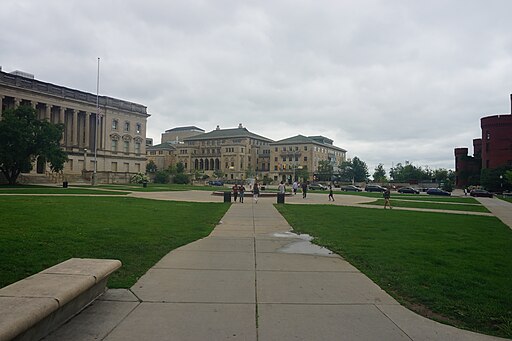
The University of Wisconsin-La Crosse (UWLC) will spend $194.5 million to finish a science center and demolish the original science facility. The university will finish the second phase of the Prairie Springs Science Center project with a final building addition and full replacement of Crowley Hall. Construction is expected to begin in June 2026.
Crowley Hall - the university’s primary science center since 1963 – no longer provides the adequate learning space and environment needed to support UWLA’s educational needs. The hall is structurally unfit for renovation, has a 12-foot floor-to-ceiling height, no fire suppression system or compartmentalization and has an insufficient structural floor loading capacity.
The second phase of the Prairie Springs Science Center project will complete the building with additional laboratories and educational support spaces. Plans include additional classrooms, offices, a greenhouse, observatory, specimen museum, animal care facility and maker space. The project will seamlessly integrate the building addition with the rest of the parent structure, including laboratory exhaust, fresh air intake, emergency power and noise and vibration isolation.
The 194,000-square-foot building addition will include nine general-access classrooms that can hold between 50 and 150 students each. The project will also build three 84-station active learning classrooms and instructional laboratories for STEM education. The university will outfit classrooms with demonstration, preparation and storage spaces.
The project will build 13 instructional laboratories for STEM faculty and students. Plans include building specialized laboratory and research spaces, including a mycology laboratory, an at-grade level greenhouse and rooftop observatory.
The university will also build several computational spaces, a computer science engineering lab, an animal care facility, a maker laboratory, testing areas, conference rooms and a faculty resource area. The facility will feature STEM departmental offices and homes alongside individual faculty office areas.
(Photo courtesy of Michael Barera.)
| |
Raleigh dedicates $157 million to upgrade critical water, sewer infrastructure | |
|
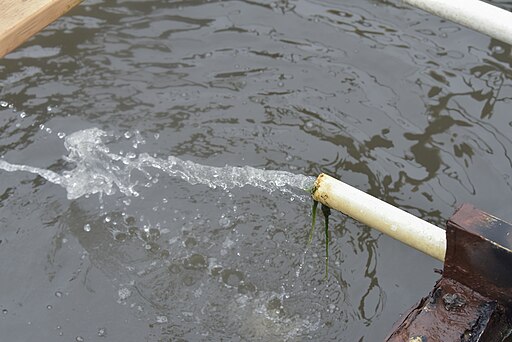
Raleigh, North Carolina, will spend $157 million to upgrade the city’s water and sewer system infrastructure. The city will distribute the funds across three projects that will replace pipes, install transmission lines and increase system redundancy.
The $71 million Crabtree Valley Sewer Improvement project will install approximately 15,000 feet of gravity sewer line along Crabtree Creek. The project will replace sections of the existing line with 36-inch, 42-inch, 48-inch and 54-inch sewer line. Plans include placing an additional sewer line behind the local mall to serve businesses. Construction is expected to begin in winter 2025.
The city will use $35 million to replace 11,700 feet of 36-inch water main transmission lines between two pump stations. Once completed, the pump stations will be able to fill a nearby water tank to provide redundancy for transmission flow from the local water treatment plant. The project may also potentially extend the city’s reuse water system throughout the project area in the future. Construction is expected to begin in winter 2025.
Raleigh will spend $30 million to upsize 15,900 feet of gravity sewer pipes with larger diameter or upgraded liner pipes. The current sewer line is not properly sized to handle heavy weather flows and risks sanitary sewer overflows. The project will enable the city to prepare for heavy rainfall in the project area, protecting the sewer system from higher yields. Construction is expected to begin in fall 2025.
The city will spend $21 million to install a 36-inch transmission main to replace and upgrade the existing undersized infrastructure along Durant Road. The pipeline will create redundancies and provide additional water flow capacity. Construction is expected to begin in winter 2025.
(Photo courtesy of USDAgov.)
| |
Michigan receives $67 million to improve street safety, enhance harbor operations | |
|
The U.S. Department of Transportation (USDOT) will allocate $67 million to help Michigan address major safety issues in the state’s roadways, ports and multimodal networks. The state will use the funds to improve a cargo transportation terminal, build pathways for nonmotorized travelers and institute traffic calming measures.
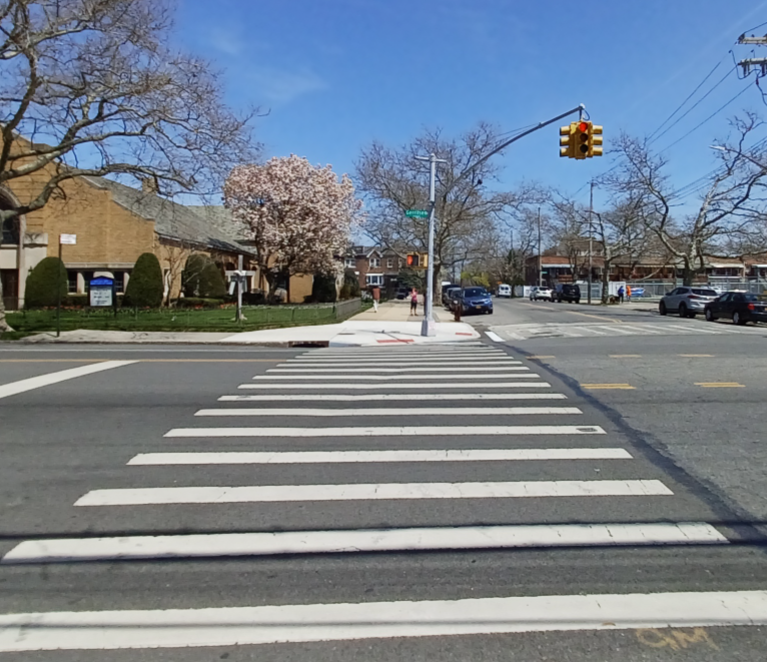
The city of Kalamazoo will receive $25 million to rebuild five street segments as part of a larger project to develop a connected multimodal network. Plans include turning these streets into Complete Streets by building sidewalks, lighting, bicycle lanes, traffic calming measures and traffic flows.
Improvements include resurfacing pavement, adding left-turn lanes, installing refuge islands and replacing storm sewer infrastructure. Plans include reconfiguring roadways, updating traffic signals, upgrading bus stops, building modified roundabouts and installing center medians. The completed project will protect pedestrians and bicyclists along busy roads and reduce air pollution caused by traffic. Construction is expected to begin in August 2027.
Menominee will use $21.3 million to improve the city’s harbor. The project will reconstruct a deteriorated dock wall, install three rail spurs and add covered storage. The city will also buy and install cargo handling equipment to redevelop the general cargo transportation terminal. The grant will support the city’s efforts to reduce the number of heavy-duty trucks on roads, increase freight movement and increase maritime berthing and rail capacity. Construction is expected to begin in January 2026.
Detroit will spend $20.7 million to build several shared-use paths and sidewalks to provide safe pathways for pedestrians and bicyclists along the city’s trail systems and streets. The project will use nature-based solutions to enhance the paths, build protected non-motorized facilities and reduce lane and vehicle speeds. Construction is expected to begin in October 2025.
USDOT allocated the funds through the Rebuilding American Infrastructure with Sustainability and Equity (RAISE) grant program. The RAISE program invests in community projects to build and renovate critical transportation infrastructure projects across the country.
The projects are a selection of 148 receiving a portion of the recently announced $1.8 billion in RAISE funding for Fiscal Year 2024. Including the latest round, USDOT has invested $7.2 billion across 550 projects through the RAISE program since it was established.
(Photo courtesy of GK tramrunner RU.)
| |
Tennessee using $39 million to improve dangerous roadways, intersections | |
|
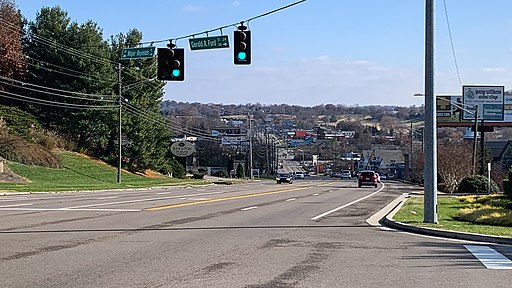
The U.S. Department of Transportation (USDOT) will distribute $39.1 million to Tennessee to mitigate dangers along high-injury corridors and roadways across three cities. The state will use the funds to build safe pathways for pedestrians, update old street markings and improve intersections.
The city of Knoxville will invest $17.8 million to support and implement SAFER Knoxville 2.0. The project will make changes to US 441 to make it safer for drivers, pedestrians and bicyclists. As a result of the current design, drivers are prone to driving at higher speeds and failing to yield to pedestrians. The funds will go toward the project’s total cost of $22.3 million.
The project will build a sidewalk or shared-use path along the side of the highway, install pedestrian signals at intersections and build a landscaped median down the center of the roadway. In addition, the city will conduct roadway safety audits at high-injury locations, create a lighting plan and institute a city-wide Safe Routes to School plan.
USDOT will provide $13.2 million to help Memphis reduce injuries and deaths at the most dangerous six-way intersection in the city. The intersection currently has faded and outdated pedestrian connectivity, poor movement guidance and confusing signals. The funds will go toward the project’s total $16.5 million cost.
As part of the project, Memphis will close one of the three intersecting roads permanently to simplify intersection geometry and operations. The city will install a traffic signal and pedestrian facilities in its place to better connect residents with a nearby park. Plans include developing a public education campaign for schools, implementing a near-mis camera pilot program, leveraging crash data analysis technology and deploying quick-build projects.
The city of Clarksville will receive $8.1 million to implement Safety Action Plan measures along four roadways. The $10.1 million project will improve intersections, install sidewalks, improve traffic signals and build pedestrian facilities. The completed project will better protect the local underserved community.
USDOT allocated the funds through the Safe Streets for All (SS4A) grant program. The SS4A program is a five-year, $5 billion initiative that helps local, rural and tribal communities remediate some of the most dangerous roads in the country to prevent deaths and serious injuries.
The Tennessee projects are a selection of the 453 projects that will receive a share of the recently announced $1.1 billion. This is the second round of SS4A funding for Fiscal Year 2024, with the first round releasing $63 million in May. Since 2023, the program has allocated $2.7 billion from the available $5 billion. USDOT expects to open the third and final round of Fiscal Year 2024 awards in November.
(Photo courtesy of AppalachianCentrist.)
|  | |
California city receives $15 million to improve park master plan | |
|
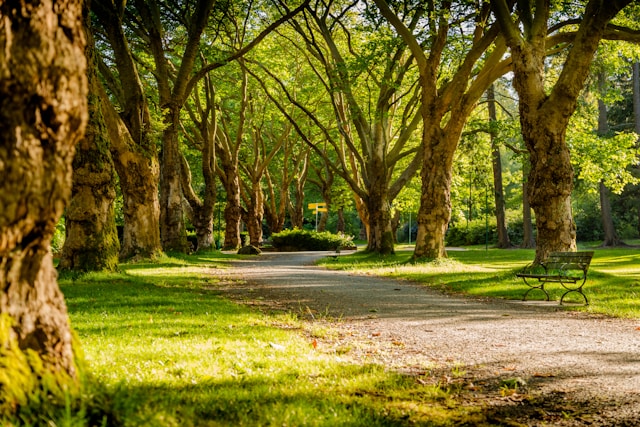
The city of Bryte, California, has received $15 million from the National Park Service (NPS) to advance the Bryte Park Master Plan Project. Currently in the design phase, construction is expected to begin in 2025.
The Bryte Park project will completely transform the existing park to offer more recreational amenities, available green space and increased park accessibility. The funds will jumpstart the second phase of the project, following the completion of the first phase in 2016.
The project will build a dog park, an all-weather soccer field with lighting, replace sod across multiple soccer fields and build a storage building and yard. The city will institute ADA-compliant improvements across the entire park, ensuring all walking loops, paths and jogging trails are up-to-code and include age-friendly features.
Plans also include creating a covered group-use area with an amphitheater and building three lighted and fenced softball fields with dugouts and bleachers. The city will improve the landscape, add green space, incorporate picnic tables and benches, install hydration stations and light pathways.
The city will build a basketball/spots court next to the existing court. In addition, the project will build a restroom/concession building, install age-friendly fitness stations and renovate the existing tennis courts with improved lighting and fencing. The master plan also includes potentially six stand-alone, fenced pickleball courts.
The project will feature angled street parking, an outdoor classroom at the Club West facility and will relocate the community pool and support building to be on park grounds. Plans include replacing the existing restroom building with an updated structure.
The NPS allocated the funds through the Outdoor Recreation Legacy Partnership (ORLP) program. The initiative invests in parks across the country, improving outdoor spaces in urban and disadvantaged communities. The city of Bryte is one of 54 projects that were chosen as a part of the recently announced $254 million ORLP funding round.
(Photo courtesy of Mike Benna on Unsplash.)
| |
NSF pushes R&D boundaries to combat climate change across nation | |
|
The National Science Foundation (NSF) has distributed $77.8 million to advance climate resilience research and associated projects in underserved communities across the nation.
The Established Program to Stimulate Competitive Research (EPSCoR) program provides critical support to help institutions develop innovative climate change solutions, implement mitigation strategies and expand STEM opportunities in disproportionately impacted communities. The completed projects will empower states, counties and cities to take proactive measures to protect at-risk regions from rising temperatures, inclement weather and other forms of climate change.
Some of the climate change R&D projects receiving awards include:
The universities of Louisville, West Virginia, Eastern Kentucky, Marshall and Kentucky will develop negative emissions technology (NET) to turn hazardous waste into low-cost, low-carbon construction materials. The project uses industrial and biomass waste as feedstock to produce a calcium-rich leachate ideal for capturing CO2. NETs use the converted materials as a viable replacement component in concrete. The conversion process provides a long-term solution for handling landfill-bound hazardous waste, reducing the amount of greenhouse gas (GHG) in the atmosphere and protecting public health.
New Mexico State University (NMSU) will create an AI-driven digital twin framework to improve energy efficiency, integrate renewable sources, reduce energy burden and optimize infrastructure to increase climate resilience in underserved communities. Digital twins are virtual replicas of physical objects and systems that researchers use to simulate conditions and scenarios. NMSU will use the twin to examine the energy and socioeconomic needs of communities and develop tailored solutions to improve and safeguard their energy futures.
Louisiana Tech University (LTU) is developing a mobile energy-water reuse system (MEWRS) to supplement dwindling water supplies in climate-impacted communities. Power outages in these regions pose a significant risk to the safety and potability of water sources. MEWRS are solar-powered solutions that combine nanomaterials and electrochemistry to purify water without relying on external resources. These technologies also provide decentralized, portable power sources to help affected communities adapt to disasters.
The funds came from the EPSCoR Research Infrastructure Improvement-Focused EPSCoR Collaborations (RII-FEC) program. The initiative builds on the agency’s efforts to push the boundaries of scientific innovation, building interjurisdictional STEM teams to sustain cutting-edge research and development.
All research topics involved in the RII-FEC program must align with the NSF’s current strategic plan and work to carry out its goals. Entities interested in participating in the RII-FEC competition must submit a full proposal by Jan. 28, 2025.
(Photo courtesy of Ousa Chea on Unsplash.)
|  | |
Minnesota PUC updates regulations for state’s plan to achieve 100% carbon-free electricity by 2040 | |
|
The Minnesota Public Utilities Commission (PUC) last month released additional regulations to guide electric utilities toward fully moving away from fossil fuel reliance. The updated rulings build on the Carbon Free Electricity Standard (CFES) that was signed into law Feb. 7, 2023. Once adopted, the standard will push the state’s electricity sector toward mitigating greenhouse gas (GHG) emissions and promoting clean energy alternatives.
The latest round of regulatory additions paves the way toward ensuring all electric utilities procure 100% of their supply from carbon-free resources by 2040. The PUC received feedback from more than 60 groups and the public to guide implementation standards.
As part of the updated regulation requirements, the PUC determined to hold additional proceedings to develop a lifecycle analysis framework for complex fuels. There is contention regarding whether certain fuels – including biomass, renewable natural gas and solid waste – fall under the current definition of “carbon-free.” The agency will create the analysis framework to clarify which fuels meet the definition in upcoming meetings before making a final decision.
The PUC determined that carbon capture and sequestration should be considered in carbon-free calculations for partial compliance with the standard. The commission established a process and further record development for guiding utilities while applying for partial credit for certain technologies outlined in the CFES. Finally, the PUC defined “environmental justice areas” to be either census tracts or Tribal boundaries.
The latest meeting was the second of four proceedings for clarifying details on the CFES. The next hearing will discuss compliance standards. The final proceeding will examine potential off-ramps for utilities if they cannot achieve the standard’s benchmarks. However, due to the PUC’s lifecycle analysis framework decision, the commission will hold an additional proceeding before Dec. 31, 2025.
(Photo courtesy of Fré Sonneveld oin Unsplash.)
| |
|
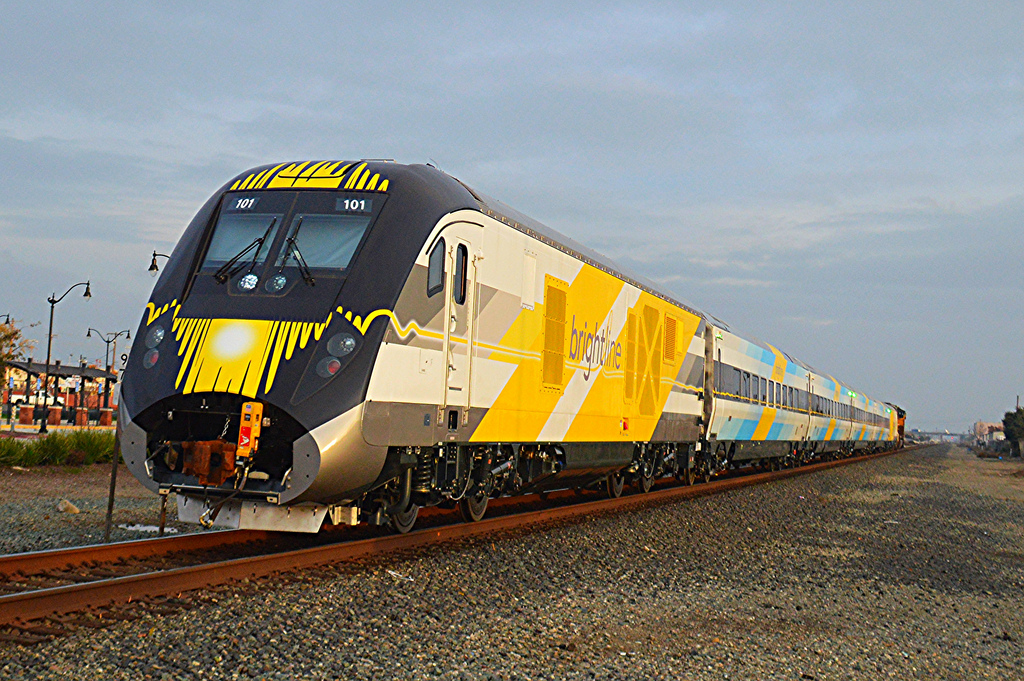
High-speed rail is the newest attraction heading to Las Vegas. The Federal Railroad Administration (FRA) is entering a historic $3 billion grant agreement with the Nevada Department of Transportation (NDOT) to streamline America’s first true high-speed rail project and significantly reduce travel time between Las Vegas and Southern California.
The Brightline West rail project, led by parent company Brightline, will develop a 218-mile, all-electric high-speed passenger rail system that’ll transport travelers between the flagship station in Las Vegas and stations throughout Southern California, including Apple Valley, Hesperia and Rancho Cucamonga.
Click here to learn more about the multibillion-dollar agreement
(Photo courtesy of Dom Blevins.)
| |
|
The U.S. Department of the Treasury has released new guidance on the Alternative Fuel Vehicle Refueling Property Credit, a key initiative aimed at accelerating the adoption of electric vehicles across the country. The credit offers significant financial incentives for individuals, businesses and tax-exempt entities to install EV charging stations and other clean refueling infrastructure.
The transition to EVs is a major part of the U.S. strategy for reducing dependence on fuels that pollute the environment. Electric vehicles are also touted as being more consumer-friendly in the long run. The Treasury estimates that EV owners could save between $18,000 and $24,000 over a 15-year vehicle lifespan compared to gasoline vehicles, with fuel costs being the largest contributor to these savings.
Click here to learn more about the tax incentive guidance
(Photo courtesy of Michael Fousert on Unsplash.)
| |
|
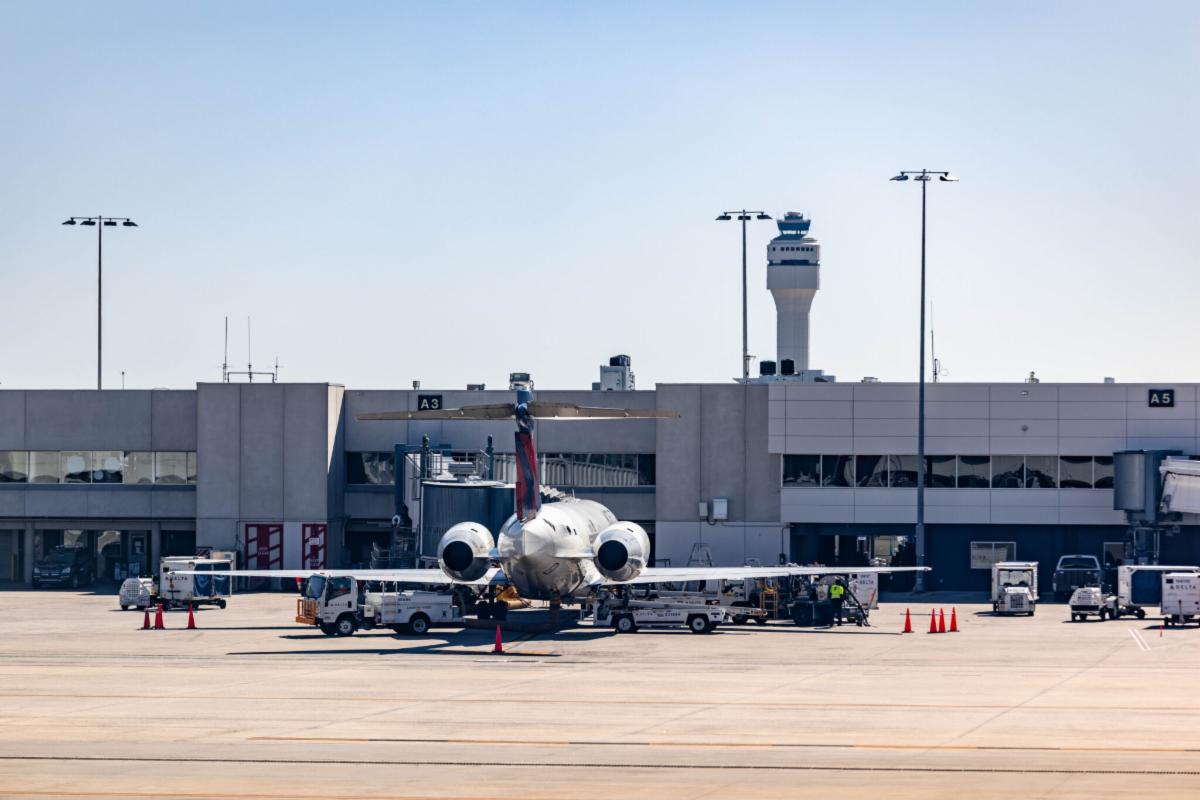
A fourth runway is coming to North Carolina’s Charlotte Douglas International Airport (CLT) thanks to a funding commitment from the Federal Aviation Administration (FAA).
The $290 million Airport Improvement Program (AIP) funding from the FAA will be used for the construction of the Fourth Parallel Runway, which is part of the airport’s 2016 Master Plan Update to address capacity concerns and to prepare for future demand.
Click here to learn more about the runway project
(Photo courtesy of Charlotte Douglas International Airport.)
| |
|
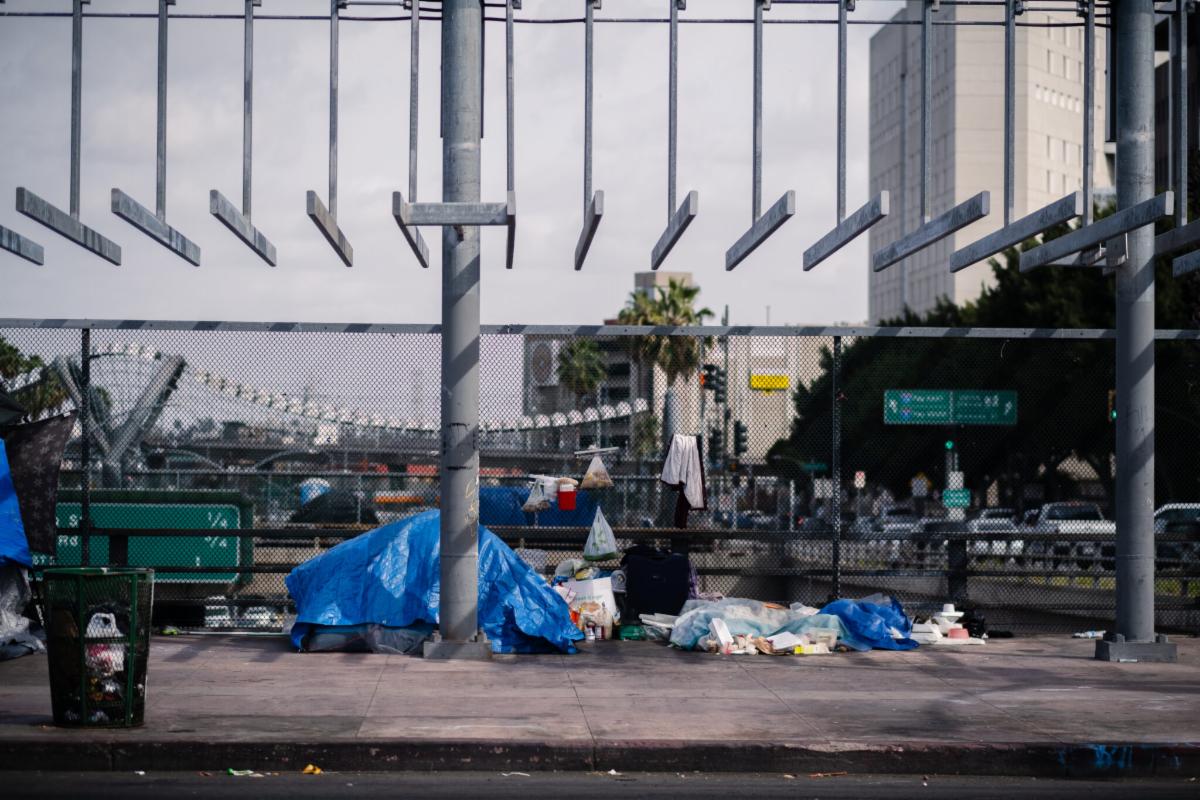
California is making a major investment to tackle the crisis of homelessness and mental health needs. In an announcement last week, the state unveiled plans to allocate up to $2.2 billion for permanent supportive housing through its new Homekey+ program. The initiative aims to create over 4,000 new housing units for individuals with mental health and substance use disorders who are experiencing or at risk of homelessness.
The funding, primarily sourced from Proposition 1 passed by voters in May 2024, will be administered by the California Department of Housing and Community Development (HCD) in partnership with the California Department of Veterans Affairs (CalVet). Notably, half of the new housing units will be reserved for veterans, addressing a critical need within this vulnerable population.
Click here for more information on California’s homeless housing initiatives
(Photo courtesy of Levi Clancy.)
| | |
|  |
|
|
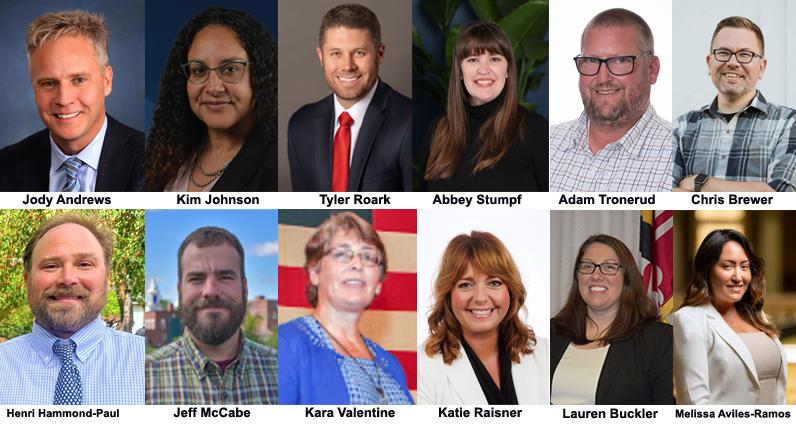
Colorado – The Westminster City Council has made Jody Andrews permanent city manager. Andrews has operated as acting city manager since July 2024. Prior to serving as acting city manager, Andrews served as deputy city manager, interim city manager and director of public works and utilities starting in 2013.
California – Kim Johnson has been appointed secretary of California Health and Human Services (CalHHS). Johnson most recently served as director of the state’s Department of Social Services. She will take over the role from Dr. Mark Ghaly. Johnson officially began her tenure Oct. 1.
Ohio – Tyler Roark has been appointed assistant city manager of Centerville. Roark has been with the city since 2019 as finance director. He will officially replace Mariah Vogelgesang on Oct. 7, 2024.
Virginia – Albemarle County has chosen Abbey Stumpf as director of communications and public engagement. Stumpf started the position Sept. 30. She had served the county as public safety information officer since January 2020. Stumpf brings more than 17 years of communications experience to the role.
California – The city of El Cajon has chosen Adam Tronerud as director of the Department of Parks and Recreation. He brings more than three decades of parks and recreation experience to the role.
Washington – The Centralia City Council voted Chris Brewer as deputy mayor Sept. 24. Brewer is a recent addition to the City Council, taking office in November 2023. He will take over the position from Norm Chapman, who rose to assume the mayor’s role following Camron McGee’s resignation.
New Mexico – The city of Santa Fe has appointed Henri Hammond-Paul as director of the Community Health and Safety Department. He previously served as a senior adviser for the New Jersey Department of Health.
Maine – Jeff McCabe has been chosen as director of Maine’s Office of Outdoor Recreation. McCabe has served as deputy director for the agency since November 2023. He succeeded Carolann Ouellette.
Nebraska – Kara Valentine has been appointed interim director of the Nebraska Department of Environment and Energy (NDEE). Valentine has served as deputy director for the department for the past eight years. She officially replaced Than Fineran in the role Sept. 30.
Illinois – Illinois State University has welcomed Katie Raisner as director of student success, retention and recruitment for the College of Arts and Sciences (CAS). Raisner most recently served in the CAS Dean’s Office.
Maryland – Lauren Buckler will lead the Baltimore County Department of Public Works and Transportation as director. Buckler has served as acting director since April 2024, previously working as deputy director of the department since 2021. She brings almost 20 years of experience in construction and public works to the role.
New York – Melissa Aviles-Ramos has been appointed chancellor of the New York City Public Schools System. Aviles-Ramos currently serves as deputy chancellor for family and community engagement and external affairs. She brings more than 17 years of educational experience to the role, replacing David Banks. She will begin her tenure Jan. 1, 2025.
| | |
|
Connect with SPI
Check out our social media links!
| |
About Government Contracting Pipeline | |
|
Strategic Partnerships, Inc.
Publisher: Mary Scott Nabers
Editors: Adam Rollins
Dave Doolittle
www.spartnerships.com
| |
Government Contracting Pipeline, a publication of Strategic Partnerships, Inc., is a free, weekly newsletter detailing important happenings nationwide and the premier source for federal, state and local government news and contracting opportunities. | |
Help us share this message.
To ensure delivery and proper formatting of the newsletter, be sure to add editor@spartnerships.com to your safe senders list.
Otherwise, the newsletter may be flagged as spam and automatically routed to your junk e-mail folder.
| | | | |