Volume 16, Issue 13 - Wednesday, March 27, 2024 | |
By Mary Scott Nabers, CEO of Strategic Partnerships, Inc. | |
|
Current data continues to indicate significant increases in student enrollments at universities and community colleges throughout the U.S. Community college enrollment was hit especially hard by the effects of the pandemic, but by 2023 a noted increase of 5.3% in student transfers from community colleges to universities had occurred. That trend continues, and these small-sounding percentages should not be discounted because the data equates to thousands of new students for universities to accommodate now and in the near future.
New construction, enhanced research divisions, technology upgrades and classroom expansions are the norm. Energy offerings are also in high demand on university campuses.
The University of Texas at Austin will make a $425 million investment in a new academic building to house the Red McCombs School of Business. Funded through gifts, designated university funds and revenue bonds, the 10-story, 450,000 square-foot facility will house six academic departments’ undergraduate programs.
The new building will include classrooms, offices, spaces for student collaboration, a career center and an event area. An underground parking garage that can accommodate 120 vehicles will also be provided. Design elements call for demolition of the existing Dobie Parking Garage and relocation of current storm water lines and utilities on the site.
The project is currently in the design and planning stage. While no contractor has been chosen for construction, all procurement selections will begin sometime prior to November 2024. The academic building is slated for completion by May 2028.
The University of Wisconsin-Madison will get a new $347 million engineering building on campus. The new facility will be designed to accommodate an additional 1,000 undergraduate engineering students. It will also be designed to represent the centerpiece of the seven-building engineering campus. Construction of an eight-story, 395,000 square-foot facility with spaces dedicated to research and engineering education will be incorporated with both indoor and outdoor gathering spaces. The design will focus on sustainability and energy efficiency gained through rooftop solar energy-harvesting technology. The building’s learning wing will use mass timber construction and a green roof to manage stormwater and mitigate the urban heat island effect. Inside space will be designed so it can be adapted and reconfigured for maximum flexibility in the coming decades. State-of-the-art technology will be included, and construction is expected to begin in 2025.
Click here for more.
| |
New York budgets $1.4 billion for Southern Tier schools, university | |
|
New York's budget for fiscal year 2025 includes $1.4 billion for Southern Tier schools, the region along New York's border with Pennsylvania, and $123 million for SUNY-Binghamton. The budget also includes $84.7 million for healthcare capital projects in the Southern Tier and $7.5 million for improvements at Taughannock Falls State Park.
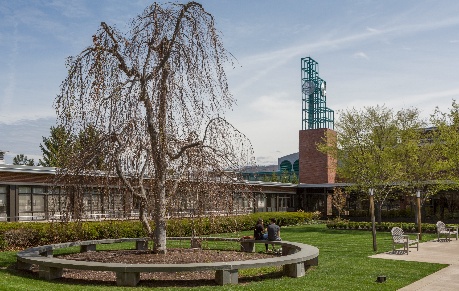
At Binghamton University, $60 million will be used to build a lecture hall, classrooms and a chem lab building. Another $30 million will go toward renovating a science building that houses biology classrooms and labs, and the fine arts building will receive $22 million worth of renovations. University officials will use $11 million on maintenance improvements campus-wide.
As winners of the seventh round of New York’s Downtown Revitalization Initiative, Roxbury and Grand Gorge, located within the Town of Roxbury, will receive $10 million each. Groton and Urbana/Hammondsport both received $4.5 million from NY Forward, the state's downtown revitalization program for rural towns.
New York's 10 Regional Economic Development Councils nominate communities based on the potential for transformation of their downtowns. In return for $10 million, each community develops a downtown strategic investment plan and carries out projects that advance the community's revitalization vision and leverage private and public investments.
To qualify for these funds, municipalities need to be certified Pro Housing Communities with the state. The designation means these communities are building more homes to address New York’s housing shortage.
(Photo courtesy of Jonathan Cohen and Binghamton University.)
| |
L.A. to increase safety, reduce congestion across 2,500 miles of streets | |
|
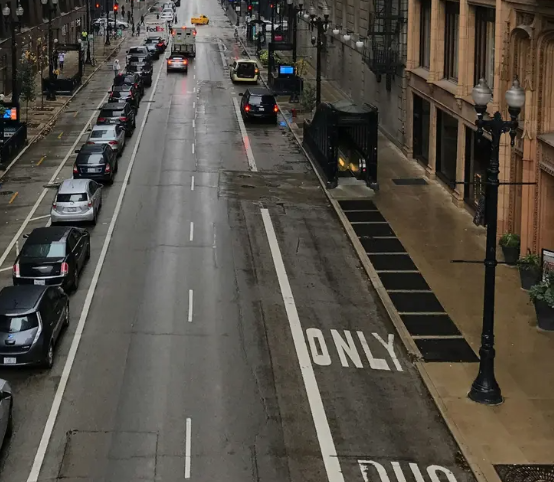
The city of Los Angeles will increase the safety and efficiency of more than 2,500 miles of streets after residents approved Measure HLA on March 5. The city will build safer crosswalks, install traffic-calming measures in neighborhood streets, improve transit, create protected bike lanes, enhance sidewalks and reduce congestion.
The measure will ensure the city implements the majority of its Mobility Plan 2035 in five to 15 years. The city is now mandated to build an open data portal that shares Mobility Plan implementation progress. The measure will also hold the city accountable by allowing residents to sue the city if any rules established by Measure HLA are broken.
The measure requires city officials to implement several multimodal modifications, including building safer crosswalks across 1,500 miles of streets. The city will also build corner curb extensions and crossing refuge islands to reduce crossing length, improve street lighting and raise crosswalks.
The city will also calm traffic in almost 1,000 miles of neighborhood streets, including curb extensions, mini traffic circles, neckdowns, raised crosswalks and diagonal diverters. The city will also improve upgrade bus station amenities and build dedicated bus lanes.
Plans include building more than 400 miles of protected bike lanes and paths. In addition, the city will upgrade sidewalks across 500 miles of streets. This includes widening sidewalks, improving curb ramps for ADA accessibility and planting trees for shade and beautification.
Los Angeles will implement the Vehicle Enhanced Network (VEN) to reduce congestion on 79 miles of critical roads that connect freeways and major destinations. Plans include upgrading technology and peak-hour restrictions for parking and turning movements, allowing the city to more easily direct and control traffic.
(Photo courtesy of Yes on HLA.)
| |
Wisconsin to administer $78 million to build, expand state EV network | |
|
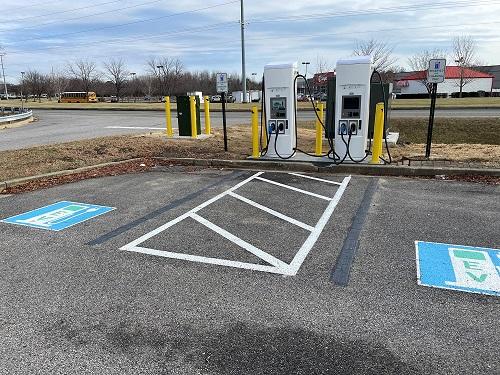
Wisconsin will receive and administer more than $78 million to support and expand the state's electric vehicle (EV) infrastructure. The state’s governor recently signed Senate Bills 791 and 792 into law, allowing the state to access funds the National Electric Vehicle Infrastructure (NEVI) Formula Program allocated in FY 2022.
NEVI is a $5 billion program that provides dedicated funding to states to deploy EV charging infrastructure and build a nationwide interconnected network. The Federal Highway Administration is responsible for the program, using funds from the $1.2 trillion Bipartisan Infrastructure Bill to distribute awards.
Senate Bill 791, now Wisconsin Act 121, functionally unlocks access to the $78 million NEVI funds. The act allows businesses to provide EV chargers that sell electricity by the kilowatt hour. This provides a major incentive for businesses to invest in EV charging stations while simultaneously qualifying the state to use NEVI funding over the next five years. The act also established how local and state governments can operate charging stations and modified EV electricity taxes are treated.
Senate Bill 792, now Wisconsin Act 122, established the Wisconsin Department of Transportation’s (WisDOT) EV infrastructure program. WisDOT will administer the $78 million through this program, primarily supporting eligible businesses near major highways.
(Photo courtesy of Michael Fousert on Unsplash.)
| |
Maryland DOT announces $55 million to reduce transportation emissions | |
|
The Maryland Department of Transportation is making $55 million available for projects that reduce transportation emissions. This funding comes from the Federal Highway Administrations' (FHA) Carbon Reduction Program (CRP), which will dedicate $94 million to MDOT over five years.
With the transportation sector being the majority contributor to greenhouse gas emissions in Maryland, MDOT is seeking to fund projects that significantly reduce pollution, as laid out in the Climate Solutions Now Act. Eligible projects include energy-efficient traffic control lights, the deployment of alternative fuels and developing carbon reduction strategies. A full outline of project and application requirements can be found in the CRP implementation guide.
MDOT encourages Metropolitan Planning Organizations (MPO), municipal and county governments and MDOT Modal Administrations to apply. Eligible applicants can submit a creative proposal through their new Climate Focused Funding Portal until April 30.
(Photo courtesy of the Center for Environmental Excellence by AASHTO.)
| |
Alabama city to enhance transportation options to underserved areas | |
|
The city of Montgomery in Alabama will use $36.7 million to help reconnect residents on the Selma-to-Montgomery Trail. Plans include increasing safety and access to public safety amenities, enhancing broadband connectivity, providing zero-emission transportation and other transportation improvements.
The U.S. Department of Transportation (USDOT) recently provided the funds through the Neighborhood Access and Equity (NAE) grant program to kickstart the Reconciliation, Regeneration and Reconnecting the Selma-to-Montgomery Trail project. Construction is expected to begin fall 2024.
The NAE program is designed to improve walkability, safety and affordable transportation access in disenfranchised communities. The Selma-to-Montgomery Trail project is one of 132 projects that will receive a portion of the $3.3 billion USDOT awarded for Fiscal Year 2023.
The city will reconnect the Selma-to-Montgomery Trail community through a series of initiatives, including redeveloping a local brownfield site into an EV charging station and microgrid. Other plans include establishing an EV workforce micro-transit site to provide routes to the city’s downtown, hospitals, Inland Port and other high-demand employers. The micro-transit site will be low-emission and ADA compliant to improve accessibility.
The project’s scope calls for laying down a fiber optic infrastructure and integrating intelligent technologies into the city’s infrastructure. These include smart lighting, CC cameras and Wi-Fi hotspots at select locations. Plans include adding historic markers and wayfinding kiosks to enhance navigation.
The city will also implement bike lanes as it repaves and stripe streets. The bike lanes will provide better access between Downtown Montgomery and West Montgomery. Plans include upgrading bus stops, covered shelters and building more than 2 miles of sidewalks.
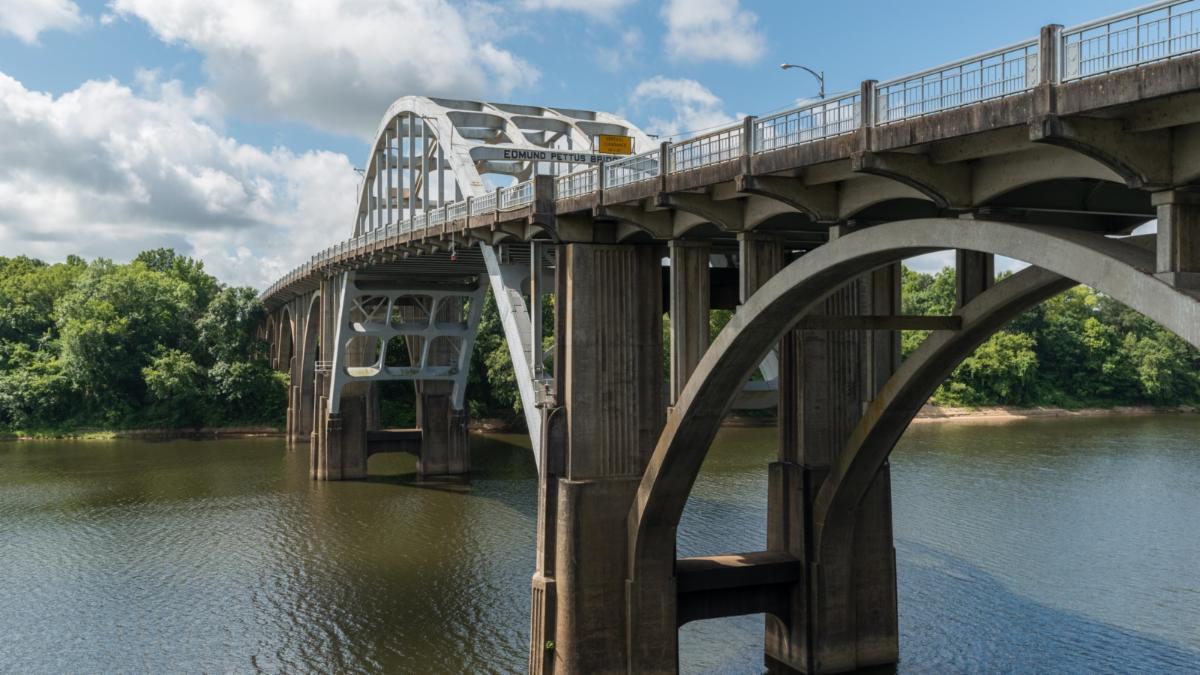
(Photo: The Edmund Pettus Bridge, a historical landmark on the Selma-to-Montgomery Trail. Courtesy of the National Park Service.)
| |
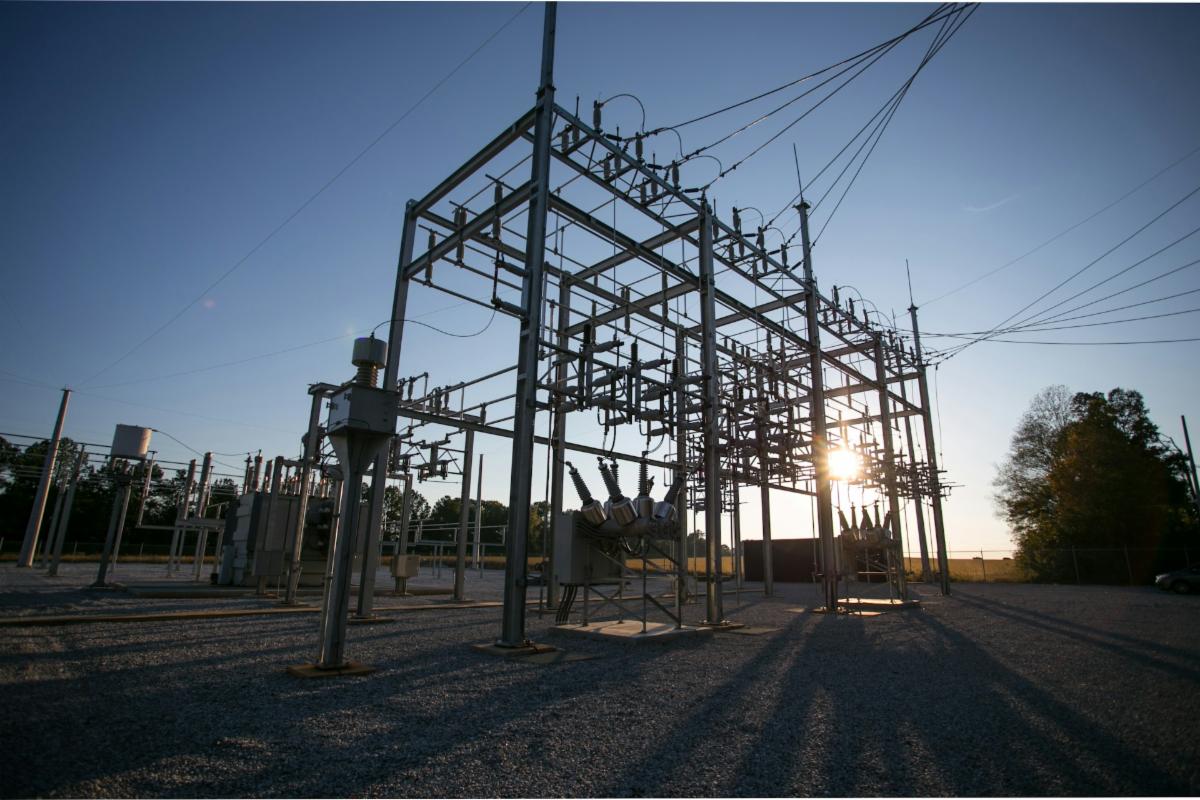
DOE provides $34 million to advance renewable energy integration | |
|
The U.S. Department of Energy (DOE) will distribute a combined $34 million to 11 projects that will integrate wind and solar energy into the electricity grid.
The DOE will distribute the funds from the Operation and Planning Tools for Inverter-Based Resource Management and Availability for the Future Power System (OPTIMA) program. The projects will advance tools that enable developers to more easily use and integrate renewable energy resources. The tools will help increase energy system reliability and resiliency at a larger production scale, helping to decarbonize the electricity sector by 2035.
Notable projects that received funding include:
The Pacific Northwest National Laboratory will use $3.6 million to create applications that empower grid operators to monitor and react to issues generated by large amounts of renewable energy sources. The technology will analyze these measurements within local substations. The applications then stream all captured data to a centralized component for grid operators to access and use to more easily integrate the renewable resources.
The University of Connecticut will receive $3.3 million to design solutions for coordinating energy transmission and distribution operations. The project will enhance distributed and renewable energy resource integration, reduce operational costs and increase efficiency and reliability.
The National Renewable Energy Laboratory will use $3.2 million to develop a management solution called Coordinated Operation for Renewable Energy Dominant Transmission Grids (CORRECT). CORRECT will assess and manage the large numbers of both renewable and distributed energy resources.
CORRECT will also align interactions between resource- and system-level management processes and improve overall power system variability management. Grid operators will integrate CORRECT into existing utility energy and distribution management systems.
(Photo courtesy of the American Public Power Association on Unsplash.)
| |
DOE to spend $22 million to improve renewable energy facilities | |
|
The U.S. Department of Energy will invest up to $22 million on projects to improve siting and permitting processes for large-scale facilities to produce wind and solar energy.
Six state-based projects will get $10 million through the DOE’s Renewable Energy Siting through Technical Engagement and Planning (R-STEP) Program.
Iowa, Mississippi, Michigan, Indiana, North Carolina and South Carolina will use the funds for statewide initiatives to provide expertise, training and technical resources to help plan for large-scale renewable energy and energy storage projects.
The DOE also plans to open a second round of the program with up to $12 million in funding made available through the Inflation Reduction Act.
Collaborators on the projects include stakeholders from all sides of the energy planning process, including state and regional agencies, universities, developers, technical experts, public service commissions, farmers unions, tribes, community organizations and other trusted entities.
(Photo courtesy of the US Department of Energy.)
| |
Delaware River commission enters design phase for $16 million bridge rehabilitation project | |
|
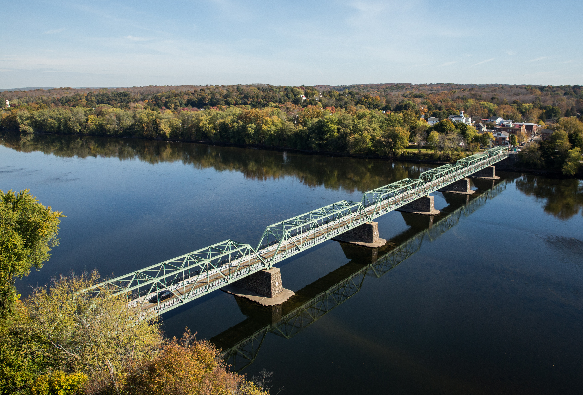
The Delaware River Joint Toll Bridge Commission (DRJTBC) will use $15.8 million to rehabilitate and improve the Uhlerstown-Frenchtown Toll-Supported Bridge. The project will put the 92-year-old bridge in a state of good condition and extend its service life by an additional 15 years. DRJTBC recently awarded a design contract for the project. Bidding and construction are expected to begin in 2025.
The bridge is currently in satisfactory condition and can safely carry up to a 15-ton weight limit. However, a 2022 Annual Inspection Report found evidence of rust, gaps, cracks and missing mortar along the structure and masonry substructure. The design phase will further identify deteriorating bridge conditions and make plans to rehabilitate the structure.
The DRJTBC will repair various pieces of the bridge’s steel superstructure. In addition, the commission will carry out additional repairs to the bridge’s abutments, piers and retaining walls. Plans include installing a programmable LED system to highlight the bridge’s architectural profile at night.
The project will include cleaning and repainting the bridge superstructure and underlying bearings. The DRJTBC will also protect the bridge’s abutments, aprons and piers from scouring. Scouring occurs when the river current removes sediment from around abutments and piers, creating holes that compromise the bridge’s integrity.
Plans also eliminate gaps in the bridge’s bearing assembly. This will ensure the bridge can effectively adapt to temperature variation and seismic activity that could increase overall stress.
The Uhlerstown-Frenchtown Toll-Supported Bridge spans the Delaware River between New Jersey and Pennsylvania. The bridge is located 28 miles east of Allentown, Pennsylvania.
(Photo courtesy of the Delaware River Joint Toll Bridge Authority.)
| |
|
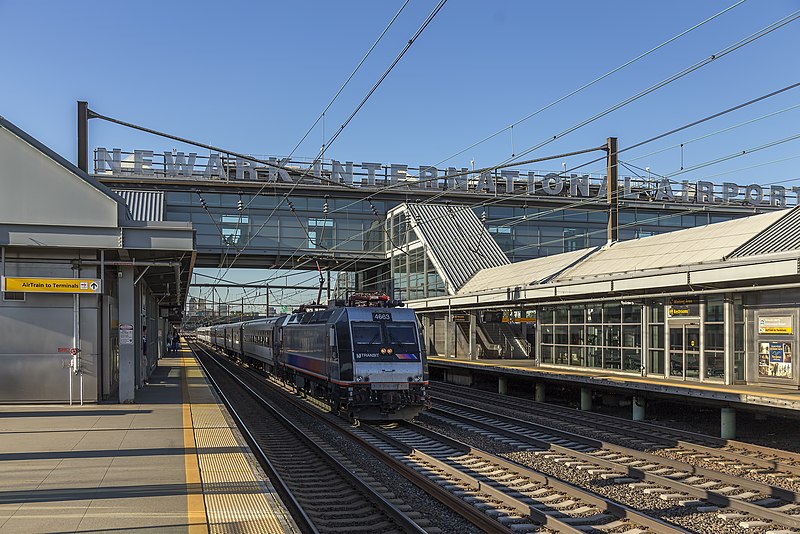
The Port Authority of New York and New Jersey have approved the design and construction of a $160 million project that will increase transit accessibility for underserved Newark and Elizabeth neighborhoods, cutting down commute times by 75%.
The Newark Liberty International Airport (EWR) Station Access project includes extending the rail station’s pedestrian bridge over station platforms and tracks to a new public access facility on a nearby street, where there will be pickup and drop-off area for vehicles, bicyclists and pedestrians. There will also be a cellphone lot for private vehicles. Construction is expected to finish by 2026.
Click here for more information on the transit accessibility project
(Photo courtesy of Acroterion.)
| |
|
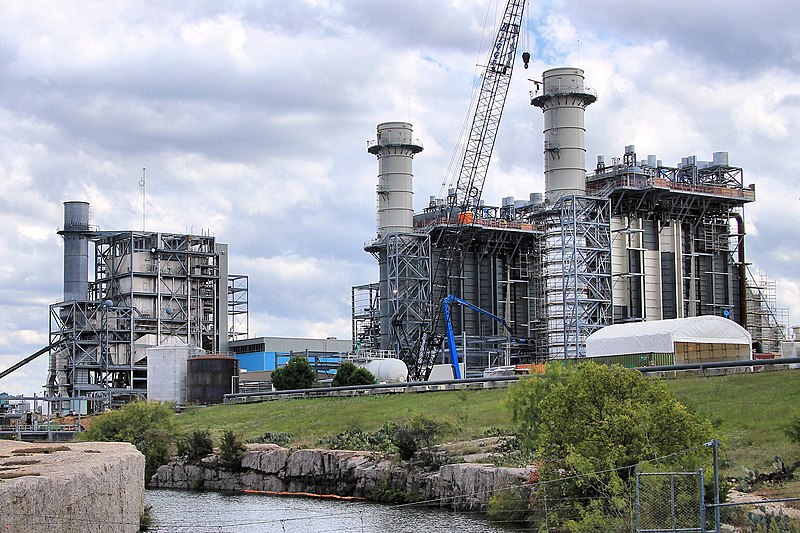
The Public Utility Commission of Texas has signed off on a program that will provide up to $5 billion in low-interest loans to developers of power plants within the state’s main power grid.
The loans will be available through the Texas Energy Fund to build power plants or fund repairs to increase the overall amount of power available on the grid managed by the Electric Reliability Council of Texas (ERCOT).
Click here to learn more about this power plant loan opportunity
(Photo courtesy of Larry D. Moore.)
| |
|
The U.S. Department of the Interior has begun accepting requests for proposals for a program that will provide up to $119 million to communities nationwide for landscape-scale conservation and restoration projects.
Dubbed the America the Beautiful Challenge, the 10-year program will use locally led and nationally scaled projects to conserve and restore 30% of U.S. lands and waters by 2030. The deadline to apply is April 4.
Click here to learn more about the America the Beautiful Challenge
(Photo courtesy of the U.S. Forest Service.)
| |
|
As artificial intelligence has become widely used, governments are looking to take advantage of the potential opportunities while minimizing the dangers of AI technology.
This year, the federal lawmakers are considering a handful of bills that address artificial intelligence. They range in from requiring transparency and disclosure for AI-generated content to establishing protections against deepfake content that looks like real people and studying the environmental impact of artificial intelligence.
Click here for more information on what states are doing to leverage AI technology
(Photo courtesy of InBox Dicas on Unsplash.)
| |
|
Georgia – The city of South Fulton has promoted Deputy City Manager Sharon Subadan to city manager. Subadan’s career as a public administrator spans more than 31 years. She has served in leadership positions with Miami-Dade County, Florida; Montgomery County, Maryland; Hillsborough County, Florida; the city of Albany, New York; and Douglas County, Georgia.
California - The Los Angeles County Metropolitan Transportation Authority (L.A. Metro) has appointed Darcy Buryniuk, Ilyssa DeCasperis and Ray Sosa to executive-level positions:
- Buryniuk has been appointed chief program management officer. Buryniuk brings more than 35 years of experience leading global design and transit projects, including the Tapipei Metro Orange and Blue lines, the North-South railway project in Saudi Arabia and more.
- DeCasperis has been appointed chief people officer. DeCasperis brings more than 35 years of legal experience and 24 years in human resources management to L.A. Metro. She most recently served as chief people officer for Metrolink.
- Sosa has been promoted to chief planning officer. He previously served as deputy chief of planning. He returned to L.A. Metro in 2022 after serving in the private sector for 10 years.
North Carolina - Martin Community College (MCC) has named Tabitha Miller, Ph.D., as president. Miller is currently MCC's vice president and chief academic officer. She previously served 11 years at Pitt Community College. She will take over her role May 1.
Pennsylvania – Jamil Bey, Ph.D., will take over as the acting director for the Pittsburgh Department of City Planning on April 8. Bey previously served as a member of the land bank board and currently holds a seat on the Housing Opportunity Fund Advisory Board. He will replace Karen Abrams.
Vermont - The Newport City Council has elected Chris Vachon president. Vachon will assume mayoral duties in the absence of Mayor Linda Joy Sullivan. He will take over outgoing Councilmember John Wilson’s seat.
California - The Los Angeles City Council appointed Richard Katz to the Board of Water and Power Commissioners. Katz has led a 44-year career of public service, including 16 years in the State Assembly. He served as a member of the California State Water Resources Control Board from 2001 to 2006 and as a member of Metro's Board of Directors from 2005 to 2014.
Texas – Thomas Jones Jr. will serve a two-year term as a port commissioner of the Port of Houston Authority. Jones has served as chairman, president and director on many community boards. Jones began his tenure March 22.
Washington - The Kennewick City Council unanimously voted for Erin Erdman as city manager. Erdman is currently the city manager for the city of Battle Ground in the Vancouver metro area. She will begin her new role within 45 days.
Nebraska - Troy Dannen has been selected as the University of Nebraska’s director of athletics. Dannen currently serves as director of athletics at the University of Washington. Previously, he was athletics director at Tulane and the University of Northern Iowa. He will replace Trev Alberts.
Texas - Dallas' outgoing City Manager T.C. Broadnax has been picked to serve as city manager of Austin. Broadnax was one of the two finalists for the position. The Austin City Council will cast their formal votes April 4.
| | |
|
Connect with SPI
Check out our social media links!
| |
About Government Contracting Pipeline | |
|
Strategic Partnerships, Inc.
Publisher: Mary Scott Nabers
Editors: Adam Rollins
Dave Doolittle
www.spartnerships.com
| |
Government Contracting Pipeline, a publication of Strategic Partnerships, Inc., is a free, weekly newsletter detailing important happenings nationwide and the premier source for federal, state, and local government news and contracting opportunities. | |
Help us share this message.
To ensure delivery and proper formatting of the newsletter, be sure to add editor@spartnerships.com to your safe senders list.
Otherwise, the newsletter may be flagged as spam and automatically routed to your junk e-mail folder.
| | | | |