Volume 13, Issue 28 - Wednesday, July 14, 2021 |
|
By Mary Scott Nabers, CEO of Strategic Partnerships, Inc. |
|
Significant trends have emerged out of the chaos of the last two years, some of which are worthy of note by industry, taxpayers, and government contractors.
The new trends are likely to impact education, health care, travel, and numerous industry business models. The trends also will affect the lives of citizens, people in the workplace, students, and public officials responsible for operations. Over the next few weeks, this column will discuss some of the trends with strong momentum – the ones that public officials and government contractors should monitor with great interest, primarily because these trends represent the future.
During the worst of the pandemic, there was a need to make deliveries safer. In fact, it was important to make deliveries as contactless as possible. That need resulted in a rise in ‘smart lockers,’ which now are appearing in numerous locations. Although contactless delivery is no longer critical, the smart locker trend met so many needs and provided so many benefits, it gathered great support. Now, the lockers have become a value proposition that operational officials at colleges, universities, office buildings, and resident facilities say they plan to continue offering.
A smart locker allows packages to be delivered anywhere to a secure location and be accessed at any time by a code that is usually sent to a smart phone. Smart lockers became extremely popular early in the pandemic because the technology allowed people to receive packages, food, and other deliveries safely without entering buildings or waiting in line. Students could order books without going to a bookstore. Food orders could be delivered conveniently.
Numerous smart locker options are available. At public facilities, a locker may be rented for a long time or a brief period. Residents may access them at any time without concern of business hours. People use them for various deliveries. Here are a few examples of how this trend is impacting government and higher education operations throughout the U.S.
Arizona
The University of Arizona installed two banks of “smart lockers” that allowed students to collect food deliveries and/or packages by simply using a scannable code. The benefits were so popular the university has announced plans to order seven additional banks of smart lockers. Because the lockers have become a benefit of high value to students, watch for this trend to accelerate quickly on college campuses.
|
|
Department of Education approves $6B in ARP funding for states |
|
Washington, D.C. – The U.S. Department of Education will distribute a total of $6 billion in American Rescue Plan (ARP) funding to six states and the District of Columbia after approving their state plans. This follows the $12 billion in ARP funds distributed to these states in March.
The state plans detail how states are using and plan to use ARP funds to safely reopen and sustain the safe operation of schools, and address the needs of students, including equitably expanding opportunities for students disproportionately impacted by the COVID-19 pandemic.
Arkansas will apply $418.63 million in ARP funding to its Arkansas Tutoring Corps that will create a system to recruit, prepare, and support candidates to become qualified tutors who provide instruction or intervention for students to meet academic needs of at-risk learners, or students most impacted by lost instructional time.
Washington, D.C.’s Out of School Time grants, funded by $128.93 million from the ARP, will enable community-based organizations to provide summer learning programs to students, designed to improve academic performance through evidence-based interventions.
Texas plans to use $4.14 billion in ARP funds to address the academic impact of lost instructional time for students and intends to offer high-dosage tutoring, high-quality instructional materials, and job-embedded professional learning to help address the academic impact of lost instructional time. Supporting students’ mental health needs was another top priority within Texas’ plan.
In South Dakota, the state education agency will use $127.34 million in ARP funding to focus on strategies designed to engage and re-engage students that may have missed out on instruction and educational opportunities over the last year.
With a portion of $611.33 million in ARP funding, Massachusetts will help schools fund Acceleration Academies this summer, which will allow students to learn and build skills working intensively on one subject in small, hands-on learning environments with excellent teachers. This will be a multi-year program that the department anticipates will impact more than 50,000 students statewide each year.
Utah will award $205.57 million in ARP funds for evidence-based summer learning and afterschool programming through a competitive grant process to both districts and community-based organizations which will support students’ academic and social, emotional, and mental health needs.
Rhode Island will use $138.46 million in ARP funding to significantly expand summer learning options statewide through its All-Course Network platform, which provides free instruction to students on topics ranging from AP classes to animation courses.
|
|
California allocates $1.18B to transportation improvement projects |
|
California – The California Transportation Commission allocated more than $1.18 billion for improvement and repair projects throughout the state.
Some of the projects that will receive funding are:
- Nevada County - $44.9 million was allocated for the Omega Curves safety project on State Route 20, which will realign curves, widen shoulders, add turnouts, construct animal crossings, and improve the clear recovery zone at various locations between the White Cloud Campground and Lowell Hill.
- San Diego and Imperial counties - $40 million for the Interstate 5 North Coast Corridor High Occupancy Vehicle (HOV) Extension to construct one HOV lane in each direction and soundwalls in Carlsbad on I-5 from Palomar Airport Road to State Route 78.
- Santa Cruz County - $30.3 million for auxiliary lanes and a pedestrian-bicycle overcrossing from 41st Avenue to Soquel Avenue in the cities of Santa Cruz and Capitola.
- Orange County - $22 million for a project to rehabilitate the pavement, extending the pavement service life, and improving ride quality for about 10 miles of State Road 241 in Anaheim.
- Los Angeles County - $20.4 million to upgrade existing guardrails, install new guardrails, and install stormwater treatment to reduce the number and severity of collisions on State Route 2 in Angeles National Forest from Bay Tree Road to Big Pines Highway.
- City of Stockton - $20 million to construct a flyover structure at the Port of Stockton that will span the length of the “Stockton Diamond,” an at-grade crossing of four freight railroad subdivision mainline tracks.
- Santa Barbara County - $18 million to grind and resurface the pavement and upgrade curb ramps to meet accessibility standards on State Route 135 from Lakeview Road to U.S. Highway 101 in Santa Maria.
- Kern County - $11 million will rehabilitate pavement by grinding and overlaying with rubberized asphalt, repair drainage systems, and upgrade Transportation Management System elements near McKittrick from the San Luis Obispo County line to State Route 33.
The Road Repair and Accountability Act of 2017 accounts for $630 million, more than half of this investment.
|
|
Great Lakes communities forecast $1.94B in coastal damages |
|
Great Lakes – A newly released survey highlights $1.94 billion in coastal damages along the Great Lakes and St. Lawrence River from climate change over the next five years.
More than 240 cities, villages, and other jurisdictions along the waterways participated in the survey conducted by the Great Lakes and St. Lawrence Cities Initiative.
According to their responses, these local governments already have spent $878 million over the past two years to address greater erosion and flooding that threaten public and private properties, critical infrastructure, and recreation and tourism amenities.
More than 95 percent of respondents were highly or moderately concerned about coastal issues facing their community. Nearly 99 percent of respondents indicated a consistent or increasing public interest in addressing coastal issues. More than 90 percent of respondents indicated an interest in participating in future training, capacity building, or partnership development opportunities related to coastal management.
The Great Lakes and St. Lawrence Cities Initiative is among several regional organizations calling for funding in an upcoming infrastructure package to enable Great Lakes states and local governments to prepare for, respond to, and build resilience to current and future impacts from high lake levels and severe weather events.
|
|
Port of Seattle issues RFI for police dispatch, records solution |
|
Washington – The Port of Seattle extended the deadline for its request for information (RFI) on a public safety dispatch and police records management solution.
Input is being gathered through the RFI about software solutions that would meet the Port of Seattle Police Department’s needs for a public safety dispatch and police records management solution and provide Computer Aided Dispatch (CAD) for Police/Fire/Emergency Medical Services and Police Records Management System (RMS) functionality.
The police department is interested in learning about vendors that have the capacity to provide the required software solution, configuration, installation, conversion, training, and other services as required.
Goals for the future system would be to provide the police department with a single integrated CAD and Police RMS software solution built using current technology and making police work more effective and easier.
The new deadline for RFI responses is 2 p.m. local time July 27.
|
|
Ohio awards $242M to multiple school construction projects |
|
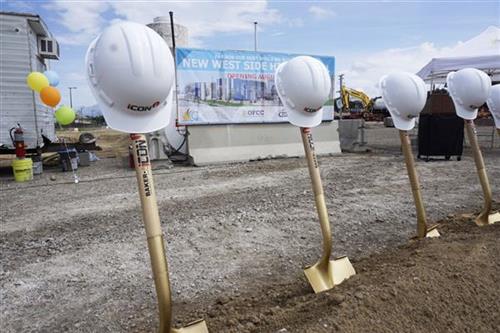
Ohio – Nine school construction projects are set to receive $242 million in state funding after the Ohio Facilities Construction Commission (OFCC) approved local school district requests on July 8. These nine projects represent more than $450 million in public construction work.
Cleveland Municipal School District (CMSD) is undertaking several construction projects that total an estimated $117.19 million, of which $79.69 million is state-funded.
As part of a modernization campaign, the district plans to build two new elementary-middle schools to house grades pre-K through eight and a new Lincoln-West high school to house grades 9-12. In addition, CSMD will renovate Joseph M. Gallagher Middle School to house grades pre-K through nine.
Construction and renovation will not begin until the district holds community meetings, completes designs, and awards contracts.
Renovation of the middle school is expected to start in fall of 2022, with the construction projects following in summer of 2023. The district expects to hold ribbon cuttings for the pre-K-8 schools in summer 2024 and Lincoln-West in summer 2025.
Other districts to receive OFCC funding include Carrollton Exempted Village School District which will receive $8.54 million for its project to construct a $20.82 million elementary portion of a new pre-K through 12th-grade building.
The commission authorized more than $29.69 million for Kenton City School District’s plans to build a $45.69 million middle-high school to house grades 6-12 and a career tech program and more than $46.43 million to Lancaster City School District for its plans to build a $103.18 million high school to house grades 9-12 and a career tech program.
Lockland Local School District is renovating a K-12 building for $25.32 million of which $21.94 million will come from the state. A project to build a new $44.14 million middle school in Milford Exempted Village School District will receive $11.56 million from the commission.
Rootstown Local School District will receive $18.73 million in state funding to construct a new $45.68 million pre-K through 12th-grade building, and Metro Early College High School is planning $28.89 million in renovations to an existing middle school to house grades 6-12 using $14.44 million in state funding.
Plans to renovate and expand a career center at Ashland County-West Holmes Joint Vocational School District for $19.24 million will receive $10.99 million from the state.
|
|
SPI adds governmental relations, transportation consultants to team |
|
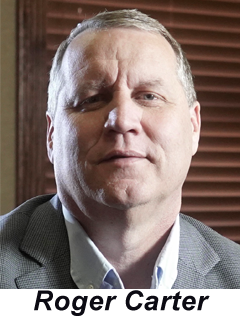
Roger Carter joins the Strategic Partnerships, Inc. (SPI) Consulting Team with decades of experience in municipal government, utility services, academics, and governmental relations. For the past two decades, he has served as city manager to communities in Utah.
Roger’s government experience began over 30 years ago when he held advisory roles related to state and federal relationships, particularly in land use, partnerships, and policy. He successfully negotiated agreements between city, county, and federal authorities on endangered species issues, land use designations, utility issues, and more.
In 2001, Roger became the city manager for Santaquin, Utah. During his time in Santaquin, he had oversight of the city’s budget and was able to secure millions of dollars in federal grants for infrastructure improvements. Additionally, Roger led the community through several natural disasters.
In 2004, Roger moved to Washington City, Utah, to become the city manager. The city was consistently ranked as one of the fastest-growing metropolitan areas in the United States. During his tenure, Roger established the city’s first police division, managed an ever-growing budget, and acquired hundreds of millions in revenue for much-needed infrastructure improvements.
Roger acquired a vast knowledge of utilities from working with public utilities for 25 years, primarily in gas and electricity. Roger served for 16 years on the board of directors for the Utah Association of Municipal Power Associations and most recently as an advocate for the development of small-modular nuclear reactor technology.
In 2017, Roger was appointed by the U.S. federal judiciary to oversee the municipal restructuring of two communities under a federal injunctive order. His oversight responsibilities included law enforcement, public utilities, land use, and governance.
After serving as an adjunct professor for nine years, he became a full-time faculty member of the public administration program at Southern Utah University in 2020. His research and writing primarily focuses on networks, strategic partnerships, community trust, and social capital.
He has a bachelor’s degree from Brigham Young University in public policy analysis and a master’s degree in public administration. Additionally, he has completed a doctoral program.
Roger’s expertise in governmental relations and utility operations will benefit SPI clients wishing to do business in those sectors.
|
|
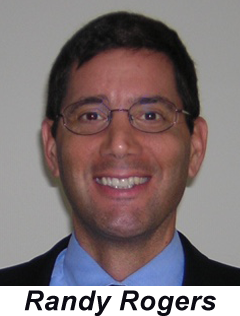
Randy Rogers brings extensive service and honors in both the Armed Forces and public transportation to his consulting role with the Strategic Partnerships, Inc. (SPI) team.
After graduation from the U.S Naval Academy, Randy enlisted in the U.S. Navy where he rose to the rank of lieutenant commander and served as a surface warfare officer with oversight of operations, logistics, and communications.
In 1992, he moved to a position with the U.S Maritime Administration (MARAD). Serving as fleet captain at the Suisun Bay Reserve Fleet in Benicia, California, his responsibilities included oversight of the day-to-day operations and maintenance of 100 ships of the National Defense Reserve Fleet. While serving in this capacity, Randy received the Secretary of Transportation’s Award for Valor after being part of a successful rescue of three fishermen. During this time, he attended the U.S. Naval War College and received his master’s degree in national security and strategic affairs.
Randy was selected in 2000 as the port and intermodal specialist, covering six western states and Guam for the western region director at MARAD’s Regional Office in San Francisco. In 2004, Randy was selected to lead the newly created U.S. Department of Transportation/MARAD office in Long Beach, California, where he reported to the U.S. secretary of transportation. Several years later, he became director of the Pacific Northwest and Alaska Gateway Office.
In one of his last government positions, Randy served as chief of staff for the Office of the Transportation Attaché at the U.S. Embassy in Baghdad, Iraq. In that role he oversaw large infrastructure projects.
After retiring from MARAD, Randy accepted the position of executive director at the Waukegan Port District in Illinois where he managed the Waukegan National Airport as well as a large marina and a commercial harbor. After serving as the vessel business manager for the largest ferry system in the country, he became the airports and ferry administrator for Pierce County, Washington, where he managed two general aviation airports and a ferry system handling 500,000 passengers a year.
In 2021, Randy Rogers retired and relocated to Austin, Texas, where he will consult with SPI clients on transportation and infrastructure opportunities.
|
|
Kansas to invest $776M in highway expansions, modernizations |
|
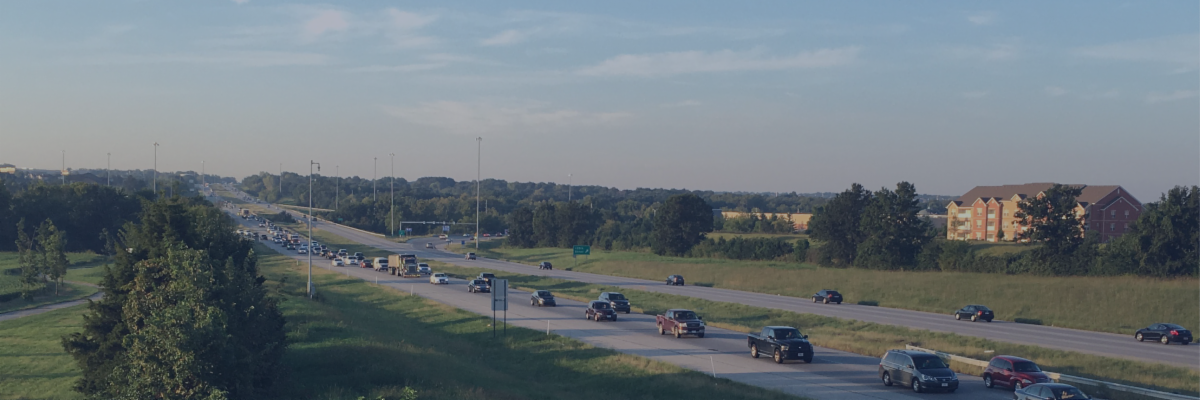
Kansas – Gov. Laura Kelly announced that more than $776 million in investments will go toward 24 expansion and modernization highway projects to help relieve traffic congestion and improve safety.
In rural areas, 20 projects across the state will focus on adding or extending more than 26 miles of passing lanes on highways, rehabilitating and adding shoulders on more than 40 miles of highway, and widening or adding shoulders on more than 22 miles on sections of the K-7 state highway.
The Kansas Department of Transportation (KDOT) will host local consult meetings this fall to identify additional regional priorities to be added to the development pipeline and continue working on those projects placed in development in May 2020.
One of the first projects scheduled to be let will widen U.S. Highway 69 to six lanes from 103rd Street to 151st Street in Overland Park. Estimated project cost is $300 million to build the first express toll lane in the Midwest. New lanes will be tolled, but existing lanes will remain free to use. Constructing letting is set for 2022.
Another project that KDOT plans to let in 2022 will address a long-time concern about congestion at the Interstate 235 Junction in Wichita. The $86 million project will directly link northbound Interstate 235 to eastbound K-96, replace the loop from westbound K-96 to southbound Interstate 135 with a flyover, widen southbound I-135, and upgrade 19 bridges.
KDOT will keep its promise to let to construction one phase of all T-WORKS projects before construction begins on highway improvement projects.
|
|
New York council seeks input on demographic forecasting models |
|
New York – A request for information (RFI) is seeking input on the best approach to replace or update the New York Metropolitan Transportation Council’s (NYMTC) existing 2050 Socioeconomic and Demographic (SED) forecasting models.
NYMTC requests comments, and recommendations on the feasibility and means of creating solutions to independently develop future SED forecasts and zonal allocations.
The objective of this project is to develop a solution that NYMTC’s staff will be able to maintain, update, revise, and use to develop future forecasts and zonal allocations with horizon years beyond 2060.
Functions should include an ability to:
- Incorporate historical SED data and report historical and forecasted SED data beginning with 2000.
- Develop county-level SED forecasts, able to be reported at one-year intervals, through 2060 and beyond.
- Allocate county-level forecasts to the traffic analysis zone-level for transportation modeling purposes.
NYMTC will review all responses and use the information received from this RFI to review the available options and solutions in making decisions for future contracting strategies.
|
|
Michigan city issues RFI for inventory management software |
|
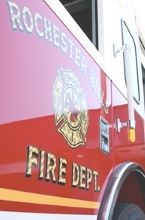
Michigan – The city of Rochester Hills released a request for information (RFI) for input, recommendations, and budgetary pricing for an inventory management workflow software solution.
Rochester Hills fire and emergency medical services (EMS) issued the solicitation to give vendors who are interested, an opportunity to exchange information relative to their Inventory Management System with the city, prior to the potential issuance of a request for proposals (RFP).
This RFI is intended to provide both the city and the respondents an opportunity to learn more about how each entity conducts business and technological efficiencies available, as well as receive budgetary estimates.
The desired solution would feature the ability to:
- Develop and create a solution for Enterprise Resource Planning (ERP).
- Access and manipulate data for 70-100 employees at various levels.
- Provide web-based management of inventory accessible via smart phones, tablets, and desk top computers.
- Ability to run real time reports on consumables to determine accurate stock (EMS and buildings).
- Track expiration dates of expirable items.
- Integrate multiple locations of inventory.
- Provide for asset tracking.
- Supply annual preventive maintenance reminders for specific equipment.
- Provide for daily checklists to ensure operational effectiveness.
- Provide for a rapid check on scene, post incident, to ensure operability.
- Provide automated notifications for operational deficiencies.
- Use bar codes, Quick Response (QR) codes, or Radio Frequency Identification (RFID).
RFI submissions are due by 3 p.m. local time July 29. If the city elects to issue a RFP, it anticipates a future solicitation in late 2021.
|
|
University of Wisconsin planning $85.6M event center, field house |
|
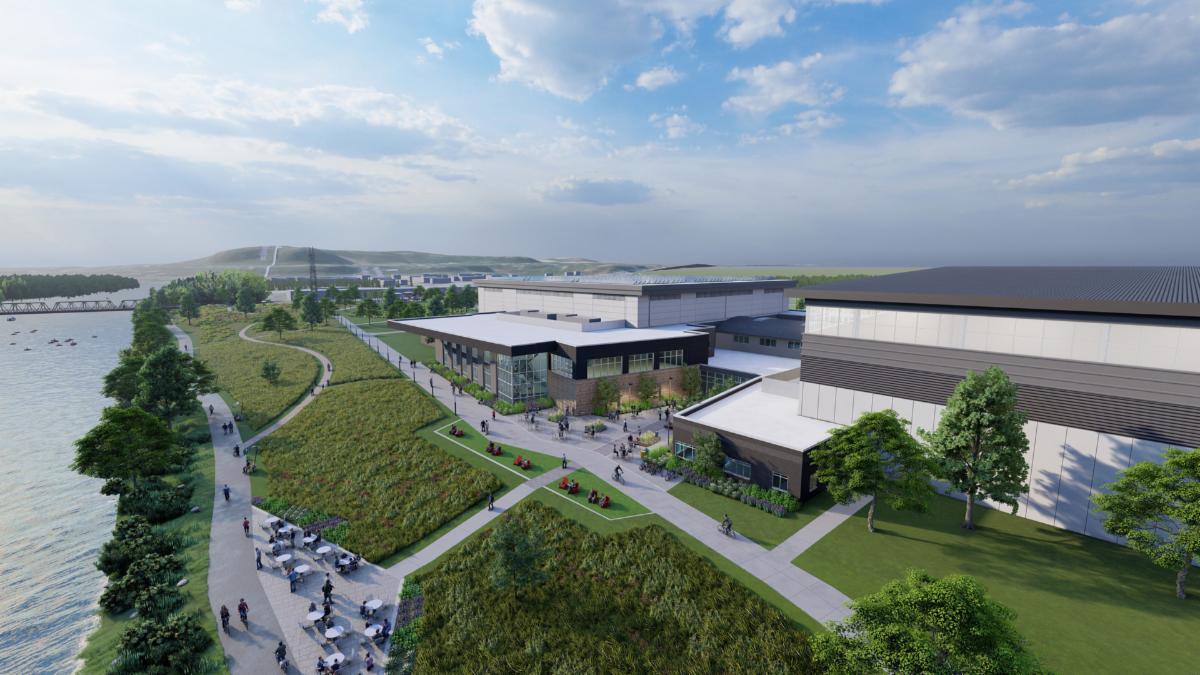
Wisconsin – Plans for the $85.6 million Sonnentag Event Center and Field House gained a key approval from the board of regents of the University of Wisconsin (UW) System on July 9.
Regents authorized UW-Eau Claire to lease space in the multipurpose facility on Menomonie Street on the Chippewa River shoreline.
The proposed 170,500-square-foot off-campus facility would have a capacity of 5,000 people and could be used for concerts, youth sports tournaments, other entertainment events, and commencements.
Plans include a two-story wellness and fitness center, a 60-yard turf field house, and offices for UW-Eau Claire’s athletics department.
The total cost of the Sonnentag Project will be $100.6 million as Mayo Clinic Health System plans to locate its imaging services and sports medicine program in a $15 million clinic within the complex. Mayo Clinic Health System will use the turf facility for performance training, pre- and post-surgery rehabilitation, and physical therapy.
Construction could begin in spring 2022 with the building projected to open in spring 2024.
|
|
New legislation to encourage solar, electric vehicle developments |
|
New Jersey – Gov. Phil Murphy signed a package of bills on July 9 to advance New Jersey’s transition to clean energy and achieve its objective of 100 percent clean energy by 2050.
The legislation will increase solar development and facilitate installation of electric vehicle charging infrastructure throughout the state.
Bills signed by Murphy are:
- S3223, which establishes numerical requirements and zoning standards for installation of electric vehicle supply equipment and make-ready parking spaces.
- A1653, which encourages development of zero-emission vehicle fueling and charging infrastructure in redevelopment projects.
- A4554, which establishes a successor program to a solar renewable energy certificate program in the New Jersey Board of Public Utilities, including a solicitation process for certain solar power generation facilities.
- A5434, which establishes a dual-use solar project pilot program for unpreserved farmland and allows land used for dual-use solar projects to be eligible for farmland assessment under certain conditions.
The New Jersey Department of Community Affairs already is drafting model ordinances to provide local governments with the ability to approve the installation of electric vehicle service equipment and parking spaces that are pre-wired for electric vehicle infrastructure.
|
|
Virginia tollway extension moves into design, construction phases |
|
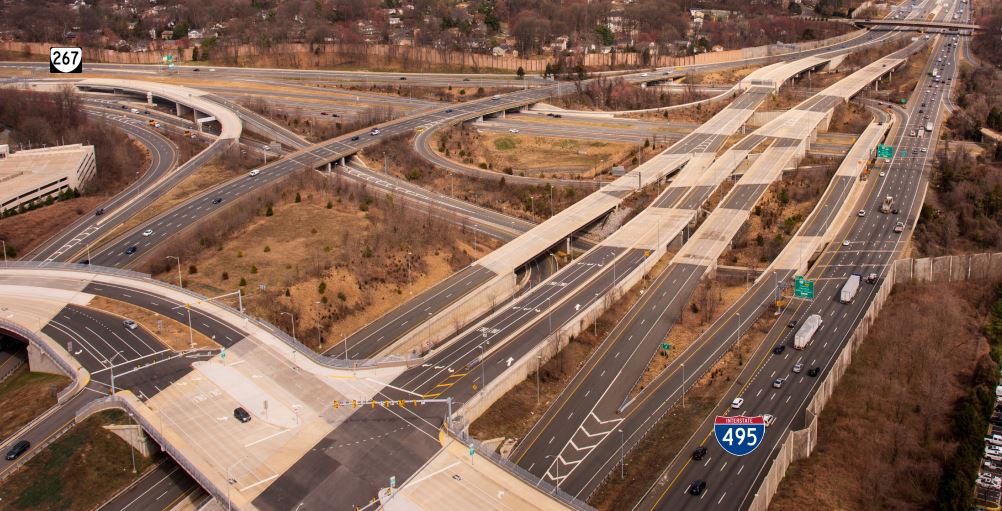
Virginia – The state’s 495 NEXT plan to extend toll lanes on Interstate 495’s Capital Beltway is entering the design and construction phases after achieving federal environmental approval.
The Virginia Department of Transportation (VDOT) project involves extending the I-495 Express Lanes 3 miles from the existing terminus of the I-495 Express Lanes to the George Washington Memorial Parkway interchange in the vicinity of the American Legion Bridge.
Project improvements would include replacing existing overpasses, implementing a shared-use path that could be used by bicyclists and pedestrians, and replacing and constructing new noise walls.
Construction on the 495 NEXT project is expected to begin in 2022, with the express lanes extension opening in 2025.
The project will provide dedicated funding to support transit in the corridor, including a commitment of $5.2 million for initial purchases of buses, and an annual amount of $2.2 million for bus service operations.
|
|
Providence gathering ideas on vendor management systems |
|
Rhode Island – The city of Providence issued a request for ideas related to vendor management systems. City officials are seeking technical and performance narratives, along with suggested pricing information.
The system solution should:
- Augment the standardized workflow stemming from the procurement process to be inclusive of steps relative to contract engagement, relevant dates, record keeping, and relationship management.
- Develop “phases” and define ownership of the workflow to clarify both internally and externally where next steps reside.
- Maintain vendor “profiles” to aid in the evaluation of bidders.
- Define quality evaluation standards that will be universally applied by all departments for contracts that they maintain.
- Build an acknowledgement of past performance into standard rubrics to be used to evaluate bids.
- Standardize contract documents/templates or components to ensure consistency.
Submissions are due by 2 p.m. local time August 2.
|
|
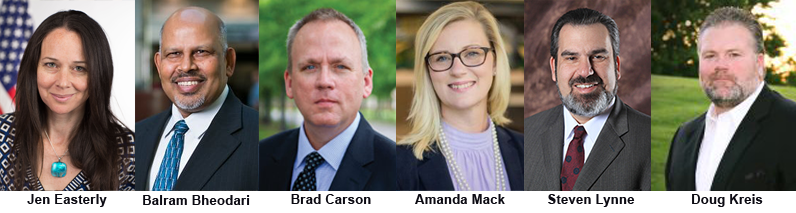
Washington, D.C. – The U.S. Senate on July 12 confirmed the appointment of Jen Easterly as director of the Department of Homeland Security’s Cybersecurity and Infrastructure Security Agency (CISA). Easterly was the head of firm resilience at a multinational investment bank. Prior to that, she was special assistant to President Obama and senior director for counterterrorism and executive assistant to National Security Advisor Condoleezza Rice. Easterly also served as the deputy for counterterrorism at the National Security Agency.
Georgia – The Atlanta City Council approved the appointment of Balram Bheodari as general manager of Hartsfield-Jackson Atlanta International Airport (ATL). He succeeds John Selden who accepted a position as chief executive officer of an airport development company in Saudi Arabia. Bheodari most recently served as interim general manager at ATL and deputy manager of operations. Before that, he was chief operating officer for the Houston Airport System.
Oklahoma – The University of Tulsa board of trustees selected Brad Carson as the university’s next president. Most recently, Carson was a professor at the University of Virginia. Before that, he was acting undersecretary of defense for personnel and readiness at the U.S. Department of Defense and undersecretary of the U.S. Army.
South Dakota – The city of Watertown transitioned to a city manager-led form of government with Amanda Mack as its new city manager. Mack most recently served as city manager for Spencer, Iowa. Before that, she was city manager of Canton and city administrator of Worthing.
New Mexico – Los Alamos County appointed Steven Lynne as county manager. He had been serving as acting county manager since the retirement of Harry Burgess in May. Lynne held several positions with the county including deputy county manager, acting assistant county administrator, and administrative services director-chief financial officer.
Kentucky – The Kentucky Transportation Center named Dr. Doug Kreis as its new director. He succeeded Joseph Crabtree who retired. Kreis most recently served as the center’s associate director. Before that, he was program manager of the center’s freight and logistics section.
|
|
|
|
Connect with SPI
Check out our social media links!
|
|
About Government Contracting Pipeline |
|
Strategic Partnerships, Inc.
Ph: 512-531-3900
|
|
Government Contracting Pipeline, a publication of Strategic Partnerships, Inc., is a free, weekly newsletter detailing important happenings nationwide and the premier source for federal, state, and local government news and contracting opportunities.
|
|
Help us share this message.
To ensure delivery and proper formatting of the newsletter, be sure to add editor@spartnerships.com to your safe senders list. Otherwise, the newsletter may be flagged as spam and automatically routed to your junk e-mail folder.
|
|
For news or calendar items: editor@spartnerships.com
For information about SPI's products and services: sales@spartnerships.com
© 2021 Strategic Partnerships, Inc. All rights reserved.
|
|
|
|
|
|
|
|