Volume 13, Issue 47 - Wednesday, December 1, 2021 |
|
By Mary Scott Nabers, CEO of Strategic Partnerships, Inc. |
|
The sudden onset of a natural disaster creates immediate havoc, and the cost of destruction that has become the norm is huge. To counter the cold unpredictability and extremely high costs of protecting the country’s environment, officials at various levels of government are announcing resiliency projects. Federal and state funding for infrastructure resiliency projects is historically high, and that is because environmental conditions continue trending toward the volatile.
In New Orleans, a focus on protecting the environment and the city’s citizens has resulted in an abundance of projects. Most of these initiatives are customized for the various parts of the city because the needs are diverse. For example, the St. Anthony Green Streets Project includes stormwater management work that will ensure efficient water drainage in cases of flooding. That project has a funding allocation of $13.1 million from the National Disaster Resilience fund and an additional $11.7 million in additional funding from the Public Assistance program at the Federal Emergency Management Agency (FEMA). This emerging opportunity entered the design phase in fall 2021, and solicitation documents for contractors will be released in 2022.
|
|
New York City prepares for sea-level rise with $7B waterfront plan |
|
New York – Facing the threat of sea level rise, the New York City Economic Development Corporation (EDC) is proposing construction of a $5 billion to $7 billion waterfront for lower Manhattan.
Targeting a mile-long section between The Battery and the Brooklyn Bridge, the Financial District and Seaport master plan recommends actions to stem anticipated daily tidal flooding conditions and coastal storm surge in the year 2100. This means a constant level of protection against tidal flooding at about 3.5 feet above the current esplanade and a coastal defense system about 17 feet above the current esplanade to protect against storm surge.
The master plan employs a mix of passive features that are integrated into the landscape and active features that are deployed before a storm. Limited waterfront space could result in parts of the system extending out into the water.
Primary cost drivers include:
- Shoreline fill and cofferdams.
- Whitehall Ferry Terminal reconstruction or partial reconstruction.
- Roadway gates.
- Drainage infrastructure such as pumps and storage.
The EDC plans to seek funding from multiple sources such as federal grants from the U.S. Army Corps of Engineers, Federal Emergency Management Agency, and the Infrastructure Investment and Jobs Act.
At the state level, financial assistance could come from a consumer insurance surcharge, Environmental Bond Act, and Clean Water State Revolving Fund loans. City general obligation and revenue bonds and other bond sources could supplement the project funding at the local level.
|
|
Transportation councils hope to revive Gulf Coast Rail service |
|
Florida – Plans to revive Amtrak’s New Orleans to Orlando Gulf Coast Rail are gaining momentum as one regional council is encouraging sister organizations to support the estimated $2.25 billion project.
The Capital Region Transportation Planning Agency recently approved a measure to ask four regional planning councils in North Florida to research the reinstatement and sustainment of Gulf Coast passenger rail.
Amtrak suspended rail service along the Gulf Coast after Hurricane Katrina in 2005.
Efforts to restore service began in 2015 when the Southern Rail Commission asked Amtrak to evaluate potential restoration options. In December 2015, the Fixing America’s Surface Transportation (FAST) Act mandated the creation of the Gulf Coast Working Group to complete a report to Congress on Gulf Coast passenger rail restoration. The following year, the working group and CSX completed two separate feasibility and cost estimate studies.
Cities along the proposed 785-mile route include Mobile, Pensacola, Tallahassee, and Jacksonville. The plan would rely on the cooperation of Florida Gulf & Atlantic Railroad, CSX Transportation, and Florida Department of Transportation to share track or right of way.
|
|
Cincinnati gathering ideas for easing residents' energy burden |
|
Ohio – The city of Cincinnati is seeking innovative solutions to its energy burden through responses to its request for information (RFI).
Cincinnati’s primary objective is to obtain market information that provides solutions to the high percentage of income that city residents spend on energy needs compared to those in other large U.S. cities.
The city seeks innovative submissions that support achievement of a 10 percent reduction in energy burden faced by the city’s low-income residents by 2023.
Cincinnati is looking for offerors to provide creative ideas to facilitate capital upgrades and/or behavior change efforts at scale. At this point, creative market solutions are more important to the city than specific financing and implementation plans.
RFI submissions are due by 4 p.m. EST December 15. Information received will be considered for the purposes of determining whether to conduct a competitive procurement.
|
|
New Jersey district puts proposed $241M high school to vote |
|
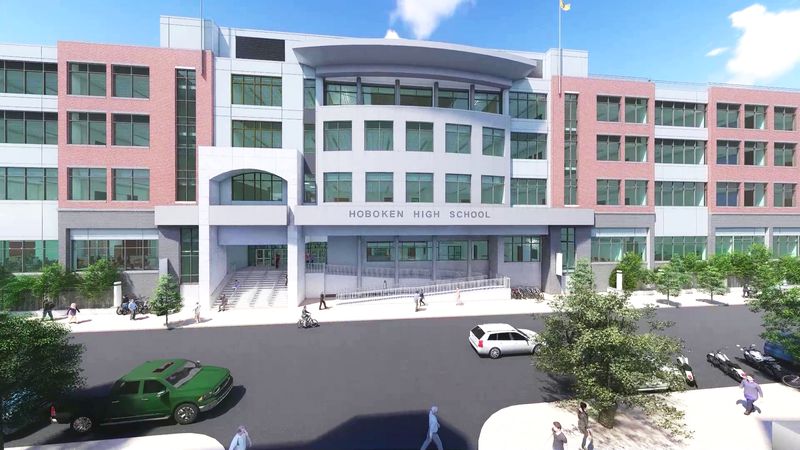
New Jersey – The Hoboken Planning Board is set to review project plans this month for the school district’s transformation of the former JFK Stadium into a new Hoboken High School.
Voters will decide the $241 million referendum in a special election scheduled for January 25, 2022 that also would allow the district to convert the existing high school into a middle school.
The new four-story high school would house up to 1,200 students and feature a competition-size swimming pool, ice rink, and rooftop athletic field. Academic space would include classrooms for culinary arts, theater, media, and art as well as an IT lab.
In addition, the school would be built with two gyms, a year-round hockey rink, tennis courts, and a 110-vehicle parking structure.
|
|
Illinois to incentivize EV facility construction, related road projects |
|
Illinois – Newly signed legislation in Illinois moves the state closer to reaching the governor’s goal of putting 1 million electric vehicles on the road by 2030 by incentivizing construction of new facilities, training Illinois graduates, and creating thousands of jobs.
The Reimagining Electric Vehicles in Illinois Act (REV) includes tax credits for income tax withholding, training costs, tax exemptions, and investment credits, as well as allowing local jurisdictions to abate property taxes for EV projects. EVs include vehicles exclusively powered by electricity and include electric cars and motorcycles. The legislation prioritizes underserved communities and communities impacted by energy transitions.
Credits range from 75 percent to 100 percent of income tax withheld for creating new jobs or 25 percent to 50 percent for retained employees, depending on various factors such as company location.
Additional enhancements include a 20 percent price preference for EVs built in Illinois for state procurements and the creation of an EV Permitting Task Force to ensure permits for EV projects are streamlined.
The legislation builds upon the administration’s commitment to improving the state’s infrastructure, by permitting the Illinois Department of Transportation (IDOT) to prioritize road projects that directly assist with locating an EV facility and the project’s infrastructure needs.
Not only will the legislation help promote new business in Illinois, but it also will create pathways to opportunity for historically underserved communities. REV incentivizes employers to locate new facilities in communities that have been historically left out of investment and prioritizes equity through vendor diversity reporting, diverse hiring plans, and workforce diversity reporting.
|
|
IT, emergency management leaders bolster SPI Consulting Team |
|
James “Jay” Rice brings extensive experience on both sides of the procurement process to the Strategic Partnerships Inc. (SPI) Consulting Team.
As a buyer and seller for IT projects in Michigan, Jay honed his skills in mission-critical application deployment, operations (24x7), maintenance, business process reengineering, technology spend analysis, and IT decision-making.
Jay also is versed in vendor contract negotiations and vendor contract management. Most recently, he served as the services general manager for the Michigan Department of Technology, Management, and Budget. In that position, he was responsible for oversight of IT for the Michigan State Police, Department of Corrections, and Department of Military and Veterans Affairs. He was responsible for $101 million IT spend.
Prior to holding that state position, Jay served as a client account consultant for Accenture where he sold and delivered IT professional services to the state of Michigan, local government, higher education institutions, and numerous nonprofits.
Jay earned a bachelor’s degree in computer science and business from the University of Minnesota-Twin Cities and a Master of Business Administration and Management from Dartmouth College. He is a welcome addition to the SPI Team.
|
|
Brent Pulver’s 25 years of service in law enforcement and emergency management have provided him a high level of expertise in public safety, technology, and management. His experience and insight bring added value to the Strategic Partnerships Inc. (SPI) team of consultants and researchers as well as the company’s clients.
Brent served in numerous jurisdictions and was involved in many complex multi-agency initiatives during his government career. He held positions that included service as a patrol deputy, jail commander, and emergency manager before his retirement as an undersheriff in October 2021. One of his recent accomplishments included the coordination and oversight of a significant upgrade of local emergency communications infrastructure.
Brent also served as a board member for the Central Utah 911 Agency which provides 911 services to all residences in two counties. The board is also responsible for emergency dispatch services for several county sheriff offices, 13 police departments, and 21 fire and EMS agencies.
Additionally, Brent served as an investigator for the Utah State office of Medical Examiners for 13 years. He earned his law enforcement certification from Weber State University.
|
|
Pasadena begins design phase for $111M seismic retrofit of library |
|
California – The city of Pasadena is searching for architectural and engineering services for the design of a seismic retrofit and renovation of Pasadena Central Library.
Consultants presented the findings of their seismic evaluation of the library to councilmembers on November 29, in which they estimated a $111 million retrofit of the building’s structural system, including mechanical, electrical, plumbing, and roofing would be necessary.
Opened 1927, Central Library was the first building completed in Pasadena’s historic Civic Center Plan and is listed on the National Register of Historic Places. However, the library has been closed since May 3 after a structural assessment determined the building was unsafe in the event of an earthquake.
The library averages approximately 55,000 visitors per month and houses a collection of over 345,000 items. As part of the seismic retrofit effort, the city will restore the building while maintaining its historic architectural significance.
Once a design team is selected, city staff recommends assembling a project oversight committee to review the analysis and make a final recommendation as to the best approach to retrofit the building.
The operations of the Library and Information Services Department are funded primarily by the city’s general fund and supplemented by a voter approved parcel tax.
Believing that design work and cost estimates will not be far enough along by next fall, staff is suggesting that the city ask voters to extend the current parcel tax past its February 2023 deadline. A parcel tax referendum in November 2022 would support the ongoing operations of the library and Information Services Department. A ballot item in June 2024 primary or November 2024 general election would seek voter approval for the financing of the seismic retrofit.
|
|
Boulder County issues RFI to replace mass notification system |
|
Colorado – Boulder Regional Emergency Telephone Service Authority (BRETSA) issued a request for information (RFI) seeking vendor input and cost data for replacement of a mass notification system for four Public Safety Answering Points (PSAPs).
BRETSA agencies hope to obtain more information on what products exist in the market today that could replace the existing system in use today. They are looking for estimated timeframes and costs for implementation (product and services) to deploy a new mass notification system.
The proposed Mass Notification System will be fully hosted by the vendor requiring no hardware, equipment, storage, etc. by any BRETSA agencies. The system should be web-based with the ability to access the system via a secure internet connection from any computer, tablet, or smart phone in order to send out alerts and notifications.
Proposed solutions must meet both current and future requirements of the local agencies. In addition to the PSAPs, the system is used by local municipalities and County Emergency Operations Center. City departments include Public Works, Parks, Open Space and Mountain Parks, with capability for municipal employee notifications.
The deadline for RFI submissions is 2 p.m. local time January 14, 2022.
|
|
Federal grant completes funding for Granite Falls Bridge project |
|
Washington – Snohomish County’s plan to replace Granite Falls Bridge 102 is now fully funded after the U.S. Department of Transportation (USDOT) announced it would award the project a $22.1 million grant.
The plan is one of four projects in Washington to receive funding from USDOT’s Rebuilding America’s Infrastructure with Sustainability and Equity (RAISE) grant program.
Spanning the Stillaguamish River approximately 1.5 miles northeast of downtown Granite Falls, the existing bridge is 340 feet long and 20 feet wide. The new bridge will increase the length to 406 feet long and 30 feet wide with room for sidewalks.
Built in 1934, the bridge is the sole southern access route for the more than 60,000 annual visitors to the area’s hiking and mountain biking trails, and gravel quarry and logging operations that employ over 270 workers.
County staff are working on environmental and design with construction targeted to begin in 2025.
|
|
Streetscape guidelines offer insight into White Flint's future |
|
Maryland – The Montgomery County Planning District released streetscape guidelines on November 23 that provide a glimpse of the vision driving the Advancing the Pike District project.
This 430-acre project is intended to spark further implementation by identifying short-term opportunities for success that can be implemented within the next two to five years to further the development of the White Flint area, as well as move forward the sector plan.
County officials expressed a desire for a transit hub near a four-year university, similar to developments near Virginia Tech and George Mason University.
In 2010, the White Flint Sector Plan was adopted to guide the future development of the White Flint area. The concept for the planning document was to create a vibrant, walkable, mixed-use district served by multiple modes of transportation.
The sector plan identified several improvements and potential interventions to achieve this vision, however, work has been incremental and uneven to date.
Now that the plan is 10 years old, the Montgomery County Planning Department is revisiting the recommendations from the sector plan by initiating the Advancing the Pike District project.
The goals of the project are to:
- Provide an up-to-date progress snapshot.
- Implement Vision Zero in White Flint’s core.
- Position the White Flint Metro Station for success.
- Create an identity for the Pike District through placemaking.
Pike District Streetscape Guidelines were drafted to ensure that streets in the Pike District are developed to accommodate all modes and users – pedestrians, cyclists, public transit, and motorists – in a safe and attractive environment.
|
|
County of Hawaii seeking information on ERP software systems |
|
Hawaii – The county of Hawaii released a request for information (RFI) to compile current market information for an Enterprise Resource Planning (ERP) software system.
County officials would use the ERP system to serve as the core business application platform for finance, accounts payable, accounting, payroll, human resources, procurement, asset management, budget, utility billing, and other functions.
The RFI’s purpose is to obtain information to assist county leadership in understanding what ERP solutions, options, and approaches are available. These solutions should be adaptable to government organizations, such as the county, to achieve greater efficiency and effectiveness in business workflow and in the management and delivery of county services.
RFI responses are due by 4 p.m. HST January 14, 2022.
|
|
Racine eyes P3 to spur Lakeview Park revitalization |
|
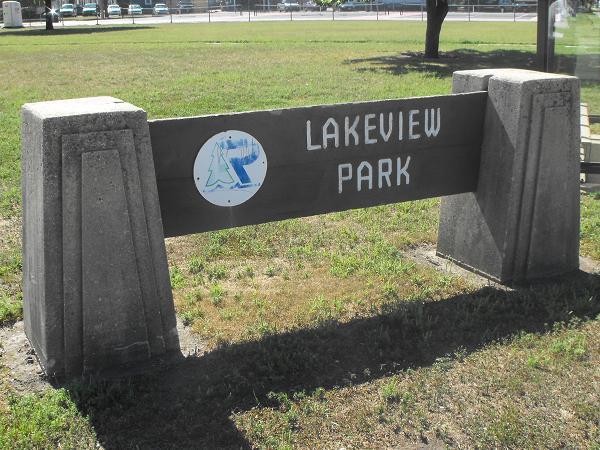
Wisconsin – Racine city leadership is exploring the possibility of a public-private partnership (P3) as it begins the planning process to revitalize Lakeview Park.
Since a 2019 fire at the park forced the closure of the Lakeview Community Center, the city has struggled with the decision to raze the building.
Now, Racine’s Department of City Development is gathering public input on how to improve the park’s community center space, outdoor amenities serving the beach and neighborhood, and accessibility.
In addition, the city is seeking feedback on private investment, such as residential housing, which would help pay for the new public improvements.
Lakeview Park is a 5-acre neighborhood park in the northwestern portion of the city adjacent to North/Zoo Beach and Racine Zoo overlooking Lake Michigan. Existing facilities include a sandlot ball diamond, playfield, playground, basketball court, and three tennis courts.
|
|
Connecticut town gains voter approval for $28M community center |
|
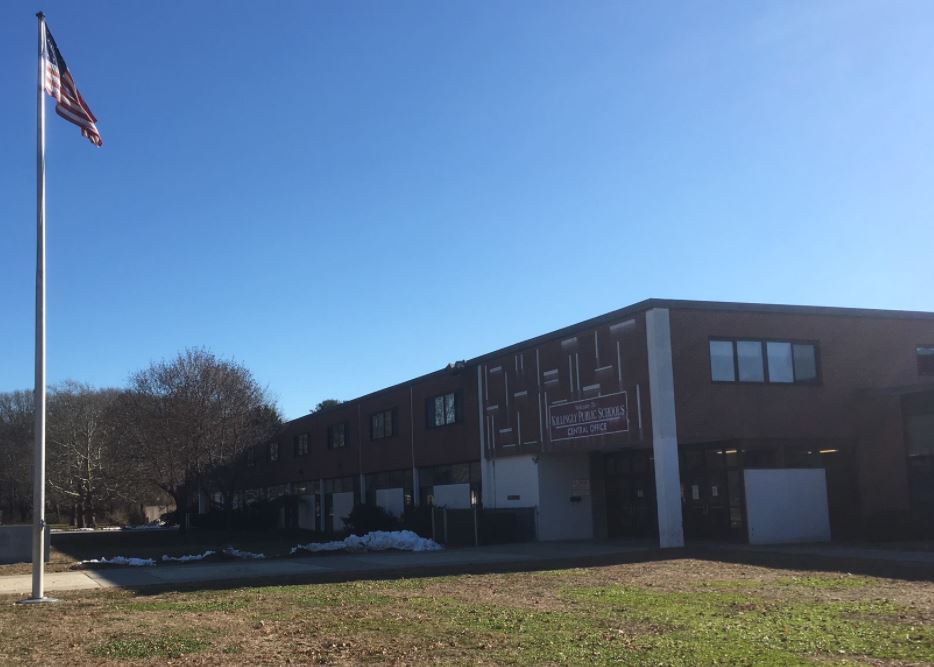
Connecticut – Backed by voter approval of $27.8 million in bond sales, the town of Killingly will advance its plan to convert a former school into a new community center.
Killingly will relocate recreation services from a rundown community center building on Broad Street to the renovated school campus on Westfield Avenue.
Repairs will include work on the former school’s roof and brick exterior, in addition to improvements to its cafeteria and theater areas. Security, restroom, and parking upgrades are planned as well.
The town’s Permanent Building Commission is scheduled to vote on a draft request for proposals before an architect is hired and the project is let.
|
|
Washington, D.C. – The U.S. Senate confirmed D.C. Public Service Commission (DCPSC) Chairman Willie Phillips as a new member of the Federal Energy Regulatory Commission (FERC). Phillips has represented the District of Columbia in national and international energy policy discussions, including at FERC, U.S. Congress, and U.S. Department of State. Prior to coming to the DCPSC, he served as assistant general counsel for the North American Electric Reliability Corporation (NERC).
California – The University of California-San Francisco welcomed Erin Gore as its new senior vice president of finance and administration. Gore most recently served as executive vice president of growth initiatives, strategy, and communications at a national bank. Before that, she was the bank’s director of higher education and not-for-profit division.
Hawaii – The Honolulu Authority for Rapid Transportation (HART) hired Matthew Scanlon as director of construction to lead construction management for the Honolulu Rail Transit Project. Scanlon previously served as a project manager for HART. He also was deputy director of railroad systems engineering and maintenance for the San Mateo County Transit District.
Colorado – The city of Louisville selected Jeffrey Durbin as its new city manager, pending a formal employment agreement. He will succeed Interim City Manager Megan Davis. Durbin most recently served as interim town manager for Frisco, Colorado. Before that, he was town manager for Fraser.
Oregon – The Port of Columbia County appointed Sean Clark as its new executive director. Clark joined the port in 2014 as the Port Westward Terminal manager and became deputy executive director in May 2021. He had been acting as interim executive director since the resignation of Douglas Hayes in September.
North Carolina – The New Hanover County Airport Board named Jeffrey Bourk as the airport’s new director, effective January 3, 2022. Bourk has served as the executive director of Branson Airport in Hollister, Missouri. Before that, he was assistant airport manager for Portland International Jetport.
|
|
|
|
Connect with SPI
Check out our social media links!
|
|
About Government Contracting Pipeline |
|
Strategic Partnerships, Inc.
Ph: 512-531-3900
|
|
Government Contracting Pipeline, a publication of Strategic Partnerships, Inc., is a free, weekly newsletter detailing important happenings nationwide and the premier source for federal, state, and local government news and contracting opportunities.
|
|
Help us share this message.
To ensure delivery and proper formatting of the newsletter, be sure to add editor@spartnerships.com to your safe senders list. Otherwise, the newsletter may be flagged as spam and automatically routed to your junk e-mail folder.
|
|
For news or calendar items: editor@spartnerships.com
For information about SPI's products and services: sales@spartnerships.com
© 2021 Strategic Partnerships, Inc. All rights reserved.
|
|
|
|
|
|
|
|