
The Port Authority of New York and New Jersey (PANYNJ) is unveiling a $45 billion capital plan, funding the completion of several megaprojects and gearing up the port for critical infrastructure improvements. The Port Authority Board of Commissioners will next meet Dec. 18 to finalize the plan.
The new capital plan represents a record-breaking investment in the port’s operations, outlining a proposed slate of projects that will modernize and expand regional infrastructure. It builds on momentum produced through the 2017-2025 Capital Plan, completing several major construction and upgrade projects at LaGuardia Airport, Newark Liberty International Airport and JFK Airport.
Projects featured in the capital plan are spread out across multiple transit and infrastructure categories, including:
- Aviation.
- Tunnels, bridges and terminals.
- Seaports.
- The World Trade Center.
- PATH Forward.
- The state-of-good repair program.
The authority has carved out $10.1 billion alone for the 2026 operating and capital budget, with $4.1 billion being used to advance work laid out in the 10-year program. Notable projects being initiated or continued over the next year involve PANYNJ’s efforts to transform JFK International Airport, accelerate construction at the new Midtown Bus Terminal, build a new entry point to the Newark Airport Rail Station, continue construction on the upcoming AirTrain Newark, enhance reliability of railcar fleet and track infrastructure and maintain a state-of-good repair.
A significant portion of 2026’s allocated budget will go toward improving security, sustainability, technology and innovation measures. This includes $1.1 billion dedicated to safeguarding travelers through investments in increased security personnel, critical cybersecurity improvements.
A roadmap toward achieving net-zero emissions and climate resilience has been incorporated into the framework of the budget, aligning the authority’s efforts with overarching goals to mitigate climate impacts while bolstering resiliency to extreme weather. PANYNJ has announced its goal to cut greenhouse gas emissions in half by 2030, implementing a series of measures including the transition to a light-duty vehicle fleet by replacing vehicles with internal combustion engines and expanding solar power investments.
To date, the authority has kickstarted more than 60 pilot projects dedicated to integrating and developing innovative technologies such as autonomous vehicles, AI and advanced air mobility. These initiatives will continue to receive financial support in upcoming years as the authority seeks to develop smart technologies that will help improve operations and create an interconnected, efficient transit network.
As part of the PANYNJ’s vision for the next decade, several projects will be implemented across the region’s airports. JFK International Airport will be completely transformed, with plans to open the first gates of international terminals one and six as well as the rebuild, simplified roadway network. Additional work includes the deployment of new train cars that will double the capacity of that AirTrain JFK, complete new stations and build a restaurant for taxi drivers at the central taxi hold lot.
Plans for Newark Liberty International Airport will include the execution of a public-private partnership to build Terminal B. Additional work will cover the expansion of Terminal A with new gates, the completion of a new AirTrain Newark and the construction of a community access point to the Airport Train Station. At LaGuardia Airport, the authority will replace Terminal A, deploy an improved bus service with a new bus lane and bus stop and completion of a taxi hold lot at Terminal B.
The most prominent project affecting the region’s tunnels, bridges and terminals will be the $11 billion Midtown Bus Terminal. The completed project will enable the authority to improve the Lincoln Tunnel, expand terminal space, integrate modernized technologies and transition to an all-electric fleet. The historic initiative will be completed across two phases. Teh first phase will build ramps and a storage and staging facility, while the second will prioritize the new main terminal and a 3.5-acre green space.
To keep infrastructure in a state-of-good repair, the authority has a few select major rehabilitation projects in store for the region:
- The $640 million plan to reinforce the Lincoln Tunnel Helix bridge’s structure, roadway and deck.
- The $336 million project to rehabilitate the Outerbridge Crossing bridge in preparation for its eventual replacement.
- Completion of the extensive rehabilitation of George Washington Bridge.
The Port of New York and New Jersey – one of the busiest seaports in the country – will leverage more than $1.2 billion in private investments to drive terminal operations and infrastructure projects into the future. Efforts will include instituting new container termiinal lease requirements to ease the trucker experience, achieve sustainable port operations using electric cargo handling equipment and other solutions and strengthen rail operations. PANYNJ will also deepen the harbor to accommodate high-capacity cargo vessels and restore or replace outdated wharves and berths.
PANYNJ will complete the buildout of the World Trade Center by finishing Tower 2 and Tower 5. The authority will maintain One World Trade Center as an office building designed to attract high-profile tenants.
The 2026-2035 Capital Plan will build on the groundwork paved by the previous plan’s $3 billion investment in the PATH Forward program, instituting a massive effort to increase service. As one of the largest service increases in the program’s history, the authority will push to implement more frequent rush hour service, late-night weekend service and reinstate direct weekend service. The budget outlines a series of capital projects that will support service expansion, including critical infrastructure investments such as new uptown tracks and the installation of cutting-edge fare gates.
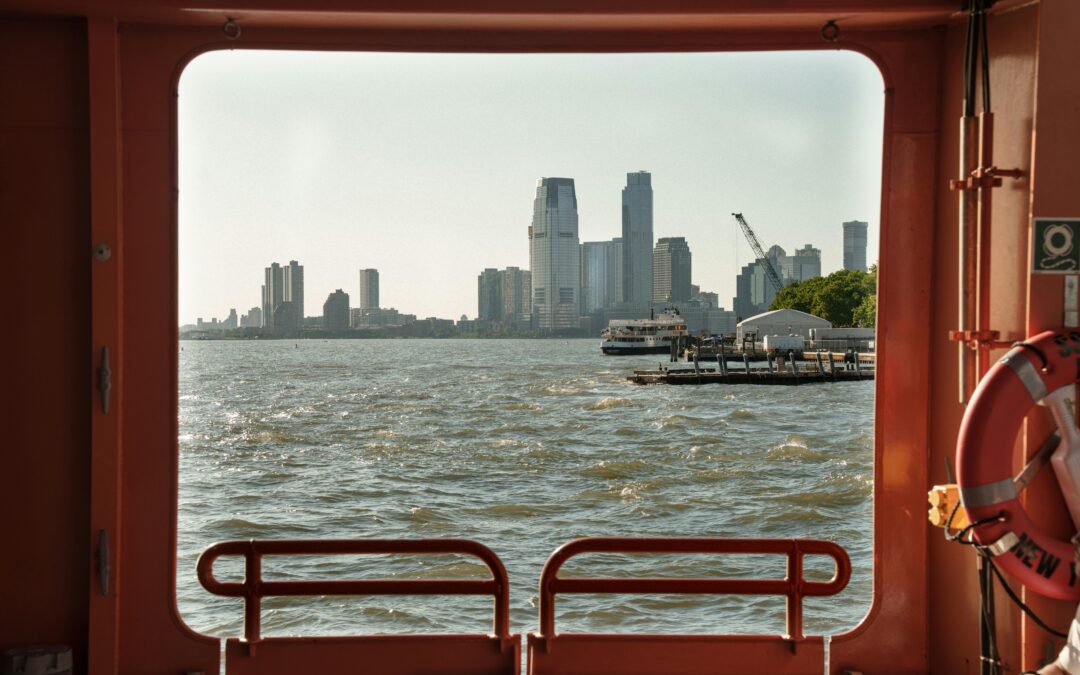
Photo by Jesse R from Pexels
This story is a part of the weekly Government Contracting Pipeline digital news publication. See more of the latest government contracting news here. For more national government news, check Government Market News daily for new stories, insights and profiles from public sector professionals.