Volume 22, Issue 12 - March 22, 2024 | |
|
Courthouses across America carry a rich history, with some dating back centuries. However, the upkeep of these aging buildings makes them extremely expensive to operate and maintain. The General Services Administration receives annual funding allocated by Congress, and this funding has recently been increased. Additionally, the recent infrastructure funding available through other programs has also increased. As a result, the available funding has resulted in hundreds of construction and renovation projects for courthouses throughout America. The needs are significant, and it is important to note that old courthouses need modern technology, upgraded HVAC equipment, safety upgrades and renovations to provide access to the services mandated by the American Disability Act.
A new $153 million courthouse is planned in Monterey County, California. It will replace the aging courthouse building and consolidate current operations from the Marina Courthouse and Salinas Courthouse in the county. The Fort Ord Courthouse project will be designed to enhance public access, increase security and safety and deliver reduced maintenance costs. It will provide seven courtrooms and a new parking lot, and the facility will be equipped with solar power capabilities. The start of site work and the installation of underground utilities will begin in 2025. A construction launch is slated for 2026.
About two years after the city hall in Richardson, Texas, was damaged by a fire in 2022, city leaders are moving to construct a new facility. The $91 million replacement project is currently in the schematic design phase, with contractor bidding expected in September 2024. Construction is scheduled for November of this year. The new 100,000-square-foot building will be three stories tall and boast a stepped-architecture design. The current city hall building will be demolished and replaced with green space connecting to the adjacent library via a fountain plaza.
The Westminster Municipal Courthouse in Westminster, Colorado, is over 60 years old and does not meet current safety and security standards. It will soon be replaced, and the project is projected to cost the city approximately $43 million. The construction project will also include site grading, drainage and infrastructure work, the installation of underground utilities and a new parking lot. The existing city hall and police station facilities will be demolished, and additional amenities will include the development of a park surrounding the new facility. Project leaders expect to issue solicitations for construction in late 2024.
Click here for more
| |
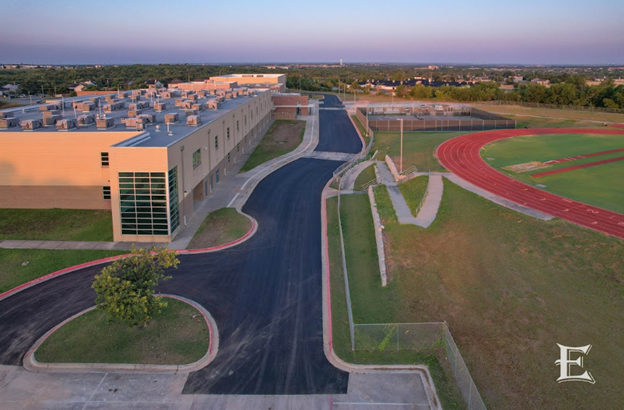
The Elgin Independent School District (EISD) Board of Trustees will place a $375 million bond on the May ballot to upgrade schools, buy buses, perform priority maintenance and enhance school programs. Early voting will take place between April 22 and April 30. Election day is May 4.
Proposition A would allocate $366 million to build an elementary school and middle school. The district would also improve the high school’s capacity to account for student enrollment growth. Plans would include performing priority maintenance across all campuses, including updating the HVAC, electrical systems, windows, fire alarms and other items.
EISD would make general upgrades districtwide, including ensuring all campuses are ADA accessible. The district would improve the cafeteria and serving lines, modernize the library and upgrade the fine arts classrooms. In addition, EISD would improve safety and security, update the gym and enhance technology infrastructure.
The district would upgrade the softball, baseball and tennis facilities. The funds would enable the district to replace the aging bus fleet with modern vehicles. EISD would also kickstart Phase 2 of the transportation building project and acquire land.
Proposition B would provide $9 million to improve the career, technology and education arts (CTE), audio/video technology programs (A/V) and renovate the press box. The district would renovate and expand the press box and elevator. The project would address aging conditions, ensure that the amenities are ADA accessible, improve safety and accommodate district growth.
(Photo courtesy of the Elgin Independent School District.)
| |
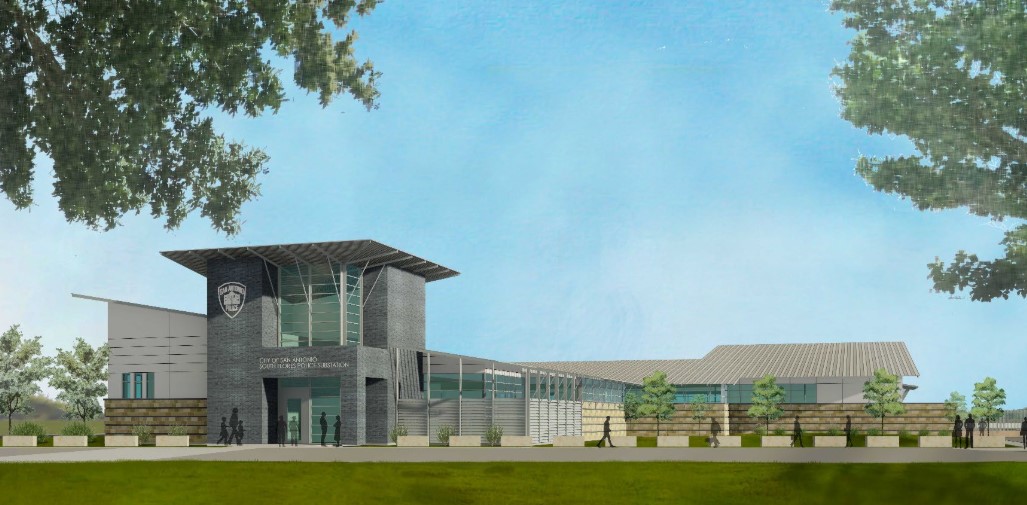
A $19.5 million modern police substation is planned for the south of San Antonio after the city solicited input from neighborhood residents for the second time in late January.
The station will be built on an 18-acre site at and funded by a $185 million bond passed in 2022.
The project is currently in the design phase, with construction set to begin in summer 2025 and end in winter 2027.
After an initial public input meeting, the San Antonio Police Department added a community meeting space, a safe community transaction location, a playground and park space to the project. Plans also call for drainage and traffic improvements around the facility as well as aesthetic and environmental enhancements to the station.
The station’s floor plan will feature fitness and locker rooms, a roll call room, community room, conference room, staff offices, lobby, a community courtyard, restrooms and a breakroom.
(Photo courtesy of the city of San Antonio.)
|  | |
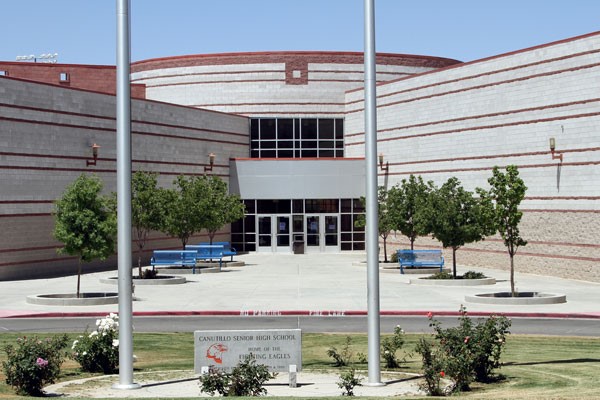
Residents in the Canutillo Independent School District (CISD) near El Paso will vote on a $386 million bond that would allow the district to relocate schools, make districtwide repairs, improve safety and update infrastructure.
The current school buildings are outdated and are unable to accommodate the needs of nearby fast-growing neighborhoods. Early voting will take place between April 22 and April 30. Election day is May 4.
Proposition A would allow the district to relocate schools to reach new neighborhoods. CISD would reconstruct and relocate Davenport and Alderete middle schools to the Enchanted Hills Subdivision. The district would also reconstruct and relocate Canutillo Middle School to an Upper Valley site.
The district would use the funds to build the brick-and-mortar Northwest Early College High School. Other plans include repairing and upgrading infrastructure across five campuses. In addition, CISD would upgrade the Career and Technical Education center at Canutillo High School.
The bond would enable CISD to improve safety and security across the entire school district. In addition, CISD would replace roofs for five campuses and upgrade the HVAC systems across six. The district would also install baseball and softball lights at Canutillo High School.
(Photo courtesy of Canutillo ISD.)
| |
DAVID BLACKBURN
COUNTY JUDGE
BELL COUNTY
| |
Public career highlights and education: I spent almost 40 years in local government service, including as city attorney for Plainview, Texarkana and Killeen. I have also been city manager for Killeen and Temple, and I’ve served as county judge for Bell County since 2019. I have also been president of the Temple Economic Development Corporation, and I’ve served on multiple boards and commissions, including chair of the Central Texas Council of Governments and Hill Country Transit District. I have a bachelor’s degree in history and political science from Hardin-Simmons University and a Juris Doctorate from St. Mary's University.
What I like best about my public service is: Making a difference in my community
The best advice I’ve received: Live your life like you ride your motorcycle: eyes open, ears listening and mouth closed.
People might be interested to know that: I enjoy hiking and have been on hikes to Everest, Kilimanjaro and Machu Picchu.
One thing I wish more people knew about the county government: I think county government provides the best bang for their tax dollar of any governmental level. Our tax rate is typically among the lowest of any of the taxing entities, and we continue to provide public safety, transportation services and more.
|  | |
William Henrich, M.D., served for the past 15 years as president of the University of Texas Health Science Center at San Antonio, died early March 14 following complications from a medical procedure.
As president, Dr. Henrich helped guide UT Health into a leading academic health center providing world-class cancer, obesity, diabetes, dementia and aging programming. He was a key figure in leading the institution through the COVID-19 pandemic and driving groundbreaking medical research and service.
“He was a joy to work with, and his creativity, hard work and passion will always be examples for all of us,” Acting President Rob Hromas, M.D. and Chancellor James Milliken said in a joint release. “Among the many people we have known both professionally and personally, he gave the most of himself to all of us.”
Dr. Henrich’s career spanned numerous institutions. He served as a professor and chairman at The University of Texas Southwestern School of Medicine, the Medical College of Ohio and The University of Maryland School of Medicine in Baltimore. He first joined UT Health in 2006 as dean of the School of Medicine and vice president for Medical Affairs.
Dr. Henrich authored more than 300 original articles and chapters. He was also an elected member of several research societies, including as president of the American Society of Nephrology.
| |
The University of Texas (UT) Board of Regents unanimously voted to consider Julie Philley, M.D., as a finalist to be UT Tyler’s next president. Philley is the current executive vice president for health affairs and vice provost at UT Tyler. If chosen, she would succeed Kirk Calhoun, M.D., following his retirement at the end of May.
“Julie Philley is a native East Texan who continues to excel as an administrator, practicing physician and researcher since her arrival to campus in 2012,” Chairman Kevin Eltife said. “Dr. Philley is deeply engaged with and highly regarded in the Tyler and East Texas medical, education, and civic communities for making transformative advancements at UTT, and I believe her trusted leadership would allow UTT to accelerate its work seamlessly.”
Philley played a crucial role in launching the UT Tyler School of Medicine in 2023, the UT System’s seventh medical school. Before serving in her current capacity, Philley was chair of the university’s Department of Medicine and professor of medicine at the UT Health Science Center at Tyler.
Once the UT Regents make their decision, there will be a 21-day waiting period before officially naming the president.
| |
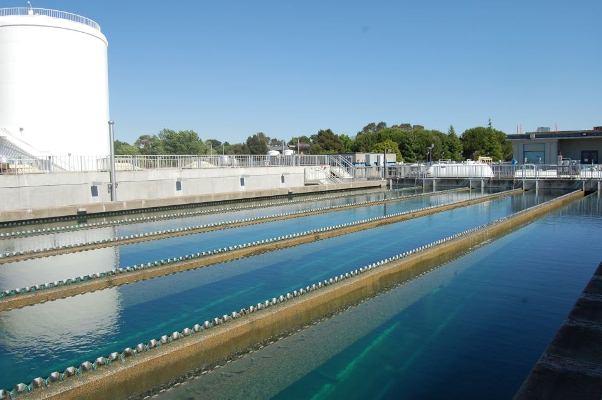
The Environmental Protection Agency is raising the alarm that water infrastructure is at risk of “disabling cyberattacks” that could “disrupt the critical lifeline of clean and safe drinking water.”
In a letter addressed to governors, EPA Administrator Michael Regan and National Security Advisor Jake Sullivan urged states to be on high alert for cyberattacks.
The threat comes from groups associated with the governments of China and Iran. Groups affiliated with the Iranian Government Islamic Revolutionary Guard Corps (IRGC) have successfully targeted water systems in the past. Volt Typhoon, a group sponsored by the People’s Republic of China, is also preparing to strike water infrastructure, according to the letter.
As recently as December 2023, an Iranian-backed cyberattack targeted several water utilities, including one in a small town in western Pennsylvania. Chinese-associated groups have also invested in a longstanding effort to hack into U.S. infrastructure for at least five years.
There are more than 150,000 water systems across the country with various levels of security, maintenance and funding. Hacking them can stop pumps from letting water flow or even lead to contamination.
The letter recommends simple protections such as resetting passwords to access the computer networks that run water systems and completing software updates. Federal officials are also directing state governments to a CISA action list for protecting water infrastructure that includes not using public internet networks, completing regular security assessments and training exercises and backing up IT systems.
Click here to read the full story
(Photo courtesy of the Water Education Foundation.)
|  | |
A new federal funding opportunity has been created for communities across the country to improve safety for cyclists and pedestrians.
The U.S. Department of Transportation’s Federal Highway Administration (FHWA) recently opened applications for up to $44.5 million in grants through the new Active Transportation Infrastructure Investment Program, which will focus on building networks of connected bicycle and pedestrian infrastructure improvements, including trail networks between communities.
Active transportation mobility options are those powered primarily by human energy, such as bicycling and walking, and provide positive health impacts, the FHWA said. Applications will be accepted through June 17.
Grants will help communities plan, design, and build sidewalks, bikeways and trails that connect destinations such as schools, workplaces, residences, businesses, recreation areas and medical facilities. They will also be provided for projects used for trails, pedestrian facilities, bikeways and other routes that serve as backbones to connect two or more communities, metropolitan regions or states, the FHWA said.
Click here for more details about this NOFO
(Photo courtesy of Thomas Loizeau on Unsplash.)
| |  |
 | |
The Austin City Council has approved aspects of a plan that will require developers of large projects to use reclaimed water to make the capital city’s water supply more sustainable.
Under the initiative, called GoPurple, new projects larger than 250,000 square feet built within 500 feet of the city’s purple-pipe reclaimed water infrastructure must connect to it or install an onsite water reuse system.
Housing developments accredited under Austin’s Affordability Unlocked or Texas’ Low Income Housing Tax Credit programs are exempt from the code changes. However, all new developments will have to monitor and assess water use to identify conservation opportunities.
The council also approved the expansion of current incentives for developers to promote water efficiency and conservation. The provisions include reduced monthly fixed charges, expedited building permit review process, low-interest loans, cost sharing, and Travis County-administered property assessed clean energy or PACE assessments and financing.
The program will help Austin save 16 million gallons of water per day by 2040 through reclaiming water and onsite reuse. The program will also help Austin Water, the city’s water utility, avoid an estimated $10 million in potential Lower Colorado River Authority (LCRA) annual water-use fees.
(Photo courtesy of the El Dorado Irrigation District on Wikimedia Commons)
|  |  | |
Several highway projects in Texas received a financial boost as part of the minibus funding bill that averted a shutdown of the federal government in March.
The Consolidated Appropriations Act of 2024 included $29.165 million for four community projects benefitting the Ports-to-Plains Alliance corridor of the U.S. National Highway System.
The alliance was created in the mid-1990s by elected officials and civic leaders in Lubbock, Texas, who wanted to improve U.S. 87/287 to the north and south of U.S. Interstate 27 between Lubbock and Amarillo. Since then, the alliance has expanded, and the corridor now runs from Laredo, Texas, through Oklahoma, New Mexico Colorado, Nebraska, Wyoming, South Dakota, North Dakota and Montana to Western Canada.
Highway improvement projects in West Texas totaling $14.7 million received funding. They include $2 million to design U.S. 287 from Amarillo to Dumas and $2.2 million to widen State Loop 335 in Amarillo.
Interstate planning efforts for U.S. 87 in Lubbock to Tahoka received $8 million and $2.5 million for improvements to U.S. 277 in San Angelo, Texas.
The alliance received $1.6 million for interstate planning in New Mexico, while Nebraska was awarded $12.865 for improvements to the Heartland Expressway.
The funding did not rely on a formula distribution, ensuring targeted investment in the group’s key transportation initiatives, the alliance said.
(Photo courtesy of the city of Lubbock.)
|  | |
The University of Texas (UT) System Board of Regents unanimously approved Neal Weaver as president of Stephen F. Austin State University (SFA) in Nacogdoches. Weaver is the current president of Georgia Southwestern State University (GSW). He will be the university’s 11th president.
Weaver was selected as the sole finalist Feb. 22 in the UT Regents’ search for a president to succeed Dr. Steve Westbrook. The board’s decision came at the end of the mandatory 21-day waiting period before the UT Regents could officially name Weaver president. He will take over responsibilities from interim president Gina Oglesbee. Oglesbee has led the university since Dr. Westbrook’s sudden retirement May 31, 2023.
A presidential search advisory committee, chaired by UT System Chancellor James B. Milliken, recommended Weaver for the role. Weaver comes with 33 years of experience in higher education administration across four public university systems.
“Dr. Weaver’s successful leadership across multiple public university systems will be valuable in guiding SFA into its new era as a UT Institution,” said UT System Board Chairman Kevin P. Eltife.
Weaver has served as president of GSW for seven years. He previously served as vice president for university advancement and innovation at Nicholls State University in Thibodaux, Louisiana, vice president for institutional advancement at West Texas A&M University and vice president for university relations at Northeastern State University in Oklahoma.
|  | |
The Texarkana Arkansas Board of Education unanimously approved Dr. Lloyd Jackson superintendent of the Texarkana Arkansas School District (TASD). Dr. Jackson brings more than two decades of administrative experience to the role. He previously served as associate vice chancellor of advancement and chief fundraising officer at Henderson State University.
| |
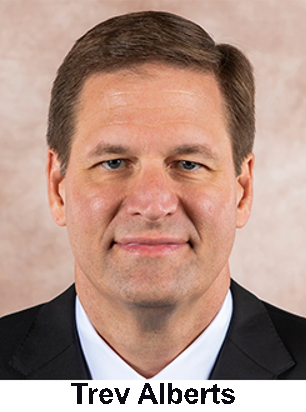
Trev Alberts will join Texas A&M as director of athletics. Alberts is the current director of athletics at the University of Nebraska (UN), held since 2021. He previously served as athletics director at UN Omaha for 12 years. He will replace Ross Bjork, who left to pursue the same position at Ohio State University.
| |
Gov. Greg Abbott announced these appointments and reappointments from March 15 through March 19:
OneStar National Service Commission
(Reappointed)
Jie Li – Austin
James Senegal – Spring
Marcos Delgado - El Paso
Verlene Dickson – Amarillo
Ronnie Hagerty, Ph.D. – Houston
Dan Leal – Bastrop
Family Practice Residency Advisory Committee
(Reappointed)
Zoey Wang – Houston
Board of Pilot Commissioners for Harris County Ports
(Reappointed)
Bruce Oakley – Houston
| |
Texas Government Insider is a free weekly newsletter detailing important happenings throughout the state and summarizing current political issues relevant to individuals interested in government.
Publisher: Mary Scott Nabers
Editors:
Adam Rollins
Dave Doolittle
| | |
|
|
Check out our
social media links!
|
|
Help us share this message.
To ensure delivery and proper formatting of the newsletter, be sure to add editor@spartnerships.com to your safe senders list. Otherwise, the newsletter may be flagged as spam and automatically routed to your junk e-mail folder.
| |
|
For news or calendar items: editor@spartnerships.com
For information about SPI's products and services: sales@spartnerships.com
© 2024 Strategic Partnerships, Inc. All rights reserved.
| | | | | |