|
It is becoming increasingly common for public safety, law enforcement, fire departments and other first responders to consolidate their operations in locations that feature leading edge technology and more efficient equipment. Many are situated in locations where training facilities are available, and some have detention centers and healthcare facilities located nearby.
For the same reasons, courthouses and other offices connected to judicial operations are also being consolidated. These types of projects are overdue based on savings and benefits gained through consolidation, technology access, shared training space, and improved operational efficiency.
Since 2014, Plumas County, California, has relied solely on a courthouse built in 1921. The overcrowded building has failed for years to meet modern safety, seismic and accessibility standards. A site search is underway for a location where a new 53,611-square-foot courthouse can be constructed. This new two-story facility carries a cost projection of $100.9 million and it will include three courtrooms. It will also feature a single point of entry to enhance security, attorney-client interview rooms, public waiting areas and spaces for jury deliberations. The pre-solicitation phase is underway, and a design-build solicitation is anticipated in 2025 with construction scheduled for later that year.
City officials in Tulsa, Oklahoma, have acquired a former insurance building for $25.5 million that will be completely renovated to establish a new Public Safety Center. The renovation work has been tagged with a $20 million cost, and when completed, the 288,000-square-foot facility will consolidate the Tulsa Police Department, Tulsa Fire Department, Emergency Management and the Real-Time Information Center under one roof. Planning for the renovation is currently underway, but no solicitations will be released until it is completed. Citizens have been advised that all departments will be operating from the new center by the end of 2026.
The Town of Swansea in Massachusetts has approved a $15.9 million renovation project that will expand the historic Town Hall Annex. This initiative will address critical issues including the removal of asbestos and hazardous materials, foundation repairs and waterproofing needs. The project will consolidate various town departments into a single, code-compliant facility equipped with dedicated meeting spaces, a climate-controlled vault for historical records and enhanced accessibility features to meet ADA and other compliance standards. The design phase is expected to conclude by April 2025, with construction anticipated by mid-2025. The project is scheduled for completion in late 2026.
Click here for more
| |
The Texas Department of Transportation (TxDOT) has released its Artificial Intelligence Strategic Plan.
The plan details TxDOT's strategy to leverage AI for improved processes, policies and investment management, positioning the agency for future innovation.
The AI Strategic Plan emphasizes five key focus areas:
- Using AI to optimize infrastructure by improving the efficiency and resiliency of the Texas transportation network.
- Prioritizing security by incorporating safety measures and data privacy safeguards, while simultaneously maintaining the human element with all AI processes.
- Leveraging AI-enabled analytics to inform data-driven decision making on roadway operations and maintenance.
- Improving workforce productivity and effectiveness by using AI to handle routing and manual tasks, allowing employees to prioritize higher-value work.
- Using AI to augment real-world solutions, enhancing stakeholder experience and helping TxDOT employees deliver better services to Texas residents.
TxDOT engineers, IT experts, planners and other industry experts helped identify the plan’s 230 potential AI-use cases. The department will implement recommendations laid out in the plan over the next three years to advance technological expansion and broaden potential AI applications in long-term programs.
To seamlessly integrate these emerging technologies into daily operations, the strategic plan includes an AI Implementation Roadmap. The map includes methods to help ensure TxDOT responsibly uses AI, emphasizing governance, transparency, human accountability and adherence to ethical, security and privacy standards.
The department identified three key milestones when implementing AI technologies:
- Initiation, where TxDOT leadership authorizes a project.
- Developing a first field proof of concept, where users first evaluate a solution’s initial deployment.
- Making the solution fully operational after a successful trial, incorporating feedback and making necessary modifications.
(Photo courtesy of Aristal on Pixabay.)
| |
The Texas Water Development Board (TWDB) will provide $78.4 million through eight project grants to enhance water systems, replace service lines, advance wastewater treatment plant designs and address contaminants. The recipients will supplement the awards with local funds.
The city of Marble Falls will receive $45.4 million to relocate the existing wastewater treatment plant out of the floodplain. The existing site will be decommissioned and restored. In addition, the city will expand the plant’s capacity to 3 million gallons per day (mgd).
La Marque will use nearly $10 million to inspect 10 miles of pipeline. As part of the project, the city will repair or replace infrastructure as needed and rehabilitate manholes throughout La Marque.
The TWDB will deliver $8.2 million to the city of Abilene, reimbursing the costs of implementing a lead service line inventory of its residential water service line connection. In addition, Abilene will replace approximately 2,600 service lines containing galvanized materials.
Another $4.9 million will enable the East Rio Hondo Water Supply Corporation to install impermeable basin liners at the disposal site for two water treatment plants. The liners will ensure that emerging contaminants will not be able to leach into nearby bodies of water.
The Rayburn Country Municipal Utility District will spend $4.3 million to drill a groundwater well as well as install filters for the new and existing wells. In addition, the district will rehabilitate two ground storage tanks and install a pressure monitoring system to help detect leaks.
Other recipients receiving funds include:
- The city of Winters will use $3.8 million to replace around 8,500 linear feet of cast-iron distribution lines with PVC water lines. Plans also include replacing inoperable valves and fire hydrants in addition to preparing an asset management plan.
- The city of Arp will spend $1.4 million to complete planning, acquisition and design for a wastewater treatment plant and sanitary sewer repairs.
- Corpus Christi will receive $625,000 to advance plans to use a per- and polyfluoralkyl substance (PFAS) treatment process as part of a wastewater treatment plant expansion project.
(Photo courtesy of Tom Fisk on Pexels.)
| |
The Austin City Council has unanimously approved a plan to meet the community's energy needs for the next decade.
Austin Energy’s Resource, Generation and Climate Protection Plan will act as a roadmap for how the city will generate its electricity in the coming decade as it works to become 100% carbon free by 2035.
The plan allows the utility to address the immediate risks affecting Austin’s power supply, including increased electricity demand, projected reliability risks from insufficient local generation, limited capacity on transmission lines and danger from extreme weather events.
City officials say a key goal of the plan is to transition Austin's energy sources from coal power, including the Fayette Power Plant, to renewable energy, with the ultimate goal of achieving carbon neutrality by 2035.
In addition, Austin Energy's 2035 plan builds on the strategies outlined in the Resource, Generation, and Climate Protection Plan adopted by City Council in 2020. The plan focuses on providing the community with:
- Prioritized customer energy solutions, such as improved demand response and energy efficiency programs, expanded solar options and increased use of customer-installed battery storage.
- A phased transition from coal, while expanding the energy portfolio to include more clean, renewable resources like wind and solar.
- Local reliability solutions, including utility-scale batteries and peaker natural gas units, to enhance resilience during extreme weather events.
- Innovative technologies and partnerships, such as exploring advanced nuclear and geothermal energy, expanding research and development efforts and integrating virtual power plants and other cutting-edge solutions.
(Photo courtesy of Steve.)
| |
The city of San Antonio will spend a combined $43.2 million to make significant drainage infrastructure improvements across several neighborhoods. Construction is expected to begin in fall 2025.
The Wilcox Avenue Area Drainage project will cost $15.6 million to complete. The area’s existing conditions are swamped with drainage and sidewalk access issues. The project will prioritize installing a storm sewer system and reconstructing the roadway to accommodate new infrastructure. In addition, the city will make utility adjustments, build sidewalks, install ADA-compliant ramps, build curbs and fix driveway approaches.
Another $11.3 million will support the second phase of the South Pine Roadway Drainage project. The stretch of road frequently experiences flooding and lacks sufficient underground storm drainage infrastructure to accommodate heavy rains. In addition, the area has variable curb heights, cracking roadways and gaps in the sidewalk.
To resolve drainage issues, San Antonio will install underground storm drains and build roadside curb inlets. Road improvements will include updated concrete sidewalks, curbs, ADA-compliant ramps and driveway approaches. Utility relocations are expected to be incorporated into the project’s design as well.
The city will spend $10.6 million to advance the first phase of the West Broadview Drive and Oakwood Drive Drainage project. The city will improve the area’s insufficient drainage infrastructure by installing a new underground storm drain system and additional inlets. The project will also require reconstruction of the roadway and installation of curbs, sidewalks and driveway approaches.
The first phase of the Valley Hi Area Drainage project will cost $5.7 million to rework critical neighborhood drainage and road infrastructure. Currently, the area’s drainage system has deteriorated, leaving nearby residences and businesses vulnerable to flooding.
San Antonio will focus on installing a new storm sewer system to protect residences and property from flood events. Like with the other projects, the drainage system will be supported with a fully reconstructed roadway, new sidewalks, ADA-compliant ramps, curbs, driveway approaches and adjusted utilities.
(Photo courtesy of manfredrichter on Pixabay.)
| |
The Woodlands Water Agency (WWA), in collaboration with the San Jacinto River Authority (SJRA) and 10 Woodlands-area municipal utility districts, is developing a long-term renewal plan to modernize and rehabilitate critical regional water infrastructure.
The overhaul will require the completion of several replacement and repair projects over the next five years. The WWA is currently finalizing the renewal plan, which has an estimated $108.6 million cost for initial replacements and upgrades.
Many components of The Woodlands-area water infrastructure are reaching the end of their useful life, signaling the need for immediate remediation to sustain safe operations for nearby communities. The plan will include pressing water and wastewater infrastructure projects identified by both WWA and in the SJRA Woodlands Division 10-year project plan.
Projects prioritized in the renewal plan are based on the following factors:
- The condition and lifespan of the relevant infrastructure.
- How likely and impactful system failures would be.
- Study results and outcomes.
- Potential future regulatory changes.
- Regular staff inspections.
Some projects that will be featured in the plan are already underway, primarily focusing on rehabilitating the system’s sanitary sewer pipes and water wells.
The WWA and participating entities will update the renewal plan annually once it's finalized.
(Photo courtesy of Daniel McCullough on Unsplash.)
| |
After another year being battered by hurricanes, Florida is utilizing cutting-edge artificial intelligence (AI) to upgrade their emergency broadcast capabilities.
The Florida Division of Emergency Management (FDEM) has joined the University of Florida College of Journalism and Communications and artificial intelligence technology company Futuri to launch a new program, the Broadcast Emergency Alerts and Communications Operations Network, or BEACON.
Click here for more information about BEACON
(Photo courtesy of Chris Watkins Photography.)
| |
The federal government is seeking to expand the country’s electric and hydrogen vehicle fleets and is awarding hundreds of millions to state and regional agencies to make it happen.
The Environmental Protection Agency (EPA) is unveiling a first-ever installment through the Clean Heavy Duty Vehicles Grant Program (CHVP), which will include more than $735 million in funding to expand the nation’s clean, zero-emissions vehicle fleet. Spanning multiple U.S. states, territories and tribal nations, this initial federal funding will advance the national transition to clean power and incentivize the usage of alternative fuels in the transportation sector.
Click here to learn more about projects receiving federal funding
(Photo courtesy of David McElwee.)
| |
California’s transportation sector is feeling the holiday spirit, securing hundreds of millions of dollars to kickstart equitable construction projects and tackle climate injustice.
The California Transportation Commission (CTC) is announcing $830 million in strategic investments to reinvigorate the state’s transportation infrastructure. Concluding the commission’s December meeting, CTC will fund a series of projects that will rejuvenate California’s infrastructure, develop alternatives to driving and improve safety on highways and bridges.
Click here to learn more about California’s transportation infrastructure investment
(Photo courtesy of RDNE Stock Project.)
| |  |
|
The Rosebud-Lott Independent School District (RLISD) will undertake a $23.4 million project to upgrade school facilities, improve learning spaces and support future expansion.
The campus buildings are severely outdated and no longer meet the needs of today's students. Built in 1971, the facilities need new flooring and ceiling, an overhaul of the HVAC systems, updated recreational options and more space.
The project will expand the high school to provide additional space for the college and career tech programs. Other high school expansions include the health, science and wellness space. Both the middle school and high school will receive renovated flooring, ceilings and new HVAC units.
The district plans to upgrade the high school kitchen, focusing on equipment such as backup generators for the freezers. Other campus modifications will include expanding the cafeteria, installing water fountains, removing and replacing the track and replacing gas heaters in the high school, gym, agriculture shop and bus barn.
On top of paying off the elementary school’s remaining debt, RLISD will build a covered playground and 100 parking spaces at the campus. Finally, plans include updating the middle school and high school classroom electrical outlets to bring them up to code as well as installing fencing around outdoor facilities.
(Photo courtesy of Pixabay on Pexels.)
| |
As the state of Texas kicks off the 89th Legislature in January 2025, lawmakers will have access to a $20 billion surplus of unspent revenue.
While notably less than the state’s previous surplus of $32.7 billion for the 88th legislative session, the additional spending power will be a prominent component for the next Biennial Revenue Estimate (BRE). Comptroller Glenn Hegar is expected to issue the 2026-2027 BRE before the next session begins.
The estimate forms the foundation of the state’s budget for the upcoming biennium, informing state appropriations and ensuring legislators do not exceed available funds and anticipated revenue. An additional $20 billion in the state’s back pocket will provide lawmakers with more resources to address issues across every public sector.
Currently, Texas is working with a $321 billion budget for the 2024-2025 biennium, which runs from Sept. 1, 2023, to Aug. 31, 2025.
While lawmakers are getting to work on drafting the state’s next budget, most priorities are preliminary. However, the next legislative session anticipates appropriating funds to support public schools, debt relief, water infrastructure, roadways and electrical grid projects.
(Photo courtesy of LoneStarMike.)
| |
An annual review by the University of Houston (UH) found approximately $708 million in deferred and planned maintenance needs in 2024, a 35% increase over the last four years.
UH officials say that total is the projected cost to take on all planned and deferred maintenance over a five-year period.
The report highlights that 10 buildings on campus that have deferred maintenance conditions rated as "critical." UH officials noted that if issues in these buildings worsen significantly, they might opt to demolish them instead of undertaking costly renovations.
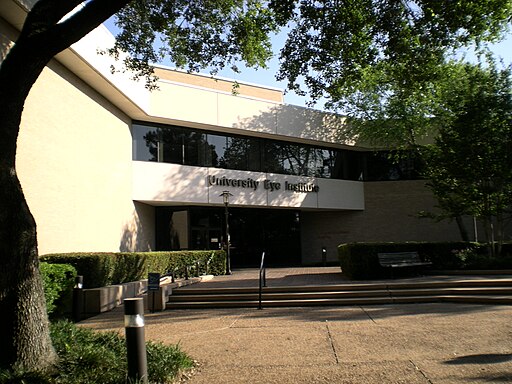
One example is the College of Optometry's Armistead Building. The 48-year-old facility faces critical mechanical, electrical and plumbing issues, according to UH officials.
For Fiscal Year 2025, UH has budgeted nearly $66 million for deferred maintenance, prioritizing the most urgent needs.
Officials point to the state's Higher Education Funds (HEF) as a lifeline for tackling more maintenance projects. The amount UH receives from HEF will determine how many of these repairs they will be able to conduct.
(Photo courtesy of BrianReading.)
| |
The National Highway Traffic Safety Administration wants to make data on crashes more accurate and accessible.
To accomplish this, NHTSA is offering $171 million in grants to 19 states and territories to upgrade and standardize their crash data systems.
These grants, part of the State Electronic Data Collection program, will fund upgrades to improve the accuracy, timeliness and accessibility of fatality information. That data will also include information about pedestrians and cyclists
Click here for more information about the future of crash data collection
(Photo courtesy of Netto Figueiredo on Pixabay.)
| |
After leaving the position vacant for 15 months, Dallas County has appointed Justine Tran as CIO. Tran brings nearly two decades of IT leadership experience to the position from both the private and public sector. She previously served as the city of Dallas’ senior technology manager and deputy chief information officer from 2009 to 2015. Tran assumed her responsibilities Nov. 19, 2024.
| |
The port of Brownsville has chosen Guillermo Rico-Leal to take over as director of business development and marketing. Rico-Leal brings more than two decades of leadership management to the role, most recently as sales account manager for the port of Brownsville.
| |
Jim Wehmeier will assume the CEO role of both the Princeton Economic Development Corporation (PEDC) and the Princeton Community Development Corporation (PCDC). Wehmeier most recently served as the economic development director for Ennis, a role held since October 2020. He brings nearly two decades of executive economic development leadership experience to the position.
| |
After unanimously voting during its Dec. 17 meeting, the Keller City Council has officially chosen to make Aaron Rector permanent city manager. Rector has been working as interim city manager since February 2024. He has been with the city since 2016, first serving as its finance director before being promoted to director of administrative services in 2018. He succeeds Mike Hafner in the role.
| |
Gov. Greg Abbott announced these appointments and reappointments from Dec. 13 through Dec. 19:
Texas Juvenile Justice Board
Manny Ramirez - Fort Worth
Family And Protective Services Council
M. Connie Almeida, Ph.D. - Richmond
Texas School Safety Center Board
Nidia De La Cerda - Corpus Christi
Robert McClelland - Dripping Springs
Rania Mankarious - Houston
Adebola Sulaiman - Mesquite
Edwin Flores, Ph.D. - Dallas
(all reappointed)
Bill Avera - Jacksonville
Craig Bessent - Abilene
Kerri Brady - Cypress
226th Judicial District Court
Benjamin Robertson - San Antonio
278th Judicial District Court
Tracy Sorensen - Huntsville
306th Judicial District Court
Emily A. Fisher - Galveston
480th Judicial District Court
Terence Davis - Leander (reappointed)
495th Judicial District Court
Lori Ann DeAngelo - Spring
471st Judicial District Court
Robert Gantt - McKinney (reappointed)
| |
Texas Government Insider is a free weekly newsletter detailing important happenings throughout the state and summarizing current political issues relevant to individuals interested in government.
Publisher: Mary Scott Nabers
Editors:
Adam Rollins
Jerrod Kingery
| |