|
America has water problems. Water stress can be found in almost every state. New Mexico falls into the category of extremely high ‘water stress’ for multiple reasons, including climate change, limited rainfall and reduced volume of water in both the Rio Grande and Colorado rivers, which are major water resources for the state. Arizona, California, Nebraska and Colorado also fall into the category of water stressed states. These states struggle with high water demands brought on by droughts, pollution, population growth and extreme needs from industries like agriculture and manufacturing. Many other states that are fortunate to have adequate freshwater resources are experiencing water stress because of outdated infrastructure or mismanaged water resource planning.
Approximately half the world’s population experiences water scarcity on too-regular a basis, and the number of people affected by water scarcity is expected to grow as populations increase and as weather patterns become more unpredictable and extreme. Many state leaders, however, are aggressively planning water infrastructure projects to increase water supply or provide more efficient use of available resources to curb the very negative impacts of water stress.
The Upper Thompson Sanitation District in Estes Park, Colorado, will soon benefit from a $127 million water infrastructure project that will deliver a new water reclamation facility. The project will also include the construction of two lift stations, which will be designed to replace the district’s aging 50-year-old wastewater treatment infrastructure.
Upgrades are essential for regulatory compliance and also because upgrades are needed to enhance water quality in the Big Thompson River watershed. The reclamation facility is a critical component of delivering drinking water to downstream communities. When completed, the facility will contribute to water sustainability by preventing water pollution and increasing the efficiency of wastewater treatment. Construction is scheduled for late 2024.
In Arizona, a wastewater treatment plant in Phoenix will undergo a $50 million rehabilitation upgrade project. The effort will focus on modernizing critical infrastructure, including primary sedimentation, aeration and secondary sedimentation basins. Because of population growth, water demand has increased significantly, and the plant must be brought into compliance with stringent water quality regulations.
Click here for more
| |
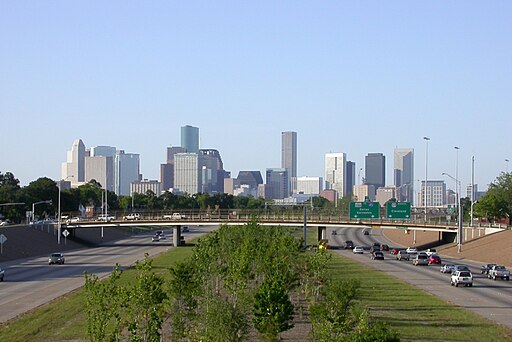
In an unprecedented action, the Texas Department of Transportation (TxDOT) has officially finalized the termination of the State Highway 288 Comprehensive Development Agreement with a private sector partner. TxDOT now fully controls oversight and management of SH 288, which includes maintenance, operation and tolling of the Harris County roadway.
In 2016, TxDOT signed a contract with a private company to build and maintain the $4 billion tollway for approximately 50 years. However, less than a decade into the agreement, TxDOT and the Texas Transportation Commission (TTC) determined they wanted the Texas 288 Toll Lanes under state control. TxDOT opted to pay the private company overseeing the lanes $1.7 billion to buy-out the road.
TxDOT anticipates paying off the $1.7 billion buy-out payment with future toll revenue bonds. By using revenue generated by toll users along the roadway, the agency can ensure the investment won’t impede development on other projects across Texas. Toll rates will also fund on-going and future maintenance and improvements along SH 288.
The Texas Transportation Finance Corporation (TTFC) will be in charge of the tollway. The TTC created the public nonprofit transportation corporation March 3, 2024, to assume custody of the SH 288 operations and management.
The Texas 288 Toll Lane project was originally one of a selection of public-private partnership (P3) development agreements signed by Texas officials. It was the only one of its kind in the Houston area.
(Photo courtesy of falsecognate.)
|  | |
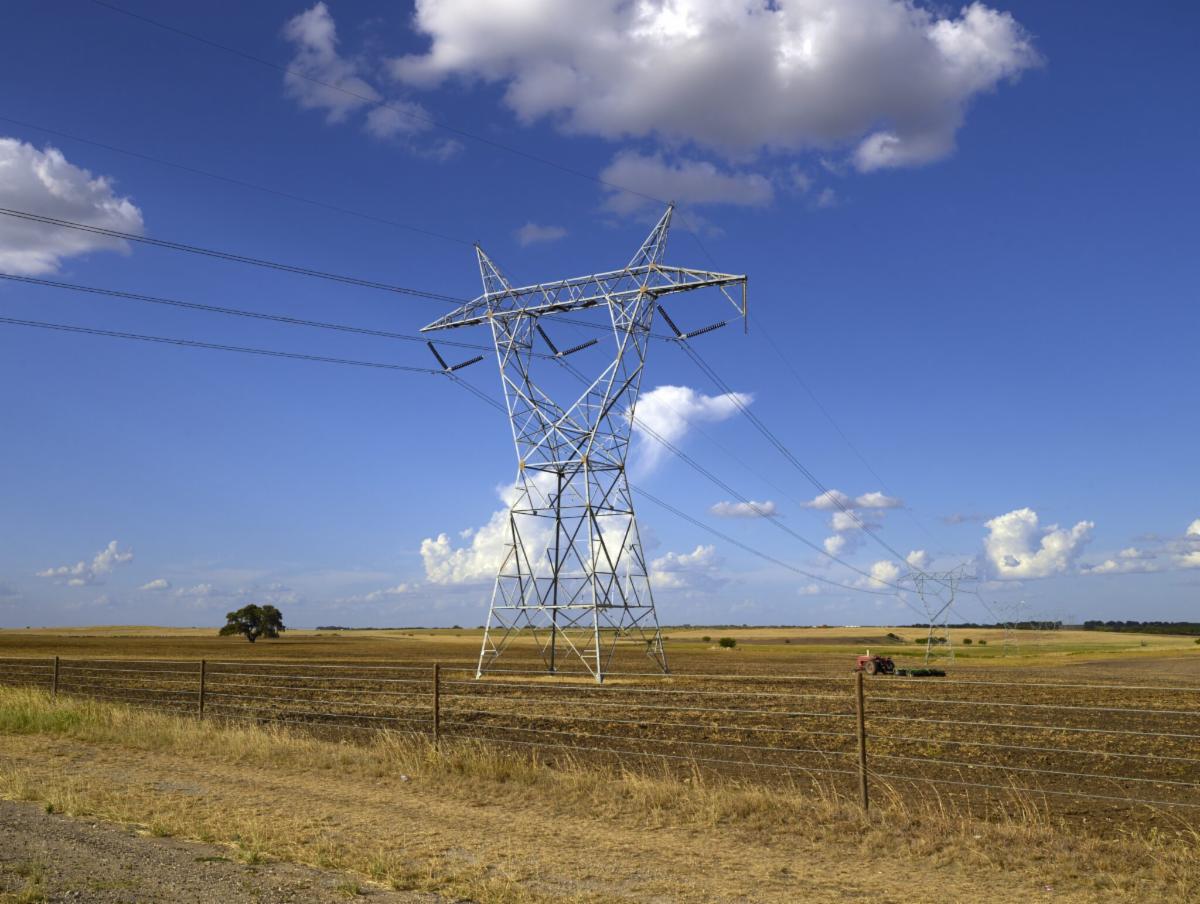
Part of a $1.5 billion investment in new transmission lines from the U.S. Department of Energy could finally connect the power grid in Texas to the nationwide power grid.
The Texas power grid, operated by the Electric Reliability Council of Texas (ERCOT), is perhaps most known for both its isolation from the rest of the country and its massive failure during Winter Storm Uri in February 2021, where millions of Texans lost power as temperatures across the state plunged into the single digits for days.
Click here to learn more about the power grid windfall
(Photo courtesy of Carol M. Highsmith.)
| |
The U.S. Department of Transportation (USDOT) will allocate $5.7 billion to support the state of Texas' infrastructure projects for Fiscal Year 2025. The funds come from the Bipartisan Infrastructure Law’s (BIL) latest $62 billion round of awards for critical transportation and environment projects.
The Federal Highway Administration (FHWA) will distribute the awards across 12 formula programs that support road, bridge and tunnel projects across the nation. This is the fourth year of funding under the Bipartisan Infrastructure Law, which has authorized up to $480 billion to support critical infrastructure projects.
Texas’ portion of the Fiscal Year 2025 allocation is spread across 11 of the available formula programs:
- National Highway Performance Program: $3 billion.
- Surface Transportation Block Grant: $1.5 billion.
- Highway Safety Improvement Program: $321 million.
- Congestion Mitigation and Air Quality Program: $201.8 million.
- PROTECT Formula Program: $148.7 million.
- National Highway Freight Program: $143.6 million.
- Carbon Reduction Program: $130.8 million.
- Bridge Formula Program: $115.4 million.
- National Electric Vehicle Infrastructure Program: $86.9 million.
- Metropolitan Planning: $36.3 million.
- Railway-Highway Crossings Program: $21.3 million.
Texas received the highest amount out of all 50 states. The BIL FY 2025 is an increase of $18.8 billion in formula programs compared with FY 2021, the last fiscal year before the BIL was implemented. Congress authorizes the federal-aid highway program funds periodically through multi-year laws to assist states in construction, and improvement of highways and bridges on eligible federal-aid routes.
(Photo courtesy of Jared Murray on Unsplash.)
|  | |
Pedestrian plazas could be coming to Congress Avenue leading to the Texas Capitol, and the Austin City Council is seeking the public’s input on the plan.
The Congress Avenue Urban Design Initiative (CAUDI) reimagines Congress Avenue as a human-centered multimodal street, with part of the plan featuring the blocks between Seventh and 11th Streets being converted into public plazas. The first phase would see vehicular traffic on Congress end just north of Seventh Street. Cross traffic would still flow east and west through 11th Street.
Inspired by the ongoing transformation of the Texas Capitol Mall, CAUDI envisions cementing Congress Avenue as the “Main Street of Texas,” transforming it from Riverside Drive through 11th Street into a dynamic, human-centric street that reflects Austin’s iconic identity.
The pedestrian-focused design change would result in the loss of 94 parking spaces downtown. All ADA parking spaces would be kept in place or relocated nearby.
Current funding for the first phase of the project allows for two of the four plaza blocks to be completely rebuilt. It would see the blocks between Ninth Street and 11th Street fully reconstructed, while the blocks between Seventh Street and Ninth Street would be improved with interim treatments that enable further investment in the future.
The initial $22 million in funding for phase one of CAUDI primarily comes from the 2020 Austin Mobility Bond. The estimated cost of the entire project is $130 million.
Austinites are encouraged to share feedback on the proposed design on the project’s virtual open house, which closes on Nov. 24. All feedback received will be summarized and reported back to the community at the end of 2024. The city says feedback will be used to better align the proposed changes to meet the needs of the community and the goals of CAUDI.
Community members will also have two chances to learn more about the project and visit with the project team in person:
- Tuesday, Oct. 22, from 4 p.m. to 7 p.m. at the Downtown Austin Space Activation at 506 Congress Avenue.
- Saturday, Oct. 26, from 10 a.m. to 1 p.m. at the Downtown Austin Space Activation at 506 Congress Avenue.
(Photo courtesy of the city of Austin.)
| |
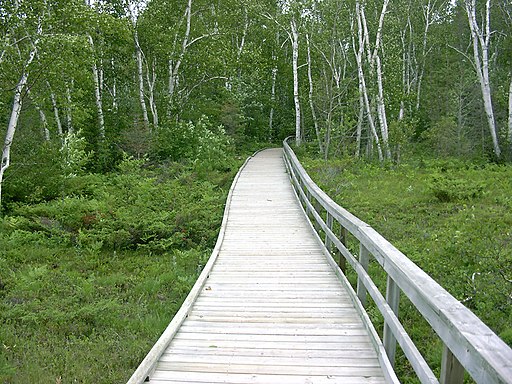
The city of Houston is investing in the community’s well-being and recreational opportunities through the $54 million MacGregor Park renovation project. The revitalization efforts will update and transform the existing park space with renovated sports facilities, ADA-accessible playgrounds and a natural amphitheater. Construction is expected to begin in 2026.
The 65-acre park has been a historically important touchstone for Houston communities for decades. However, the park’s infrastructure is aging and outdated, requiring continual maintenance to keep facilities operational and fit for public use. The park revitalization project will provide critical infrastructure and recreational updates, keeping MacGregor Park in good condition.
The project will renovate the Homer Ford Tennis Center, turning it into a state-of-the-art facility featuring enhanced tournament-hosting capabilities. Plans also include renovating the pool and adjacent pool building, building a natural amphitheater near the bayou and installing all-abilities, ADA-accessible playgrounds for park users.
The city will upgrade the community center to better serve the community. The project will build and extend the park’s walking trails by 1.25 miles, connecting them to the existing greenway trail along Brays Bayou. The trails will feature better connectivity to the Bayou Greenways system, covering more than 150 miles of trails across Houston. Houston will improve the park's greenspace by including native plants and refurbish the Dr. Martin Luther King, Jr. Plaza.
The Houston Parks and Recreation Department (HPARD) recently received $10 million from the Department of the Interior (DOI) to support park design and construction. The funds came from the Outdoor Recreation Legacy Partnership (ORLP) program, a federal initiative dedicated to providing grants to park projects that provide outdoor recreation space for underserved communities. The latest award builds on a $27 million gift from the Kinder Foundation to catalyze the project, among other investments.
(Photo courtesy of Craigmusselman.)
|  | |
Brandon Hubbard
Superintendent
Chilton Independent School District
| |
Public career highlights and education: I have 21 years in education, 19 years in district leadership roles and eight years as superintendent of schools. In that time, I’ve never had a campus fall below state academic standards.
What I like best about my public service is: Oliver Wendell Holmes said, “A mind, once expanded by a new idea, never returns to its original dimensions.” As a public servant in education, my role and responsibility are to execute systems that will allow our students’ minds to be expanded beyond the context of their socio-economic limitations.
The best advice I've received: It comes from one of my mentors in education, Dr. Debra Bishop. She always told us, as leaders, to ensure that we leave a place better than we found it.
People might be interested to know that: I am also a pastor of a local church. I have been pastoring for approximately two years. Prior to that, I served as a Minister of Music for approximately 20 years. I love to sing and play the piano.
One thing I wish more people knew about Chilton ISD: The district offers a big-time education in a small-town environment. We work hard to build relationships with our students and our community to ensure all stakeholders are involved and informed in the education of our future.
| |
Extreme climate emergencies – from hurricanes to wildfires to grid-breaking snowstorms – are expected to shake the state’s infrastructure in the future. In response to these disasters, The University of Texas at Austin has established an adaptation lab to help community leaders adapt to and prepare for extreme weather.
Hurricanes Francine and Helene are only the latest cases in Texas’ history of billion-dollar weather disasters. Between 1980 and 2024, the National Oceanic Atmospheric Administration (NOAA) found 179 climate-related disasters exceeding 1 billion dollars affected Texas. UT’s Extreme Weather Adaptation Lab will offer a proactive approach toward providing training, research and policy tools to community leaders to help guide resilience decision-making.
The lab’s target audience includes local and regional governments, nonprofits, religious groups, utilities and local businesses. Participants will be able to access the university’s training workshops and skills-development offers to develop resilience blueprints tailored to their needs. These services include:
- An Adaptation Academy where leaders will gain experience managing specific weather hazards through hands-on training and collaborative workshops.
- Applied research where scholars and local experts collaborate to develop evidence-based solutions that improve community-level adaptability and resilience.
- Tools, events and networking activities to help local leaders access national resources for technical assistance and financial support. Participants will use these resources to turn training into actionable plans of action.
- A Policy Implementation Hub for leaders to keep up with the latest information, track funding opportunities and foster connections with peers that face similar challenges.
The Extreme Weather Adaptation Lab pulls from UT’s full extent of resources and expertise across its schools, research centers and available experts. Increased resilience in Texas’ most disaster-prone communities will help save lives, reduce damage costs and increase response and recovery times.
(Photo courtesy of Daphne Zaras.)
| |
The Northside Independent School District (NISD) will build a $12.7 million sports medicine magnet school and improve the Katherine Stinson Middle School campus. Currently in the design phase, construction is expected to begin in June 2025.
The planned magnet school will be an addition to the existing middle school campus, both converting existing space and building additional structures for the project. The project will bring the magnet school to 37,577 square feet, featuring dedicated spaces for general learning, Career and Technical Education (CTE), science, administration and special education.
NISD will renovate and repurpose several existing classroom spaces for the magnet school. The completed project will feature a magnet collaboration space, physical therapy lab. Plans also include classrooms for English language arts (ELA), career, leadership and future A/B investigations, exercise and wellness and health sciences.
The district will also expand the special education spaces, providing two classrooms, a kitchen, restroom and storage rooms. Renovations will extend to the second floor, where NISD will renovate three existing science labs, a CTE classroom and a prep room.
The project will demolish the old administration offices, which are slated for replacement. The improved administration area will include office space, a conference room, reception areas and workrooms. Administration will also feature a nurse clinic, restrooms, a lobby, a security vestibule and secured storage.
As part of the project, NISD will upgrade its fencing with both high non-scalable and chain-link fences. The district will also build an outdoor dining area, install canopies and exterior canopy lighting for the existing bus canopy.
(Photo courtesy of Katherine Stinson Middle School.)
| |
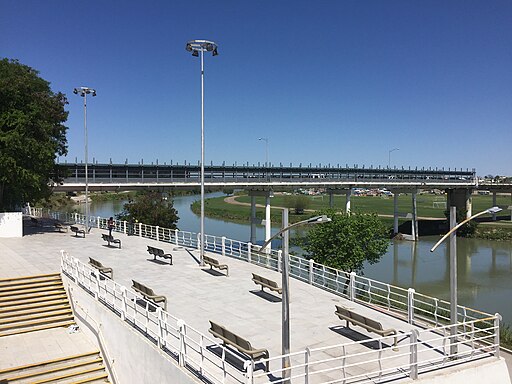
The federal government has approved the construction of an international bridge between the U.S. and Mexico. The bridge, called the Laredo 4/5 International Bridge, is the fourth of five bridges that will provide a permanent corridor to improve trade and relations between the two nations.
The permit paves the way for a bridge company to build, maintain and operate the vehicular and pedestrian border crossing. Before construction can begin, however, the project must satisfy certain environmental conditions and requirements. These include:
- Concurring with the U.S. Section of the International Boundary and Water Commission, U.S. and Mexico.
- Submitting a plan for approval covering how the permittee will fund the U.S. Customs and Border Protection staffing, operations and maintenance for relevant facilities once operations are underway.
- Providing a plan detailing the method for funding construction, outfitting, technology integration and outyear refresh of these elements for the border facilities.
- Providing a plan covering how the recipient will fund and build commercial motor vehicle inspection facilities. The plan must also cover the necessary funding for U.S. Department of Transportation (USDOT) staffing, operations and maintenance costs at the facilities.
The facilities included in the permit include the bridge, its approaches and any land, structure or relevant equipment located on the U.S. side of the boundary.
This approval comes four months after the federal government approved similar permits for three other international bridges in Eagle Pass, Laredo and Brownsville. These bridges – the World Trade Bridge, the Puerto Verde Global Trade Bridge and the Flor de Mayo Bridge – will play similar roles to the 4/5 International Bridge to strengthen the supply chain between the U.S. and Mexico.
(Photo courtesy of Los viajeros 77.)
| |
A Louisiana program that looks to improve energy grid resilience and provide reliable access to power during hurricanes and other severe weather events is receiving $249 million in federal grants to help fund pilot projects located around the state.
The U.S. Department of Energy is releasing the funding through the federal Infrastructure Investment and Job Act funding to support Louisiana’s Hubs for Energy Resilient Operation (HERO) program.
Click here for more information about the state’s energy projects
(Photo courtesy of Arcadeparamount.)
| |  |
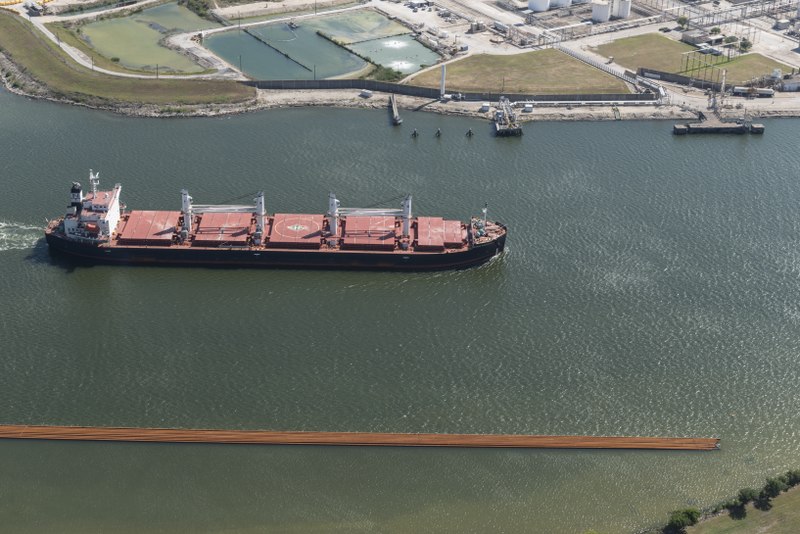 | |
The Texas Transportation Commission (TTC) has approved $400 million in loans to support two ship channel improvement projects. The projects, located in Brownsville and Beaumont, will play a vital role in supporting trade, job creation and maintaining the state’s strategic position in global maritime markets.
The TTC, the governing body of the Texas Department of Transportation (TxDOT), will deliver loan funds to the two projects through the state’s Ship Channel Improvement Revolving Fund (SCIRF). The SCIRF has offered funding opportunities for ship channel improvement projects around the state since its establishment in Texas’ 85th Legislative Session. For 2024, lawmakers approved $400 million in general revenue to fund the SCIRF.
These two projects will begin work to expand and deepen waterways, further Texas’ economic development and create hundreds of thousands of jobs throughout the projects’ construction timeline.
The TTC will loan $357 million to the Sabine-Neches Navigation District (SNND) for the Sabine Neches Waterway project in Jefferson County. SNND will use the funds to deepen the waterway from 40 feet to its authorized depth of 48 feet, which will accommodate larger ships.
The overall project is estimated to cost $1.8 billion, with SNND responsible for $600 million of the local share.
The third largest waterway by tonnage in the U.S., Sabine Neches Waterway is crucial for generating business, trade and tax revenue for Texas. Officials anticipate the project’s completion will spur $200 billion in business activity, $6 billion in annual sales tax revenue and create over 335,000 jobs during its development.
The Brownsville Navigation District (Port of Brownsville) is set to secure a $43 million loan from the TTC for a Brazos Island Harbor Channel deepening project. The project, estimated to cost $139.5 million, will leverage state, federal and private investments to deepen Brazos Island Harbor Channel by 10 feet, from 42 feet to a newly authorized depth of 52 feet.
The Port of Brownsville is a deepwater seaport covering a 17-mile-long ship channel at the southernmost tip of Texas. Boasting 51,000 concurrent jobs and over $3 billion in annual state economic activity, the port is one of the largest foreign trade ports in Texas and in the country.
Officials anticipate the project will create 800 permanent full-time jobs, increase access to clean energy, enhance export capacity and expand Texas’ economic development.
(Photo courtesy of Carol M. Highsmith.)
|  |  | |
Rural regions in Texas will receive $37.6 million from the U.S. Department of Agriculture (USDA) to improve electricity and water infrastructure. The awards will help seven recipients connect electric lines between communities, build wells, water plants and pipelines.
Some of the projects receiving funds include:
The Victoria Electric Cooperative will receive $16.8 million to build and improve 67 miles of electric lines. The completed project will provide 1,236 consumers with reliable access to critical electricity.
The Robertson County Water Supply Corporation (RCWSC) will use $9.8 million to build a water plant site. The project will feature a water well that will produce 1,000 gallons per minute (gpm). Plans also include building a 500,000-gallon elevated storage tank, two 1,200 gpm booster pumps and other assorted equipment. The corporation will also repair and replace water lines along three roads.
The Onalaska WSC (OWSC) will receive $6.2 million to expand system capacity to satisfy environmental requirements and build infrastructure to meet demand growth over the next three years. The project will build a groundwater well at Idlewilde Plant, finish modifying a building at Ponderosa Plant, replace a ground storage tank at the Elbow Bend Plant and install two groundwater wells at Plant 5.
The city of Smyer will use $3.3 million to build a Reverse Osmosis (RO) treatment system. The project will improve the city’s water transmission and distribution system, satisfy Texas Commission on Environmental Quality standards and reduce repair and maintenance costs.
The USDA provided the awards through the Electric Infrastructure Loan and Loan Guarantee (EILLG) Program and Water and Waste Disposal Loans and Grants (WWDLG) Program. Both programs supplement critical utility infrastructure projects in rural areas, ensuring residents have access to safe water, disposal and reliable energy. The Texas recipients are a selection out of 116 projects that will receive a portion of the USDA’s recently announced $1.3 billion to support rural utility infrastructure.
(Photo courtesy of Wikideas1.)
|  | 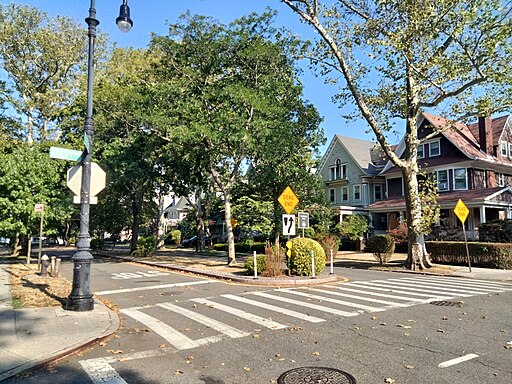 | |
The U.S. Department of Transportation (USDOT) will award $7.8 million to help the city of Bellmead improve safety measures along streets near school zones. The funds will go toward the project’s $9.7 million total cost.
Bellmead has two high-injury arterial roads – Bellmead Drive and Concord Road - that provide arterial connections and access to a local school. The roads lack safe facilities and pathways for non-motorized travelers and do not provide adequate lighting conditions. In addition, the streets do not have safe pedestrian connections, and public transit facilities are in poor condition.
To remediate these issues, the city will build sidewalks and crosswalks, install street lighting, improve access management and expand parking lanes along Bellmead Road. Plans also include installing medians, bus stops and speed feedback signs. Concord Road will receive similar improvements, including speed feedback signs, improved striping, signage and street lighting.
USDOT allocated the funds through the Safe Streets for All (SS4A) grant program. The SS4A program is a five-year, $5 billion initiative that helps local, rural and tribal communities remediate some of the most dangerous roads in the country to prevent deaths and serious injuries. This award will be the city’s third, adding onto its $22.9 million award in 2022 and $288,000 grant in 2023 to advance ADA transition projects for trails and crossings.
Bellmead, which borders Waco to the north, is one out of 453 recipients that will receive a share of the recently announced $1.1 billion. This is the second round of SS4A funding for Fiscal Year 2024, with the first round releasing $63 million in May. Since 2023, the program has allocated $2.7 billion from the available $5 billion. USDOT expects to open the third and final round of Fiscal Year 2024 awards in November.
(Photo courtesy of Joeyvandernaald.)
|  | |
The U.S. Department of Energy (DOE) is making up to $500 million available for basic research initiatives that support clean energy, economic growth and national security. The funds, available through the DOE’s Office of Science, will advance priorities such as advanced scientific computing, fusion energy, high energy physics and nuclear physics.
The funding is available through the Office of Science’s annual Notice of Funding Opportunity (NOFO), which was previously known as a Funding Opportunity Announcement (FOA). This year’s NOFO allows research institutions to apply for financial support in areas not covered by other specific solicitations.
Click here for more information about the science NOFO
(Photo courtesy of Radowan Nakif Rehan on Unsplash.)
| |
The East Texas Council of Governments (ETCOG) has chosen Quitman Mayor Randy Dunn to lead the organization as chairman. Dunn has served on the Quitman City Council since 2008 as mayor, mayor pro tem and alderman. He was most recently vice president of ETCOG.
| |
Dr. Karen Molinar will assume the role of interim superintendent of the Fort Worth Independent School District (FWISD) for the second time in two years. Dr. Molinar has been with the district since 2015, most recently as deputy superintendent. She will succeed Dr. Angelica Ramsey until a permanent replacement is found.
| |
Wes Moorehead has been chosen as deputy director of the Texas A&M Forest Service. Moorehead most recently served as associate director of forest resource protection and fire chief since 2022. He has been with the Texas A&M Forest Service since 2001.
| |
Gov. Greg Abbott announced these appointments and reappointments from Oct. 4 through Oct. 10:
Presiding Officer Of Hidalgo County Regional Mobility Authority
Robert L. Lozano - Edinburg
Chair Of State Cemetery Committee
Tom Sellers - Austin
| |
Texas Government Insider is a free weekly newsletter detailing important happenings throughout the state and summarizing current political issues relevant to individuals interested in government.
Publisher: Mary Scott Nabers
Editors:
Adam Rollins
Dave Doolittle
| |