|
Cities and counties throughout the U.S. are expanding and modernizing public safety facilities. Many are long overdue for upgrades. The urgency to upgrade is because well-maintained and strategically placed facilities contribute to lower response times by police, fire and EMS services.
The U.S. has approximately 52,290 fire stations and 19,000 police stations, and their combined budgets exceed hundreds of billions annually. Those budgets, however, are dedicated to maintaining facilities, building stations and upgrading outdated buildings and equipment.
Funding is available now from the federal government as well as from local governments. More than $3 billion in public safety infrastructure projects were proposed in bond elections this year nationwide. The number of upcoming projects related to public safety over the next several years will be extremely large. Below are examples of just some of those projects.
The Wilmette Police Department in Illinois will soon launch a police station project to replace its outdated facility so public safety needs can be met. The current facility has significant limitations, including a small training room that cannot accommodate modern defensive tactics or firearms training, inadequate locker rooms, interview spaces and evidence-processing areas. The replacement effort carries a cost projection of between $20 million and $25 million. When completed, the project will deliver a building that incorporates modernized training facilities, secure evidence-handling rooms and enhanced wellness spaces.
The new station will also have updated holding cells and a redesigned lobby that will accommodate security and public interactions. The exterior parking area will be revamped to prevent delays caused by extreme weather, and the more efficient workplace will have a welcoming environment for the community. Currently, officials are in the process of selecting a design firm and finalizing the station’s location. Construction will begin in 2025.
Click here for more
| |
The Texas Space Commission (TSC) has opened grant applications for up to $150 million to develop spaceflight technologies, exploration and spaceflight research and infrastructure development. The TSC will review applications on a rolling basis, with no deadline to apply.
The Space Exploration and Aeronautics Research Fund (SEARF) will support projects that promote space commercialization, space flight infrastructure, and civil, commercial and military aerospace activity.
Project types eligible for consideration must be directly related to aerospace innovation and development. These include projects that:
- Develop emerging technologies necessary for any aspects of human spaceflight.
- Research aspects of space exploration and spaceflight.
- Train the workforce to promote space exploration and spaceflight.
- Create post-mission materials associated with space exploration and spaceflight.
- Develop infrastructure for the establishment or maintenance of a spaceport.
Eligible applicants include businesses or nonprofits involved in the space exploration, research or aeronautics industry. Public applicants must be governmental entities that have already signed an intergovernmental agreement with the TSC for space-related projects.
There is no maximum dollar amount for which applicants may request, and eligible entities may submit multiple applications for different funding requests. Submissions must be submitted electronically to the TSC’s SEARF email address. Entities may access applications through the TSC website.
(Photo courtesy of Pixabay on Pexels.)
|  | |
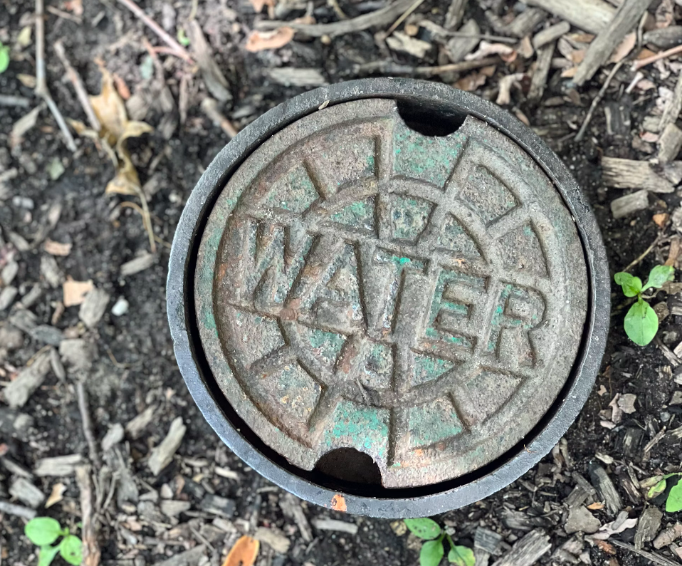
The Texas General Land Office (GLO) allocated $17 million to improve communications, water detention, drainage and sewer systems in flood-prone counties. Communities receiving funds will increase their resilience against inclement weather.
The Capital Area Council of Governments (CAPCOG) received the largest allocation of $9.2 million for three projects in Bastrop and Fayette counties:
The city of Schulenburg in Fayette County will increase drainage capacity, improve drainage infrastructure and mitigate channel erosion. The project will excavate, enlarge and line channels, install culverts, headwalls, aprons and slope pavement. The city will also reconstruct a road, relocate utilities, build curbs and gutters and install wastewater sewer lines and tie-ins.
Smithville in Bastrop County will improve its detention pond drainage system by clearing vegetation, installing rip rap, demolishing existing drainage structures and excavating a pond. In addition, the city will relocate utilities, repair pavement, add headwalls and enlarge and regrade the channel.
The city of Elgin in Bastrop County will expand its water treatment plant. The project will install gravity backwash filters, replace pneumatic air compressors and valves and replace chlorine storage systems. The city will also relocate the power supply and replace the Supervisory Control and Data Acquisition (SCADA) system.
The Brazos Valley Council of Governments (BVCOG) received the second largest award to advance a water improvement and modelling project, install broadband infrastructure and enhance water and wastewater infrastructure. BVCOG will distribute the funds across five counties:
The city of Navasota in Grimes County will rehabilitate its water system. Plans include installing a water line, fire hydrants, repairing pavement and reconnecting services. The project will also install sewer lines and manholes. The completed project will increase system resiliency and reliability.
Snook in Burleson County will rehabilitate an existing lift station, install sewer and fore main lines and place manholes. The city will also repair pavement and reconnect services, improving the city’s wastewater infrastructure as a result.
The city of Calvert in Robertson County will replace waterlines, reconnect services, install hydrants and valves and repair pavement. The city will also undertake a water modeling project to develop a digital map of its existing water system and update water shut-off valve locations.
Kurten in Brazos County will install fiber optic cables and conduits across the city. The project will also install vaults and optical terminal enclosures.
The city of Oakwood in Leon County will improve its water system with a SCADA system, generator, concrete pad, propane tank, and various electrical modifications. The city will also improve its sewer system infrastructure by enhancing the lift station, improving the electrical and control panel and replacing pumps.
GLO is providing the funds through the Community Development Block Grant Mitigation (CDBG-MIT) program from the Department of Housing and Urban Development (HUD). These awards help support areas impacted by recent disasters and enable vulnerable communities to mitigate future disaster risks. To date, GLO has distributed $1.2 billion in CDBG-MIT funds to eligible communities.
(Photo courtesy of Tim Wildsmith on Unsplash.)
| |
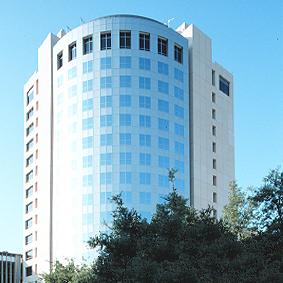
The Baylor College of Medicine's Lillie and Roy Cullen Tower project has received $51 million from three private donors. The gifts will bring the project's total funding to nearly $150 million, a critical step forward in developing the future home for the university’s School of Medicine and School of Health Professions.
The 11-story, 503,000-square-foot tower is the first phase in the university’s ambitious Health Sciences Park (HSP). Once completed, the 800,000-square-foot campus will consolidate Baylor’s medical education and research into a single cohesive learning environment. The donations will ensure Baylor can advance the already in-progress Lillie and Roy Cullen Tower, keeping the project on-track to open its doors by 2026.
The Lillie and Roy Cullen Tower will be an innovative facility will serve as a collaborative space for Baylor’s trainees and scientists. It will feature state-of-the-art technology, dedicated space for big data analytics, an anatomy lab, teaching labs and an immersive, hands-on simulation center.
The tower will include ample space for small-group and studio classrooms, large-capacity, high-tech theater-style event space and a 500-seat atrium. The facility will feature an Education Innovation Center with a faculty development lab, a student wellness center, lecture halls, a rooftop garden and an elevated courtyard.
The HSP will be a transformative space for the university’s healthcare and life sciences programs, providing long-term support for future generations of doctors, scientists and leaders. The university will develop the campus across from the McNair Campus and the Texas Medical Center’s Helix Park, a 37-acre project with a similar goal to support the future of healthcare, life sciences and business.
Baylor expects to build additional facilities throughout the HSP’s development, including a research tower, hotel and conference center and other unannounced structures. The park will complement future development expected in Helix Park and McNair Campus as well, featuring an inpatient tower, dynamic structures, collaborative buildings and other facilities dedicated to fostering a commitment to education and research in healthcare and science.
(Photo courtesy of Zereshk.)
|  | |
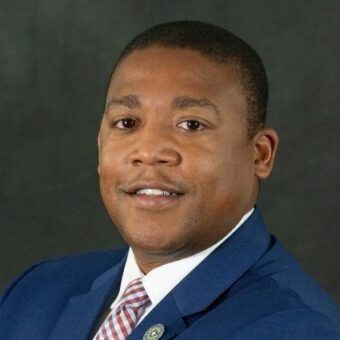
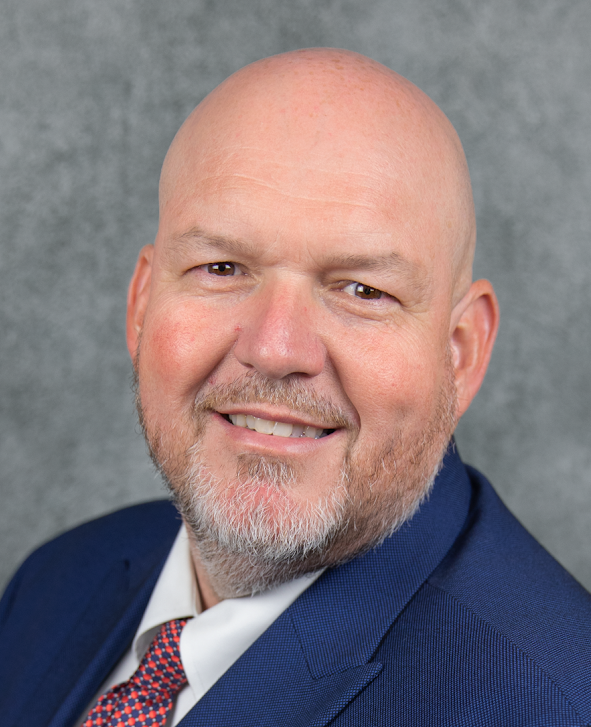
Bryan Snoddy
Director of Civil Rights Division
Texas Workforce Commission
| |
Public career highlights and education: I graduated from The University of Texas at Austin with a degree in Chemistry and began my public service career in the United States Air Force. I later served as an Assistant Attorney General, representing the state of Texas in various courts. Today, I lead a team dedicated to enforcing fair housing and equal employment laws, ensuring justice and equality for all Texans.
What I like best about my public service is: There exists a profound nobility in those who dedicate themselves to the service of the greater good, uplifting their fellow men and women. It is an understanding that, no matter how gifted or brilliant we may be as individuals, our true greatness emerges when we extend our hands to others.
The best advice I've received: It can be summed up in a phrase that I repeat to my son each morning as I drop him off at school: “If you can see it in your mind, you can hold it in your hand.” Thoughts become things. Stay focused and achieve greatness.
People might be interested to know that: My father instilled in me the value of persistence, which still benefits me today. When I was raising broilers in 4-H, I built a small coop without an automated feed and water system, so I tended to them daily. On the rainy day of the livestock show, my bird looked malnourished compared to others. Feeling discouraged, I didn’t want to get out of the truck to carry my birds into the show through the mud, but my dad reminded me, “Champions never quit, and quitters never win.”
One thing I wish more people knew about the Civil Rights Division: The division serves as both an umpire and an educator in the vital pursuit of justice. We carry the solemn responsibility to ensure fairness in equal employment and housing, calling balls and strikes in matters that shape people’s lives.
| |
It’s been a decade since the city of Austin created its own Innovation Office. Originally established to discover and implement creative solutions to complex issues, the Innovation Office is now at the forefront of integrating artificial intelligence (AI) technologies in both practice and policy.
AI technologies have been gaining traction for years, both nationwide and in Texas. On Aug. 27, 2024, the Texas Senate convened a hearing on the development and deployment of AI solutions from both the public and private sectors. The Legislature heard testimonies and concerns about the potential risks and utility AI technologies bring. The hearing provided lawmakers with recommendations for responsible AI regulatory frameworks and what changes should be made to existing state law to protect Texas media from unauthorized AI usage.
Austin’s innovation officer testified about the city’s stance on AI and the guiding principles taken to ensure security, privacy, ethical use and risk mitigation are the top priority. The city has been working on several AI pilots and research projects for years, collaborating with higher education institutions like the University of Texas Good Systems to develop cutting-edge AI technologies that pit Austin as a pioneer in AI development.
The Transportation and Public Works Department (TPW) has been working with UT to improve transportation safety through AI integration. The department is using AI video assessments to take a proactive approach to addressing road and vehicular safety risks. These assessments help the city identify near-miss events, red light running and other high-risk behaviors. TPW uses the compiled data to make informed decisions to mitigate risk along the city’s roadway.
Both TPW and UT are using AI to optimize productivity and workflow. TPW has been working on implementing automated workflows, creating new data models and developing innovative data cleaning and processing methods. UT researchers, on the other hand, are using the video to create an object recognition algorithm designed to identify where pedestrians most frequently cross streets.
Austin is also leveraging AI to develop smart hand tools to assist the city’s workers and make power tools more efficient and safer. These tools help streamline the training process and make it easier for workers of all capabilities to access jobs.
Additionally, the city has developed a digital twin that uses real-time fire, building and weather data to predict smoke dispersion and issue early warnings. Firefighters benefit from this type of analysis, enabling them to make informed decisions about evacuation routes and resource allocation on the fly. The city is currently using the real-time fire tracking and smoke analysis tool to collect data and run simulations in the digital twin.
The Austin City Council established an AI Advisory Committee earlier this year to help develop security guidelines and a workforce plan. The committee is currently in the process of creating generative AI technology guidelines to ensure ethical development, accountability and operations of these technologies.
(Photo courtesy of Igor Omilaev on Unsplash.)
| |
The Nuclear Regulatory Commission (NRC) has approved and licensed the first liquid salt fueled reactor in American history at the Abilene Christian University (ACU) campus.
ACU was issued a construction permit to build a molten salt research (MSRR), making it the first U.S. university research reactor approved in more than three decades. The permit is also the second ever issued for an advanced nuclear reactor, marking the next generation in reactors that are safer, more efficient and more cost-effective than their predecessors.
Notably, the MSRR will not generate any actual electricity. ACU will build the reactor for research purposes and to demonstrate the feasibility of a liquid-fueled molten salt reactor in commercial deployment. The reactor will also provide unique educational opportunities in nuclear science and engineering.
The construction permit issuance means that the NRC confirmed that the preliminary design for the reactor meets federal regulations, passing both an environmental review and safety evaluation. While the permit ensures that ACU will build and operate the MSRR without uranium, the university will still need to apply and receive an operating license before deployment.
The university’s Nuclear Energy eXperimental Testing Laboratory (NEXT) will spearhead the project. The NEXT Lab conducts research and experimentation on using molten salts instead of water to cool nuclear reactors. ACU is leading the NEXT Research Alliance (NEXTRA), a consortium of four universities dedicated to advancing MSRR innovation, design and deployment. ACU is partnered with the Georgia Institute of Technology, Texas A&M University and The University of Texas at Austin.
(Photo courtesy of Pixabay on Pexels.)
| |
The U.S. Department of Homeland Security (DHS) is announcing the availability of $279.9 million in grant funding to further cybersecurity initiatives around the country. DHS is unveiling this Notice of Funding Opportunity (NOFO) as the next installment for a first-of-its-kind federal cybersecurity funding initiative.
The NOFO represents the third year of funding from the State and Local Cybersecurity Grant Program (SLCGP), which delivers funding opportunities to state, local and territorial governments to help reduce cybersecurity risk. The program enables DHS to make targeted investments in agencies to improve the security of critical infrastructure and protect community services through enhanced resilience measures. For Fiscal Year 2024, DHS has committed $300 million to initiatives through this program.
Click here for more information on the cybersecurity NOFO
(Photo courtesy of Jefferson Santos on Unsplash.)
|  | |
The U.S. Department of Energy (DOE) has announced its largest-ever investment in marine energy, a funding package of up to $112.5 million over the next five years to fast-track the development, construction and testing of various wave energy converters (WECs). These converters generate power from ocean waves, offering a local, affordable and clean power source for electric grids, coastal and island areas and offshore operations.
Wave energy is plentiful and works well alongside other renewable energy sources, such as wind and solar power. Harnessing just a small part of this energy could greatly help meet U.S. energy demands, including grid electricity, offshore operations and rural or remote communities, which often depend on costly fossil-fuel deliveries.
Click here for more information about wave energy technology innovation
(Photo courtesy of Nick Fewings on Unsplash.)
| |
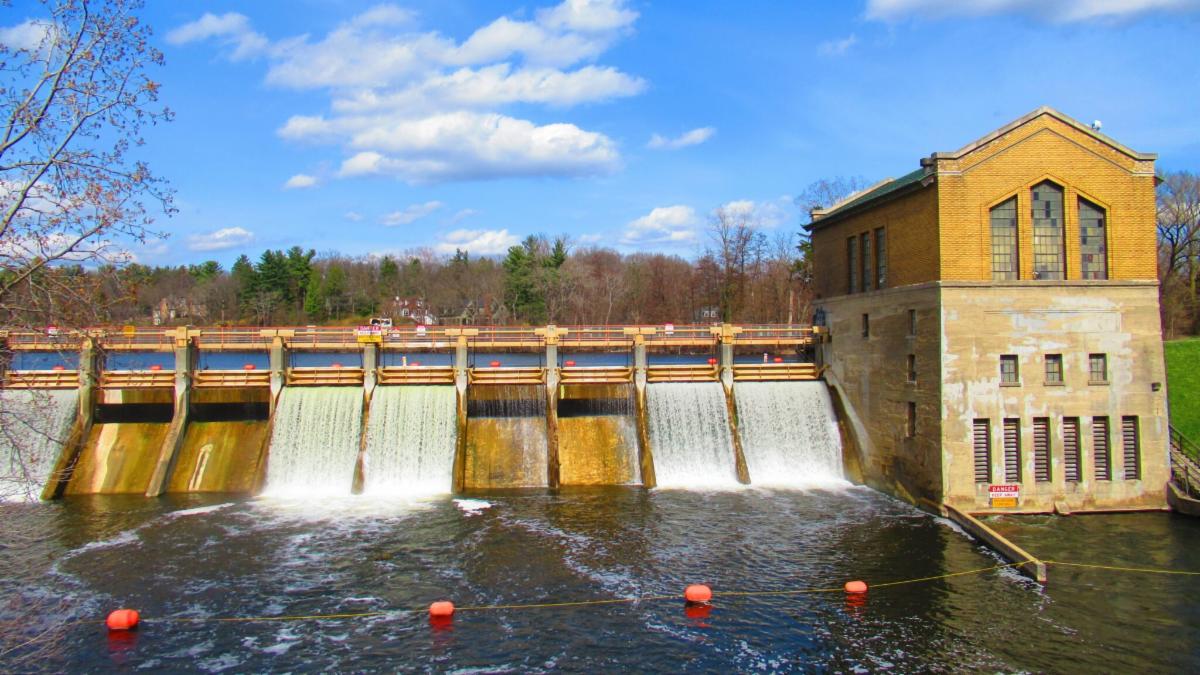
The U.S. Army Corps of Engineers has invited 18 water infrastructure projects across 12 states to apply for a total of $3.19 billion in federal loans. This funding, part of the Corps Water Infrastructure Financing Program (CWIFP), will work to enhance dam safety, safeguard communities against flooding, and modernize critical water infrastructure.
The CWIFP, authorized by the Water Infrastructure Finance and Innovation Act of 2014, is a new federal financing program administered by the Army Corps of Engineers. The program received an $81 million boost through the 2021 Infrastructure Investment and Jobs Act and additional appropriations.
Click here for more information about the dam improvement loans
(Photo courtesy of Notorious4life.)
| |  |
 | |
The state of Texas will use $107.1 million from the Federal Aviation Administration (FAA) to improve airport safety, sustainability and performance.
The El Paso International Airport (EPIA) received $26.9 million to support the Five Node Intersection Remediation project. The airport will reconstruct, rehabilitate and improve existing approach areas near the terminal apron. The project scope includes removing and placing pavement, installing drainage and electrical systems and reconstructing a taxiway.
The Five Node Intersection Remediation project will also include rehabilitating and reconfiguring a parallel taxiway, connectors and a terminal apron taxi lane. EPIA will demolish the current pavement and remove electrical infrastructure in the area. The airport will then build the taxiway and shoulders with erosion control measures. Construction is expected to begin in February 2025.
Dallas Love Field will use $11.7 million to build and extend its safety area. The project will reconstruct 2,400 feet of concrete along the northwest end of the airfield. Plans include installing lighting, signage and markings and mitigating erosion. The airport will undertake additional utility work to enhance airfield operational resilience.
Other recipients receiving funding include:
- Houston George Bush Intercontinental Airport will invest $11.3 million in zero-emissions infrastructure projects.
- Victoria Regional will spend $10.6 million to shift a taxiway.
Click here to read more on the SPI website
(Photo courtesy of Tobias Rehbein on Pixabay.)
|  |  | |
Fort Worth will spend $14.6 million to expand and upgrade Gateway Park, the first phase in the project’s anticipated $170 million buildout. The city recently approved the updated Master Plan, building on two decades of projects to improve trail systems, park elements and community recreational spaces. Currently in the design phase, construction is expected to begin in January 2026.
The Master Plan iterates and expands on several existing park amenities, including the athletic field complex, disc golf course, mountain bike trails and Fort Woof Dog Park. The project will supplement the bike trails with a bike skills course and trailhead, mountain biking hub and skatepark.
Other recreational features in the Master Plan include tennis and pickleball courts, sand volleyball courts and a paddle sports boat launch. The city will also build basketball courts, a splashpad and two playgrounds.
The city will build a series of facilities to accommodate the needs of park visitors, including a restrooms/concession building and dedicated park facility. The Master Plan features additional parking areas for vehicles, food trucks and large trailers. The plan will expand available greenspace for events and activities, including the Great Lawn, outdoor event space, outdoor market space, an outdoor classroom and low ropes course, a scenic overlook and a hill slide.
Fort Worth will build out the park’s connecting trails and pathways, starting with a boardwalk, trail connections to nearby streets, a maintenance road and both paved and unpaved paths. The project will include two bridge crossings, stairways, a bioretention area and a monument at the entrance to the park.
(Photo courtesy of Dameon Hudson.)
|  |  | |
The United States Department of Transportation (USDOT) will deliver $9.2 million to help Dallas protect pedestrians along five key, dangerous corridors in its high-injury network. The funds will go toward the project’s $11.6 million total cost.
Currently, the city’s high-injury network contains 7% of Dallas’ roads but accounts for 62% of its severe crashes. Dallas will build a series of pedestrian safety zones to lower these numbers, leveraging cost-effective, high-impact traffic countermeasures to help nonmotorized travelers cross the street safely.
The “Creating Pedestrian Safety Zones on the High-Injury Network” project will install pedestrian hybrid beacons, rectangular rapid-flashing beacons, crosswalk striping and improved signage to raise visibility of crossing residents. The city will also improve intersection lighting, build pedestrian refuge islands, improve sidewalks and curbs and optimize key bus stops to channel pedestrians to safety zones. In addition, the city will institute planning updates to its Visions Zero Action Plan and Sidewalk Master Plan.
USDOT allocated the funds through the Safe Streets for All (SS4A) grant program. The SS4A program is a five-year, $5 billion initiative that helps local, rural and tribal communities remediate some of the most dangerous roads in the country to prevent deaths and serious injuries. This award will be the city’s third, adding onto its $22.9 million award in 2022 and $288,000 grant in 2023 to advance ADA transition projects for trails and crossings.
Dallas is one out of 453 projects that will receive a share of the recently announced $1.1 billion. This is the second round of SS4A funding for Fiscal Year 2024, with the first round releasing $63 million in May. Since 2023, the program has allocated $2.7 billion from the available $5 billion. USDOT expects to open the third and final round of Fiscal Year 2024 awards in November.
(Photo courtesy of IcedCowboyCoffee.)
| |
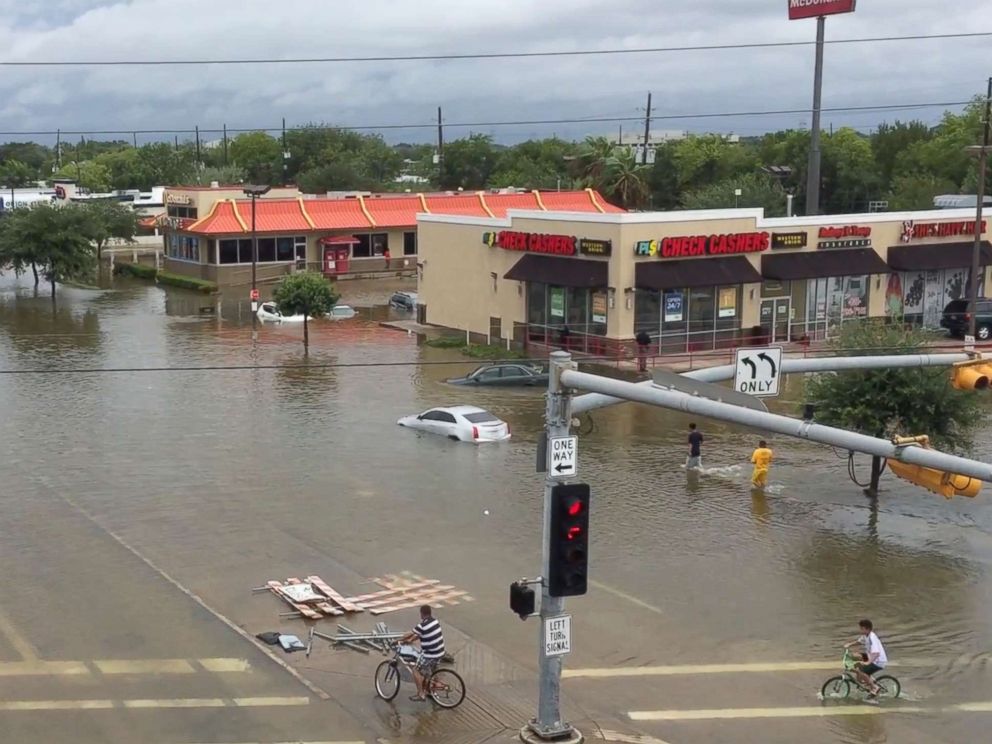
Due to climate change, extreme weather events are occurring with greater frequency and intensity, resulting in a rise in response and recovery efforts nationwide. The Federal Emergency Management Agency (FEMA) announced Monday that the agency will soon reveal around $715 million in new project selections designed to prevent or minimize flood damage.
Funds come from the Investing in America Agenda and will assist communities across the country in strengthening their resilience to extreme weather.
The Bipartisan Infrastructure Law has significantly boosted funding for the Flood Mitigation Assistance program: Compared to the $160 million available during the fiscal 2021 before the law, funding for project selections has nearly increased fivefold.
Click here to learn more about the upcoming NOFO
(Photo courtesy of Chabad Lubavitch.)
| |
Thomas O’Neal, Ed.D., has been officially chosen to take over as superintendent of Sherman ISD. Dr. O’Neal has been the district’s deputy superintendent since 2022. He brings more than 32 years of education experience to the role. Prior to joining Sherman ISD, Dr. O’Neal was deputy superintendent and chief financial officer of Anna ISD.
| |
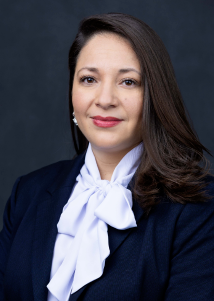
Ysleta ISD has appointed Diana Mooy to take over as associate superintendent of technology information services. Mooy brings more than 17 years of education experience to the position. She has been with Ysleta ISD since 2020, starting as a coordinator in the Office of Student Services. She will officially begin her tenure Oct. 1, 2024.
| |
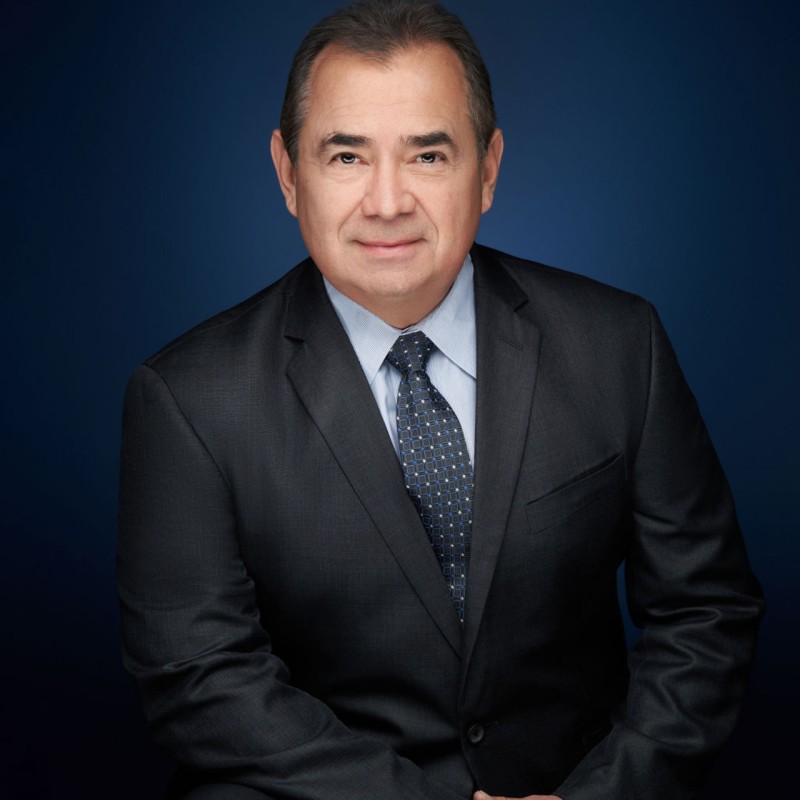
Congresswoman Monica De La Cruz has chosen Roy Rodriguez as chairman of the newly established South Texas Water Working Group (STWWG). He brings more than three decades of municipal, public administration and water management experience to the role. He most recently served as city manager of McAllen.
| |
The city of Sachse has promoted Jerod Potts to director of economic development. Potts most recently served the city as economic development manager. He has been with the city since 2021, starting as assistant to the city manager for economic development. He will assume his responsibilities Oct. 1.
|  | |
Gov. Greg Abbott announced these appointments and reappointments from Sept. 20 through Sept. 26:
Texas Medical Board District Two Review Committee
Penelope Duke, M.D. - the Woodlands
Tejas Ozarkar, M.D. - Denton County
(both reappointed)
Kristen Cox - College Station
Robert Simonson, D.O. - Duncanville
Early Childhood Intervention Advisory Committee
Rosalba Calleros Ramirez - Buda
Deborah Cohen, Ph.D. - Austin
David Goff, M.D. - Strawn
Audrey Jackson - San Marcos
(both reappointed)
Terrie Breeden - Wimberley
Guillermo Lopez - Austin
Nueces River Authority Board Of Directors
Jeb Hogan - Tilden
Chronic Kidney Disease Task Force
Roberta “Bobbi” Wager - Boerne
Hussein Musa, M.D. - San Antonio
State Pension Review Board
Daniel Harper - Kyle
|  | |
Texas Government Insider is a free weekly newsletter detailing important happenings throughout the state and summarizing current political issues relevant to individuals interested in government.
Publisher: Mary Scott Nabers
Editors:
Adam Rollins
Dave Doolittle
| |