|
Two months ago, the federal government announced that $2.4 billion is available to support rail infrastructure projects in America. Hundreds of public officials interested in rail projects have already submitted applications for funding, and decisions about the projects selected for funding will be announced soon.
In December 2023, more than $9 billion was awarded for rail projects through various federal programs. Those awards resulted in numerous large projects being pushed into the planning and design phase. Almost all will be very large rail initiatives. For example, the Chicago Metra announced a plan in April that details $332 million in capital projects for 2024. The Washington Metropolitan Area Transit Authority also announced a three-year capital plan in February, including a $2.3 billion capital budget for fiscal year 2025. Large rail initiatives are outlined in both plans.
As soon as the funding allocations are announced, a diverse range of new project announcements will follow. These projects, while different in nature, will all present numerous opportunities for private industry offerings, underscoring the breadth of the rail industry and the potential for collaboration.
Miami-Dade’s Department of Transportation and Public Works will oversee an upcoming $538 million rapid transit project to connect Aventura and downtown Miami. A rail line will be constructed along with five new stations. The remaining two stations will be enhanced significantly. Parking facilities will be designed to deliver a total of 521 new parking spaces. About 20 commuter rail vehicles will be purchased for the project, and improvements will be made to the rail vehicle maintenance facility in Hialeah. Finally, the two existing stations will be modified and enhanced in various ways to accommodate the new line. The project’s environmental review process has ended, and it is now in the engineering phase. Construction work is planned for 2025, and officials say the new rail service will be operational by the end of 2027.
A much-needed safety project is progressing at a railroad crossing in Fresno, California. Funded by an $80 million grant from the state of California, the project will be designed to improve safety for the Burlington Northern and Santa Fe Line (BNSF) rail crossing at the intersection of Blackstone and McKinley. This particular rail crossing project is a high priority because it has experienced the highest vehicle traffic and the most accidents of any BNSF corridor crossing in California. The work will include elevating the existing tracks onto new bridges. This will eliminate the current need for vehicles and pedestrians to stop at the tracks as a passage for them will be underneath the new bridge when the project is completed. Another safety component will be the installation of retaining walls. The project’s design phase, which is currently underway, is expected to continue for another 18 months. Construction will follow once the designs have been approved and reviewed for safety and feasibility. That should allow for a construction launch in late 2025 or early 2026.
Click here for more
|  | |
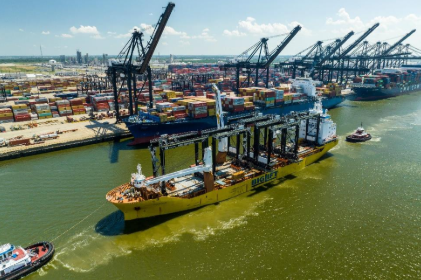
Port Houston has experienced an increase in cargo volume compared with the previous year, despite global supply chain disruptions. This year, 1.7 million 20-foot equivalent containers (TEUs) have already moved through Houston’s two container ports.
In May 2024, Port Houston handled 364,866 TEUs, a 21% increase from the same month last year, contributing to a year-to-date (YTD) increase of 14% from 2023. Loaded imports and exports have both increased – up 18% from last May for imports and a YTD increase of 15% for exports.
The construction of warehouses and distribution centers over the past two years, coupled with increased consumer spending in Texas, are the main contributors to this increase, officials said.
Port Houston, situated along the Houston Ship Channel, operates the largest port in the nation by waterborne tonnage. It supports almost 20% of Texas’ gross domestic product (GDP).
To aid in efficient operations, Port Houston has added six new hybrid-electric rubber-tired gantry (RTG) cranes. This brings the total number of new RTGs to 26 since December 2023 across key terminals.
The hybrid RTGs combine battery power with diesel, significantly reducing greenhouse gas emissions, noise pollution and fuel consumption compared with conventional RTGs, further contributing to the ports broader goal of sustainability. The port is expecting another batch of RTGs later this year.
(Photo courtesy of Port Houston.)
| |
The Texas Commission on Environmental Quality (TCEQ) is making $20 million available to replace or upgrade drayage trucks and cargo handling equipment. Applications are due March 4, 2025, on a first-come, first-served basis.
The grants come from the Seaport and Rail Yard Areas Emissions Reduction Program (SPRY). The initiative will help reduce greenhouse gas (GHG) emission rates by transitioning seaport and rail yard vehicles and equipment to models that produce less Nitrogen Oxide (NOx).
The program is a part of the TCEQ’s Texas Emissions Reduction Program (TERP), which improves the state’s air quality by replacing outdated machinery with clean technology upgrades. TERP has distributed over $1.4 billion in grants since 2001 to reduce NOx emissions.
Eligible applicants include people, corporations, organizations, governments, agencies and any other legal entity. The program supports projects that replace or repower drayage trucks and cargo handling equipment with newer models. The replacement vehicles and equipment must emit NOx at a rate that is minimally 25% less than the original vehicles and equipment.
Eligible areas for the program include seaports and rail yards in nonattainment areas or affected counties. Counties must have vehicles and equipment that have been used in eligible seaports or rail yards for at least 200 days per year for the preceding two years. The replacement or repowered models must operate 200 days per year for the project.
(Photo courtesy of the EPA.)
|  | |
Norman Roy Garza Jr., has been appointed executive director of the Texas Space Commission (TSC). The TSC was created in 2023 to pioneer the state’s growth in space exploration, development and manufacturing. The agency officially launched after the Texas Space Commission Board of Directors was appointed March 26, 2024.
Garza previously worked with the Texas A&M University System since 2014, most recently as assistant vice chancellor for Texas A&M Engineering Experiment Station. He has also served as vice president of government relations for Texas A&M University in College Station and assistant vice chancellor of government relations and external affairs for three state agencies.
While working with the Texas A&M University System, Garza played a key role in advancing the state’s space initiatives. He supported major initiatives to establish both the Texas Semiconductor Institute and the Texas Space Institute. The Texas Space Institute is a $200 million facility that will be built next to NASA’s Johnson Space Center.
Garza collaborated with the Texas Legislature to develop and pass House Bill 3447 in the 88th Regular Session. The bill officially established the TSC and supported the Texas Space Institute project. As executive director, Garza will advance the TSC’s work to promote innovation in space exploration and commercial aerospace opportunities.
| |
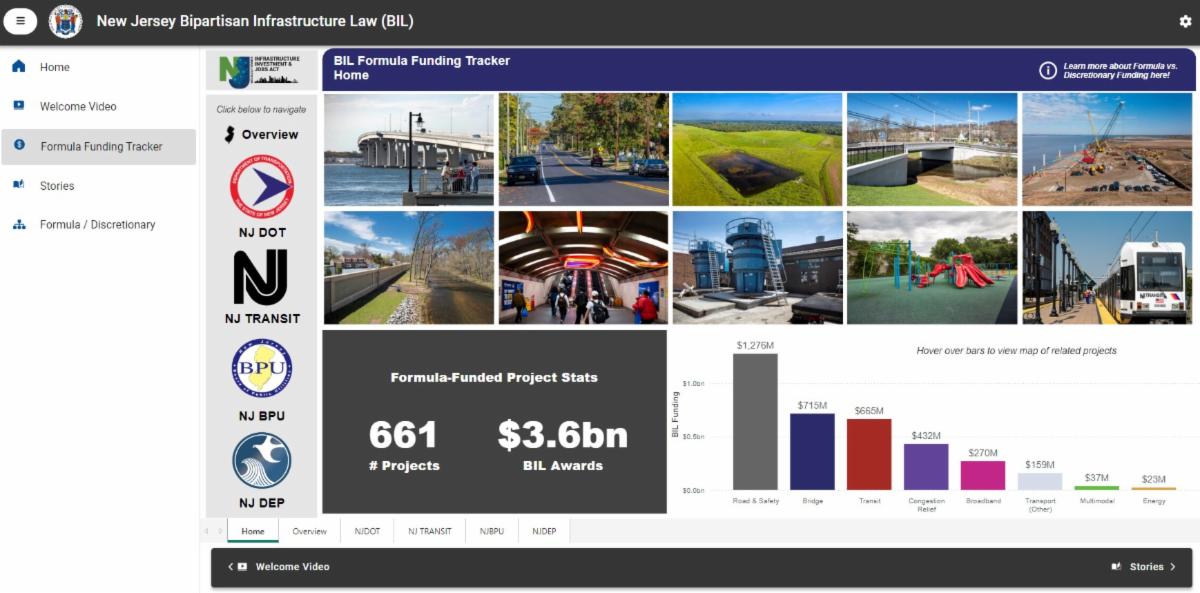
New Jersey has launched an interactive website that tracks federal Bipartisan Infrastructure Law (BIL) funding for projects across the state. The Bipartisan Infrastructure Law (BIL) Formula Funding Tracker explains how the state will use more than $7 billion in federal funding over five years.
New Jersey has already received $3.6 billion and invested in 661 projects, the tracker shows. Funding data is categorized by project type and further divided by state agencies. Website users can explore interactive graphs and maps to view project locations, descriptions, status, funding allocated and expenditures to date.
Click here to learn more about New Jersey's interactive project site
(Photo courtesy of the state of New Jersey.)
| |
Chad Gee
Superintendent
Kennedale ISD
| |
Public career highlights and education: I have been the proud superintendent of Kennedale Independent School district for five years and as a public-school superintendent for seven years. This is my 30th year in public education, having served as a teacher and coach for 14 years and assistant principal and principal before becoming a superintendent. I received my bachelor’s degree from Texas Tech University, my master’s degree from Sul Ross University and my doctorate from Texas A&M University - Texarkana.
What I like best about my public service is: Working with people to make our community better as the superintendent of our school district, as a community member involved in civic organizations, and working with local public officials to move our community forward.
The best advice I've received: It was from my uncle when I was 15 years old working in his restaurant: “You are going to have many jobs in your lifetime but always remember when you leave a place (job), make sure you leave it a better place than you found it.”
People might be interested to know that: I went to Texas Tech to study architecture and somehow ended up a superintendent. I am also a big John Wayne fan, and my grandpa’s name is “Duke”.
One thing I wish more people knew about Kennedale Independent School District is: We are the “tiny little gem” surrounded by the giants of the Metroplex and are continuously having to keep pace with them on a much smaller budget. In my opinion, we do this quite well and maintain our sense of family and community. As we like to say about our district, “Small town feel, big time appeal.”
| |
The city of Houston is looking for applications from developers to build single-family homes serving low- to moderate-income homebuyers. Nonprofit and for-profit developers must submit applications for the $11.6 million Notice of Funding Availability (NOFA) for the Stella Link Development Project by July 12, 2024.
The awarded recipient will build homes on a 12.22-acre plot of land along Stella Link Road, located outside the city’s 100- and 500-year flood plains. The size and number of homes covered by the project will be determined after a developer is selected. However, a preliminary design plan has a layout proposing more than 100 mixed units on the property.
The city stipulated that at least 51% of the homes must be reserved for households earning 80% of the Houston area median income (AMI). The AMI for a single-person household is approximately $53,000, while a household of four’s AMI is around $75,700. Out of the remaining homes, no fewer than 25% can be sold at market rates. Developers can opt for the remaining homes to be reserved for 100% to 120% AMI households.
All construction must abide by standards laid out in the city’s Minimum Property Standards. Construction must also comply with green building, resilience and elevation design standards. At least 5% of the units must be accessible for people with mobility impairments. An additional 2% must be accessible for people with hearing and vision impairments.
The city wants developers to incorporate community feedback priorities into the design of the development. These priorities include:
- Shared community amenities, including playgrounds, shaded walking paths and bicycle trails.
- Inclusion of yards, porches and façade elements.
- Installation of mobility elements, including speed deterrents, raised crosswalks and sidewalks.
- Safety elements, including fencing and well-lit public areas The establishment of a homeowner’s association.
The Department of Housing and Urban Development (HUD) provided the project funds through the Community Development Block Grant Disaster Recovery 2017 (CDBG-DR 17) program. The funds support the Texas General Land Office’s (GLO) efforts to respond to and recover from Hurricane Harvey.
(Photo courtesy of Ivan Bandura on Unsplash.)
| |
The U.S. Economic Development Administration (EDA) has awarded $12.4 million to six Texas communities to build infrastructure and recover from natural disasters. The projects include building a veterinary care facility, commercial aviation training facility, water infrastructure and an instructional facility.
The city of Perryton will receive $2.7 million to create the Rebuild Perryton Incubator. The city is currently being rebuilt after a devastating tornado in 2023. The project will convert an existing building into commercial space for local businesses impacted by the natural disaster. The city will match the investment with $625,000 in local funds.
The Texas Biomedical Research Institute in San Antonio will use $2.5 million to build a multi-species veterinary care facility. Leftover funds will support biomedical research. The institute will match the grant with $625,000 in local funds.
The Collin County Community College District in Plano will receive $2 million to build a health care and instructional facility. The facility will help prepare students to enter the healthcare workforce, providing training for in-demand jobs. The district will use $500,000 to match the funds.
Other projects receiving funding include:
- Angelo State University will spend $2 million to build a commercial aviation training facility. The university will provide a $500,000 match.
- The city of Hidalgo will receive $1.8 million to improve an industrial park’s roadway and water infrastructure. The city will match the grant with $460,925.
- Kleberg County will use $1.4 million to develop an industrial park and transportation hub. The county will provide an additional $350,000 to support the project.
The EDA will support all projects with $483 million from the Economic Adjustment Assistance (EAA) Program. The program allows the EDA to support public works and infrastructure projects in communities experiencing adverse economic changes due to plant closures, changing trade patterns or natural disasters including hurricanes, wildfires and flooding.
(Photo courtesy of urban.houstonian.)
|  | |
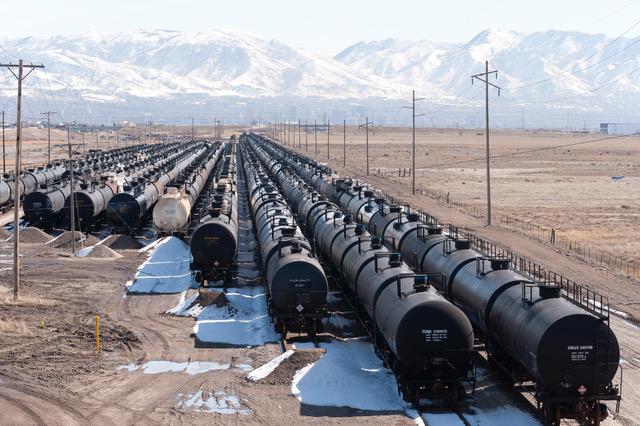
The U.S. Supreme Court has agreed to consider whether to revive a 2021 approval by federal regulators for a $1.5 billion crude oil railway project in Utah.
In Seven County Infrastructure v. Eagle County, Colo., the court will take up whether the National Environmental Policy Act requires an agency to study environmental impacts beyond the immediate effects of an action that agency has authority to regulate.
Click here for details about the case
(Photo courtesy of Utah Physicians for a Healthy Environment.)
| |
The Department of Energy (DOE) has selected four new transformative technology projects to be a part of the Seeding Critical Advances for Leading Energy technologies with Untapped Potential (SCALEUP) program. The projects aim to improve energy efficiency, storage and sustainability.
The SCALEUP program helps bring advanced energy technologies from prototypes to market-ready products. It focuses on turning high-risk, innovative ideas into scalable and commercial versions.
Click here for more information about the technology initiatives
(Photo courtesy of NASA/JPL-Caltech.)
| |  |
 | |
The Texas Legislature passed House Bill 4 in 2023, enacting the Texas Data Privacy and Security Act (DPSA). As part of the act, the Texas Department of Information Resources (DIR) was required to build an online portal for public outreach, allowing residents to provide feedback and recommended revisions. DIR officially launched its public portal June 24, 2024, and will keep it open through Sept. 30, 2024.
The DPSA regulates how business entities collect, use, process and treat personal data, effective July 1, 2024. It effectively protects consumer data, providing specific rights over how much access business entities have over personal data. Through the law, consumers must provide consent before businesses can process any “sensitive” personal data and can opt out of personal data processing.
The ruling applies to the sale of personal information as well, requiring clear notice and consent requests from consumers before it can be sold. Businesses must also provide additional notices for the sale of biometric personal data. In addition, businesses must also respond to requests for access and correction of information.
DIR is inviting residents to share their experiences in exercising their rights and implementing the act’s requirements through the portal. The agency will use the comments to prepare a report to the Texas Legislature detailing the status of the DPSA’s implementation, requirements of the act and recommendations for how it can be improved.
(Photo courtesy of Glenn Carstens-Peters on Unsplash.)
|  | |
Courtney Hjaltman has been appointed to the Public Utility Commission of Texas (PUCT). She was officially sworn in June 26, with a term that will expire Sept. 1, 2025. The PUCT is responsible for regulating Texas’ electric, water, wastewater and telecommunications industries. The agency oversees and implements industry-relevant legislation and provides assistance to resolve customer complaints.
Hjaltman brings more than 17 years of state service experience to the role. She most recently served as chief executive and public counsel for the Office of Public Utility Counsel (OPUC). In that role, Hjaltman helped represent residential and small-commercial customers in proceedings before the PUCT and the Electric Reliability Council of Texas (ERCOT).
Before joining OPUC, Hjaltman was the Office of the Governor’s deputy legislative director. As deputy legislative director, she collaborated with Texas lawmakers and other stakeholders on policy issues. She played a key role in improving the ERCOT energy grid’s reliability and instituting weatherization requirements for ERCOT generation resources.
|  | |
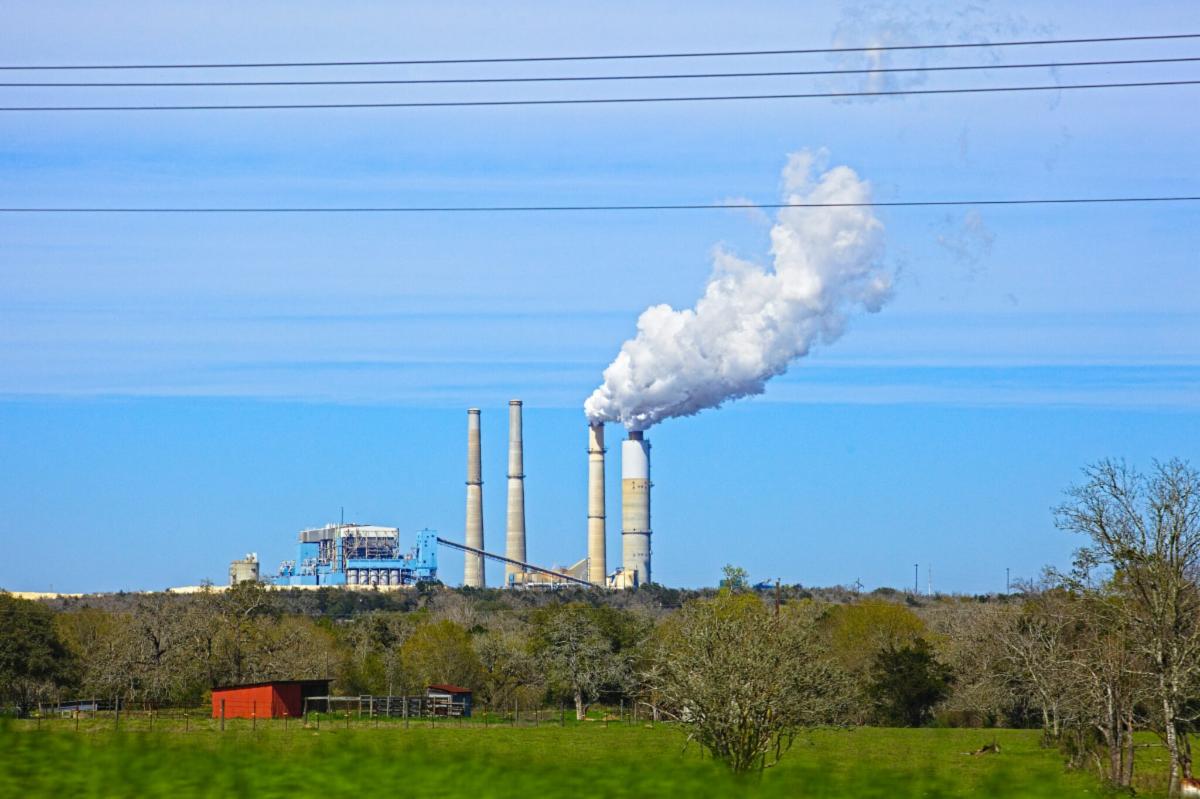
Rules from the Environmental Protection Agency (EPA) intended to lower greenhouse gas emissions from the power sector are facing criticism and legal challenges over concerns that it will force power plants to shut down, making it harder to meet growing electricity demand.
During a recent board meeting of the Electric Reliability Council of Texas, the ERCOT CEO Pablo Vegas warned that the EPA’s new rules for carbon dioxide emissions, mercury and toxic air pollutants would force all of Texas’ coal-fired power plants to shut down.
Click here for more information about the lawsuits
(Photo by Sam LaRussa on Unsplash.)
|  | 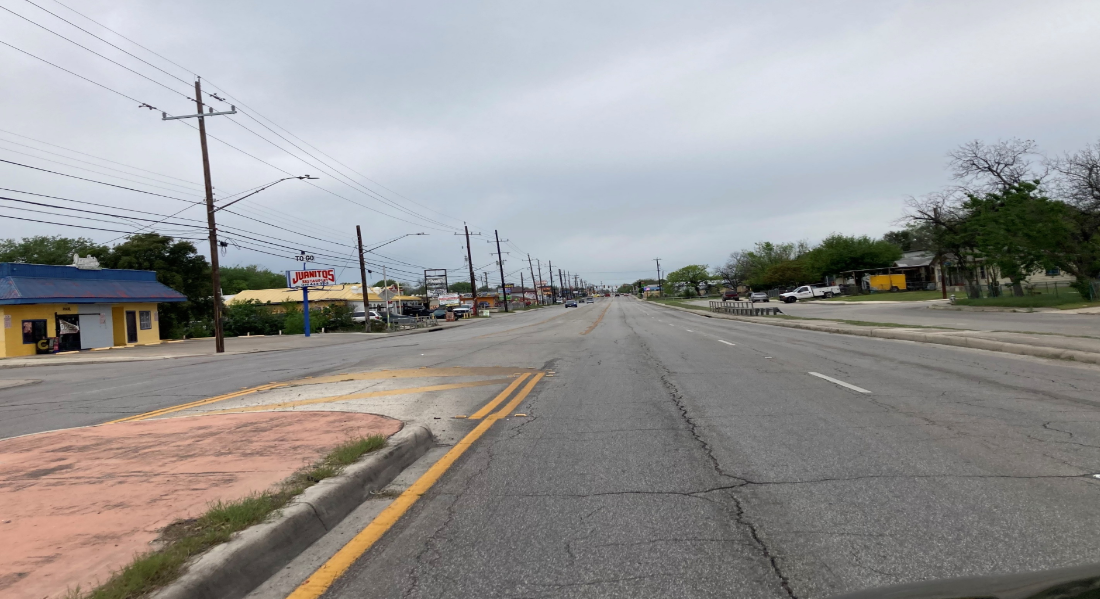 | |
The U.S. Department of Transportation (USDOT) has awarded the city of San Antonio $8 million to advance the $18 million Culebra Road project. The project will improve pedestrian mobility, increase safety and reconstruct the road. Construction is estimated to begin in winter 2026.
The city will make safety and multimodal complete streets improvements to a 5-mile segment of Culebra Road. The road currently has sidewalks in poor condition and a deteriorated drainage system that cannot handle heavy rainfall. As a result, the street is prone to frequent flooding.
The project will reconstruct the roadway and install a replacement storm sewer system. Plans include building ADA-compliant sidewalks, crossings, dedicated bicycle facilities, transit stops, street trees, traffic calming and green infrastructure. The city will reconfigure traffic lanes to increase sight distances and reduce driver confusion at intersections, increasing the road’s safety.
Planting street trees and installing green infrastructure will allow the city to reduce the area’s heat island effect and filer air pollutants. Additional native vegetation will also help mitigate flooding and increase stormwater capture and water quality. The city will remove physical barriers and increase access to affordable transportation options for local low-income households.
USDOT allocated the funds through the Rebuilding American Infrastructure with Sustainability and Equity (RAISE) grant program. The RAISE program invests in community projects to build and renovate critical transportation infrastructure projects across the country.
The Culebra Road project is one of 148 projects that will receive a portion of the recently announced $1.8 billion in RAISE funding for Fiscal Year 2024. Including the latest round, USDOT has invested $7.2 billion across 550 projects through the RAISE program since it was established.
(Photo courtesy of the city of San Antonio.)
|  | The city of San Marcos has selected Rodney Gonzales and Lonzo Anderson to serve as assistant city managers. They will take over the roles from Laurie Moyer and Chase Stapp following their retirement. | |
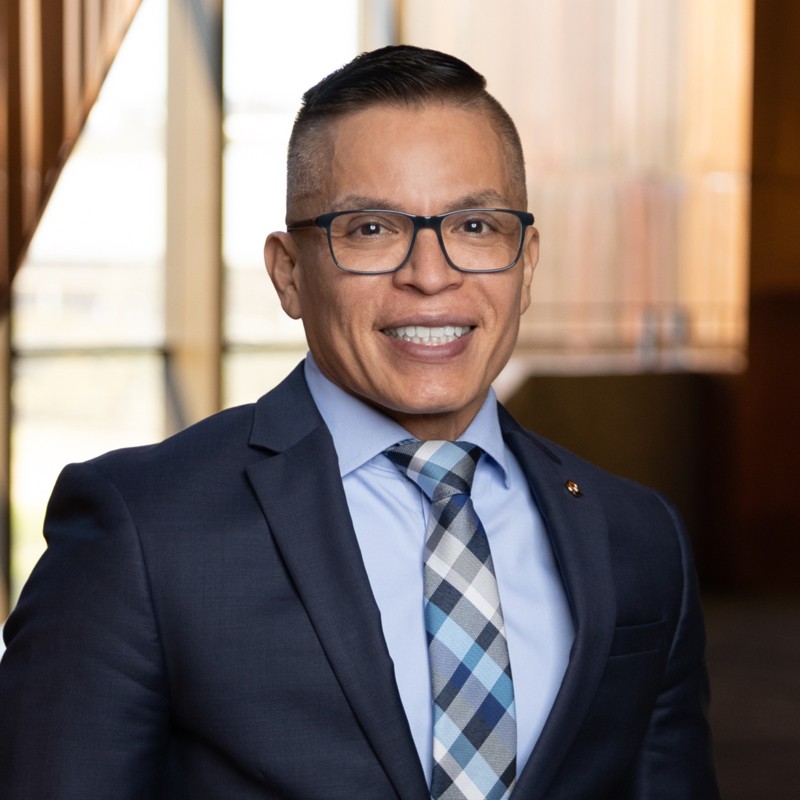
Gonzales brings more than 28 years of municipal government leadership experience to the role. He previously served as assistant city manager in Austin. He has been serving as interim city manager for Public Safety since March 2024. He has begun transitioning into his new role.
| |
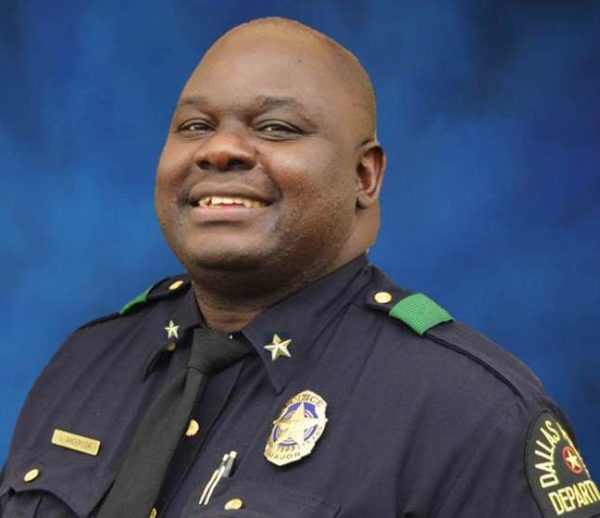
Anderson has more than 27 years of experience in law enforcement and municipal government. He has held several leadership positions in the Dallas Police Department, including interim chief of police. He most recently served as executive assistant chief since 2021. He will assume his responsibilities Aug. 5, 2024.
| |
Veerinder “Vinny” Taneja will become the city of El Paso’s director of the Department of Public Health. Taneja previously served as health director for Tarrant County Public Health, a position held since September 2014. He brings more than two decades of public health experience to the role. He will begin his tenure in August 2024.
| |
Gov. Greg Abbott announced these appointments and reappointments from June 21 through June 27:
Texas Violent Gang Task Force
David McCracken - Bastrop
Electric Reliability Council of Texas Board Selection Committee
Paul Foster - El Paso
Public Utility Commission of Texas
Courtney Hjaltman - Austin
Texas Military Preparedness Commission
John “Mark” McLean - Fort Worth
Paul Norwood - Georgetown
Michael “Mike” Boyd - Christoval
| |
Texas Government Insider is a free weekly newsletter detailing important happenings throughout the state and summarizing current political issues relevant to individuals interested in government.
Publisher: Mary Scott Nabers
Editors:
Adam Rollins
Dave Doolittle
| |