Volume 18, Issue 36 - September 4, 2020 |
|
By Mary Scott Nabers, CEO of Strategic Partnerships Inc. |
Motorists and automobile lovers are already noticing rather rapid change. Sustainability goals adopted by elected officials at cities and counties are continuing to promote projects that support walking, biking, and using public transportation. Housing density, walkable communities, technology enhancement and convenient public transportation are the goals.
Parking options are being reduced. Automobiles are being banned on many community streets, and cities are adding parks, entertainment venues, affordable housing, and more retail. Mixed use development, biking lanes, and convenient transportation options for non-motorized travel are the goal. The arguments for such changes are that people will be healthier and safer, the air will be cleaner, and there will be more options for people with disabilities. The trend is called ‘livable and walkable communities,’ and as it sweeps through the country, it opens up thousands of partnering opportunities between public entities and private sector contractors.
Indiana
The city of Indianapolis plans to add more sidewalks throughout the city and has commissioned an inventory to determine how many and which streets don’t have a sidewalk. The results of that study will be published by the end of 2020. The city, which covers 360 square miles, has approximately 8,400 lane miles of streets. Indiana’s Department of Transportation maintains about one-third of the state’s sidewalks, and the cities are responsible for the rest. The study is part of the Indy Moves plan, a long-range planning document that combines walking, biking, and public transportation goals. More than 400 projects are outlined that include building new roads, developing greenways, upgrading existing roads with sidewalks, and constructing more bike lanes. Adding sidewalks to every street without them could cost more than $1 billion. The sidewalks, however, appear to be a high priority because city officials have pledged net zero carbon emissions by 2050 and that requires fewer automobiles in the city.
|
The Texas Transportation commission allocated more than $2.1 billion to infrastructure projects in the Texas Department of Transportation (TxDOT) Pharr district with the adoption of the Unified Transportation Program (UTP).
Of that, Hidalgo and Cameron counties will receive $1.1 billion in federal and state funding, according to the Rio Grande Valley Metropolitan Planning Organization (RGVMPO).
Regional projects such as the widening of SH 48 in Cameron County, the widening of BUS 77 in Harlingen, construction of SH 68 in Hidalgo County, and Phase 1 construction of the International Bridge Trade Corridor in Hidalgo County as well as the widening of FM 1015 in Weslaco will benefit from inclusion in the UTP.
A new authorization will commit $96 million to the first phase of the International Bridge Trade Corridor from SH 365 Tollway and FM 493 to Interstate 2.
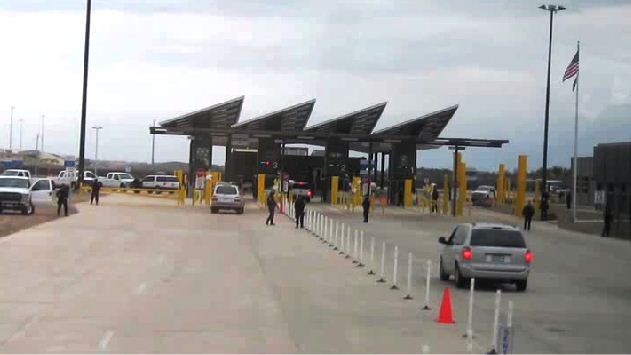
In addition, commissioners authorized $30 million in rider funds and $46 million in Coordinated Border Infrastructure funds, part of which will be used for the expansion of the Anzalduas Port of Entry. The funding will contribute toward making improvements to southbound inspection facilities and building northbound facilities to allow for loaded and empty commercial traffic in both directions.
The Commission also approved $30.7 million in increased funding for a total of $88.9 million to upgrade US 281 in southern Brooks County to interstate standards.
|
In response to the coronavirus pandemic, the Willis ISD board of trustees authorized a revised $100.15 million bond referendum for November 3.
The district originally planned a May election to seek voter approval to sell $175 million in bonds for school construction projects, but postponed it to November with the lowered amount.
Proposition A will seek more than $55 million for campus improvements including a $22 million pre-kindergarten center and a $14 million expansion of Lynn Lucas Middle School. Bond sales also would provide funding for about $8.64 million to make gym additions at four elementary schools.
Trustees removed propositions from the bond referendum that sought funding for a new stadium, sports fields, tennis courts, and natatorium. Officials said those projects could be considered for a future bond election.
Demographic reports indicate a need for the district to add a second high school and a new middle school to accommodate student population growth. Willis ISD is in the process of acquiring property for a middle school.
|
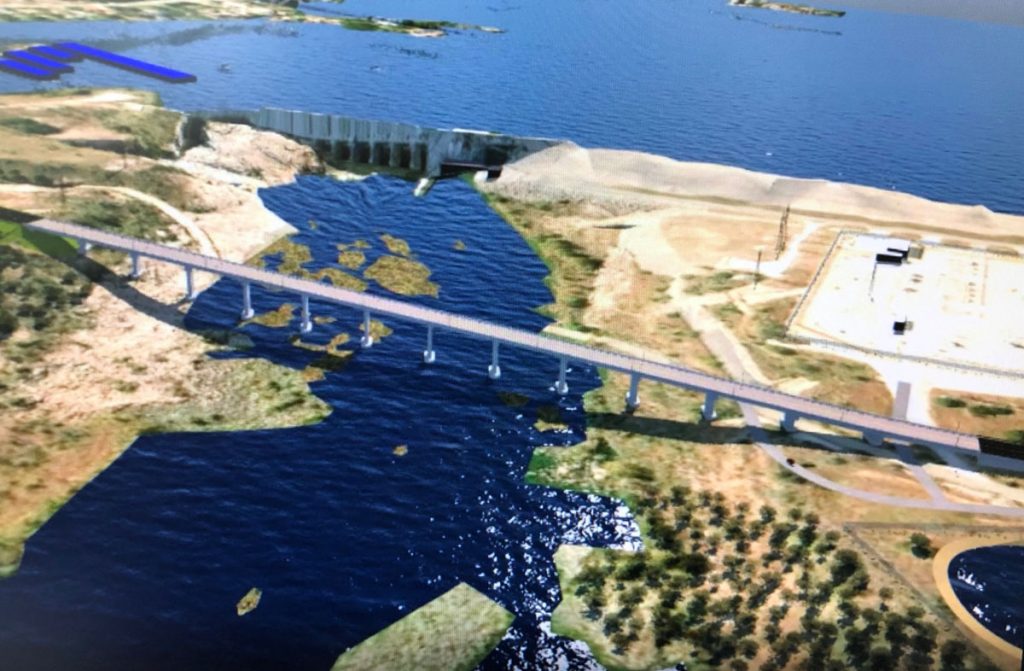
Burnet County commissioners entered into a contract for preliminary engineering of a bridge river crossing east of Wirtz Dam on Lake LBJ.
The Commissioners Court agreed to the contract at its August 25 meeting for the design of the bridge that is estimated to cost $20 million to $30 million.
The span will connect RM 2147 in Cottonwood Shores to RM 1431 between Granite Shoals and Marble Falls.
Discussions about a crossing originated in 1974, but began to catalyze in 2017 with public outreach efforts by the Capital Area Metropolitan Planning Organization (CAMPO), which will reimburse the county for engineering expenses.
Engineering is projected to take 24 months to design the bridge using Texas Department of Transportation (TxDOT) standards in order for the state agency to accept bids, award a contract, construct the bridge and approaches, and maintain the project.
|
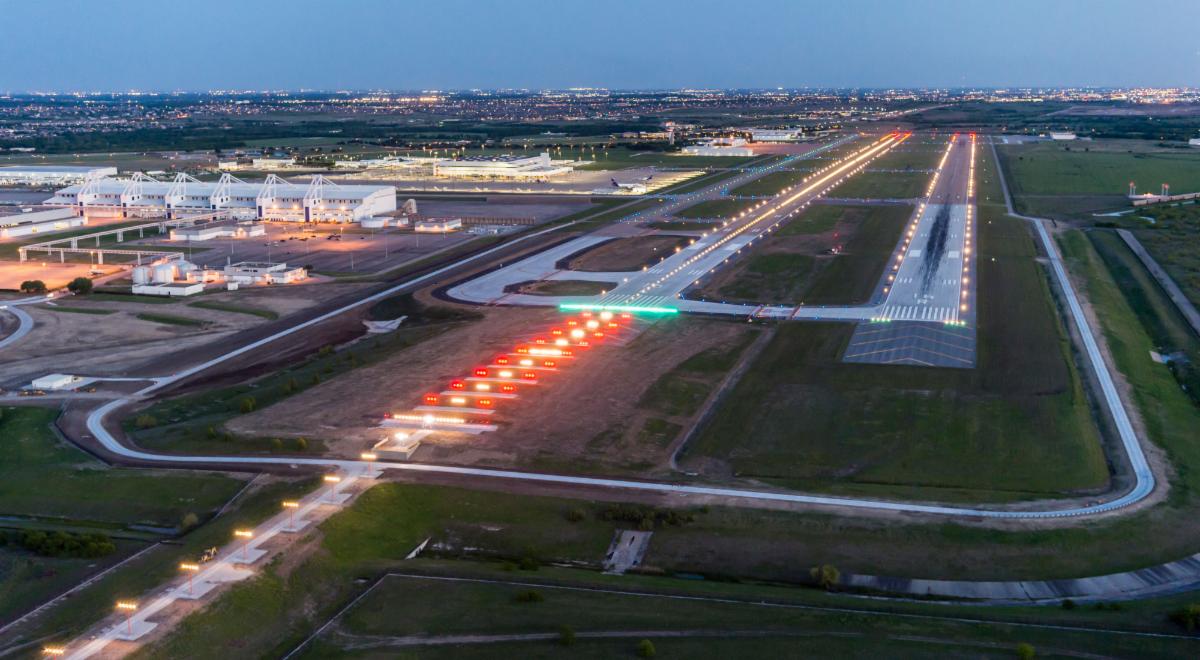
The Federal Aviation Administration (FAA) awarded $78.6 million in Airport Improvement Program (AIP) grants to 12 primary airports in Texas.
AIP grants will be distributed to the following airports in Texas:
- Fort Worth Alliance Airport - $15.82 million for noise mitigation and to extend a taxiway;
- Austin-Bergstrom International Airport - $11.68 million for terminal building improvements;
- Corpus Christi International Airport - $8.85 million to rehabilitate an apron and acquire an aircraft rescue and firefighting vehicle;
- Brownsville/South Padre Island International Airport - $8.51 million to reconstruct an apron;
- Rick Husband Amarillo Airport - $7.47 million for taxiway construction and improvement;
- Waco Regional Airport - $2.63 million for terminal building improvements;
- San Antonio International Airport - $2.6 million for updates to the airport master plan or study;
- Easterwood Field in College Station - $1.16 million for airport improvements;
- Dallas-Fort Worth International Airport - $985,881 for airport infrastructure, Voluntary Airport Low Emissions (VALE) infrastructure, and a zero emissions vehicle;
- East Texas Regional Airport in Longview - $865,543 for runway rehabilitation;
- Robert Gray Army Airfield in Killeen - $766,666 for terminal building improvements; and,
- Ellington Field Joint Reserve Base in Houston - $666,666 for the sealing of surfaces and joints.
More than $16.6 million in AIP funding will go to non-primary airports in the state block grant program.
The Texas grants are part of more than $1.2 billion in airport safety and infrastructure grants through the FAA in order to improve the nation’s airport infrastructure, enhance safety, and strengthen growth in local communities.
|
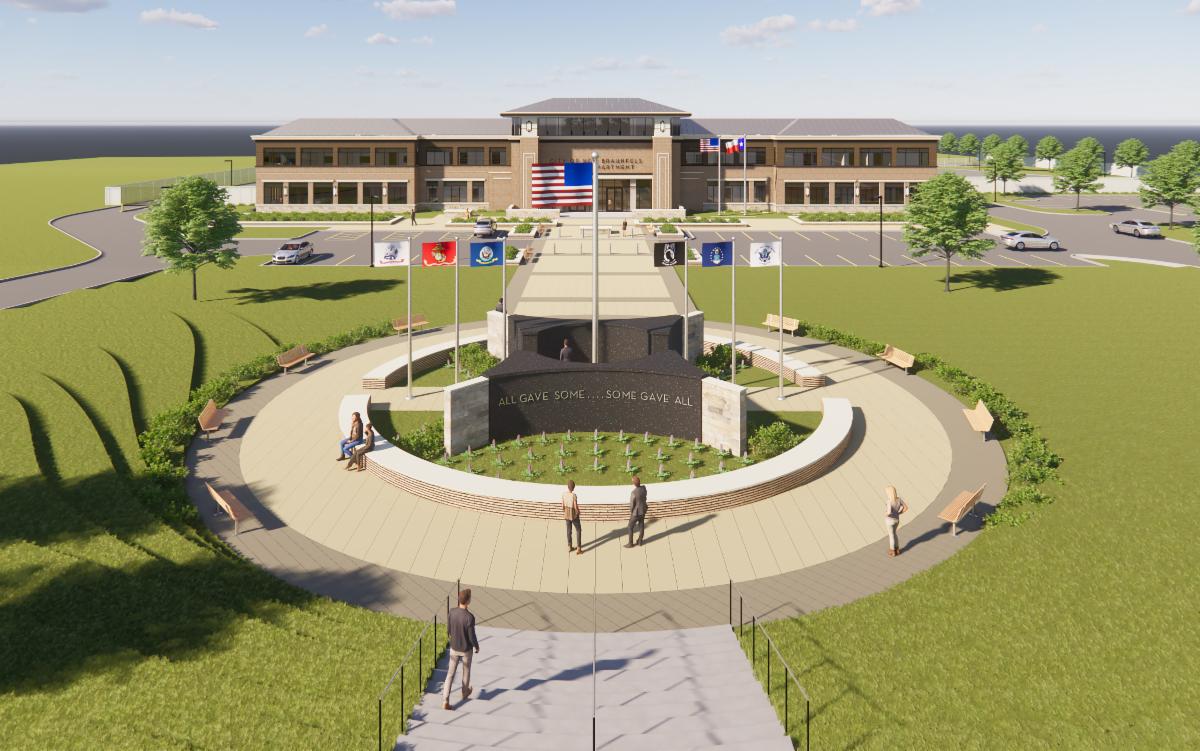
The city of New Braunfels anticipates issuing a request for competitive sealed proposals in September to build a new $36.31 million police station to replace existing facilities.
City officials said a 65,000-square-foot main building and 15,000-square-foot annex will house space for all divisions.
The new site also would have room for public space, a training room, vehicle maintenance bays, evidence storage space, and a gym. Construction of a veterans memorial at the San Antonio Street site also is included in the project scope.
An 18-month construction schedule is expected to start in early 2021.
|
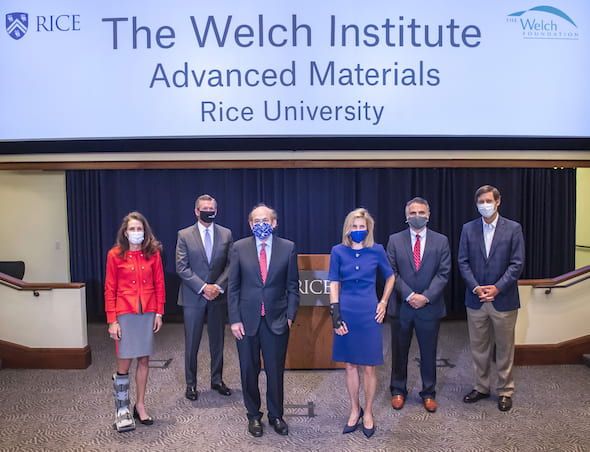
Rice University is striving to become a hub for next-gen materials innovation with the founding of The Welch Institute.
The Robert A. Welch Foundation announced on September 2 that it donated $100 million gift – the largest in the university’s history – to underwrite research that will accelerate discovery, design, and manufacture of new materials.
Advancing the ability to custom-build materials from the atoms up is a primary goal that will involve not only materials scientists but also scientists and engineers from across many disciplines at Rice.
The institute will be governed by an independent board of directors and advised by a scientific advisory board to build on established programs that have supported basic research in chemistry and related fields in Texas colleges and research universities for 65 years.
|
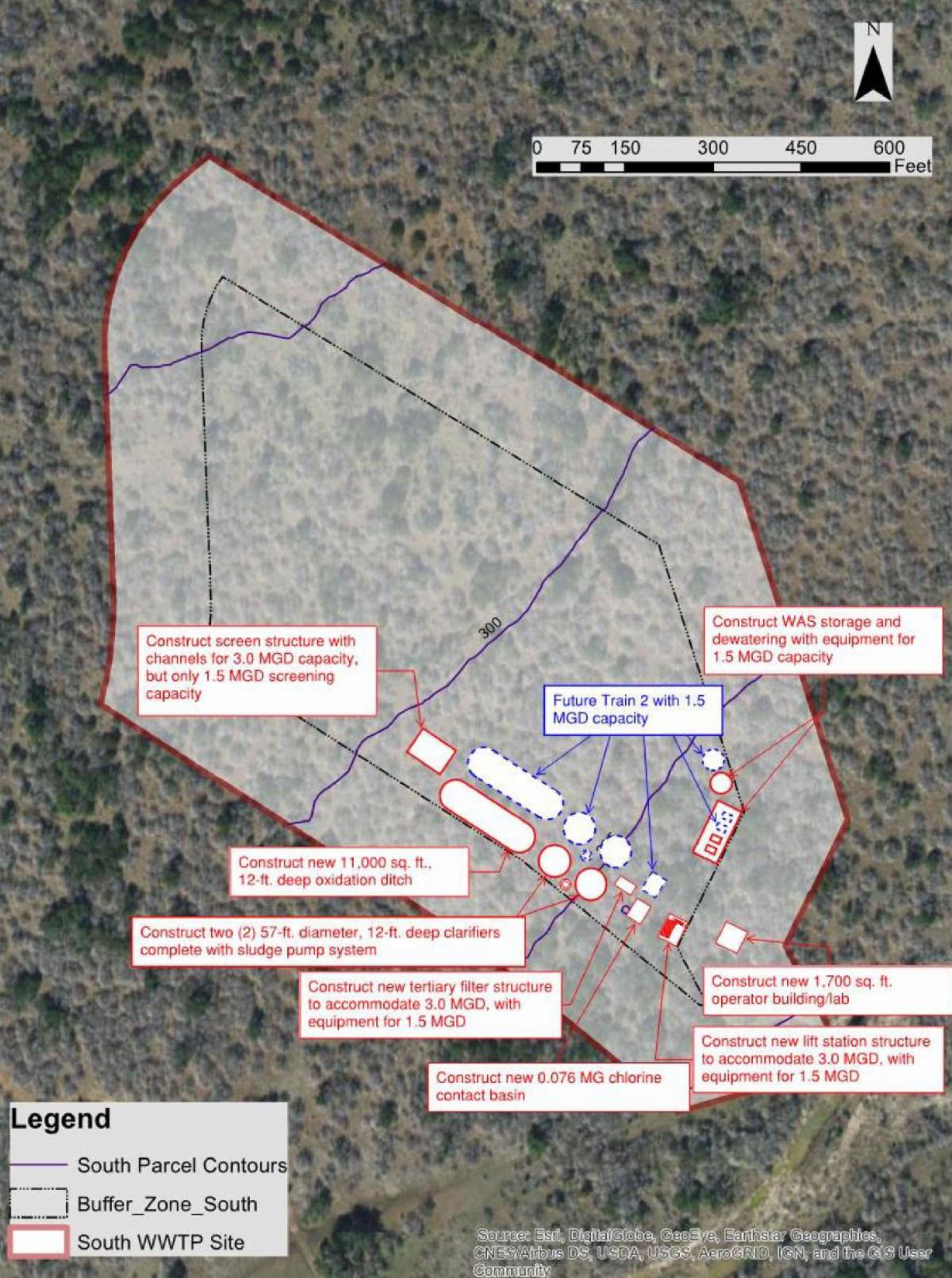
The city of Marble Falls is moving forward on a new $15 million to $18 million wastewater treatment plant to replace its existing plant located in the floodplain.
An early 2019 engineering study recommended that the city build a new plant on the site of its wastewater treatment affluent farm instead of expanding its current facility, which was damaged twice by floodwaters.
City officials said they plan to issue a request for qualifications (RFQ) within the next three to four months for engineering services to design a new plant.
Engineering is expected to take 20 to 24 months with construction beginning in 2022 and the plant going online by early 2024.
On September 3, the U.S. Economic Development Administration (EDA) awarded the city $2.5 million for engineering, design, and permitting for the new wastewater treatment plant. The grant will come from the Economic Adjustment Assistance (EAA) Program funded by the Disaster Relief Act of 2019.
|
The Texas Parks and Wildlife Commission approved more than $15.7 million in competitive local park grants to help fund projects that will create and enhance outdoor recreational opportunities.
Construction and installation of amenities such as nature trails, native gardens, playgrounds, splash pads, dog parks, and sports fields at 30 community parks across the state will receive Texas Parks and Wildlife Department (TPWD) funds.
Commissioners, who administer the local park grants program for the state of Texas, awarded projects in various categories based on community population size and scope.
Urban outdoor recreation grants are reserved for cities having populations exceeding 500,000, with projects in three communities receiving grants. The commission awarded 15 grants in the non-urban outdoor recreation category to fund park projects in municipalities with populations of fewer than 500,000 residents. Twelve Small Community Recreation Grants went to park projects in towns of fewer than 20,000.
The city of Fort Worth is the recipient of a $1.5 million urban outdoor grant for its Fort Worth Nature Center and Refuge project to complete a restoration of the Lotus Marsh Boardwalk.
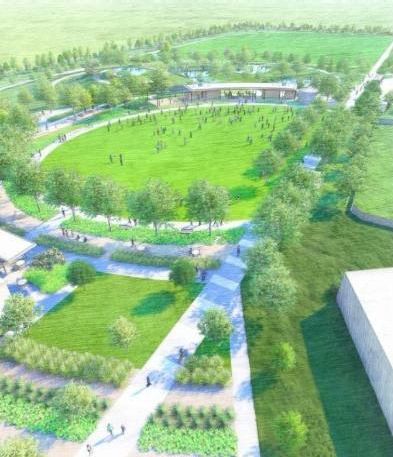
Houston area parks received several TPWD grants, including a $1.5 million urban outdoor grant for the James Driver All-Inclusive Park project in Harris County Precinct and a $750,000 non-urban outdoor grant for Phases 5 and 3b of the Clear Lake City Water Authority’s Exploration Green project.
In the Rio Grande Valley, Hidalgo County will receive a $1.22 million urban outdoor grant for its Sunflower Memorial Park project, and Cameron County will get a $750,000 non-urban outdoor grant for its Santa Rosa Community Park Improvements project.
|
Amarillo ISD is seeking statements of qualifications for architectural and engineering services in response to a request for qualifications (RFQ).
Services to be provided may include program evaluation, feasibility analysis, testing, studies/reports, conceptual design, cost estimates, and schematic design.
The district also may require design development, construction documents, bidding, basic construction administration, as-built plans, and more extensive construction phase quality control and monitoring.
Multiple architectural and engineering firms may be selected for each of these disciplines or a combination of:
- Architectural services for multifunctional areas, office renovations and additions, classroom additions, athletic facilities, auditoriums, and more;
- Architectural services for accessibility-related renovations and remodeling;
- Landscape architecture;
- Environmental surveys, testing, design documents, and monitoring;
- Environmental engineering;
- Civil engineering, including paving, draining, and storm water projects;
- Structural engineering
- Property surveying and topographic mapping;
- Mechanical and electrical engineering; and,
- Fire alarm and roof design engineering.
Submission deadline is 4 p.m. September 9.
|
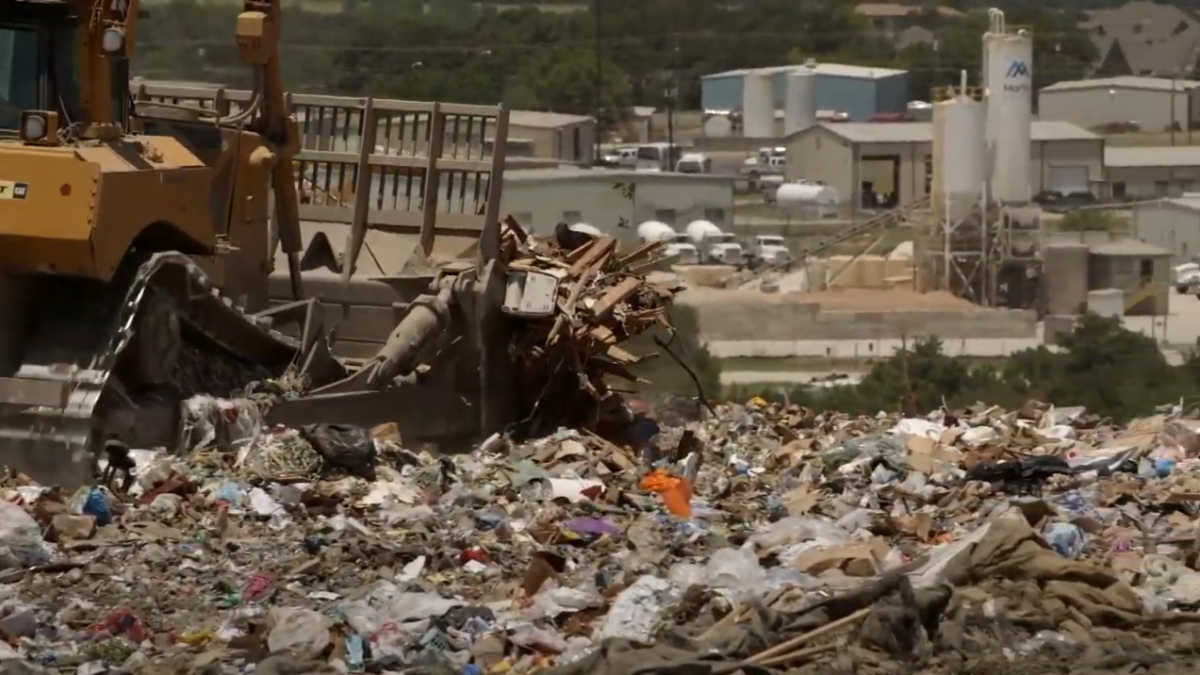
The city of Waco is planning the construction of a new $12.59 million landfill as its current facility approaches capacity.
Waco’s 2021-2025 Proposed Capital Improvement Program budgets $750,000 in 2021 for design.
Construction would begin in 2022 with an estimated $7.84 million budgeted for the project, if approved by the City Council. An estimated $4 million would be spent in 2023 with construction set for completion by September 2025.
Project scope also includes all services surrounding the land purchase, permitting, and site development.
The city has identified a 500-acre property on Old Lorena Road that will allow the landfill operations to be properly buffered from the surrounding area with no material within at least 125 feet of the boundary.
Consultants selected the location after considering multiple issues including whether the property was available for sale, geological testing, and distance from the city of Waco.
In 2017, the city estimated the current landfill had about seven years of life remaining. City staff continue to develop new waste diversion programs to conserve the facility that opened in 1986 and serves an 11-county region. Once the city’s current landfill reaches capacity, it will be closed and no longer accept waste.
|
The city of Brady is preparing three separate work packages and revising the design for a new .6 million-gallon-per-day (MGD) wastewater treatment plant.
On September 3, the Texas Water Development Board (TWDB) approved $4.13 million in financial assistance for the project that will replace Brady’s existing wastewater treatment plant.
The new plant also will be raised out of the floodplain and stormwater controls will be put in place.
Previously, the city received $2.65 million for planning and design in 2012, and $14.68 million for construction in May 2019.
The project was bid in fall 2019; however, bids came back approximately $3 million higher than the funds available due to the city’s remote location and an active construction market creating demand for labor and equipment.
Design is scheduled to start in October, and construction is expected to begin in February 2021 and conclude in August 2022.
|
|
The U.S. Economic Development Administration (EDA) announced on September 3 that it will award $7.2 million in coronavirus recovery assistance grants to 18 EDA Economic Development District organizations across Texas.
Funding will go toward updates of economic development plans and support programs that assist communities in their coronavirus pandemic response.
The EDA will invest $400,000 in CARES Act Recovery Assistance grants for projects in these communities in Texas:
- Alamo Area Council of Governments;
- Brazos Valley Council of Governments;
- Central Texas Council of Governments;
- Coastal Bend Council of Governments;
- Concho Valley Council of Governments;
- Deep East Texas Council of Governments;
- East Texas Council of Governments;
- Golden Crescent Regional Planning Commission;
- Gulf Coast Economic Development District;
- Lower Rio Grande Valley Development Council Corporation;
- North East Texas Economic Development District;
- Permian Basin Regional Planning Commission;
- Rio Grande Council of Governments;
- South East Texas Economic Development District;
- South Texas Development Council; and,
- Texoma Council of Governments.
The Capital Area Council of Governments in Austin will receive $399,546 to develop economic resources to support workforce recovery needs and stabilization tools for local economies.
Middle Rio Grande Development Council in Carrizo Springs will receive $397,181 to hire additional staff to elevate the workforce recovery and resiliency plans.
These entities, all EDA-designated Economic Development Districts (EDD), are some of the more than 850 existing, high-performing EDA EDD, University Center, Tribal, and Revolving Loan Fund (RLF) grant recipients invited to apply for supplemental funding under the Coronavirus Aid, Relief, and Economic Security (CARES) Act.
|
The Texas A&M University (TAMU) System formed a 17-member search committee on September 3 to find a successor to Texas A&M University President Michael Young who will retire May 31, 2021.
Young’s announcement follows the system board of regents’ 2019 decision not to renew his contract. He will return to teaching and lead the new Institute for Religious Liberties and International Affairs within the Bush School of Government and Public Service.
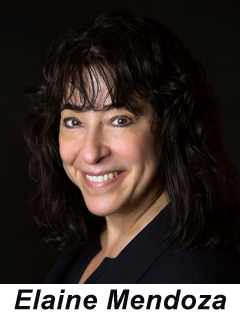
The search advisory committee will recommend a minimum of three candidates to Chancellor John Sharp who will refer one of them to the TAMU board of regents. The committee includes two Texas A&M System regents: chairman Elaine Mendoza and vice chairman Tim Leach.
James Hallmark, vice chancellor for academic affairs, will be the committee staff person and an ex-officio member.
|
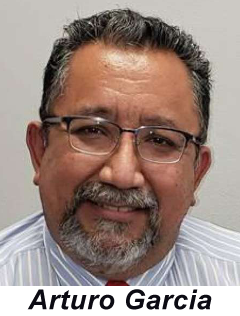
The city of Laredo selected Arturo Garcia as its new utilities director on August 28. He succeeded former Utilities Director Riazul Mia who was promoted to assistant city manager.
Garcia joined the city in 2019 as an engineering manager. Prior to that, he served as utilities director for the city of McAllen and city engineer for the city of South Padre Island.
He also founded a consulting firm that served the South Texas area.
|
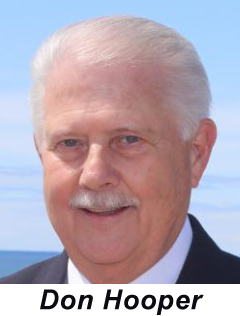
DeSoto ISD trustees named Dr. Don Hooper as acting superintendent at a special meeting on August 30 following the resignation of Superintendent Dr. D’Andre Weaver. The board’s action is effective immediately.
Hooper is the executive director of a private firm that hosts symposia for superintendents, and he is a member of two private school boards and two corporate boards. He previously served 25 years as superintendent in five school districts, including Fort Bend ISD.
|
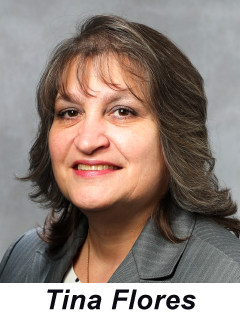
The city of San Antonio appointed interim city clerk Tina Flores to the position permanently on September 3. She had been serving in an interim capacity since Leticia Vacek’s retirement in March.
Flores has worked for the city of San Antonio for 19 years in several roles, including as deputy city clerk.
|
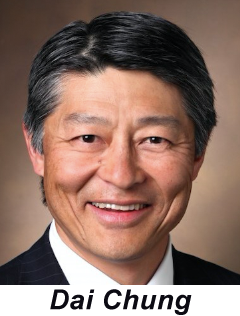
The University of Texas (UT) Southwestern named Dr. Dai Chung as chief medical officer of its joint pediatric enterprise with Children’s Health.
In addition, Chung is professor of surgery, chief of the division of pediatric surgery, and executive vice chairman in UT Southwestern’s Department of Surgery, as well as surgeon-in-chief and senior vice president of surgical services at Children’s Health.
|
The city of Blanco selected Scott Rubin as its new police chief.
Rubin previously served as police chief of Fair Oaks Ranch for more than 20 years. He began his law enforcement career at the U.S. Navy Police Academy at Lackland Air Force Base.
He currently serves as the vice president of the Texas Police Chiefs Association and chairman of the Best Practices Program.
|
Join the Association for the Improvement of American Infrastructure (AIAI) for a free webinar on Countercyclical Infrastructure Strategy: Best Practice on Timing the Cycle at 1 p.m. EDT September 4.
DJ Gribbin, infrastructure policy expert and author of “Bridge the Dip,” a white paper on the case for countercyclical investment and best practice procurement strategies, will lead a panel of industry professionals in a discussion on how to keep projects moving forward using alternate funding opportunities and solutions.
Panelists scheduled to appear are: Jay Brown of Alvarez & Marsal, Lisa Buglione of AIAI, Michael Morris of the North Central Texas Council of Governments, and Rodney Moss of Hunt/Amber Infrastructure.
Based on prior economic cycles, a countercyclical infrastructure investment strategy could save the taxpayer 20 percent or more on the total net present value cost of the asset.
Furthermore, the projects are ready when they are needed as the economy ramps backs up and enhance the recovery, instead of lagging the demand and often resulting in inefficient lifecycle expenditures on obsolete assets.
|
Dozens of public-sector jobs are available. Click here to view all job openings and guidelines for job submissions to SPI. New jobs added this week:
-
Texas Water Development Board – Team Manager (Manager V)
-
Texas Water Development Board – State Programs Coordinator (Program Specialist II-VI)
-
Texas Department of Information Resources – Manager IV (CCTS Telecom Manager)
-
Texas Department of Information Resources – Budget Analyst IV
-
Texas Department of Information Resources – Accountant III (Telecom Accounts Receivables/ Payables)
|
|
|
|
|
Connect with Us
Check out our
social media links!
|
|
View our Texas Government Insider and Government Contracting Pipeline newsletter archives
|
|
Help us share this message.
To ensure delivery and proper formatting of the newsletter, be sure to add editor@spartnerships.com to your safe senders list. Otherwise, the newsletter may be flagged as spam and automatically routed to your junk e-mail folder.
|
|
For news or calendar items: editor@spartnerships.com
For information about SPI's products and services: sales@spartnerships.com
© 2020 Strategic Partnerships, Inc. All rights reserved.
|
|
|
|
|
|
|
|