TxDOT expects $1.1B jump in funding from oil, gas taxes, economic growth
|
|  | |
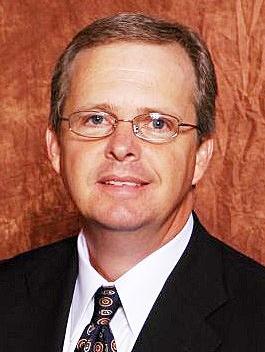
Brian Ragland
| |
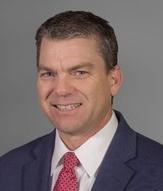
Texas Department of Transportation (TxDOT) officials reported that revenue from Proposition 1, that directs oil and gas taxes to the agency, is $800 million more than originally projected this year. The boost is a result of oil prices more than doubling from $33 per barrel for West Texas intermediate crude in 2016 to $74 a barrel last month. Production also increased from about 3 million barrels a day in 2015 to more than 4.2 million barrels a day in April 2018, according to Brian Ragland, chief financial officer for TxDOT.
TxDOT officials also expect that economic growth in Texas will produce $300 million more in higher-than expected sales tax revenue during the next year, resulting in as much as a $1.1 billion overall increase in highway funding, according to Ragland. While TxDOT expects to speed up some road projects with the additional funding, revenue for Prop 1 is inherently volatile and could be reduced by trade wars, natural and other disasters as well as increased oil production in other countries.
Added to the $734 million the agency received in November 2017, TxDOT will have received about $2.1 billion as a result of Prop 1 during this two-year budget cycle. The agency had been projected to receive about $1.3 billion in Prop 1 funds. In addition, a 2015 constitutional amendment, Proposition 7, brings up to $2.5 billion in sales tax revenue to the agency that previously was directed to the general fund. Ragland predicts TxDOT will receive the full $5 billion in funding during the 2018-19 budget cycle instead of the $4.7 million previously expected.
|
GLO requesting input for $137M in federal grants
 Texas General Land Office (GLO) officials are seeking more local and regional input to decide on projects eligible for $137 million in Community Development Block Grants for Disaster Recovery (CDBG-DR). The grants will be used to help pay for local, regional and state planning to mitigate and reduce the impact of future disasters, according to Land Commissioner George P. Bush. Texas General Land Office (GLO) officials are seeking more local and regional input to decide on projects eligible for $137 million in Community Development Block Grants for Disaster Recovery (CDBG-DR). The grants will be used to help pay for local, regional and state planning to mitigate and reduce the impact of future disasters, according to Land Commissioner George P. Bush.
GLO officials plan to distribute the survey to citizens, local officials, councils of government and river authorities. Input has been requested on flood control, drainage improvements, resilient housing solutions, economic development and infrastructure upgrades. The grants from the United States Department of Housing and Urban Development (HUD) will be used to fund studies in impacted areas to promote sound, long term recovery. This allocation is part of the $5.024 State Action Plan recently approved by HUD. The survey is available here.
|
U.S. Congress stalls in efforts to reform National Flood Insurance Program
 With the National Flood Insurance Program set to expire on July 31, efforts by the U.S. Congress to reform the flood insurance program are stalled. The government still owes $36 billion in debt from insurance payouts from flooding and other storms. The primary insurer for thousands of property owners in coastal states could expire unless Congress passes, and the president signs, a bill to fund the flood insurance program. The most likely efforts are two pieces of legislation that would extend the program for another six months under its current terms. Another strategy is to add an extension of the national flood insurance program into a Farm Bill that won Senate approval in June and is now being considered by a conference committee in the U.S. House of Representatives. With the National Flood Insurance Program set to expire on July 31, efforts by the U.S. Congress to reform the flood insurance program are stalled. The government still owes $36 billion in debt from insurance payouts from flooding and other storms. The primary insurer for thousands of property owners in coastal states could expire unless Congress passes, and the president signs, a bill to fund the flood insurance program. The most likely efforts are two pieces of legislation that would extend the program for another six months under its current terms. Another strategy is to add an extension of the national flood insurance program into a Farm Bill that won Senate approval in June and is now being considered by a conference committee in the U.S. House of Representatives.
Lawmakers, have proposed different bills to make changes to the program but most have stalled in Congress. The U.S. House in November passed the 21st Century Flood Reform Act, a bill carrying some reforms, sending it to the Senate for approval. This legislation renews the program for five years, updates federal flood mapping requirements and seeks to spur private-sector participation in flood insurance. The legislation also requires communities with 50 or more repeatedly flooded properties to implement improved floodplain management. States also would be required by October 2022 to mandate that home sellers disclose flood damage and insurance claims.
Some advocates for a reform bill say that none of the proposed reform bills address all the problems flood mitigation experts see and none of them will pull the program out of debt. For instance, the program would need about $4 billion to $7 billion over the next five years to update the flood risk maps nationwide. The proposed legislation also doesn't adequately address rates for properties at the highest risk of flooding.
|
TCEQ proposes using $31M from BP Oil Spill Fund for recovery efforts
 The Texas Commission on Environmental Quality (TCEQ) proposes use of more than $31 million from the BP oil spill settlement along the Gulf Coast to revive tourism, clean up streams and bayous, restore beaches and shoreline as well as improve water quality. The settlement was from the Deepwater Horizon oil spill in 2010. The proposal urges spending about $7.8 million for each of the priority items. Funding amounts could change once public comments on the proposal are received and after the Governor's Commission to Rebuild Texas weighs in on the proposal. The Texas Commission on Environmental Quality (TCEQ) proposes use of more than $31 million from the BP oil spill settlement along the Gulf Coast to revive tourism, clean up streams and bayous, restore beaches and shoreline as well as improve water quality. The settlement was from the Deepwater Horizon oil spill in 2010. The proposal urges spending about $7.8 million for each of the priority items. Funding amounts could change once public comments on the proposal are received and after the Governor's Commission to Rebuild Texas weighs in on the proposal.
The funding from the settlement could be spent to restore many coastal parks, boat ramps, piers, towers for bird watching and other facilities to encourage nature-based tourism. The funding also could be used to remove debris and sediment from coastal bayous and restore freshwater flows and salinity levels. The goal is to approve a plan for using the BP settlement funding by the end of this year. The 45-day comment period will end Aug. 27. Written comments should be submitted electronically to rcomments@tceq.texas.gov.
|
Tyler proposing to spend $27.4M on infrastructure projects
|
| | | Scott Taylor | |
Tyler city officials are proposing to increase spending on public infrastructure projects to $27.4 million. This is a preliminary budget of the Half Cent Sales Tax Corporation for the 2018-2019 fiscal year that begins on Oct. 1. The Half Cent Sales Tax Corporation is a city-run entity that makes recommendations to the city council on how the city should spend revenue from the city's half-percent sales tax that is imposed within city limits.
Scott Taylor, managing director of utilities and public works, noted the proposed $27.4 million budget is nearly four times the $7.1 million in funds the Half Cent Sales Tax Corporation expects to spend this fiscal year. New infrastructure projects include replacing and upgrading traffic signals throughout the city, building two new fire stations and upgrading Martin Luther King Jr. Boulevard.
|
Strategic Partnerships salutes Texas' Lone Stars
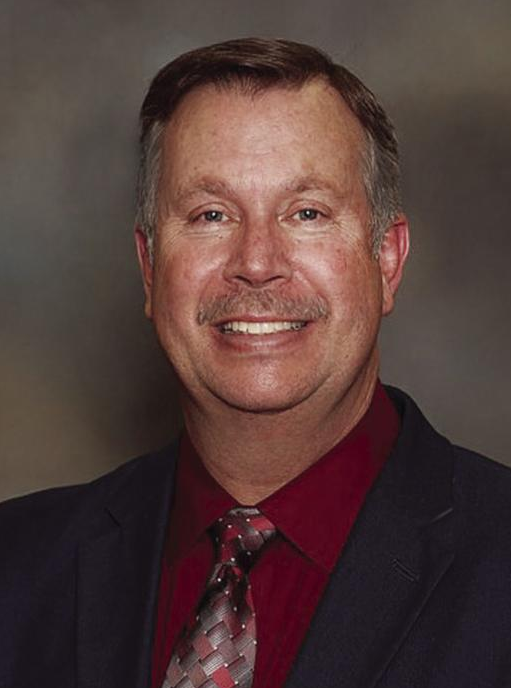
Peter Lake, Chairman, Texas Water Development Board
|
| | Peter Lake |
Career highlights and education: Although I was born in Tyler, Texas, I moved around a bit for my education. I went to the University of Chicago for my undergraduate work, and I earned my MBA at Stanford. The highlight of my career was my time bond trading on the Chicago Board of Trade, which is directly related to the financial work we do at the Texas Water Development Board (TWDB).
What I like best about my job is: My favorite part of the job is working with a great team on a critical issue to the state. Texas works on water, and we make Texas water work.
The best advice I've received for my current roll is: "A lot of where a person stands depends on where they sit." I always try to consider folks' different perspectives and where they are coming from when considering issues in front of the TWDB.
Advice you would give a new hire in your office: There are no bad questions! Be curious, learn everything you can about your job, and explore everything that the TWDB does.
If I ever left work early, I could probably be found: Working with my new bird dog, Doc.
People would be surprised to know that I: Travel with my own bottle of Tabasco sauce. Sometimes you need to add a little flavor to a meal!
One thing I wish more people knew about TWDB: How much we do! The TWDB does more than financing - we work on lots of water science issues and develop the state water plan every five years. At the end of the day, it takes all three-science, planning, and financing-to ensure Texas has the water it needs for the future.
|
Galveston issues RFP for incinerator demolition project
|
| | | Courtesy Photo: City of Galveston. Galveston's incinerator that closed in the 1950s. | |
The city of Galveston received $5 million in Community Development Block Grant Disaster Recovery funds from the Texas General Land Office to demolish and remediate the city's municipal incinerator.
The city is in the process of obtaining a request for proposals (RFP) for the project to demolish the building, remove asbestos materials and construct a concrete cap over the site to contain the contaminated soil onsite. As part of the process, the city is also working to prevent any harmful effect from the contaminated soils in the area and is pursuing rezoning the surrounding area to non-residential use, buying out the properties in the site area, demolishing the existing structures, and remediating the soil. This process will affect 19 properties in the site area, 4 of which are currently occupied. All of the affected properties have been notified. The RFP is due by Aug. 1.
|
Design team selected for Alameda Theater
|
| | Courtesy Photo: Alameda Theater Conservancy |
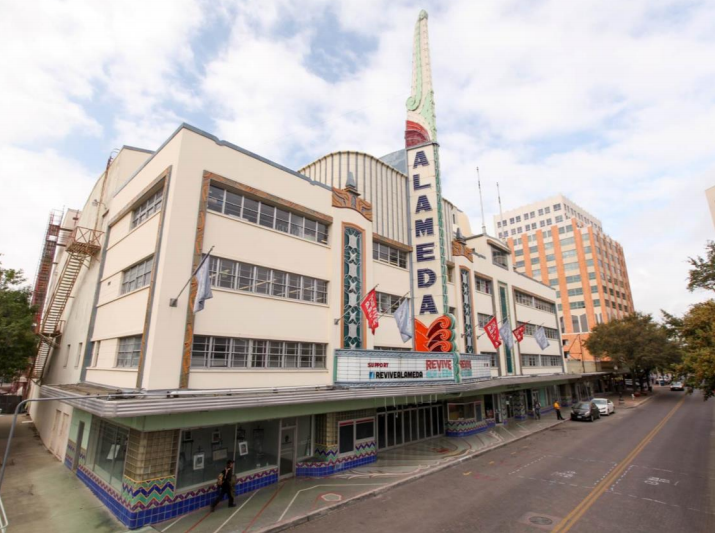
The Alameda Theater Conservancy and Texas Public Radio (TPR) selected two design firms to oversee the redesign of the Alameda Theater. Built in 1949, the theater will become a multimedia facility with space for performing arts, a film center focusing on American Latino culture and as the broadcast and operations headquarters for TPR. The conservancy also is seeking proposals for construction management services for the Alameda project. The deadline for submitting qualifications is Aug. 6.
City of San Antonio and Bexar County officials are each donating $9 million to the new multimedia facility using funding from the Houston Street Tax Increment Reinvestment Zone. TPR agreed to contribute $5 million to the project while the conservancy will pay additional construction costs through private fundraising, according to a city council member. The renovation and reconstruction are expected to take two years to complete.
|
Jersey Village proposes funding increase of $5.5M for capital projects
|
| | | Austin Bleess | |
Jersey Village council members are considering a proposal by City Manager Austin Bleess to transfer funding from the general fund to budget $5.5 million in capital projects in the next fiscal year. This is an increase from the $3.75 million in capital projects budgeted for 2017-2018.
The proposed capital projects to be funded in the 2018-19 fiscal year include $2 million to pay for building a raised berm around the Jersey Meadow Golf Course and work on drainage upgrades or home elevations. Other capital projects include $1 million to install a new wayfinding signage and $450,000 for engineering work at city hall. The proposed capital improvement budget for 2018-19 also includes $1.6 million for construction of a new golf course club house that will be funded by both hotel occupancy tax revenue and the city's general fund. The goal is for council to discuss the proposals, seek and listen to citizen input and adopt a budget by Oct. 1.
|
Longley tapped as new director of LBJ Presidential Library
|
| | Kyle Longley |
Kyle Longley, a nationally recognized historian and author, was selected as the new director of the LBJ Presidential Library in Austin. Citing his teaching, research and leadership experience, David S. Ferriero, archivist of the United States, appointed Longley to serve as the fifth director of the LBJ Library since it opened on the campus of The University of Texas at Austin in 1971.
Longley will replace Mark Updegrove, who resigned in 2017 to become director at the National Medal of Honor Museum in South Carolina. Updegrove was the director for almost a year before returning to Austin to serve as president of the LBJ Foundation in Austin. The LBJ Presidential Library is one of 14 presidential libraries overseen by the National Archives although closely associated with UT-Austin, the LBJ School of Public Affairs and the LBJ Foundation.
A native of Lubbock, Longley began his career in higher education as a teacher at Arizona State University in 1995. A respected author and historian, his latest book is "LBJ's 1968: Power, Politics and the Presidency in America's Year of Upheaval." He begins his new duties at the LBJ Library on July 29.
|
Klein school district to increase security efforts
|
| | | Robert Robertson | |
In the wake of mass shootings in the United States, Klein Independent School District trustees approved $3.5 million to fund construction of more secure entrances to 19 elementary schools ranging in age from 10-to-40 years old. The effort to increase security began when redesigning an elementary school that was flooded during Hurricane Harvey, according to Robert Robertson, associate superintendent of facility and school services.
District officials plan to award a contract in October to build the new, more secure entrances and complete the project in six months. Once completed, all visitors will use a buzzer with a camera to speak with office personnel to gain entrance into a managed vestibule. The upgrades are funded using bonds approved in 2015. Other projects that the district is considering, as part of the 2015 bond, are interior hallway doors that would add another layer of internal security for open-concept classroom areas.
|
|
Check out our social media links!
|
Canyon to join Amarillo MPO
|
| | | Randy Criswell | |
Canyon City Council members approved a resolution to support joining the Amarillo Metropolitan Planning Organization (MPO) as a member. The organization formed nine years ago to serve the city of Amarillo, parts of Potter and Randall Counties and the Amarillo district of the Texas Department of Transportation (TxDOT). City officials declined to join the MPO as an ex-officio member with no voting rights nine years ago.
Covering almost 360 square miles, the Amarillo MPO is comprised of a policy committee, a technical committee and staff who are responsible for the coordination of highways, transit, and land use planning efforts required to receive federal funding for highway and transit improvements. The resolution to support joining the MPO will be submitted and processed by the Office of the Governor, noted City Manager Randy Criswell. As little separation exists between Canyon and Amarillo, joining in decision making on transportation and transit issues allows the city more input.
|
Rollingwood agrees on two-phased approach to upgrade infrastructure
|
| |
Amber Lewis
|
The Rollingwood City Council agreed to ask engineering firms to submit qualifications to develop a plan to upgrade infrastructure throughout that city. While the emphasis will be on drainage and stormwater infrastructure, city officials also plan to address upgrades to streets, electric, water and other utilities in a two-phased approach.
The first phase of the plan will involve development and creation of an infrastructure improvement plan that will extend for five years, fiscal years 2019 through 2024. Phase two will include a request for qualifications for professional engineering services to design, assist with locating funding and build the projects identified and prioritized in the plan, according to City Administrator Amber Lewis.
|
|
|
By Mary Scott Nabers, CEO of Strategic Partnerships, Inc.

In its newest 21st Century reorganization effort, the U.S. Army has announced that Austin - known as a hub for innovation, technology, research and academia - has been chosen as its base for the country's new high-tech, four-star Futures Command.
The Futures Command will be responsible for coordinating efforts to modernize the Army, improve future readiness and increase the country's wartime capabilities. Austin was chosen because the Army wants to identify and work with new technology, value-added service providers and innovative firms that have offerings to enhance the Army's capabilities.
The new Command Center will partner with academia, researchers and private-sector innovators to find options for modernizing and ensuring that soldiers have better weapons and adequate equipment for future military encounters. Integration Management Officer for the Army Futures Command, Lt. Gen. Eric Wesley, said, "The Army is looking for talent that will make us better."
The new command headquarters will be housed in The University of Texas System's building in downtown Austin. It will be a symbiotic relationship, as the System boasts one of the nation's top-ranked research institutions in its flagship campus - The University of Texas at Austin. But the Army Futures Command will also have access to the resources and expertise of all the System's 14 member institutions throughout Texas.
Because UT's 14 member institutions boast some of the country's leading experts in areas such as national security, bioterrorism, cybersecurity, medicine and engineering, there already exists an ethos of innovation that can help shape the Army's modernization efforts and expand its capabilities.
|

Check out this article from our Pipeline newsletter!
|
Galveston County selects Carlson as director of economic development
 Galveston County Commissioners selected Dane Carlson as the new director of economic development. He currently is the chief executive officer of the Mariposa County Chamber of Commerce as well as the president of the Economic Development Corporation that includes Fresno, Calif., and parts of the Yosemite National Park. Galveston County Commissioners selected Dane Carlson as the new director of economic development. He currently is the chief executive officer of the Mariposa County Chamber of Commerce as well as the president of the Economic Development Corporation that includes Fresno, Calif., and parts of the Yosemite National Park.
He will replace C.B. "Bix" Rathburn, who resigned as executive director in June 2017 to start his own consulting business.
|
Tokar selected as president of McKinney EDC
|
| | | Peter Tokar III | |
Peter Tokar III was chosen as the new president and chief executive officer of the McKinney Economic Development Corporation (EDC). He begins his new duties on July 30.
Tokar has served as the economic development director for the city of Alpharetta, Ga., since 2012. During that same time, he also served as managing director of the Alpharetta Development Authority and was successful in recruiting a technical college system and a $1 billion mixed-use development to the city.
|

|
Fort Worth ISD taps Johnson as budget and finance officer
|
| |
David Johnson
|
Fort Worth Independent School District trustees named David Johnson as the new senior budget and finance officer. In addition to managing a $952 million annual budget, he also will oversee financial, purchasing, accounting and position control operations for the school district.
Currently the chief financial officer for Cleburne ISD, Johnson will begin his new duties at the Fort Worth district on Aug. 7. Prior to joining the Cleburne school district in 2008, he served four years as the chief financial officer for Keene ISD. Johnson will replace Elsie Schiro, who is retiring after nine years in that position.
|
Quinlan ISD selects Irvin as lone finalist for superintendent
|
| | |
Jeff Irvin
| |
Trustees for the Quinlan Independent School District selected Jeff Irvin as the lone finalist for superintendent. He has served as the assistant superintendent for the district since 2016 and will begin his new duties as superintendent on July 30.
Irvin previously was superintendent of Sam Rayburn ISD and began his career in public education as a teacher for school districts in Honey Grove and Rockwall. He replaces Debra Crosby, who served as superintendent for 24 years before retiring in June.
|

|
Espino named director of government relations for Trinity Metro
|
| | Salvador Espino |
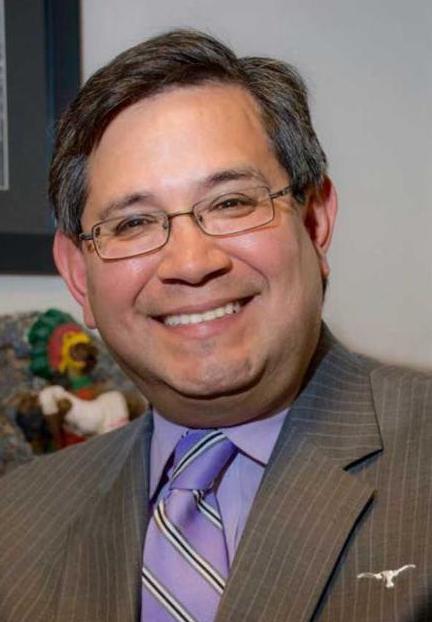
Salvador Espino, a former member of the Fort Worth City Council, was selected as the new director of government relations for Trinity Metro. In addition to managing relations with local, state and federal officials, Espino also will be responsible for developing and implementing a strategic legislative plan for the transportation agency and analyzing proposed legislation affecting public transportation and transit.
He served on the city council from 2005 to 2017 and was chairman of the Infrastructure and Transportation Committee and was on the Regional Transportation Council.
|
Figueroa named superintendent of Wolfe City ISD
|
| | |
Anthony Figueroa
| |
Anthony Figueroa, currently a high school principal, was chosen as the lone finalist for superintendent of the Wolfe City Independent School District following a two-month search.
Now serving as the principal of Blue Ridge High School, Figueroa began his career as a science teacher in 1998 and served as an assistant principal and principal during his 21-year career in public education. Once his contract is finalized, Figueroa will replace former Superintendent Vernon Richardson, who resigned in April.
|

|
Judson ISD names Ball as new superintendent
|
| | |
Jeanette Ball
| |
Trustees for the Judson Independent School District named Jeanette Ball as the new superintendent to replace Carl Montoya, who is retiring at the end of the academic school year.
Ball began her career in public education in 1998 teaching history and English as a Second Language at a middle school in Southwest ISD. She served in several leadership positions with that district before she began serving as superintendent of Uvalde ISD in 2013.
|
Gov. Greg Abbott has announced the following appointments/reappointments from July 13-July 19:
Javier Villalobos- McAllen, Prepaid Higher Education Tuition Board
|
Dozens of public-sector jobs are available. Click here to view all job openings and guidelines for job submissions to SPI. New jobs added this week: - Employee Retirement System of Texas- Procurement Specialist III
- Texas Higher Education Coordinating Board- Assistant Director
- Texas Facilities Commission- Government Relations Specialist I
- City of Irving- Talent Services Manager
- City of Burnet- Director of Development Services
- Ector County- Customer Service Supervisor Information Technology Department
- City of Kingsville- Capital Improvements Manager
- City of Pearland- Controller
- City of Odessa- Assistant City Manager
- City of Dallas- Relocation Manager
- City of Austin- Procurement Specialist IV Capital Contracting Office
- City of San Antonio- Procurement Administrator
- City of The Colony- Director of Public Services
- Texas Department of Banking- Programmer II (Revised and Extended)
|
View our Texas Government Insider and Government Contracting Pipeline newsletter archives
|
Help us share this message.
To ensure delivery and proper formatting of the newsletter, be sure to add editor@spartnerships.com to your safe senders list. Otherwise, the newsletter may be flagged as spam and automatically routed to your junk e-mail folder.
|
Texas Government Insider is a free weekly newsletter detailing important happenings throughout the state and summarizing current political issues relevant to individuals interested in government.
Publisher: Mary Scott Nabers
Editor: Kristin Gordon
TGI is published by Strategic Partnerships, Inc. (SPI), a research and consulting firm. Founded in Texas in 1995 by former government executives and public sector experts, the SPI Team has developed a national reputation for partnering public and private sector entities.
To learn more about SPI services, click here or contact our sales department at 512-531-3900.
Barton Oaks Plaza One, Suite #100
901 S. Mopac Expressway Austin, Texas 78746
|
|
 |
|









 July 23 and 24
 Aug. 5-8
 Sept. 13 and 14