
Grimes County may be set to host one of the largest industrial development projects in Texas history after Gov. Greg Abbott and two local school districts submitted positive determinations on eight proposed tax incentive agreements for SpaceX’s TeraFab semiconductor campus.
Two rural school districts in Grimes County — Iola ISD and Anderson-Shiro CISD — voted July 14 to approve resolutions supporting eight proposed JETI value-limitation agreements carrying an estimated $1.66 billion in gross school maintenance-and-operations tax benefits. Known as Terafab, the semiconductor manufacturing facility is anticipated to cost upwards of $119 billion across all phases, beginning with a $55 billion initial buildout.
While the school districts have voiced their consent, the final decision for whether the factory moves from concept to execution comes down to Gov. Abbott. However, the July 15 deadline for his determination on the eight Texas Jobs, Energy, Technology, and Innovation (JETI) tax agreements has passed with no further word. The JETI process allows the governor seven days to alert all parties to his decision, leaving a week’s window for the announcement.
The tax abatement deal hangs on Gov. Abbott’s compliance. Voting no will override the districts’ decision, effectively killing the agreement. Voting yes will allow SpaceX, IISD and ASCISD to formalize the agreement, paving the way for construction.
The filed property tax abatement application details the project as a multi-phase, next-generation, vertically integrated semiconductor manufacturing and advanced computing fabrication facility. The structure will be located 90 miles northeast of Austin at the Gibbons Creek Reservoir and its surrounding areas.
The Terafab facility itself is proposed as a major step forward in the future of semiconductor manufacturing processes, significantly boosting domestic production capabilities and advanced AI infrastructure. Rather than spread production across multiple facilities, Terafab will consolidate the entire semiconductor manufacturing lifecycle under a single roof. This will allow SpaceX to produce critical chips at a rate needed to support innovative development by reducing production cycle times, improving design iteration speed and enhancing supply chain resilience.
The initial $55 billion investment will cover the first of four phases. The first phase will cover a variety of improvements and construction projects planned for the site. Aside from various site improvements – including roads, paving, internal transportation infrastructure, drainage and stormwater management systems and other foundational and support structures – the phases will tackle a variety of infrastructure and utility objectives. Examples of eligible property that may be used as part of the project include:
- Manufacturing buildings.
- Supporting administrative and engineering offices.
- Utility infrastructure buildings.
- Water treatment, recycling and related facilities.
- A Space Compute Test Facility.
- Industrial waste treatment facilities.
- On-site substations, transformers and power generation facilities.
- Backup generation systems.
- Compressed gas and chemical distribution systems.
- Semiconductor fabrication tools.
- Robotics and automated material handling systems.
- Cleanroom environmental systems, including HVAC and filtration.
- Utility scale battery storage.
- Optical fiber cabling and transceivers.
- Process control and metrology equipment.
- Cooling distribution systems.
- Dry cooler arrays.
- Low- and medium-voltage electrical equipment.
At a projected $119 billion if all four phases are constructed, the proposed Terafab campus in Grimes County appears to be the largest publicly disclosed single-site private industrial or manufacturing investment in Texas history by announced capital investment. Nationally, it would rank among the largest semiconductor manufacturing developments ever proposed, exceeding the stated $100 billion full-buildout estimates for Micron’s New York campus and Intel’s Ohio campus, though remaining below TSMC’s $265 billion multi-facility investment in Arizona.
The impact the Terafab facility would have on the districts themselves, as well as the state at large, would be significant. The facility would employ more than 3,000 people and generate billions in revenue through its chipmaking services
Local residents, however, are concerned about the building’s energy, water consumption and overall regional impact on their communities. While SpaceX has asserted that the facility will generate its own power and water from the Gibbons Creek Reservoir, the scale of such an accomplishment extends beyond utilities. Both districts will receive an influx of new residents as people move to work at the chipmaking facility, resulting in ballooning district sizes the small towns may or may not be ready for.
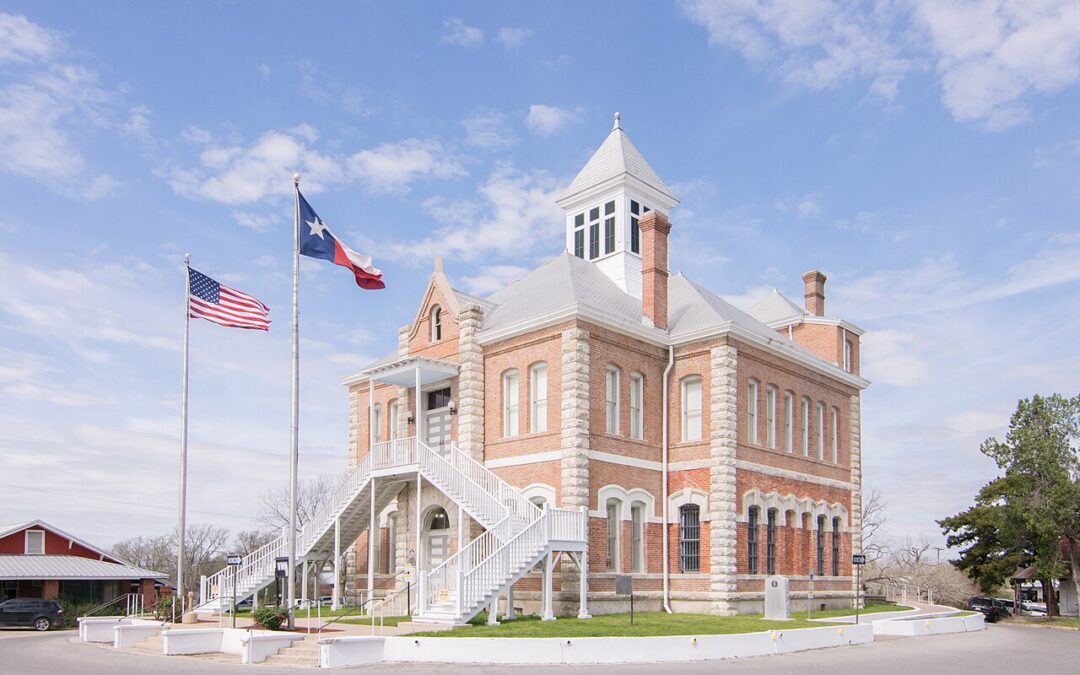
Photo by Patrick Feller from Humble, Texas, USA, CC BY 2.0 <https://creativecommons.org/licenses/by/2.0>, from Wikimedia Commons
This story is part of the weekly Texas Government Insider digital news publication. See more of the latest Texas government news here. For more national government news, check out Government Market News daily for new stories, insights and profiles from public sector professionals.