
The Denton City Council has adopted a $2.22 billion Fiscal Year 2027 budget, including a $1.43 billion Capital Improvement Program that allocates new funding to water, wastewater, electric utility, roadway, technology and public-facility projects.
The city lowered its property tax rate to about 54.85 cents per $100 valuation, down from 59.54 cents the previous year, the largest one-year percentage drop in the six-year trend shown in budget documents. Denton’s rate has generally moved downward since FY 2020-21, though it rose in the prior two budget years.
The state has put limits on city property tax increases in two key ways. Cities must publish a no-new-revenue rate, which shows taxpayers the rate needed to raise roughly the same property-tax revenue from existing properties as the prior year. They also must calculate what is known as a voter-approval rate. A tax rate that exceeds that threshold generally must go to the voters for approval, with state law limiting city and county maintenance and operations property tax revenue growth to 3.5 percent from existing property without an election. Those limits were adopted by the Texas Legislature in 2019 through Senate Bill 2.
Denton’s adopted rate is above its no-new-revenue rate of 51.60 cents but below its voter-approval rate of 55.35 cents. The budget also includes a $233.4 million General Fund, 1,903 full-time equivalent positions and hundreds of millions of dollars in new capital funding.
The city’s FY 2027 capital program includes $384.8 million in planned new funding. Wastewater utility projects make up the largest share at $147.3 million, followed by $107.9 million for water utility projects, $67.9 million for electric utility work, $48.9 million for general government projects, $12.5 million for solid waste and $100,000 for airport work.
The budget includes:
- $147.3 million for wastewater utility projects, including plant improvements, line replacements, lift station improvements, collection system upgrades, oversize lines, taps, meters and vehicle replacements.
- $107.9 million for water utility projects, including plant improvements, transmission lines, line replacements, taps, fire hydrants, meters and oversize lines.
- $67.9 million for electric utility projects, including distribution substations, transformers, feeder extensions, metering operations, transmission lines, transmission substations, technology hardware and software, vehicles and building construction.
- $48.9 million for general government projects, including technology services improvements, traffic improvements, roadway improvements, facility improvements, fleet replacements, Fire Station No. 10 and neighborhood street reconstruction.
- $12.5 million for solid waste projects, including vehicle purchases and building construction.
Denton began the FY 2027 budget process in February, with department planning packets due April 1, staff review meetings from April through June, council and Public Utility Board updates in July, a council budget workshop Aug. 8, a budget and tax-rate hearing Sept. 15 and final adoption Sept. 22.
City staff framed the budget around growth and infrastructure pressure, citing healthy sales-tax collections and a strong development pipeline, but also inflation, regional labor competition, constrained funding sources and rising service demand.
Comparable North Texas cities set lower tax rates, but with different budget structures. Frisco adopted a $319.1 million General Fund budget while keeping its property tax rate flat at 42.55 cents per $100 valuation for a third year, and Lewisville proposed a $148 million General Fund budget with a tax-rate increase from 41.90 cents to 43.64 cents. Denton’s General Fund is smaller than Frisco’s at $233.4 million, but its overall budget is far larger because the city operates municipal utilities and carries a $1.43 billion capital program.
Plano’s budget process similarly centers on infrastructure and facilities, but the city frames its five-year capital program around renovation, expansion and upgrades to existing streets, utilities and buildings. The comparison shows why Denton’s budget needs to be read in pieces: its operating budget is comparable to other North Texas cities, but its total budget and capital plan reflect a city that also functions as a utility operator.
The city’s General Fund revenue mix is led by property taxes, which account for 34.96 percent of revenue. Sales taxes account for 28.56 percent, while return-on-investment and cost-of-service payments account for 18.96 percent. Fees, permits and intergovernmental revenue make up 11.44 percent, franchise fees account for 5.01 percent and investment income accounts for 1.07 percent.
Denton’s municipally owned utilities also play a role in the budget. The city budgets a return to the General Fund equal to 3 percent of gross water and wastewater revenues and 6 percent of electric revenues. The city describes the payments as a substitute for property-tax revenue because city-owned utility property is tax-exempt.
The lower tax rate is partly tied to growth in the tax base. Denton’s certified assessed value for general government purposes rose to $26.7 billion, with $1.9 billion in new value added to the tax roll. The workshop presentation also identified about $1.29 billion in business personal property (BPP), while warning that a large BPP spike can create a misleading picture of long-term revenue capacity because those assets depreciate faster than real property.
Much of Denton’s capital program is debt-financed. The city sold $62.55 million in General Obligation (GO) bonds and $280 million in Certificates of Obligation (CO) in 2026. The GO bonds included $44.2 million for the third year of voter-approved projects from Denton’s November 2023 bond election, while the CO sale supports general government, solid waste, water, wastewater and electric projects.
The city’s most recent voter-approved bond package was approved in November 2023 and included streets, drainage, parks, public safety, affordable housing, an active adult center, South Branch Library and City Hall West. Denton’s budget workshop also laid out an extended timeline for the 2023 bond program, which staff said would spread the program over four additional years and help smooth the debt-tax-rate impact.
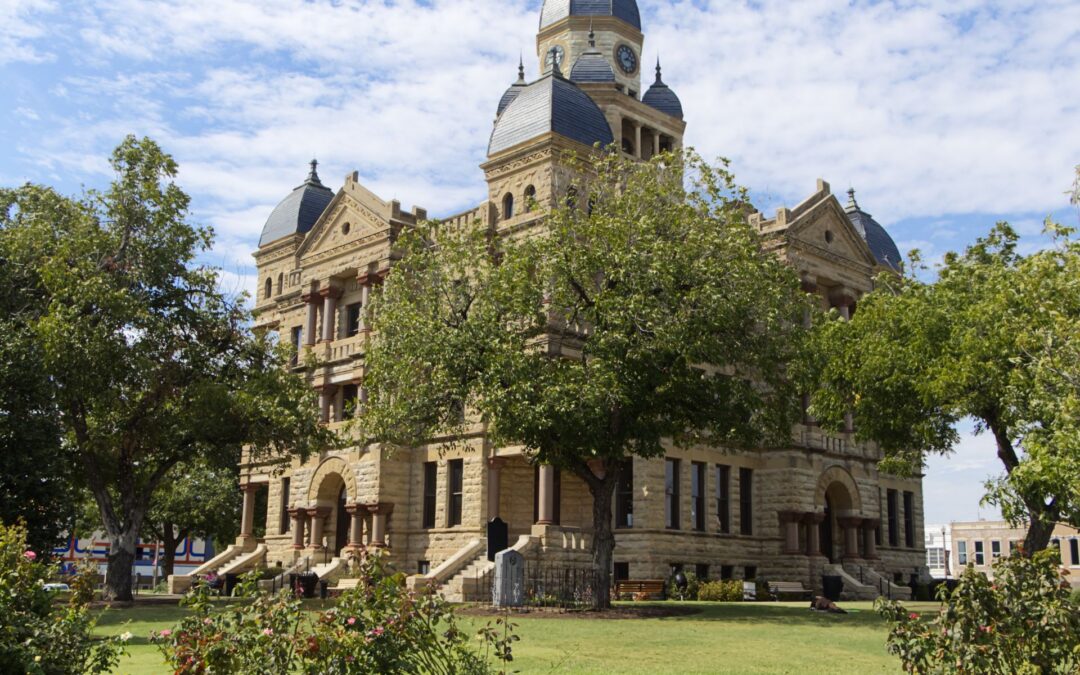
Photo by Phil Mitchell from Pexels
This story is part of the weekly Texas Government Insider digital news publication. See more of the latest Texas government news here. For more national government news, check out Government Market News daily for new stories, insights and profiles from public sector professionals.