
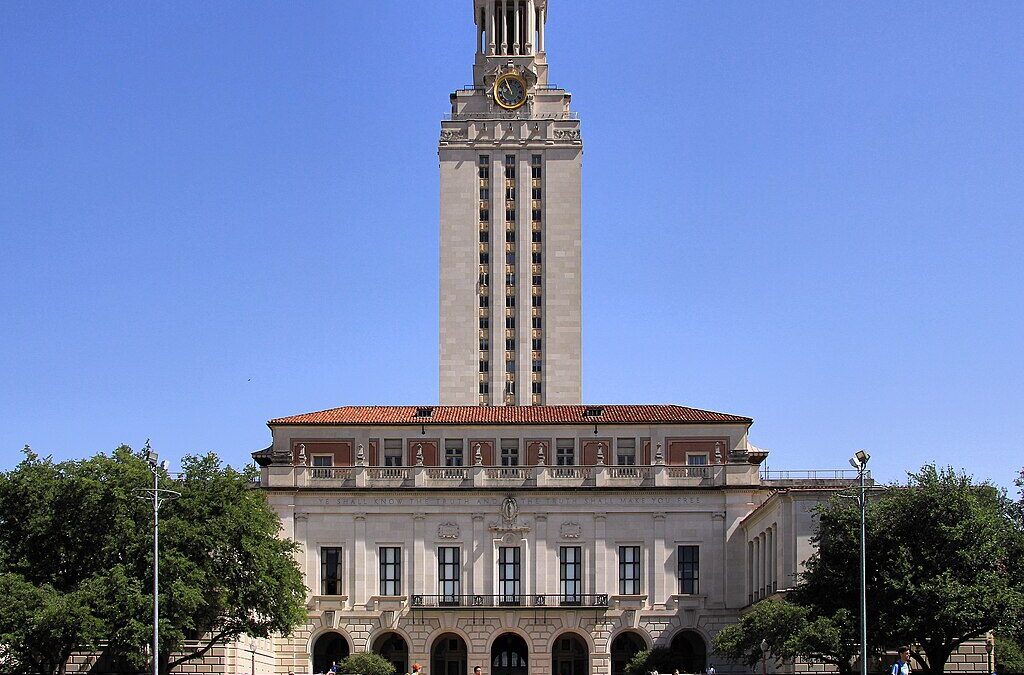
The city of Austin has renewed a partnership with The University of Texas (UT) at Austin, expanding the research-driven model to deliver innovative solutions to regional and community needs. The city will invest $12 million over the next five years to maintain the partnership and broaden it to include five additional higher education institutions. These include:
- Austin Community College.
- Concordia University Texas.
- St. Edward’s University.
- Huston-Tillotson University.
- Texas State University.
The partnership is an ideal example of using research to deliver measurable outcomes that benefit local communities. To date, the UT-City partnership has delivered almost 60 research projects that have produced tangible results, ranging from climate resilience and transportation safety to public health and housing.
Using the last five years and $12 million investment as a springboard, the expanded partnership will help usher in result-driven research to address complex civil challenges using hard data and collaborative, interdisciplinary methods. Out of the dozens of projects produced through the partnership, Austin has noted six ongoing that have stood out.
UT-Austin is conducting a three-phase project examining how AI can provide real-time emergency guidance across multiple languages. Three studies will be used to test which strategies are most effective at engaging audiences and communicating disaster response, preparedness and information. The chatbot technology will primarily focus on residents whose primary language is not English or Spanish. Researchers anticipate the project to be completed before the end of the year and subsequently integrated into Austin’s emergency preparedness system.
A separate initiative is developing traffic technology using advanced computing and video analytics to enhance intersection safety – aligning with Austin’s Vision Zero goals. The team used traffic camera footage to gather data to compare several emerging detection technologies. The information helped the team determine accuracy rates for detecting vehicles, pedestrians and bicycles and how capable they were of ascertaining safety risks. The project will provide critical support for revealing pedestrian movement patterns, informing a framework to improve future traffic safety.
As extreme weather continues to batter region’s across Texas, UT and Austin are collaborating to better forecast and prepare for future natural disasters. With a team comprised of climate adaptation and resilience experts across multiple disciplines, the UT-City CoLab will provide timely, actionable climate data to inform long-term projections, launch seasonal outlooks for summer and winter and provide city departments with the data needed to effectively prepare for inclement weather. The partnership is currently supporting projects centered on:
- Addressing forest health and wildfire risk.
- Integrating climate data into building codes.
- Developing and testing scenario planning tools for infrastructure and community health.
- Studying how cooling corridors can mitigate heat impacts.
The partnership is also researching impactful solutions to improve the city’s homeless services program. UT is collaborating with the Downtown Austin Community Court (DACC) – which currently uses a person-centered, housing-focused case management model to help the homeless population achieve long-term stability – to create innovative solutions. The partnership has co-developed a scalable community platform to enhance access to critical services while providing service providers with better data. The project is in the planning stages with plans to evaluate and improve the DACC’s federally funded Mobile Court initiative throughout the second phase.
The UT-City partnership is emphasizing ecological preservation and stewardship through a conservation plan to analyze and address the threat an invasive ant species poses to local wildlife and habitats within the Balcones Canyonlands Preserve. The project aligns with city efforts to sustain parks, open spaces and urban trail networks. As part of the study, the partnership will:
- Evaluate the tawny crazy ants’ impacts on endangered invertebrates and birds.
- Test biological control methods.
- Develop management strategies to protect native ecosystems.
The city of Austin instituted some major land use policy changes that are reshaping neighborhoods. UT is leading a study to evaluate how these changes impact housing production, affordability, demographic composition and mobility. Researchers will compare the data with similar cities to understand who is most affected and who may be displaced as the city grows. The results will help determine how effective these reforms are and enable the city to develop a framework for ongoing evaluation.
Photo by Larry D. Moore, CC BY 4.0 <https://creativecommons.org/licenses/by/4.0>, from Wikimedia Commons
This story is a part of the weekly Texas Government Insider digital news publication. See more of the latest Texas government news here. For more national government news, check Government Market News daily for new stories, insights and profiles from public sector professionals.