
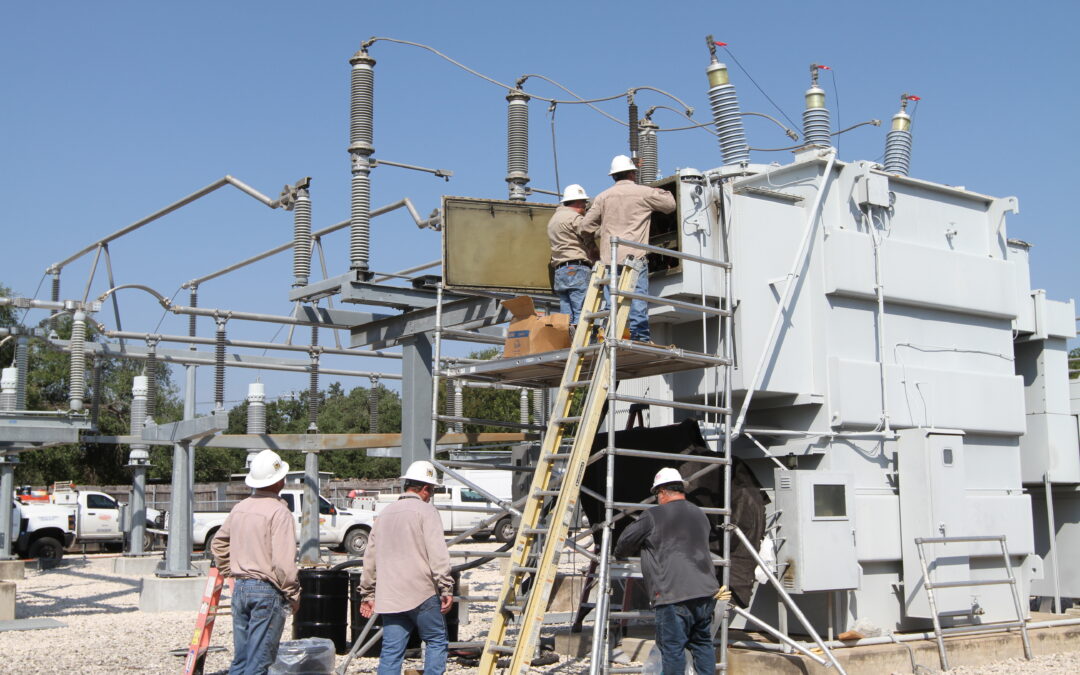
Austin Energy has announced its Electric System Resiliency Plan (ESRP) – a $735 million strategy designed to bolster the city’s energy resilience and reliability under extreme conditions.
The ESRP outlines a series of measures to help ensure Austin residents, businesses and essential services are supplied with power during inclement weather, can recover quickly from outages and quickly adapt to future challenges. These measures include hardening existing infrastructure, enhancing the grid to better utilize Distributed Energy Resources (DER) – such as solar and batteries – and sustaining ongoing initiatives including vegetation management, wildfire mitigation and equipment upgrading.
The forecasted budget divides the $725 million allocation across three primary investments over the next decade:
- $340 million for vegetation management and wildfire mitigation.
- $280 million for circuit hardening, pole inspection, sectionalization and automation.
- $115 million for intelligent systems, grid analytics and progress dashboard.
A total of $60 million in planned investments is slated for fiscal year 2026 alone. Austin Energy has identified its priorities for the upcoming year, using data-driven decision-making to select projects that will deliver the greatest impact in the region. These selections were based on the results from an underground feasibility study and overhead resiliency study conducted in 2024 to guide the ESRP’s framework and development.
Among its 2026 priorities, the utility will expand the circuit hardening program to 10 circuits, consisting of upgrading existing overhead lines with better equipment and technology to increase resilience and reliability. Additional efforts will consist of replacing 30 segments of underground cable, applying wildfire circuit hardening to 10 circuits in high wildfire risk areas and inspect 8,000 poles.
Austin Energy plans to further capitalize on its resilience efforts by deploying 30 main line reclosers and 100 lateral reclosers in strategic locations. These features act as automatic switches on powerlines to detect faults, briefly cut power to remove temporary issues and then automatically restore power to minimize outage time. The utility will also align vegetation management with risk and hardening efforts and conduct circuit optimization studies.
Integration of intelligent systems will continue to play an important role in the coming years. As technology evolves through innovation, Austin Energy remains dedicated to operating on the cutting-edge of development and deployment, with plans to double its Advance Metering Infrastructure (AMI) systems network infrastructure by 2027. In the coming year, the utility will:
- Apply Remote Terminal Unit Replacement Programs to 10 additional units.
- Finalize a Request for Qualifications for DER Management Systems and assess vendor qualifications.
- Enhance DER hosting capacity analysis.
To demonstrate operational transparency and promote communication, Austin Energy will create and launch an ESRP resiliency tracking dashboard during 2026. The dashboard will update viewers on the near-term implementation of the ESRP and provide periodic reports to the utility’s governing entities. The tool will provide insight into progress milestones, interdependencies, timing expectations and translate resiliency efforts into tangible benefits for customers.
Photo courtesy of Austin Energy
This story is a part of the weekly Texas Government Insider digital news publication. See more of the latest Texas government news here. For more national government news, check Government Market News daily for new stories, insights and profiles from public sector professionals.