Volume 16, Issue 49 - Wednesday, December 4, 2024 | |
By Mary Scott Nabers, CEO of Strategic Partnerships, Inc. | |
|
The U.S. Department of Defense (DOD) has many large construction projects with launch dates planned for 2025. The projects will be federally funded and implemented in multiple states across the nation. Contractors from multiple specialties and industries will be essential for completion.
A $13.8 million Department of Defense (DOD) project is being planned with the objective of modernizing the Iowa Army National Guard’s vehicle maintenance shop in Sioux City, Iowa. It calls for delivery of a new 25,391-square-foot facility with full-size drive-through maintenance bays, administrative offices, and specialized storage areas. Project components will also include 8,200 square yards of paved roads and parking areas to enhance operational efficiency. Sustainability is a top priority for the facility, with a goal of achieving LEED Silver certification. To meet this standard, the project will require the installation of high-efficiency LED lighting, geothermal heating, and solar panels. An environmental assessment for the project began in February 2024, and initial pre-construction work is currently underway. Construction is expected to commence in 2025.
In Yuma, Arizona, a training facility is the focus of a planned $62 million construction project at the federal Military Free Fall School Advanced Training Complex. The project will call for a new 155,000-square-foot facility capable of consolidating operations that are currently in 14 outdated and dispersed buildings. The complex will include a company headquarters, general instruction spaces, an airborne equipment and parachute rigging facility, and a covered parachute landing fall pit. The project will focus on sustainability, requiring the incorporation of energy-efficient systems and Anti-Terrorism/Force Protection components. Upon completion, the facility will be poised to meet the growing operational demands of the school and its training complex. The design work has been completed and a contract award is anticipated by or before a designated deadline of March 2025. Construction is slated to begin in the summer of 2025 with a two- year delivery timeline.
The U.S. Navy will invest $116.96 million in a state-of-the-art aircraft maintenance hangar at Marine Corps Base Hawaii. The project will be designed to support Fleet Logistics Squadron 51 with its critical C-40A Clipper aircraft. The hanger will address essential operational needs by providing advanced maintenance and storage capabilities, inspection areas, and anti-corrosion/storm protection for the planes. The new facility will incorporate cutting-edge features such as advanced cybersecurity measures, energy-efficient systems, and sustainable design elements. The project will also include an aircraft parking apron, modern administrative offices, and enhanced mechanical systems designed for high operational demands. The design work should be completed in 2025, and a construction launch will occur later in the year.
An Army National Guard armory facility, or readiness center as it is normally called, is planned for Peoria, Illinois at a cost of approximately $40 million. The funding has been secured and the design phase is expected to last approximately eighteen months with the construction phase kicking off sometime in 2026. When the project is completed, the National Guard at the Peoria International Airport will move its stored helicopters into the updated facility which will also serve as a backup headquarters for the state’s National Guard in case of emergencies. This project will provide interested contractors with ample opportunity to engage with officials and acquire detailed information regarding the development plan.
Click here for more.
| |
University of Minnesota pioneers agriculture’s future with $220 million research complex | |
|
The University of Minnesota (UMN) will spend $220 million to develop a state-of-the-art research facility. Construction on the Future of Advanced Agricultural Research in Minnesota (FAARM) complex is expected to begin in January 2027.
University officials will execute the project through a public-private partnership (P3). A contractor has not yet been chosen to lead construction. Once completed, the FAARM research complex will be a critical education and research hub, featuring 660,000 square feet of space dedicated to education and workforce development.
Located on a 1,600-acre site, the facility will support a holistic learning experience, allocating dedicated areas for agriculture, animal, research and labs, teaching, offices and administration. Additional spaces for housing, a visitor center, outreach and support will be included in the design.
The research complex will utilize cutting-edge tools and technology to help researchers pioneer innovative solutions for the future of agriculture. These resources will include predictive analytics, big data, robotics and artificial intelligence.
(Photo courtesy of ThisisEngineering on Unsplash.)
| |
Alexandria investing $140 million to revitalize City Hall, public square | |
|
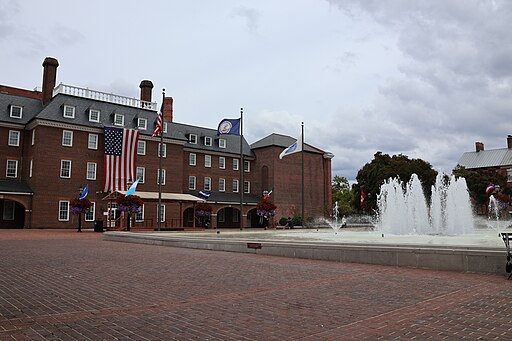
The city of Alexandria, Virginia is laying out plans to renovate City Hall and Market Square Plaza, reimagining the space’s aging facilities and amenities to better serve residents and visitors. The $140 million project is expected to kick off construction in the spring of 2026.
City Hall and the adjoining public square are cultural and historical landmarks, but they’re showing their age as the infrastructure deteriorates. Extensive repairs and replacements are needed to ensure the 153-year-old building, along with the square and underground parking garage, can continue operating safely and effectively.
The project focuses on major renovations to repair outdated infrastructure, upgrade utility systems, optimize space usage, improve accessibility and enhance security Plans include making significant structural repairs to City Hall, prioritizing its operational capacity and utility system integrity. This will include upgrading the building’s HVAC, plumbing and electrical systems and modernizing the workspaces.
The Market Square Plaza will receive the most significant changes, featuring a full restructuring to provide better opportunities for cultural events and community engagement. City officials are working with residents to refine the final design for the plaza, gathering feedback on community needs and wants. The plaza’s current configuration is largely inaccessible, inflexible and doesn’t contribute to the visitor experience.
Updated project designs emphasize outdoor spaces conducive to gatherings and public activities. In addition to providing multiple circulation routes, the city will incorporate a covered stage, permanent shade structures, trees, gardens, water features and an elevator connecting to the underground garage.
The city will redesign entrances to improve the arrival experience. Some solutions include removing visual barriers, relocating trash areas and incorporating accessible entryways.
(Photo courtesy of DiscoA340.)
| |
California water districts receive $97.4 million to upgrade infrastructure, recycle water | |
|
A selection of California water districts will spend a combined total of $97.4 million to build and expand infrastructure to conserve, treat and purify water supplies to increase drought resilience, recharge groundwater resources and provide millions of gallons of potable water per day (mgd).
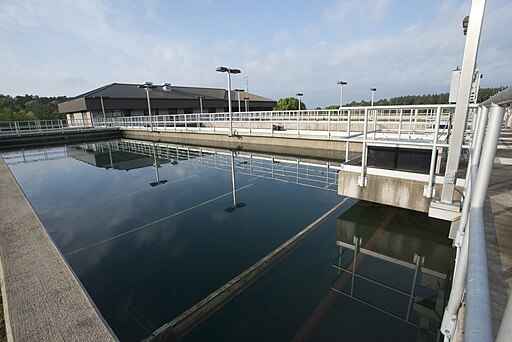
The city of Ventura will invest $60.4 million in the VenturaWaterPure program, providing critical treatment services for water discharged into a nearby river estuary. The funds will enable the city to support the Membrane Bioreactor (MBR) Project at the decades-old wastewater treatment plant and develop the VenturaWaterPure advanced water purification facility.
Once concluded, the projects will expand the city’s water supply by approximately 20%, delivering 3,600 acre-feet of recycled, purified wastewater annually. The improved facilities are essential components for developing sustainable, drought-resilience water resources for Ventura, allowing the city to process a larger capacity of water while maintaining environmental standard compliance.
An additional $26.2 million will enable the Metropolitan Water District of Southern California (MWDSC) to move forward with planning, design and improvement work on a major regional water recycling project. The Pure Water Southern California program will use a multi-stage process to treat and purify wastewater, distributing 150 mgd to support drinking water systems, replenish groundwater basins and meet industrial needs.
MWDSC anticipates the completed project will produce more than 118,500 acre-feet of water annually.
Finally, the Inland Empire Utilities Agency (IEUA) received $10.8 million to recycle water as part of the Chino Basin Resiliency Project. The initiative is part of a larger $985 million program that will provide 15,000 acre-feet of purified, recycled water annually, supplementing the Chino Basin’s supply.
The Chino Basin Program includes water treatment and storage projects to boost regional water resilience and reliability, featuring an advanced purification facility, pipelines and upgraded well infrastructure. These efforts optimize local water use, reduce imports, and support resource management across 242 square miles.
(Photo courtesy of Lance Cheung.)
| |
Massachusetts announces $50 million project to build first fully accessible rail station in Newton | |
|
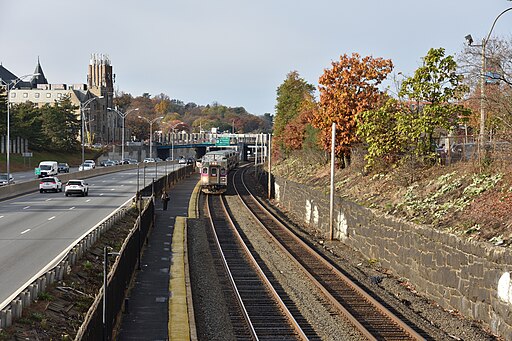
Officials from the Massachusetts Bay Transportation Authority (MBTA) are announcing a comprehensive plan to reconstruct the largest commuter rail station in Newton.
The Newtonville Station reconstruction project, led by the MBTA, will replace the existing station in Newton with the first fully accessible commuter rail hub in the city, providing critical upgrades that enhance safety, accessibility and convenience for riders. The rebuild will further improve Massachusetts’ transportation network and accessibility options for commuters of all abilities.
The $50 million project will combine financial support from federal, state and local sources, including $7 million in federal assistance from Community Project Funding. As one of only three commuter rail stations along the city’s Interstate 90 corridor, Newtonville Station is the largest and most used rail hub in the city, despite only having one boarding platform in use.
Initially, MBTA and Newton officials sought to reconstruct all three of the stations in the city. But as costs for all three projects were higher than anticipated, only the Newtonville Station project became feasible.
The new station will feature two boarding platforms, which will make it easier for all passengers, including those with disabilities, to board trains efficiently. To limit costs, these platforms will be 400 feet in length, nearly half as long as the station’s current layout. Despite this, officials anticipate this cost-saving change will still accommodate the growing number of bi-level coaches and higher frequency of service in the future.
The reconstruction project will include several additional accessibility improvements that will revamp commuters’ experience, including an up-and-over bridge for inclusive access, new elevators, benches, canopies and designated pick-up and drop-off areas.
The proposed Newtonville Station will feature new security enhancements, such as tactile warning strips, wayfinding signage and bicycle racks, to mitigate dangers and hazards for commuters. This will also include security upgrades like blue phones, CCTV cameras and lighting improvements.
While the design is not final, the project also plans to upgrade tracks and signals to modernize the station’s operations and efficiency. The city and MBTA will conduct the project in phases and will require input from the transportation industry and local communities to ensure the design meets the needs of all passengers. As the project progresses, MBTA will provide updates to riders on any changes to the Framingham/Worcester Line commuter rail schedule.
Officials for the Newtonville Station reconstruction project have yet to announce an official timeline but expect to unveil a construction schedule announcement during this planning process. The MBTA is still evaluating several construction contract procurement methods to complete the proposed Newtonville Station.
(Photo courtesy of 4300streetcar.)
| |
University of Wisconsin plans $19 million renovation and expansion of residence dining hall | |
|
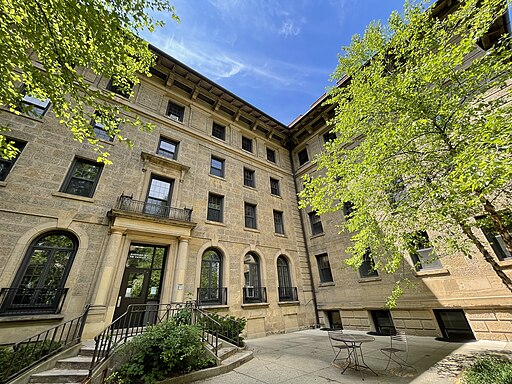
The University of Wisconsin at Madison (UW-Madison) will spend $18.8 million to expand and renovate a dining complex shared by a pair of residence halls. Construction is expected to begin in May 2026.
Rheta’s Market was built in 1959 to serve both Chadbourne and Barnard Hall. Since its last renovation in 2007, the university has grown exponentially, and the dining hall can no longer sustain the increased traffic volumes. Not only will the renovation project ensure the complex is brought back up to code, building an addition will accommodate a larger student population.
UW-Madison will start with reconfiguring Rheta’s Market's back-of-house space to streamline flow from the building’s loading docks to the coolers and improve access to the residence halls. Renovation work will focus on creating a new food hall, revisioning the servery and dining space and installing additional food units to better serve residents.
As part of the project, the university will enhance accessibility at the hall’s ground-level entrance by adding a vestibule, stairs and a lift to improve access to the main floor. The entrance will also receive a nearby check-in station, and UW-Madison will relocate and convert the existing convenience store into seating areas.
The addition will greatly expand the dining hall’s available square footage, featuring ample furnishings such as built-in counters, stand-up and sit-down tables, benches and other seating options. The university will update the building’s interior finishes with new floors in the dish room, back-of-house and dining areas and replacing the ceiling with hard-lid tiles. Plans also include stylizing the serving counters, installing a slightly higher flat roof, improving the HVAC system, fixing stormwater and sewer drainage issues and installing updated fire protection systems.
(Photo courtesy of Wikimapeditor.)
| |
Arizona releases new AI policies promoting public safety and government efficiency | |
|
In March 2024, Arizona introduced its first statewide policies for using generative AI (Gen AI) to improve public safety and government efficiency. To enhance technological success, the state has updated its AI strategies and formed a committee to drive future AI deployment.
The updates targeted the state’s Gen AI Policy and Use of Gen AI Procedures, expanding on the original guidelines to better address rapid developments in AI technology.
Arizona’s Gen AI Policy outlines best practices to foster innovation while complying with the law, protecting data privacy and ensuring public service is accurate and efficient. The document focuses on a series of principles that guide how state employees and agencies interact with and incorporate AI technologies in current and future faculties. These principles include:
- Empowering the workforce to deliver services efficiently and safely to the public.
- Ensuring there is ample transparency and accountability to foster trust and collective learning.
- Ensuring equitable use of Gen AI when supporting communities.
- Maintaining privacy and security through responsible experimentation.
- Ensuring that all data is accurate, complete and relevant.
- Providing a minimum level of training for all AI users.
To support the principles laid out in the Gen AI Policy, the state made major changes to the standards employees must adhere to when using the technology. The updated Use of Gen AI Procedures document redefined the State Data and Analytics Office's role to enhance data initiatives and support Gen AI adoption across Arizona. The office was established following the release of the state’s initial AI policies.
Among other changes, the document emphasizes the importance of data governance policies and data readiness. While Gen AI is powerful and convenient, the newly established procedures require users to maintain a high standard of authenticity and vigilance against inaccurately generated material. Agency and employee responsibilities were further expanded in regard to responsible use, data protection, transparency, accountability, security and privacy.
To ensure that Gen AI is effectively used, the state established the AI Steering Committee to oversee future deployment and implementation of the technology. The group will be responsible for identifying Gen AI opportunities that benefit the public and to help develop policies advocating for AI's transparent, ethical and responsible use.
(Photo courtesy of geralt on Pixabay.)
| |
Tennessee Tech researchers developing mobile solution for recycling electric vehicle batteries | |
|
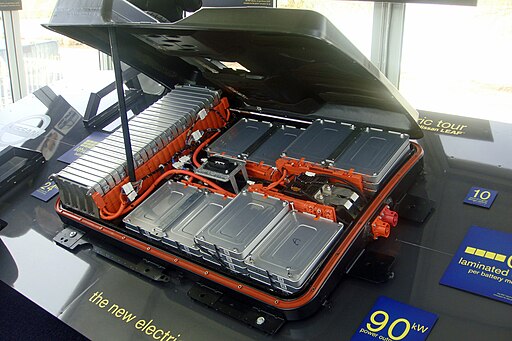
As the demand for electric vehicles (EV) is expected to rise, the nation will need innovative methods to efficiently recycle EV batteries and associated components. Researchers at Tennessee Tech University are pioneering research and development of technologies to improve the national EV battery recycling ecosystem.
Battery recycling is a complex process, primarily because there is no standardized method for battery construction. Different EVs use a variety of batteries that utilize a diverse range of chemistries, design, components and safety hazards. To address the issue, Tennessee Tech researchers are creating a mobile preprocessing hub to streamline and accelerate the recycling process.
The hub will be portable, allowing it to be easily transported to collection sites and provide on-site services anywhere. Rather than go through the complex process of finding and taking EV batteries to a separate site, EV owners will be able to use the hub to safely disassemble and shred batteries.
Deconstructed batteries are the first phase in the recycling process. Once taken apart, processing centers can then extract the raw materials for study and reuse. EV battery materials like lithium are scarce and valuable, and recycling these helps establish a cycle to sustain the EV industry.
The mobile preprocessing hub is the university’s latest step into developing innovative EV solutions. Researchers are also working on a testbed that will demonstrate the viability of an electric park-and-ride system in major cities. The project will provide a centralized charging hub for users who own EVs but lack at-home charging stations. City agencies will also benefit from the system, making it easier to integrate EVs into their fleets.
(Photo courtesy of Mariordo Mario Roberto Duran Ortiz.)
| |
Alaska deploys drones to protect residents and infrastructure from avalanches | |
|
As winter approaches, the state of Alaska is taking proactive measures to secure the safety of its roadways and residents from the threat of avalanches. The latest development in avalanche mitigation relies on drone technology to maintain highway safety.
Traditionally, mitigation measures rely on military artillery to trigger controlled avalanches. But using high-yield ordinance isn’t a perfect solution, which has prompted the state to transition to alternative solutions that provide better controlled avalanche events.
The Remote Avalanche Control Systems (RACS) uses fixed-position detonation materials to selectively trigger avalanches before they occur naturally. This method is more precise than artillery and allows the state to control where and when these events happen, protecting vital infrastructure from damage and disruption.
Because these methods are used in mountainous regions, RACS isn’t always a feasible or economical option depending on the weather conditions and geographical location. The Alaska Department of Transportation & Public Facilities (DOT&PF), in cooperation with the Alaska Railroad Corporation (ARCC), began using drone technology in early 2024 as a feasible option to preemptively handle avalanches.
Drone Avalanche Reduction Technology (DART) uses Unmanned Aerial Systems (UAS) to trigger controlled avalanches. Drones provide a level of precision and flexibility to mitigate avalanches in areas where fixed installations either can’t be used or are impractical. The program has already seen success, having already deployed two explosives earlier this year.
(Photo courtesy of Iewek Gnos on Unsplash.)
| |
|
Sky Harbor International Airport in Phoenix will receive a surge of federal support to modernize utility infrastructure and improve energy efficiency.
The U.S. Department of Transportation’s Federal Aviation Administration (FAA) is awarding a $35 million grant for the airport to conduct several infrastructure improvement projects at Terminal 4. Sourced from the Bipartisan Infrastructure Law (BIL), the federal funding will go toward Sky Harbor’s modernization of the nearly 30-year-old central utility plant.
Click here to for more information about the airport modernization project
(Photo courtesy of K50 Dude.)
| |
|
Pennsylvania has opened the first round of applications for its $1.16 billion Broadband Equity, Access and Deployment (BEAD) Program, which funds broadband infrastructure projects and provides residential internet access.
Pennsylvania Broadband Development Authority (PBDA) Executive Director Brandon Carson announced this initial round last month; applications will close Jan. 21.
Click here to learn how to access Pennsylvania’s BEAD funding opportunity
(Photo courtesy of Pixabay on Pexels.)
| |
|
More manufacturing of advanced semiconductors is coming to U.S. soil. The U.S. Department of Commerce is finalizing negotiations to invest up to $300 million across three advanced semiconductor packaging research projects in Georgia, California and Arizona.
The funding, announced through the CHIPS for America program, looks to accelerate development of advanced semiconductor technology that is critical for artificial intelligence and next-generation computing but currently not produced in the United States.
Click here for more information about the influx of support for semiconductor manufacturing
(Photo courtesy of Maxence Pira on Unsplash.)
| |
|
High speed internet expansion in California is getting a big financial boost, with the California Public Utilities Commission (CPUC) recently approving $157 million for projects that bring broadband internet access to underserved and unserved communities across the state.
The most recent round of CPUC awards brings the total for Last Mile Federal Funding Account grants to $829 million across 35 counties.
Click here to learn more about California’s efforts to expand broadband services
(Photo courtesy of fancycrave1 on Pixabay.)
| | |
|  |
|
|
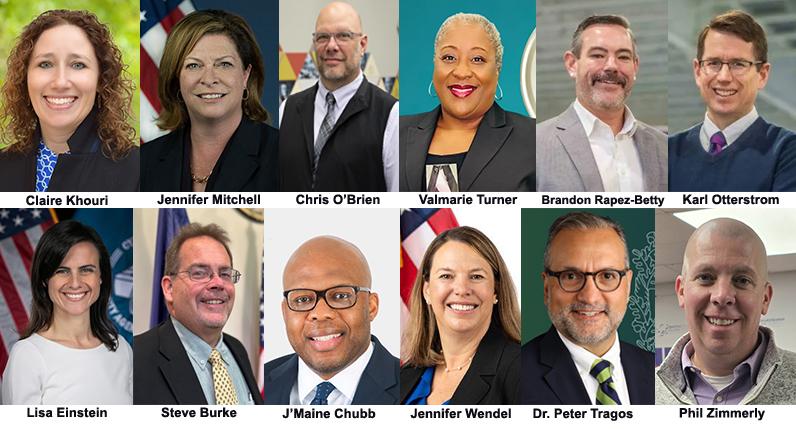
Oregon – Claire Khouri has been appointed as TriMet’s first chief of strategy and planning. Khouri brings more than two decades of public policy and tactical build out experience to the position. She left her previous role with Sound Transit in Seattle as deputy executive director of portfolio management and integrity to join TriMet. Her first day with TriMet was Nov. 27, 2024.
Washington, D.C. – Amtrak has selected Jennifer Mitchell as executive vice president of strategy and planning. Mitchell most recently served as deputy administrator of the Federal Railroad Administrator. During her career, she also operated as director of the Virginia Department of Rail and Public Transportation from 2014 to 2022. Mitchell succeeded Dennis Newman on Dec. 2.
Iowa – Chris O’Brien has been chosen as Iowa City’s deputy city manager. O’Brien left his most recent role as a chief operating officer in the private sector to rejoin the city. He previously served the city from 1997 to 2017, with his last role being director of transportation and resource management. O’Brien assumed his responsibilities Nov. 12, 2024.
Virginia – Valmarie Turner has officially been appointed city manager of Roanoke. On Dec. 2, the Roanoke City Council unanimously voted to confirm Turner in the position. Turner brings more than 30 years of local government experience to the role. She most recently served as deputy city manager for Fairfax. She succeeded Bob Cowell.
Washington – The Spokane Transit Authority has chosen Brandon Rapez-Betty and Karl Otterstrom as interim Co-CEOs to assume the responsibilities of E. Susan Meyer. They will step into the roles Jan. 1, 2025.
- Rapez-Betty is the authority’s chief operations officer, his latest role in the decade he’s served with the agency. Before his current role, he served as chief communications and customer service officer.
- Otterstrom is the authority’s chief planning and development officer. He has spent the past 15 years with the authority.
Washington, D.C. - The Cybersecurity and Infrastructure Security Agency (CISA) has selected Lisa Einstein as its first chief artificial intelligence officer. Einstein previously served the agency as senior advisor for AI and as executive director of the CISA Cybersecurity Advisory Committee.
Virginia – The city of Manassas has concluded its search for a city manager with the appointment of Steve Burke to the role. Burke currently serves the city as assistant city manager and director of public works. He brings more than three decades of local government experience to the position, taking over for W. Patrick Pate.
Texas – J'Maine Chubb has officially joined VIA Metropolitan Transit as CFO and VP of fiscal management. Chubb left his previous role as CFO for the Greater Toronto Airports Authority to join the transit agency. He brings 28 years of financial experience to the position.
Washington, D.C. - Jennifer Wendel has been appointed permanent CIO of the Department of Health and Human Services. She has been operating as the department’s acting CIO since December 2023. Before serving as active CIO, Wendel was the department’s deputy chief information officer and acting DCIO for the Federal Bureau of Investigation. She assumed her role Nov. 18, 2024.
Illinois – The New Trier Township High School District 203 has chosen Dr. Peter Tragos as superintendent. Dr. Tragos currently serves as assistant superintendent, the latest role in his 26 years with the district. He will succeed Dr. Paul Sally in the role July 1, 2025.
Ohio – Phil Zimmerly has been selected to take over as deputy director of the Allen County Department of Homeland Security and Emergency Management. He was officially appointed by the county’s Board of Commissioners on Nov. 21, 2024. His first day was Dec. 2.
| | |
|
Connect with SPI
Check out our social media links!
| |
About Government Contracting Pipeline | |
|
Strategic Partnerships, Inc.
Publisher: Mary Scott Nabers
Editors: Adam Rollins
Jerrod Kingery
www.spartnerships.com
| |
Government Contracting Pipeline, a publication of Strategic Partnerships, Inc., is a free, weekly newsletter detailing important happenings nationwide and the premier source for federal, state and local government news and contracting opportunities. | |
Help us share this message.
To ensure delivery and proper formatting of the newsletter, be sure to add editor@spartnerships.com to your safe senders list.
Otherwise, the newsletter may be flagged as spam and automatically routed to your junk e-mail folder.
| | | | |