Volume 16, Issue 47 - Wednesday, November 20, 2024 | |
By Mary Scott Nabers, CEO of Strategic Partnerships, Inc. | |
|
Cities and counties throughout the U.S. are revitalizing downtown areas, providing more housing, adding revenue generating attractions and repurposing other public areas. There are numerous drivers behind these types of focused projects, with population growth and the critical need for upgrades to aging facilities standing out as primary reasons. Visionary municipal leaders are planning for the future by focusing on sustainability, public safety, and citizen services. In 2025, local governments in cities and counties will offer a wealth of contracting opportunities across various specialties and trades.
A $20 million street expansion project in Columbia, South Carolina will expand public access to the city’s riverfront. This effort will be designed to attract future riverfront development to the city, enhance recreational options, and improve public safety. Phase one of the project will include construction of approximately 4,700 feet of new roadway and sidewalks, three electric car charging stations, two bike share stations, and other related infrastructure needed to support the roadway. Developers and contractors will be invited to respond to solicitations in early 2025 with project launch planned for later in the year.
A $35 million project in Dayton, Ohio for the construction of an Innovation Hub is currently in the design phase. The new facility, which will be located on the former Montgomery County Fairgrounds site, will be dedicated entirely to advancing digital services and integration. The objective is to provide a hub for innovators to design, develop, and deliver cutting-edge digital technology for aviation and national defense. The U.S. Air Force will be a partner at the facility and will provide oversight in technology innovation that is designed for airplanes, missiles, sensors, and hardware. Work is scheduled to begin on infrastructure and construction of the facility in 2025.
The downtown Pittsburgh area in Pennsylvania will soon benefit from a large mixed-use development that will provide new housing options for the area. Funding has been made available and various projects are currently in the planning stages. The project’s cost will exceed $100 million, and a construction launch will occur once the design work is completed. Components included in this large effort include:
- $22 million allocated for five mixed-use projects creating 800 new residential units, including 135 new affordable units.
- $25 million to enhance Point State Park with infrastructure upgrades and new recreational amenities for the park’s cityside lawn.
- $50 million to reimagine Market Square and transform underutilized open spaces within the city’s Cultural District.
- $400,000 dedicated to uniting arts and cultural organizations, establishing new programs to support the city’s creative entrepreneurs through an artist-in-residence program.
The schematic designs for two of these projects are scheduled for completion in late 2024 and construction is slated for early 2026.
Click here for more.
| |
Washington county plans $250 million project to restore estuary and realign infrastructure | |
|
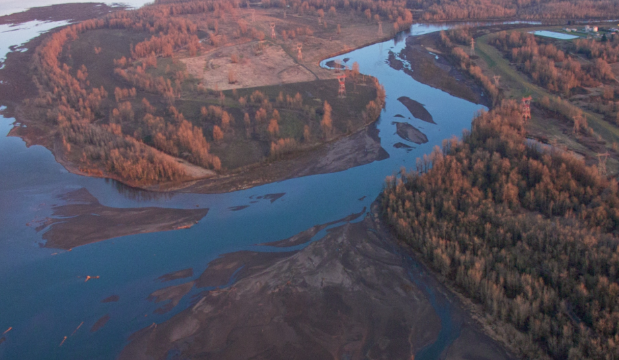
Jefferson County, Washington, is working to restore the Duckabush Estuary, conserving the local ecosystem while rebuilding local transportation infrastructure to preserve wildlife habitat and water flow. The project has an estimated cost of $250 million, with construction expected to begin after the design phase concludes in late 2025.
The county estimates that the bridge realignment portion of the project will cost approximately $126 million. This will include replacing the existing causeway with a 1,600-foot-long bridge, raising the road’s profile to survive 100-year flood events and sea-level rise. The county will further improve the bridge’s connectivity by building a turn lane onto the U.S. Route 101 highway and realigning a segment of a nearby road with the bridge.
To prepare for the bridge replacement process, the project will remove the area’s existing causeway and levee. The county will build nearby parking and pedestrian infrastructure for recreation and other amenities—including two parking lots, pedestrian pathways, restrooms, water runoff treatment and a welcome kiosk.
The bridge’s design will play a key role in restoring the local wildlife habitat and channel connectivity. The county will replace three culverts to ensure salmon populations can travel freely. The project also calls for building logjams using removed trees, reconnecting river channels to enhance habitats and installing bioswales to protect water quality.
The county will need to significantly modify the area’s utility systems to support the new bridge and restore the ecosystem. To that end, underground lines will be installed, additional conduits will connect to nearby communities, an overhead line will be placed on the bridge and poles obstructing the estuary will be removed.
(Photo courtesy of Sam Beebe.)
| |
Massachusetts school district lays out $65 million plan to build elementary campus | |
|
North Adams Public Schools (NAPS) in Massachusetts will build a $65 million school to replace an existing campus. Construction is expected to begin in summer 2025.
The Greylock School project will develop a two-story, 75,000-square-foot building that emphasizes seamless access to outdoor space, natural light and collaborative learning spaces. The plan for the facility’s first floor includes dedicated space for a gymnasium, stage, cafeteria and service delivery area. It also provides for more than a dozen classrooms, a music room, creative lab, media center, restrooms, special education spaces and teacher workrooms.
The building’s second floor has significantly less space to work with, primarily assigned to classrooms and other educational spaces. Like the first floor, the district will incorporate special education rooms and restrooms into the floor layout. Additionally, the second-floor plan features an art room, breakout space, a mechanical closet and teacher workrooms.
Emphasizing expansive outdoor spaces, the school will feature dedicated greenspace and a design that keeps vehicular traffic circulating. The campus will also provide students with pickleball and basketball courts, protected play areas, an explorer’s courtyard, vegetable gardens and access to a trail. An essential part of the school’s outdoor-accessible approach is the courtyard, integrated into the center of the facility, as well as outdoor classroom areas, a community porch, exterior play areas and a breakout space.
The site plan also outlines additional space for athletic complex parking, bus and vehicle queuing and separated bus, service and vehicular circulation. The district will ensure the campus has ample access for emergency responders and for future expansion.
NAPS is located approximately 63 miles northwest of Springfield.
(Photo courtesy of Pixabay on Pexels.)
| |
Pacific Northwest transmission line to receive $173 million upgrade for increased capacity, wildfire resilience | |
|
Two utility companies in United States’ Pacific Northwest and Mountain regions will collaborate to reconstruct a major transmission line spanning three states. The Lolo-Oxbow Transmission Upgrade and Optimization project will cost $173 million to complete.
The transmission line runs from the Oxbow Dam on the Oregon-Idaho border to Lewiston, Idaho, covering approximately 164 miles. Once completed, the project will increase the transmission systems’ utilization rate and resilience, integrating wildfire resilient designs, materials and other technologies to enhance performance.
The companies will deploy a series of advanced power flow controllers to provide real-time system visibility and control. Once installed, these devices will help the companies efficiently manage power flow and energy distribution along the Lolo-Oxbow line and three connected Idaho-to-Northwest transmission lines.
Enhanced control over power distribution will benefit hundreds of thousands of American residents, creating opportunities for communities to increase generation interconnection capacity for renewable resources, harden the grid and deploy innovative technologies. While the grid enhancements will optimize four transmission lines in total, construction will be limited to the Lolo-Oxbow line exclusively.
The project’s emphasis on wildfire resilience is expected to reduce line outages to fewer than one per year on average. The companies will also utilize a drone system to string lines, further reducing the risk of outages during construction. After project completion, the reconstructed interregional transmission system’s capacity will be increased by approximately 635 megawatts (MW).
(Photo courtesy of Jan Huber on Unsplash.)
| |
New York expanding broadband infrastructure with $140 million boost | |
|
The state of New York is distributing $140 million to expand broadband infrastructure and provide residents with access to reliable, secure internet.
The funds will support a series of public-private partnership (P3) projects to provide high-quality, symmetrical internet service to over 60,000 homes and businesses. The six New York regions receiving funds will collectively build more than 1,200 miles of publicly owned fiber optic infrastructure, transforming digital connectivity across the state.
Schoharie County – a mid-New York region in the Mohawk Valley – will receive $30 million to build nearly 300 miles of fiber connecting around 4,000 locations. The Broadband for Schoharie County project prioritizes fiber-optic deployment in unserved areas in the county, ensuring rural communities will benefit from affordable, accessible internet access. The network will be open-access and advance the county’s goal to achieve 100% broadband coverage across 5,000 rural locations.
Sullivan County will benefit from a $29.9 million grant, which will go toward installing more than 250 miles of fiber and building a communication tower to supplement its 11 existing towers. The project centers on expanding the county’s existing network to ensure all residents can access critical digital services and opportunities, serving more than 22,000 homes and businesses.
The state will allocate $26.6 million to help the Central New York Regional Planning and Development Board (CNYRPDB) establish a regional open-access fiber network. Implementing the network will connect more than 6,600 locations in the Cayuga and Cortland counties. The network, called CNYNET, will be a local non-profit development corporation overseeing the network’s operations and management.
(Photo courtesy of Christin Hume on Unsplash.)
| |
University of Wisconsin plans $32 million renovation, expansion project for recreation complex | |
|
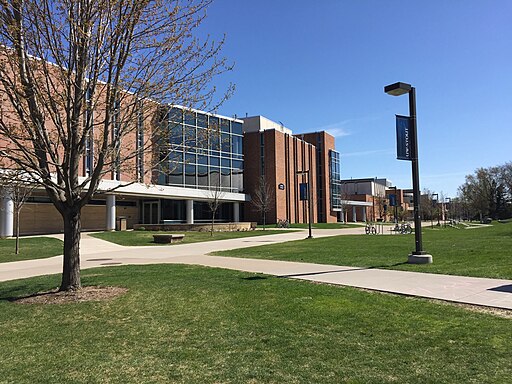
The University of Wisconsin at Stout (UW-Stout) will use $31.7 million to expand and renovate a recreation complex, providing additional space, new amenities and updating infrastructure. Construction is expected to begin in May 2026.
The current state of the nearly 60-year-old Sports and Fitness Center (SFC) cannot meet the student body’s demand for quality interior recreation space. The facility does not have adequate room and the recreation amenities are notably inferior to many high schools that students come from. To make the SFC suitable for the modern student body, the university will build an 11,750-square-foot extension and renovate 27,658 square feet of the existing complex.
UW-Stout will convert several of the existing facilities, including turning the decommissioned natatorium into a multi-purpose gymnasium. In addition, plans include converting the athletic weight room into multi-use studios and the fitness center into the new home for the relocated athletic weight room.
The addition’s second floor will feature a series of multi-use courts. The university also has plans to expand and improve the general locker rooms while reducing the space in athletics team locker rooms. Additional expansions are expected for the facility’s cardio and strength fitness space, recreation locker rooms, gymnasium and multi-purpose spaces.
To provide better accessibility and security for the recreation complex. UW-Stout will install a single facility entrance that will also increase building capacity and improve circulation. Once completed, the facility will have an entirely refreshed infrastructure, including renovated, relocated and replaced site utilities. This will include the project relocating the underground steam duct bank, medium voltage electrical service and storm sewer.
The project also calls for removing the motor control center and electrical feeder taps and upsizing the domestic water service.
External improvements will include enhancements to nearby pedestrian pathways, parking lots and storm sewer treatment systems. The university also plans to replace the fire alarm and smoke detection system with a single, unified system. Finally, all project areas will receive updated HVAC, electrical, telecommunications, fire protection and plumbing systems.
(Photo courtesy of Eevensen.)
| |
Port of Wilmington receiving $128 million to decarbonize operations, equipment | |
|
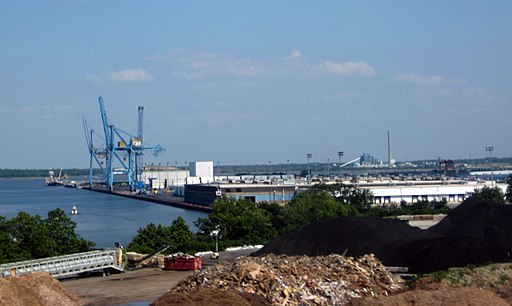
The Diamond State Port Corporation (DSPC) will spend $127.5 million to fully electrify the port of Wilmington in Delaware.
The port of Wilmington is one of dozens of ports nationwide refurbishing their operations to combat air pollution while maintaining productivity. To accomplish this, the port will use the funds to fully transition the port to zero-emission equipment and infrastructure.
While ports play an essential role in transporting goods and people throughout the country, they heavily rely on equipment and infrastructure that produce significant amounts of greenhouse gases (GHG).
The shipping industry, including global port operations, is estimated to produce up to 850 million metric tons of CO2 annually.
The DSPC will invest in converting cargo handling equipment from diesel fuel to exclusively utilize electric power. The port will also buy new electric cargo handling equipment for parts of the inventory that can’t be converted, or that the port doesn’t have. This process will require the port to scrap a portion of the remaining diesel fleet.
To ensure the port can support its zero-emission equipment, plans include buying and installing chargers and electrical infrastructure. The DSPC will prepare and maintain an emissions inventory, alongside conducting community engagement and workforce development, to ensure that all emissions reductions targets are met.
(Photo courtesy of Diiscool.)
| |
Hydropower projects open doors to future renewable energy investments | |
|
Utility companies, public laboratories and state universities are working together to develop cutting-edge technologies to enhance hydropower distribution flexibility for energy grids. These projects will help hydropower facilities quickly stabilize electricity networks, ensuring reliable power for communities when it’s needed most.
As a major source of renewable energy, hydropower holds enormous potential for future investment and revenue growth opportunities. Infrastructure and technologies designed to enhance hydropower capability will be essential for supporting cost-effective, resilient power production and storage as municipalities, counties and states expand clean energy.
A Colorado-based project looks to demonstrate the potential of combining hydrogen energy technologies with existing hydropower facilities. The project team - consisting of a Colorado utility company, the National Renewable Energy Laboratory (NREL) and the University of California at Irvine (UC-Irvine) - will integrate specialized hydrogen-production equipment at a hydropower facility. The facility will then store hydrogen to provide power to the grid or renewable energy vehicles when needed.
North Carolina State University is leading a project leveraging AI and machine learning technologies to optimize hydropower facility operations and flexibility. The initiative will create an operational framework designed for widespread deployment to hydropower facilities nationwide. AI integration will provide a level of redundancy for energy grids, improving resiliency and sustainability.
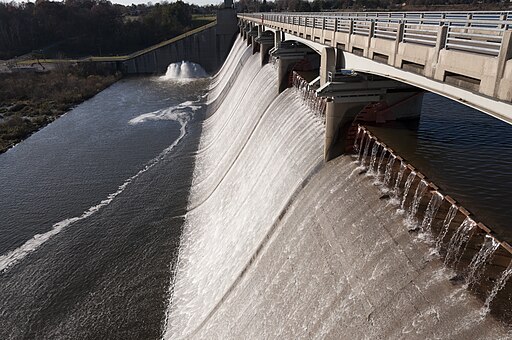
The Tuckertown Hydropower Facility Energy Storage Hybrid Operation and Resiliency Project will install and test a battery energy storage system in North Carolina. The project team will increase the facility’s flexibility through trihybridization, leveraging multiple renewable energy resources to sustain power distribution.
Hydropower currently accounts for approximately 27% of utility-scale renewable electricity generation across the U.S., making it one of the nation’s largest renewable energy contributors. Existing hydropower facilities play an essential role in the United States’ power system, capable of immediately providing electricity on-demand or storing potential energy for future application.
(Photo courtesy of Sixflashphoto.)
| |
California releases updates for fuel standard, sets targets to reduce carbon intensity | |
|
The California Air Resources Board (CARB) has updated the Low Carbon Fuel Standard (LCFS) to set new targets to reduce carbon intensity by 90% across the state’s transportation sector by 2045.
The goal of the LCFS is to increase the number of cleaner fuel and transportation options for consumers. Establishing carbon intensity targets to regulate benchmarks for reducing greenhouse gas (GHG) emissions helps the state lower air pollution and encourage greater investment in cleaner transportation.
The latest update, released Nov. 8, 2024, established new targets to reduce the carbon intensity of the state’s transportation fuel pool by 30% over the next six years and 90% by 2045. The amendments also poured in billions of additional funding to increase support for zero-emissions infrastructure, particularly medium- and heavy-duty vehicles.
As the state continues to push for implementation of its zero-emission vehicle regulations, the updates included more incentives to ensure low-income and remote communities can benefit from associated infrastructure. California will also phase out crediting the use of biomethane as a combustion fuel while simultaneously extending its use for renewable hydrogen.
To better incentivize the transportation sector’s transition to cleaner fuels, CARB has made more transit agencies eligible to generate credits. These credits can be sold to companies that exceed carbon limits, providing additional decarbonization support for ongoing and future projects. Some of the benefits provided through the LCFS include:
- Increased affordability for electric vehicles (EV).
- Improved public health.
- Expanded EV charging and hydrogen refueling infrastructure.
- Reduced dependence on the fossil fuel industry.
- Development of new industries and attraction of community-supporting investments.
- Greater price competitiveness with traditional fuels.
To date, the LCFS has reduced the state’s carbon intensity in fuels by nearly 13% and displaced approximately 70% of diesel fuel with cleaner options. Implementing the standard has prevented around 320 million metric tons of GHG emissions from entering the atmosphere since it was established.
(Photo courtesy of VBlock on Pixabay.)
| |
|
Multiple states and tribes will receive $16.45 billion in revenue from energy production on federal offshore areas and federal and tribal lands this year.
The Fiscal Year 2024 disbursement is the fourth largest annual payout since 1982, the Department of the Interior’s Office of Natural Resources Revenue said.
This revenue is generated from energy and mineral leases and other uses of public resources on the U.S. Outer Continental Shelf and onshore federal and tribal lands.
Click here for more information about how states and tribes will use billions from energy production revenue
(Photo courtesy of Elliott Day on Pixabay.)
| |
|
The U.S. Department of Transportation (DOT) is working to reduce its carbon footprint and make federally funded transportation projects greener by procuring more low-carbon construction materials from American-made sources.
The DOT’s Federal Highway Administration (FHWA) will provide almost $1.2 billion in grants for states to implement low-carbon construction materials through the Low Carbon Transportation Materials Grant Program. Developed in collaboration with the U.S. Environmental Protection Agency, the program seeks to reimburse and incentivize state transportation agencies’ usage of sustainable, domestic construction materials and products that have lower levels of greenhouse gas emissions.
Click here to learn more about the low carbon materials program
(Photo courtesy of Erich Westendarp on Pixabay.)
| |
|
The Federal Railroad Administration has awarded the Connecticut Department of Transportation and Amtrak $291 million for five rail improvement projects across the state.
The NEC Federal-State Partnership investment will be matched by $120 million in state funds from the Connecticut Department of Transportation. Amtrak is contributing $11.7 million toward the projects.
Click here to learn more about upcoming Connecticut rail projects
(Photo courtesy of Tim Wildsmith on Unsplash.)
| |
|
Kansas is upgrading a major freeway with the help of federal funds. The U.S. Department of Transportation has awarded Kansas nearly $98 million to modernize the Interstate 35 and Santa Fe Street corridor in Olathe, addressing critical safety and congestion issues in the fast-growing Kansas City suburb. The grant will join a mix of state funding to support the $278 million project.
The initiative targets a section of highway where the crash rate is more than 2.5 times the state average, with nearly half of all incidents being rear-end collisions at lower speeds. The upgrade will focus on eliminating bottlenecks at two key interchanges: Santa Fe Street and Old Highway 56.
Click here to learn more about the Kansas freeway project
(Photo courtesy of Benjamin White on Pexels.)
| | |
|  |
|
|
Maryland – Francesca Ioffreda has been tapped as the state’s next chief innovation officer. Ioffreda brings more than a decade of experience leading economic development initiatives and creative public-private partnerships to the position.
Colorado – The city and county of Denver has appointed Sean Greer as chief data officer. Greer has been with the city for 17 years, most recently as its IT director of service delivery. Before joining the city’s technology services team, he worked in IT for the Denver International Airport for 12 years.
Arizona – The County Supervisors Association’s Board of Directors has chosen Lynne Pancrazi as its next president. Pancrazi currently serves as supervisor of Yuma County. She will replace Stephen Miller in the role.
Missouri – Ed Hassinger has been appointed director of the Missouri Department of Transportation (MoDOT). Hassinger brings four decades of experience with MoDOT to the role, most recently as chief engineer and deputy director. He succeeded Patrick McKenna.
Maine – Joan Cohen will assume duties as acting commissioner of the Department of Professional and Financial Regulation. Cohen will succeed Anne Head after she retires at the end of this month. She currently serves as deputy commissioner for the department.
Arizona – Seema Patel has assumed the role of interim chief information security and privacy officer (CISO) for Maricopa County. She previously served as the county’s assistant CISO, bringing more than 20 years of program management experience in the government and healthcare industries. She replaced Lester Godsey in the role.
Maryland – The National Institute of Standards and Technology (NIST) has selected Melissa Midzor to take over as director of the Communications Technology Laboratory. Midzor most recently served as the agency’s chief of the Spectrum Technology and Research Division, holding that position since 2021. She has also operated as program manager of the National Advanced Spectrum and Communications Test Network since 2018.
Virginia – Tiffany Robinson has been appointed director of the Virginia Department of Rail and Public Transportation. Robinson brings 15 years of state and local government experience. She will leave her role as deputy chief of staff in the Governor’s Office to accept her new responsibilities.
Ohio – The city of Delaware will welcome Andy Beare as assistant city manager Dec. 16, 2024. Beare currently serves as director of operations for Hilliard. He originally joined Hilliard in 2020, starting as an operations administrator.
California – Justin Clifton has been chosen to take over as city manager of Murrieta. Clifton brings 15 years of city manager experience to the role, most recently serving as Murrieta’s assistant city manager. Clifton will succeed Kim Summers in January 2025.
North Carolina – Rakeem Brawley has been selected as assistant director of Salisbury’s Parks and Recreation Department. Brawley brings more than a decade of experience in recreation management to the position, most recently serving as a recreation supervisor in the town of Mooresville.
Iowa – The city of Davenport has welcomed Doug Maxeiner as city administrator. Maxeiner most recently served as city administrator for four years in East Moline, the latest in his 32-year-long local government career. His first day in his new role was Oct. 28, 2024.
| | |
|
Connect with SPI
Check out our social media links!
| |
About Government Contracting Pipeline | |
|
Strategic Partnerships, Inc.
Publisher: Mary Scott Nabers
Editors: Adam Rollins
Jerrod Kingery
www.spartnerships.com
| |
Government Contracting Pipeline, a publication of Strategic Partnerships, Inc., is a free, weekly newsletter detailing important happenings nationwide and the premier source for federal, state and local government news and contracting opportunities. | |
Help us share this message.
To ensure delivery and proper formatting of the newsletter, be sure to add editor@spartnerships.com to your safe senders list.
Otherwise, the newsletter may be flagged as spam and automatically routed to your junk e-mail folder.
| | | | |