Volume 16, Issue 5 - Wednesday, January 31, 2024 | |
By Mary Scott Nabers, CEO of Strategic Partnerships, Inc. | |
|
Every $1 spent on flood mitigation before disaster strikes yields $6 to $7 in saved recovery costs, according to the Federal Emergency Management Administration (FEMA. Meanwhile, the number of properties in the U.S. that suffer from repeated flood damage is rising at a staggering rate, the Natural Resources Defense Council says. That’s surprising because abundant funding is available for flood mitigation efforts. When flooding is repeated regularly, taxpayers end up footing the bill.
Numerous cities and states are working to rectify this alarming problem. But the question is, why aren’t all states taking action?
In 2017, a major flooding event occurred in Santa Clara, California, causing thousands of residents to be evacuated and sheltered. Public officials have launched several projects to protect the area from another flood. Now, however, a larger $115 million project is being planned to further reduce the risk of another major flooding event.
The project will include additional levees, floodwalls, and passive barriers along 9 miles of Coyote Creek. It will include minimal or no stream-channel changes to ensure the natural habitat will be protected, and it will also include revegetation measures to replace all soil and plant growth lost during construction. An environmental impact study has been concluded, and community input has been received. The last hurdle is to complete the final design work so construction can begin in mid-2025.
In Houston, a $131 million canal project is planned. A partnership between the Texas Department of Transportation, the city of Houston, Harris County Flood Control District and Memorial Heights Redevelopment Authority will support the effort to address flooding risks. The project, now in the design phase, has three specific areas that will be designed to address flooding and provide more resilient infrastructure. Project components will include a high-flow diversion channel, an overflow channel and other channel improvements. Plans also include project enhancements to the public space, such as open green areas and walking or biking trails. This project is experiencing a significantly long design phase, with a construction launch slated for 2026. It will be partially funded through FEMA’s Hazard Mitigation Grant Program. When completed, the result will be much lower flood water levels in the city’s downtown area and surrounding upstream areas.
Click here for more.
| |
|
The state of New York is making $100 million available to support clean-energy upgrades at public schools. The grant program is part of an ongoing effort to create healthier learning environments and improve air quality by decarbonizing school buildings. Applications are due by June 6, 2024.
The New York State Energy Research and Development Authority (NYSERDA), a state agency dedicated to reducing greenhouse gas emissions and improving quality of life, will administer the funding. The grants are part of a broader $400 million fund set aside by the Clean Water, Clean Air, and Green Jobs Environmental Bond Act (EBA). The EBA is a $4.2 billion program that helps communities adapt to climate change and create green jobs.
High-need public schools are eligible to apply for incentives starting at $500,000. Public schools located in areas the Climate Justice Working Group (CJWG) has identified as disadvantaged communities are also eligible. Qualifying projects include those that improve air quality, increase resiliency and create paths toward electrifying systems to achieve carbon neutrality.
Click here for more.
(Photo courtesy of New York State.)
|  | |
|
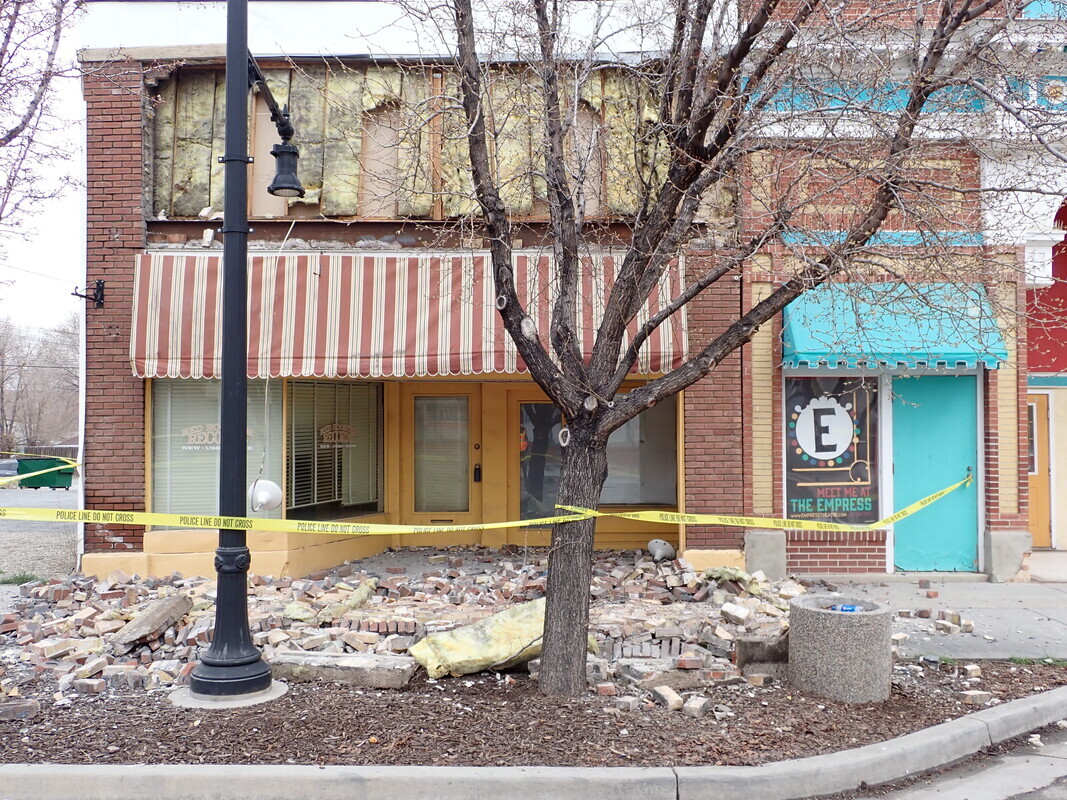
The Beehive state needs an early earthquake warning system similar to California, Oregon and Washington to protect its infrastructure and economy from potentially billions in losses. That is the primary message from an updated Utah Seismic Safety Commission report.
The Utah Seismic Safety Commission’s updated study called on the state to partner with the federal government to expand the United States Geological Service’s ShakeAlert early earthquake warning system to the Wasatch fault from California, Oregon and Washington.
Utah can also improve its earthquake resilience by upgrading its water infrastructure, evaluating school buildings for earthquake retrofits, public awareness campaigns and enforcing existing building codes.
Utah should invest $125 million in its four major water aqueducts that serve over 2 million residents, the commission said. An earthquake could rupture any of these pipelines and leave hundreds of thousands of Utahans without water for up to six months.
The cost of improving the four pipelines is over $550 million. Utah’s legislature appropriated $50 million in 2023, leveraging district and FEMA funds to fully fund two projects, but the remaining two projects face a $125 million funding gap.
Investing $4 million in evaluating or designing retrofits for Utah’s 130 school campuses would help keep school children safer. Over 70,000 Utah children who attend school in these buildings are at high risk in an earthquake. The campuses also serve as important gathering and sheltering places and are essential for resuming normal life after a disaster, the study noted.
The commission called on Utah to spend $600,000 over two years to increase the public’s awareness of the risk from the state’s 140,000 unreinforced masonry buildings. Most of these buildings that were built before 1976 are spread across the state and include single-family homes, apartments and office buildings. The study noted improved public awareness will also apply market pressure on developers and landlords to upgrade more of these buildings.
Click here for more.
(Photo courtesy of the state of Utah.)
| |
|
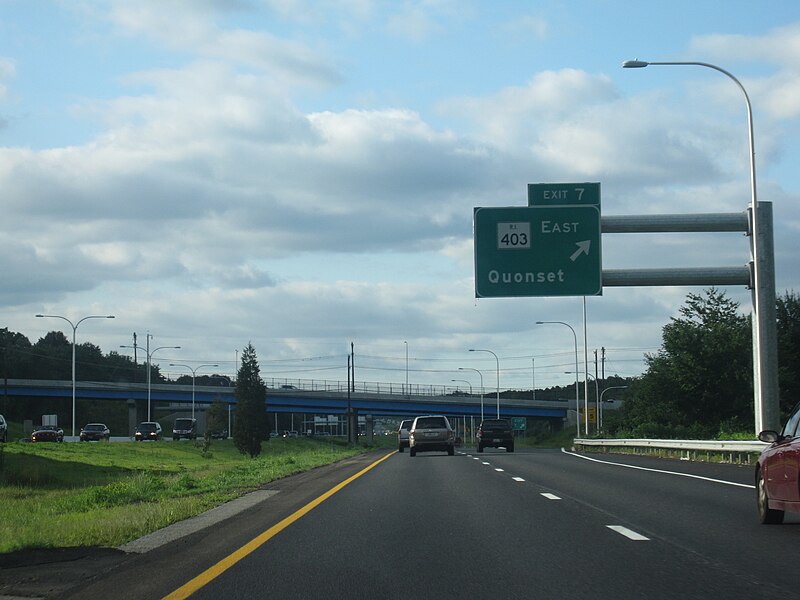
The Rhode Island Department of Transportation was awarded an $81 million federal grant in January to build a series of freeway interchanges and ramps connecting Interstate 95 to a business park that houses the Port of Davisville.
The project’s estimated total cost is $135 million and will improve safety and freight connectivity in the region, Rhode Island U.S. Sen. Jack Reed said in a statement. Construction begins in 2025 after design and build teams are selected.
Rhode Island’s federal grant will help finance the completion of the final link between the state’s portion of Interstate 95 and Route 4, establishing a direct freeway connection at one of its busiest junctions for commercial and passenger traffic.
The funding will also create three missing ramps to improve access for truck and freight providers servicing the 3,200-acre Quonset Business Park, a major industrial park that is home to 225 companies, employing 14,000 people.
Click here for more.
(Photo: Route 4 near Quonset. Courtesy of Raime.)
| |
|
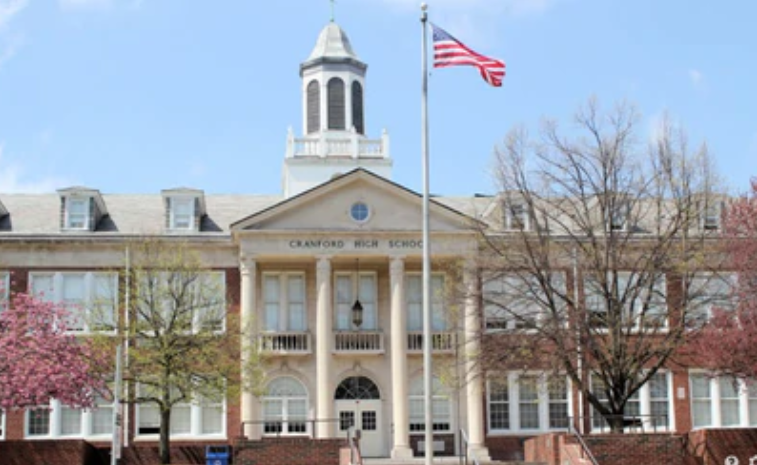
The Cranford Township Public Schools district in New Jersey will move forward with plans to build a suite of kindergarten classroom and update existing facilities at eight campuses after voters approved a bond referendum Jan. 23.
State aid will cover $19.6 million in project costs, leaving the school district to shoulder the remaining costs.
The school district will use $20.9 million to build an additional 16 kindergarten classrooms across four campuses. Each classroom will include restrooms, furniture and furnishings. The district will spread the remaining $54.1 million across all eight schools included in the bond.
At Cranford High School, the district will upgrade and renovate 18 science and classrooms, including rooms for science labs, culinary arts, digital photography and eSports. The district will also renovate the media center to create spaces to practice new forms of media and collaboration zones. Other plans include renovating the nurse’s area, renovating the bathrooms and upgrading electrical infrastructure.
The district will improve the auditorium by updating the sound system, stage lighting, flooring, painting and air conditioning. The auditorium will receive barrier-free exterior access for ADA compliance. The district will also replace the bleachers and install air conditioning in the school’s main gymnasium.
Three schools – Walnut Avenue, Bloomingdale Avenue and Brookside Place – will receive large, modern media centers to replace their existing media centers. The district will renovate the old media centers into either art or music classrooms. The district will also replace the gyms’ windows and install air conditioning for each school’s All Purpose Room and replacement media centers. Plans include building adjoining wings onto the main school buildings, housing four kindergarten classrooms each.
Click here for more.
(Photo: Cranford High School. Courtesy of Cranford Township Public Schools.)
| |
|
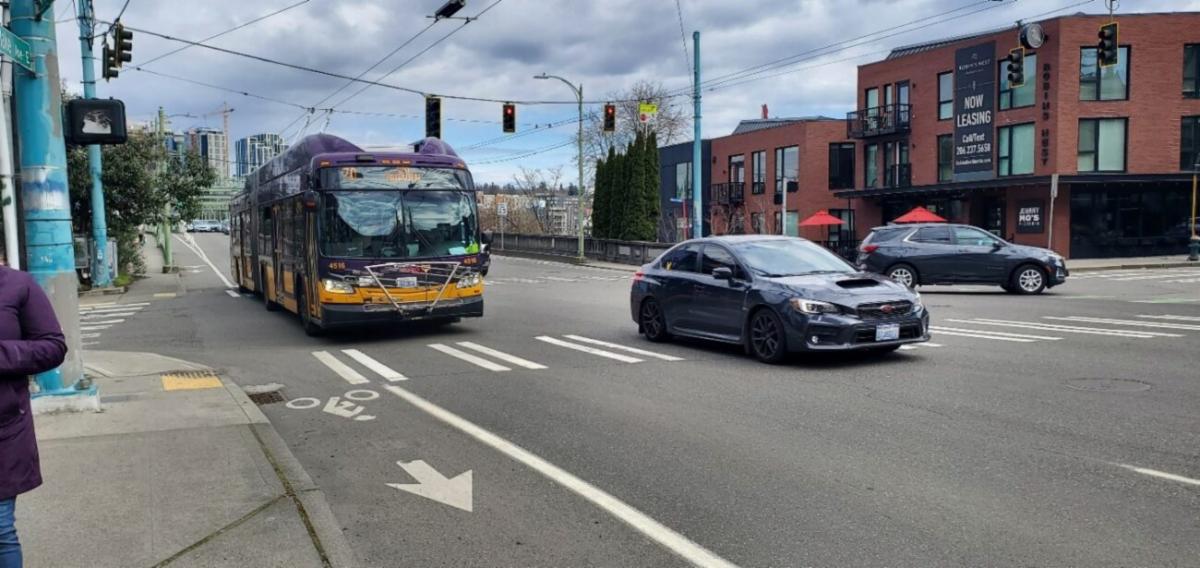
A project to improve service on one of Seattle’s most-traveled bus routes got a boost last week in the form of a $64.2 million grant from the Federal Transit Administration (FTA).
The RapidRide J Line project is a partnership between the Seattle Department of Transportation (SDOT) and King County Metro to upgrade King County Metro’s Route 70 bus route — one of the most used routes in Seattle and an important connection between downtown, Belltown, South Lake Union, Eastlake and the University District.
The project includes installing thicker pavement, safety enhancements such as new shelters and protected bike lanes and planting 100 trees along the route. The $128.5 million project is partially funded by the nine-year Levy to Move Seattle program, which voters passed in 2015.
Funding includes the $64.2 million FTA grant, an additional $9.6 million from the Federal Highway Administration (FHA) and $43 million from the city of Seattle. The six-year design phase was completed in 2023. Construction is scheduled to begin this year. The goal for completion is 2027.
In addition to the federal funding, the Washington State Department of Transportation and the University of Washington will each contribute $6 million to the project. Seattle Public Utilities will also replace a water main along the route during repaving. The $28 million project is considered separate from the RapidRide J Line project.
Click here for more.
(Photo: The existing Metro route 70 bus travels south into the Eastlake neighborhood. Courtesy of SDOT.)
| |
|
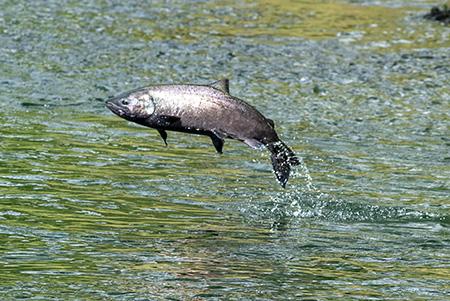
The U.S. Bureau of Reclamation is making $40 million available to create habitats for salmon in the California Central Valley. The grant program is part of a federal effort to double the salmon population by 2025. Applications are due March 18, 2024.
The Notice of Funding Opportunity (NOFO) is for the Central Valley Project Habitat & Facility Improvements program’s third year of awards. The program supports projects that the Central Valley Project Improvement Act’s (CVPIA) Near-Term Restoration Strategy prioritizes. The strategy is a five-year plan to double the number of fish migrating to spawn upstream by 2025.
Projects include building structures to provide habitats for salmon. This includes developing and modifying side channels and placing woody material, boulders and other structures. Other projects include creating and enhancing floodplain habitats and improving facilities by adding fish screens on diversions. These diversions prevent salmon from entering irrigation channels where they may die or become stranded.
California implements the program in the Central Valley, an 18-county area covering 20,000 square miles from Redding in North Sacramento Valley to Bakersfield in the Tulare Basin. The Central Valley rivers support three fall, spring and winter runs for salmon and trout.
Click here for more.
(Photo courtesy of UC Santa Cruz.)
| |
|
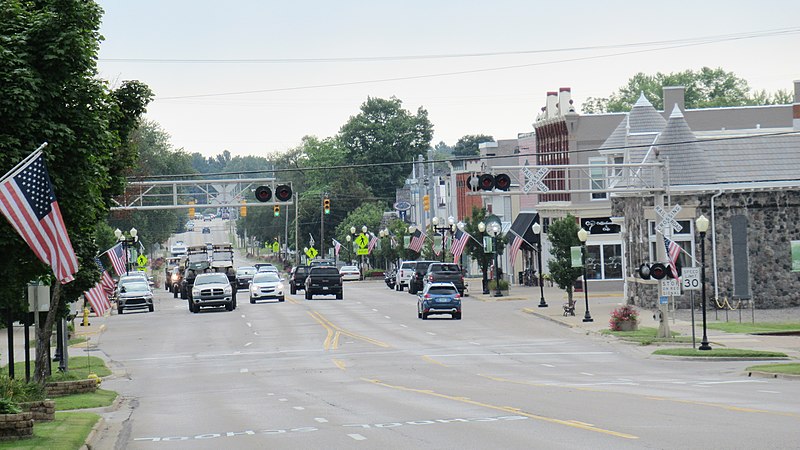
As part of an ongoing effort to reduce sewage overflows and to replace lead water pipes, the state of Michigan has awarded more than $67 million to projects statewide.
The MI Clean Water Plan grants will help local officials upgrade aging infrastructure, ensure residents have healthy drinking water and protect the state’s environment. Specifically, the funds will support fixing legacy issues such as aging facilities and challenges like new standards for Per- and Polyfluoroalkyl Substances (PFAS), also known as “forever chemicals.”
The city of West Branch received $18 million in state funds to replace old, undersized and failing watermains and to build a water tower. Improvements to an existing well and replacing the master meter connection are also planned. West Branch is about 150 miles north of Lansing.
In Detroit, $17.5 million in state funds will go to replacing and rehabilitating more than 30,00 linear feet of vintage cast iron water mains in the neighborhoods of Dexter-Linwood, Davison and Buffalo-Charles. Approximately 475 lead service lines will be replaced as well.
The town of White Cloud will receive $4 million to replace 420 lead and galvanized service lines. The town is about 30 miles north of Grand Rapids.
Click here for more.
(Photo courtesy of Notorious4life.)
| |
|
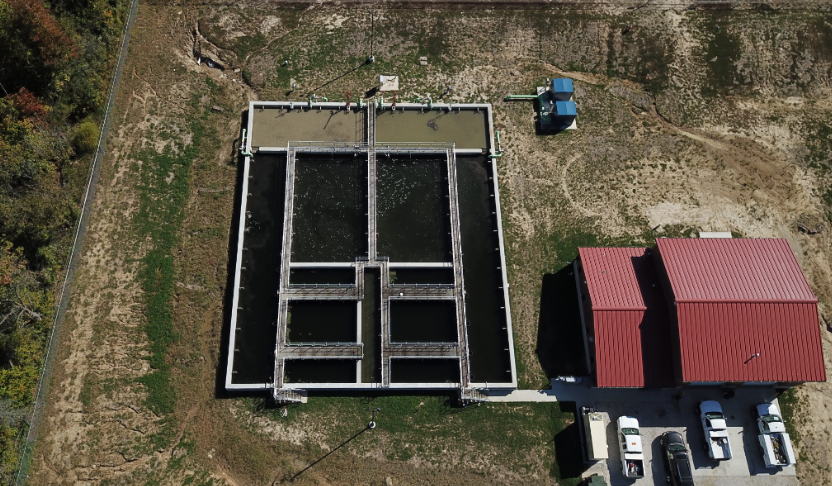
An upcoming $40 million bond measure in the Missouri city of Ashland would improve the city’s waterworks and sewage system. The projects will increase the system’s capacity and reduce the amount of stormwater that enters and negatively affects the treatment process. Residents will vote to approve the bond Feb. 6.
Approval would allow the city to complete a series of projects using the Missouri Department of Natural Resources State Revolving Fund (SRF). The SRF funds a wide range of projects that address the state’s highest priority needs to protect public health, the environment and meet environmental standards. Applications to the SRF are due annually on March 1.
Voter approval would set a series of investments in motion, including $14.8 million to improve the city’s wastewater treatment facility. Those plans call for $9.5 million to expand its treatment capacity, $2.6 million to expand the facility’s headworks and $1.9 million for UV disinfection and post-aeration. The projects constitute Phase 1 of the city’s plans to improve the facility over the next three to five years.
The funds would also support $4.5 million to repair the city’s wastewater collection system and support regionalization projects. Regionalization projects typically consolidate multiple areas into a regional service facility.
Plans also call for investing $2.6 million to reduce infiltration and inflow, which is the process of excess groundwater or stormwater flowing into sanitary sewer pipes. If left unchecked, infiltration and inflow can result in sewer system overflows.
Click here for more.
(Photo courtesy of the city of Ashland.)
| |
|
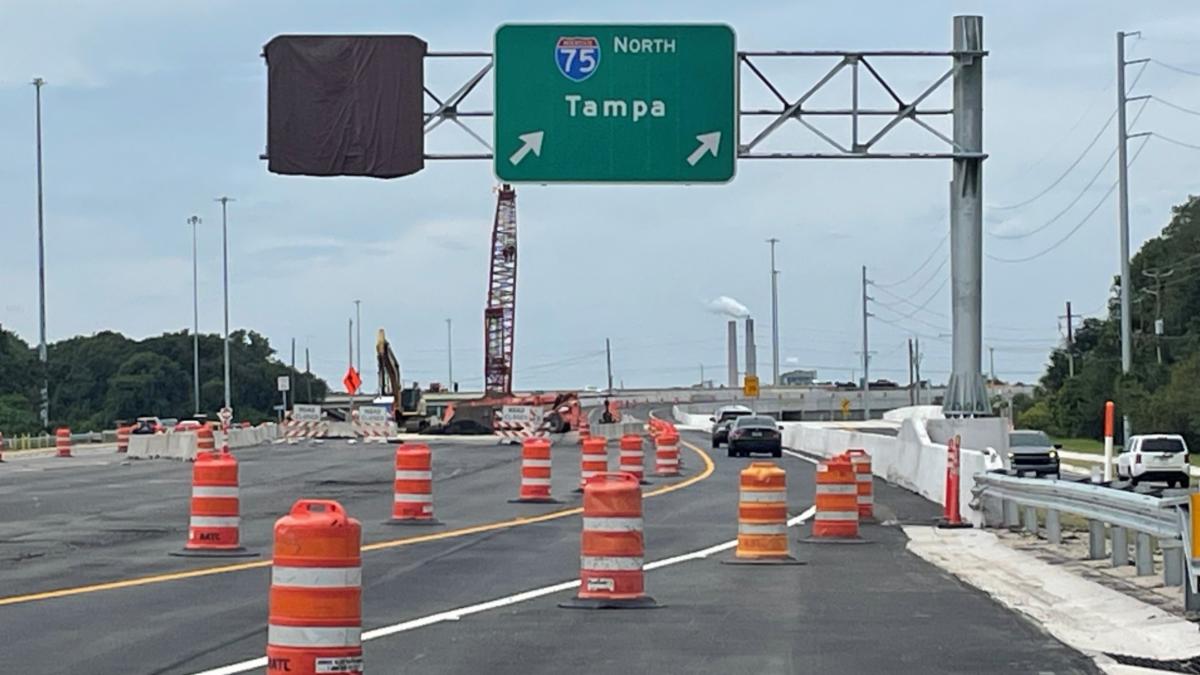
Hillsborough County, Florida, will use $33 million to widen a road, called Big Bend Road, in the Tampa-St. Petersburg area and repair sidewalks. The Florida Department of Transportation (FDOT) provided the funding from the American Rescue Plan (ARP). The $45.6 million Big Bend Road project is currently in the design phase. Construction will begin in fall 2024.
Hillsborough County officials recently signed an agreement with FDOT to expand Big Bend Road from four to six lanes. The road stretches from U.S. Highways 41 to 301. The county will also add sidewalks, curbs, gutters and shared-use paths to connect neighborhoods to schools, shops and recreational activities along the corridor.
Corridor-improvement plans also call for converting the corridor’s open drainage system to a closed system. Other improvements include replacing the road’s existing diagonal-span wire signal with box-span strain poles. In addition, the county will upgrade the corridor’s water reclaim and sewer lines.
The project will prioritize safety elements to protect pedestrians and bicyclists, according to U.S. Rep. Kathy Castor’s office. This includes high-emphasis crossings at intersections and countdown pedestrian-crossing signals. Plans also call for reflective pavement markers, reflective thermoplastic lane markings and retroreflective signs for nighttime visibility.
The project is part of a $181 million capital investment in the corridor that includes $87 million in combined federal and state grants, according to a presentation to the Board. A $97 million Big Bend/I-75 Interchange project is also underway with completion expected by mid-2025.
Click here for more.
(Photo courtesy of FDOT.)
| |
|
Minneapolis will use $20 million from the U.S. Department of Transportation (USDOT) to improve safety along some of the city’s most dangerous roads.
The city will direct the funds toward high-priority safety projects in the city’s Vision Zero Action Plan 2023-2025, which seeks to end traffic deaths and severe injuries by 2027. Other cities such as Nashville and San José have also committed to Vision Zero plans and received SS4A grants.
The Minneapolis safety improvements will address speeding, left-turn conflicts and red-light running. USDOT has identified these areas as the city’s leading severe and fatal crash factors. The city will improve traffic signals at 526 intersections to increase roadway safety.
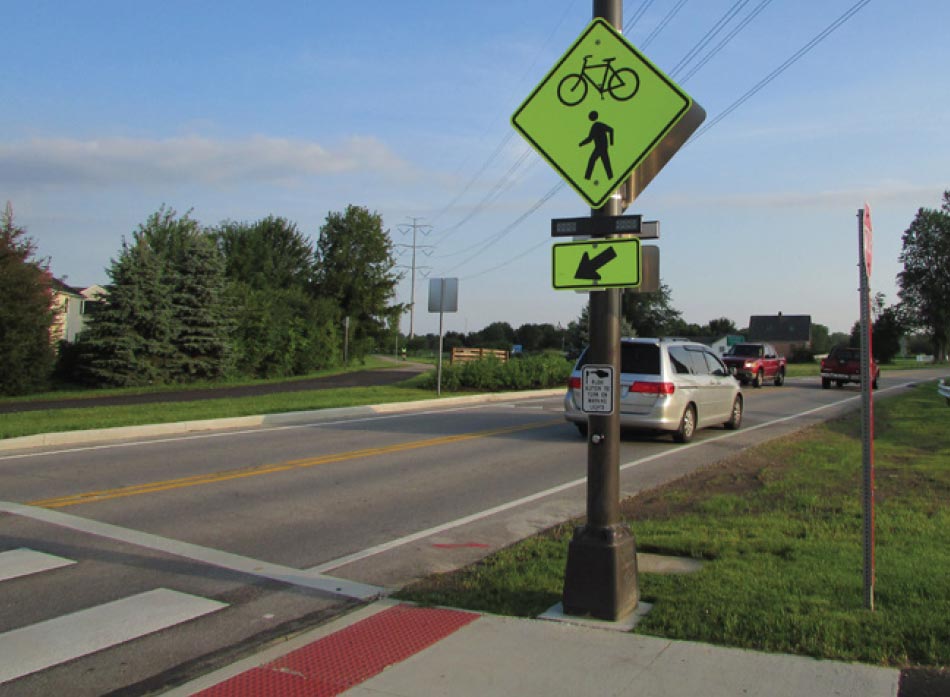
The city will build pedestrian refuge islands, intersection medians and protected bicycle lanes along 25 of the 112 miles identified as high-injury streets. Other project components include implementing high-visibility crosswalks, rectangular rapid-flashing beacons (RRFB), intersection lighting upgrades, pedestrian crosswalk signs and roadway lane-reductions.
The project also calls for supplemental planning and demonstration activities, including speed data collection, reduced speed limit and roundabout evaluation, and quick-build pilot projects and analysis.
Other key components of the Minneapolis plan include designing streets to lower traffic speeds and implementing automated traffic enforcement to monitor speeding and red-light running. The latter approach requires legislative signoff and has proven effective in eliminating officer interaction, an executive summary of the plan said.
Click here for more.
(Photo: Rectangular rapid-flashing beacons like this will be installed as part of Minneapolis' safety plans. Courtesy of the U.S. Department of Transportation.)
| |
|
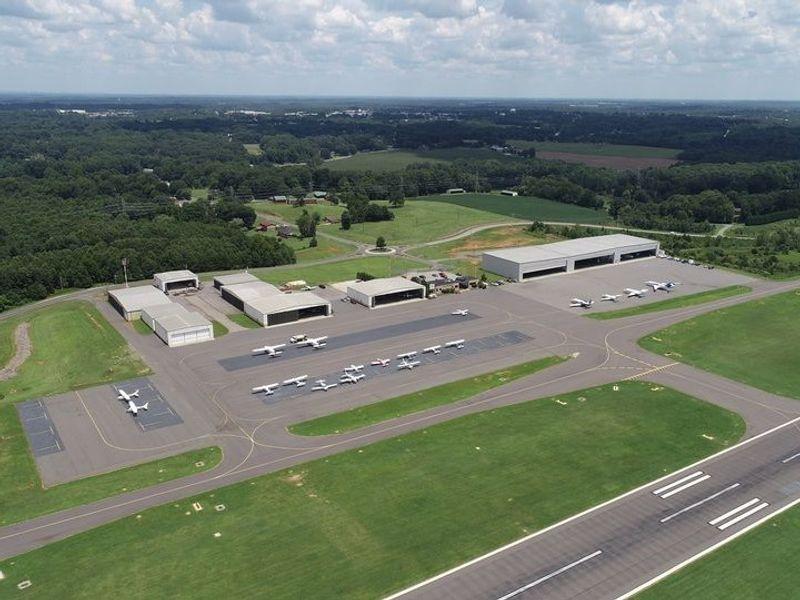
The North Carolina city of Statesville will use $15.5 million to make a series of improvements to its regional airport, including construction of a terminal building. Currently in final design, bids will open the third week of February. Construction is expected to begin in March, with completion slated for August 2025.
City Council members recently accepted a $15.5 million non-matching grant from the North Carolina Department of Transportation, $6 million of which will go toward the four-story airport facility. The other $9.5 million will be used to develop a pad-ready site that will house one or two hangars.
The airport’s first floor will include a VIP office, customer service area, galley for seating and food, a “pit stop” vending area, small conference room and several rental offices. The second floor will feature a pilot lounge, boardroom, coffee bar and an overlook. Third-floor amenities will include an overlook with an outdoor patio that glows at night, with space that could accommodate a restaurant. The entire building will include two-story atrium bubble lighting to mimic the airport’s hot air balloon festival. The project is estimated to cost $12.5 million.
Click here for more.
(Photo courtesy of the city of Statesville, North Carolina.)
| |
|
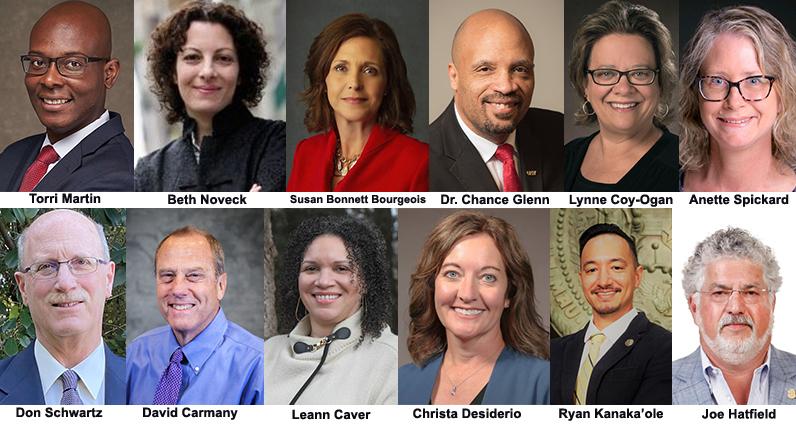
Georgia – Torri Martin has been named chief information officer of Atlanta Housing. Martin previously led the city’s Office of Financial Systems Services. The Georgia State University alum previously served as senior vice president and chief information officer for the Washington Metropolitan Area Transit Authority (WMATA).
New Jersey – Beth Noveck has been appointed as the state’s first-ever chief AI strategist. She takes on the job as the state launches what Gov. Phil Murphy recently called an “AI Moonshot” effort focused on innovation in public services, health, education and other areas. Noveck already serves as the state’s first chief innovation officer. She is director of The GovLab and the Burnes Center for Social Change at Northeastern University.
Louisiana - Susan Bonnett Bourgeois is set to lead the Louisiana Economic Development agency. Bourgeois is currently president of SBB Consulting and president emeritus of the Northshore Community Foundation. Bourgeois also held multiple roles in Louisiana Gov. M. J. Foster’s Administration, including director of Administrative Affairs and special assistant to the governor.
New York - The State University of New York Board of Trustees announced the appointment of Chance M. Glenn Sr., Ph.D., as the 10th president of Buffalo State University. Dr. Glenn, whose appointment is effective July 1, 2024, is a professor of electrical engineering, who has served as provost and vice president for academic affairs at the University of Houston-Victoria since 2019.
Maine - The Husson University Board of Trustees has unanimously elected Senior Vice President for Academic Affairs and Provost Lynne Coy-Ogan as Husson’s next president. Coy-Ogan joined Husson University as dean of the School of Education in 2005 and rose to provost in 2009.
Arizona - The Sedona City Council voted 7-0 Jan. 23 to hire Anette Spickard as city manager. Spickard’s background includes over 25 years of dedicated public service, most recently as the city manager of McCall, Idaho.
California - The city of Sebastopol has named Don Schwartz as city manager. Schwartz previously served as the assistant city manager of Rohnert Park. He has almost 30 years of experience in government, community service and nonprofit leadership, including nine years with the County Administrator’s Office for the county of Sonoma.
California – The Rialto City Council voted to hire David Carmany as city manager at its Jan. 23 meeting, effective the next day. Carmany brings over 30 years of experience as a public servant, most recently as city manager of West Covina.
Washington - Leann Caver was unanimously selected as CEO of Clark County Public Transit Benefit Area Authority (C-Trans), effective March 1. Caver has been with C-Tran’s operations team since 2021 and is currently C-Trans’ deputy chief executive officer.
Illinois - City Manager Beth Beatty appointed Christa Desiderio as deputy city manager. Desiderio has been Joliet’s city clerk for the past 12 years. She brings more than 23 years of municipal government experience to the role.
Hawai’i - On Jan. 16, Gov. Josh Green nominated Ryan Kanakaʻole as the first deputy for the Hawai’i Department of Land and Natural Resources. Kanakaʻole is currently a deputy attorney general with the Department of the Attorney General. He previously served for the Hawaii Housing Finance and Development Corp. and the Mauna Kea Stewardship Oversight Authority. Kanaka’ole brings 15 years of law and public sector experience to the position.
Georgia - The Georgia Department of Natural Resources board unanimously elected Joe Hatfield as its chairman. Hatfield assumes the role after spending a year as the board’s vice chairman. He takes over the position from Dwight Davis.
| | |
|
Connect with SPI
Check out our social media links!
| |
About Government Contracting Pipeline | |
|
Strategic Partnerships, Inc.
Publisher: Mary Scott Nabers
Editors: Adam Rollins
Dave Doolittle
www.spartnerships.com
| |
Government Contracting Pipeline, a publication of Strategic Partnerships, Inc., is a free, weekly newsletter detailing important happenings nationwide and the premier source for federal, state, and local government news and contracting opportunities.
| |
Help us share this message.
To ensure delivery and proper formatting of the newsletter, be sure to add editor@spartnerships.com to your safe senders list.
Otherwise, the newsletter may be flagged as spam and automatically routed to your junk e-mail folder.
| | | | |