Volume 16, Issue 1 - Wednesday, January 3, 2024 | |
By Mary Scott Nabers, CEO of Strategic Partnerships, Inc. | |
|
The Federal Transit Administration has about $4.5 billion available in 2024 for transit projects of all types. This includes bus rapid transit projects, light rail and commuter rail initiatives. While most of the projects involve state departments of transportation, the projects are local and require collaboration between the jurisdictions. The upcoming projects will all be large and diverse. Upcoming projects outlined in today’s column are all related to rapid bus transit efforts. It is advisable, however, to check with each state of interest to see what other types of transit projects are also in the process of planning and design.
MARTA, the public transit authority in Atlanta is currently seeking designers and engineers to help finalize plans for the construction of a 15.5-mile rapid transit bus route. The new route, with 13 total station areas, will add many new connections, including shopping malls and a medical center. The buses that will shuttle passengers on the new route daily are high capacity and very fast. The estimated construction cost is projected to be $338 million.
MARTA also has a project in the works to transform Five Points Station in downtown Atlanta for $260 million. This project is in the design phase, with construction solicitations set to be issued in the coming months. Construction will get under way in 2024. The current station is covered by a brutalist structure, which will be removed and replaced with an open canopy. Additionally, the station plaza and concourse levels will be redesigned to increase accessibility, improve wayfinding and allow in more light and air. This project received financial support from the federal Rebuilding American with Sustainability and Equity (RAISE) grant program.
Denver’s Colfax Corridor is undergoing a significant transformation with the installation of a $250 million Bus Rapid Transit (BRT) system. This initiative covers 5.5 miles of dedicated center lanes and another 3 miles of operating in mixed traffic. Designs are currently being finalized, with construction slated for 2024.
The BRT service is designed for 24/7 operations, offering buses every four minutes on weekdays during the day, every 15 minutes at night and every seven minutes on weekends. The project includes station structures resembling those found in light-rail systems, with raised platforms, canopies, seating, ticket vending machines, electronic displays and a distinctive arch design along Colfax Avenue. The project follows years of planning, community input and a comprehensive analysis of corridor needs, resulting in a preference for the center-running BRT design. Buses should be running the route by early 2027.
Click here for more.
| |
|
The U.S. Department of Energy (DOE) is investing $7 billion to boost the country’s hydrogen production and create a network of seven regional clean hydrogen hubs (H2Hubs). Spread across the U.S., each hub would create hydrogen from available resources in the region to store and use locally. The goal is to help lower emissions from the industrial sector, which produces 30% of the nation’s carbon emissions, but also to expand its use in other industries, such as transportation and power supply.
Hydrogen is a vital part of a comprehensive portfolio of tools to achieve net zero emissions by 2050, according to the Office of Clean Energy Demonstrations (OCED).
The U.S. can use the H2Hubs to rapidly scale its infrastructure to produce and use more hydrogen. Once operational, the H2Hubs are projected to produce 3 million of the 10 million metric tons of clean hydrogen needed to achieve the zero-emissions goals and to drive the cost of hydrogen to $1 per kilogram, down from the current price of $5 per kilogram. Additionally, the federal investment is expected to capture $40 billion in private-sector funds. Each H2Hub would develop projects for the production, storage and consumption of hydrogen.
Click here for more.
(Photo courtesy of the Alliance for Renewable Clean Hydrogen Energy Systems.)
| |
|
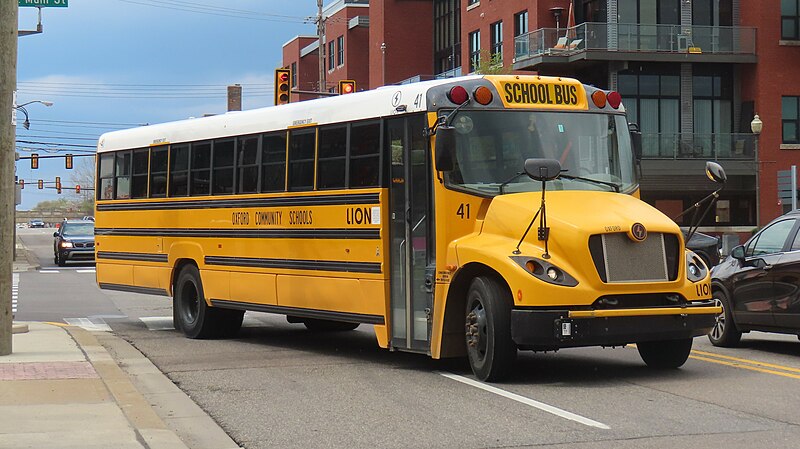
School districts nationwide are taking steps to electrify their bus fleets, and the window to apply for rebates to help cover the cost of new vehicles closes Jan. 31.
The Clean School Bus (CSB) Rebate program subsidizes the cost of zero-emission (ZE) school buses, charging infrastructure and other related costs such as workforce training. School districts, Tribes, nonprofit transportation associations and eligible contractors can apply to receive rebates for up to 25 new battery electric, compressed natural gas (CNG) or propane-powered buses.
The Environmental Protection Agency (EPA) oversees the distribution of funds for the program, which was created out of the Bipartisan Infrastructure Law. Funding of $5 billion is available now for school districts to replace older diesel buses with ZE buses between 2022 and 2026. The first round of funding in 2022 awarded $900 million to 365 school districts.
While the CSB program offers both grants and rebates, the rebate program is quicker, and the EPA selects recipients based on a random-number generated lottery. The program is ideal for districts with smaller fleets. The CSB grant program closed applications in August for $400 million in competitive funding and anticipates announcing the awards in February or March.
Districts applying for rebates can receive up to $345,000 per ZE bus plus the charging infrastructure if the district meets priority criteria, such as districts located in low-income, rural or Title I areas or territories. Non-priority districts can receive up to $200,000 per ZE bus. Rebates for CNG and propane buses range from $20,000-$45,000 per vehicle.
Click here for more.
(Photo courtesy of 42-BRT.)
| |
|
The Wisconsin State Building Commission recently approved approximately $589 million in building projects at state facilities.
Most of the approved funding will pay for expansions and renovations that support university system growth. Seventeen projects that include upgrades to infrastructure at parks, state healthcare facilities and at various state agencies also received funding.
Projects receiving funding include:
- $344 million for a combined project to build a Health and Science Building at University of Wisconsin-Eau Claire and replace the lower campus’s chiller and cooling tower. The new instructional spaces will be designed to serve multiple courses, disciplines and programs. The Lower Campus Chiller and Cooling Tower Replacement Project replaces an existing 650-ton centrifugal chiller with a 1,000-ton centrifugal chiller. The new chiller and controls will be connected to and integrated with an existing 1,400-ton chiller and controls to work in parallel.
- $138.8 million for a new facility at University of Wisconsin-Stout's Heritage Hall to bring all College of Arts and Human Services programs under one roof.
- $32.9 million to build a two-story student health and wellness center addition at University of Wisconsin-Steven's Point’s Champions Hall while providing new accessible parking, a one-story storage area and preserving greenspace.
Click here for more.
(Photo: Rendering of the proposed science and health sciences building at the University of Wisconsin-Eau Claire. Courtesy of the University of Wisconsin-Eau Claire.)
| |
|
Voters in the western New York town of Jamestown approved a $126 million Capital Improvement Project (CIP) to support improvements across nine schools and its bus garage. School officials said the latest CIP is needed to address upgrades that couldn’t be included in the $86.5 million improvements voters approved in 2021. Work stemming from the bond approved in December 2023 is slated to begin in 2024 and run through 2029.
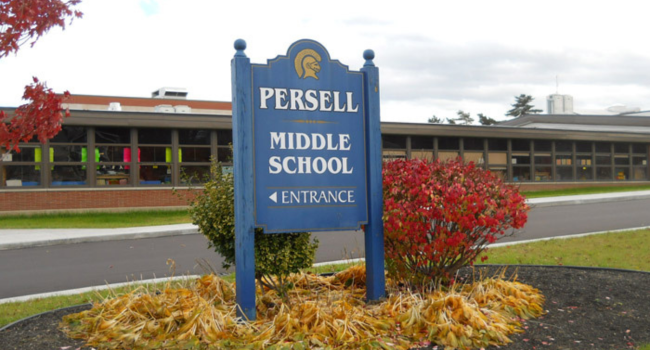
Persell Middle School will see the largest amount – $22.4 million – for roof replacement and upgrades to water heating, water service and HVAC systems. Plans include upgrading mechanical systems from the 1950s and 1980s, and renovating staff and student bathrooms.
Additionally, all nine schools and the bus garage will receive upgraded emergency systems and communication systems. Eight schools will require new electronic road signs, and generators will be either replaced or added to seven schools. Exterior security improvements and security window film will be added to all five of the district’s elementary schools: Bush, Ring, Fletcher, Lincoln and Love.
Click here for more.
(Photo: Exterior of Persell Middle School. Courtesy of Jamestown Public Schools.)
|  | |
|
The Department of Energy (DOE) recently announced up to $530 million in technical assistance competitive grants designed to bring local government codes up to date. The grants are intended to help local governments defray the costs of adopting the most recent model code guidelines published by two recognized nonprofits that are widely considered to be the standard bearers.
The United States does not have a national building code or energy code. States or local governments can choose to adopt one of the national model energy codes, a modified version of the model code or their own state-specific code.
The International Code Council writes the International Energy Conservation Code (IECC), the model code for residential buildings that was last updated in 2021. The American Society of Heating, Refrigerating and Air-Conditioning Engineers (ASHRAE) writes energy codes for commercial buildings and last issued updates in 2022. State governments have traditionally been slow to adopt the changes to model codes.
The new Latest and Zero Building Energy Codes program is being administered through the DOE’s Office of State and Community Energy Programs (SCEP), part of the Inflation Reduction Act. The competitive funding opportunity expands the pool of eligible grantees to include some local governments. The funding opportunity also expands qualifying activities beyond the IECC and ASHRAE to include customized codes and building performance standards. The funding opportunity also includes zero energy codes detailed in the 2021 IECC.
Using this funding, states and localities can also coordinate to develop a workforce with skills of the latest building technologies, the DOE said.
Click here for more.
(Photo courtesy of Brett Jordan on Unsplash.)
| |
|
The South Carolina Broadband Office (SCBBO) approved $112.3 million in its first round of grant funding for 17 projects that will expand last-mile broadband to 16,000 locations. The funding comes from the “Next, Next Greatest Thing – Main Street South Carolina” (MAIN ST) grant program. The competitive grant program will help bring reliable, high-quality internet to rural areas that lack adequate broadband access and service. The program will prioritize projects in rural town centers and surrounding residential areas.
South Carolina announced in March 2023 that it received a total of $185.8 million for broadband infrastructure from the US Treasury’s Capital Projects Fund (CPF 1.0) grant program. CPF is a $10 billion federal initiative that supports state, territory and Tribal government capital projects that enable work, education and health monitoring. CPF has awarded approximately $9 billion to states since March 2021.
As part of the MAIN ST program, SCBBO awarded grants to eight internet service providers (ISPs), which contributed $50 million in their own funding to the projects, bringing the total first round broadband infrastructure investment to $162.1 million.
Click here for more.
(Photo courtesy of Vitaly Sacred on Unsplash.)
| |
|
The Tennessee Department of Environment and Conservation (TDEC) has directed $191 million in grants to support water infrastructure projects that will improve water access, support water reuse projects and upgrade aging infrastructure.
More than $121 million will go to 14 projects that will improve sustainability and reliability of water and wastewater systems. Another $50 million will go to 27 resource protection projects, including efforts to strengthen water infrastructure against extreme weather or to bolster stormwater management to improve water quality. Nearly $20 million will support eight projects to reclaim water from a variety of sources and then treat it for reuse.
Big-ticket items include a $19 million award to the city of Gallatin to help build a 118,000 linear-foot transmission main to supply water to the Castalian Springs Bethpage Water Utility District and the cities of Portland and Westmoreland. The collaborative effort addresses regional drinking water needs and mitigates drought conditions.
Almost $16 million will go toward a project to connect the plant and distribution systems between the cities of Lexington and Scotts Hill. The project, which will address regional water-system inadequacies, will absorb the city of Sardis’ plant in the process.
Click here for more.
(Photo courtesy of Patrick Pahlke on Unsplash.)
| |
|
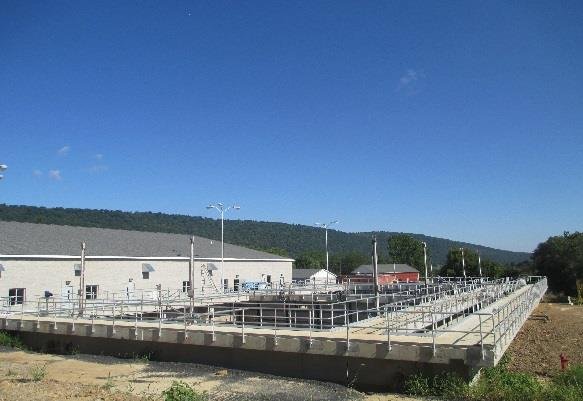
The West Virginia Water Development Authority (WDA) has directed more than $26 million to nine water-infrastructure projects across the state, including building a sewer plant and replacing water service lines and sewer pipes.
The grants come from the state’s Economic Enhancement Grant Fund (EEGF), which provides matching grants to municipalities for upgrading infrastructure such as water, sewer, economic development, commerce and tourism projects. Since it was established in April of 2022, the EEGF has provided $330 million to various projects statewide.
The town of East Bank will receive $8.5 million to support a raft of sewer system upgrades totaling $13.5 million. Plans include building two pump stations, 350 new house connections and installing more than 32,000 linear-feet of new sewer pipe.
The town of Sophia received $4 million that will go toward constructing a $16 million sewer plant that will serve Coal City. Mercer County Public Service District (PSD) will receive a similar $3.6 million grant to build a $14.4 million regional sewer collection and treatment system.
Click here for more.
(Photo courtesy of the Environmental Protection Agency.)
|  | |
|
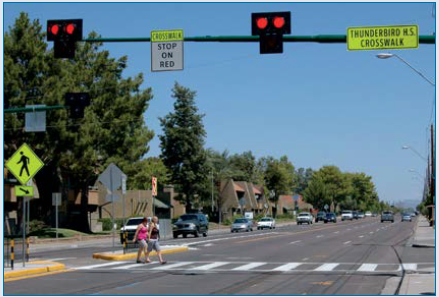
The city of Phoenix will receive $24.8 million from the U.S. Department of Transportation (USDOT) to improve road safety and infrastructure along Indian School Road in the city’s uptown area. To improve safety in the high-risk corridor, the city will install sidewalks, pedestrian beacons, improved crosswalks and better lighting.
The grant comes from USDOT’s Safe Streets and Roads for All (SS4A) program, which announced $817 million in funding for 385 communities in December 2023. SS4A aims to reduce roadway deaths and injuries by preventing crashes and similar traffic accidents. The next opportunity to apply for the program will be in February 2024.
The project is part of a larger mixed-use development to turn a vacant uptown property into a walkable urban hub for residential, retail and restaurant spaces. The Indian School Road project will improve safety conditions at adjoining intersections and pedestrian infrastructure in advance of future development.
Click here for more.
(Photo by Mike Cynecki. Courtesy of the U.S. Department of Transportation.)
| |
|
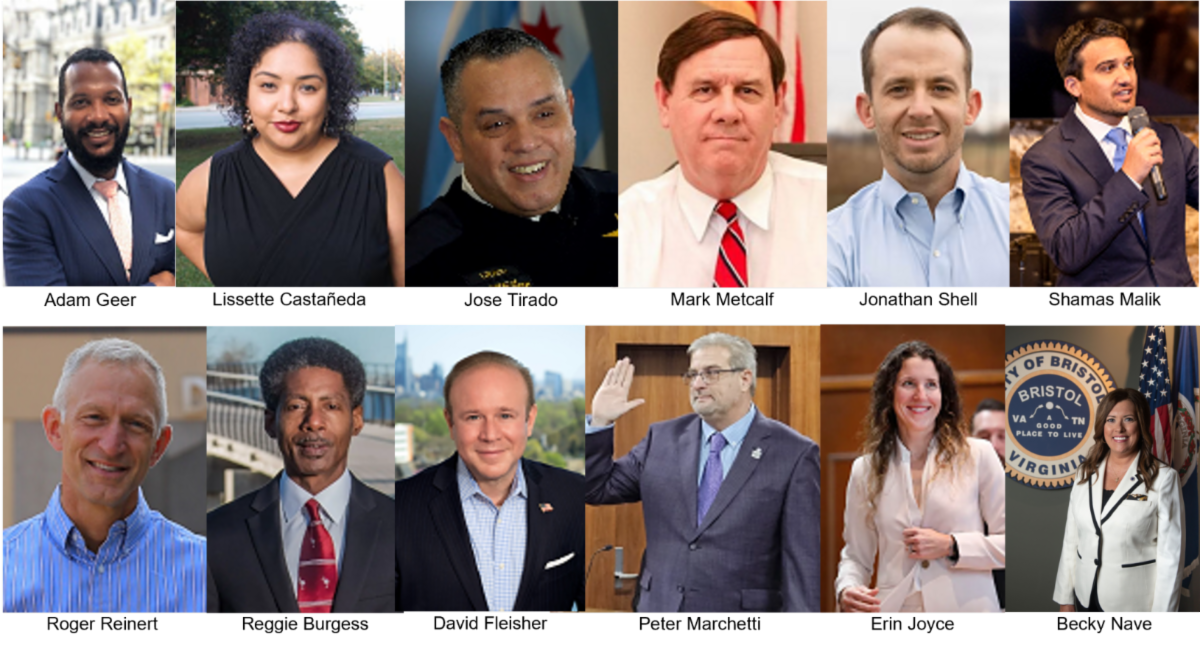
Pennsylvania - Philadelphia Mayor-elect Cherelle Parker named Adam Geer as the city's first chief public safety director, a newly created position. Geer previously served in the city’s Office of the Inspector General as the deputy inspector general for Public Safety. He brings 14 years of public sector legal experience to the role, previously serving as the assistant district attorney in the Philadelphia District Attorney’s Office.
Illinois – Chicago Mayor Brandon Johnson recently announced the appointments of Lissette Castañeda as the Department of Housing (DOH) commissioner and Jose Tirado as the executive director of the Office of Emergency Management and Communications (OEMC).
- Castañeda brings two decades of experience in affordable housing development, housing services and organizational leadership to the role of DOH commissioner. She previously served as the executive director for LUCHA, a DOH counseling agency, since 2019.
- Tirado will be the next executive director for OEMC. He brings decades of experience with OEMC and CPD to the role and will help modernize community safety strategy, advocate for diversity and inclusion in departments, and lead planning efforts for large-scale events. Tirado has served as the acting executive director of OEMC since April 2023.
Kentucky - A swearing-in ceremony was held in Lancaster on New Year’s Day for two of Kentucky’s newly elected constitutional officers.
-
Mark Metcalf was elected as the state’s treasurer. He previously served as the Garrard County attorney for 22 years. He has also served in the Kentucky Army National Guard and as a judge on the U.S. Immigration Court in Miami.
-
Jonathan Shell was elected as the state’s commissioner of agriculture. Shell began his political career in 2012 after joining the Kentucky House of Representatives.
Ohio – Shammas Malik was officially sworn in as the 63rd mayor of Akron on New Year’s Day. Malik replaces Dan Horrigan in the role.
Minnesota – On Jan. 2, Roger Reinert became the city of Duluth’s 40th mayor. Reinert brings extensive public experience to the role, previously serving as a city councilor, state representative and state senator. He defeated two-term Mayor Emily Larson in the November mayoral race.
South Carolina - Reggie Burgess was sworn in Jan. 2 as North Charleston’s first new mayor in 30 years. Burgess is a former police chief and will be the city’s first Black mayor. He replaced Keith Summey in the role.
New Jersey – David Fleisher, the previous president of the Cherry Hill Township Council, was sworn in as mayor of Cherry Hill on Jan. 2. Fleisher served on the Township Council since he was 27, the youngest to ever take a seat. He replaced former Mayor Susan Shin Angulo.
Massachusetts - After 16 nonconsecutive years on the city council and a failed mayoral bid in 2011, Peter Marchetti has officially become the city of Pittsfield’s mayor. Marchetti succeeds Mayor Linda Tyer after she chose not to run for re-election. He is the city’s first openly gay mayor.
Massachusetts – Erin Joyce was sworn in as the city of Braintree’s 3rd mayor on Jan 2. Joyce brings years of experience working as a civil engineer, local business owner and community advocate. She is the first woman to hold the office. Joyce replaced Mayor Charles Kokoros in the role.
Virginia – The Bristol Virginia City Council appointed Becky Nave to the role of mayor Jan. 2. Nave previously served as the city’s vice mayor. She takes over the role from Neal Osborne, who will remain on the City Council.
| | |
|
Connect with SPI
Check out our social media links!
| |
About Government Contracting Pipeline | |
|
Strategic Partnerships, Inc.
Publisher: Mary Scott Nabers
Editors: Adam Rollins
Dave Doolittle
www.spartnerships.com
| |
Government Contracting Pipeline, a publication of Strategic Partnerships, Inc., is a free, weekly newsletter detailing important happenings nationwide and the premier source for federal, state, and local government news and contracting opportunities.
| |
Help us share this message.
To ensure delivery and proper formatting of the newsletter, be sure to add editor@spartnerships.com to your safe senders list.
Otherwise, the newsletter may be flagged as spam and automatically routed to your junk e-mail folder.
| | | | |