Volume 16, Issue 4 - Wednesday, January 24, 2024 | |
By Mary Scott Nabers, CEO of Strategic Partnerships, Inc. | |
|
There is a sector of a federally funded program that I fear is not getting enough attention. This program supports many of the local projects I know public officials want to launch. The Facilities Grant Program, administered through the Treasury Department, is awarding grant funding to support the expansion of broadband accessibility in public centers.
Four of the following upcoming projects will be financed by the Multi-Purpose Community Facilities program, and two other upcoming projects are noteworthy as they represent another way to serve the same purpose.
Arizona State University (ASU) will oversee construction of the McCain Library, which is adjacent to the university’s Tempe campus. The library, named for the late Sen. John McCain, will occupy approximately 83,000 square feet and include space for community functions, educational activities and health monitoring programs. The library will be designed to accommodate equipment for telemedicine, health screenings, monitoring, job fairs, employment-training programs and skills-development training classes.
The library project will have presidential funding support along with $83 million from the U.S. Treasury’s Capital Projects Fund. The facility will be located on the 22.5-acre McCain Campus near Papago Park in Phoenix, just north of Tempe Town Lake. Officials estimate 50,000 people annually will benefit from the library’s services. Currently, there is no timeline for a construction launch, but design work is underway.
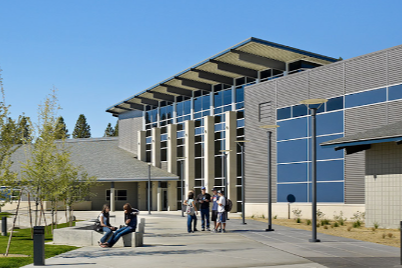
Central Wyoming College has announced plans to construct a permanent campus in Jackson, Wyoming, at a cost of $20 million. A funding award of $12.4 million from the U.S. Treasury's Capital Projects Fund will be consolidated with other state appropriations and federal funding to cover the cumulative costs.
The Jackson campus will house healthcare, hospitality and English as a Second Language programs. As a designated multi-purpose community facility, it will provide programming and services to support the Jackson community and provide public access to computer labs and career workshops. The design work is finished, and development plans will be available for approval by March 2024. Construction work will begin in late 2024.
Click here for more.
| |
|
What would you do if you could get anywhere within 100 miles in under an hour? That question – posed by Caryn Moore Lund, president of public policy, regulatory and government affairs for Ferrovial Airports – is at the heart of advanced air mobility (AAM).
Ferrovial Airports is a private airport investor and operator that is developing vertiport networks in the U.S. and Europe. Vertiports – small, secure facilities that allow electric vertical takeoff and landing aircraft (EVTOLs) to operate – are one of the latest developments in the AAM world.
EVTOLs differ from traditional planes and helicopters in that they are powered by batteries, meaning they have a lower noise output and zero emissions. They’re not like hover drones, though. These aircraft, designed to carry two to six passengers, including a pilot, will have a cruising altitude of 2,500 to 5,000 feet and speeds of up to 200 mph.
Vertiports operate most similarly to heliports and are defined as an area that can support the take-off and landing operations of EVTOL aircraft. The FAA regulations for the standard design of a vertiport includes specifications such as charging infrastructure and takeoff-area size. The regulations have stipulations for vertiport additions to current airports or on top of existing structures.
Click here for more.
(Photo courtesy of NASA.)
|  | |
|
The U.S. Department of Transportation has awarded a $1.05 billion grant to Wisconsin and Minnesota to replace the aging John A Blatnik Bridge, which connects the two states at the western tip of Lake Superior.
The funds are available through the Nationally Significant Multimodal Freight and Highway Projects program (INFRA) as part of the Bipartisan Infrastructure Law. Wisconsin and Minnesota each have committed $400 million toward replacing the bridge, a project estimated to cost $1.8 billion. The 8,000-foot Blatnik Bridge was built in 1961 and has reached the end of its service life.
More than 33,000 vehicles cross the bridge daily, and more than 265,000 trucks transporting nearly $4 billion in goods pass over the bridge every year. It is vital for reaching the Port of Duluth-Superior, the largest U.S. port on the Great Lakes, and it is one of the largest marine links for U.S. trade with Canada.
Design work is expected to begin this year. Construction could begin as early as 2025.
Click here for more.
(Photo courtesy of Jakes18.)
| |
|
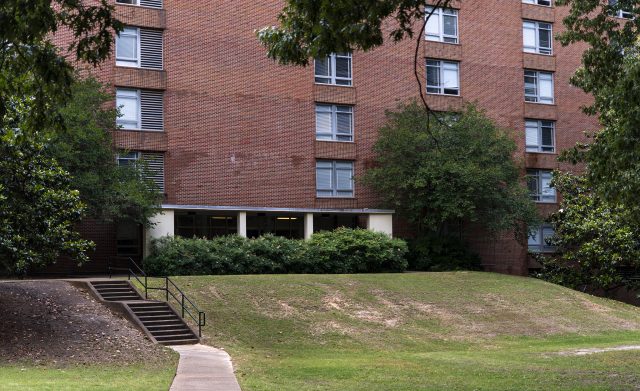
The University of Mississippi (Ole Miss) will improve academic and athletic facilities and increase student housing using a $245 million bond. The Mississippi Institutions of Higher Learning (IHL) Board of Trustees approved the funding to add almost 1,000 beds, build a softball stadium, renovate women’s athletics facilities, improve arts buildings and renovate a hall.
Building the student residence facility will cost $165 million, covering most of the bond issue. The school will begin the project by demolishing Kincannon Hall to make room for three residence buildings. The housing complex, totaling 337,000 square feet, will provide an additional 981 beds and student amenities. Construction is expected to begin in spring 2024.
The bond will provide $42 million to build and renovate multiple women’s athletics facilities. The university will build a softball stadium, including dugouts, seating, a press box, restrooms and other amenities. The project includes renovating the existing indoor team facility, playing field and the concessions and restrooms building. The stadium will also include coaches’ offices, training and treatment space, a team lounge and locker rooms.
Click here for more.
(Photo: Kincannon Hall. Courtesy of Srijita Chattopadhyay of Ole Miss Digital Imaging Services.)
| |
|
The Federal Highway Administration (FHWA) is providing $729.4 million to 34 states, the District of Columbia, the U.S. Virgin Islands and Puerto Rico to repair bridges and roads damaged by natural disasters, extreme weather and catastrophic events.
The funds come from the FHWA’s Emergency Relief (ER) program as the result of major disaster declarations. FHWA has distributed over $1.3 billion from the program since January 2022 to help states make repairs because of climate-related events, Transportation Secretary Pete Buttigieg said in a press release.
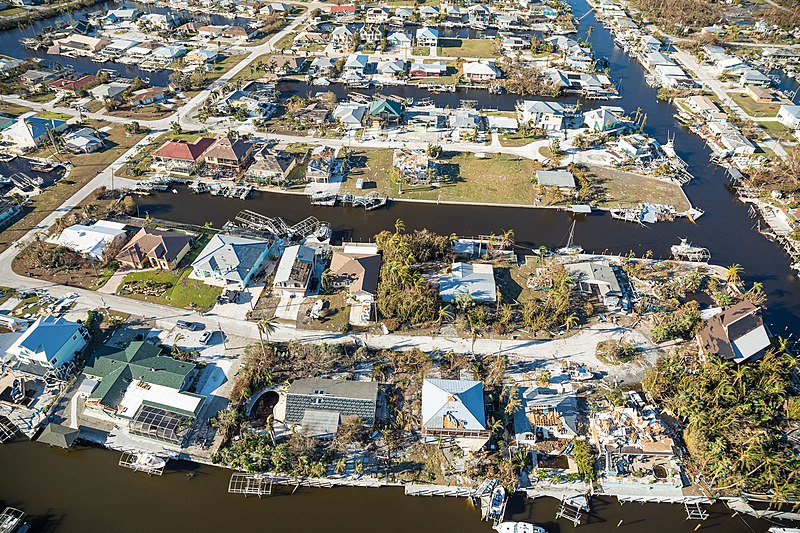
Florida will receive more than $223 million for continued repairs to roads, bridges and infrastructure damaged by hurricanes Ian, Fiona and Nicole in 2022. Vermont will receive almost $38 million for repairs from severe storms and mudslides in 2023. Puerto Rico will receive almost $33 million after Hurricane Fiona in 2022 and storms and flooding in October of 2022.
Pennsylvania will receive $22 million to cover repairs to the Interstate 95 bridge in Philadelphia that collapsed in June. That bridge fell when a gasoline tanker truck crashed and exploded under the highway. The state previously received $3 million in ER funds to repair the bridge.
Click here for more.
(Photo: Hurricane Ian caused extensive damage in Florida in 2022. Courtesy of Ozzy Trevino.)
| |
|
The state of Nebraska has awarded $124 million to support a business park construction project and to develop a community facility in the city of Omaha. The Nebraska Department of Economic Development (DED) delivered the grants through the Airport Business Park (ABP) Program and Multipurpose Community Facilities (MCF) Program.
The ABP Program provides funding to nonprofit development organizations to build business parks near major airports. Business parks are designated areas of land containing office buildings. The program is funded by LB 531, which state lawmakers passed in 2023 to provide grants for economic and community development programs.
The MCF Program supports capital projects that rehabilitate or expand existing multipurpose community facilities in metropolitan areas. The program also supports projects that enable work, education and health monitoring. The program uses federal funding from the Coronavirus Capital Projects fund, which was created to help state governments to respond to and recover from the COVID-19 pandemic.
Click here for more.
(Photo: The downtown skyline in Omaha, Nebraska, as seen from across the Missouri River in Council Bluffs, Iowa. Courtesy of Tony Webster.)
| |
|
A pair of U.S. senators have introduced a bill that would avoid duplicative federal software by preventing federal agencies from hiring contractors to reproduce code that another agency has already purchased.
Sens. Ted Cruz, R-Texas, and Gary Peters, D-Michigan, introduced the Source Code Harmonization and Reuse in Information Technology, or SHARE IT, Act last week, saying it would reduce the federal government’s annual $12 billion bill on custom-developed proprietary software code.
Every year the federal government buys software, including both “off-the-shelf” like Microsoft Word and code that is “custom developed” for agencies, Cruz and Peters said in a statement.
The purchases include custom code for websites, public databases of government activity – such as grants.gov – computer models for regulatory analyses and mobile applications.
Federal agencies were instructed in 2016 to share code with each other under a federal source-code policy that recognized the problem. However, the policy did not include accountability mechanisms, uniformity in accessing code or reporting requirements for agencies that did not share their code. As a result, 13 federal agencies still do not share code they buy with the rest of the government.
The SHARE IT Act requires federal agencies to list custom code they make or buy and share it with the rest of the government. The legislation ensures code created by contractors for the government is subject to the Freedom of Information Act. The bill exempts disclosure of code for national security systems, classified code or code whose disclosure would create an identifiable risk to individual privacy.
Click here for more.
(Photo courtesy of Mohammad Rahmani on Unsplash.)
| |
|
The Gunnison Watershed School District (GWSD) in Colorado will use $95 million to upgrade security, improve playgrounds and add more classrooms at four of its seven schools. Voters approved the projects as part of a 2022 bond package. Construction will begin this year.
The district will spend $55 million to upgrade Crested Butte Community School, a project that calls for building more classrooms to expand the school’s capacity by one-third. Other upgrades include improving the HVAC system, creating special education and STEAM spaces, expanding the cafeteria and renovating the science lab.
Plans call for spending $29 million on Gunnison Community School to expand the cafeteria and kitchen and make the playground and main entrance safer. The district will install an HVAC system, install classroom temperature controls, renovate the library and increase STEAM space flexibility.
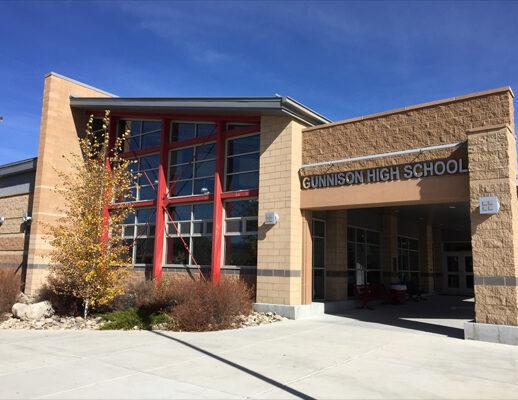
The district will spend $9.3 million on Gunnison High School/Pathways to build safer entrances and expand career readiness facilities. Plans also call for a $2.8 million Lake School project that includes making the school’s entrance, traffic flow and playground safer.
Click here for more.
(Photo courtesy of the Gunnison Watershed School District.)
| |
|
New York will make $325 million available for clean water infrastructure projects through a pair of grant programs, the governor’s office announced last week.
Municipalities throughout the state will be able to apply for funding through the state’s Water Infrastructure Improvement (WIIA) and Intermunicipal Grant (IMG) programs, Gov. Kathy Hochul said.
Applications and more details will be released Feb. 5, Hochul said. Nearly $479 million in grants were awarded through the WIIA and IMG programs in 2023, the program’s first year.
Small or disadvantaged communities will get a boost in this round of funding, the governor suggested during her State of the State presentation earlier this month. Hochul said she was having the Environmental Facilities Corp. (EFC) increase water infrastructure grants for small rural communities from 25% to 50% of net eligible project costs.
That change from 2023 will support smaller communities such as those in the Adirondacks, which Hochul said often struggles with accessing clean water grants and completing affordable projects.
Click here for more.
(Photo courtesy of Andres Siimon on Unsplash.)
| |
|
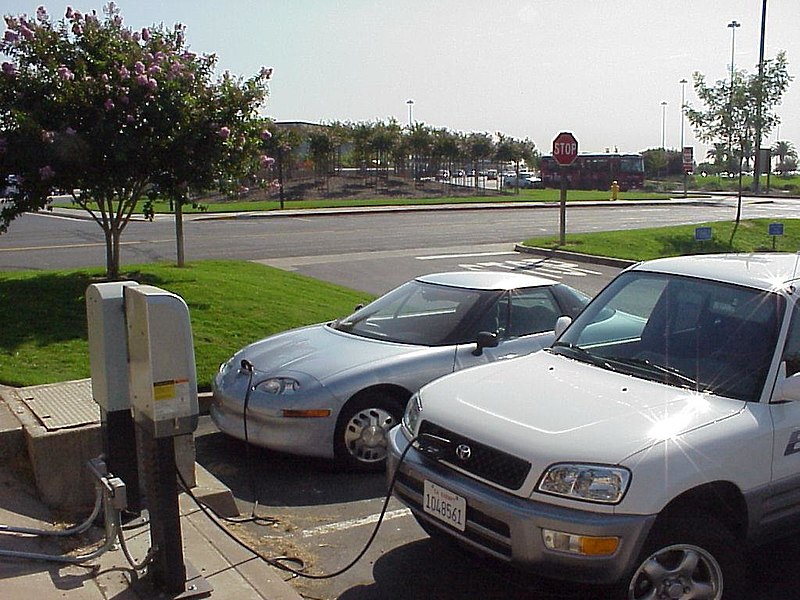
California will spend $63.7 million to improve the state’s electric vehicle (EV) charging grid reliability by fixing and installing 1,302 charging ports. The funding comes from the U.S. Department of Transportation’s (USDOT) Electric Vehicle Charger Reliability and Accessibility Accelerator (EVC RAA) program.
The EVC RAA program will provide $100 million to repair or replace non-operational, publicly accessible EV chargers. The initiative is supported by the National Electric Vehicle Infrastructure (NEVI) program, which aims to create an interconnected EV charging network nationwide.
The state will use the funds to replace both Level 2 and Direct Current fast chargers (DCFC). Level 2 charging equipment provides a 240-volt outlet that can charge a battery electric vehicle (BEV) from empty to 80% in four to 10 hours. DCFC equipment can charge a BEV to 80% in under an hour and is used for rapid charging along high-traffic corridors.
USDOT announced the awards in January 2024. California received the largest amount from the available $148.8 million out of a combined 14 state transportation agencies and 10 local entities. Spanning 20 states, the grants will help repair approximately 4,471 EV ports.
Click here for more.
(Photo courtesy of the Sacramento Municipal Utility District.)
| |
|
Voters in the Washington town of Deer Park are being asked to approve a $62 million bond measure to build an elementary school and a transportation center. The projects will increase safety and security while providing space to maintain smaller class sizes. The state will provide $23 million in matching funds. The bond election is scheduled for Feb. 13.
If approved, the Deer Park School District (DPSD) would use $49 million to build an elementary school, serving second through fifth grade, to replace the existing campus – Arcadia Elementary. Arcadia Elementary currently uses three portable facilities adjacent to the main building to support six classrooms. DPSD will build the replacement elementary school to the east of Deer Park Elementary.
After migrating students to the new elementary school, DPISD would use $13 million to renovate Arcadia Elementary for the school’s Home Link program. Additions would include more offices and space for weights, dance classes, stained glass, survival classes and other activities.
The district would use another $13 million renovate and modernize the middle school, as well as $6 million to build a transportation facility. The bond would support updating technology and infrastructure, including HVAC systems, across all schools and the transportation center.
Click here for more.
(Photo courtesy of Deer Park School District.)
| |
|
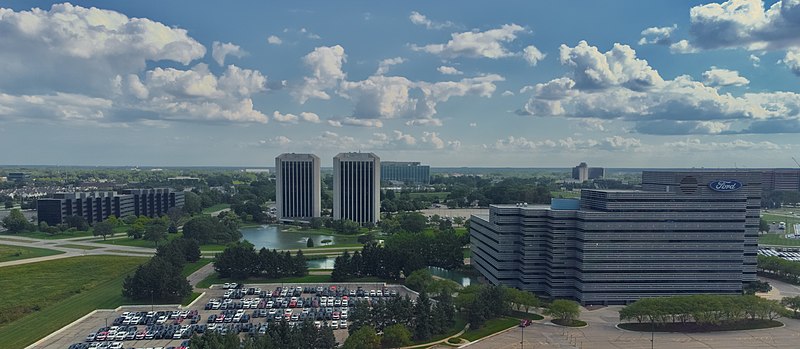
The Michigan cities of Detroit, Dearborn and a regional planning partnership will use $59.6 million from the U.S. Department of Transportation (USDOT) to improve roadway safety.
The city of Dearborn, located 10 miles west of Detroit, will use $24.9 million to reconfigure five-lanes of traffic on Warren Avenue. Warren Avenue is a high-use corridor that connects Detroit, Detroit Metro Airport and the Canadian border. The city will reduce the number of lanes along the 2-mile stretch to calm traffic.
Other improvements call for a demarcated bike lane, a plant buffer to mitigate flood waters and LED lighting to boost safety and visibility for pedestrians and motorists. The project has a $31.9 million budget.
The city of Detroit will use $24.8 million to improve safety and bus stop accessibility at 56 high-crash intersections served by the Detroit Department of Transportation (DDOT) bus service. The project has a $31 million budget. Safety infrastructure improvements include building transit islands, widening sidewalks and updating ADA curb ramp updates. The city will also create high-visibility crosswalks, install intersection lighting and improve signal timing.
Click here for more.
(Photo courtesy of WMrapids.)
| |
|
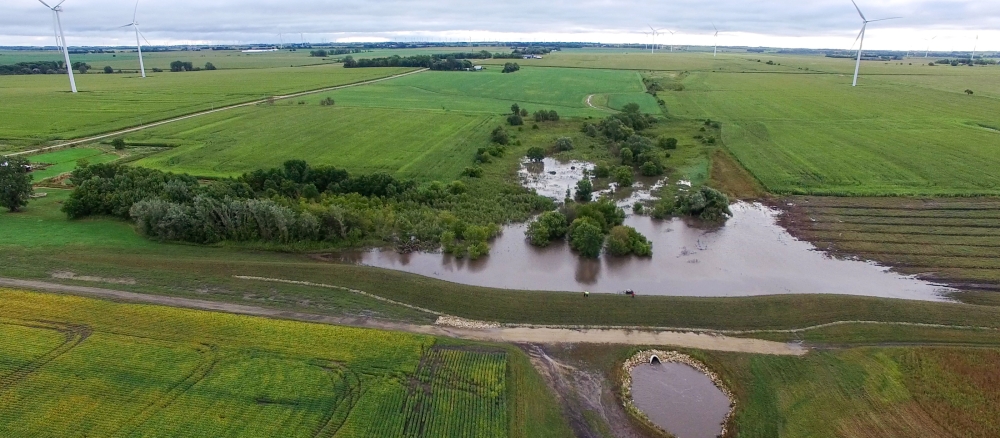
The Minnesota Pollution Control Agency (MPCA) is making $35 million in grants available to modernize the state’s stormwater systems and prepare its aging infrastructure for climate change. The projects will protect water quantity and prevent localized flooding. Applications are due April 11, 2024.
The stormwater resilience grants program is the first part of a broader $100 million fund for climate-related projects Minnesota lawmakers created in 2023. Warmer weather and extreme storms have pushed aging stormwater systems to a breaking point statewide. Over the last two decades, Minnesota has experienced 10 “mega-rain” storms producing at least six inches of rainfall across an area exceeding 1,000 square miles.
Eligible projects include stormwater retention/detention ponds, smart stormwater ponds, planting raingardens, improving street drainage and expanding stormwater pipe capacity. Multi-use storage projects that offer community amenities when not flooded will also be considered.
Eligible applicants include Tribal Nations and Local Governmental Units (LGUs) within the state. LGUs include cities, counties, towns, soil and water conservation districts (SWCDs), water management organizations (WMOs), watershed districts (WDs), regional development commissions (RDCs) and metropolitan planning organizations (MPOs).
Click here for more.
(Photo courtesy of the Minnesota Pollution Control Agency.)
| |
|
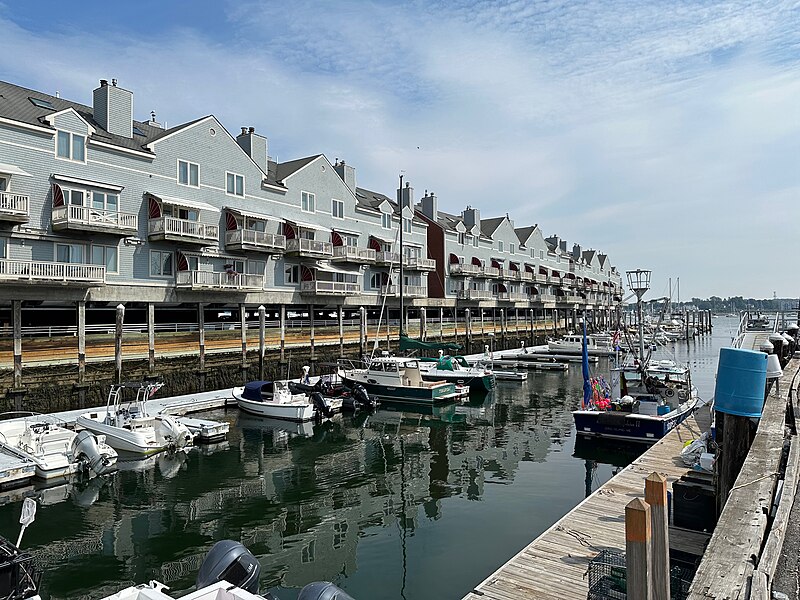
The city of Portland, Maine, is moving ahead with a $25 million project to remove sediment, debris and pollutants from Portland Harbor. A request for proposals for the Portland Harbor CAD Cell and Dredge project’s first phase will go out this summer.
City officials have secured a $10 million grant from the state via the governor’s Maine Jobs & Recovery Plan. The project has also received a combined $15 million from the Maine Department of Transportation (MaineDOT), the cities of Portland and South Portland, U.S. Environmental Protection Agency (EPA) Brownfields services and wharf and pier owners.
The dredged material will be deposited in a Confined Aquatic Disposal (CAD) cell, a deep hole in the harbor bottom that is filled with dredged material and covered with a thick layer of clean sand. The process boosts the water’s depth and allows more ships to dock.
Seven decades of environmental contamination in the harbor have severely limited the waterfront's capacity to accommodate vessel loading and unloading, according to a letter by the International Longshoremen's Association. The contamination will continue to threaten the harbor’s economic activity if left untreated, the association said.
The project will span 47 properties along Portland Harbor’s waterfront adjacent to privately and publicly-owned piers. The city will remove approximately 244,678 cubic yards of dredge material with 2,038,000 square feet (46.8 acres) of impact. After dredging, the city will build the CAD cell on state lands and excavate 376,858 cubic yards of sediment from a shallow subtidal habitat.
Click here for more.
(Photo courtesy of Seasider53.)
| |
|
Alabama - The Alabama Community College System Board of Trustees approved the appointment of Dr. Aaron Milner as president of Coastal Alabama Community College. Dr. Milner currently serves as superintendent of Saraland City Schools. He brings 29 years of public education experience to the role.
Kansas – Following the search for new leadership since July, Telly McGaha has been announced as president and CEO of the Wichita State University Foundation and Alumni Engagement. McGaha most recently served as interim president of the Georgia State University Foundation and co-interim vice president for university advancement at GSU.
North Carolina – DeAndrea Salvador has joined the executive committee of the National Council on Electricity Policy (NCEP). She is currently a state senator for North Carolina.
California – Portola Valley’s council unanimously voted Sarah Wernikoff as mayor during its meeting in December. Wernikoff most recently served as the town’s vice mayor and has been a council member since 2020.
Ohio - Ross Bjork has been hired as the athletic director for Ohio State University. Bjork previously worked as the athletic director for Texas A&M. He will replace longtime Ohio State Athletic Director Gene Smith. Bjork brings more than a decade of Southeastern Conference (SEC) experience to the position. He will begin his tenure July 1.
Florida – The government of Seminole County has hired John Slot as chief technology officer (CTO). Slot previously served as the CIO for the Central Florida Regional Transportation Authority and Valencia College.
Georgia - The city of Snellville announced Matthew Pepper will be the new city manager, taking over for Butch Sanders, who retired after 12 years in the position. Pepper served the past two years as assistant city manager. Pepper comes to Snellville after serving as city manager for the city of Oxford in Newton County. He previously worked for the city of Alpharetta’s Economic Development Office.
Ohio - Larry Lester, former operations director of the city of Hilliard was recently approved as Monroe’s city manager, replacing William “Bill” Brock, who served for 20 years. Lester has served as operations director in Hillard, a community with 40,000 residents, since 2020. Before that, he served as deputy director of public service and right-of-way service manager.
Louisiana - Baton Rouge’s Mayor-President Sharon Weston Broome has appointed Julie Baxter Payer as chief of staff. Baxter Payer is a 30-year resident of Baton Rouge who most recently served as deputy secretary of the Louisiana Department of Veterans Affairs. She brings extensive experience in public service and legal expertise to the role.
Indiana - National League of Cities (NLC) President Mayor David Sander of Rancho Cordova, California, announced New Haven Mayor Steve McMichael has been appointed to the NLC 2024 Transportation and Infrastructure Services Committee. Over a one-year term, McMichael will provide strategic direction and guidance for NLC's federal advocacy agenda and policy priorities on transportation and infrastructure.
Washington - The Department of Ecology Director Laura Watson selected David Bowen as director of the agency’s Central Region Office. Bowen has worked for Ecology since 2016, most recently serving as manager of the agency’s Nuclear Waste Program, which oversees cleanup at the Hanford nuclear site. His previous experience also includes private and public sector roles in forestry, planning, renewable energy and economic development. He is a former Kittitas County commissioner and lifelong central Washington resident.
California – The Ojai City Council unanimously voted to hire Ben Harvey as city manager. Harvey previously served as city manager for Pacific Grove for seven years as well as the city manager for Avalon from 2013 to 2015. He will take over the role from James Vega.
| | |
|
Connect with SPI
Check out our social media links!
| |
About Government Contracting Pipeline | |
|
Strategic Partnerships, Inc.
Publisher: Mary Scott Nabers
Editors: Adam Rollins
Dave Doolittle
www.spartnerships.com
| |
Government Contracting Pipeline, a publication of Strategic Partnerships, Inc., is a free, weekly newsletter detailing important happenings nationwide and the premier source for federal, state, and local government news and contracting opportunities.
| |
Help us share this message.
To ensure delivery and proper formatting of the newsletter, be sure to add editor@spartnerships.com to your safe senders list.
Otherwise, the newsletter may be flagged as spam and automatically routed to your junk e-mail folder.
| | | | |