Volume 16, Issue 3 - Wednesday, January 17, 2024 | |
By Mary Scott Nabers, CEO of Strategic Partnerships, Inc. | |
|
Large funding grants for surface transportation projects are available from the federal government’s Multimodal Project Discretionary Grant Program. This program, actively overseen by the U.S. Department of Transportation, is especially focused on funding projects that hold regional or national significance.
Applications that were approved in 2023 will provide between $5.45 billion and $5.58 billion for transportation projects expected to launch in 2024 or 2025. The funding allocations and the type of projects to be supported will be announced soon. However, numerous projects have already been funded, and many are also about to launch.
The Indiana Department of Transportation received $127 million for a $212 million FlexRoad project. The project’s design will focus on adjustments and advanced features to be added to the Interstate 80/Interstate 94 corridor. The objective will be to improve traffic flow on a 14-mile-long section of Indiana’s busiest stretch of the interstate highway.
The project is currently in an environmental design phase, but planning documents outline four of the designs under consideration. They include dynamic shoulder lanes, traffic accident management components, upgraded signage and intersection improvements. Additionally, the project will include ramp metering, variable speed limits, dynamic lane control and queue warnings. Bidding will begin in 2025.
The Community Connector Roadway in New York is part of an extensive $258 million initiative to upgrade the Cross Bronx Expressway in the Bronx. It is funded by a $150 million Mega Grant from the federal program. This project will renew and replace five key bridges and access roads, enhance the expressway’s function and add a direct-access ramp from the southbound Bronx River Parkway to the westbound Cross Bronx Expressway. Additionally, there is a plan to construct a multimodal Community Connector Roadway neighboring the highway. It will feature specialized lanes for buses and paths for cyclists and pedestrians, allowing improved local connectivity. This roadway will serve as a strategic detour to reduce traffic disruptions during construction. It will connect to key recreational areas such as Starlight Park and the Bronx River Greenway upon completion.
Currently in the development phase, this project's bidding is scheduled for summer 2025, with construction starting in 2025.
Click here for more.
| |
|
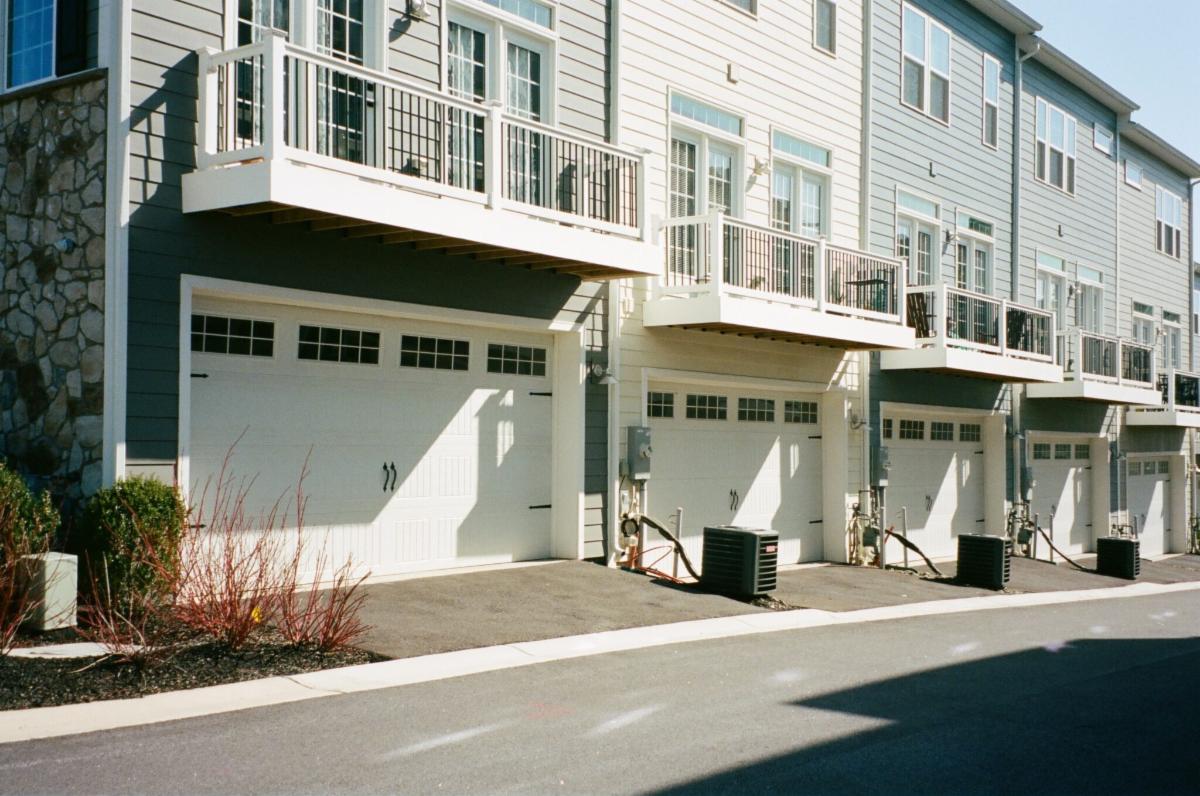
The state of Ohio will provide $150 million over a two-year period to help provide statewide accessible housing. The window to apply for funding is open until Feb. 9. Rolling applications will be accepted from Feb. 12 to May 31, depending on available funding. The state will announce grants in March and begin distributing them in April.
The funds are available through the Welcome Home Ohio (WHO) program, which helps landbanks buy, rehabilitate or build qualifying residential properties for income-eligible Ohioans. Landbanks are public or non-profit organizations that acquire and redevelop property into affordable housing.
WHO is backed by $100 million in general funds and $50 million in nonrefundable tax credits. The initiative offers three programs:
- Purchasing, which offers grants to help buy residential properties. The program does not have a maximum funding amount.
- Rehab/Construction, which will provide grants for rehabilitating or building residential properties. Each qualifying property can receive a maximum of $30,000. The program could support building or rehabilitating at least 1,600 homes over two years.
- Tax Credits, which will provide $50 million in nonrefundable tax credits that can be used to offset rehabilitation and construction costs once a property is sold. Credits are capped at $90,000 or one-third of the rehabilitation or construction costs. The program could add a minimum of 550 homes to the state’s housing supply, according to state officials. Although funds may roll into the next fiscal year, no money will be expended after June 30, 2025.
The Ohio Department of Development (ODOD) will provide $25 million to fund each program per fiscal year. Up to 2,150 affordable, owner-occupied single-family homes could be funded by the initiative, according to state officials. Landbanks, county land-reutilization corporations and electing subdivisions are all eligible for the programs.
Click here for more.
(Photo courtesy of Simi Iluyomade on Unsplash.)
|  | |
|
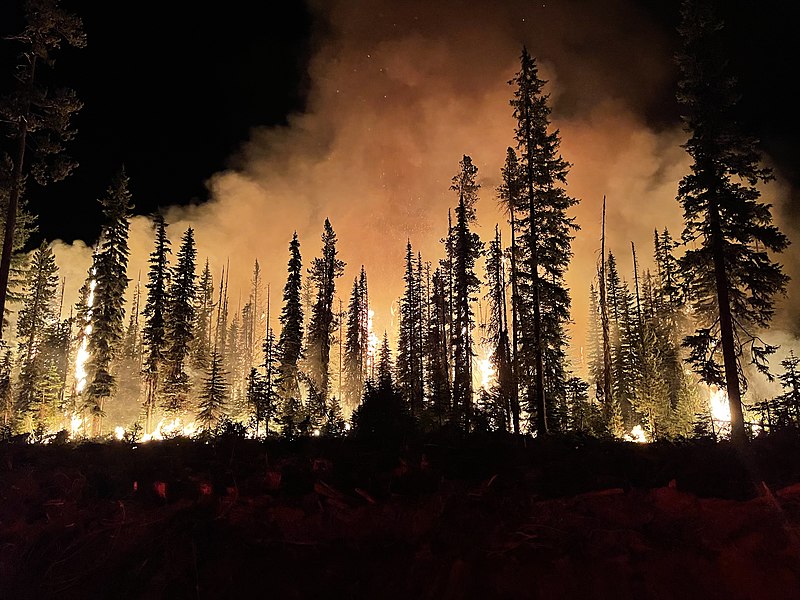
The U.S. Department of the Interior (DOI) will invest $138 million to support wildfire prevention efforts by modernizing wildland firefighter training and restoring habitats. The funds are part of a five-year, $1.5 billion Bipartisan Infrastructure Law (BIL) initiative to combat increased wildland fire hazards caused by extreme heat and drought.
Acting Deputy Secretary of the Interior Laura Daniel-Davis announced the financial boost during a visit to the National Interagency Fire Center in Boise, Idaho. The funding will help reduce the risk of extreme wildfires, rehabilitate burned areas and advance fire science.
Between 1999 and 2020, the western United States saw a 246% increase in structures lost to wildfires, according to a 2023 report by the Wildland Fire Mitigation and Management Commission. The BIL created the commission in 2021 to make recommendations to Congress for combating the wildfire crisis.
The funding will provide $12.4 million to modernize fire training and position qualifications. The project will be a part of the Incident Performance and Training Modernization (IPTM) initiative, which is led by the National Wildfire Coordinating Group (NWCG). The NWCG is an organization that enables interagency communication for wildland fire operations. The organization will review and analyze more than 100 wildland fire positions to better support trainees and evaluators.
The DOI will also invest $7.5 million to help restore landscapes that have been damaged beyond the point of natural recovery. For example, a series of Southern Idaho wildfires in 2022 reduced the area’s population of bitterbrush and sagebrush, which decimated elk and deer habitats. BIL funding will help re-seed and plant native vegetation, along with removing invasive species.
Click here for more.
(Photo courtesy of the U.S. Forest Service - Pacific Northwest Region.)
| |
|
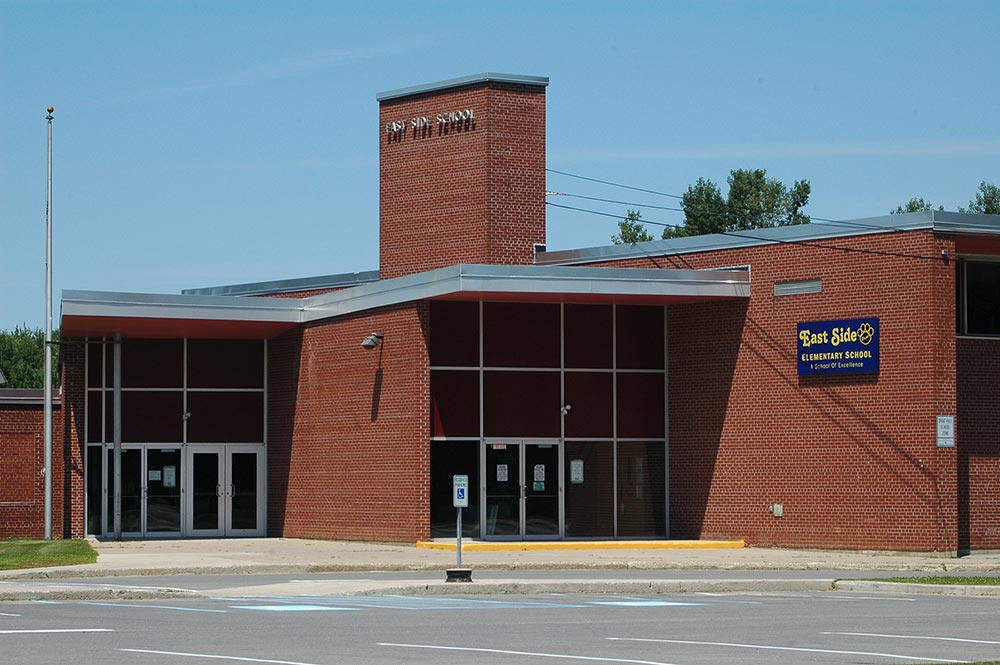
Voters in the northern New York town of Gouverneur last month approved a $57.4 million Capital Improvement Project (CIP) that will update all three of the school district’s buildings, add a state-of-the-art athletic stadium and renovate the bus garage.
The state of New York will cover 83.8% of the total cost. The remaining $9.6 million will be supplied by the school board’s reserve fund voters approved in 2020. Design work is already underway, with construction expected in late spring 2025.
The bulk of the funding – $38.6 million – will renovate the district’s high school campus, including its swimming pool complex, band and choral suites, auditorium, auxiliary gym, main entrance, nurse’s suite and bathrooms.
Upgrades to the swimming pool complex include installing a water heater, renovating the locker room and adding dehumidification and filtration systems. The band and choral suites will receive better equipment and materials such as sound panels.
Planned improvements for the school’s auditorium include upgrading the theatrical lighting for seating and stage areas. The auxiliary gym, bathroom and nurse’s suite will all be upgraded to meet ADA standards.
Click here for more.
(Photo courtesy of the Gouverneur Central School District.)
| |
|
The Tennessee Department of Transportation (TDOT) has awarded $46 million through three grant programs supporting multimodal transportation projects across the state. The funding comes through a combination of state and federal grants from the Transportation Alternatives Program (TAP), IMPROVE Transit Investment Grant program and the Multimodal Access Grant (MMAG) program.
TAP is a federal initiative that provides support for local transportation projects that improve pedestrian and biking facilities, enhance viewing areas, preserve historic facilities, landscape areas and undertake other non-traditional projects. Recently, TDOT granted $15.2 million from TAP to seven Tennessee communities for 2024. The funds will be used to improve sidewalks, revitalize downtown areas and restore community spaces.
TDOT has awarded over $400 million in grants through TAP since 1991. In 2023, TAP allocated $19.9 million to 20 communities to improve pedestrian and biking trails, green spaces and depots. Application cycles occur once a year, starting Aug. 1 and running through the first Friday in October.
The IMPROVE Transit Grant program is a state-funded program that enables transit agencies to build facilities and expand transit options to reduce congestion, improve ridership and increase safety. TDOT awarded $18.8 million to 10 transit agencies to buy replacement vehicles and equipment, improve transit infrastructure and build transit facilities.
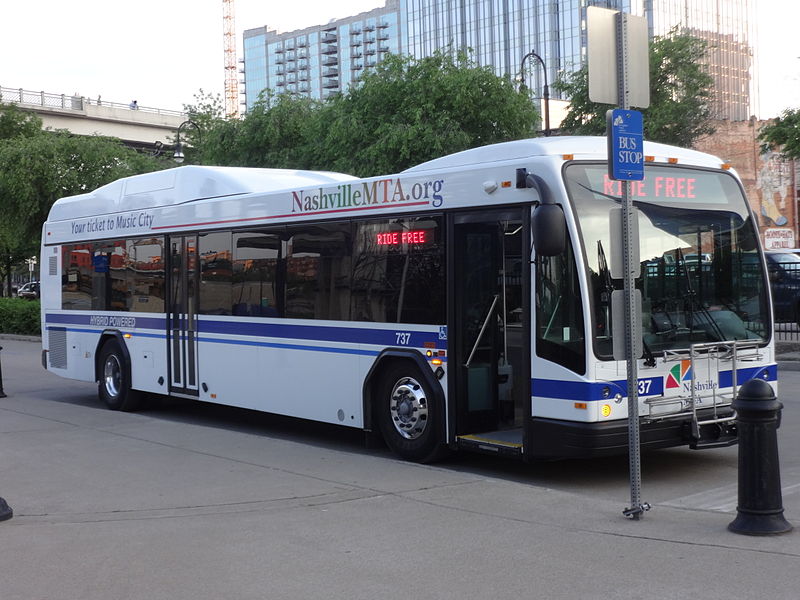
The Nashville Metropolitan Transit Authority (MTA) was awarded $7.5 million, representing the largest allocation of funds from the IMPROVE Transit Grant program. Nashville MTA will use $5 million to design and build bus stops on the city’s High Injury Network. The funding covers easements, property acquisitions and extensive civil construction. The remaining $2.5 million will go to the Hickory Hollow Transit Center, a project to convert the area’s former mall into a transit center and mobility hub.
Click here for more.
(Photo courtesy of Michael Rivera.)
| |
|
The Commonwealth of Pennsylvania is starting a pilot program in January for state employees to use generative artificial intelligence (AI) for copywriting, coding and updating documents.
Gov. Josh Shapiro announced Jan. 9 that the state is partnering with OpenAI, an AI research and deployment firm that offers a platform for generating content, images and code based on user prompts. OpenAI operates the ChatGPT language tool that has an Enterprise option with increased security and privacy to prevent any sharing of sensitive data.
Shapiro anticipates the pilot will help employees better understand how and when to use AI tools daily in state operations. Initially, only employees in the Office of Administration will use ChatGPT for tasks such as updating outdated policy language, creating job descriptions and cleaning up employee policies that may have duplicated or conflicting information.
Shapiro has been preparing state employees for the pilot program since September when he issued an executive order that set the framework for the state to use generative AI. The order listed 10 core values for Pennsylvania to consider when using AI, including accuracy, employee empowerment, innovation, safety and security and transparency.
Click here for more.
(Photo courtesy Jonathan Kemper on Unsplash.)
| |
|
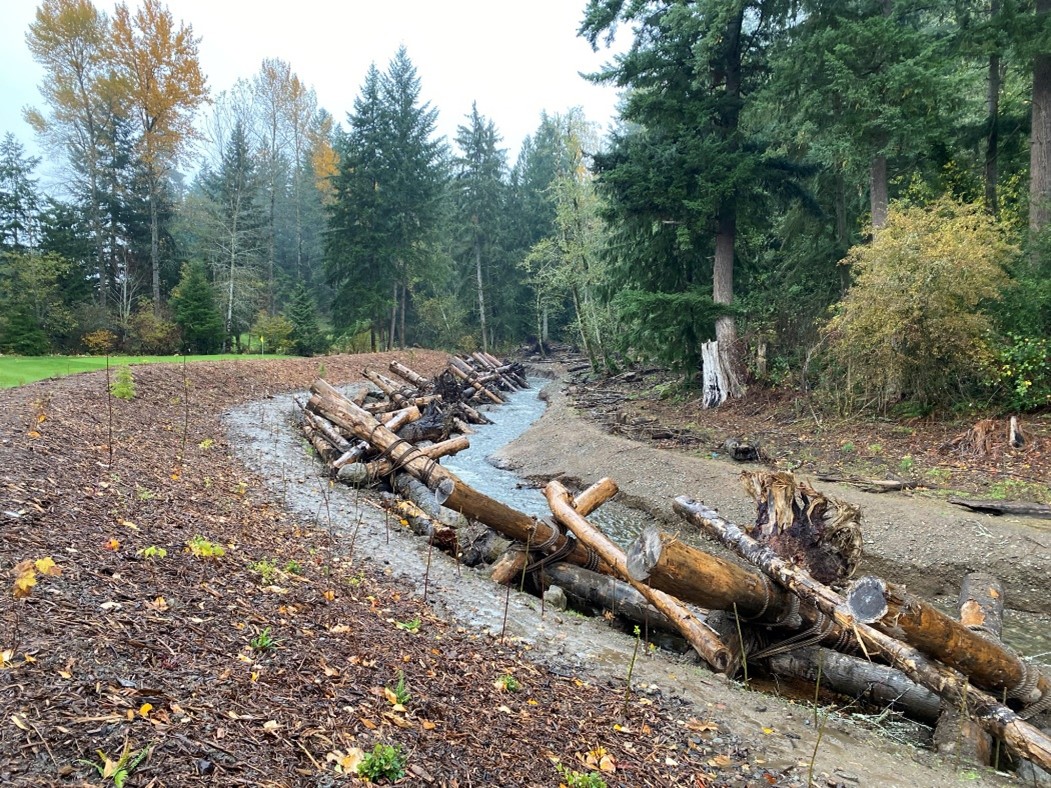
The state of Washington’s Department of Ecology is making a total of $40 million available for projects that protect and enhance streamflows while providing water for rural homes. Applications for the fourth round of Streamflow Restoration Grants are due Feb. 29, 2024. The state will announce awards in fall 2024.
The department will prioritize projects that benefit threatened or endangered fish or are located in watersheds identified in Washington’s Streamflow Restoration Act. The law directed 15 planning groups to develop watershed plans to help improve streamflows and offset the effects of using domestic permit-exempt wells. After lawmakers passed the law in 2018, a $300 million fund was created to support streamflow projects through 2033.
The state will use the grant funding for projects that store water, improve fish habitats, acquire water rights, monitor the environment, conduct feasibility studies or improve watershed function. Approximately $85 million in grants have been awarded since 2018.
Click here for more.
(Photo: Boise Creek. Courtesy of the Washington Department of Ecology.)
| |
|
Responding to studies showing poor indoor air quality negatively affects academic performance and attendance, the Environmental Protection Agency (EPA) is making up to $32 million available to improve the air in public schools nationwide.
The grants will support projects that address indoor air quality and energy efficiency activities over five years, including educational campaigns and research initiatives. They are available through the Grant Funding to Address Indoor Air Pollution at Schools Program, which is designed to assist organizations who serve schools in low-income and disadvantaged communities.
Many children across the nation, particularly poor children in urban and rural districts, attend school in buildings that are more than 50 years old, making it more likely that facilities will contain hazardous materials such as asbestos and lead paint. Other harmful indoor air pollutants include radon, mold and smoke from wildfires. Collectively, exposure to these materials can cause or aggravate a number of respiratory illnesses, including asthma. Among chronic illnesses, asthma is the leading cause of absenteeism among school-aged children.
In an effort to assist schools in developing comprehensive air quality plans for their facilities, the Grant Funding to Address Indoor Air Pollution at Schools Program will make grants available through a competitive process that opened Jan. 11. The final deadline to submit applications to this funding opportunity will be March 19.
Click here for more.
(Photo courtesy of the Centers for Disease Control and Prevention on Unsplash.)
|  | |
|
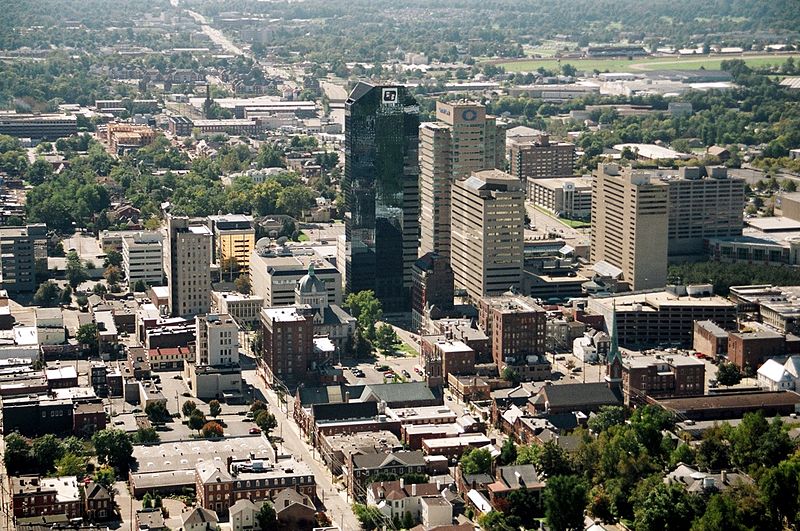
The Kentucky cities of Lexington and Louisville will use a pair of U.S. Department of Transportation (USDOT) grants totaling $29.2 million to improve street safety, including a $21.7 grant for Lexington to reconstruct a section of Northeast New Circle Road — the city’s highest fatal and serious-injury corridor.
Thirty-four fatal or severe crashes occurred along the commercial and residential corridor from 2015-2021, according to a city release. Nearly half of the incidents included pedestrians or bicyclists navigating areas without access to sidewalks and few ADA-accessible transit stops.
The Lexington-Fayette Urban County Government (LFUCG) will use the federal grant to reconstruct the section of road from Development Drive to Bryan Station Road northeast of the city’s downtown. Planned safety upgrades call for restricted-crossing U-turns and increasing and improving pedestrian crossing locations.
Other improvements will include additional lighting, raised crossing islands and construction of a 10-foot-wide shared use path on both sides of the roadway. Funds will also support a countywide safety education program targeting safe driving behaviors. Plans also call for the establishment of a Vision Zero coordinator to implement recommendations of the Lexington Area Safety Action Plan, which aims to eliminate traffic fatalities and serious injuries by 2050.
Separately, Louisville Metro Government will use a $7.5 million federal grant for a $12.5 million project to convert Second and Third streets into two-way roadways — a departure from their current one-way configuration. Work is slated to start in 2024, with anticipated completion in 2027.
Click here for more.
(Photo courtesy of Madgeek1450.)
| |
|
A $19.6 million bond package that will fund construction projects at six school campuses in West Virginia’s Marion County will be up for voter approval in May. The proposed package includes construction, renovation and improvement projects that will revamp the school district’s educational and athletic facilities.
If approved, the bond would allocate $3.8 million to build a facility that will consolidate New East Park and Pleasant Valley elementary schools. The facility will feature more space, larger physical education areas, updated drop-off and pick-up spaces, updated HVAC systems and improved security systems. Once the facility is built, the district will close the other two schools.
Another $6.4 million would go toward improving the East Fairmont High School’s athletic facility and Fairmont Senior High School’s East-West Stadium, adding turf, bleachers, seating and repairing concrete steps. Additionally, the roof and drainage system at East Fairmont High School would be renovated.
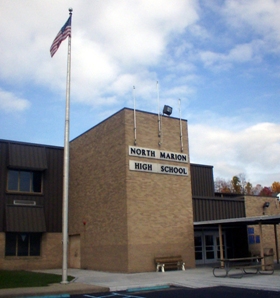
Another $3.6 million will be used to add two classrooms as well as a 7,000-square-foot gym at Barrackville Elementary School and Middle School. At North Marion High School, $3.2 million would be used to replace classroom trailers with a three-classroom addition while adding walls and doors at Watson Elementary.
Click here for more.
(Photo courtesy of Mbarber68.)
| |
|
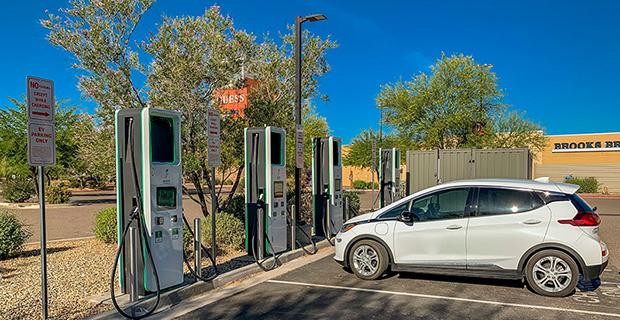
The city of Mesa, Arizona, will receive $11.9 million to add 48 more electric vehicle (EV) charging stations to support the city’s EV infrastructure and Climate Action Plan. The federal jolt is part of a broader $623 million nationwide push to furnish 500,000 chargers to the public by 2030.
The grants stem from the Bipartisan Infrastructure Law’s $2.5 billion Charging and Fueling Infrastructure (CFI) Grant Program. The competitive funding program will build 7,500 EV charging ports and fund 47 EV charging and alternative-fueling infrastructure projects in 22 states and Puerto Rico.
The Federal Highway Administration (FHWA) is awarding $311 million to 36 projects supporting EV charging and hydrogen fueling infrastructure in urban and rural communities. Another $312 million spanning 11 projects will be directed toward supporting roadways designated as Alternative Fuel Corridors.
The grant will support installing charging centers in underserved communities, a NEVI-compliant major regional highway charging hub and a public fleet charging station in the city’s employment industrial zone. Construction of the EV chargers supported by CFI funds must meet the same minimum standards by The National Electric Vehicle Infrastructure or NEVI program, which requires that EV chargers are made in America and installed and maintained in alignment with strong workforce standards.
Click here for more.
(Photo courtesy of the Arizona Technology Council.)
| |
|
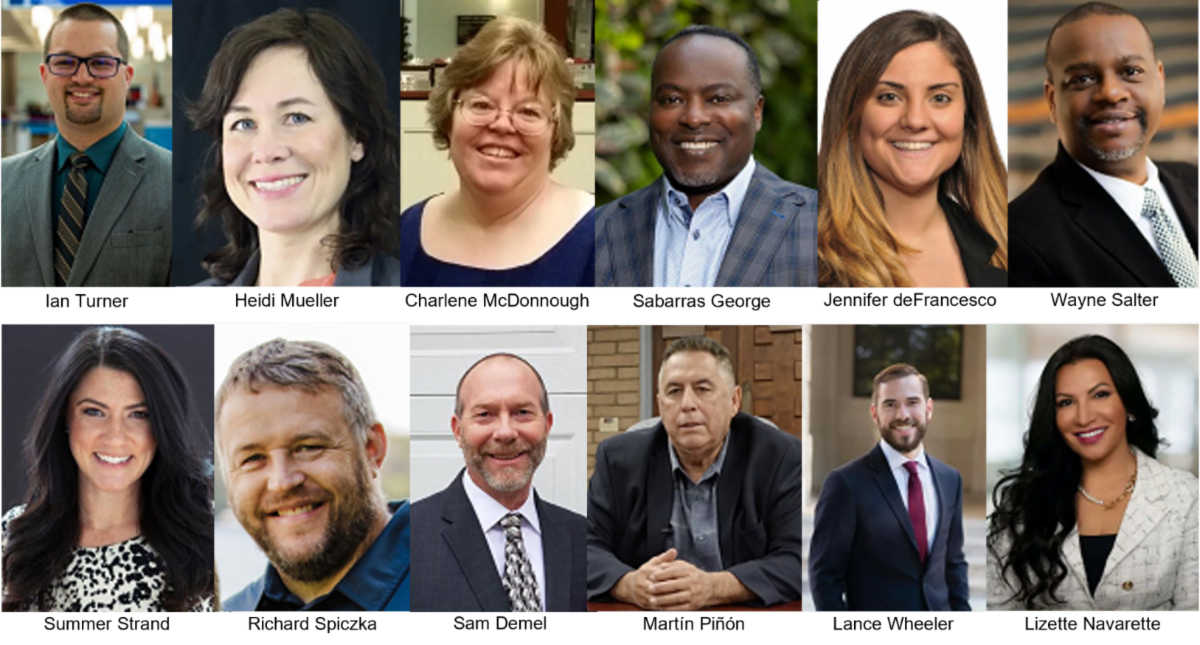
Idaho - Ian Turner will become the director of the Idaho Falls Regional Airport (IDA) after receiving an appointment from Mayor Rebecca Casper. Turner previously was airport director at the La Crosse, Wisconsin, and Pueblo, Colorado, airports.
Illinois - Department of Juvenile Justice (IDJJ) Director Heidi Mueller will take over the Department of Children and Family Services starting Feb. 1. Mueller has served as IDJJ director since 2016, overseeing youth adjudicated as juvenile offenders.
Arkansas - After almost a year of searching, the Crawford County Library Board agreed to offer the position of executive director of the library system to Charlene McDonnough at its first board meeting Jan. 9. McDonnough served active duty in the Air Force and is a disabled veteran.
Missouri - The St. Louis Zoo’s WildCare Park has a new park director, Sabarras George. George will officially assume his role Feb. 5. WildCare Park is a safari-style zoo property. George comes to St. Louis from the Detroit Zoological Society, where he currently serves as vice president of operations and facilities and chief operating officer. He succeeds Jo-Elle Mogerman as park director.
Ohio - Dr. Jennifer DeFrancesco has been appointed permanent director of the Dayton VA Medical Center (VAMC), effective Jan. 14. DeFrancesco has been serving as acting director since July 2023 after Mark Murdock left the position.
North Dakota – Wayne Salter, a former Texas Health and Human Services executive, will be the next person to lead North Dakota's Department of Health and Human Services. Salter served for almost six years as Texas' deputy executive commissioner of access and eligibility services before departing in June 2023. He brings 24 years of public service experience to the role.
Wisconsin - Commissioner Summer Strand will take on the role of Public Service Commission (PSC) chair. She will replace Rebecca Cameron. Before joining the Wisconsin PSC, Strand was the administrator of the state Department of Administration’s Division of Facilities Development.
Minnesota – The city of Bemidji has welcomed Richard Spiczka as its next city manager. Spiczka began his role in December.
Oklahoma – Sam Demel recently began his duties as city manager for the city of Purcell. Demel has been the city administrator for the city of Kiowa since Dec. 14, 2020.
California - Martín Piñon has become the fifth interim city manager in the past year. He replaces Michele Martinez following her resignation. He previously served as the human resources director for the city of Desert Hot Springs.
West Virginia — Kanawha County has a new commission president for the first time in nearly two decades. Lance Wheeler was selected as the county’s commission president during a regularly scheduled meeting Jan. 11. Wheeler replaces Kent Carper, who had been selected consecutively as the commission’s president every year since 2006.
Arizona – Yuba Community College District (YCCD) appointed Lizette Navarette as president of Woodland College in Lake County. Navarette previously served as the executive vice chancellor for Institutional Supports and Success at California Community Colleges. She brings 17 years of higher education experience to the role.
| | |
|
Connect with SPI
Check out our social media links!
| |
About Government Contracting Pipeline | |
|
Strategic Partnerships, Inc.
Publisher: Mary Scott Nabers
Editors: Adam Rollins
Dave Doolittle
www.spartnerships.com
| |
Government Contracting Pipeline, a publication of Strategic Partnerships, Inc., is a free, weekly newsletter detailing important happenings nationwide and the premier source for federal, state, and local government news and contracting opportunities.
| |
Help us share this message.
To ensure delivery and proper formatting of the newsletter, be sure to add editor@spartnerships.com to your safe senders list.
Otherwise, the newsletter may be flagged as spam and automatically routed to your junk e-mail folder.
| | | | |