Volume 16, Issue 36 - Wednesday, September 4, 2024 | |
By Mary Scott Nabers, CEO of Strategic Partnerships, Inc. | |
|
Public officials at the local government level are initiating large, innovative, and forward-thinking projects aimed at enhancing economic prosperity in various regions of the country over the next few decades. Many of the projects are funded by federal programs, with billions yet to be allocated before the end of 2026 unless the programs are reauthorized—which may or may not happen.
Illinois is set to embark on a groundbreaking and historic initiative with the establishment of a new quantum computing facility on the former U.S. Steel South Works site. This unique project, which includes the construction of a cryogenic facility that will house the world's first industrial-use quantum computer, is estimated to cost $9 billion and is backed by a diverse group of supporters, including the state of Illinois, the U.S. Defense Advanced Research Projects Agency and Chicago's housing, Cook County and economic development organization.
It will deliver a newly created carbon-neutral campus, which will be managed by a public organization under the direction of the University of Illinois. The board will comprise representatives from Illinois’ major universities, state officials, local nonprofits and private companies.
The project is anticipated to attract $20 billion in private investments over the next decade. Supporters will work together to find initiatives to attract private sector firms, and the ongoing effort will offer significant contracting opportunities, especially in infrastructure, research development and environmental sustainability. Construction is currently expected to begin in 2025.
A $1.45 billion initiative in Portland, Oregon, is a transformative public infrastructure effort to improve safety, reduce congestion, reconnect the historic Albina neighborhood to other community spaces and restore neighborhoods that were divided by the original I-5 construction. The roadway project will improve accessibility and house new development, upgraded interchanges and enhanced multimodal connections. The roadway cover will be engineered to support structures up to three stories high, offering potential for future community development and revitalization. The project received federal environmental clearance this year, and the Oregon Department of Transportation is now free to move forward with construction. Contracting opportunities remain plentiful, particularly for construction, environmental consulting, engineering and community engagement services. The project will be delivered by a Construction Manager/General Contractor (CM/GC) model and work is slated to begin in 2025.
Click here for more.
| |
NOAA delivers $76 million to support Washington coastal community climate resilience | |
|
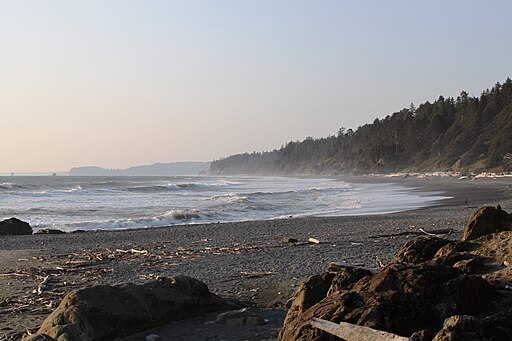
The National Oceanic and Atmospheric Administration (NOAA) allocated $75.6 million to support two Washington initiatives dedicated to combating climate change impacts and improving state resilience. The projects will restore shoreline habitats, develop a climate-informed workforce and support environmental collaborative programming.
The lion’s share of the funds - $73.6 million - will support the Coastal Climate Resilience Initiative (CCRI). The CCRI is a coalition of agencies, Tribes, nonprofits and academic institutions that address climate change impacts. The funds will support the initiative's three habitat restoration projects that will protect habitat and shoreline environments, improve stormwater drainage and realign roads.
The projects are the result of 20 years of CCRI proactive climate efforts to improve community resilience, support critical infrastructure and determine future priority projects. Once completed, CCRI will reduce coastal hazard vulnerability, manage coastal climate adaptation and redesign the state’s coastal landscape. In addition, CCRI will use the funds to strengthen regional coalitions, build tribal capacity and grow a climate-informed workforce.
The Puget Sound Climate Preparedness Collaborative – an organization composed of local and county governments, Tribes and regional agencies – will receive the remaining $2 million to build community, economic and environmental resilience to climate change. The collaborative will provide staffing and programming support to ensure local communities and organizations have the knowledge base and preparation needed to prepare for climate change-fueled events including flooding, wildfires, drought and extreme heat.
NOAA, in collaboration with the Department of Commerce (DOC), delivered the funds through the Climate Resilience Regional Challenge (CRRC). The CRRC invests in projects that increase resilience for coastal communities, allowing them to prepare for and recover from extreme weather, sea level rise and drought. The projects are a part of the selected 19 that will receive shares of the agency’s $575 million investment for Fiscal Year 2024.
(Photo courtesy of John Murphy.)
| |
EPA distributes $70 million to support New Orleans climate resilience | |
|
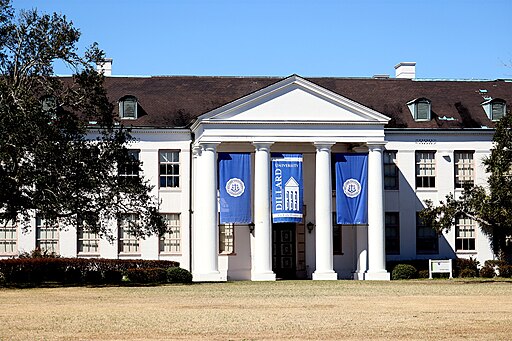
The Environmental Protection Agency (EPA) has awarded $70 million to New Orleans and Dillard University to increase community climate resilience, expand clean energy transit access, reduce greenhouse gas (GHG) emissions and decarbonize infrastructure.
New Orleans will receive $50 million to improve access to affordable transportation and reduce the city’s reliance on fossil fuels. The project will help improve the well-being and living quality of underserved communities, providing better access to solar energy, expanding native plant-based urban forestry initiatives and increase building energy efficiency. The city estimates that the project will prevent .2 million metric tons of GHG emissions from 2025 to 2050.
Plans include providing alternative transit options to single-occupancy vehicles to increase mobility and access to clean transportation options for disadvantaged communities. The city will install 148 bike share stations, deploy 2,500 bikeshare e-bikes and provide incentives for 3,000 e-bikes for residents. In addition, New Orleans will address the city’s urban heat island effect by investing in green infrastructure solutions. The city will plant 7,500 trees, allocate additional green space, lower energy costs and improve air quality.
New Orleans will support building decarbonization efforts to ensure its infrastructure meets state standards for preserving air quality and clean energy accessibility. The project will upgrade 50 municipal buildings with energy efficiency or solar photovoltaic technologies.
As part of the initiative, the city will develop building energy benchmarks and performance standards to help decarbonize large buildings. Plans include creating programs to incentivize solar adoption for private facilities.
Dillard University, in partnership with a nonprofit organization, will use $20 million to increase community resilience to natural disasters, expand transportation access and reduce GHG emissions. Plans include expanding bike sharing programs and providing up to 300 families with e-bikes. In addition, the university will install electric vehicle (EV) chargers to support clean fuel vehicles.
As part of the university’s plans to increase community resilience, Dillard University will retrofit a selection of public buildings with improved HVAC systems, solar and energy storage. These locations will provide critical support during emergencies as resilience hubs for the community.
The EPA allocated the funds from the Climate Pollution Reduction Grants (CPRG) program and Community Change Grants Program (CCGP). Both programs help eligible recipients develop and deploy solutions to reduce harmful air pollutants. Awarded projects will address climate change, reduce air pollution, support environmental justice and transition the nation to clean energy.
New Orleans is one of 25 applicants chosen to receive a portion of the recently announced $4.3 billion in CPRG funding. Dillard University is one of 21 recipients in the $2 billion CCPG’s first funding wave.
(Photo courtesy of 2C2K Photography.)
| |
USDOT delivers $39 million to improve Montana urban connectivity, safety | |
|
The U.S. Department of Transportation (USDOT) will allocate $39.1 million to the state of Montana to improve urban infrastructure, enhance roadway connectivity and plan a complete street project.
The city of Belgrade will receive $25 million to build a highway-rail grade separation, install an intersection signal and widen a three-lane roadway to a five-lane configuration. The widened road will include safety and accessibility features such as curbs, gutters and accommodations for pedestrians and bicyclists. Once completed, the project will improve mobility and community connectivity with a multimodal network. Construction is expected to begin in July 2026.
The city of East Helena will spend $10.2 million to build a series of roadway improvements that will reduce traffic congestion and greenhouse gas emissions. Plans include installing additional safety features, sidewalks and ADA-compliant curb ramps. The city will build separated multimodal paths, a roundabout, curbs and gutters and improved stormwater conveyance. Construction is expected to begin in September 2026.
The Blackfeet Indian Reservation will receive $3.9 million to plan a street reconstruction project. The project will address roadway and pedestrian safety issues while increasing accessibility to essential services. In addition, the project will help improve resilience to climate change by decreasing dependence on motor vehicles. The Tribe will use the funds for surveys, stormwater planning, engineering, environmental analysis, stakeholder engagement, identification of utility impacts and right-of-way analysis.
USDOT allocated the funds through the Rebuilding American Infrastructure with Sustainability and Equity (RAISE) grant program. The RAISE program invests in community projects to build and renovate critical transportation infrastructure projects across the country.
The projects are a selection of 148 receiving a portion of the recently announced $1.8 billion in RAISE funding for Fiscal Year 2024. Including the latest round, USDOT has invested $7.2 billion across 550 projects through the RAISE program since it was established.
(Photo courtesy of Jamar Penny on Unsplash.)
| |
Minnesota town receives $21 million to upgrade wastewater system | |
|
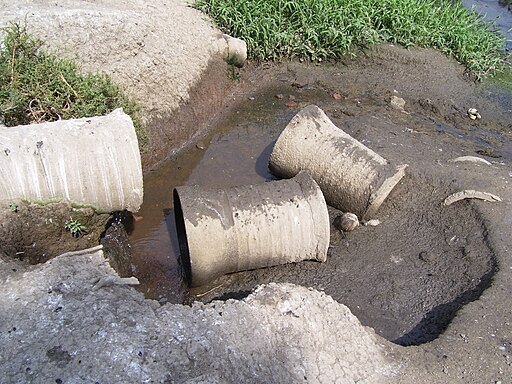
The Laketown Township, Minnesota, will receive $21.4 million to replace an over 40-year-old community sewer system. The 201 Community Sewer systems project will replace and reroute water mains, install piping and ensure water infrastructure meets compliance. Construction is expected to begin in July 2025.
The current wastewater treatment facilities, installed in the mid-1980's, were originally built with a 20-year lifespan in mind. The aging infrastructure has required extensive, continual repairs to maintain functionality. The six wastewater collection systems included in the project area connect aging residential holding tanks with substandard pipes to inadequate lines.
The town’s existing wastewater infrastructure poses a flood risk to the properties included among the 201 Community Sewer systems. To prevent future flooding, the city will replace the systems with modern wastewater infrastructure designed to accommodate the growing city’s needs.
The city will ensure that the replacement and rerouted pipes are adequately sized to meet state standards, providing sufficient inflow and infiltration in the case of emergency or natural disaster. As part of the project, the city outlined six improvement plans for the individual area water systems. Plans include installing sanitary sewer lines and force mains, rerouting lines and reconnecting wastewater infrastructure.
The project will eliminate the need for certain lake crossings, remove force mains and lift stations and reroute discharge to a series of mount treatment systems. Once completed, the city expects it to be out of the wastewater treatment business entirely, reconnecting those lines to the neighboring city of Victoria. In addition, the city may collaborate with Victoria to install a lift station to supplement the upgraded systems.
(Photo courtesy of SuSanA Secretariat.)
| |
UDOT recycles old concrete to build new freeways | |
|
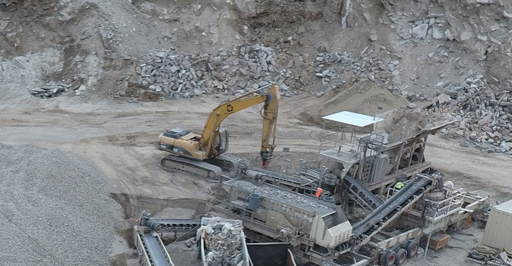
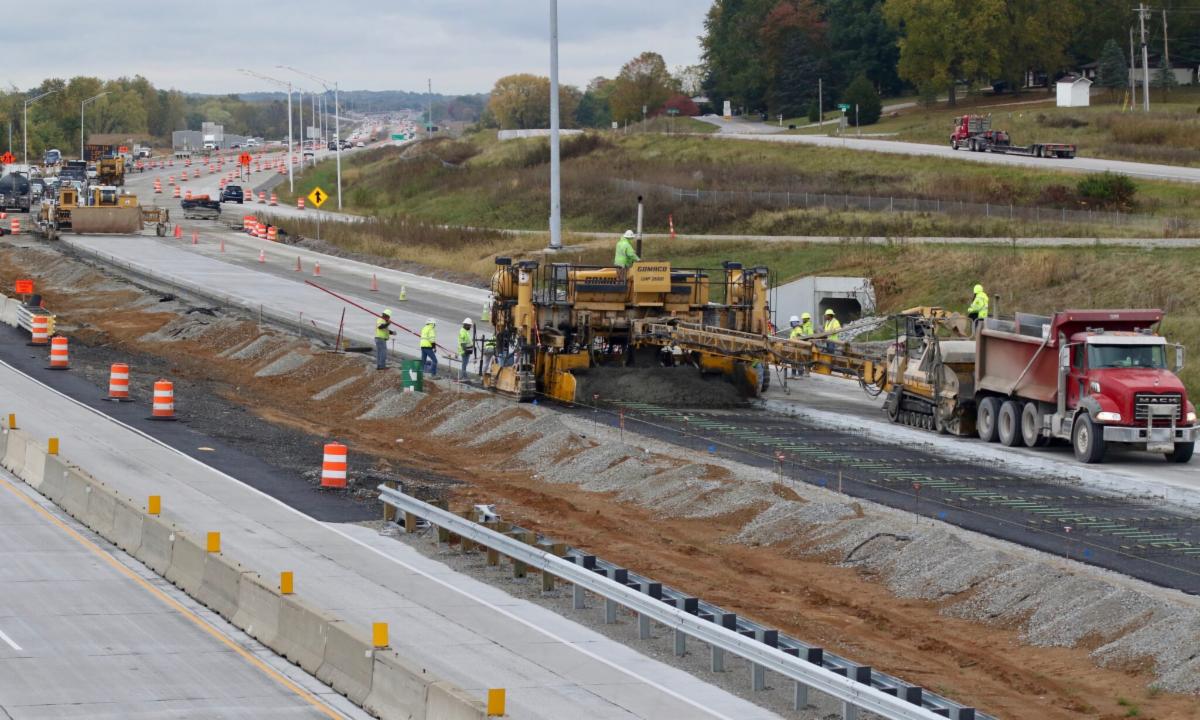
Over the past five months, the Utah Department of Transportation (UDOT) has been recycling old concrete to pave new highway interchanges.
Breaking down old highways typically results in excessive waste from removing and discarding thousands of pounds of materials. Instead of throwing away the concrete generated from demolishing parts of Bangerter Highway, one of the state’s largest corridors, UDOT is reusing the materials to improve efficiency and reduce the carbon footprint.
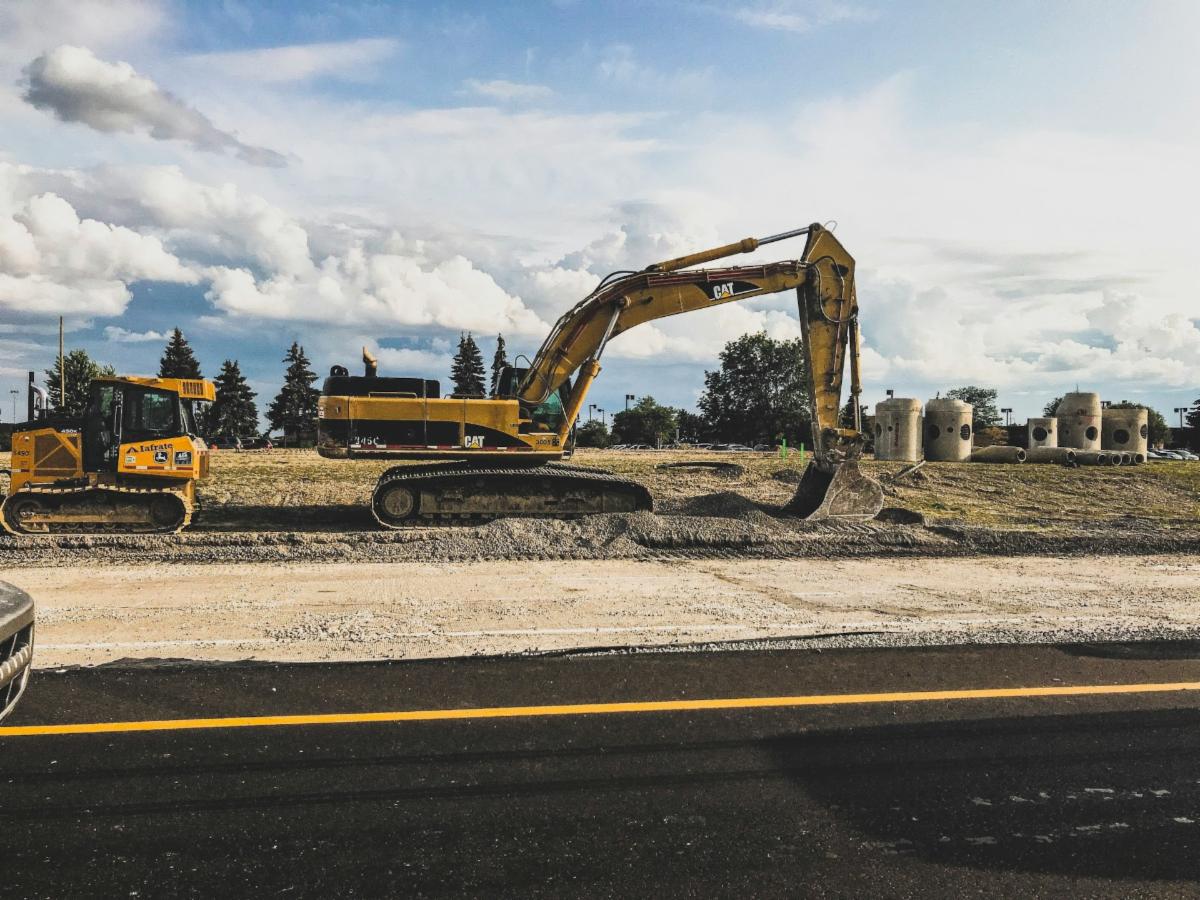
As workers break down outdated sections of Bangerter Highway, the concrete is kept on-site for conversion and reuse while building highway interchanges. Heavy machinery breaks the materials down, pulverizing the concrete into small pieces.
The crushing machine used for this portion of the work includes a large magnet to separate rebar from concrete. UDOT recycles the metal rebar separated from the concrete as well. After separation, workers reprocess the powdered concrete into a road base. UDOT uses the recycled base to build additional infrastructure using the same materials.
Construction crews have, to date, processed approximately 15,000 cubic yards of concrete through this process. The recycling initiative is the latest aspect of UDOT’s efforts to reimagine the Bangerter Highway. The department is working on transforming the highway system to a freeway-style design, which includes removing stoplights and replacing interchanges. Once finished, the freeway interchanges will increase safety and reduce congestion.
(Photo courtesy of Ramco.)
|  | |
NSF invests in biology, biotechnology innovation through biofoundry facilities | |
|
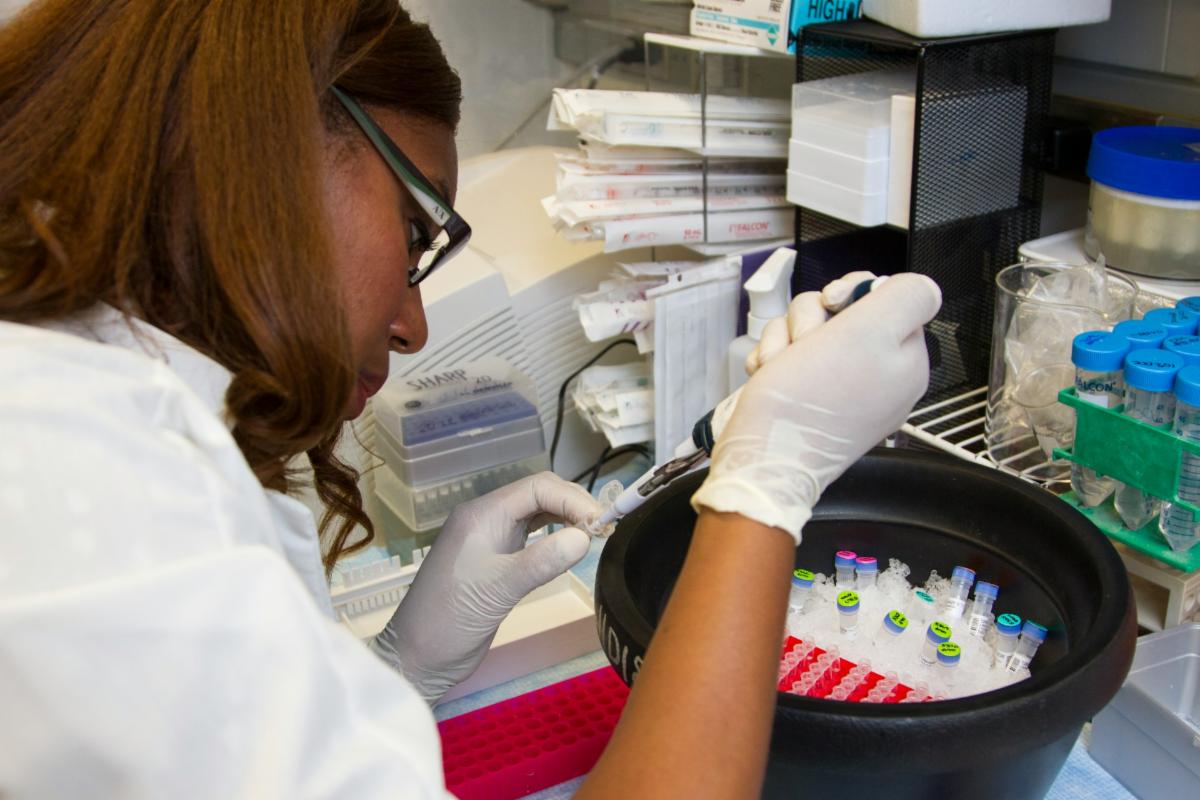
The National Science Foundation (NSF) is investing in the future of biofoundries to advance tools and technologies in biology, biotechnology and the broader STEM field. The agency allocated $75 million to five facilities to spur innovation and expand biotechnology capabilities across the nation.
NSF BioFoundries are integrated facilities that enable researchers to rapidly design, develop, test and distribute tools and product development, streamlining research that stimulates the bioeconomy. Researchers use cutting-edge tools and technologies, including artificial intelligence (AI) and machine learning, to accelerate projects, train the next generation of the scientific workforce and optimize workflows.
Examples of research projects receiving awards include:
The University of Pennsylvania (UPenn) will receive funds to establish the NSF AI-driven RNA BioFoundry (NSF AIRFoundry). UPenn will collaborate with the University of Puerto Rico to research and manipulate structures at the microscopic level.
AIRFoundry centers its research efforts around three primary goals:
- Optimizing RNA design, synthesis and efficiency.
- Helping researchers uncover basic design principles to accelerate RNA-based innovations.
- Discovering new knowledge to create bridges between RNA design, delivery vehicles and their usage in biological systems.
Researchers will develop an open-access platform to address challenges in RNA technology research. Plans include expanding RNA usage beyond healthcare to agriculture, biotechnology and environmental remediation.
The University of Illinois at Urbana-Champaign (UIUC) will receive a portion to create the NSF iBioFoundry for Basic and Applied Biology (iBioFoundry). The iBioFoundry will be a national center to advance biotechnology applications and develop sustainable biomanufacturing processes. The facility will provide a centralized location to support innovation, research efforts and streamlined development processes.
One of the iBioFoundry’s primary goals will be to create a remotely accessible, programmable, user-driven cloud biofoundry. The digital platform will integrate synthetic biology, AI and machine learning and laboratory automation to accelerate research efforts on protein and cellular engineering.
(Photo courtesy of the National Cancer Institute on Unsplash.)
| |
New York university developing nanotech to identify, remediate waterborne contaminants | |
|
Clarkson University, located in Potsdam, New York, is developing nanosensor technology designed to detect, monitor and degrade per- and polyfluoroalkyl (PFAS) materials in potential drinking water sources.
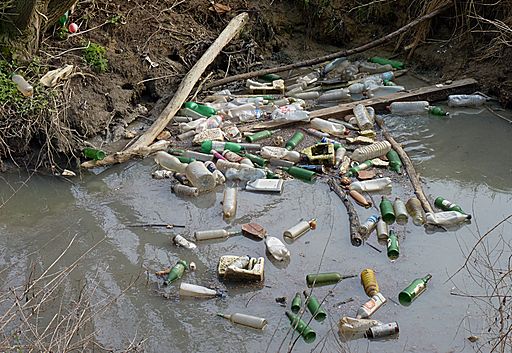
PFAS substances are commonly used components in water-resistant and personal-care products that pose a significant risk to the environment and public health. These substances have a slow decomposition rate, with most traditional remediation methods either proving ineffective at degrading them or producing a toxic waste stream.
The university will use nanosensors to develop a field-ready PFAS-detection technology that can evaluate PFAS exposure and effectiveness of remediation solutions. As part of the project, the university will create a portable, stand-alone unit that outperforms conventional methods to estimate levels of PFAS exposure in contaminated waters. The university will pair the sensors with nanocatalysts to break down PFAS substances as well.
The project’s goal is to not only surpass current means to effectively measure PFAS contamination, but to develop a technology that provides this solution while reducing cost, improving efficiency and increasing selectivity. The unit will include interchargeable sensing and degradation units to provide inexpensive on-site screening and remediation solutions in any environment.
Even low concentrations of these materials can have an adverse effect on human health. Measuring PFAS as these levels is a recurring challenge for current analytical methods, making it difficult to determine the potable safety of critical drinking water sources. Studies into the prolonged exposure of these substances have linked them to cancers, impacts on internal organs and immune and developmental damage to children.
(Photo courtesy of Jamain.)
| |
|
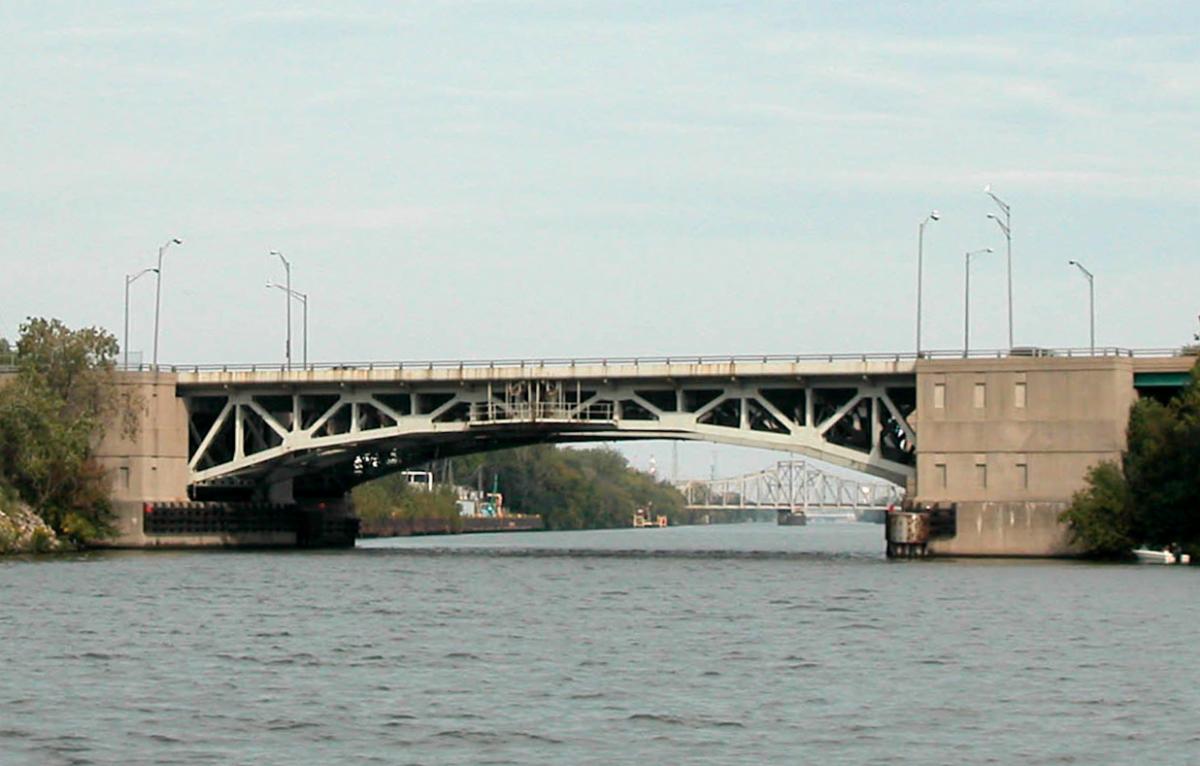
The Illinois Department of Transportation (IDOT) is investing nearly $220 million into 10 Cook County road and bridge renovation projects, highlighting a historic construction year for the state.
These projects round out the fifth year of the state’s Rebuild Illinois capital plan, a six-year transportation investment program. Since its passage in 2019, Rebuild Illinois has allocated $33.2 billion to renovate, rebuild and repair the state’s aging transportation systems. The program is also the largest capital program in state history and is addressing all forms of transportation needs.
Click here for more information on Illinois’ transportation projects
(Photo courtesy of David Wilson from Oak Park, Illinois, USA.)
| |
|
Electric vehicle drivers across the Golden State will have more options on where to plug in their cars and trucks. Due to rapid construction so far in 2024, California announced that the state now has over 150,000 active EV charging stations. Nearly one-third of those chargers have been added since the end of 2023.
Electrifying transportation has become a cornerstone of federal climate policies, and California has long embraced the shift with vehicle emissions standards. However, consumer sentiment on the EV push has been mixed, with limited vehicle range and sparse charging networks being a common hesitation around the adoption of EVs. The rapid growth in California’s charging network is a major step toward making going electric an easier choice.
Click here to learn more about California’s efforts to expand EV infrastructure
(Photo courtesy of JUICE on Unsplash.)
| |
|
The U.S. Department of Transportation is offering funding for projects designed to support the use of materials in highway construction that produce less pollution and reduce greenhouse gas emissions compared with traditional materials. The Federal Highway Administration (FHWA) announced $800 million in funding through the Low Carbon Transportation Materials Program that will provide opportunities for local and regional agencies to develop greener infrastructure.
Transportation infrastructure, particularly roads, bridges and highways, has traditionally been a significant source of carbon emissions, both in its construction and use. As the nation looks to meet emissions reduction goals as part of the fight to stave off climate change, policymakers are looking at ways alternate construction materials can play a part. This program aims to reduce the environmental impact of essential infrastructure projects and take a step toward more sustainable cities by incentivizing the use of low-carbon materials.
Click here to learn more about the NOFO
(Photo courtesy of ITB495.)
| |
|
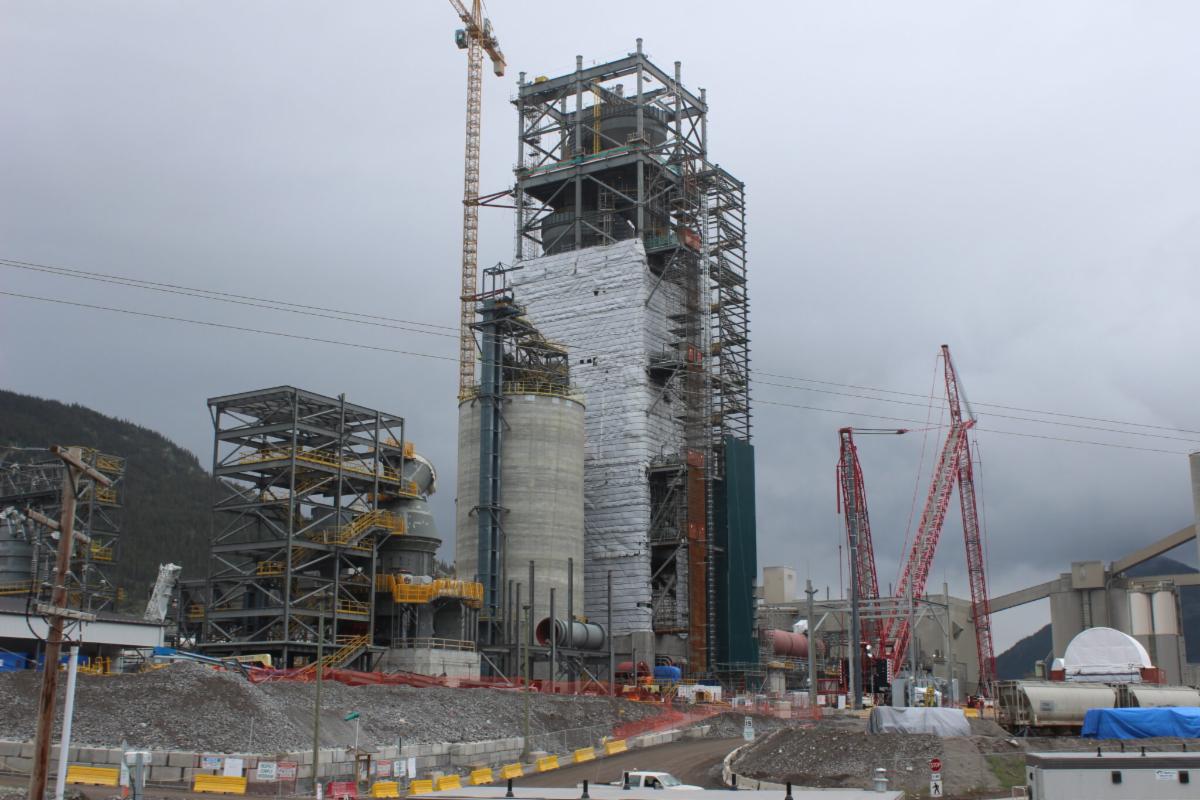
The U.S. Department of Energy’s (DOE) Office of Fossil Energy and Carbon Management (FECM) is making available up to $127.5 million for the development of test centers focused on carbon dioxide (CO2) capture, removal and conversion at cement manufacturing facilities and power plants.
Achieving the federal goal of a net-zero emissions economy by 2050 will need novel solutions, as well as responsible development and deployment of technologies, to capture CO2 emissions from industrial operations and power generation. The most cutting-edge solutions still incur high energy and capital costs, posing barriers to widespread adoption. The new centers will use public funding to cost-effectively research and evaluate groundbreaking carbon solutions in these settings.
Click here to learn more about the DOE’s decarbonization NOFO
(Photo courtesy of Jason Woodhead.)
| | |
|  |
|
|
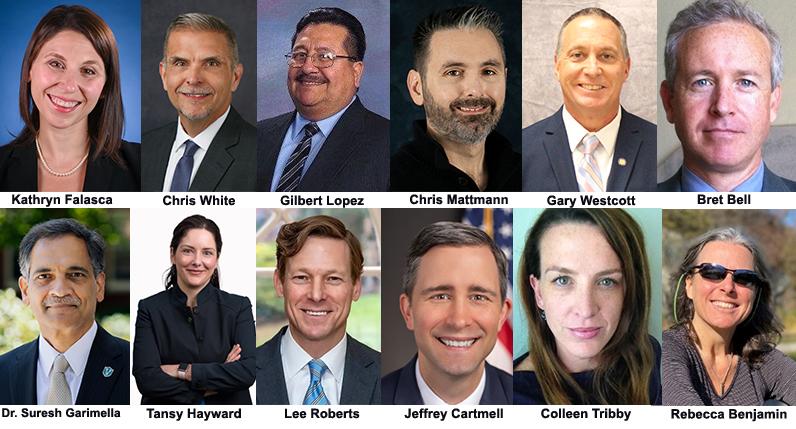
New York – The Metropolitan Transportation Authority (MTA) has chosen Kathryn Falasca as the agency’s first criminal justice advocate. Falasca most recently served as director of the Strategic Initiatives Bureau of the New York City Police Department (NYPD). Before that, she was the NYPD’s Department Advocate Office’s director and special counsel.
Georgia – Chris White has been promoted to permanent city manager of Thomasville. White has been working as the city’s interim city manager since February 2024. Before stepping into the interim role, White was Thomasville’s assistant city manager since August 2021. He brings more than 27 years of municipal operation experience to the role. His appointment was effective immediately Aug. 26, 2024.
Arizona – During its Aug. 12, 2024, meeting, the Coolidge City Council hired Gilbert Lopez as city manager. Lopez brings 38 years of municipal government experience to the role. He previously served as the city’s economic development and development services director since 2016. He officially began his tenure Aug. 23, 2024.
California – The University of California – Los Angeles (UCLA) has hired Chris Mattmann as its first chief data and artificial intelligence officer. Mattmann previously worked for 24 years at NASA’s Jet Propulsion Laboratory. He officially assumed responsibilities June 24, 2024.
Louisiana – Gary Westcott has been appointed secretary of the Department of Public Safety and Corrections (DOC). Westcott was promoted from his previous role in the DOC as deputy secretary. He has served the state’s DOC and Division of Probation and Parole for 29 years, briefly retiring in 2020 as regional administrator.
Georgia – The city of Tybee Island, after nearly a year without a city manager, welcomes Bret Bell to the role. Bell most recently worked as chief of information and public affairs for the City of Savannah. He will replace Shawn Gillen, who resigned in September 2023. Bell officially assumed his position Sept. 3, 2024.
Arizona – Suresh Garimella, Ph.D., has been officially hired as the University of Arizona’s president. Dr. Garimella will leave his current position as president of the University of Vermont to accept his new role. He will replace Robert Robbins on Oct. 1, 2024.
Colorado – Tansy Hayward has been appointed city manager of Thornton. The City Council unanimously voted for Hayward out of five finalists. She most recently served as deputy city manager for Raleigh, North Carolina, the latest in a career spanning over 18 years. She will take the role over from Kevin Woods. Hayward will begin her tenure Oct. 21, 2024.
North Carolina – Interim Chancellor Lee Roberts has been given the permanent role of chancellor at the University of North Carolina at Chapel Hill. Roberts is the university’s 13th chancellor. He began his official duties Aug. 12, 2024.
Oklahoma – Jeffrey Cartmell has been selected as executive director of the Oklahoma Department of Human Services (DHS). Cartmell will leave his role as executive director of the Oklahoma Office of Juvenile Affairs to accept the appointment. He will begin his tenure Sept. 16, 2024.
California – Colleen Tribby has been chosen as Dublin’s city manager. The Dublin City Council promoted Tribby from her role as assistant city manager to replace Linda Smith. Tribby has been with the city since 2013, starting as director of the Administrative Services Department. She was later appointed assistant city manager in December 2019. Tribby will assume her responsibilities in mid-October.
Washington – The Washington Department of Ecology has hired Rebecca Benjamin as director of the Washington Conservation Corps program. Benjamin most recently served as executive director for the North Olympic Salmon Coalition, the latest in a long career of leadership for environmental nonprofits.
| | |
|
Connect with SPI
Check out our social media links!
| |
About Government Contracting Pipeline | |
|
Strategic Partnerships, Inc.
Publisher: Mary Scott Nabers
Editors: Adam Rollins
Dave Doolittle
www.spartnerships.com
| |
Government Contracting Pipeline, a publication of Strategic Partnerships, Inc., is a free, weekly newsletter detailing important happenings nationwide and the premier source for federal, state and local government news and contracting opportunities. | |
Help us share this message.
To ensure delivery and proper formatting of the newsletter, be sure to add editor@spartnerships.com to your safe senders list.
Otherwise, the newsletter may be flagged as spam and automatically routed to your junk e-mail folder.
| | | | |