Volume 16, Issue 34 - Wednesday, August 21, 2024 | |
By Mary Scott Nabers, CEO of Strategic Partnerships, Inc. | |
|
Recently, the Federal Aviation Administration (FAA) announced $1.7 billion for upcoming projects at airports in America. The budget was allocated several years ago when Congress passed the Bipartisan Infrastructure Law. The recent allocation is significant, but there’s more to come. A total of $3.35 billion will be awarded in 2024 for airport projects. This will result in contracting opportunities, including terminal expansions, baggage system upgrades, runway safety enhancements, noise compatibility projects and overall airport infrastructure upgrades.
The funding is available for various airport projects, including new runways, taxiway upgrades, signage, lighting, technology modernization and airport markings.
The Los Angeles International Airport (LAX) will launch projects that represent upgrades and significant expansions designed to accommodate the thousands of anticipated visitors who will be visiting the state over the next several years. The 2026 FIFA World Cup and Olympic Games 2028 will draw extremely large crowds to California. Airport officials are currently overseeing projects to update the wayfinding and signage standards. Other ongoing projects will provide clear, consistent, and responsive solutions to improve airport navigation across the campus. More substantial efforts will be initiated soon.
Plans are underway to deliver extensions to the D and E easterly taxiways, and planning documents outline other projects that will provide upgrades and improvements to the new expansions. When completed, the taxiways will be able to serve the future Concourse 0 and the North Airfield. Improvements will be focused on enhancing safety, providing more efficient airfield operations, improving access enhancements to the new concourse and upgrading terminal facilities. The airfield improvements will also include reconfiguring taxiways to meet current FAA design standards, improving runway exits that will enhance pilot visibility and updating ends of taxiways for the new terminal and concourse. These projects are currently in the design phase, and approximately $150-200 million is earmarked for them. A request for proposal (RFP) solicitation is expected in the first quarter of 2025.
In Florida, Broward County Aviation Department officials are advancing plans for a large Intermodal Center at the Fort Lauderdale-Hollywood International Airport. This $835 million effort will include a new structure that provides linkages between the airport, its transit systems and the regional transportation modes. The new Intermodal Center will have more than 4 million square feet of new space and span eight levels in height. It will connect the airport’s automated people mover shuttle system to a parking garage, bus and taxi locations, and potential future light rail routes. Motorists will find 6,685 new parking spaces at the center to facilitate the transition to other transit modes. Other project components will include improvements to existing airport parking garages and terminal roadways.
The project is currently in the environmental review phase, but the phase of work is expected to be completed by the end of 2024. Construction will begin sometime after that, but no timelines are currently available.
Click here for more.
| |
Wisconsin invests $262 million to build, modernize critical facilities across the state | |
|
The state of Wisconsin will use $262 million to support a series of critical projects, including building infrastructure, upgrading facilities, supporting correctional centers and performing general maintenance and upkeep. The Wisconsin State Building Commission (WSBC) will allocate the funds to partially support selected projects, ensuring the state can meet the needs of its education, justice, parks and public service systems.
Some of the notable projects receiving funding include:
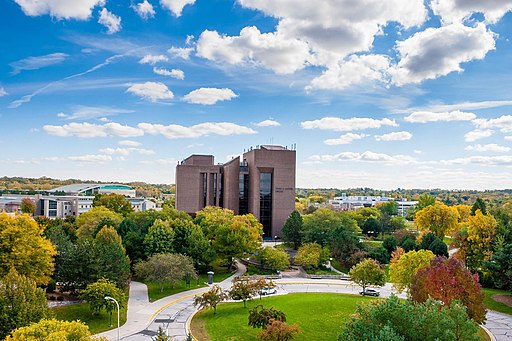
The University of Wisconsin (UW) in Green Bay will build a $101.7 million technology and education center. The 131,011-square-foot building will replace the university’s library center with a state-of-the-art five-story, mixed-use facility. Plans include reconfiguring, relocating, extending and connecting the underground site utility tunnel, concourse pedestrian and utility distribution systems.
As part of the project, the university will ensure the replacement building is fully fire resistant, using steel frames and a floor made out of a natural stone rain-screen and terracotta panels. The facility’s design features a green roof, solar panels and natural landscaping to support sustainable construction. UW will completely replace the building’s mechanical, electrical and plumbing systems. The project will demolish the original library after completing the replacement facility. Construction is expected to begin in April 2025.
The UW System will spend $31.5 million across projects at two campuses to replace a central heating plant chiller and burner. The first project at UW-Milwaukee will use $24.1 million to install a 4,000-ton electrical centrifugal chiller within the campus’ Central Heating and Chilling Plant. The original chiller has outlived its useful life. The university will also upgrade the chilled and lake water piping, install ancillary equipment and improve utilities to enhance operation. Construction is expected to begin in April 2025.
For the second project, UW-River Falls will use $7.4 million to replace the natural gas and fuel oil burners in the Central Heating plant. The current equipment is outdated, limiting the boiler’s capacity and impacting heating efficiency. The replacement project will restore full redundant steam capacity to enhance operations. The project will also replace fuel piping, boil refractory, boil casing and related equipment. Construction is expected to begin in December 2024.
(Photo courtesy of Vliesk.)
| |
Pennsylvania to spend $86 million to develop infrastructure, reconnect communities | |
|
The U.S. Department of Transportation (USDOT) will allocate $86.3 million to build a bridge, a transit facility, extend street grids and develop waterfront trails. The projects will increase non-motorized travel safety and ensure communities are connected with critical amenities.
The Susquehanna Regional Transportation Authority (SRTA) in Harrisburg will receive $25 million to build a Compressed Natural Gas (CNG)-compliant maintenance and operations transit facility. The building will help mitigate greenhouse gas (GHG) emissions and provide additional sidewalks to reduce conflicts between vehicles and non-motorized travelers. The project will also build a transfer center featuring 16 bus berths, sales booths, real-time passenger information and seating and weather protection for passengers. Construction is expected to begin in September 2025.
The Borough of Sharpsburg will use $24.9 million to build a bridge, roads, a multi-use trail and bus stops to transform a riverfront district. The project will install sidewalks and rail crossings to increase non-motorized traveler safety. In addition, the borough will build a 300-foot bridge over an impassable rail line, linking an active transportation facility to neighboring towns. The project will improve access to affordable transit options, reduce transportation and housing cost burdens and advance the borough’s carbon neutrality goals. Construction is expected to begin in October 2027.
The Philadelphia Housing Authority will receive $21.4 million to redevelop the city’s Westpark campus. The project will extend the street grid to connect the campus with a rail station and local park. Plans include creating additional space for housing with a network of shared streets, sidewalks and bike infrastructure. Construction is expected to begin in December 2024.
Additionally, the Redevelopment Authority of the county of York will spend $15 million to build a 1-mile waterfront trail and upgrade flood control infrastructure. The greenway trail will separate non-motorized travelers from vehicles, increasing safety and accessibility along the waterfront. Once completed, the project will use a non-motorized facility to reconnect underserved communities with critical destinations and amenities. Construction is expected to begin in January 2025.
USDOT allocated the funds through the Rebuilding American Infrastructure with Sustainability and Equity (RAISE) grant program. The RAISE program invests in community projects to build and renovate critical transportation infrastructure projects across the country.
The projects are a selection of 148 receiving a portion of the recently announced $1.8 billion in RAISE funding for Fiscal Year 2024. Including the latest round, USDOT has invested $7.2 billion across 550 projects through the RAISE program since it was established.
(Photo courtesy of King of Hearts.)
| |
|
The U.S. Environmental Protection Agency (EPA) has announced $27 billion in grants through three competitions under the Greenhouse Gas Reduction Fund. These grants come from EPA’s $14 billion National Clean Investment Fund (NCIF), the $6 billion Clean Communities Investment Accelerator (CCIA) and the $7 billion Solar for All program.
Together, they will establish a nationwide financing network for clean energy and climate solutions. Since their selection in April, recipients have collaborated with the EPA to meet federal requirements and refine their workplans. Now that the funds are available, communities can start accessing the resources needed to develop cleaner, more sustainable economies.
Click here to learn more about The Greenhouse Gas Reduction Fund programs
(Photo courtesy of Bryan Williams on Unsplash.)
| |
DOE releases RFI on increasing semiconductor industry energy efficiency | |
|
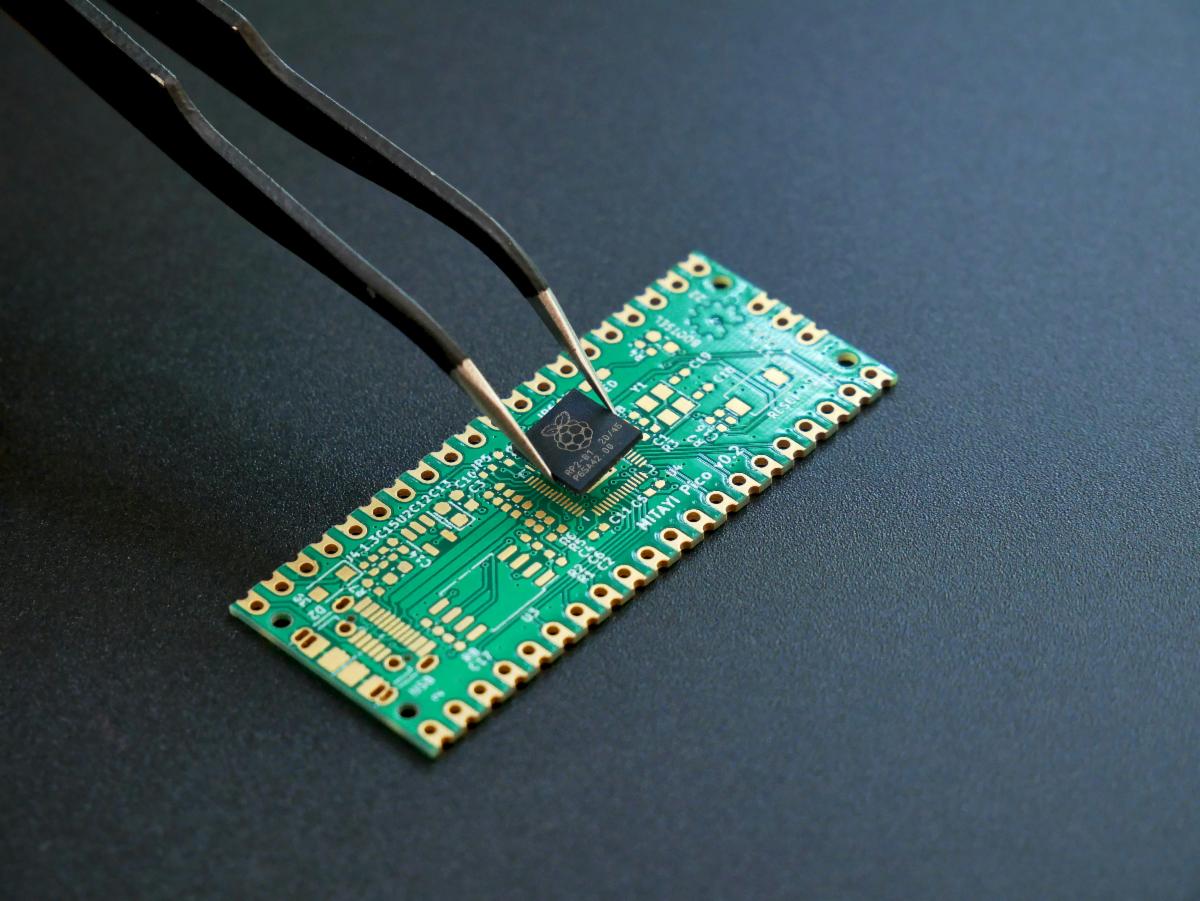
The Department of Energy’s (DOE) Advanced Materials and Manufacturing Technologies Office (AMMTO) is soliciting feedback on a roadmap that outlines goals to increase the energy efficiency of semiconductor applications by 1,000 times over the next two decades. Industry, academia, research laboratories, government agencies and other stakeholders have until Sept. 30, 2024, to respond to the Request for Information (RFI).
The use of semiconductor application energy use has doubled every three years since 2010. If the trend continues, the industry will consume approximately 20% of global energy production. However, the unsustainable nature of energy consumption in the semiconductor industry will completely outpace what measures are in place to offset it.
As dependence on computing has grown and the advent of artificial intelligence (AI) has developed, energy efficiency improvements have stalled over the past 30 years. AMMTO is looking for solutions to double energy efficiency every two years through the Energy Efficiency Scaling for Two Decades (EES2) National Initiative.
The EES2 roadmap prioritizes the energy efficiency of computing and the computing stack. AMMTO has broken the roadmap down into eight working groups, each targeting layers of the computing stack or enabling technologies and approaches. Each working group will help identify emerging energy-efficient technologies, their challenges and their solutions. The working groups are:
- Materials and Devices (MnD).
- Circuits and Architectures (CnA).
- Advanced Packaging and Heterogenous Integration (APHI).
- Algorithms and Software (AnS).
- Power and Control Electronics (PaCE).
- Manufacturing Energy Efficiency and Sustainability (MEES).
- Metrology and Benchmarking (MnB).
- Education and Workforce Development (EWD).
The RFI is seeking input on three distinct categories: EES2 initiative goals and objectives; the roadmap document; and the overall process and future steps. Participants must email their responses in a Microsoft Word document.
(Photo courtesy of Vishnu Mohanan on Unsplash.)
| |
New York invests $73 million to support last-mile fiber infrastructure for underserved communities | |
|
New York will distribute $73 million to six projects that will develop and expand last-mile fiber broadband infrastructure across the state’s homes, businesses and community anchor institutions.
The funds are a part of the first round of awards from the state’s $228 million Municipal Infrastructure Grant (MIG) Program. The program is one part of the $1 billion ConnectALL initiative, the state’s largest investment in transforming the state’s broadband infrastructure to be more affordable, effective and accessible to residents.
The MIG Program’s first round will provide municipalities, nonprofits and other eligible recipients to build open and accessible broadband infrastructure. As part of the ConnectALL initiative, the projects will ensure unserved and underserved areas will modernize service to provide fast, symmetrical download and upload speeds. Once completed, the projects will cover 800 miles of public broadband infrastructure, connecting more than 25,000 residences and businesses.
Notable projects receiving funds include:
Livingston County will spend $26.5 million to expand service through its public-private partnership (P3) to more than 4,000 locations. The funds will advance the county’s existing high-speed affordable broadband program – Light Up Livingston - to reach the remaining county residents without reliable access to the internet. The county will build approximately 340 miles of fiber to reach all unserved regions.
Southern Tier Network – a government-owned telecommunications company – will receive $18.2 million to build 223 miles of fiber networks across eight towns. The company will manage and operate broadband infrastructure for more than 4,200 homes located in areas of extreme poverty, vulnerable aging populations and service areas with high levels of households with disabilities. The project will provide fiber optic connections and high-speed symmetric service options to all recipients.
The town of Dryden and Caroline will use $8.9 million to install 125 miles of fiber optic infrastructure in more than 2,600 locations. Through the ConnectALL program, Dryden will expand its fiber network by 125 miles to reach underserved communities in Caroline. The towns will own the respective infrastructure, with Dryden Fiber providing operations and maintenance for the network.
(Photo courtesy of Crew on Unsplash.)
| |
Ohio’s second innovation hub to advance digital technology transformation | |
|
Ohio will launch the state’s second-ever innovation hub in Dayton. The state received approximately $95 million from state, local and private sources to create the onMain Innovation Hub. The hub will help Dayton position itself as a leader in researching and developing digital transformation technologies.
OnMain, Inc. - a collaborative venture between the University of Dayton and Premier Health – will lead the innovation hub. The organization will use the funds to build a Digital Transformation Center (DTC) to serve as the hub’s headquarters. The headquarters will be built on the former Montgomery County fairgrounds site in Dayton.
The hub will primarily work toward creating digital technology for aviation and national defense. In particular, the innovation hub will help digitally transform the U.S. Air Force, revolutionizing the design and manufacturing process for airplanes, missiles, sensors, hardware and software.
The organization will work alongside other key partners to develop, attract and maintain a highly educated, competent workforce to advance digital technology innovation. Leaders expect the hub to increase STEM graduate retention by 25% over the next seven years, generate $500 million in research dollars and create approximately 2,000 jobs.
The Ohio Innovation Hubs Program, led by the Ohio Department of Development (ODOD), is supporting the creation of the innovation hub to spur investment outside Ohio’s primary metro areas. ODOD plans to invest $125 million to create more innovation hubs across the state, most recently establishing the state’s first hub in July 2024. The hub is similar to innovation districts – created to position Ohio as a healthcare, life sciences and technology leader – already created in Columbus, Cincinnati and Cleveland.
(Photo courtesy of wastedgeneration on Pixabay.)
| |
Minnesota receives $200 million to reduce GHG emissions | |
|
The Minnesota Pollution Control Agency (MPCA) will receive $200 million from the Environmental Protection Agency (EPA) to reduce climate pollution across the state. The agency will invest in buying clean energy equipment, restore peatland and improve food security.
The MPCA's climate-smart food systems project is estimated to prevent 19 metric tons of GHG emissions from 2025 to 2050. The projects receiving funds align with Minnesota’s Priority Climate Action Plan.
The MPCA, alongside five other state agencies, will work to decarbonize the state’s food systems, transition from fossil fuel-based equipment and restore local ecosystems.
The state will invest in innovative technologies designed to optimize food and organic waste processing sites. The MPCA will also expand support for farmers through the Minnesota Agricultural Water Quality Certification and Soil Health Financial Assistance programs.
The EPA allocated the funds through the Climate Pollution Reduction Grants (CPRG) program. The CPRG program provides financial support to eligible recipients to develop and deploy plans to reduce harmful air pollutants. Awarded projects will address climate change, reduce air pollution, support environmental justice and transition the nation to clean energy.
Minnesota is one of 25 applicants chosen to receive a portion of the recently announced $4.3 billion in CPRG funding. The most recent round of funding prioritizes reducing GHG emissions in the transportation, electric power, commercial and residential buildings, industry, agriculture and working lands and waste and materials management sectors.
(Photo courtesy of Tim Mossholder on Unsplash.)
| |
NSF distributes awards for innovative materials science research | |
|
The U.S. National Science Foundation (NSF) is supporting collaborative research projects to increase accessibility to advanced materials associated with science-focused facilities, education, training and careers. Recipients will share $50 million from the Partnerships for Research and Education in Materials (PREM) program to advance innovative scientific initiatives through partnerships with minority-serving institutions and research centers.
Examples of the research projects receiving funding include:
Fort Lewis College (FLC) will receive a portion to support its partnership with Norfolk State University (NSU) and the Science and Technology Center for Integration of Modern Optoelectronic Materials on Demand (IMOD). Research prioritizes quantum-level material properties that can be used in materials fabrication and nanoscale devices.
The cutting-edge materials science will push the limits of what’s possible with nanoscale technology, developing materials as wide as 10 nanometers (nm). Research into this field will provide greater control over these structures, creating innovative opportunities to control light-matter interactions and engineer nanoscale material properties. The partnership will enable researchers to advance understanding of how multi-scale and nanostructure materials function.
The North Carolina Agricultural and Technical State University (NCAT) will use its share to strengthen its partnership with the University of California at San Diego (UCSD) Materials Research Science and Engineering Center (MRSEC). NCAT will focus its research on developing two-dimensional (2D), plasmonic and biomaterials.
The research teams will innovate 2D materials, controlling and integrating wafer-scale technology to create flexible electronic devices. Once deployed, the team will further advancements in inventions like screens that can be rolled up and stored for travel and convenience.
Research efforts will also prioritize the development of plasmonic materials to advance conventional optics – such as sensors or flat screens - by concentrating and enhancing light. This will reduce production costs and improve efficacy without relying on precious metals like gold and silver. The third research focus on biomaterials will develop biodegradable metals for medical use, infrastructure and environmental sustainability.
In addition to the research awards, PREM will advance training and mentorship efforts in states that receive overall less federal funding. The initiative will distribute six awards to build the future materials research workforce by supporting students and early-career researchers, new research faculty positions and expanded educational outreach to high schools.
(Photo courtesy of This_is_Engineering on Pixabay.)
| |
Illinois uses simulator to determine effectiveness of dynamic highway signs | |
|
The Illinois Department of Transportation (IDOT) recently concluded a six-month project to study the most effective ways to make drivers pay attention to electronic dynamic message signs along roadways. To determine this, the department partnered with the University of Illinois (UI) to develop a driving game that placed players on a highway where they would be exposed to different types of messages while simulating the average driving experience.
The project was an example of applied gamification to engage with the test’s audience in a productive medium. Gamification is the process of using typical gaming elements – competitive leaderboards, rule of play, point scoring, objectives – in non-game contexts to encourage engagement and motivating audience behavior.
IDOT built an online driving simulator to conduct this experiment, emulating the average road conditions and distractions as closely as possible without putting participants at any actual risk.
The agency invited participants between the ages of 18 and 30 to control a virtual car along a four-lane highway. The game simulated real-life driving conditions by allowing the players to fully control the vehicle, allowing them to speed up, slow down, brake, or change lanes. The simulation also provided distractions for players to engage with, such as introducing phone calls or text messages to read. Throughout the entirety of their time playing, the game included a variety of messaging on dynamic message signs.
Players drove for approximately 3 minutes at a time, during which researchers recorded the player’s actions and gathered experimental data. Afterward, participants provided an account of what happened in their game through a post-game questionnaire. Researchers would compare the drivers’ accounts to their own recording of in-game events, actions and behaviors.
Researchers found that participant behavior and recollection was generally affected by humorous or pop culture messages. However, certain driving behaviors were more noticeably impacted by specialized tones and messaging, depending on the result the team wanted to see. For instance, emotionless messaging that avoided humor was most effective at decreasing speed and discouraging honking. Alternatively, humorous messaging was effective at reducing calling and texting, while negative reinforcement made more players use their seat belts.
IDOT’s research project is only the latest example of public entities using gamification to gather data and encourage specific behaviors. The Department of Energy’s (DOE) Advanced Research Projects Agency – Energy (ARPA-E) developed an app in 2018 to award points that could be redeemed for prizes to drivers that chose cleaner, more effective routes. The Texas Department of Transportation (TxDOT) ran an interactive driving simulator game in 2021 to highlight the dangers of distracted driving.
(Photo courtesy of DriverSafety.)
| |
|
In an effort to increase automotive autonomy nationwide, the U.S. Department of Transportation (USDOT) has released a plan to speed up the integration of technology that allows vehicles to communicate with other vehicles and roadside infrastructure.
The plan, entitled Saving Lives with Connectivity: A Plan to Accelerate V2X Deployment, supports the federal government’s ongoing commitment to reducing roadside deaths and serious injuries.
Click here for more information on the V2X roadmap
(Photo courtesy of Jules Nieves on Unsplash.)
| |
|
The Nebraska Department of Transportation has launched a new center charged with helping state and local public agencies compete for federal grants.
The Nebraska Infrastructure Hub was created to help communities navigate the challenges of the grant application and administration process, NDOT said.
Click here to learn more about the Nebraska grant hub
(Photo courtesy of Ben Schumin.)
| |
|
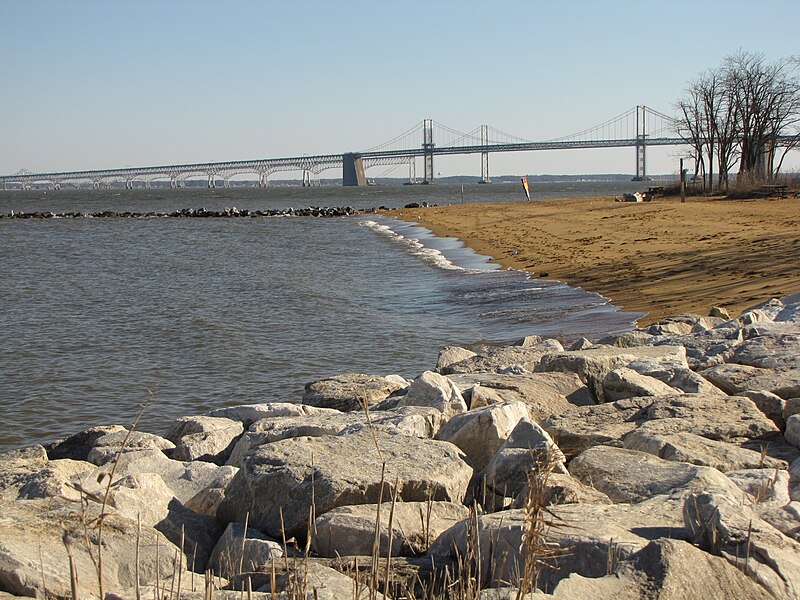
A proposed ferry system across the Chesapeake Bay area of Maryland could improve access to key coastal communities in the region, according to a recent year-long study.
Representatives of the five-county area are evaluating potential routes that would connect 14 key communities in the area via the proposed Baseline Passenger Ferry System.
Click here to learn more about the potential impact of a Chesapeake Bay ferry system
(Photo courtesy of Ben Schumin.)
| | |
|  |
|
|
Pennsylvania - The Southeastern Pennsylvania Transportation Authority (SEPTA) has appointed John Golden as senior press officer. He brings more than 20 years of experience to the role, most recently as director of communications for the Valley Forge Tourism and Convention Board.
New York – The Port Authority of New York & New Jersey has promoted Christopher Lee to director, government and community relations. He joined the authority in 2013, most recently serving as a senior external relations manager.
Oklahoma – The Oklahoma University Health System has brought in Robin G. Daniels as vice president of digital and content strategy. Daniels most recently served in a similar capacity at McMurry University. She brings more than 20 years of experience in communications to the role.
Texas - Deputy City Manager Dionne Mack was named as El Paso’s next city manager. Mack moved from New York to El Paso to serve as the library director in 2011. She has served the city for 14 years.
Tennessee – Randy Geiger was sworn in as mayor of Henry County. Geiger won a special election to replace John Penn who has become president of the Tennessee College of Applied Technology. A graduate of West Point, he served in the U.S. Army for two decades.
Arizona - The Board of Mesa County Commissioners promoted Todd Hollenbeck from deputy county administrator to county administrator, effective Jan. 4, 2025. The decision follows Pete Baier's upcoming retirement. Hollenbeck’s promotion comes after a 24-year career with Mesa County, where he has held several key leadership positions.
Pennsylvania - Allegheny County Executive Sara Innamorato has selected John Fournier as county manager. Fournier is currently the deputy city administrator in Ann Arbor, Michigan. Prior to that, he held numerous positions in the Pittsburgh city government, including deputy chief of staff for former Mayor Bill Peduto.
Georgia - Heather Nicole Freeman Scott was recently appointed by the Montgomery County Board of Commissioners as county manager. Scott's career spans more than a decade, including her most recent position as county administrator for the Jeff Davis Board of Commissioners in Hazlehurst.
Colorado - Justice Monica M. Márquez was sworn in as Colorado’s new chief justice, making her the first Latina in Colorado’s history to hold the title. Márquez has an extensive career in public service and law. Prior to joining the court, Márquez served in several roles at the Colorado Attorney General’s Office.
Massachusetts - Staverne Miller, a former social worker and longtime public employee, has been named the permanent commissioner of the Massachusetts Department of Children and Families. She has been holding the post in an interim capacity since September.
Colorado - The Denver Civil Service Commission introduced Gracie Perez as its latest executive director, more than two months after its previous leader was fired. Perez most recently worked as state and regional operations director for Access & Eligibility Services with the Texas Health & Human Services, overseeing more than 6,000 employees.
Oregon - The port of Portland has selected Kimberly Branam as chief trade and economic development officer. Branam is currently the executive director for Prosper Portland. Prior, she spent four years leading economic development of the city of Portland.
| | |
|
Connect with SPI
Check out our social media links!
| |
About Government Contracting Pipeline | |
|
Strategic Partnerships, Inc.
Publisher: Mary Scott Nabers
Editors: Adam Rollins
Dave Doolittle
www.spartnerships.com
| |
Government Contracting Pipeline, a publication of Strategic Partnerships, Inc., is a free, weekly newsletter detailing important happenings nationwide and the premier source for federal, state and local government news and contracting opportunities. | |
Help us share this message.
To ensure delivery and proper formatting of the newsletter, be sure to add editor@spartnerships.com to your safe senders list.
Otherwise, the newsletter may be flagged as spam and automatically routed to your junk e-mail folder.
| | | | |