Volume 16, Issue 33 - Wednesday, August 14, 2024 | |
By Mary Scott Nabers, CEO of Strategic Partnerships, Inc. | |
|
Many federal programs support revitalization projects for cities and specific neighborhoods and currently, there is an abundance of revenue flowing to cities. The Community Development Block Grant (CDBG) Program, administered by the Department of Housing and Urban Development (HUD), is one of the oldest and best-known programs supporting municipal revitalization projects. The federal agency also oversees the Choice Neighborhood Implementation Grant program, which recently awarded $325 million for seven revitalization projects. These types of funding allocations are made annually, and hundreds of projects result from the support. Revitalization projects are about to launch throughout America, so contracting opportunities will be abundant.
City leaders in Waco, Texas, have announced plans to redevelop 100 acres of the downtown area. This mega-million-dollar initiative will be divided into at least four phases, including developing new public spaces and a commercial development area. Construction will include new public buildings, a convention center, a performing arts complex and a sports entertainment venue.
The entire redevelopment plan will take years to complete, but work on the first phase will be immediate. The project will start with the restoration of the city's buried Barron's Branch Creek. The plans involve preparing the area for development by installing street and utility infrastructure and mitigating the floodplain. Approximately 2.5 million square feet of development space will become available when that work is completed. Cost projections for the first phase of work are approximately $170 million. A competitive sealed bidding process is planned for 2025.
City leaders will oversee the second part of Phase 1, which will include the construction of a new city hall and an administrative headquarters for the Waco Independent School District. The cost estimate for the project is pegged at approximately $420 million. This part of Phase 1 will also include constructing several public parking garages, an upgraded park area, and new street infrastructure. Schematic design is underway, and construction will be delayed until all plans are complete.
The Greenwood District in Tulsa, Oklahoma, historically known as "Black Wall Street," is also about to be revitalized.. A key component of this plan is the development of a Pop-Up Plaza, which will serve as a public square. It will be designed to serve as a flexible public space for community events, pop-up markets and cultural activities. It will also provide an amphitheater for events with a range of amenities, including seating, lighting, and areas for art installations. A revitalization project cost of between $14 million and $22 million has been projected.
Click here for more.
| |
Purdue University approves 10-year, $239 million capital plan | |
|
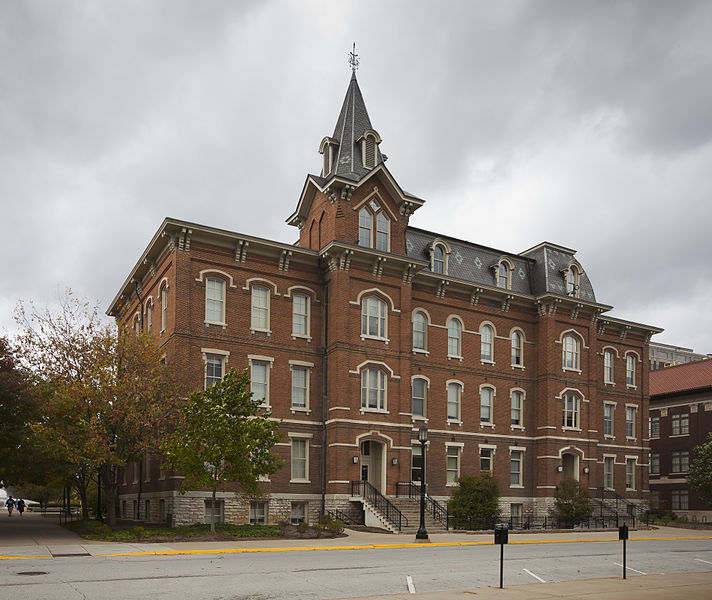
Purdue University will invest $239 million to build a research facility, renovate a library and expand student housing. The university’s Board of Trustees approved the 10-year capital plan during its Aug. 2 meeting. The board expects to start construction on three priority projects in 2026.
The largest investment is the $160 million Interdisciplinary Sciences Research Building project as part of the One Health strategic initiative. The university will build a 140,000-square-foot facility to house programs for life science research on the West Lafayette campus – most notably the Institute for Cancer Research. The current life sciences facilities would need extensive renovations and updates to accommodate the university’s research needs, goals and capabilities.
As part of the project, the university will allocate 1,400 square feet of animal facilities space for gnotobiotic animals – specimens that have been born under germ-free conditions in a controlled environment to help study the impact of microbes on an animal's well-being. The facility will include energy and space efficient research laboratories. Plans include building core and support rooms to further cutting-edge research initiatives. After transitioning programs to the new research building, Purdue University will repurpose the current life sciences structures.
The university will spend $56 million to provide additional student housing. Plans include building a 110,000-square-foot student housing building for first- and second-year students. The structure’s layout will include a kitchen, classroom and study spaces. The residence hall will add 375 beds in pod or suite-style units.
Purdue University will use $23 million to support the first phase of the Hammond Student Union Library Building (SULB) renovation project. The university will renovate 29,000 square feet of the building’s labs, classrooms and offices. The renovations are part of the university’s efforts to replace lost space after demolishing Porter Hall.
Plans include turning SULB’s campus bookstore on the first floor into a multimedia center for the College of Humanities, Education and Social Sciences. The university will reconfigure the second and third floors to make room for office and classroom space. In addition, the university will install a fire suppression system and upgrade the vertical circulation systems.
(Photo courtesy of Diego Delso.)
| |
Kentucky receives $44 million to increase street safety, mobility | |
|
The U.S. Department of Transportation (USDOT) will distribute $44.2 million to help the state of Kentucky make streets safer and enhance urban mobility. The award will advance county and municipal efforts to rebuild downtown areas, develop complete streets and reconnect community hubs.
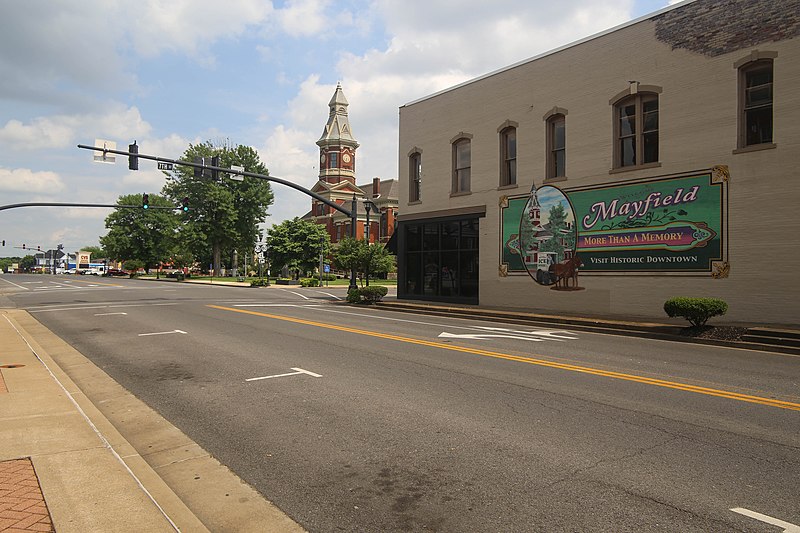
The city of Mayfield will receive $25 million to reconstruct a 2.5 mile stretch of road in the city’s downtown area. The updated street will feature ADA-compliant sidewalks, infrastructure for bicycles, traffic calming measure and trees. In addition, the city will install a stormwater sewer system capable of handling increased rainfall and mitigate flooding risk.
The project will fill gaps in the city’s existing bike system, enhancing non-motorized mobility and reducing vehicular usage. Construction is expected to begin in June 2026. Covington will use $16.3 million to install sidewalks and a land bridge to reconnect the city’s central riverfront hub area.
The city will make the sidewalks longer and wider to protect pedestrians and bicyclists. In addition, the streets will include high visibility crosswalks, direct connections to the regional trail system, lighting for pedestrians and limited speed limits. Plans also include building a public parking garage. Construction is anticipated to begin in March 2025.
The remaining $2.9 million will go toward a planning project for roadway reconstruction. Boone County will use the award to design a road layout with widened travel lanes, turn lanes, curbs, gutters, roundabouts, a shared-use path and two new connecting roadways. Plans also include installing sidewalks, pedestrian crossings, rehabilitated pavement, utility replacements and improved drainage.
USDOT allocated the funds through the Rebuilding American Infrastructure with Sustainability and Equity (RAISE) grant program. The RAISE program invests in community projects to build and renovate critical transportation infrastructure projects across the country.
The projects are a selection of 148 projects that will receive a portion of the recently announced $1.8 billion in RAISE funding for Fiscal Year 2024. Including the latest round, USDOT has invested $7.2 billion across 550 projects through the RAISE program since it was established.
(Photo courtesy of Paul Sableman.)
| |
Mobile City Council clears way for Amtrak to return to Gulf Coast | |
|
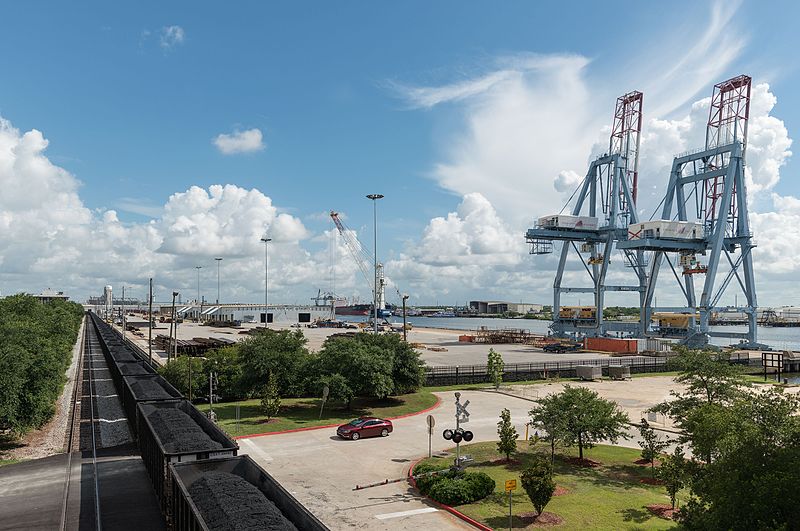
The nearly 20-year absence of an Amtrak line on the Gulf Coast connecting New Orleans, Louisiana to Mobile, Alabama, is poised to end following action taken Tuesday by the Mobile City Council.
The council voted 6-0 with one council member absent to fund passenger train service for three years.
Click here to learn about the Gulf Coast rail line
(Photo courtesy of DXR.)
| |
EPA develops clean label program to identify low-carbon construction materials
| |
|
The Environmental Protection Agency (EPA) will implement a clean label program that will help buyers source clean, climate-friendly construction materials and products. The EPA will place qualifying materials into a publicly accessible registry to make it easier to identify clean construction materials.
The label program is designed to identify and define clean construction materials that are low in carbon, making them feasible alternatives to reduce climate pollution. Currently, construction material production accounts for more than 15% of annual greenhouse gas (GHG) emissions.
Once implemented, the label program will incentivize innovation and demand for domestically produced, lower-carbon building materials. The EPA will prioritize the most procured materials – including steel, glass, asphalt and concrete – as part of the program. These materials provide the most opportunities to reduce climate change impacts.
The EPA will implement the program through a three-phase approach.
During Phase 1, the EPA will improve and standardize the data quality used to calculate the embodied carbon in construction materials. This will ensure buyers will access reliable data to determine which products to work with. The agency will improve the quality of product category rules (PCRs) and environmental product declarations (EPDs) to fill existing data gaps and establish assessment criteria.
Phase 2 will determine the embodied carbon threshold settings that product types need to meet to qualify for the label program. The EPA will build off EPDs established in Phase 1, as well as representative industry benchmarks and data, to finalize thresholds. The program will include a tiered eligibility list categorizing the amount of embodied carbon in qualifying clean materials.
Phase 3 is when the EPA will label products and materials as clean options for buyers. All products that pass Phase 3 meet EPA thresholds and standards, certifying them for listing on the clean material registry.
The label program is supported by $100 million from the Inflation Reduction Act (IRA). The award is the IRA’s latest investment in lowering GHG emissions, totaling $350 million to reduce emissions from construction materials. In July, the EPA distributed $160 million to support clean manufacturing practices across the nation.
(Photo courtesy of Rob Lambert on Unsplash.)
| |
FAA releases additional $566 million in grants for airport infrastructure | |
|
The Federal Aviation Administration (FAA) is making $566.4 million in grants available to upgrade airports in 47 states.
This funding, the ninth round for fiscal year 2024, is part of the Bipartisan Infrastructure Law, which allocates $15 billion to the Airport Infrastructure Grants (AIG) program as part of $25 billion overall for improvements to airport and air traffic control infrastructure. AIG funds can be used for projects such as planning, development, sustainability initiatives, terminal expansions, baggage system upgrades, runway safety improvements and noise compatibility projects at qualifying airports.
Click here for details on airports receiving funds
(Photo courtesy of Andrik Langfield on Unsplash.)
| |
University of Maine developing ways to turn waste wood into fuel, fish feed | |
|
The University of Maine (UM) is developing a process to transform low-quality waste wood into sustainable jet fuel and fish feed for aquaculture farms.
Low-value wood biomass from small diameter trees and branches are typically left behind across the state’s forests due to compounds that make them unusable for most modern industries and practices. Drops in pulp and paper production, drought, fire suppression and decreased demand have resulted in millions of tons of this type of wood littering Maine’s forests.
The UM Forest Bioproducts Research Institute (FBRI) and Aquaculture Research Institute (ARI), in collaboration with both public and private partners, are developing ways to introduce low-quality wood biomass into sustainable markets. Compounds found in low-quality wood – such as lignins and sugars – can be converted to support the transportation industry and fish cultivation practices.
Renewable fuels for planes and jets are more expensive than cheaper fossil fuel-based alternatives, making the transition to clean energy more difficult without raising costs. However, due to the abundance of low-quality wood biomass across Maine, the FBRI is working toward using the material as a feasible alternative to help ease the transition to clean energy while reducing fuel costs.
The FBRI uses a process involving high temperature and pressurized water to break down lignins and other sugar production byproducts into organic liquids. The partnership will leverage AI-based predictive modeling to test the resulting material under varying conditions and compositions. FBRI will also use AI to guide sustainable development.
Both agencies will collaborate to separate sugars, lignin and other biomass components and convert them into proteins. The process will then use those proteins to formulate fish food. Feed is typically one of the highest expenses in aquaculture production. The biomass formula fish food may help lower associated feeding costs and enhance sustainability.
The U.S. Department of Agriculture has awarded $10 million to progress UM’s Sustainable Wood to Fuel and Fish Feed for Strengthening the U.S. Bioeconomy (SWF3) project. The project is part of a National Institute of Food and Agriculture (NIFA) program, dedicated to supporting sustainability in agricultural systems. In addition to technological development, UM will develop higher education courses based on the SWF3 project. These courses cover chemical engineering, AI, fish nutrition, forest resources, economics, microbiology and sustainability.
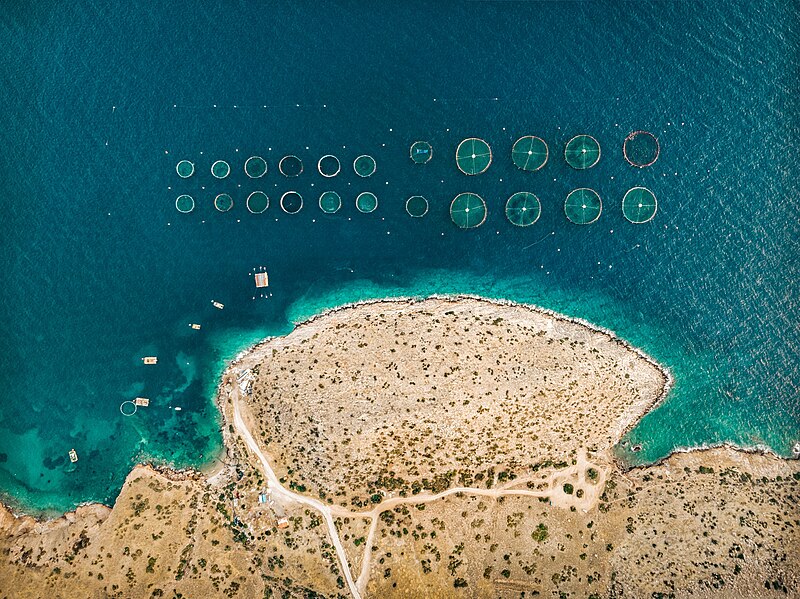
(Photo courtesy of Oregon State University.)
| |
HHS reorganizes departments to amplify technology, cybersecurity resilience, strategy | |
|
The U.S. Department of Health and Human Services (HHS) will reorganize its leadership positions, responsibilities and policies to better reflect and accommodate recent opportunity growth. The reorganized agency will better consolidate critical functions to streamline and promote technology, cybersecurity, data and artificial intelligence (AI) strategy and policy functions.
Policy and operational responsibility have traditionally been distributed across three offices:
- The Office of the Office of the National Coordinator for Health Information Technology (ONC).
- The Assistant Secretary for Administration (ASA).
- The Administration for Strategic Preparedness and Response (ASPR).
However, as the role of data strategy and technology have evolved, the need to redistribute core functions to keep pace with future developments and demands necessitated reorganization.
As part of the reorganization, HHS is renaming ONC to the Assistant Secretary for Technology Policy and Office of the National Coordinator for Health Information Technology (ASTP/ONC).
The new office will establish an Office of the Chief Technology Officer and create two roles – chief AI officer and chief data officer – to oversee department-level and cross-agency technology, data and AI strategy and policy.
The chief AI officer will be responsible for setting the department’s AI policy and strategy and establishing internal governance, policies and risk management approaches for internal AI usage. The officer will coordinate HHS’s AI approach in health and human services, advance the use of AI technologies and tools in the department and develop AI-related talent and training initiatives.
The chief data officer will oversee data governance and policy development and promote data literacy and data talent initiatives. The officer will also manage the HHS’s data strategy, support data collaboration and exchange and manage the agency’s data as a strategic asset.
In addition, ASPR will take over public-private efforts between the health sector and federal government on cybersecurity. It will consolidate those cybersecurity efforts with the department’s Office of Critical Infrastructure Protection health sector cybersecurity initiatives. This will help centralize the department’s healthcare cybersecurity and increase resilience.
(Photo courtesy of Glenn Carstens-Peters on Unsplash.)
|  | |
DOI provides $16 million to help protect Yakima River Basin from drought | |
|
The Department of the Interior (DOI) will allocate $16 million to safeguard and strengthen communities in the Colorado Yakima River Basin from wildland fires, restore ecosystems and alleviate drought conditions. The Yakima River Basin is the latest of several regions receiving funds to address water scarcity and wildfire dangers.
The Yakama Nation will receive the largest portion of the award - $6 million – to support the Fan Shallow Aquifer Recharge project. Low flows and high temperatures have caused drought conditions in the creek, impacting the ecosystem. The completed project will conserve 748 acre-feet of water and recharge 5,400 acre-feet of water.
The remaining funds will be split between the Washington State Department of Ecology, the Roza Irrigation District and the Kittitas Reclamation District to improve drought resilience. The Washington State Department of Ecology will use $5 million to expand existing programs designed to mitigate water impacts and alleviate drought conditions. Expanding the drought resilience programs would give the department greater flexibility to improve water flows in Yakama Basin when needed.
The Roza Irrigation District will use $3.4 million to recover from the effects of drought. The funds will offset costs included in the district’s purchase of 11,330 acre-feet of water to address drought in the basin. Approximately 70% of the district includes crops that need water late in the season to survive.
The Kittitas Reclamation District will use the remaining $1.6 million to support the Bureau of Reclamation’s (BOR) investment in the $83 million North Canal Piping Project. The project will line 13,862 feet of canal to save up to 7.1 cubic-feet-per-second of water at peak flows. Once completed, the project will conserve 6,658 acre-feet of water per year. The district expects to start construction in fall 2024.
The DOI will deliver approximately $8.3 billion over five years to support water infrastructure projects. These projects include rural water, storage, conservation, conveyance, dam safety, purification and desalination. The Yakima River Basin has already received $40 million to support projects, including $7 million to enhance the Cle Elum reservoir’s capacity and expand fish passage. BOR has distributed nearly $3 billion for 430 projects since the Bipartisan Infrastructure Law was signed in 2021.
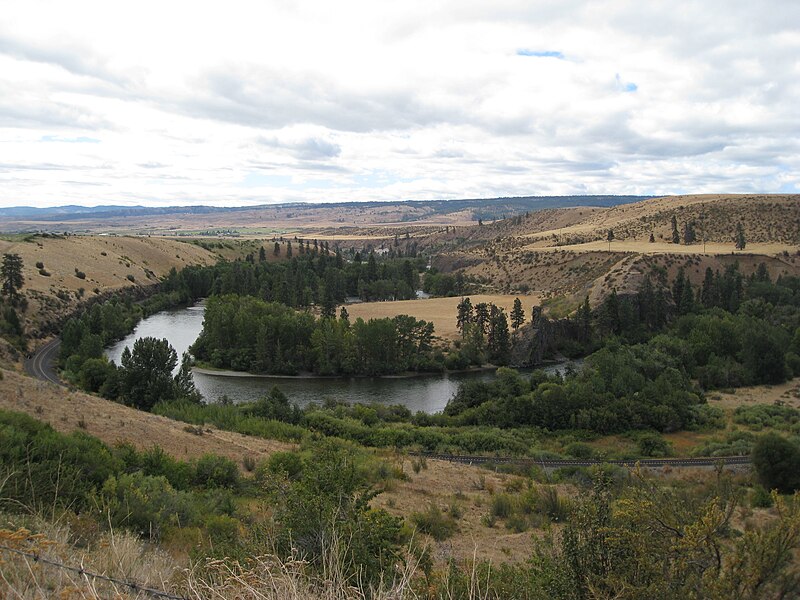
(Photo courtesy of J Brew.)
| |
EPA awards $171 million loan to upgrade water infrastructure in Birmingham, Alabama | |
|
The U.S. Environmental Protection Agency (EPA) will provide a $171 million Water Infrastructure Finance and Innovation Act (WIFIA) loan to the Birmingham Water Works Board in Alabama. The loan will support improvements to the drinking water supply that supports 770,000 residents in Birmingham.
The WIFIA loan will be used to improve the reliability of Birmingham’s drinking water supply and make it more resilient in the face of drought by upgrading the Lake Purdy Dam, as well as modernizing drinking water infrastructure.
Click here to learn more about this opportunity
(Photo courtesy of Rojan Maharjan on Unsplash.)
| | |
|  |
|
|
Texas - The Brownsville Navigation District Board of Commissioners voted unanimously to appoint William Dietrich as port director and CEO. Before joining the port as chief of police in July 2022, Dietrich served the city of Brownsville Police Department for 26 years. Dietrich is a graduate of the Canadian Police College.
Ohio - Pamela Vest Boratyn will be nominated to serve as director of the Ohio Department of Transportation beginning Oct. 1, when current director Jack Marchbanks steps down. Boratyn has worked at ODOT in various capacities over a 30-year career in public service, including as assistant director and chief of staff.
Georgia - The city of Pooler’s mayor and City Council have hired Heath Lloyd as city manager. Pooler comes from the City of Savannah, where he served as assistant city manager. He brings over 18 years of public experience to this role.
California – The Santa Ana City Council unanimously appointed Alvaro Nuñez permanently as city manager. Nuñez, who has spent 30 years with the city of Santa Ana, had been the acting city manager. Before that, he was leading the planning and building agency within the city.
Washington – Lon Pluckhahn will take over as city manager of Vancouver by Oct. 11. He beat out two other finalists to replace Eric Holmes, who is retiring. Pluckhahn has served as city manager of Marion, Iowa, for the past 15 years.
Maryland - Nancy Wallace has been named NOAA Research’s incoming deputy assistant administrator for programs and administration. Wallace brings a wealth of experience from her time leading NOAA’s Marine Debris Program.
Arizona - The Arizona Board of Regents has appointed Dr. Suresh Garimella as the 23rd president of the University of Arizona. Dr. Garimella is currently the 27th president of the University of Vermont (UVM) and is the former executive vice president for research and partnerships at Purdue University. He received his doctoral degree from the University of California, Berkeley, his master's degree from The Ohio State University and his bachelor’s degree from the Indian Institute of Technology Madras.
Ohio - The Ohio Valley Regional Development Commission Executive Committee named Stephanie Gilbert as executive director.
Washington - Afthab Zainudeen has been named C-TRAN’s chief information officer, effective Aug. 12. Zainudeen started his transportation career in 1995, spending time in both the public and private sector.
New York - Manhattan College has named Kristell Lowe vice president of student life. Lowe comes to the college with an extensive background in the luxury hospitality industry coupled with campus operations in higher education. She will report directly to the president and serve as a member of the president’s executive cabinet.
Missouri - The Federal Reserve Bank of St. Louis has appointed François G. Henriquez first vice president and chief operating officer, following the retirement of Kathleen O’Neill. Henriquez joined the St. Louis Fed in September 2018 and is currently executive vice president, general counsel, corporate secretary, chief administrative officer and a member of the Bank’s management committee.
District of Columbia - Tony Clark will join the National Association of Regulatory Utility (NARUC) Commissioners on Oct. 1, serving as executive director-elect. He is slated to become executive director on Jan. 1, 2025, a day after the official retirement of Greg White, the current executive director. Clark has been a commissioner for the Federal Energy Regulatory Commission.
| | |
|
Connect with SPI
Check out our social media links!
| |
About Government Contracting Pipeline | |
|
Strategic Partnerships, Inc.
Publisher: Mary Scott Nabers
Editors: Adam Rollins
Dave Doolittle
www.spartnerships.com
| |
Government Contracting Pipeline, a publication of Strategic Partnerships, Inc., is a free, weekly newsletter detailing important happenings nationwide and the premier source for federal, state and local government news and contracting opportunities. | |
Help us share this message.
To ensure delivery and proper formatting of the newsletter, be sure to add editor@spartnerships.com to your safe senders list.
Otherwise, the newsletter may be flagged as spam and automatically routed to your junk e-mail folder.
| | | | |