Volume 16, Issue 31 - Wednesday, July 31, 2024 | |
Clean energy projects escalate with billions in funding support | |
By Mary Scott Nabers, CEO of Strategic Partnerships, Inc. | |
|
Clean and renewable energy continues to get abundant attention, and the funding support flowing to support clean power projects is historic. Approximately $3 trillion is invested in energy globally each year, and $2 trillion of that amount is devoted to renewable energy. Hundreds of billions have been invested in clean energy initiatives in the United States since 2021.
This week, the U.S. Environmental Protection Agency announced another $4 billion in funding through its Climate Pollution Reduction Program. This allocation was earmarked for 25 selected initiatives in 30 states. $372 million of the funding went to projects expanding solar and wind power generation. Approximately $1 billion will support energy efficiency projects, including energy retrofits of 250 public buildings.
With funding support of $80 million from the EPA, city officials in Painesville, Ohio, will oversee the construction of a solar installation and a battery backup system on a multi-acre brownfield site. The solar project will deliver 35 megawatts of energy, and the battery system will have a capacity of 10 megawatts. When completed, the system will allow the city to close its coal-fired power plant, which has been in use since 1888. The brownfield site on which the solar farm will be located was polluted years ago and will be remediated as a component of the effort. The project’s design will take place in 2025, with installation and interconnection scheduled to begin in 2026.
In New Jersey, the state’s Department of Environmental Protection will lead a coalition of partners to oversee the construction of electric vehicle charging infrastructure for commercial zero-emission medium- and heavy-duty vehicles. The electric power infrastructure will be deployed along Interstate 95 and adjacent roadways from Connecticut to Maryland. The project has been tagged with an estimated cost of $248.9 million. When completed, it will significantly lower greenhouse gas emissions from freight transportation, reduce air pollution along the corridor and provide technical assistance to other program developers. The project includes approximately 20 freight truck charging infrastructure sites, 164 fast charging ports and 138 ultra-fast charging ports along I-95. In January 2025, the New Jersey Department of Environmental Protection will select a third-party administrator through a competitive bidding process to oversee the development of requests for information (RFIs) and requests for proposals (RFPs). Because of the size of the project, the selection of contracting partners could easily be delayed until 2027.
Click here for more.
| |
USDOT provides $54 million to restore Alaska highway, improve maritime infrastructure | |
|
The U.S. Department of Transportation (USDOT) has allocated $54 million to help the state of Alaska address climate change degradation, reinforce harbor infrastructure and plan port development and facilities. The funds will support the state’s efforts to restore 45 miles of Alaska highway, build float and anchoring systems and design a port facility to reduce safety risks and improve port function.
The Alaska Department of Transportation and Public Facilities (ADTPF) will receive $25 million to repair a 45-mile stretch of highway that has been affected by thawing permafrost and other climate-change-related degradation. Plans include improving drainage, restoring highways slopes and surfaces, resurfacing the road with bituminous surface treatment, restoring and replacing guardrails and installing thermosyphons. The project will improve mobility, connectivity and resilience to future climate change. Construction is expected to begin in May 2026.
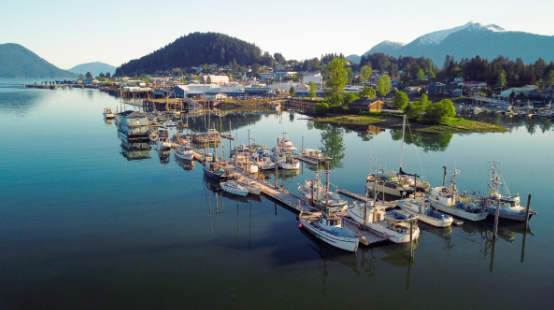
The city and borough of Wrangell will use $25 million to support the Wrangell Harbor Basin Revitalization and Transportation Resiliency Project. The project will plan, design and build float and anchoring systems for the Wrangell Harbor Basin. In addition, the city will build water, electrical and fire suppression systems. These improvements will help enhance docking safety and reliability while optimizing the harbor’s overall functionality and safety. In addition, the city will relocate the Inner Harbor parking. The project will enhance mobility, reduce transportation-related air pollution and remove deteriorating in-water infrastructure.
Nulato Village will spend $4 million to design a commercial port, bank armoring and dock facilities along the Yukon River and Mukluk Slough. The facility upgrade project will help reduce safety risks and mitigate greenhouse gas emissions. Safety improvements include better access to boat ramps and vessels, installing lighting, placing non-slip surface, building a specified docking and storage area and providing space for barge navigation.
The village will armor and reinforce streambanks, eliminating erosion and promoting revegetation in the upper ridges of the slough and river. Plans also include installing a river barge and solar panels to transition the port to clean energy.
USDOT allocated the funds through the Rebuilding American Infrastructure with Sustainability and Equity (RAISE) grant program. The RAISE program invests in community projects to build and renovate critical transportation infrastructure projects across the country.
The projects are a selection of 148 projects that will receive a portion of the recently announced $1.8 billion in RAISE funding for Fiscal Year 2024. Including the latest round, USDOT has invested $7.2 billion across 550 projects through the RAISE program since it was established.
(Photo courtesy of the city and borough of Wrangell.)
| |
NOAA opens $54 million NOFO to remove, capture debris along coasts, lakes | |
|
The National Oceanic and Atmospheric Administration (NOAA) will allocate $54 million across two funding programs to remove marine debris across the nation’s coasts and Great Lakes. Projects that receive funding will use large-scale marine debris removal solutions and install, monitor and maintain marine debris interception technologies.
Eligible applicants for both funding opportunities include:
- State, local, Tribal and territory governments whose activities affect research or regulation of marine debris.
- Federally and non-federally recognized Tribes and Native or Indigenous organizations.
- Institutes of higher education.
- Nonprofit organizations.
- Commercial organizations.
NOAA will provide $47 million through the Marine Debris Program. Projects can receive up to $10 million through the program. To qualify, applicants must submit a Letter of Intent by Sept. 27, 2024. Full proposals are due Jan. 31, 2025. NOAA expects selected projects to begin no sooner than Oct. 1, 2025.
The Marine Debris Program will support projects that address persistent solid debris abandoned in marine environments or the Great Lakes. Marine debris includes derelict vessels, fishing gear and other materials that can’t be collected by hand. Completed projects will improve the resilience of coastal and marine environments.
While removing large-scale debris, projects should use alternative disposal methods when possible, prioritizing environmentally friendly options, such as recycling, reuse, waste-to-energy or other similar methods. Projects should integrate prevention strategies to prevent debris reaccumulation. In addition, NOAA will prioritize applicants that monitor projects for long-term beneficial outcomes for habitats, communities and the economy.
NOAA will distribute $7 million through the Marine Debris Interception Technologies Program. Projects may receive up to $1 million through the program. Applicants must submit a Letter of Intent by Oct. 9, 2024, to qualify. Full proposals are due Feb. 7, 2025. NOAA expects selected projects to begin no sooner than Oct. 1, 2025.
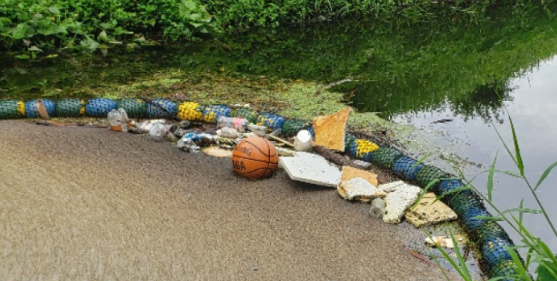
The Marine Debris Interception Technologies Program will support projects that deploy interception technologies in water environments that accumulate trash, plastics and other types of reaccumulating litter. These technologies include storm drain catchments, shoreline removal technologies, booms, skimmers, conveyors with receptacles and floating collection devices designed to capture removable maritime debris.
Applicants should provide a long-term monitoring and maintenance plan for their projects. NOAA will prioritize plans that collect data on captured debris and don’t require additional future federal funding to sustain. Projects should include a prevention strategy to prevent debris reaccumulation. This includes plans that promote behavior change and awareness efforts through education or outreach plans. Applicants should also identify and estimate marine debris removal metrics, such as how many pounds of debris the project will remove.
(Photo courtesy of NOAA.)
| |
Caltrans to distribute $51 million for transportation infrastructure planning | |
|
The California Department of Transportation (Caltrans) is investing $51.4 million to advance transportation planning projects that will improve the system’s climate change resilience. The awards will support 89 projects statewide, allocating $48.3 million to disadvantaged communities.
The state selected the recipients out of 146 applicants that applied for a share of the Sustainable Transportation Planning Grant Awards (STPG) program. The projects will help reduce pollution, improve state highway system resiliency, enhance non-motorized pathway safety and expand natural disaster preparedness. Caltrans will deliver awards through three categories:
- Climate Adaptation Planning (CAP) Grants.
- Sustainable Communities Competitive and Technical (SCCT) Grants.
- Strategic Partnerships (SP) Grants.
Caltrans will allocate $28.8 million in CAP grants to 30 local, regional and transit agencies. The recipients will use the funds to identify transportation-related climate vulnerabilities while developing climate adaptation plans. In addition, the planning projects will address climate impacts to transportation infrastructure.
The agency will provide $19.2 million in SCCT grants to 50 local, regional and transit agencies to plan for transportation, land use and electric vehicle (EV) charging infrastructure projects. Caltrans will dedicate $6 million to support 16 projects that will improve safety and accessibility for pedestrians and bicyclists.
The remaining $3.4 million in SP grants will support nine projects. These projects will develop plans to support the state’s efforts to plan for managed lanes, training and certification, comprehensive multimodal corridors and transit network and comprehensive operational analyses. In addition, the plans will outline goals to improve interregional ADA paratransit coordination, develop airport passenger transportation recommendations, develop a zero-emissions bus fleet and coordinate multimodal transportation and land use compatibility.
Some of the notable projects include:
- The Port Department of the city of Oakland will receive $3 million to conduct a vulnerability assessment of sea level rise (SLR) and groundwater inundation (GWI) for the port and nearby communities. The assessment will develop a future model estimating ocean metrics and inundation areas for 2030, 2050 and 2100. The resulting model will help the port assess water table fluctuations and liquefaction potential. Plans include creating an Adaptation Plan to provide strategies for mitigating tidal inundation and groundwater impact.
- The Tulare County Association of Governments will use $3 million to assess the climate change vulnerabilities of the San Joaquin Valley (SJV) corridor and resiliency connectors. The SJV corridor is an essential connector for some of the most agriculturally productive and economically disadvantaged regions in the U.S. The association will use the assessment to leverage and advance crucial transportation infrastructure projects and implement adaptive climate measures.
- The county of Del Norte will spend $2.7 million to develop a countywide geographic information system (GIS) compiling existing drainage infrastructure features connected to the county-maintained road system. The project will conduct a hydrology and hydraulics analysis to assess climate change impacts to existing conditions. The county will also develop a capital improvement plan (CIP) to guide drainage infrastructure projects.
Since launching the STPG program in 2015, Caltrans has awarded $266 million through 685 planning grants. The funds for the latest round come from the state’s $15 billion 2022-2023 clean transportation package and the Road Repair and Accountability Act of 2017.
(Photo courtesy of the California Climate Adaptation Strategy.)
| |
|
An initiative to hire a developer to build a transit-oriented life sciences center near public transportation in North Bethesda, Maryland, is officially underway.
The Washington Metropolitan Area Transit Authority recently issued a request for qualifications for a developer with experience creating life science hubs. The new development will include housing, office, retail and public spaces near the North Bethesda Metro Station.
Click here to learn more about the developer RFQ
(Photo courtesy of the Washington Metropolitan Area Transit Authority.)
| |
Massachusetts invests $29.7 million to replace, repair two bridges | |
|
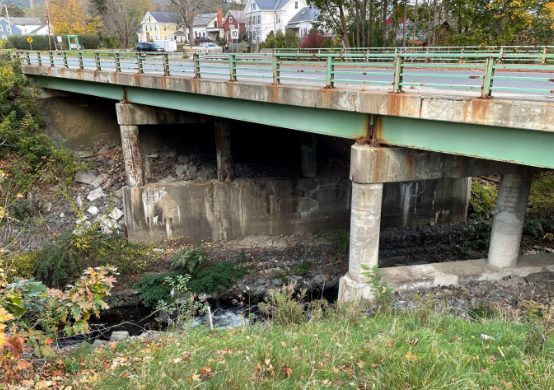
Massachusetts will spend $29.7 million to replace and preserve two Route 10 bridges spanning the Fall River and Interstate 91 in the town of Bernardston. The projects will replace aging infrastructure, address maintenance concerns, improve accessibility and enhance connectivity to essential facilities. The state expects construction to begin in summer or fall of 2026.
The project will fully replace the bridge spanning the Fall River. The existing bridge has fallen into disrepair, including cracking pavement, exposed rebar, evidence of corrosion and a lack of pedestrian safety accommodations. The project will mitigate ongoing maintenance with a 75-year lifespan.
The replacement bridge will be a single span structure that reduces scour, undermining and the need for future ongoing maintenance. Plans include building a steel beam superstructure, concrete bridge deck, bedrock-founded abutments and steel rails to meet safety standards.
In addition, the bridge will feature striped and buffered bicycle lanes. The state will install a striped median to increase safety and clearly separate vehicles. Plans also include upgrading the stretch of roadway’s stormwater drainage system. The state will re-align the I-91 offramp to include a safer look-back angle for merging vehicles.
The state will fully replace the second bridge’s deck and repair the superstructure to improve pedestrian accessibility and traffic safety features. Plans call for installing high-visibility pedestrian crossings, pedestrian warning devices, colored bicycle lanes in conflict areas and a cement refuge island. The state will also build ADA-compliant pedestrian curb ramps and concrete sidewalks.
(Photo courtesy of the state of Massachusetts.)
| |
Colorado studies outline how to utilize geothermal, hydrogen clean energy | |
|
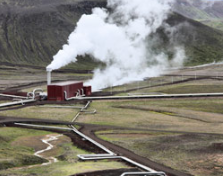
The Colorado Energy and Carbon Management Commission (ECMC) has released two reports that outline how the state can harness emerging clean energy solutions to achieve climate and air quality goals. These studies provide guidelines and recommendations for reducing greenhouse gas (GHG) emissions, protecting local communities and reducing utility costs.
The first study focuses on analyzing the potential of harnessing geothermal energy across the state. The ECMC reviewed the state’s geologic and geothermal history, a data review and resource assessment, a utilization and market analysis and an environmental and regulatory evaluation of geothermal opportunities.
The second study prioritizes studies into the current state and regulations of hydrogen infrastructure, transportation and storage. The study offers several recommendations to direct the use, storage, transportation and usage of hydrogen operations.
The ECMC regulates the development and production of oil and gas, deep geothermal resources, carbon capture and sequestration and storing natural gas underground. The agency is dedicated to serving the community at large and protecting public health, safety, welfare, the environment and wildlife resources.
(Photo courtesy of the EPA.)
| |
NSF launches initiative to develop AI test beds | |
|
The U.S. National Science Foundation (NSF) is ready to develop artificial intelligence (AI) test beds to vet emerging AI technologies. AI test beds provide simulated workspaces to help AI researchers analyze their work before real-world implementation.
The initiative will award planning grants to research teams to design and develop AI systems for sectors such as urban and regional transportation networks, power grid control, criminal justice systems and public safety. Research teams will use grants to expand or enhance existing test beds to ensure they are AI-ready. Projects will collect preliminary data, form teams, and design and develop governance and management plans ensuring AI-ready test beds are scalable and effective.
The platform allows researchers to assess AI software through rigorous testing and evaluation and record their societal and economic impacts. These solutions provide insight into the potential security, safety, privacy and fairness issues that may cause issues after implementing AI on a commercial scale.
The development and integration of cutting-edge AI technologies will include private AI laboratories, academia, civil society and third-party evaluators to form dedicated research teams.
The application of AI technologies poses genuine risks, including fraud, discrimination, bias and disinformation.
The AI test bed initiative aligns with the Safe, Secure and Trustworthy Development and Use of Artificial Intelligence executive order, signed in October 2023. The order exemplifies the necessity of developing comprehensive ecosystems for AI development that center around safety, security and trustworthiness.
(Photo courtesy of the NSF.)
| |
Philadelphia launches P3 to turn wood waste into carbon-negative lumber | |
|
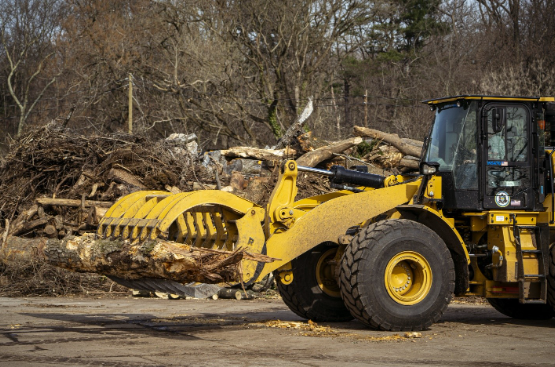
The city of Philadelphia’s Parks and Recreation Department has launched a public-private partnership (P3) to turn fallen trees into building materials.
The city created the Philadelphia Reforestation Hub to repurpose urban wood waste. The initiative will both allow the city to reduce waste by converting wastewood into usable materials and provide career-development pathways through job skills training.
Traditionally, trees that die or fall are taken to a recycling center to become wood chips and mulch. This process removes millions of potential lumber sources from the market, ending up as primarily as a source of waste rather than being put to better use in construction. The Reforestation Hub, instead of chipping these trees, will turn them into a carbon-negative building material.
The city can use this material to support green infrastructure projects, including tree stakes, construction, furniture and decking. The project helps offset the demand for fresh lumbered wood, reducing the need to log forests and mitigate environmental climate impacts.
Currently, approximately 36 million trees fall in the United States due to development, natural disasters, disease and decay. Considering that global wood demand is expected to grow up to 54% by 2050, the hub’s goal to efficiently turn unused trees into sustainable lumber assets will help the city meet the demand without resorting to expanding foresting efforts.
The hub will be located at the Fairmount Park Organic Recycling Center (ORC). In addition to ensuring the ORC can convert wood waste into viable building materials, the P3 will provide a workforce development process to train workers for lumber processing and management. The program will offer young residents the skills and experience needed to build careers in energy, green infrastructure and community-based career fields.
(Photo courtesy of the city of Philadelphia.)
| |
|
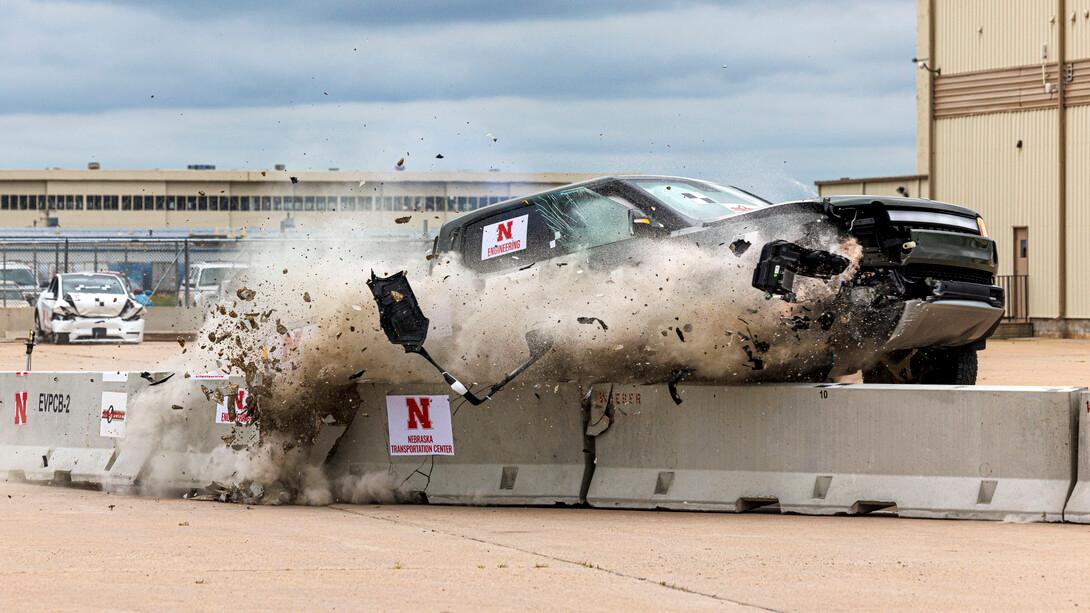
A recent crash test conducted by the University of Nebraska-Lincoln has raised questions about the readiness of U.S. highways for widespread electric vehicle (EV) adoption. The test, involving a 2022 Rivian R1T electric pickup truck, suggests that the increased weight of large EV’s with heavy battery packs and a lower center of gravity make commonly used highway guardrails and traffic barriers inadequate in reducing the risk of injury and death when an electric vehicle leaves the road.
With EV sales in the U.S. reaching 1.6 million in 2023, a 60% increase from the previous year, and federal tax credits encouraging further adoption, ensuring road safety for these vehicles is crucial. The Environmental Protection Agency estimates that by 2032, more than half of new cars sold annually will need to be electric to meet new emissions standards. However, many U.S. roads and safety features were designed decades ago, potentially unprepared for the unique characteristics of EVs.
Click here to learn more about to future of highway safety and EVs
(Photo courtesy of the University of Nebraska.)
|  | |
|
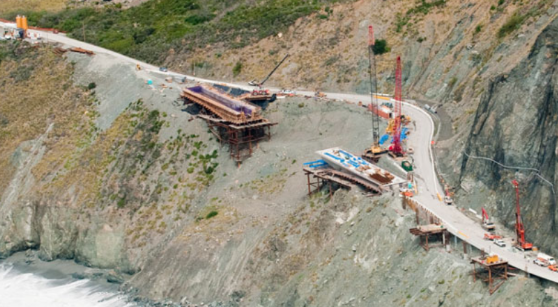
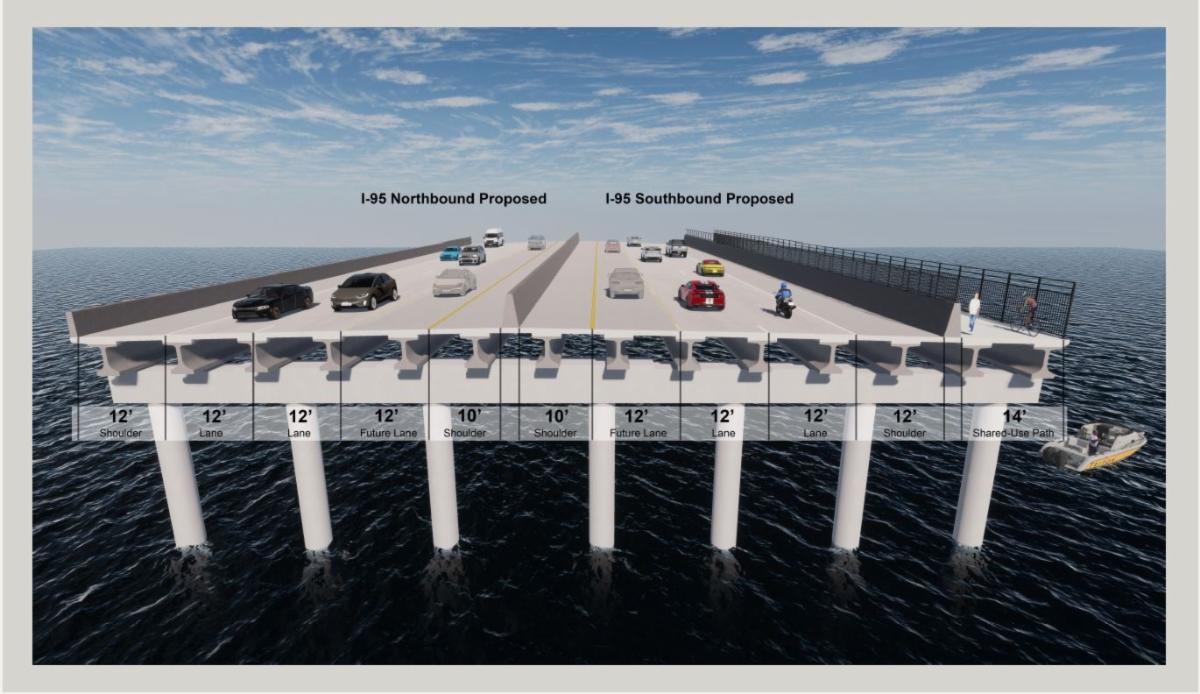
The South Carolina General Assembly recently approved a $200 million increase in the budget for bridge projects statewide. The additional funds boost the total program budget for bridge replacements and rehabilitations to $439 million for this year.
The South Carolina Department of Transportation (SCDOT) will dedicate the new funding in equal portions – $100 million for bridges on interstate routes and $100 million for bridges on secondary roads.
Click here for more information on South Carolina’s bridge investment
(Photo courtesy of SCDOT.)
| |
|
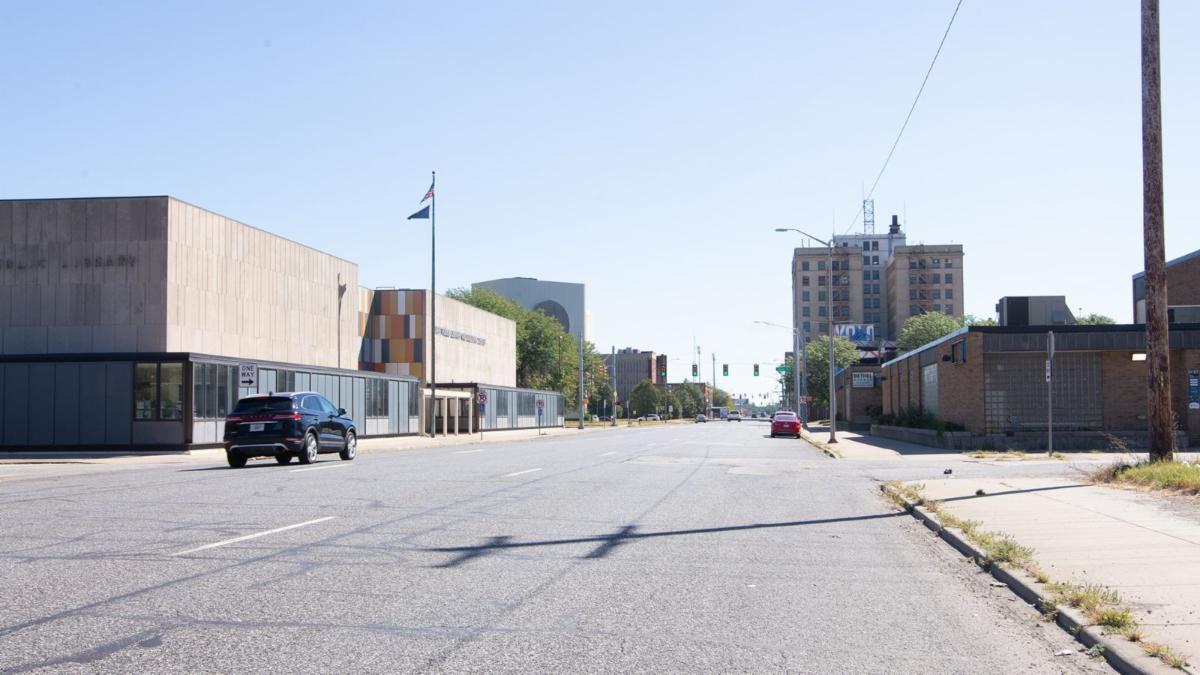
Gary, Indiana, has announced a partnership with the University of Notre Dame to create a master plan for the city’s downtown area. The city will collaborate with the university's architecture school to reimagine the city’s Broadway corridor over the next decade.
While still serving as state senator, Gary Mayor Eddie Melton authored Indiana Senate Bill 434 in 2003, which provides matching funds to cities to remove distressed properties located within Indiana’s transit development district. The city has received $6 million from the state, $3 million from Hard Rock Casino of Northern Indiana and will put up the remaining $3 million to pay for the planning project.
Click here to learn more about the city’s revitalization plans
(Photo courtesy of the city of Gary.)
| | |
|  |
|
|
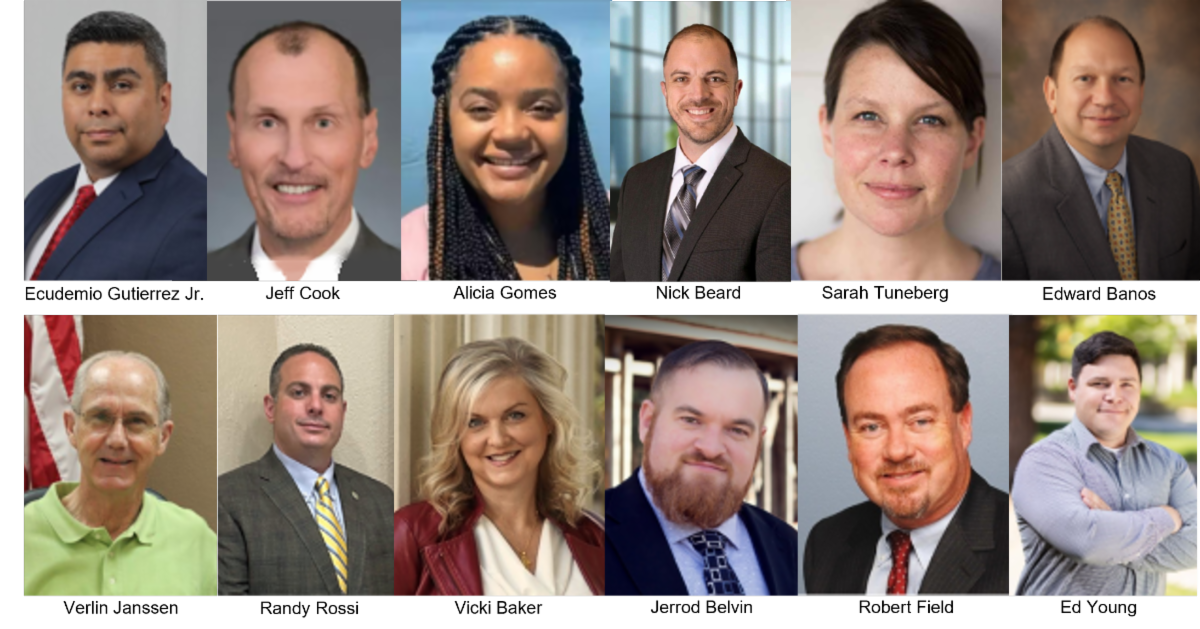
District of Columbia - Ecudemio Gutierrez Jr. has joined DC Water’s leadership team as director of occupational safety and health. Gutierrez most recently served as employee health and safety corporate director for a technology company. He brings 19 years of leadership and safety management experience to the position.
Massachusetts - The Massachusetts Bay Transportation Authority (MBTA) has appointed Jeff Cook as permanent chief administrative officer (CAO) and Alicia Gomes as the inaugural executive director of light rail.
Cook joined the MBTA in 2018 as chief procurement and contracts administration officer. He has been serving as acting CAO for the past six months.
With 17 years of experience at the MBTA, Gomes has progressed from a light-rail motor person to roles including chief inspector, division chief of light-rail operations and chief transportation officer of rail operations.
California - The California Highway Patrol has appointed Nick Beard as chief technology officer. Beard has served as senior business manager at the California Department of Technology (CDT) for the last three years. Prior to joining the CDT, Beard was chief operations manager at the California Department of Forestry and Fire Protection.
Colorado - The Colorado Governor’s Office of Information Technology (OIT) has appointed Sarah Tuneberg as Colorado digital service (CDS) director. Tuneberg also has experience in public health and emergency management, serving Colorado as a senior adviser and director of its Innovation Response Team.
Texas - Edward Banos will be University Health’s president and CEO following a unanimous vote of the Bexar County Hospital District Board of Managers. Banos previously served as the organization’s executive vice president and COO. He brings more than three decades of executive health care leadership experience to the role. Prior to joining University Health in 2015, he served as president and CEO of two health systems in Michigan.
Nebraska – Verlin Janssen has taken over as mayor of the city of Gothenburg. Janssen took over the role from Will Rahjes. Janssen has been serving as president of the City Council.
Rhode Island - The Rhode Island League of Cities and Towns has selected Randy Rossi as executive director. Rossi will succeed Ernie Almonte, who is set to retire Dec. 31. Rossi brings more than 20 years of municipal experience to the role, including more than 16 years working for the town of Smithfield. He will begin his tenure in the fall of 2024.
Washington – The Yakima City Council officially approved Vicki Baker as city manager. Baker most recently served as deputy director for the Yakima Valley Conference of Governments. Baker will officially succeed Bob Harrison on Aug. 8, 2024.
Pennsylvania – The Pocono Township has hired Jerrod Belvin as township manager. Belvin most recently served as the vice president commissioner. He also served as an emergency management specialist with FEMA. Belvin brings 12 years of management experience to the role.
Oregon – Robert Field has been chosen as the city of Medford’s next city manager. Field brings more than 30 years of experience in local government and the private sector to the role. He most recently served as city manager for San Bernardino, California. Field will begin his tenure in mid-September. He will take over the role from Brian Sjothun.
California – Ed Young has been chosen as the Bureau of Reclamation’s (BOR) deputy regional director of business services for the California-Great Basin Region. Young has worked with BOR since 2014, starting as a regional budget analyst. He was later promoted to assistant budget officer, regional budget officer and regional program and budget manager. Before joining BOR, Young was a budget analyst for the Department of Defense.
| | |
|
Connect with SPI
Check out our social media links!
| |
About Government Contracting Pipeline | |
|
Strategic Partnerships, Inc.
Publisher: Mary Scott Nabers
Editors: Adam Rollins
Dave Doolittle
www.spartnerships.com
| |
Government Contracting Pipeline, a publication of Strategic Partnerships, Inc., is a free, weekly newsletter detailing important happenings nationwide and the premier source for federal, state, and local government news and contracting opportunities. | |
Help us share this message.
To ensure delivery and proper formatting of the newsletter, be sure to add editor@spartnerships.com to your safe senders list.
Otherwise, the newsletter may be flagged as spam and automatically routed to your junk e-mail folder.
| | | | |