Volume 16, Issue 30 - Wednesday, July 24, 2024 | |
By Mary Scott Nabers, CEO of Strategic Partnerships, Inc. | |
|
Congress continues to allocate billions to a long-overdue effort to make the country’s bridges safer. About 50,000 bridges in America recently were deemed structurally unsound, and weather-related events are taking a huge toll on the structures.
Last week, the U.S. Department of Transportation announced $5 billion in awards for 13 large bridge projects. Many of these projects will have cost projections ranging from hundreds of millions to billions. This $5 billion allocation is part of approximately $9.6 billion that will be awarded to bridge projects that will launch between now and the 2026 fiscal year.
While this sounds like an abundance of funding, the need for improvements to America’s bridge infrastructure sector is so significant much more funding will be required. Recent estimates suggest the country’s bridges alone need more than $300 billion for repairs. One bridge project currently in motion is the Hilton Head Island bridge project, which may cost as much as $480 million.
The Arkansas and Tennessee Departments of Transportation are collaborating to replace the aging Interstate 55 bridge that connects Memphis, Tennessee, and West Memphis, Arkansas, across the Mississippi River. The $800 million project will replace the 75-year-old bridge with a six-lane multimodal bridge that meets modern seismic safety standards. The project will improve safety and route resiliency, streamline traffic flow and increase freight capacity. It will also improve the Big River Crossing Trail, a pedestrian and cyclist bridge that runs parallel to the I-55 bridge.
The project is currently in the environmental review phase. Design work will be solicited in late 2024, and construction services will be solicited in early 2025. The project may not be completed until 2030.
Click here for more.
| |
Boise State University renovating football stadium’s north end zone | |
|
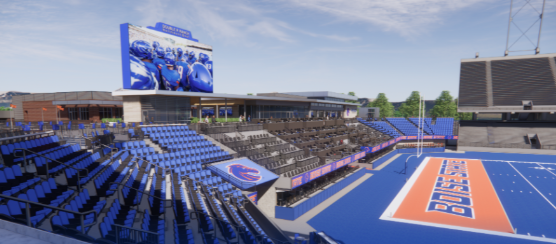
Boise State University will renovate the north end zone of Albertsons Stadium to add additional seating, amenities and resolve structural issues. The $60 million project is currently in the final design stages, with construction expected to begin in early 2025.
University officials will use the North End Zone project as an opportunity to replace the stadium’s temporary seating with approximately 1,600 premium seats. Among the seating additions, the project calls for 12 field level suites, 44 loge boxes, 148 ledge seats and 882 club seats.
The premium seating options will provide various luxury services, including private, climate-controlled spaces with indoor and outdoor hybrid seating options. The north end zone will include comfortable chairback seats, tabletops for concessions and easy access to club area restrooms.
The project will include club spaces that provide exclusive lounge, dining and concessions spaces, as well as extended pregame and postgame access to the stadium and player tunnel. Concessions areas will include an open-air sports bar, mobile kiosks and wider concourses to decrease congestion. Plans include a multi-use space providing a year-round dining room and nutrition center for student-athletes.
The university will include build outs of a football recruiting lounge and visitors' locker room in future project phases. The north end zone’s 360-degree concourse will also include additional entrances to eliminate queues at stadium gates, better circulation and additional restroom facilities and concession stands.
(Photo courtesy of Boise State University.)
| |
USDOT awards $44.8 million to New York to reclaim riverfront, support innovation hub | |
|
The U.S. Department of Transportation (USDOT) has allocated $44.8 million to help the state of New York reclaim a downtown riverfront and plan mobility initiatives. The funds will support a development project, a planning assessment and an innovation hub.
The town of Riverhead will receive $24.1 million to build a 500-space parking garage. Most of those funds – $14.7 million – will be used for the structure itself, with the remaining funds going toward flood mitigation and streetscapes. The project will build complete streets that will emphasize pedestrian-bike-vehicular connectivity, reimagine the downtown riverfront as a public green space and spur mixed-use development. Construction is expected to begin in December 2024.
The New York City Metropolitan Transportation Authority (NYC MTA) will receive $15 million to perform a planning assessment for the Interborough Express (IBX) project. The IBX is a high-capacity light-rail transit link that will provide critical, affordable transit connections between Brooklyn and Queens.
Once completed, the IBX will decrease safety risks posed to non-motorized travelers and make street-level safety improvements. The project will help reduce transportation-related air pollution and greenhouse gas (GHG) emissions in underserved neighborhoods.
The NYC Department of Transportation (NYC DOT) will receive $5.7 million to develop an Urban Freight Mobility Collaborative (UFMC). The collaborative is a first-of-its-kind innovation hub that will enhance urban freight movement and reduce greenhouse gas (GHG) emissions through public-private partnerships. Currently in planning, the UFMC will develop guiding principles and freight prioritization metrics, collect data, identify pilot programs and strategies and interface with stakeholders and the community.
The UFMC will mitigate GHG emissions by promoting the replacement of freight vehicles with cargo bikes, waterborne freight and other cleaner alternative fuel vehicles. In addition, the project will identify locations for electric vehicle (EV) charging infrastructure to streamline zero-emission vehicle adoption. The UFMC will develop buildable short-term project designs in five priority areas that prioritize environmental justice neighborhoods and Industrial Business Zones (IBZs).
USDOT allocated the funds through the Rebuilding American Infrastructure with Sustainability and Equity (RAISE) grant program. The RAISE program invests in community projects to build and renovate critical transportation infrastructure projects across the country.
The projects are a selection of 148 projects that will receive a portion of the recently announced $1.8 billion in RAISE funding for Fiscal Year 2024. Including the latest round, USDOT has invested $7.2 billion across 550 projects through the RAISE program since it was established.
(Photo: Rendering of the Interborough Express. Courtesy of the MTA.)
| |
California ports to develop data systems to improve interoperability, management | |
|
California is developing a series of first-in-the-nation cloud-based port data systems across five ports to enhance the maritime supply chain and movement of goods. The state will invest $27 million through the California Containerized Ports Interoperability Grant Program (CCPI) to support 10 projects that will address challenges in port operations and climate resiliency. These solutions include optimizing cargo-routing, deploying cutting-edge technology, developing cargo data standards and adopting trucking appointment systems.
The CCPI program will help the state port systems achieve four key objectives to ensure the long-term interoperability and success of the port ecosystem. The goals include:
- Ensuring the ports achieve federal alignment. This includes aligning port proposals and data systems with federal goals and initiatives for goods movement, efficiency and environmental benefits.
- Reducing greenhouse gas (GHG) emissions through data management to meet regional, state and federal climate goals.
- Increasing economic competitiveness through comprehensive data management and organization.
- Enhancing community and port ecosystem stakeholder engagement to promote equitable participation, knowledge sharing and benefits.
The port of Los Angeles (POLA) will receive $7.95 million – the largest portion of the awards - for three projects to improve information sharing, increase scheduling transparency and optimize data accessibility.
The first project will develop the California Ports Mobile Application (CalPorts). The application will broaden visibility and insights into container movement across selected ports, allowing cargo owners to streamline the flow and reduce the time and cost of goods movement. The project will make it easier for ports to send data, enhancing operational efficiency and emissions reductions by mitigating the risk of congestion, delays and disruptions.
The second project will use AI to enhance the in-development trucking appointment system. The system will integrate cross-terminal scheduling tools with real-time container tracking data. The port will combine the two applications into a single platform to make it easier to identify and move containers. The application may also accommodate other port trucking appointment system data feeds into the future to create a seamless interface for managing and optimize scheduling.
POLA will develop and deploy the Carbon Intensity Gateway as the third project. The port’s portal will provide a real-time Green Asset Score based on rail, trucking, vessel and on-port equipment particulate and GHG emissions. The information will help optimize routes that balance cargo speed and emissions impact. The platform will unify information gathered from the Clean Air Action Plan, Air Emissions Inventory, the Environmental Management System and the Clean Truck Program to simplify data access to a single source.
Other recipients receiving funding include:
- The port of Long Beach will use $7.9 million to support three projects. The initiatives will extend the port’s existing Supply Chain Information Highway, use data analytics to improve port efficiency and develop a non-containerized data system and data model standards.
- The port of San Diego will spend $4.2 million to create a centralized digital system to support maritime operations and terminal management. The project will minimize manual processes and allow the port to share information more easily.
- The port of Hueneme will use $4 million to leverage cloud-based infrastructure to integrate maritime port and terminal management solutions and backend systems. This will help transition the port away from manual data entry and management to seamlessly sharing vital information through a unified port-wide data system.
- The port of Oakland will receive $3 million to develop an integrated data environment that will use new data sets and processes to distribute critical information. The port will also create a unified marine terminal appointment system to support scheduling and management within the port ecosystem.
(Photo courtesy of the California Governor's Office of Business and Economic Development.)
| |
DOI makes $120 million available for Tribal entities to address climate change | |
|
The Department of the Interior (DOI) is making $120 million available for Tribal communities to increase climate resilience and relocate critical infrastructure in response to severe climate-related environmental threats. The funds come from the Bureau of Indian Affairs’ (BIA) Tribal Climate Resilience Annual Awards Program (TCRAA). Applications must be submitted by Oct. 18, 2024.
The TCRAA provides financial support for Tribes to address current and future climate change that will affect food sovereignty, conservation practices, infrastructure and human health and safety. Projects that will receive funding include:
- Climate adaptation planning.
- Drought measures.
- Wildland fire mitigation.
- Community-driven relocation.
- Relocation, managed retreat and protect-in-place (RMP) efforts.
- Ocean and coastal management.
Tribal nations and organizations can apply for grants in three categories. Eligible applicants can submit and receive funds for multiple applications in each category. However, applicants will only receive funds for the highest-ranked proposals per category.
Category 1 is for planning projects. Awards will help federally recognized Tribes and Tribal organizations incorporate climate change considerations into planning documents or designs. Projects will provide additional flexibility for Tribes to adapt to severe weather changes, support data collection and analysis and advance monitoring efforts. Recipients may receive up to $250,000 per award. Eligible proposals may include:
- Climate adaptation planning.
- Relocation.
- Managed retreat.
- Protect-in-place (RMP) plans.
- Natural or cultural resource management plans.
- Hazard and emergency response or mitigation plans.
- Ecological restoration.
- Greenhouse gas mitigation plans.
Category 2 awards will support implementation projects. Recipients may receive up to $4 million per award. Awards will allow Tribes to execute projects with official planning documents. These documents may include plans for:
- Tribal climate adaptation.
- Relocation master.
- Natural resources.
- Drought.
- Hazard mitigation.
- Ecological restoration.
- Greenhouse gas mitigation.
- Construction or engineering.
Category 3 provides non-competitive financial support for RMP staff. Only federally recognized Tribes are eligible for up to $150,000 per year for three years. The funds will enable Tribes to hire staff positions dedicated to developing:
- Community planning documents.
- Climate adaptation strategies.
- Implementation actions.
- Community engagement.
- Coordination with federal and other partners.
- Emergency response plans or mitigation.
- Implementation of RMP actions.
Including this round of funding, the DOI has invested almost $560 million to support Tribal climate resilience programs to date. The BIA’s Branch of Tribal Climate Resilience (TCR) has allocated $194.3 million to support 568 projects since 2020. The program builds on the $135 million Voluntary Community-Driven Relocation Program, a 2022 initiative to help Tribal communities impacted by climate change relocate critical community infrastructure and build long-term climate resilience.
(Photo courtesy of the BIA.)
| |
DOI, NOAA collaborate to use satellite network to identify, track wildfires | |
|
The Department of the Interior (DOI) will collaborate with the National Oceanic and Atmospheric Administration (NOAA) to leverage satellite technology to advance and expand early wildfire detection capabilities. The DOI will use the NOAA Geostationary Operational Environmental Satellite – R series (GOES-R) to quickly detect and report wildfires before they escalate.
The satellite detection initiative is supported by a $20 million investment from the DOI and the Department of Agriculture (USDA), each contributing $10 million to the project. The satellite network will use advanced remote sensing capabilities to enhance the agencies’ wildfire detection speed and accuracy.
GOES-R satellites can regularly pinpoint wildfires before they are identified on the ground or reported to emergency services. The agencies can then develop an early warning center using the satellite network’s data to provide firefighters with in-depth information and insights into the conditions and status of wildfires. This ensures the DOI and USDA can detect hot spots faster as well as track wildfire progression in real-time, providing emergency responders with critical up-to-date information.
As wildfires grow in scale and severity, precise wildfire tracking will improve interagency efforts to protect public health and communities. In addition, the network observes and monitors smoke from fires. The satellite network will provide an aerial perspective for agencies to direct efforts and track the exact location and drift of smoke.
Smoke detection and monitoring will also provide information for air quality forecasts. Communities will be able to use these forecasts to assess risks and develop climate solutions to protect public health.
The collaboration between the DOI and NOAA aligns with recommendations set out by the Wildland Fire Mitigation and Management Commission. The Commission released a report in 2023 outlining 148 recommendations to improve wildfire management and response. The use of the GOES-R satellite system advances the report’s recommendations to expand wildfire detection system usage and enhances interagency collaboration.
(Photo courtesy of NOAA and NASA.)
| |
|
The U.S. House of Representatives overwhelmingly approved bipartisan legislation that authorizes the U.S. Army Corps of Engineers to undertake projects that improve the nation’s ports, harbors, inland waterways and flood protection infrastructure.
The Water Resources Development Act of 2024 (WRDA) passed with a vote of 359 to 13. Proponents of the bill, H.R. 8812, say it will strengthen America’s maritime infrastructure and flood protections while boosting economic competitiveness.
Click here to learn more about the port infrastructure bill
(Photo courtesy of Steve Saunders on Unsplash.)
| |
Ohio creates first innovation hub to innovate glass sector, solar industry | |
|
Ohio has launched the first innovation hub in the state’s history. The state received $41.7 million from state and local sources to establish the Northwest Ohio Glass Innovation Hub as a leader in glass science, engineering, technology and production.
The Northwest Ohio Innovation Consortium (NOIC) – an organization dedicated to driving state innovation, creating employment opportunities, opportunities and advances research – will lead the innovation hub. The consortium will use the hub to accelerate innovation and job growth in the glass sector and solar industry. Core goals include researching and developing technology to solve critical challenges in these industries.
The hub will collaborate with several universities, colleges and high schools in the region to nurture a high-quality glass and solar workforce. Trade workers, graduate-trained scientists and engineers will help hone participant skills across multiple areas of expertise. The state estimates that the initiative will create approximately 1,600 jobs and 230 STEM graduates over the next seven years.
The Ohio Innovation Hubs Program, led by the Ohio Department of Development (ODOD), is supporting the creation of the innovation hub to spur investment outside Ohio’s primary metro areas. ODOD plans to invest $125 million to create more innovation hubs across the state. The hub is similar to innovation districts already created in Columbus, Cincinnati and Cleveland. These districts will help position Ohio as a healthcare, life sciences and technology leader.
(Photo courtesy of Lacey Williams .)
| |
Utah agency creates asphalt blend that outperforms traditional options | |
|
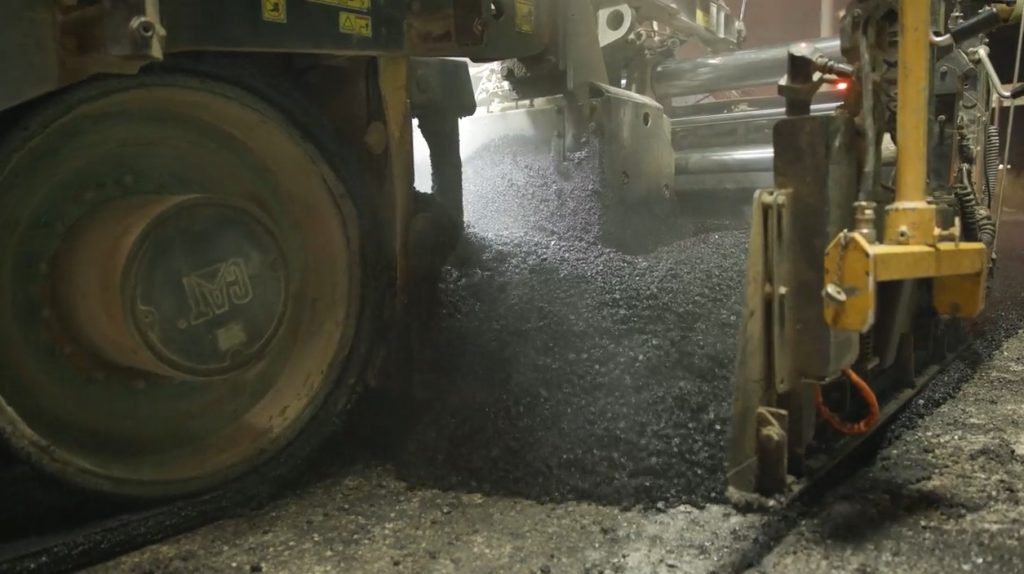
The Utah Department of Transportation (UDOT) has developed an innovative asphalt blend that reduces road paving costs, time and repairs.
The asphalt mix is weather-resistant and durable, designed to last significantly longer than other blends. UDOT engineers achieved this solution by using a high-density asphalt with a higher ratio of polymer in the binder than is usually used. When creating asphalt, engineers use these binders with crushed rocks to create a final mixture. The high-ratio polymer asphalt is denser than traditional asphalt, making the resulting mixture stronger and more durable.
The improved durability and sustainability of the asphalt means roads will experience significantly reduced wear and tear over time. Typically, UDOT will have to perform regular paving maintenance to ensure roadways are safe for travel. Increasing the lifespan of the roads between maintenance periods will help the agency save time and money while providing reliable transit options for drivers.
In addition to increasing durability and saving money, the innovative asphalt mixture accelerates the paving process. Usually, paving roadways is a two-step process where crews lay down pavement in two layers. This requires laying down the first layer of pavement and waiting for it to cool and settle before laying down the second layer. The new mixture can be applied in a single layer without compromising the structural integrity of the road.
UDOT has already tested the asphalt along the border of Utah and Nevada. The agency chose a site known for regular environmental extremities, including:
- Temperatures in the triple digits during summer.
- Temperatures in the single digits during winter.
- Heavy truck traffic with regular deceleration and acceleration.
The pilot project laid down the asphalt blend in June 2021. Since then, the site has proven that the mixture is effective, requiring no additional maintenance while still holding strong. UDOT will continue to perform tests on the asphalt blend to further analyze and optimize its capabilities. In addition, the agency is using the mixture on several construction projects. Officials hope to distribute the blend to other state transportation agencies over the next few years.
(Photo courtesy of UDOT.)
| |
Virginia opens $20 million NOFO to preserve historic sites | |
|
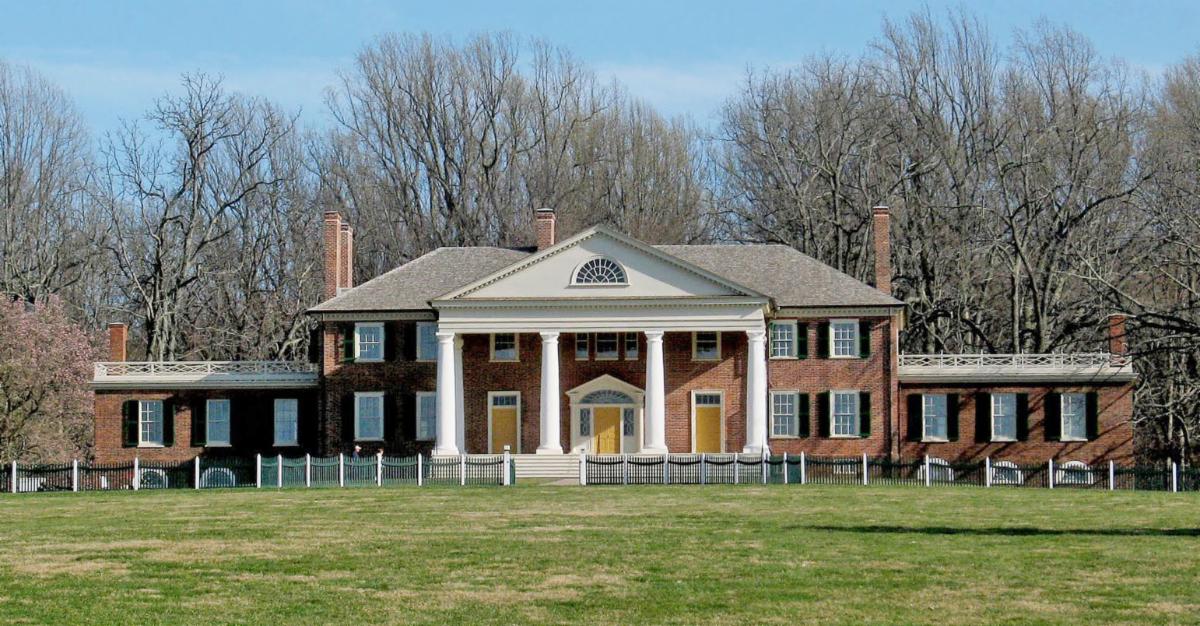
The Virginia Department of Historic Resources (DHR) will distribute $20 million to support statewide historic preservation projects. The funds are part of the Virginia 250 Preservation Fund, an initiative launched in remembrance of the nation’s 250th anniversary of the signing of the Declaration of Independence.
The program consists of a two-step application process. To qualify for funding, applicants must submit a preapplication form by Aug. 30, 2024. Participants who advance past the first round will then have until Oct. 14, 2024, to submit a full application. The DRH recommends that potential applicants read through the grant guidelines before submission.
The preservation fund will provide financial assistance for projects that improve significant historic sites and history museums across Virginia. Eligible projects that may receive funding include those that help increase visitation numbers in honor of the nation’s Semiquincentennial. These may include projects that:
- Rehabilitate or stabilize historic resources.
- Improve ADA accessibility.
- Improve infrastructure at historic sites.
- Reconstruct historic buildings.
- Build or install museum exhibits.
- Perform site work, including landscaping, parking improvements, lighting, wayfinding and interpretive signage.
Eligible applicants include Native-American tribes, non-profit organizations and Virginia localities. Awards are available to any historic sites or museums that fit the program’s guidelines, not exclusively to properties related to the American Revolution. Applicants are required to match one-third of the requested grant amount to qualify.
While any history museums may qualify for the initiative, the DHR will prioritize properties listed in the Virginia Landmarks Register, National Register of Historic Places, designated as a National Historic Landmark or any the DHR recognizes as eligible for these listings. The DRH expects to announce grant awards in late 2024.
(Photo courtesy of Virginia DHR.)
| |
|
The U.S. Environmental Protection Agency has awarded more than $4.3 billion in grants designed to help coalitions comprised of state and local governments and nonprofits tackle pollution and help transition the country to clean energy.
The 25 applications selected for Climate Pollution Reduction Grants will fund projects in 30 states that target reducing greenhouse gas pollution from six sectors: transportation, electric power, commercial and residential buildings, industry, agriculture/ natural and working lands, and waste and materials management.
Click here to learn more about the EPA’s multibillion climate change investment
(Photo courtesy of the Clean Air Task Force.)
| |
|
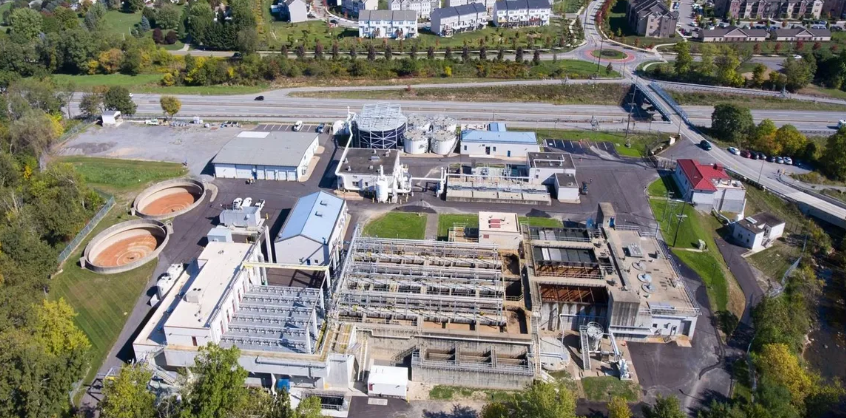
The state of Pennsylvania is investing $257.5 million to support 18 water infrastructure projects across the state. The projects will replace pipes, rehabilitate aging systems, upgrade service capabilities, extend service to additional communities and reduce environmental contaminants.
The funds come from the Pennsylvania Infrastructure Investment Authority (PENNVEST), which provides financial assistance for construction or improvements to drinking water, storm water or sewage treatment facilities. In addition, the authority supports non-point source pollution prevention best management practices, helps remediate brownfields and provides loans to homeowners to connect to a public sewer or repair/replace on-lot septic systems.
Click here for more information about the water projects funded by PENNVEST
(Photo courtesy of the Western Pennsylvania Water Pollution Control Agency.)
| |
|
The National Institute of Standards and Technology (NIST) is making $70 million in grants available to bring artificial intelligence to manufacturing to fortify America’s industrial backbone. The initiative, announced Monday, seeks to establish a new Manufacturing USA institute focused on leveraging AI to enhance the resilience of U.S. manufacturers over a five-year period.
The Notice of Funding Opportunity (NOFO) comes as the U.S. grapples with how to harness the positive uses of AI while reining in its dangers. Simultaneously, a host of policies and funding initiatives have sought to breathe new life into the nation’s manufacturing sector. The new institute aims to forge cutting-edge AI technologies into tools that can help make American factories more cost-effective, streamlining supply chains, and arming industry against unforeseen disruptions.
Click here to learn more about the NOFO
(Photo courtesy of Simon Kadula on Unsplash.)
| | |
|  |
|
|
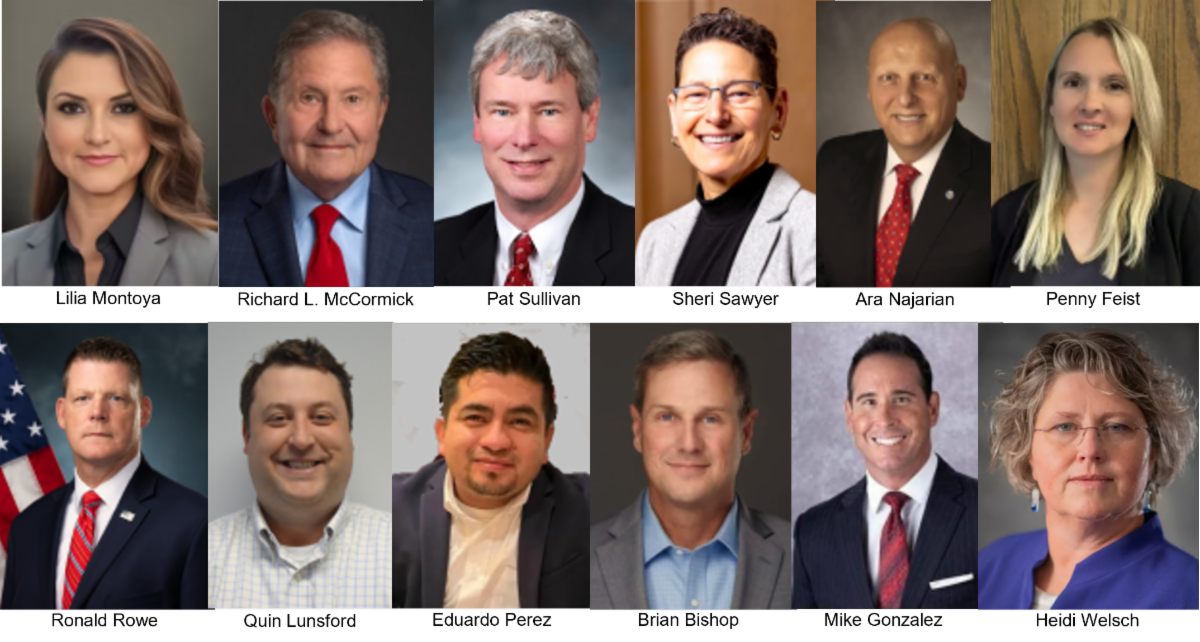
North Carolina - The North County Transit District (NCTD) has appointed Lilia Montoya to serve as the agency’s COO of bus. Montoya will also serve as a strategic adviser to the CEO, bringing more than 20 years of experience in nearly every aspect of transit, including operations, safety, regulatory compliance, employee engagement and administration.
New York - Richard L. McCormick has been appointed interim president of Stony Brook University, effective Aug. 1. McCormick previously served as president of Rutgers University and the University of Washington, and as provost at the University of North Carolina at Chapel Hill. He brings more than four decades of experience in higher education to the role.
Washington - Pat Sullivan has been appointed director of the Washington State Office of Financial Management, with Sheri Sawyer serving as Sullivan’s executive director of legislative affairs.
Sullivan brings than 17 years of experience as an elected official in the Washington State House of Representatives to the role, including 12 years as the majority leader. He will replace David Schumacher.
Sawyer currently serves as deputy director of policy and outreach with the governor’s office. She joined as a senior policy adviser in 2016. Earlier in her career, she worked for the Washington State Auditor's Office and the Association of Washington Cities.
California – The Burbank-Glendale-Pasadena Airport Authority (BGPAA) has selected Glendale Councilmember Ara Najarian as board president. Najarian has served on the Glendale City Council for 19 years, including four terms as mayor. He has also served on the Los Angeles County Metropolitan Transportation Authority (MTA) Board of Directors.
Kansas –The city of Wichita has hired Penny Feist as transportation director. Feist has been serving as interim transportation director since January 2024. She started working for the city in 2022 as assistant director of public works and utilities. She brings more than 17 years of public sector experience to the position.
District of Columbia – Ronald Rowe will take over as director of the U.S. Secret Service. Rowe, who has served as the agency’s deputy director since April 2023, will replace Kimberly Cheatle, who resigned this week. He previously served in various Secret Service leadership positions, including assistant director for the Office of Intergovernmental and Legislative Affairs and deputy assistant director for the Office of Protective Operations.
Virginia - The Albemarle County Service Authority (ACSA) Board has appointed Quin Lunsford as executive director. Lunsford has served as ACSA’s director of finance for the past decade.
Illinois - Eduardo Pérez has been hired as director of the bilingual early learning lab at Western Illinois University (WIU). Pérez brings more than a decade of experience in early childhood and bilingual education to the position. Prior to joining WIU, Pérez taught kindergarten and pre-school age students.
South Dakota - The Rapid City Regional Airport has appointed Brian Bishop as deputy director. Bishop brings 25 years of experience in the aviation industry to the role. Bishop previously served as deputy airport director of operations and maintenance at Rocky Mountain Metropolitan Airport.
Washington – In a unanimous vote, the Sunnyside City Council has selected Mike Gonzalez as city manager. Gonzalez previously served as county administrator of Franklin County. He will take over the role from Elizabeth Alba.
Minnesota – Heidi Welsch will be the next county manager for Dakota County. Welsh previously served as county administrator for Olmstead County for 11 years. She brings 28 years of public service experience to the position.
| | |
|
Connect with SPI
Check out our social media links!
| |
About Government Contracting Pipeline | |
|
Strategic Partnerships, Inc.
Publisher: Mary Scott Nabers
Editors: Adam Rollins
Dave Doolittle
www.spartnerships.com
| |
Government Contracting Pipeline, a publication of Strategic Partnerships, Inc., is a free, weekly newsletter detailing important happenings nationwide and the premier source for federal, state, and local government news and contracting opportunities. | |
Help us share this message.
To ensure delivery and proper formatting of the newsletter, be sure to add editor@spartnerships.com to your safe senders list.
Otherwise, the newsletter may be flagged as spam and automatically routed to your junk e-mail folder.
| | | | |