Volume 16, Issue 23 - Wednesday, June 5, 2024 | |
By Mary Scott Nabers, CEO of Strategic Partnerships, Inc. | |
|
Medical schools represent billions in spending each year, and the federal government provides financial support throughout the U.S. They conduct incredible research and provide outstanding services to the general public at the institutions.
There are currently 156 accredited medical schools in America, and the public and private institutions receive about $4 billion in funding and other types of grant support annually. Hundreds of collaborative opportunities exist, and the projects should be of high interest since public universities spent $63.8 billion on facilities, equipment and other projects in the 2021-2022 academic year. More current data is not yet public.
State and local governments tend to allocate an additional $311 billion-plus for higher education and at least 10% of that funding is for capital projects. This suggests that approximately $30 billion in state and local spending on university capital projects is spent annually, with a significant portion of that amount dedicated to university medical care and research facility projects.
The University of California, Los Angeles (UCLA) recently received funding for a project to convert the fourth floor of the Ronald Reagan UCLA Medical Center into a general medical and surgical acute care unit. The project’s projected cost is $169 million. The hospital's increasingly high acute care demand is beyond the university’s capacity, and patients are forced to wait for care. The plans are to leave as much existing infrastructure in place as possible while redesigning and taking maximum advantage of the currently available space. The reconfiguration of the floor to acute care space will increase inpatient capacity by 23%. The project will renovate 67,000 square feet and construction is scheduled for March 2026.
The University of Wisconsin-Milwaukee will soon benefit from the launch of a $136.5 million expansion of its Northwest Quadrant buildings. The project will increase student capacity by 15% and consolidate the school’s health sciences programs, labs and classrooms. The newly renovated space will house multiple healthcare disciplines, including orthopedics, physical therapy, assistive technology, speech and audiology, medical imaging and nutrition and wellness. More than 300,000 gross square feet across three buildings will be renovated. The work will include removing old hospital treatment rooms and clinic space while redesigning the space for instructional use. All the architectural, mechanical, electrical, telecommunications and plumbing systems will be replaced. New insulation on the exterior envelope will be installed and extensive improvements will be made to bring the buildings up to modern code. The current scope of work is preceded by years of planning efforts and other construction projects. When complete, the project will reduce duplication of equipment and significantly improve the efficient use of the existing space. Currently, the project is in the development phase, and construction will likely not begin until 2028.
Click here for more.
| |
Washington State DOT transitioning aging ferry system to fully electric fleet | |
|
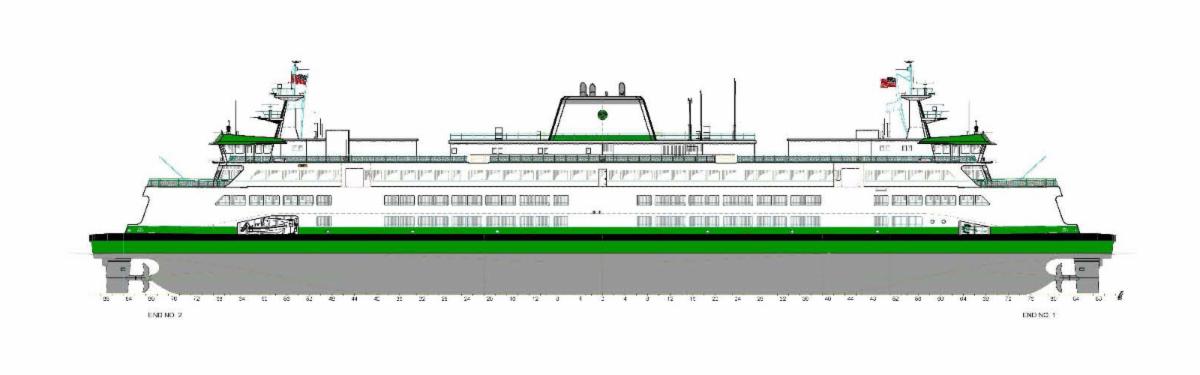
The Washington State Department of Transportation (WSDOT) operates the largest ferry system in the United States. However, the current fleet is aging and outdated, burning nearly 19 million gallons of diesel fuel each year. The agency is moving forward with its electrification plans to convert the fleet to exclusively use hybrid-electric ferries by 2040.
On May 30, WSDOT invited shipbuilders to submit qualifications to build five hybrid-electric vessels for the ferry fleet. All five are expected to be delivered by 2030. These vessels will save approximately 240 million gallons of diesel over their 60-year lifespan and reduce emissions from 180,000 metric tons to 45,000 metric tons annually. In addition, the agency will install charging stations at 16 terminals.
The hybrid-electric vessels are part of the agency’s System Electrification Plan, which aims to build 16 vessels by 2040 and convert six diesel vessels to hybrid-electric. WSDOT estimates the electrification program will cost $4 billion to deploy. The state’s fleet decarbonization efforts began with two executive orders in 2018 and 2020 outlining WSDOT’s directive to transition to a zero-carbon-emission fleet.
The plan’s funding, legislative direction and design provides the agency with the resources needed to build hybrid-electric vehicles faster than diesel-only ferries. In addition to reducing greenhouse gas emissions, the vessels will make significantly less noise, protecting marine life while in operation.
The program’s design workshops will provide the agency with more opportunities to explore additional environmentally friendly vessel designs. For instance, while lithium-ion batteries provide a clean power source, battery production and disposal bring up new complications the workshops hope to resolve. WDOT expects to be fully emission-free by 2050.
(Photo courtesy of WSDOT.)
| |
New Mexico receives $156 million to increase clean energy grid power, resilience | |
|
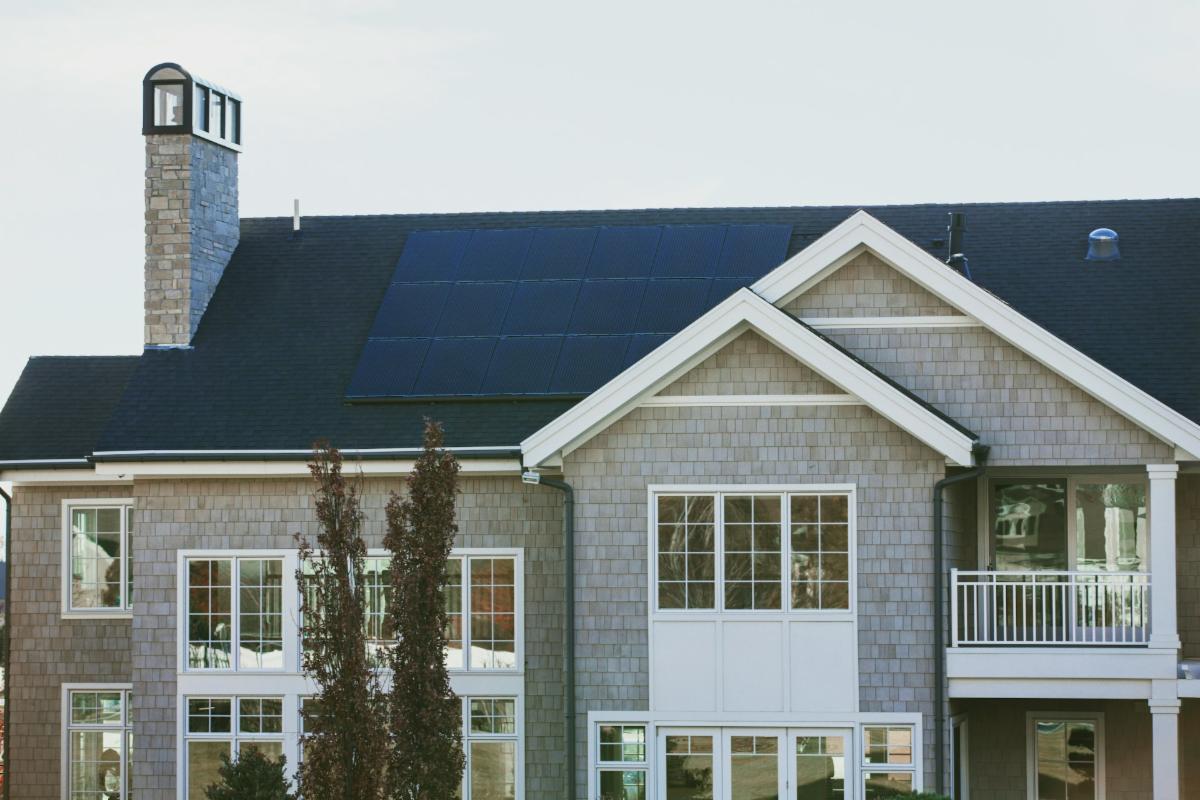
The Energy, Minerals and Natural Resources Department (EMNRD) for New Mexico will spend $156 million to provide affordable solar energy to low-income, disadvantaged communities. The program will provide solar power to almost 21,000 households.
New Mexico’s Solar for All (SFA) program will prioritize overcoming barriers that prevent underserved and rural communities from accessing clean energy systems. The EMNRD will use the award to expand its current community solar program to include isolated and off-grid residents and improve grid resiliency.
The SFA program will add 21 megawatts of solar energy capacity to New Mexico’s power grid and produce approximately 8.1 megawatt hours of stored energy for deployment. The EMNRD will install storage with solar panels to boost the grid and build resiliency. The agency expects communities will begin installing solar systems in 2025.
The agency will provide grants for communities to develop community solar projects that allow multiple households to draw from a shared clean energy source. The EMNRD will collaborate with the Public Regulation Commission (PRC) to support local power infrastructure upgrades, ensuring that community solar systems receive maintenance and support. The EMNRD will also provide grants for tribal households without electricity to develop battery backup power and repair roofs for solar panel installment.
The EPA’s SFA initiative selected 60 recipients, including states, territories, Tribal governments, municipalities and nonprofits, for awards totaling $7 billion to set up more than 900,000 households across the nation with solar. The program was made possible by the Inflation Reduction Act, which established the EPA’s $27 billion Greenhouse Gas Reduction Fund.
Projects eligible under the EPA program:
- Support residential rooftop and residential-serving community distributed solar projects for low-income and disadvantaged households around the country.
- Must be primarily residential solar projects, providing power and financial benefits to households nationwide.
The EPA partially funded all 60 selected applications the same percentage of their initial funding request. The Wisconsin SFA program will partner with private capital to maximize the EPA funds and establish a sustainable program extending beyond the initial five-year timeline. The EPA will publish more information on the selected applicants once awards are finalized by summer.
(Photo courtesy of Vivint Solar on Unsplash.)
| |
VA pursuing AI tools to reduce healthcare worker burnout | |
|
The U.S. Department of Veteran Affairs (VA) is looking for ways to leverage AI technologies to help reduce healthcare worker burnout.
The VA recently concluded the latest AI Tech Sprint to develop solutions to reduce administrative burden and ensure healthcare workers can more easily attend to patients. AI Tech Sprints are 90-day periods where teams compete to create AI-enabled tools designed to address Veteran healthcare issues.
During the most recent Tech Sprint, 152 teams developed AI tools through two different areas of focus, or “tracks.” Participants chose either one or both tracks. The results generated by AI tools aren’t used for clinical decision-making, and clinicians must review and edit them before approval. Out of the participating teams, six received awards for their work during the Tech Sprint.
Track 1 focused on “Ambient Dictation for Clinical Encounter Notes.” Applicants designed AI solutions to generate transcripts and key details from patient recordings. VA clinicians would use these tools to quickly summarize appointments to input into the electronic health record.
Track 2 focused on “Community Care Document Processing.” These solutions are designed to summarize hundreds of pages of medical records whenever veterans visit a clinic for the first time. The range of records comes from patient encounters and complex medical documents. The AI tool generates a searchable, quality transcript highlighting significant events from the veteran’s medical history and integrates the document with the electronic health record.
Participants use federal and private data, such as large data sources including clinical trials, patents, experimental therapeutics and patients. Other resources include veteran and expert perspectives, technical AI and machine learning support, feedback from users and long-term partnership and funding opportunities.
(Photo courtesy of the US Department of State.)
|  | |
|
The Federal Aviation Administration (FAA) released grants totaling $186.7 million for airports in 34 states. The money comes from the Airport Infrastructure Grants (AIG) program as a part of the Bipartisan Infrastructure Law (BIL).
Grants will help make improvements to the airports’ terminals, baggage systems, safety systems and other infrastructure upgrades.
Click here for more information about airport modernization
| |
NYC invests $118 million to turn abandoned rail line into public park | |
|
New York City will use $117.7 million to turn an abandoned railway into a linear park. Plans include developing the QueensWay public park, building bridges and creating recreational amenities.
The city’s Department of Parks and Recreation (NYC Parks) will repurpose approximately 0.7 miles of the abandoned Rockaway Beach Branch line into a park that will reconnect nearby communities in the borough of Queens. The communities were separated by a dividing railway facility in the late 1800s. The railroad line has been unused since 1962.
NYC Parks will extend 1.3 miles of the greenway into the nearby Forest Park. In addition, the agency will build greenway bridges, recreational amenities and connect the park to existing facilities.
The project is part of the larger QueensWay vision, a community-driven plan to turn the 3.5-mile railroad line into 47 acres of public park space and 7 miles of greenway. The completed QueensWay park will connect seven Queens neighborhoods through a greenway corridor. The corridor will provide alternative, low-emission transportation options to help NYC residents reach critical amenities.
The Forest Park Pass project is the second phase in the city’s plan to transform the rail line into a linear park. In 2022, the project's first phase received $35 million to turn a vacant Forest Hills corridor into a 5-acre park with 0.7 miles of greenway. The park will provide access to open space, recreational amenities, outdoor education opportunities and safe transportation.
The U.S. Department of Transportation (USDOT) provided the funds through the Neighborhood Access and Equity (NAE) grant program. The NAE program is designed to improve walkability, safety and affordable transportation access in disenfranchised communities. The Tukwila and South Renton BRT Stations project is one of 132 projects that will receive a portion of the $3.3 billion USDOT awarded for Fiscal Year 2023.
(Photo courtesy of Trust for Public Land.)
|  | |
USDA opens up $50 million to protect wetlands, improve agricultural lands | |
|
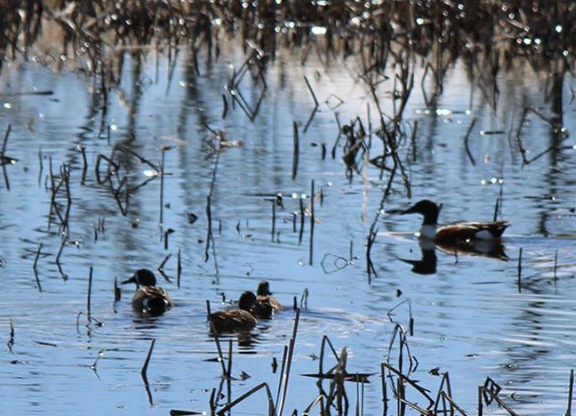
The Natural Resources Conservation Service (NRCS) is making $50 million available through the Wetland Reserve Enhancement Partnership (WREP) to help protect, restore and enhance wetlands on agricultural lands. The Notice of Funding Opportunity (NOFO) closes Aug. 16, 2024.
State and local governments, nongovernmental organizations and Tribes are eligible for awards up to $10 million. Partners are required to contribute matching funds. The NCRS will prioritize proposals that focus on producers who conserve wetlands in disadvantaged communities.
WREP is a voluntary U.S. Department of Agriculture (USDA) program that supports projects dedicated to protecting, restoring and enhancing wetlands and improving wildlife habitats. The funds come from the 2018 Farm Bill and the Inflation Reduction Act (IRA). WREP helps eligible partners work with NRCS to safeguard threatened wetlands through cooperative and partnership agreements.
The program is a part of the Agricultural Conservation Easement Program (ACEP), which supports wetland preservation through conservation easements. These easements help landowners, land trust and other entities protect farms and ranchland by limiting non-agricultural land use.
Easements awarded through WREP provide buffers from flood waters, improve agriculture land resiliency and protect habitats for wildlife. In addition, restoring wetland ecosystems helps filter sediments and chemicals. This process improves water quality, enhances wildlife and aquatic habitats, reduces flooding impacts, recharges groundwater and offers recreational benefits.
The program will help mitigate climate change and contribute to the America the Beautiful Freshwater Challenge. The challenge will conserve and restore freshwater sources nationwide with the goal to protect, restore and reconnect eight million acres of wetlands of 100,000 miles of rivers by 2030.
The NCRS has awarded approximately $104 million from the 2018 Farm Bill for WREP projects to date.
(Photo courtesy of the USDA.)
| |
MassDOT to spend $37 million to expand public transportation, enhance mobility | |
|
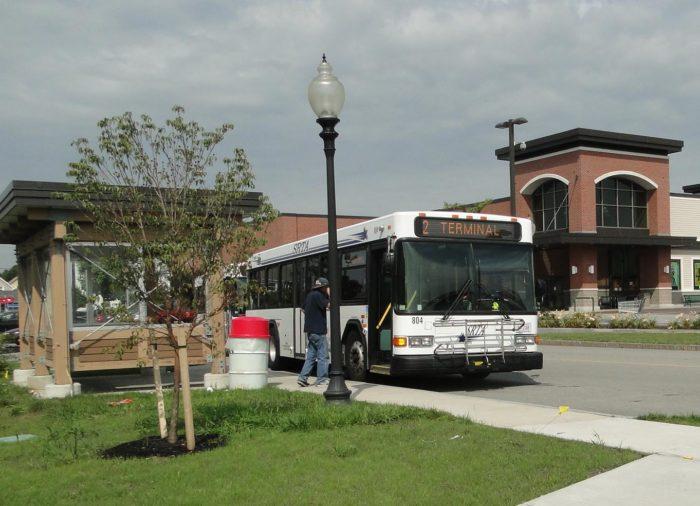
The state of Massachusetts will allocate $37 million to the Massachusetts Department of Transportation (MassDOT) to support regional public transportation projects across the state. The funds come from three grant programs and will help electrify vehicular fleets, enhance and expand existing transit services and improve rural connectivity.
MassDOT will receive $15 million through the Regional Transit Innovation Grant (RTIG) Program to support 18 transit projects. The RTIG program helps recipients expand existing transit services, implement new and innovative transit services, expand service hours and enhance connectivity.
Notable RTIG recipients include:
- The Berkshire, Pioneer Valley and Franklin transit authorities will receive $4.5 million to improve the 413 Commuter and Regionally Interconnected Bus (CRIB) network. The agencies operate a commuter bus network between the three regions and will use the funds to rehabilitate seven buses.
- The Merrimack Valley Regional Transit Authority will use $1.9 million to extend an existing fixed-route bus service and build a new route to connect four cities.
- The Greater Attleboro and Taunton Regional Transit Authority will spend $1.5 million to pilot the Brockton-Taunton-Fall River Connection. The authority will fill in transportation service gaps to provide communities access to critical amenities such as healthcare, employment or education.
MassDOT will provide an additional $23.7 million to 54 applicants through the Community Transit Grant Program (CTGP). The funds help municipalities meet the transportation and mobility needs of older adults and people with disabilities.
Recipients will use $19.7 million to buy minivans, cutaways and minibuses designed with ramps and lifts. The remaining $4 million will help further expand mobility and transportation services, providing taxis, demand-response and paratransit services to reach critical amenities.
(Photo courtesy of the Southeastern Regional Transit Authority.)
|  | |
Arkansas, Louisiana receive $30.6 million to plug orphaned wells | |
|
The Department of the Interior (DOI) will provide $30.6 million to Arkansas and Louisiana to clean up legacy pollution sources.
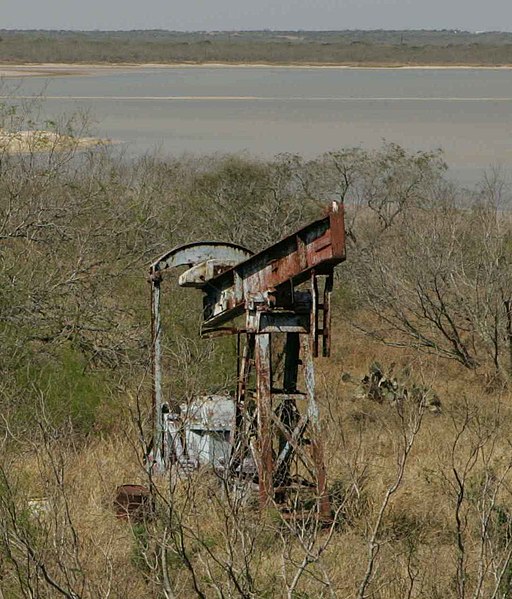
Orphaned oil and gas wells pose serious health and safety risks to communities across the nation, leaching contaminants and toxic air pollutants into the atmosphere and water sources. These legacy pollutants affect backyards, recreation areas, communal spaces and are heavy contributors to climate change. Methane, a greenhouse gas far more potent than carbon dioxide, leaks from these orphaned wells at an alarming rate.
Louisiana will receive $25 million to plug and reclaim around 540 orphaned oil and gas wells. Arkansas will use $5.6 million for similar work across 274 sites. To date, Louisiana has plugged more than 540 wells and Arkansas has remediated 57.
The funds come from the Bipartisan Infrastructure Law (BIL) as part of the first phase of formula grant funding to remediate legacy pollution issues. The BIL has delivered nearly $150 million to federal land managers to plug, remediate and restore orphaned wells on public lands and waters.
The BIL has also awarded around $40 million to Tribal communities for similar work. Tribes can now apply for up to $55 million for the next phase of treating orphaned well pollution.
(Photo courtesy of Hillebrand Steve with the US Fish and Wildlife Service.)
| |
Illinois receives $18 million to cleanup, transform polluted brownfield sites | |
|
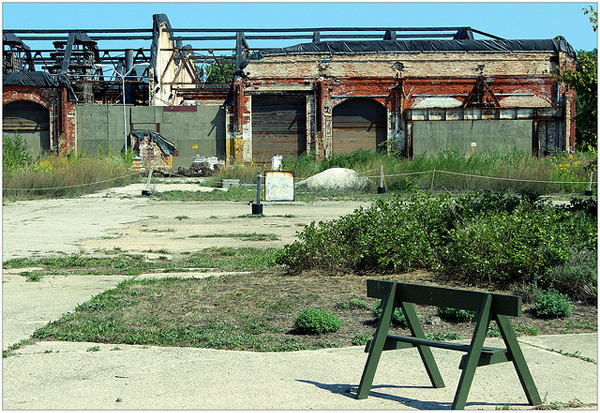
Illinois will spend $17.8 million from the Environmental Protection Agency (EPA) to assess and cleanup brownfields across the state. The funds will help communities address legacy pollution concerns and transform once-polluted, abandoned properties into community assets.
The EPA awarded the funds through the Brownfields Multipurpose, Assessment and Cleanup (MAC) Grant Program and the state’s existing Revolving Loan Fund (RLF). The state will use the funds from both programs to conduct site assessments, clean up brownfields and engage communities.
The state will provide $9.9 million in MAC grants to seven entities to clean up contaminated facilities, including factories, gas stations, distribution centers, retail stores and laundromats. These sites have fallen into disrepair over time and are contaminated with inorganic compounds and metals. The recipients will also assess each site and develop cleanup and revitalization plans.
The remaining funds provided through the RLF will help three programs complete cleanup projects and support future cleanups in underserved areas. The recipients are high-performing RLF programs that have depleted their funds. The state will ensure these programs can continue and will extend their cleanup capacity.
The funds are a part of a $300 million investment in nationwide brownfield projects. The EPA will support 178 communities using 181 grant awards to reclaim and repurpose once-polluted properties.
The Brownfields Program is part of the federal Justice40 Initiative, which aims to ensure that 40% of the overall benefits of specific federal investments reach areas burdened by pollution and underinvestment. More than 80% of the applications selected for funding under the MAC and RLF Supplemental programs focus on areas containing disadvantaged communities.
Since it was established in 1995, the Brownfields Program has allocated nearly $2.7 billion in grants to evaluate and clean up contaminated properties. The program typically allocates around $60 million annually; since passage of the BIL in 2021, it has risen by nearly fourfold. Much of the funding for this grant cycle — approximately $160 million — stems from the legislation, and the increased funding has raised the limits for MAC grants from $500,000 to $5 million per award.
(Photo courtesy of the Illinois EPA.)
|  | |
|
Artificial intelligence is emerging as a powerful tool in the fight against cyberattacks on critical infrastructure, particularly in the water treatment sector.
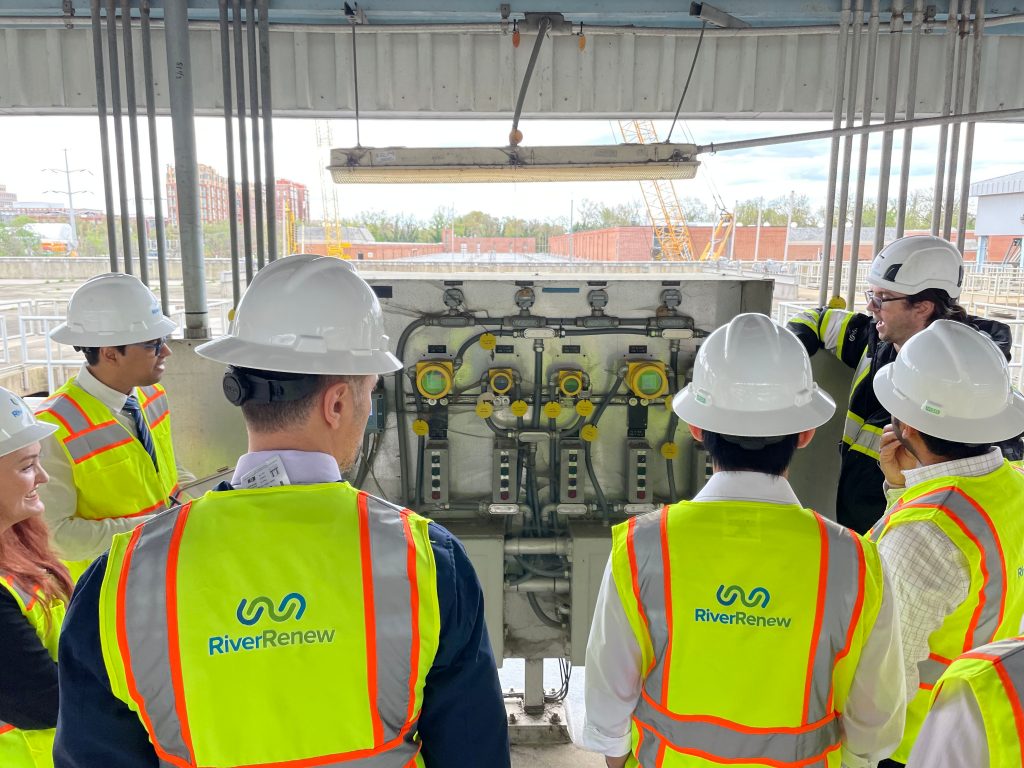
A team of researchers at Virginia Tech University is harnessing AI’s potential to enhance cybersecurity. Through collaborations with DC Water and AlexRenew, a water treatment plant in Alexandria, Virginia, the team is developing innovative AI-driven solutions to protect water utilities from cyber threats.
Click here to learn more about how AI is used to fight cyberthreats
(Photo courtesy of Virginia Tech University.)
| |
|
The U.S. Department of Energy (DOE) announced a Notice of Intent (NOI) to fund projects that advance research, development, demonstration and deployment in key areas to achieve net-zero greenhouse gas emissions in the transportation sector.
The potential funding, expected to be formalized as a Funding Opportunity Announcement (FOA) in July or August, will go toward innovations in low-cost electric vehicle (EV) battery manufacturing, using inexpensive and abundant materials to support a robust domestic supply chain and demonstrating smart-charge management, as well as reducing vehicle battery fires.
Click here to learn more about the DOE’s research funding opportunity
(Photo courtesy of the Electric Vehicle Association.)
| |
|
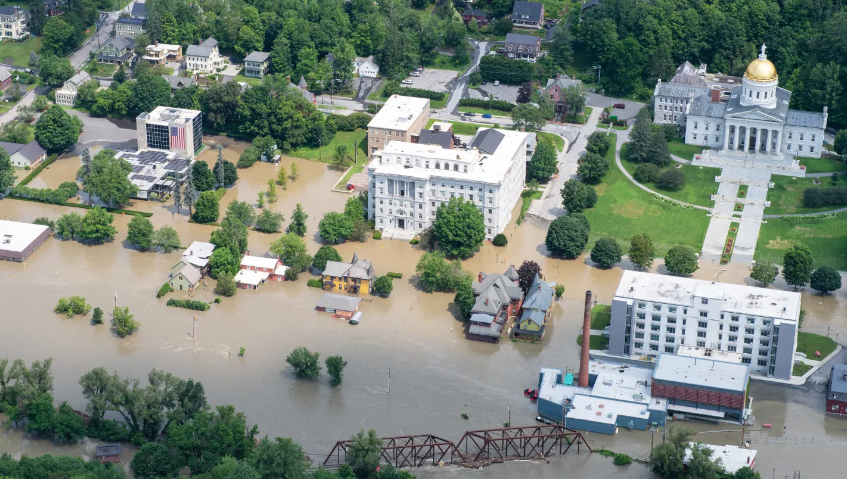
Vermont is making $90 million available in no-match grants to help cities pay for projects aimed at reducing future flood risk.
The announcement was made nearly a year after catastrophic rainfall that killed two Vermont residents and caused extensive flooding in communities and numerous washouts of bridges and roadways.
Click here for more information about Vermont’s flood mitigation efforts
(Photo courtesy of NASA.)
| | |
|  |
|
|
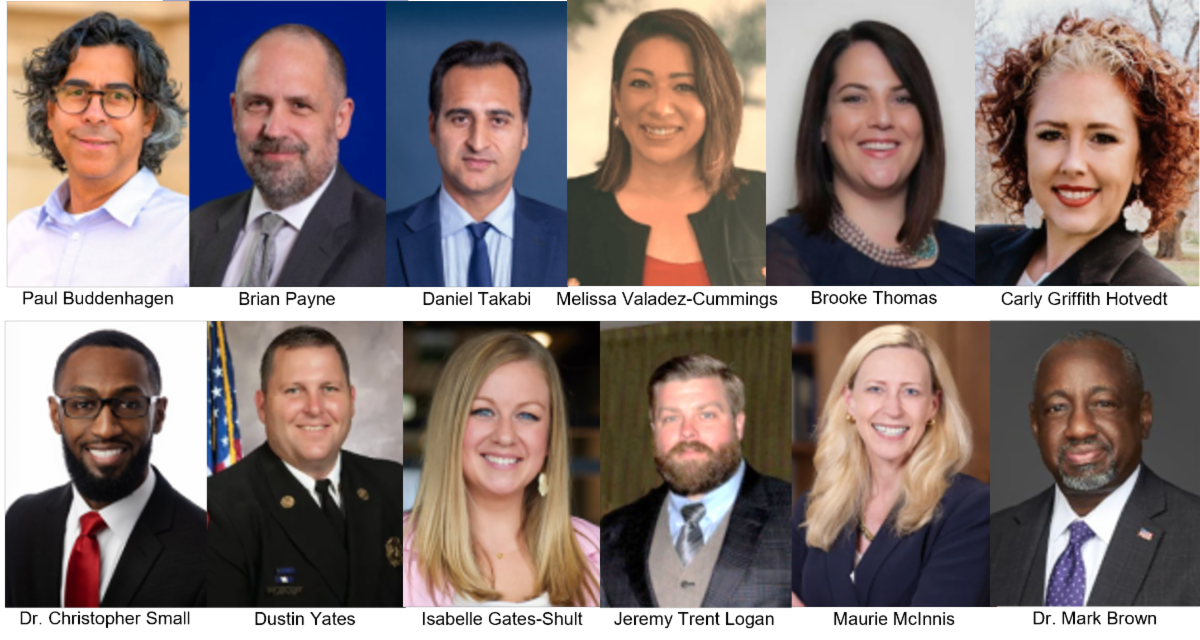
California – The Berkeley City Council selected Paul Buddenhagen as city manager. Buddenhagen is the current city manager of Emeryville and previously served as Berkeley’s deputy city manager. He will replace Dee Williams-Ridley. Buddenhagen will begin his role in September 2024.
Virginia – Director Brian Payne will transition to interim provost and vice president for academic affairs at Old Dominion University (ODU). Payne has served as director of the Commonwealth Cyber Initiative Coastal Virginia Node (COVA CCI) at ODU for five years.
Daniel Takabi will succeed Payne as COVA CCI director. Takabi is the current ODU director of the School of Cybersecurity. He will officially assume director responsibilities after Payne moves into his new role this summer.
Texas - The Cedar Hill City Council unanimously named Melissa Valadez-Cummings city manager. Valadez-Cummings has worked with the city for more than two decades, most recently as deputy city manager. She will succeed Greg Porter on Aug. 1.
Indiana – Brooke Thomas will be the permanent chief development officer for the Indianapolis Public Transportation Corporation (IndyGo). She has served as interim chief development officer since December 2023. She has more than 20 years of leadership and management experience in the public, private and nonprofit sectors.
Arkansas – Carly Griffith Hotvedt (Cherokee Nation) J.D., will be interim executive director for the Indigenous Food and Agriculture Initiative (IFAI). Hotvedt will replace Erin Parker. She joined the organization as director of tribal enterprise in 2019.
Florida – The Florida State University Schools (FSUS) Board of Directors has appointed Christopher Small, Ph.D., interim executive director of FSUS. Dr. Small will take over the role from Stacy Chambers. He is the current director of the university’s online educational leadership/administration programs. Dr. Small is also an assistant teaching professor in the FSU College of Education, Health and Human Sciences’ Department of Educational Leadership and Policy Studies. He will officially begin June 3.
Louisiana – Dustin Yates is the first interim mayor of the newly incorporated city of St. George. Yates has been involved with the city’s incorporation since the original petition in 2013. He has served with the St. George Fire Department for 19 years, most recently as chief administrative officer.
New York – The village of Potsdam has promoted Isabelle Gates-Shult to permanent village administrator. Gates-Shult will take over the role from Greg Thompson. She previously served as the village’s treasurer and currently serves as interim village administrator.
Oklahoma - Gov. Kevin Stitt notified Comanche County officials Friday that he had appointed Jeremy Trent Logan to serve as temporary District 1 county commissioner, effective immediately. Logan is stepping after the suspension of Commissioner John O’Brien following a recommendation by the Oklahoma Attorney that he be removed from office.
Connecticut - Maurie McInnis, Ph.D., currently a Yale Corporation trustee and president of Stony Brook University, will become Yale's 24th president, succeeding President Peter Salovey. She is set to begin her tenure July 1. She received her bachelor’s degree in art history from the University of Virginia in 1988 before earning her master’s and doctorate degrees from Yale in the History of Art in 1990 and 1996.
Alabama - The Tuskegee University Board of Trustees has appointed Mark Brown, Ph.D., as the university's 10th president and chief executive officer. Brown's selection is the first time in Tuskegee's nearly 143-year history that an alum will lead the university. Brown retired from the Air Force as a major general serving as a deputy commander of Air Education and Training Command at the Joint Base San Antonio-Randolph in Texas.
| | |
|
Connect with SPI
Check out our social media links!
| |
About Government Contracting Pipeline | |
|
Strategic Partnerships, Inc.
Publisher: Mary Scott Nabers
Editors: Adam Rollins
Dave Doolittle
www.spartnerships.com
| |
Government Contracting Pipeline, a publication of Strategic Partnerships, Inc., is a free, weekly newsletter detailing important happenings nationwide and the premier source for federal, state, and local government news and contracting opportunities. | |
Help us share this message.
To ensure delivery and proper formatting of the newsletter, be sure to add editor@spartnerships.com to your safe senders list.
Otherwise, the newsletter may be flagged as spam and automatically routed to your junk e-mail folder.
| | | | |