Volume 16, Issue 22 - Wednesday, May 29, 2024 | |
By Mary Scott Nabers, CEO of Strategic Partnerships, Inc. | |
|
Officials at all jurisdictional levels of government develop planning documents that outline upcoming initiatives. Additionally, upcoming projects are often listed in budgets, but large initiatives are usually in planning documents of some sort. The most common planning document is called a capital improvement plan (CIP). These documents list projects that officials want to launch along with estimated costs, purpose, justifications, timelines and priority rankings. The upcoming projects discussed in this column will soon need contracting partners, and the details surrounding each were obtained by researching CIPs from throughout the U.S.
The Central Ohio Transit Authority lists three major projects in its 2024-2028 Capital Improvement Plan. These initiatives, overseen by a coalition of local government entities – the Franklin County Board of Commissioners, city officials in Columbus, and the Mid-Ohio Regional Planning Commission – are not just projects, but transformative endeavors. One of the major projects, a $314 million West Broad Corridor Project, is listed as a large transportation infrastructure improvement initiative. The project aims to establish a bus rapid transit system connecting downtown Columbus to the Prairie Township Community Center, covering a distance of approximately 9 miles. Roadway improvements will be made along with new infrastructure for bicyclists. The coalition has received $41.9 million in federal funding and plans to complete 90% of the design in 2024 so construction can begin in 2025.
The San Francisco Public Utilities Commission plans to launch a $54 million pipe repair project in Redwood City. The Pre-Stressed Concrete Cylinder Pipe Repair Project will address 650 feet of critically damaged pipeline on the western side of the San Francisco Bay. A Needs Assessment Report identified six segments of the damaged pipeline that require attention because of a potential failure risk that could occur because of breakage anywhere in the damaged pipeline’s spiral wiring. If that happened, it could lead to total system failure. The planned project will work as a short-term but necessary solution until more replacement is done. The first phase will involve planning, design and construction work, while the second phase will focus on addressing the remaining 1.25 miles of damaged piping. Bidding for the repairs is scheduled for late November 2024 and construction is slated for 2025.
The city of Portsmouth, New Hampshire, is planning a new Community Policing Facility. An initial design for the project was completed this month, and a cost estimate of $41 million has been established. The project will involve renovating the old facility and expansion construction of the municipal facility. Project planners estimate it will be about 15 months before the design is finalized, construction documents are prepared and a procurement method is identified. That pushes project bidding to the summer of 2025, and construction will launch soon after selecting contracting partners. This clear timeline ensures that all stakeholders know the project's progression and can plan their involvement accordingly.
Click here for more.
| |
FDOT to build $257 million interchange to reduce congestion, improve safety | |
|
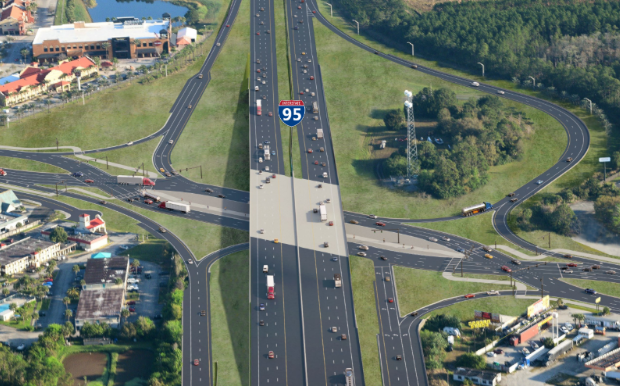
The Florida Department of Transportation (FDOT) will build a $257 million Diverging Diamond Interchange (DDI) along Interstate 95 at U.S. 1. The project will help reduce congestion and improve safety at the intersection. The project is in the design phase, with construction expected to begin in fall 2027.
A DDI is a highway design intended to accommodate high traffic volumes without increasing the existing number of lanes and traffic signals. The traffic lanes use crossover sections to temporarily divert drivers to the left side of the road. This transition makes it easier and safer for drivers to make left turns, reducing conflict points in intersections and mitigating accident risk.
The current I-95 interchange is outdated, featuring deficient median opening spacing and driveway connections. The intersections feature high crash rates that are an ongoing danger to motorists and pedestrians. In addition, the existing loop ramps are substandard, the I-95 bridges do not have enough vertical clearance, and the bicycle and pedestrian features do not extend far enough to ensure safety.
FDOT will build the I-95 DDI to improve operations, reduce conflict points, minimize traffic queues and eliminate loop ramps. Plans include widening the roadway from two lanes in each direction to three. A grass median will separate the two-direction lanes. In addition, FDOT will build shared-use paths for bicyclists and pedestrians.
The project will only use two traffic signal phases to direct traffic to streamline traffic flow without increasing delays. FDOT plans to install detention ponds and floodplain compensation sites to mitigate flooding.
The project will be in Volusia County, approximately 63.5 miles northeast of Orlando.
(Photo courtesy of FDOT.)
| |
Ohio awards $152 million to transform riverfront communities | |
|
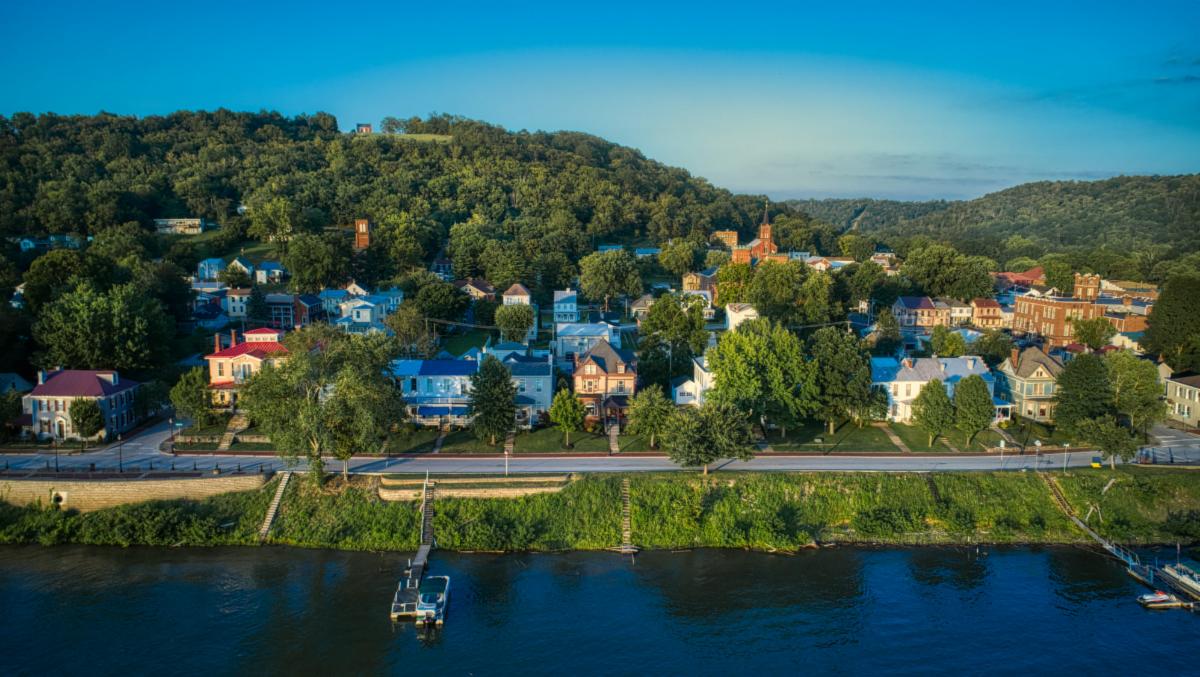
The state of Ohio is investing $152 million into 21 waterfront development projects to increase access to local waterways, revitalize historic downtown areas and promote tourism and recreation opportunities. The projects will connect rivers to downtown spaces, redevelop downtown streetscapes, increase community riverfront walkability and improve boat ramps, docks and parks.
The city of Portsmouth will spend $34.2 million to redevelop and improve the local riverfront. Plans include building outdoor parks, recreational amenities, murals and an amphitheater. The city will also install a fishing pier, campsites and improve connectivity between its economic center to the river.
The village of Ripley will receive the second highest award - $16.4 million – to build a public gathering space on the riverfront. The gathering space will be among a series of improvements to enhance public accessibility to village amenities. Some of these amenities feature historic sites including the Underground Railroad.
The village of New Richmond will use $13.5 million to redevelop Liberty Landing, creating additional recreation space. Plans include building a river marina, a trail providing waterfront access and an amphitheater. The village will also connect the U.S. 52 bike trail, install a natural landscape terrace and build sidewalks.
The projects are part of the state’s Appalachian Wonderful Waterfronts Initiatives program, funded through the Appalachian Community Grant Program. The $500 million program supports planning and development for communities in the state’s Appalachian region.
The grants help local governments, schools and nonprofits complete projects that redevelop downtown areas, improve connecting trails, build outdoor community space, build workforce infrastructure and invest in services addressing children’s health.
(Photo courtesy of the village of Ripley.)
| |
|
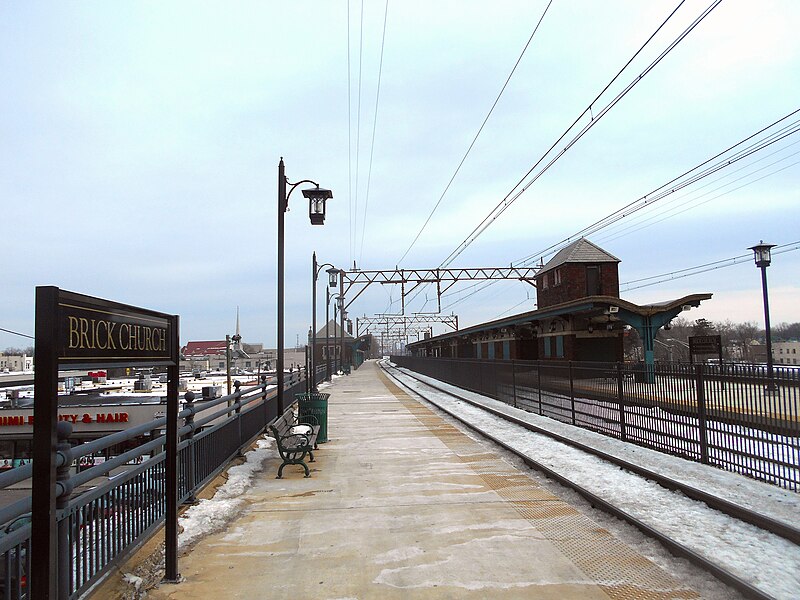
The Federal Transit Administration is awarding $343 million to eight states to retrofit some of the busiest rail transit systems in the nation. The funds will support upgrades to aging systems to make public transportation more accessible for the elderly and disabled and more efficient for all.
With funds provided by passage of the Infrastructure Investment and Jobs Act in 2021, the grants are being given out through the FTA’s All Stations Accessibility Program (ASAP). The funds can be used for upgrades to rail transit stations and projects to make public transportation accessible to all passengers. The federal funding provides up to 80% of the total financial needs for each project.
Click here to learn more about the rail station projects
(Photo courtesy of Adam Moss.)
| |
New Jersey to use $156 million to bring affordable solar energy to underserved communities | |
|
The New Jersey Board of Public Utilities (NJBPU) will receive $156.1 million to overcome barriers blocking low-income, disadvantaged multifamily residences and communities from accessing affordable solar energy.
The NJPBU will use the funds to support four key pillars of its Solar for All (SFA) program. Once deployed, the program will provide tens of thousands of households across the state with accessible clean energy. These initiatives will prioritize community solar, multifamily solar, residential solar and technical assistance and workforce development.
Developers will receive funds to install community solar grids in underserved communities, including areas that are considered infeasible due to grid upgrade costs. As part of the program, the NJPBU will launch a pilot program allowing qualifying entities to collaborate with developers to set up subscription models for solar panels.
New Jersey will raise the cap on the total amount of allowed community solar installations through 2027. The state anticipates its residence-serving community solar initiative will provide clean energy to 15,500 households.
The initiative will offer a per-kilowatt incentive, including incentives for on-site energy storage solutions. The state anticipates the program serving approximately 5,500 households.
NJPBU will launch a residential solar pilot program that will help overburdened households own their solar panel system. There are currently 30% fewer residential solar installations in disadvantaged communities. The program is anticipated to reach 1,250 households.
The final pillar of the state’s SFA program centers around the state providing technical assistance and workforce development for underserved communities. The funds will support workforce training programs, customer outreach and interconnection support for electric utilities. The remaining funds will help modernize the grid and increase efficiency.
The EPA’s SFA initiative selected 60 recipients, including states, territories, Tribal governments, municipalities and nonprofits, for awards totaling $7 billion to set up than 900,000 households across the nation with solar. The program was made possible by the Inflation Reduction Act, which established the EPA’s $27 billion Greenhouse Gas Reduction Fund.
Projects eligible under the EPA program:
- Support residential rooftop and residential-serving community distributed solar projects for low-income and disadvantaged households around the country.
- Must be primarily residential solar projects, providing power and financial benefits to households nationwide.
The EPA partially funded all 60 selected applications the same percentage of their initial funding request. The Wisconsin SFA program will partner with private capital to maximize the EPA funds and establish a sustainable program extending beyond the initial five-year timeline. The EPA will publish more information on the selected applicants once awards are finalized by summer.
(Photo courtesy of Giorgio Trovato on Unsplash.)
| |
Davidson College to reimagine historic 50-year-old library | |
|
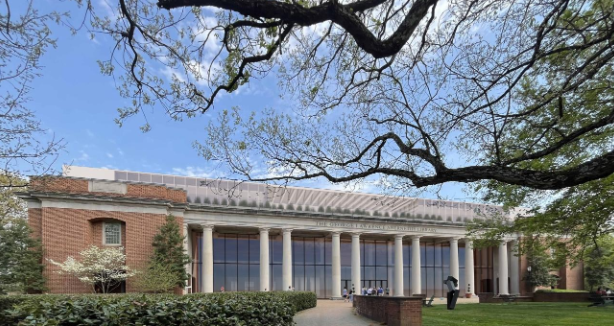
Davidson College in North Carolina will renovate the E.H. Little Library to provide modern services, preserve its book collection and expand the space to facilitate student learning. The $100 million project is currently in the design phase, with construction beginning in 2025.
The existing 50-year-old library lacks built-in infrastructure to serve the needs of the digital age. The college will renovate the library to provide specialized information resources, peer-to-peer tutoring, foundational and emerging technologies and professional expertise for students across all disciplines.
The college will expand the building, renamed the George Lawrence Abernathy Library, to 120,000 square feet and include a permanent, temperature-controlled annex location for the existing book collection. Plans include scaling back the amount of book space originally allocated to hold expanding collections.
The updated library will ensure the existing collection remains accessible and will expand on student-centric collaboration and sharing spaces. The facility will include multi-purpose spaces, workspaces and interactive areas. The facility will feature additional event and programming space on a rooftop level.
The college will emphasize sustainable building practices to create a low-carbon, resilient structure. Plans include ample natural lighting, renewable geothermal and photovoltaic energy systems and efficient water use technologies.
Davidson College has already received $85 million from private donors to launch the library renovation project.
(Photo courtesy of Davidson College.)
| |
DOI invests $60 million to increase water supply in Rio Grande Basin | |
|
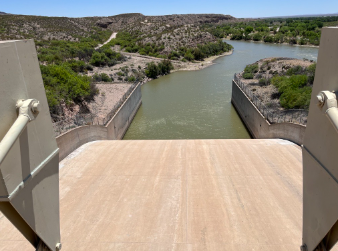
The Department of the Interior (DOI) has invested $60 million to conserve water and increase drought resilience in the Rio Grande Basin. The funds will support the Bureau of Reclamation’s (Reclamation) efforts to improve climate resilience and water security for communities from the Elephant Butte Reservoir in southwest New Mexico to West Texas.
Plans include building off-channel storage to capture stormwater and increase storage at existing sediment dams in the Rio Grande basin. Reclamation will use the water to recharge the local aquifer and reduce irrigation demands. In addition, the funds will help improve and create riparian wildlife habitats for threatened and endangered species.
The funds will support Reclamation’s Rio Grande Project, an ongoing initiative to supply farmland and communities with potable water. The project supports and maintains dams and reservoirs that store and distribute floodwater. The irrigation system includes five diversion dams, 139 miles of main canals, 457 miles of smaller canals and 465 miles of drains.
Reclamation will collaborate with agencies, commissions, irrigation districts, water improvement districts and local stakeholders to develop supplemental water projects that support the Rio Grande Project. The DOI has invested $59 million in the Rio Grande Project to date, including $30 million to repair aging infrastructure and improve water supplies and delivery systems.
A 23-year drought has led to record-low water levels in the Rio Grande Basin. Despite progress on improving hydrology in recent months, the drought has severely affected the region’s ecosystem. The project’s reliance on pumping groundwater to make up for the prolonged drought has resulted in a loss of project efficiency and wildlife habitats.
(Photo courtesy of the Bureau of Reclamation.)
| |
Washington cities to reconnect neighborhoods with bus line stations | |
|
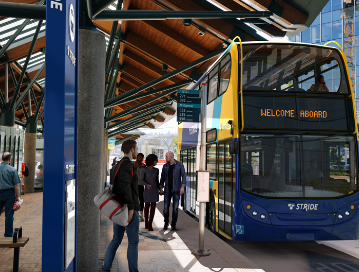
The cities of Tukwila and Renton in Washington will use $69.8 million to build two Bus Rapid Transit (BRT) stations along the 18-mile Stride S1 BRT line in King County. Plans include building bus lanes, bridges, and other pedestrian infrastructure improvements to help disadvantaged neighborhood communities. The project has a total cost of $200.9 million.
Currently, both communities are prevented from easily accessing critical amenities due to State Route 518 and Interstate 405 impeding mobility. The Stride S1 BRT line sees approximately 10,000 riders daily. Construction on the Tukwila International Boulevard (TIB) Station began in early 2024. Construction on the South Renton Transit Center (SRTC) is expected to begin in spring 2025.
The TIB Station will feature pedestrian bridges spanning SR 518, connecting the station to the existing TIB light rail station and a neighborhood. The city will also build two in-line BRT platforms and approximately 4,700 feet of east- and westbound bus-only lanes.
The SRTC will include a transit center supporting the Stride BRT, King County Metro Rapid Ride and express and local bus services. The city will install transit signal prioritization, build bus-only lanes and create parking for 108 bikes. Plans also include building sidewalks, crosswalks, benches, lighting and signage.
The U.S. Department of Transportation (USDOT) provided the funds through the Neighborhood Access and Equity (NAE) grant program to start the Reconnecting Communities with new BRT Stations in Tukwila and South Renton project. Construction is expected to begin in 2025.
The NAE program is designed to improve walkability, safety and affordable transportation access in disenfranchised communities. The Tukwila and South Renton BRT Stations project is one of 132 projects that will receive a portion of the $3.3 billion USDOT awarded for Fiscal Year 2023.
(Photo courtesy of Sound Transit.)
| |
New Mexico investing $25 million to plug orphaned wells, restore polluted sites | |
|
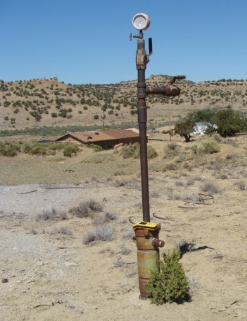
The Department of the Interior (DOI) will provide $25 million to the state of New Mexico to clean up legacy pollution sources.
Orphaned oil and gas wells pose significant health and safety risks to communities across the nation, leaching contaminants and toxic air pollutants into the atmosphere and water sources. These legacy pollutants affect backyards, recreation areas and communal spaces and are heavy contributors to climate change. Methane, a greenhouse gas far more potent than carbon dioxide, leaks from these orphaned wells at an alarming rate.
New Mexico will use $25 million to plug 117 orphaned wells, remediate four sites and restore the surface of 33 locations. This grant builds on the state’s previous work to address orphaned well sites across the state. To date, New Mexico has plugged 137 wells, extensively remediated surfaces and restored additional orphaned well sites.
The funds come from the Bipartisan Infrastructure Law (BIL) as part of the first phase of formula grant funding to remediate legacy pollution issues. The investments in addressing legacy pollution include $4.7 billion dedicated to plugging orphaned wells. DOI previously announced $560 million for legacy pollution projects in August 2022.
The BIL has delivered nearly $150 million to federal land managers to plug, remediate and restore orphaned wells on public lands and waters. The BIL has also awarded around $40 million to Tribal communities for similar work. In total, states have plugged more than 7,700 orphaned wells and reduced around 11,530 metric tons of potential greenhouse gas emissions.
(Photo courtesy of the New Mexico Legislature.)
| |
New York district to invest $15.4 million to fix school infrastructure, improve safety | |
|
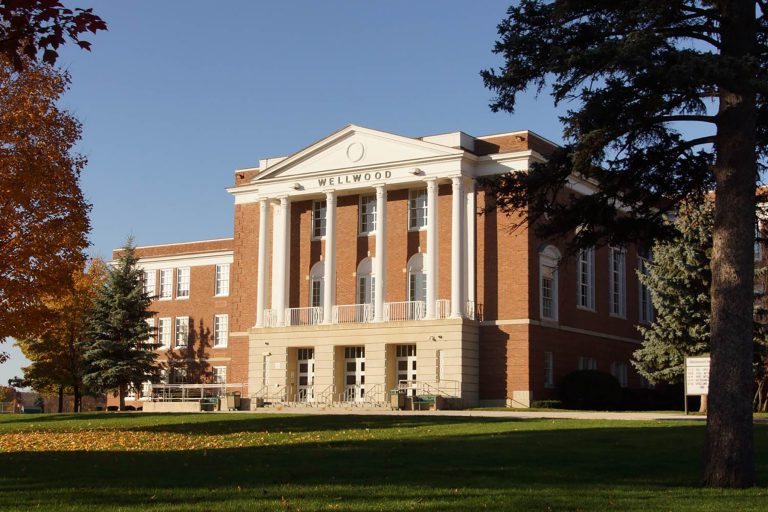
The Fayetteville-Manlius School District (F-MSD) will spend $15.4 million to address aging infrastructure needs and improve security and safety across six school buildings. Voters approved the capital improvement project May 21 as part of a $111.3 million budget proposal. Construction is expected to begin in summer 2025.
The current school facilities have outdated, aged roofing that allows water and melting snow to leak into classrooms and hallways. The water damage has affected facility infrastructure, damaging ceilings and pipework. In addition, the school announcement systems are failing and no longer reliable for communication.
As part of the project, F-MSD will start by partially replacing the roofs at F-M High School, Wellwood Middle School, Eagle Hill Middle School and the district office. In addition, the district will improve HVAC systems for F-M High School, Fayetteville Elementary School, the Support Services Maintenance Building, Transportation Center and Conference Center.
Plans include improving safety and security measures districtwide. The district will replace the current public announcement system to provide school bell schedules and emergency notifications across all campuses. F-MSD will ensure that all school buildings have uniform safety and security measures.
(Photo courtesy of F-MSD.)
| |
|
A partnership among a major airplane manufacturer and several international airports is another step in getting hydrogen-powered flight off the ground. The company recently announced it is conducting feasibility studies to develop hydrogen fuel capabilities at Hartsfield-Jackson Atlanta International Airport and George Bush Intercontinental Airport in Houston.
The company created the ZEROe program with the goal of manufacturing the world’s first hydrogen-powered commercial aircraft by 2035.
In addition to Atlanta and Houston, the company is conducting hydrogen feasibility studies at three airports across Canada, joining 11 ongoing studies in Europe and the Asia-Pacific region.
Click here to learn more about the future of hydrogen-powered flight
(Photo courtesy of Airbus.)
| |
|
Los Angeles once again leads the United States in the number of ENERGY STAR certified commercial and multifamily buildings, with 876 buildings last year.
The Environmental Protection Agency (EPA) recently released its annual list of buildings that are ENERGY STAR certified, meaning they use 35% less energy and produce 35% less CO2 emissions than standard structures.
Click here to learn more about energy efficiency in America’s infrastructure
| |
|
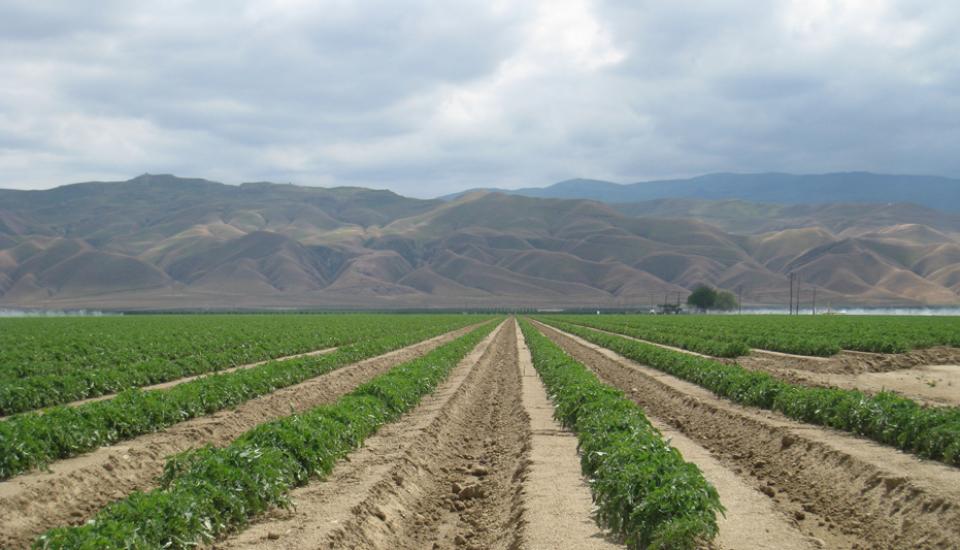
The U.S. Department of the Interior has made $81 million available for water conservation and drought resilience efforts in California’s San Joaquin Valley, located south of the Sacramento-San Joaquin Delta.
The funds come from the Inflation Reduction Act, which includes $500 million specifically designated for conservation initiatives, ecosystem restoration and habitat preservation in areas outside the Colorado River Basin that are facing comparable levels of prolonged drought. The Bipartisan Infrastructure Law previously allocated $428 million to the San Joaquin Valley.
Click here for more information about drought resilience efforts in California
(Photo courtesy of the Water Education Foundation.)
| | |
|  |
|
|
Louisiana – Ronald J. Wendel Jr. has been appointed acting president and CEO of Port NOLA and acting CEO of the New Orleans Public Belt Railroad. Wendel currently serves as the port’s executive vice president and chief financial officer. He will replace Brandy Christian in June.
Illinois - Jay Roszhart will become the president and CEO of Springfield Memorial Hospital. Roszhart is the current president of Memorial Health Ambulatory Group. He will assume responsibilities July 1. Roszhart began his career at Memorial in 2009 as an administrative fellow. He brings 21 years of healthcare experience to the role.
Oregon – Julie Hoy has been officially voted mayor of Salem. Hoy will replace outgoing Mayor Chris Hoy. She currently serves as Ward 6’s city councilor.
Kentucky – Michelle King has been hired as the city of Louisville’s executive director of the Department of Parks and Recreation. King has worked with the Louisville Metro government for two decades. She most recently served as assistant director of the Louisville Metro Air Pollution Control District.
Pennsylvania – The city of Easton has chosen Dwayne Tillman as director of planning and codes. He had been serving as acting director. Tillman has been with the city since 2015, beginning as a general inspector and progressing to the head inspector.
West Virginia – The city of New Martinsville has elected Keith Nelsen as its mayor. Nelsen will replace Sandy Hunt. This will be Nelsen’s second time as the city’s mayor, last serving from 2012 to 2016.
Texas – Texas Christian University has appointed Merianne Kimmel Roth as vice chancellor of marketing and communication. Roth has been the associate vice chancellor since 2019. Prior to TCU, Roth held leadership positions at JPS Health Network, RadioShack and Visit Fort Worth, among other key strategic marketing and communication roles.
Florida – Lake City has hired Don Rosenthal as city manager. Rosenthal previously served as assistant county administrator for Pasco County, director of Office of Buildings for Atlanta and building and safety manager for Reno.
California – The California State University Board of Trustees appointed Ronald S. Rochon president of CSU Fullerton on May 22. Rochon is the current president of the University of Southern Indiana. He will officially assume his duties July 22.
Arizona – Graham Rossini has been promoted to athletic director for Arizona State University. Rossini brings more than 20 years of sports experience to the role. He is the university’s current chief business officer for the athletics department.
Michigan – Beverly Walker-Griffea will be the permanent director of the newly created Department of Lifelong Education, Advancement and Potential (MiLEAP). Walker-Griffea is the current president of Mott Community College in Flint. She was the first female and Black president in the college’s history.
New Jersey – Amanda Haines has been chosen as the first female executive director of the Election Law Enforcement Commission. Haines will replace Jeffrey Brindle in the role. She brings nearly two decades of experience, previously serving as the agency’s acting legal director.
| | |
|
Connect with SPI
Check out our social media links!
| |
About Government Contracting Pipeline | |
|
Strategic Partnerships, Inc.
Publisher: Mary Scott Nabers
Editors: Adam Rollins
Dave Doolittle
www.spartnerships.com
| |
Government Contracting Pipeline, a publication of Strategic Partnerships, Inc., is a free, weekly newsletter detailing important happenings nationwide and the premier source for federal, state, and local government news and contracting opportunities. | |
Help us share this message.
To ensure delivery and proper formatting of the newsletter, be sure to add editor@spartnerships.com to your safe senders list.
Otherwise, the newsletter may be flagged as spam and automatically routed to your junk e-mail folder.
| | | | |