Volume 16, Issue 20 - Wednesday, May 15, 2024 | |
By Mary Scott Nabers, CEO of Strategic Partnerships, Inc. | |
|
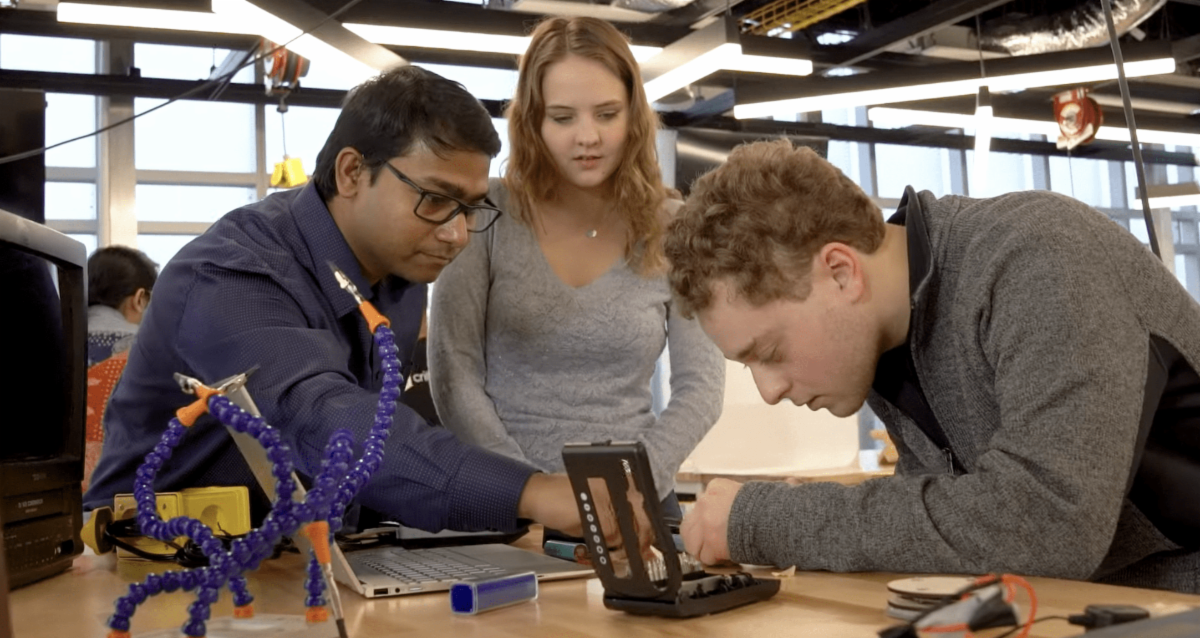
Sustainability has been a global goal for over five decades, but today's conversations about sustainability are more robust than ever. Government leaders everywhere are launching initiatives that preserve systems, structures, safety and the planet.
There are so many funding programs for sustainability projects it’s difficult to list them all. A few agencies with large amounts of funding available to support initiatives that meet sustainability guidelines include:
Environmental Protection Agency: The EPA funds sustainability projects focused on environmental conservation, pollution prevention and sustainable development.
Department of Energy: This agency has funding for research, development and deployment of clean energy technologies, energy efficiency improvements and other sustainability initiatives.
Department of Agriculture: The USDA supports sustainable agriculture projects, renewable energy systems and conservation efforts that promote environmental resilience.
Department of Housing and Urban Development: HUD funds sustainable housing and community development projects, including green building initiatives, affordable housing and climate resilience projects.
Department of Transportation: The DOT supports public transit improvements, bike and pedestrian infrastructure and alternative fuel vehicle initiatives.
National Science Foundation: The NSF allocates funds for research and innovation related to renewable energy, climate change mitigation and environmental science.
Federal Emergency Management Agency: FEMA funds hazard mitigation projects that enhance community resilience to natural disasters and climate change impacts.
Department of Commerce: This agency supports economic development and initiatives focused on ocean conservation, fisheries and coastal resilience.
These are just a few examples of funding sources currently available. Together, the programs amount to billions of dollars and will be used for upcoming projects throughout the country. Sustainability is and has always been an American goal. Funding support is not new – it is just more abundant than in the past. Because of climate change, pollution, water contamination and biodiversity loss, funding will continue to be available for the next several years.
Click here for more.
| |
$1 billion I-5 bridge replacement project expected to break ground in 2026 | |
|
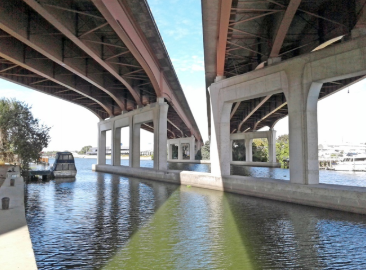
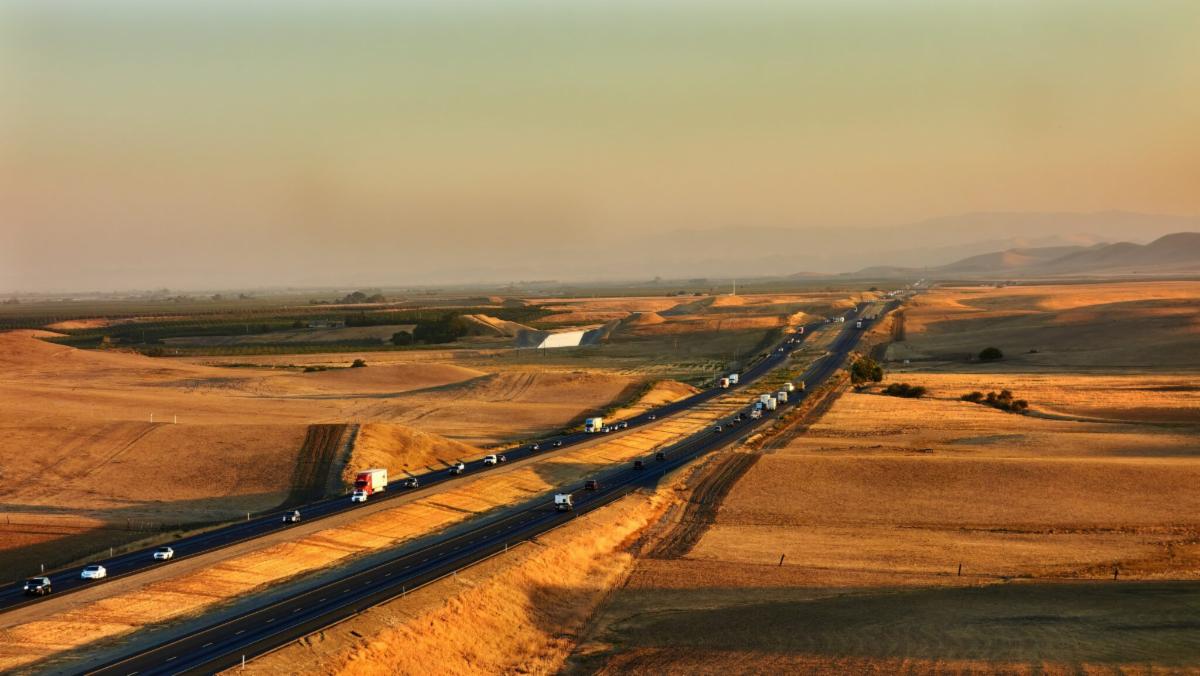
Construction on a $1 billion bridge replacement project over the Stockton Deep Water Channel on Interstate 5 in California is on schedule to begin in 2026, the California Department of Transportation (Caltrans) has said.
The Interstate 5 Stockton Channel Viaduct Replacement Project is expected to be completed in 2031. It is a collaboration among the San Joaquin Council of Governments, City of Stockton, Federal Highway Administration, U.S. Coast Guard and Environmental Resource Agency.
Though rehabilitation alternatives were considered, full replacement was selected because of structural deficiencies and ongoing bridge repairs. The bridges show problems with their concrete and steel components, including long-standing deterioration of the concrete decks, ongoing challenges in maintenance, rust appearing on the steel parts, damaged bracing and cracks in concrete elements.
Caltrans also has concerns about substructure weaknesses, including soil liquefaction possibly triggered by earthquakes.
The project lies in San Joaquin County over and near the Stockton Deep Water Channel and is designed to meet current American Association of State Highway and Transportation Officials standards for Load and Resistance Factor Design. Current traffic data show about 133,000 vehicles use the two bridge structures a day, 19% of which is truck traffic.
The replacement bridges will have an expected lifespan of 75 years and improve the structure permit load for up to a 15-axle vehicle.
The project will be completed in three stages and entails:
- Removing existing structures and building bridges for northbound and southbound Interstate 5 and portions of connector ramps.
- Realigning a portion of Weber Avenue beneath and east of the existing bridges, south of the channel. This will involve removing a portion of the surface street and building a new intersection at Washington Street, south of the existing intersection.
- Building large bents/columns to support the superstructure and connect to the foundations.
- Building foundations, including cast-in-drilled-hole piles and/or cast-in-steel-shell piles within and outside the channel.
- Building retaining walls for embankments due to an increase in roadway elevation.
(Photo courtesy of Caltrans.)
| |
Atlanta to stitch downtown communities back together with 14-acre cap project | |
|
The city of Atlanta will use $199.9 million to help reconnect downtown and midtown Atlanta, create urban greenspace, improve transportation and enhance mobility. Plans include increasing affordable housing, sustainable infrastructure, access to critical amenities and supporting underserved communities.
The U.S. Department of Transportation (USDOT) provided $157.6 million through the Neighborhood Access and Equity (NAE) grant program to begin Phase 1 of the Atlanta Stitch project. It will cost approximately $713 million to complete all sections of the Stitch. The project is in the design phase, with construction beginning in 2026.
The NAE program is designed to improve walkability, safety and affordable transportation access in disenfranchised communities. The Selma-to-Montgomery Trail project is one of 132 projects that will receive a portion of the $3.3 billion USDOT awarded for Fiscal Year 2023.
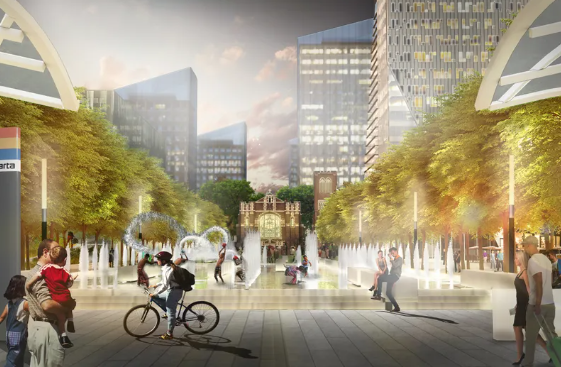
As part of the Stitch project, Atlanta will build a 14-acre mixed-use development cap covering three-quarters of the Downtown Connector. Plans include building a major park comprised of three distinct components to serve the community. These sections will include a dynamic urban plaza connecting residents with the city’s metro and bus system, an active greenspace with multimodal transportation paths and a park providing access to key city centers.
The city will provide more than 3000 affordable housing units for local neighborhoods. Plans include using the Stitch to reconnect historic streets and retrofit existing roadways into multimodal complete streets. The complete streets will feature bike lanes, street trees and improved pedestrian crossings.
The city will ensure the project will help mitigate the impact the Downtown Connector on local communities by reducing noise, pollution and ensuring communities are no longer physically separated from city amenities. The Stitch will also help lower emissions by improving traffic flow, reducing the urban heat island with greenspace, implement energy-efficient technologies and capture and distribute clean water.
(Photo courtesy of the city of Atlanta.)
| |
University of Idaho will spend $195 million to expand student housing | |
|
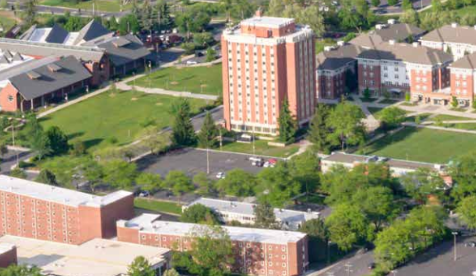
The University of Idaho (UI) in Moscow will spend $195 million to build additional student housing after receiving permission from the Idaho State Board of Education (Board). Construction will begin in 2025.
The university’s housing inventory is more than 50 years old and has extensive deferred maintenance. To have enough housing for the on-campus student body, UI is leasing an off-campus motel holding up to 200 students. UI will expand capacity on the Moscow campus by an additional 150 beds to provide sufficient housing.
The housing project will allow the university to stop leasing off-campus apartments, meet housing demands and improve living space quality. As part of the project, UI will address deferred maintenance in residential facilities. The university will enhance the Wallace Complex, Theopolis Tower and Elwood Apartments.
Plans include reconfiguring the existing South Hill Apartments to provide housing for both graduate students and married/family housing. South Hill Apartments currently only serves married students. UI will add additional undergraduate apartments to the campus. In addition, the university will expand the dining space to accommodate more students.
The Board approved the project after the university made the case that time was to begin was short. Factors such as a limited construction season and overlap with other major construction projects would make waiting to start the project prohibitively expensive and time-consuming.
(Photo courtesy of the University of Idaho.)
| |
|
The Department of Transportation (DOT) is entering the third year of a program that seeks to solve transportation problems such as fuel consumption, pollution and congestion.
DOT is now accepting applications for its Strengthening Mobility and Revolutionizing Transportation (SMART) grants program. The five-year program will fund up to $500 million in grants to conduct demonstrations and build prototypes.
Click here for more information on the SMART grant program
(Photo courtesy of Grace Dadson on Unsplash.)
| |
Boston revitalizing historic soccer stadium through P3 | |
|
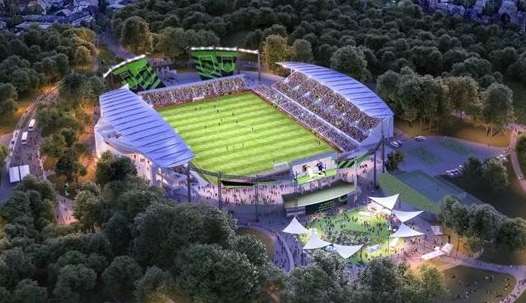
The city of Boston and Boston Public Schools (BPS) will collaborate with Boston Unity Soccer (BUS) on a $100 million public-private partnership (P3) project to renovate White Stadium. The city and BUS will hire separate construction companies to rebuild the stadium, install a natural grass field, build an 8-lane track and install a multipurpose activated space. Construction will begin in late 2024.
White Stadium currently has degraded, obsolete and non-ADA-compliant facilities with fire damage and no bathrooms or water fountains. The athletic field is in poor condition, limiting the amount of time players can use it per year. The stadium’s 6-lane track can’t host meets and does not meet Mid-America Intercollegiate Athletics Association (MIAA) standards.
The stadium has cramped offices, no indoor community facilities, locker rooms in poor condition, limited ventilation and no fire protection. The stands currently have outdated mechanical and electrical systems, inaccessible bleacher seats, an outdated plumbing system and enclosed spaces lacking natural light.
The city will renovate and build the stadium’s East Grandstand to accommodate up to 5,000 spectators, restrooms, concessions and community space. Plans include a state-of-the-art athletic facility featuring locker rooms, a strength and conditioning suite, sports medicine suite, student resource area and athletics offices. In addition, the city will install a professionally maintained grass field and an 8-lane, 400-meter track that will triple the amount of field use per year.
BUS will oversee construction of the West Grandstand, featuring the same amenities as the East Grandstand. In addition, BUS will install mobile endline seating, lighting and banner pylons and a scoreboard. Plans include building a multipurpose activated space outside the stadium, reconstructing the entry plaza and building the two structures to provide food, beverages, restrooms and storage.
(Photo courtesy of the city of Boston.)
| |
DOI to work with Tribes on water infrastructure projects | |
|
The U.S. Department of the Interior’s (DOI) Bureau of Reclamation (BOR) and Indian Health Service (IHS) will collaborate with Tribal communities to study, plan and design water infrastructure projects across the American West.
As part of a Memorandum of Understanding (MOU), the agencies will collaborate to develop safe drinking water and community sanitation infrastructure projects in Tribal communities across Indian Country. The MOU aligns with Executive Order 14112, which directs federal agencies to work together to remove barriers and help Tribes access resources.
The Yakama Reservation in Washington State has been identified as a potential site for a pilot project under this agreement.
The Yakama Nation and IHS will build a treatment system to remove arsenic from the local water supply. An agency engineering team recently conducted a research study that confirmed high arsenic levels in Georgeville, Washington. The BOR will provide technical support for this and future projects.
The IHS is supporting water and sanitation projects using $3.5 billion from the Bipartisan Infrastructure Law (BIL) for the third consecutive year. In addition, the agency announced in April that it would allocate $700 million in Fiscal Year 2024 for Tribal projects.
The BOR provided $320 million in April to fund Tribal domestic water supply projects for disadvantaged communities. The money was part of $550 million received through the Inflation Reduction Act (IRA). Additionally, the Infrastructure Investment and Jobs Act (IIJA) provided $250 million for the HIS to repair Tribal water infrastructure, including dams, irrigation systems and water sanitation facilities.
(Photo courtesy of taichi nakamura on Unsplash.)
| |
Ohio invests $154 million to revitalize downtown areas | |
|
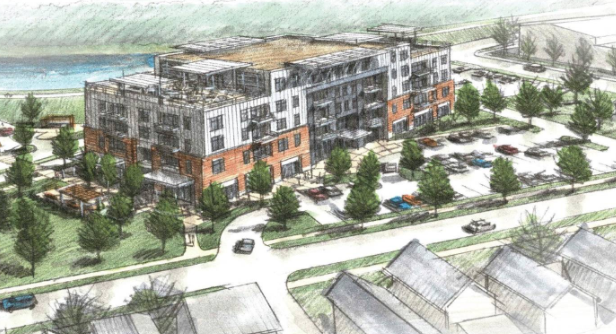
The state of Ohio is investing $154 million into 30 economic development projects to revitalize downtown districts, build recreational areas, improve the quality of life for residents and enhance regional cultural sites.
The city of Chillicothe received the largest award - $35.4 million – to fund four projects to transform the Yoctangee Riverside District. The city will renovate the Armory to house the UNESCO World Heritage Sites Visitors’ Center, meeting spaces and a recreational facility. Plans include a pavilion adjacent to the Armory for a farmer’s market.
Chillicothe will also improve the district’s park recreational fields. This will include building an amphitheater, pickleball courts and refurbishing a baseball field. In addition, the city will reconfigure the surrounding road network to improve access and build a shared-use path. The project will also renovate and expand a museum to add STEM programming.
The city of Logan will use $14.3 million for three projects that will revitalize its downtown area. The first project involves installing signage, archways, landscaping and decorative intersections along Mulberry Street. The city will reorganize surface parking on Main Street to accommodate wider sidewalks and a shared-use path.
Plans include doubling the size of Worthington Park to include a bouldering/climbing wall, overhead canopies and large community gathering areas. In addition, the city will install lighting to enhance the district’s appeal and improve safety.
The projects are part of the state’s Appalachian Downtowns and Destinations Initiatives program, funded through the Appalachian Community Grant Program. The $500 million program supports planning and development for communities in the state’s Appalachian region.
The grants help local governments, schools and nonprofits complete projects that redevelop downtown areas, improve connecting trails, build outdoor community space, build workforce infrastructure and invest in services addressing children’s health.
(Photo: Rendering of the proposed Yoctangee Riverside District. Courtesy of the city of Chillicothe.)
| |
Maryland university establishes institute dedicated to advancing AI research | |
|
The University of Maryland (UMD) in College Park has launched an institute dedicated to researching artificial intelligence (AI) and developing the next generation of students to ethically study, manage and use AI technologies. The Artificial Intelligence Interdisciplinary Institute at Maryland (AIM) is a collaborative hub for AI, faculty research, innovative and experiential learning opportunities and AI technology for the public good.
As AI technology becomes increasingly integrated in industry and government, the risk of it being used to cause harm has skyrocketed. The institute will help prepare students to understand the ethics, equity and responsibility of handling AI technologies. UMD expects that, eventually, students across all majors will be required to take an AI course.
AIM will advance the university’s existing commitment to AI expertise, research and learning centers. UMD already has multiple initiatives dedicated to advancing machine learning, integrating AI technology into social systems and manage the long-term impact of AI.
The institute provides resources and lessons enabling students to learn about how AI applies to their chosen field of study. AIM offers AI majors and minors, certificates, degrees, workforce development programs, AI government and industry partnerships and a cluster of high-performance computers tailored for AI.
Establishing the institute is the latest in the state of Maryland’s efforts to actualize and integrate AI technology. Gov. Wes Moore released an executive order Jan. 1, 2024, outlining measures to incorporate AI technologies and innovation into state agency operations. The order will help the state chart a path to use AI to improve government efficiency and efficacy while mitigating risk of harm.
(Photo courtesy of UMD.)
| |
DOE seeks information on decarbonizing off-road vehicles, technologies | |
|
The Department of Energy (DOE) is seeking information on how to decarbonize the off-road sector using preferred and promising alternative propulsion technologies. The DOE also wants to identify existing barriers that prevent the U.S. from transitioning to net-zero emissions by 2050. Interested parties must respond to the Progression of Net-Zero Emission Propulsion Technologies for the Off-Road Sector Request for Information (RFI) by June 7, 2024.
Off-road vehicles are designed to operate in areas outside of existing roadway systems. This means off-road vehicles come in a diverse array of types and use cases, making it challenging to standardize decarbonization technologies. Currently, the off-road transportation sector generates 10% of U.S. transportation greenhouse gas (GHG) emissions.
The RFI will help answer three critical questions allowing the DOE to develop a national decarbonization strategy:
- What is the current state of the off-road vehicle fleet?
- Which powertrain technologies are most promising for decarbonization of off-road vehicles?
- What is the timeline for the off-road sector to transition to net-zero emission GHG technologies?
The DOE considers biodiesel, renewable diesel, renewable natural gas, battery electric, direct electrification, electric hybridization, hydrogen-fuel internal combustion engines and hydrogen fuel cells as viable alternative propulsion. The results of the RFI will help determine which propulsion technologies are preferred.
The RFI is the latest movement to progress the nation’s transportation decarbonization efforts. It builds off a September 2022 Memorandum of Understanding (MOU) between the DOE, Department of Transportation (DOT), Department of Housing and Urban Development (HUD) and the Environmental Protection Agency (EPA). The agencies later released the U.S. National Blueprint for Transportation Decarbonization laying out a plan of action to completely remove emissions over the three decades.
(Photo courtesy of the DOE.)
| |
|
The California Department of Transportation (Caltrans) is starting to explore using generative artificial intelligence to improve roads across the state.
The agency awarded three contracts to private companies to use the emerging technology to find solutions to address road safety and traffic bottlenecks.
Click here to learn more about AI integration in California’s infrastructure
(Photo courtesy of Simon Hurry on Unsplash.)
| |
|
The Department of the Interior has announced over $70 million for 43 projects in 29 states to improve fish passage around outdated structures such as dams and culverts. The investment contributes to climate resilience, recreation and local economies.
The new funds supplement previous investments from the U.S. Fish and Wildlife Service’s National Fish Passage Program under the Bipartisan Infrastructure Law (BIL). Nationwide barriers across the country make fish migration more difficult and increase flood risks.
Click here to learn more about the DOI’s Fish Passage Program
(Photo courtesy of the Fish and Wildlife Service.)
| |
|
As urban areas grow, and developments are built closer to rivers and streams, the risk of flooding increases. Meanwhile, climate change is leading to more intense rainy seasons.
To address the challenge of flood mitigation, many cities across the United States are exploring permeable pavement to manage stormwater. Mandated by the 2021 Infrastructure Investment and Jobs Act, the Federal Highway Administration is also studying permeable pavement and its potential to protect against deadly floods.
Click here for more information about how cities are tackling flooding
(Photo courtesy of Porous Pave Inc.)
| | |
|  |
|
|
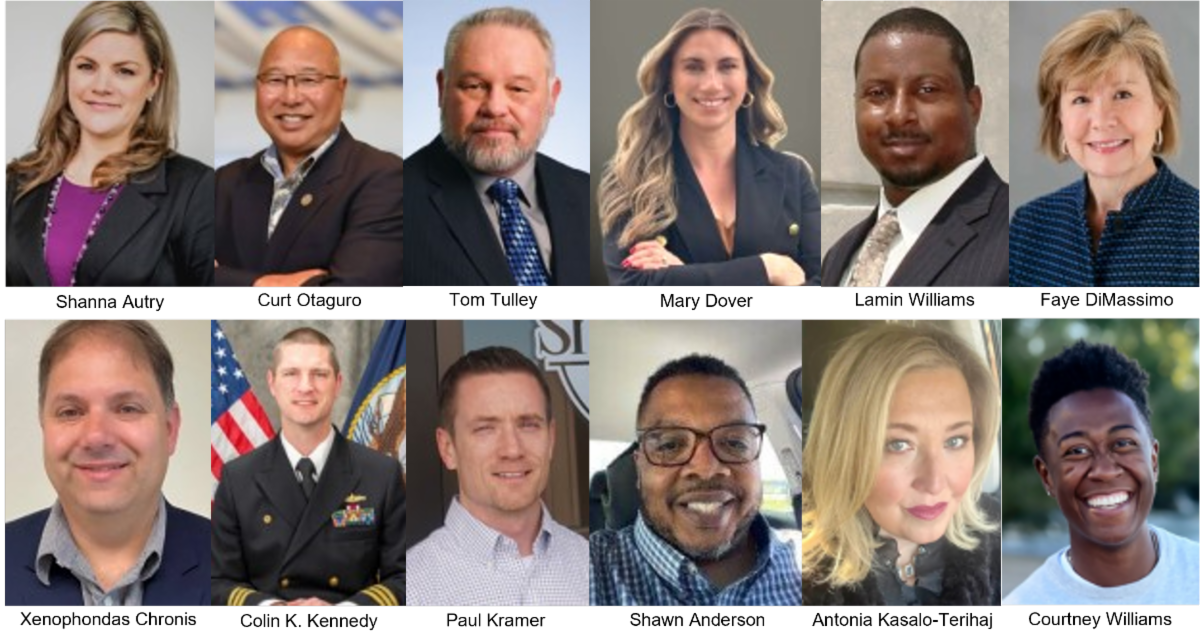
Florida - The Office of Program Policy Analysis and Government Accountability (OPPAGA) has hired Shanna Autry as senior legislative analyst. Autry previously served as an adjunct professor at Tallahessee Community College and director of student affairs for the Florida College System.
Hawai’i – The Hawai‘i Department of Transportation (HDOT) appointed Curt Otaguro deputy director of transportation for airports. Otaguro will begin his role June 4, 2024. He previously served as state comptroller and deputy superintendent of operations for the Department of Education.
California – North County Transit District (NCTD) has appointed Tom Tulley and Mary Dover to key positions:
- Tulley started as the agency’s chief operations officer of rail May 13. He most recently served as managing director and country manager for a rail vehicle construction company.
- Dover will be chief of staff for the chief executive officer and the Board of Directors. She previously served as the agency’s government affairs officer.
Washington, D.C. – The Federal Highway Administration has promoted Lamin Williams to division administrator of the District of Columbia Division Office. Williams has served as deputy division administrator since 2022. He brings nearly 20 years of public sector experience to the role.
Georgia – Faye DiMassimo has been appointed chief of planning and economic development for the city of Savannah. She brings more than 40 years of private and public experience to the position. She previously served as chief executive officer of the Chatham Area Transit Authority. She will begin her role June 17.
New York - Ogdensburg appointed Xenophondas ‘Fonda’ Chronis city manager during the May 13 City Council meeting. He will officially assume his duties July 1.
Rhode Island – The Newport City Council has appointed Colin Kennedy as city manager. Kennedy has served over two decades as an officer in the Navy, previously working as the director of operation training and performance for the Commander Naval Surface Force.
Kansas – The Shawnee City Council unanimously approved Paul Kramer as city manager. Kramer is the former long-time Leavenworth city manager.
Pennsylvania – The city of Farrell has hired Shawn Anderson as city manager. Anderson was previously director of development for the New Castle school district.
Illinois - After operating short-handed for five months, the Skokie Park District board has appointed Antonia Kasalo-Terihaj and Courtney Williams as commissioners:
- Kasalo-Terihaj, a lifelong resident of Skokie, currently works for a Chicago-based interior design firm.
- Williams, a former journalist, is currently the communications director for the Obama Foundation.
| | |
|
Connect with SPI
Check out our social media links!
| |
About Government Contracting Pipeline | |
|
Strategic Partnerships, Inc.
Publisher: Mary Scott Nabers
Editors: Adam Rollins
Dave Doolittle
www.spartnerships.com
| |
Government Contracting Pipeline, a publication of Strategic Partnerships, Inc., is a free, weekly newsletter detailing important happenings nationwide and the premier source for federal, state, and local government news and contracting opportunities. | |
Help us share this message.
To ensure delivery and proper formatting of the newsletter, be sure to add editor@spartnerships.com to your safe senders list.
Otherwise, the newsletter may be flagged as spam and automatically routed to your junk e-mail folder.
| | | | |