Volume 16, Issue 18 - Wednesday, May 1, 2024 | |
By Mary Scott Nabers, CEO of Strategic Partnerships, Inc. | |
|
April has been a big month for airport infrastructure funding. Two separate announcements of new funding awards were made. The first announcement, on April 5, was for $148 million. On April 25, the second announcement allocated another $76 million to support airport projects. In April alone, $224 million was made available for initiatives to construct terminals and expand older ones, upgrade runways, add gate capacity and improve airports.
When Congress passed the Bipartisan Infrastructure Law several years ago, $15 billion was earmarked for airport infrastructure. Funding announcements such as these last two will continue through 2026.
A new airport near Las Vegas, Nevada, will be built on a 6,000-acre plot approximately 23 miles from the Las Vegas Strip. The new airport will have multiple terminals with 153 gates and two runways. The estimated cost of the overall project, $12 billion, makes it the most expensive public works project in Nevada.
Another airport is needed to support the city’s projected domestic international and charter travel increase over the next decade. The new facility will also accommodate cargo flights. The Clark County Department of Aviation plans to acquire an additional 17,000 acres of land near the airport, increasing the size of the site to more than 23,000 acres. Currently, in the planning phase, the project will soon begin the environmental impact statement process. Contractor solicitations and awards are projected for 2027.
O’Hare International Airport’s current Terminal 2 in Chicago will be rebuilt in a massive $2.2 billion undertaking. At over 2.2 million square feet, the rebuilt terminal will be about twice the size of the current facility. The Chicago Department of Aviation will lead the project, which will be funded by the airlines operating at O’Hare International Airport.
Click here for more.
| |
|
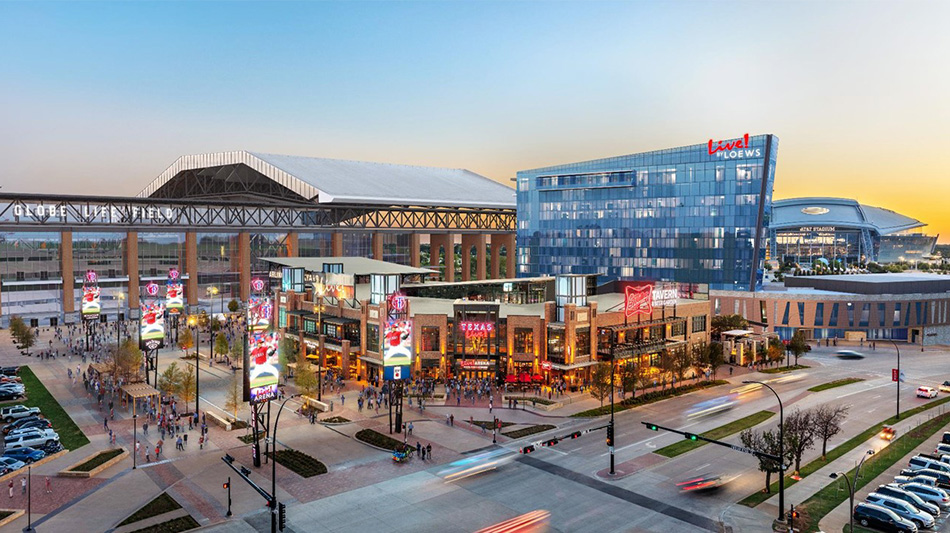
Arlington, Texas, a city of 340,000 people nestled between Dallas and Fort Worth, has been a driving factor in the continued economic growth of the North Texas Metroplex.
The city, the fastest growing metro in the country based on 2022 Census numbers, is home to multiple global businesses, a University of Texas system campus and a large sports and entertainment district.
The Texas Rangers play at Globe Life Field, and the Dallas Cowboys compete in the nearby AT&T Stadium. The city is known for hosting concerts and bringing tourists to its Six Flags amusement park.
“We’re the can-do city. I think that’s why we’ve attracted so many incredible businesses and sports teams and everything else,” Arlington Mayor Jim Ross said on Episode 9 of “The Connection: Partnering Private and Public Entities,” a companion podcast of Government Market News.
Click here to learn more about what's in store for Arlington's future
(Photo courtesy of the city of Arlington.)
| |
EPA grants $7 billion for solar energy accessibility | |
|
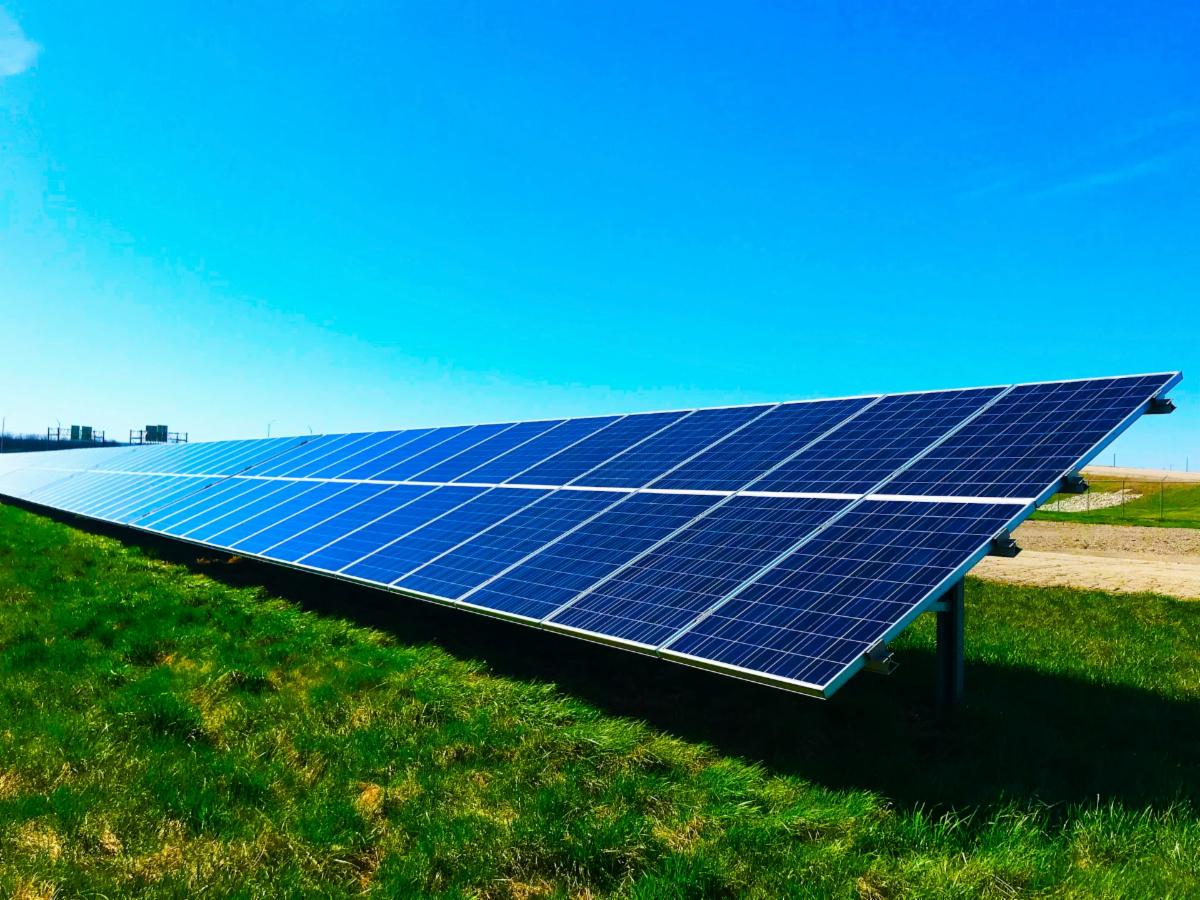
The Environmental Protection Agency (EPA) granted $7 billion in Solar for All grants to 60 entities to bring solar energy to low-income households. The money comes from the Greenhouse Gas Reduction Fund, a $27 billion program dedicated to combatting climate change.
Selectees will help mobilize solar energy for more than 900,000 houses by creating or further developing low-income solar programs. Of the 60 selected applicants, 49 are state level awards, six are awards to tribal communities, and five are multi-state awards.
The program has three objectives: reduce climate and air pollution, aid low-income and underserved communities and create more funding for solar energy. Programs like Grid Alternatives’ Solar on Multifamily Affordable Housing (SOMAH) follow these principles by equitably providing solar access to renters.
Leveraging reusable energy such as solar power not only reduces greenhouse gases, but conserves energy costs. The EPA estimates that this award will save households $350 million annually.
The Solar for All awardees include:
- $249.3 million for a multistate nonprofit, Inclusive Prosperity Capital, Inc., to expand and implement the Department of Energy’s (DOE) National Community Solar Partnership and Community Power Accelerator program.
- $249.8 million to New York State Energy Research and Development Authority (NYSERDA) to strengthen the state's existing solar, technical support and worker development programs.
- $249.7 million to Texas’ Harris County to help communities be better prepared for power outages by funding solar installation, battery storage and energy-efficient home upgrades.
(Photo courtesy of Chelsea on Unsplash.)
| |
North Carolina to use $1.5 billion to increase affordable housing supply | |
|
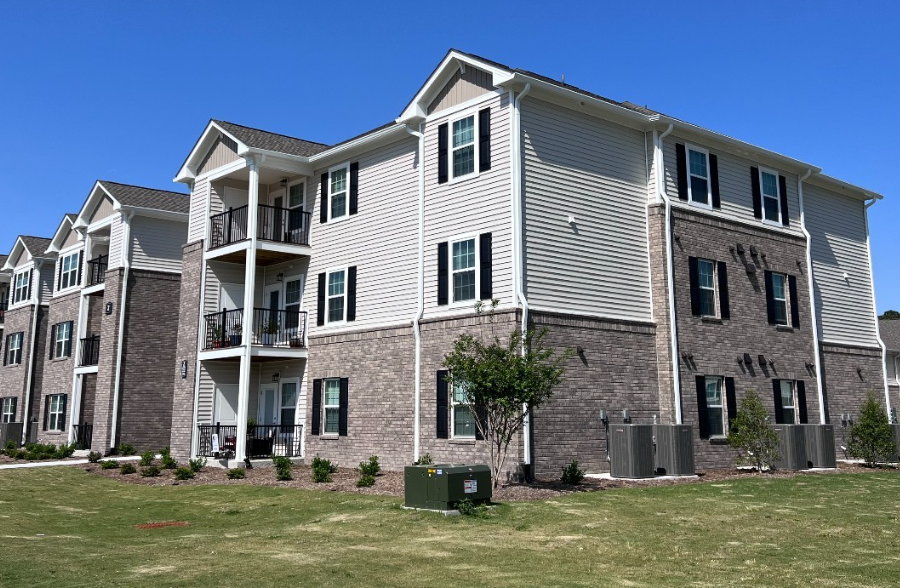
North Carolina will allocate more than $1.5 billion to address its affordable housing crisis.
The North Carolina Housing Finance Agency (NCHFA) received approval from the Local Government Commission (LGC) to issue $750 million in bonds supporting housing projects. There are 326,751 low-income households in North Carolina but only 130,930 affordable rental homes are available, according to the National Low Income Housing Coalition. The state created the NCHFA to address and combat the overwhelming shortage in affordable housing.
The NCHFA leverages a combination of private and public funds to finance and promote safe, affordable housing opportunities. Since 1974, the agency has spent nearly $32 billion to finance more than 310,000 homes and apartments. The NCHFA will use the $750 million to supplement the affordable housing supply for low- to moderate-income families.
Wake County was approved for $321 million in bond refunding and purchasing. The county will refund $184 million in general obligation bonds. In addition, the county will buy $137 million in limited obligation bonds to build and renovate school buildings and buy equipment.
The city of Charlotte will finance projects using $137 million in certificates of participation. The city will use the bonds to improve and renovate government buildings, procure vehicles and equipment, buy a helicopter and refinance prior debt obligations.
Other notable bond financing approvals include:
- CarolinaEast Health System will use a $45 million unsecured line of credit to cover daily operations expenses.
- Wilmington will issue $32 million in bonds to build part of a sports complex and improve streets, streetscapes and riverwalks.
- Inlivian Housing, a housing authority in Charlotte, will use $30 million to buy, rehabilitate and equip a multifamily residential rental facility for low-income residents.
- Cleveland County Water will use $12 million to improve dams, eliminate sand buildup and prevent creek erosion.
(Photo courtesy of NCHFA.)
| |
Washington city to vote on $157.5 million bond to build school, improve systems | |
|
Residents in the Lynden School District (LSD) in the state of Washington will vote on a $157.5 million bond to build a high school, increase student safety and improve system infrastructure. Voting will take place Aug. 6, 2024.
If approved, the school district would build a school to replace the existing Lynden High School. The current building is outdated, unsuitable for learning and is unsafe. LSD cannot renovate or remodel Lynden High School due to outstanding issues that make those options unfeasible.
The replacement high school would feature fewer points of entry, updated building systems and greater emphasis on natural lighting. LSD would build athletic facilities, a performing arts center and space for Career and Technical Education (CTE) programming and technologies. Plans include increasing classroom capacity and common room and shared space to serve up to 1,200 students.
LSD would incorporate breakout space into the high school’s design to promote teamwork and collaboration. Plans include increasing electrical capacity to handle modern learning technology and improving school safety and security.
The district would add permanent early learning and special education classrooms at Isom and Vossbeck elementary schools. This would allow LSD to permanently remove portables from the campus. The district would increase each school’s capacity by 540 students.
In addition, LSD would upgrade HVAC systems throughout the entire district to extend system life and improve air quality. Plans include improving safety and enhancing playgrounds at all campuses that serve early learning, special education and parent partnership programs.
Strategic Partnerships provides a bond report for all 50 states with project descriptions.
(Photo courtesy of the Lynden School District.)
| |
|
The Sunshine State’s reputation for its progressive attitude toward public-private partnerships is set to evolve even further, with legislation taking effect in July that will make it easier for companies to submit unsolicited proposals for local government projects.
Beginning July 1, public entities will be able to accept unsolicited proposals from private companies without undertaking a public bidding or solicitation process. If selected, the private company soliciting the proposal will be allowed to ultimately own its project — another change from the previous law.
Click here for more information about Florida’s P3 ruling
(Photo courtesy of Tamanoeconomico.)
| |
Jacksonville using federal funds to reconnect disadvantaged communities | |
|
The city of Jacksonville, Florida, will use $147 million to reconnect 14 disadvantaged neighborhoods via an approximately 30-mile trail. Plans include building five trail segments to connect and expand the existing trail and park system. The total project cost is $183.9 million.
The U.S. Department of Transportation (USDOT) recently provided the funds through the Neighborhood Access and Equity (NAE) grant program to begin the Emerald Trail project. Out of the five trail segments receiving funds, the Hogan Street segment will begin construction in mid-2024. Hogans Creek is in design and will begin construction in 2026. McCoys Creek is in various stages of design and construction.
The NAE program is designed to improve walkability, safety and affordable transportation access in disenfranchised communities. The Emerald Trail is one of 132 projects that will receive a portion of the $3.3 billion USDOT awarded for Fiscal Year 2023.
Interstate highways I-95 and I-10 currently split underserved Jacksonville communities, providing residents with few safe multimodal alternatives to access critical amenities. The limited pedestrian access to essential services makes Jacksonville one of the top 10 cities in the United States for pedestrian and bicycle fatalities.
The city will use the funds to build 15 miles of trails to expand the existing 34-mile, off-street bike and pedestrian trail and linear park system. Once finished, the trail will link 16 schools, 21 parks, two colleges and three hospitals. The system will also provide access to additional nearby restaurants, businesses, retail, schools and parks.
Currently, 40% of the trail is in design, under construction or completed. The city is using the Emerald Trail Master Plan, developed in 2021, to guide the project. The Emerald Trail is estimated to be finished by 2029.
(Photo courtesy of Groundwork Jacksonville.)
| |
Rhode Island to use $54 million to increase resiliency, repair infrastructure | |
|
Rhode Island will receive $54 million in federal funding to address climate change and flooding issues, protect a bridge and repair roadways.
The Rhode Island Department of Transportation (RIDOT) will use $26 million to support the Turning the Tide initiative. The initiative will increase climate change resiliency by deploying nature-based stormwater treatment units at 97 locations across the state. The project will enhance drainage capacity, improve water quality, reduce runoff and increase green space in watershed areas. The total project cost is $35 million.
The Rhode Island Turnpike and Bridge Authority will receive $17 million to dehumidify the Mount Hope Bridge. Over time, temperature, moisture and humidity have compromised and corroded the integrity of the bridge’s cables, weakening the structure. While the bridge is still safe for travel, the funds will help the state repair and preserve the bridge for years to come.
As part of the project, the authority will install a dehumidification system on the suspension bridge’s cables, wires and anchors. The system will help mitigate further corrosion and prevent deferred maintenance from compounding expenses.
Newport will leverage $11 million to repair and stabilize the Newport Cliff Walk. The cliff area partially collapsed in 2022. The city will work on two sections of the road to stabilize the cliff face, repair the walkway and restore pedestrian access.
The funding was made available through grants administered by the U.S Department of Transportation’s (USDOT) Promoting Resilient Operations for Transformative, Efficient and Cost-Saving Transportation (PROTECT) program. USDOT will deliver nearly $830 million for 80 projects nationwide.
The program funds projects to make transportation infrastructure more resilient to future weather events and other natural disasters by focusing on resilience planning, making resilience improvements to existing transportation assets and evacuation routes and addressing at-risk highway infrastructure.
(Photo courtesy of RIDOT.)
| |
Kentucky, Mississippi and Missouri tackling legacy pollution, orphaned wells | |
|
The Department of the Interior (DOI) will provide $36.9 million to Kentucky, Mississippi and Missouri to clean up legacy pollution sources.
Orphaned oil and gas wells are serious health and safety risks to communities across the nation, leeching contaminants and toxic air pollutants into the atmosphere and water sources. These legacy pollutants affect backyards, recreation areas, communal spaces and are heavy contributors to climate change. Methane, a greenhouse gas far more potent than carbon dioxide, leaks from these orphaned wells at an alarming rate.
The DOI will deliver $25 million to Kentucky to plug and reclaim around 550 orphaned oil and gas wells. Mississippi will receive $6.8 million to identify, characterize and prioritize undocumented wells. In addition, Mississippi will plug, remediate and restore approximately 400 known orphaned well sites. Missouri will use the remaining $5.1 million to plug and reclaim approximately 238 orphaned wells.
All three states will measure methane emissions from these wells. Plans include screening for groundwater and surface water impacts and prioritizing wells near disadvantaged and underserved communities.
The funds come from the Bipartisan Infrastructure Law (BIL) as part of the first phase of formula grant funding to remediate legacy pollution issues. The BIL has delivered nearly $150 million to federal land managers to plug, remediate and restore orphaned wells on public lands and waters. The BIL has also awarded around $40 million to Tribal communities for similar work. Tribes can now apply for up to $55 million for the next phase of treating orphaned well pollution.
(Photo courtesy of the DOI.)
| |
St. Louis-area district to use $17 million to renovate, improve, secure campuses | |
|
The Valley Park School District (VPSD) near St. Louis, Missouri, will renovate and upgrade school infrastructure across four campuses. The district will use $16.9 million approved through an April 2 bond election to fund the projects.
The district will use the money to renovate the high school’s English and business classrooms; food, science and home science labs; industrial tech and art room and restrooms. Plans include updating the library’s furniture and equipment, replacing the windows and painting classrooms. The district will also replace flooring throughout the school.
VPSD will upgrade the Early Childhood Center, starting by installing a replacement HVAC system and reroofing the facility. The district will also make several improvements to the Parent Advisory Council space, including lighting, the green room and the stage. Plans include expanding the center’s pick-up and drop-off area, painting throughout the building and replacing the flooring.
The district will upgrade the elementary school’s restroom and renovate its center learning pods. In addition, VPSD will repurpose the special education, counseling and reading rooms. The district will also update the library’s furniture and technology, paint classrooms and replace flooring throughout the building.
VPSD will similarly update the middle school, starting with renovating the restroom. The district will install an HVAC system and reroof the facility. Like the other schools, plans include repainting classrooms and replacing flooring.
The district will make a series of improvements across all campuses. VPSD will improve the baseball field’s drainage to mitigate flooding. It will resurface the central and western parking lots and install access gates to restrict vehicle parking. Plans include adding locks to both sides of all interior doors and building a central student quad with site lighting and parking. Finally, VPSD will enhance campus security by promoting better perimeter security, installing a security notification system and upgrading security cameras.
Strategic Partnerships provides a bond report for all 50 states with project descriptions.
(Photo courtesy of the Valley Park School District.)
| |
|
Entertainment, restaurants, retail and tourism are playing a key role in driving people back to downtowns, which have seen a drop in office workers caused by the COVID-19 pandemic. Those are the findings of recent study from the University of Toronto’s School of Cities.
For the study, researchers analyzed cell phone activity in 62 downtown areas across the U.S. and Canada since January 2020 to understand post-pandemic urban recovery trends.
Click here to see how economic diversity drives city growth and development
| |
|
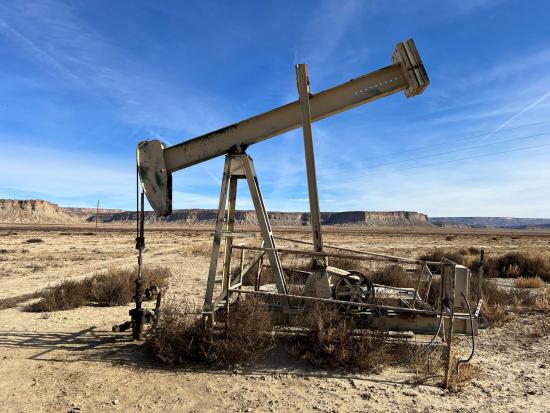
The U.S. Department of Energy is looking to use artificial intelligence technology to help speed the adoption of clean energy sources in the fight against climate change.
The agency is also researching potential benefits for electric grid stability, while studying the challenge of meeting new energy demand from AI data centers.
Click here to learn more about AI integration in the energy sector
(Photo courtesy of Nyttend.)
| |
|
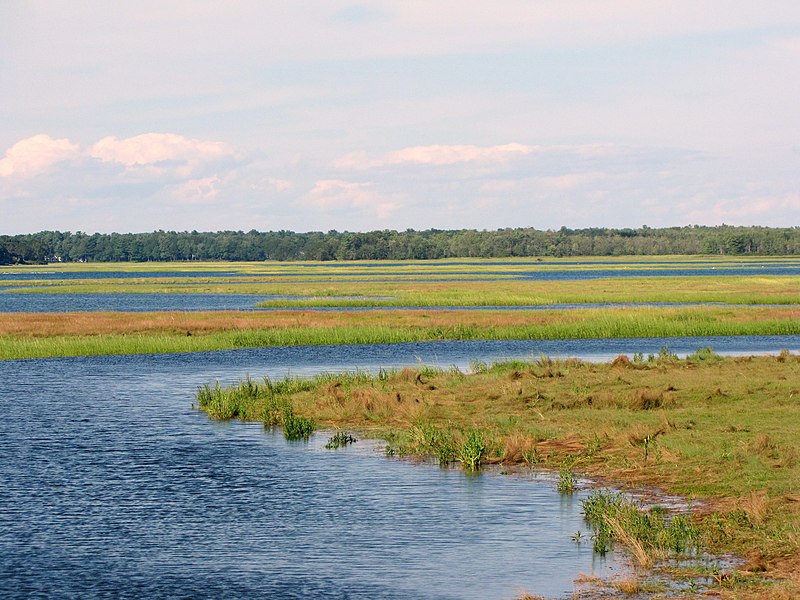
The National Oceanic and Atmospheric Administration will receive $123 million to support coastal habitat restoration projects throughout the United States. The funds come from the 2021 Infrastructure Investment and Jobs Act to create 30 coastal restoration projects that will help ecosystems thrive and that mitigate the effects of climate change.
With sea levels projected to rise in the coming decades, coastal wetlands are expected to play a pivotal role in limiting damage inland. Wetland environments slow down hurricane storm surges and act as a natural sponge to soak up incoming water that could otherwise exacerbate flooding. The investment in research and restoration of these environments is part of an ongoing effort to make America’s coastlines more resilient to future climate impacts.
Click here to learn more about NOAA’s coast habitat restoration initiatives
(Photo: Maine's Scarborough Marsh. Courtesy of AlanBuncher.)
| | |
|  |
|
|
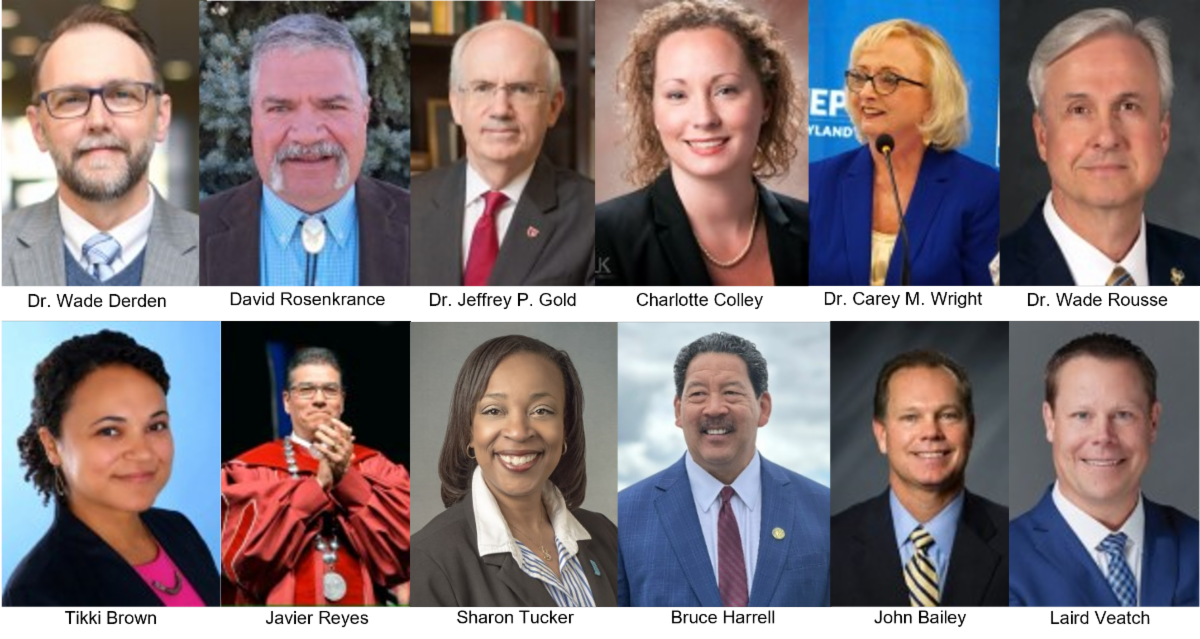
Arkansas – The National Park College (NPC) Board of Trustees unanimously selected Wade Derden, Ph.D., as its fifth president. Derden previously served as the college’s executive vice president for advancement and government relations. He will begin July 1, 2024.
Washington, D.C. - The Bureau of Land Management has appointed David Rosenkrance assistant director for the Energy, Minerals and Realty Management Program. Rosenkrance brings more than 30 years of experience as an engineer, natural resources manager and leader to the role. He currently serves as a senior adviser for the U.S. Department of Agriculture Animal and Plant Health Inspection Service.
Nebraska – Jeffrey Gold, M.D., has been confirmed by the University of Nebraska (UN) Board of Regents as the university’s ninth president. Dr. Gold is the current chancellor of the UN Medical Center. He has served as chancellor since 2014.
Ohio – The city of Troy has appointed Charlotte Colley assistant director of public service and safety. Colley previously was assistant city director with Troy. She began her role April 29, bringing more than 28 years of local government experience with her. Colley replaced Mark Wendling.
Maryland - The Maryland State Board of Education has selected Carey Wright, Ed.D., as state superintendent of schools. Her term will begin July 1. Dr. Wright has served as interim state superintendent of schools since Oct. 23, 2023. Dr. Wright brings decades of educational experience to the role.
Louisiana – Wade Rousse, Ph.D., has been appointed eighth president of McNeese State University, which is part of the University of Louisiana System. Dr. Rousse has worked at McNeese since 2019, most recently as the university’s executive vice president. He has also served as vice president of university advancement and as dean and professor in the College of Business.
Minnesota – Tikki Brown will be the first commissioner of the Department of Children, Youth and Families when it is officially established in July. Brown is currently assistant commissioner of children and family services with the Minnesota Department of Human Services.
Massachusetts – The University of Massachusetts at Amherst has officially inaugurated Javier Reyes as its 31st chancellor. He has previously served in higher education leadership positions at the University of Illinois Chicago, West Virginia University and the University of Arkansas.
Indiana – Sharon Tucker was officially sworn into office April 23 as mayor of Fort Wayne. Tucker previously served as a Fort Wayne City Council member. She is the first black person to serve the city in this capacity. She took over the role from Tom Henry following his death.
Washington, D.C. - Seattle Mayor Bruce Harrell will serve on the recently established Artificial Intelligence Safety and Security Board. The board is comprised of 22 representatives from a range of private sectors. He is also the chair of the Technology and Innovation Committee within the Conference of Mayors.
Mississippi – On April 29, NASA selected John Bailey to serve as director of the agency’s Stennis Space Center near Bay St. Louis, Mississippi. He began his tenure effective immediately. Bailey had been serving as acting director since January.
Missouri - University of Missouri officials have announced that Laird Veatch has been named as the next director of athletics for Mizzou, effective May 1, 2024. Veatch has served in the same role at the University of Memphis since October 2019. Veatch, a former football student-athlete at Kansas State University, is 25-year veteran of intercollegiate athletics with experience in the Big 12 and Southeastern Conference.
| | |
|
Connect with SPI
Check out our social media links!
| |
About Government Contracting Pipeline | |
|
Strategic Partnerships, Inc.
Publisher: Mary Scott Nabers
Editors: Adam Rollins
Dave Doolittle
www.spartnerships.com
| |
Government Contracting Pipeline, a publication of Strategic Partnerships, Inc., is a free, weekly newsletter detailing important happenings nationwide and the premier source for federal, state, and local government news and contracting opportunities. | |
Help us share this message.
To ensure delivery and proper formatting of the newsletter, be sure to add editor@spartnerships.com to your safe senders list.
Otherwise, the newsletter may be flagged as spam and automatically routed to your junk e-mail folder.
| | | | |