Volume 16, Issue 16 - Wednesday, April 17, 2024 | |
By Mary Scott Nabers, CEO of Strategic Partnerships, Inc. | |
|
If the U.S. government marketplace is the largest market in the world, surely one should expect it to be competitive and somewhat challenging. A company's size does not measure success with a good offering; it is almost always measured by understanding the basics — the culture, process and people.
Sooner or later, most companies realize that ignoring the multi-trillion government marketplace is not an option, and a decision must be made to enter it. I have often cautioned company executives to carefully consider what will be required. It is worth the effort, but it is impossible to be successful without knowing how to navigate. Most will understand this analogy: “If you don’t know how to swim, don’t jump into the ocean.” The same is true about entering the government marketplace.
Success is multifaceted, but the following advice covers important areas:
- Understand the culture! The government marketplace is unlike the commercial sector. It is extremely structured and process-oriented. The rules of engagement are different, and public officials expect quite a bit from private-sector executives and sales representatives. If an understanding and a knowledge base are lacking, that is evident to a public official very quickly.
- Government decision-makers are risk-averse. They operate with taxpayer funding, and the penalties for misuse or a misstep can be extreme. Because of that, they move slowly and carefully. They prefer to engage with people they know and trust, and most can spot inattention to detail, a lack of knowledge and promises that are questionable in a very short amount of time.
- Public officials are very busy. They continually juggle too many balls and have distractions and time-consuming challenges. Few people realize how many responsibilities most officials have daily. Because of this, all communication and every conversation with them should be brief and to the point. Sales executives must remember that public officials don’t have time for small talk and don’t appreciate being given a large media package promoting a company. They won’t read it because they simply don’t have time.
- Consultative sales conversations are not possible in the public sector. Officials expect visitors to have done enough homework to know the immediate needs and issues. They also expect a sales executive to know if their organization already has a similar solution or offering.
- Competition is exceptionally keen, so competitor intelligence is critical to success. It is imperative to know everything possible about other companies with similar offerings. What is their offering? What is it priced? What is the highest value proposition it offers? What contracts are already held by which competitors and are any of the contracts nearing an expiring date?
- After a sales presentation or just a conversation about an offering, public officials appreciate a one-pager summarizing the pertinent points discussed. That communication can be attached to an email, but it is important to remember that a follow-up effort should follow in a few days. It is never wise to believe that a public official will be the one to follow up after a conversation. That usually does not happen – at least not without a gentle reminder. The official often leaves a conversation and is immediately required to address another more pressing situation. Your conversation can be forgotten, no matter how interesting it may have been.
Click here for more.
| |
University of Michigan approves $250 million Center for Innovation | |
|
The University of Michigan (UM) will build a $250 million Center for Innovation (UMCI) in downtown Detroit to support education, workforce development, research and public-facing programs. The UM Board of Regents recently approved the design for the building. The university expects to open the facility’s doors by 2027.
The university will build the 200,000-square-foot structure on a 4-acre plot of land. The facility is the first of three built on-site. Developers will build the other two – an incubator space and a residential building – at a future date. The project officially broke ground in December 2023, but a construction contract has not been awarded.
The building will be six stories tall and include a basement. The facility will feature shelled space providing flexibility and opportunities for expansion in the future. The university will dedicate the lower levels of the building to public-facing programs and reserve the upper floors for multidisciplinary graduate research.
Aside from public programs, the first two floors will also feature a cafe and shared office space for the UM Detroit Center, Admissions Office and School of Environment and Sustainability Clinic. The building will feature a mezzanine and atrium. In addition, the UMCI will engage with the Detroit community by hosting kindergarten through 12th grade programs.
The UMCI will use a mixed-model approach to support masters’ degrees and workforce development programs centered around technology and innovation. The facility will help talent-focused community development, job creation and economic development.
The state of Michigan has provided $100 million to support the project. In addition, UM received a private $100 million gift and will raise the remaining $50 million from donors.
(Photo courtesy of the University of Michigan.)
| |
New York approves $142 million for municipal water projects | |
|
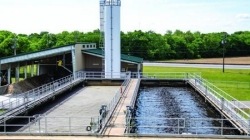
The state of New York will allocate $142 million to local water infrastructure projects. The state’s Environmental Facilities Corporation (EFC), which provides financial support for critical water quality infrastructure projects, approved the grants and loans to help municipalities reduce environmental and public health risks.
The town of Hempstead will use seven Water Infrastructure Improvement (WIIA) grants totaling $51.2 million to install equipment designed to treat emerging contaminants for two wells and a well field. The funds will support efforts to install additional treatment systems to remove harmful chemicals, quench residual hydrogen peroxide and extricate oxidation byproducts.
The Water Authority of Western Nassau County will receive four WIIA grants totaling nearly $31.5 million. The funds will enable the authority to install an AOP treatment system and a granular activated carbon filtration system. These improvements will allow the authority to remove harmful chemicals from four wells.
The village of Alexandria Bay will use $13.1 million in grants and financing to replace watermains, replace and rehabilitate water storage tanks. In addition, the village will replace water meters, the existing filtration system and upgrade the water plant.
The village of Perry will receive $7.2 million in grants and loans to upgrade the water treatment plant. Plans include upgrading the plants clarifier, raw water intake, low lift pump station and clear well storage tank. In addition, the village will install a mixing system, chemical feed system and elevated water storage tank.
(Photo courtesy of Ivan Bandura on Unsplash.)
| |
|
The U.S. The Department of Commerce is looking to make a $6.4 billion investment in partnership with Samsung to support semiconductor manufacturing in Central Texas.
The funding from the 2022 CHIPS and Science Act is designed to help cement the United States’ role as a leader in manufacturing semiconductors. At this point, the $6.4 billion award is not yet finalized. Samsung and the U.S. Department of Commerce have signed a non-binding preliminary memorandum of terms.
Click here to learn more about Samsung’s plans in Texas
(Photo courtesy of Samsung)
| |
Phoenix-area voters to decide on $127 million school bond | |
|
Residents in the Dysart Unified School District (DUSD) in Arizona will vote on a $127 million bond to renovate facilities, improve safety and security districtwide, build an elementary school and replace buses.
If approved, the bond would provide $48 million to renovate school buildings across the Phoenix-area district. Plans include installing HVAC systems, roofing, flooring, building weatherization, freezers and walk-ins. In addition, the district would renovate the Dysart High School auditorium and the community restrooms at high school athletics facilities.
DUSD would allocate $35 million to build an elementary school in the Northwest Asante area. The school would serve students from kindergarten to eighth grade. The district would use an additional $10 million to acquire land for a future high school in the same area.
The district would use $17 million to improve the safety and security for all facilities districtwide. DUSD would integrate building access and safety-related communication systems, install a standardized lockdown system, repair and replace fences and gates and install automatic gate openers. In addition, the district would upgrade and replace the district’s tactical floor plan diagramming and fire panels.
The remaining $17 million would enable DUSD to replace 78 buses. The district would replace 46 regular yellow buses and 32 special education buses, all of which are more than 16 years old.
(Photo courtesy of MChe Lee on Unsplash)
| |
Memphis receives EPA, state funds to improve water infrastructure | |
|
The city of Memphis will use a combined $52.1 million in financing from state and federal sources to modernize stormwater systems and improve water infrastructure.
The Tennessee Department of Environment and Conservation (TDEC) awarded $42.1 million through the state’s Clean Water State Revolving Fund Loan Program (CWSRF). The Environmental Protection Agency administered the remaining $10 million through the Water Infrastructure Finance and Innovation Act (WIFIA).
Memphis will use the CWSRF loan to address infiltration issues, correct inflow, reinstate laterals and rehabilitate manholes. In addition, the city received $2.5 million in principle forgiveness. City officials will repay the remaining loan amount over the next 20 years.
The WIFIA funds are the first loan in the EPA’s $50 million agreement to advance Memphis’ $103 million Stormwater Upgrades Project. Plans include modernizing portions of the city’s aging stormwater management system to improve resilience, protect property and reduce economic impact due to inclement weather.
The funds will allow Memphis to complete 13 projects in total. The city will rehabilitate pipes, culverts, drains, drainage ditches and detention basins. The projects will develop innovative and sustainable solutions to reduce flooding and improve water quality in the city’s underserved areas.
The CWSRF provides low-interest loans to help municipalities, utility districts and stormwater authorities plan, design and build wastewater and stormwater systems. The program has provided more than $2 billion since 1987. Similarly, WIFIA supports regional and national projects that prevent or mitigate drought, enhance water facility energy efficiency and desalinate or recycle water. The program has announced approximately $20 billion in loans since 2018.
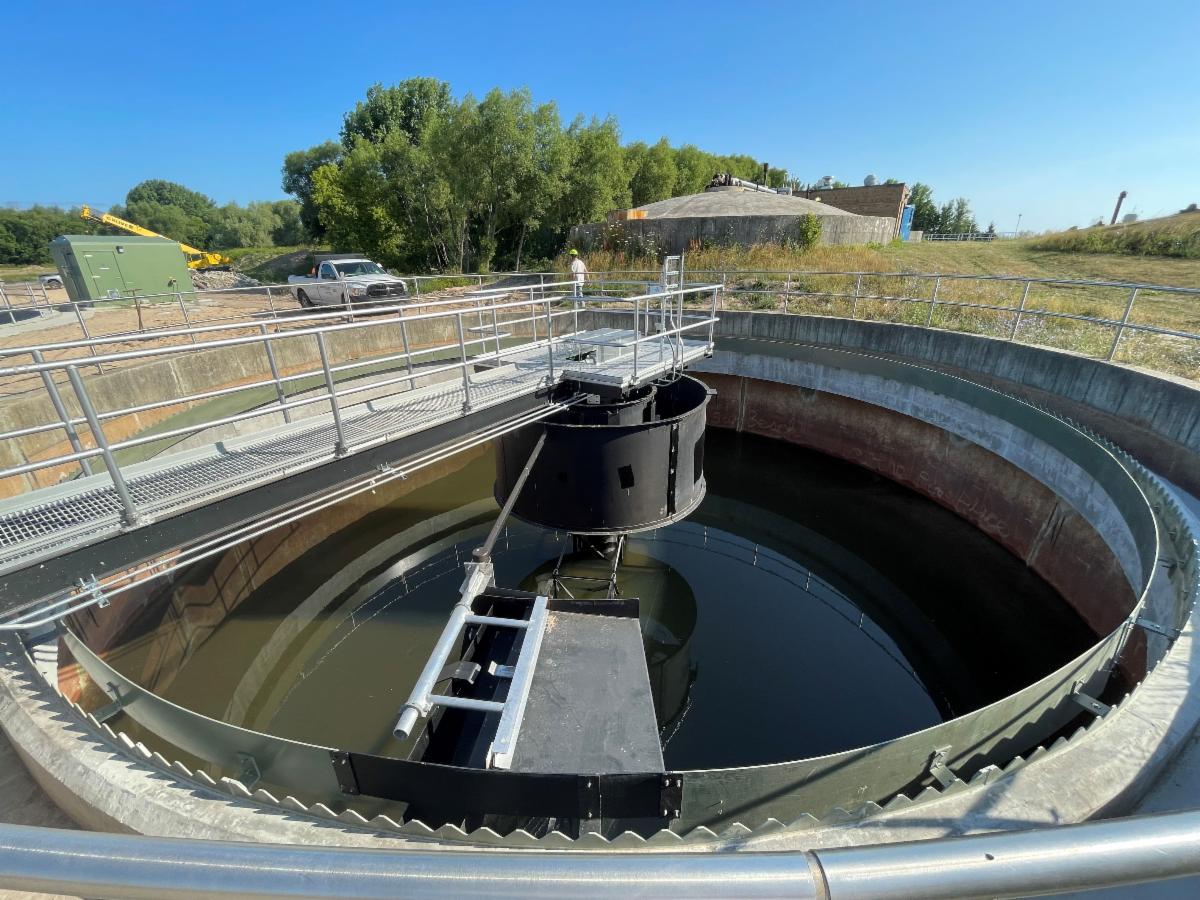
(Photo courtesy of TDEC.)
| |
Oklahoma district to use $47 million to build facilities, renovate schools | |
|
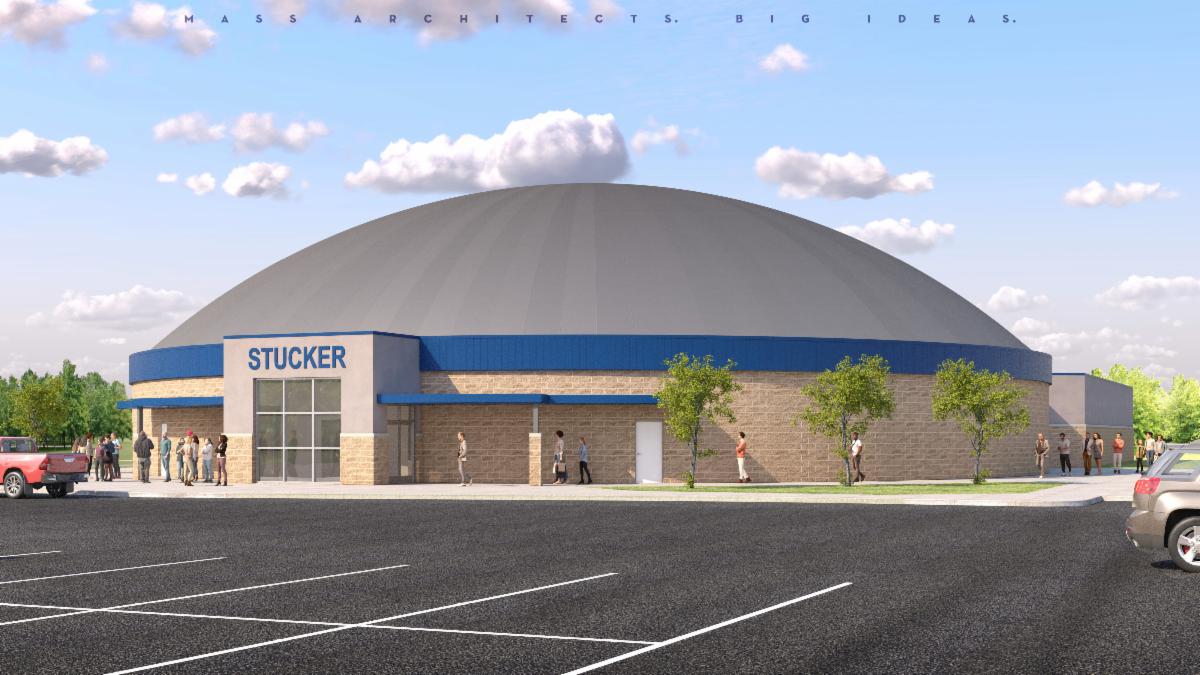
Shawnee Public Schools (SPS) will use $47.1 million to build sports facilities, perform maintenance, replace driveways and repurpose allocated bond funds to improve and renovate five elementary schools. Voters approved the district’s bond package April 2. Construction could begin as soon as summer 2024.
Proposition 1 will allocate $39 million to rebuild the Stucker Complex after the original facility was destroyed by a tornado in 2023. SPS will build the replacement on the original complex’s site. The complex will feature greater capacity for the school’s wrestling room and high school safe room.
The district will build a facility to provide space and opportunity for the district’s agriculture program. In addition, SPS will build a tennis facility and a multi-purpose building next to the Shawnee Middle School’s field house. Plans also include replacing the middle school’s driveway.
The proposition provides funds to alleviate operational expenses with ongoing maintenance and new technology. The district will use the funds to replace HVAC units districtwide, buy band uniforms and add marching band storage space next to the Jim Thorpe Stadium.
Proposition 2 will repurpose $8.1 million from the 2016 bond election to improve and renovate five elementary schools. The district will use the money to replace classroom and hallway flooring, remodel bathrooms and windows and refurbish school exteriors. SPS will also update school intercoms, build driveways at two schools and install a security vestibule at the Shawnee Early Childhood Center.
(Photo courtesy of Shawnee Public Schools.)
| |
Florida county moves memorial park into design phase | |
|
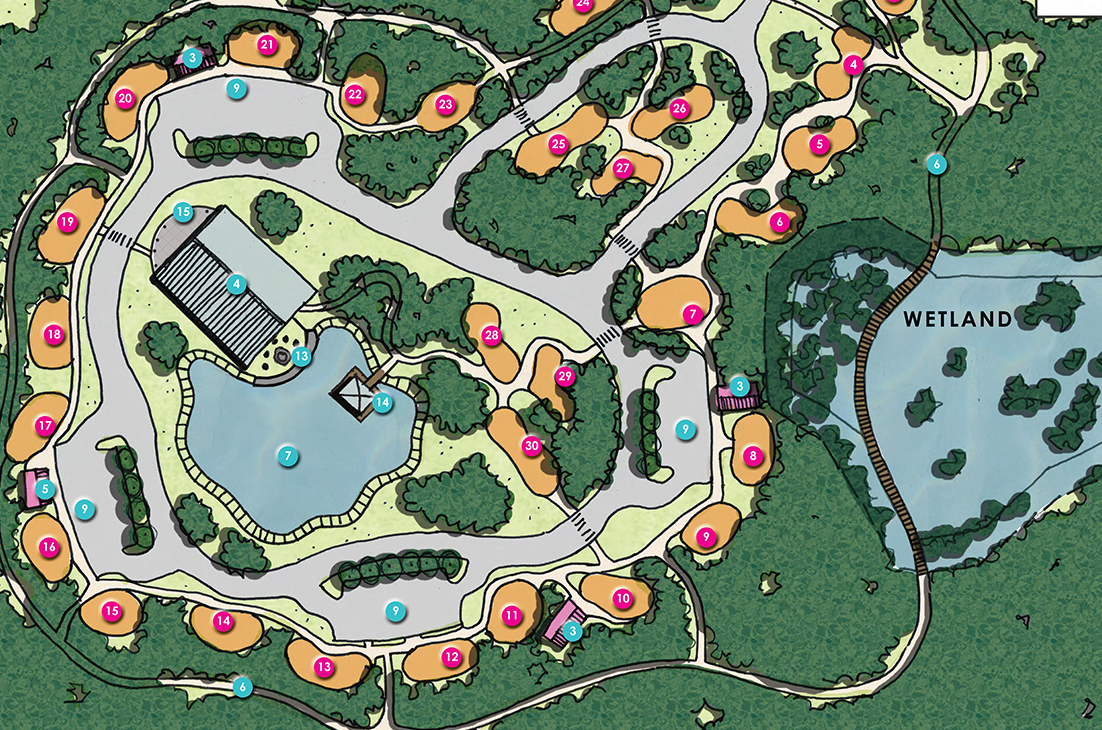
Manatee County, Florida, will build a $30 million Veteran’s Memorial Park that will include memorials, a community center and walking trails. The Manatee Board of County Commissioners (BOCC) recently approved the project to move into design phase. Commissioners have not finalized when construction will begin.
The county will build the park on a 24-acre plot neighboring local wetlands in the city of Palmetto. The park will include 30 memorials throughout the complex commemorating military conflicts, war heroes, military divisions and notable organizations. Plans include walking paths connecting all memorials and a wetlands boardwalk.
The county will build a 12,000-square-foot Veteran’s Center and an entry flag plaza near the park’s front entrance. In addition, the county will build a 5,600-square-foot pavilion on the shore of the park’s stormwater pond. The pavilion will provide a rest area along with a fire pit and a patio dedicated to service flags.
Plans include building a gazebo over the surface of the pond. The park will feature three 700-square-foot picnic shelters with seating, a grass-lot flexible event space and a restroom building. The county will build a paved parking lot, overflow parking on a grass lot.
(Photo courtesy of Manatee County.)
|  | |
Portland, Maine, neighborhood project will reconnect communities | |
|
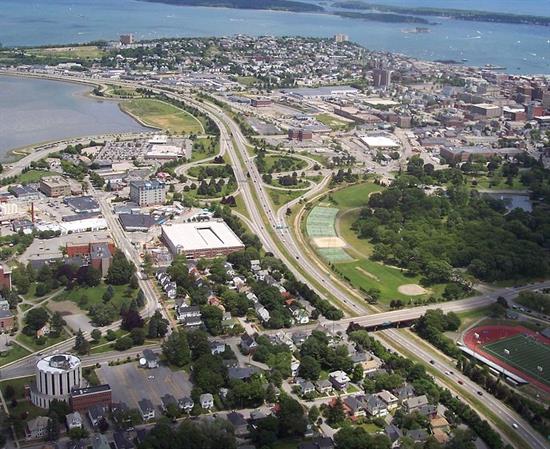
Portland, Maine, will use $28 million to build multimodal connections to reconnect the Libbytown neighborhood with the city, improve pedestrian and bicyclist accessibility and enhance safety for motorists and public transit users. Interstate 295 was built in the 1960s, bisecting the neighborhood and cutting it off from Portland and surrounding communities.
The U.S. Department of Transportation (USDOT) recently provided $22.4 million through the Neighborhood Access and Equity (NAE) program to kickstart the Historic Libbytown Project. Construction will begin in November 2026.
The NAE program is designed to improve walkability, safety and affordable transportation access in disenfranchised communities. The Libbytown project is one of 132 that will receive a portion of the $3.3 billion USDOT awarded for Fiscal Year 2023.
The city will build multimodal infrastructure connections to provide Libbytown residents with better access to key amenities such as hospitals, housing, recreation and employment centers. The funds will allow the city to build pedestrian and bicyclist infrastructure that increases safety, visibility and mobility.
Plans include reconstructing Congress Street and Park Avenue beneath I-295. The city will build a roundabout featuring sidewalks and bike lanes to slow traffic. The project’s scope includes high-visibility crosswalks for bikes and pedestrians, additional sidewalks and protected bicycle lanes. Plans include redesigning connections between I-295 ramps and streets to improve safety and increasing streetside greenspace.
Park Avenue and Congress Street are currently one-way flow roads. The city will convert them into two-way streets and install traffic-calming features, including center turn lanes. The city will boost public transit accessibility and safety by building modern transit stops with shelters, benches, bike racks and electronic signage.
Plans include increasing distance between pedestrian areas and active traffic lanes by installing sidewalks separated from the street by a tree-lined esplanade. The city will also create bidirectional bike paths separated by esplanades, as well as separate bike and pedestrian crosswalks. Finally, the city will replace railroad crossing signage at an at-grade crossing.
(Photo courtesy of Chellie Pingree)
| |
St. Louis suburb invests $22.1 million in parks, fields, recreation | |
|
The city of Webster Groves, Missouri, will use $22.1 million to create, improve and repair amenities for the city’s parks, recreation facilities and athletics fields. The city received approval for the projects after residents passed Proposition W on April 2. City officials estimate the projects will be completed over the next five years.
The city will dedicate the largest portion of the funds – totaling $12 million – to replace the existing aquatic center. The 29-year-old aquatic center has needed continual repair and maintenance over the past decade for leaks, broken concrete, slides and play features and replacement shade structures. The city will build a water park on the site of the current aquatic center.
Webster Groves will use the rest of the funds for a variety of projects, including building an outdoor performance park. Plans include replacing and upgrading the city’s skate park, creating a park along Great Rivers Greenway and installing a splash pad and water play features in Ivory Crockett Park.
The ice arena project will use nearly $2 million to improve the facility. The city will reconstruct the arena’s concrete slab, build a cooling tower, replace the bleachers and install HVAC units. In addition, the city will repair tennis courts in all city parks and install ADA playground features.
The funds will allow the city to build an upgraded athletic field and add additional lighting to existing fields. The city will also install solar panels in all parks and recreation facilities. The city will install walking paths in the Southwest, Larson and Memorial parks. Plans also include replacing and improving park building roofs, restrooms and associated facilities.
(Photo courtesy of Webster Groves, Missouri)
| |
Pennsylvania accepting unsolicited transportation P3 proposals | |
|
The Pennsylvania Department of Transportation Office (PennDOT) of Public-Private Partnerships (P3) is accepting unsolicited proposals for transportation projects from the private sector through April 30.
Private companies are invited to offer ways to deliver projects that would improve roads, bridges, rail, aviation and ports. Proposals can also include more efficient ways to manage existing transportation-related services and programs, PennDOT said.
Click here for more details
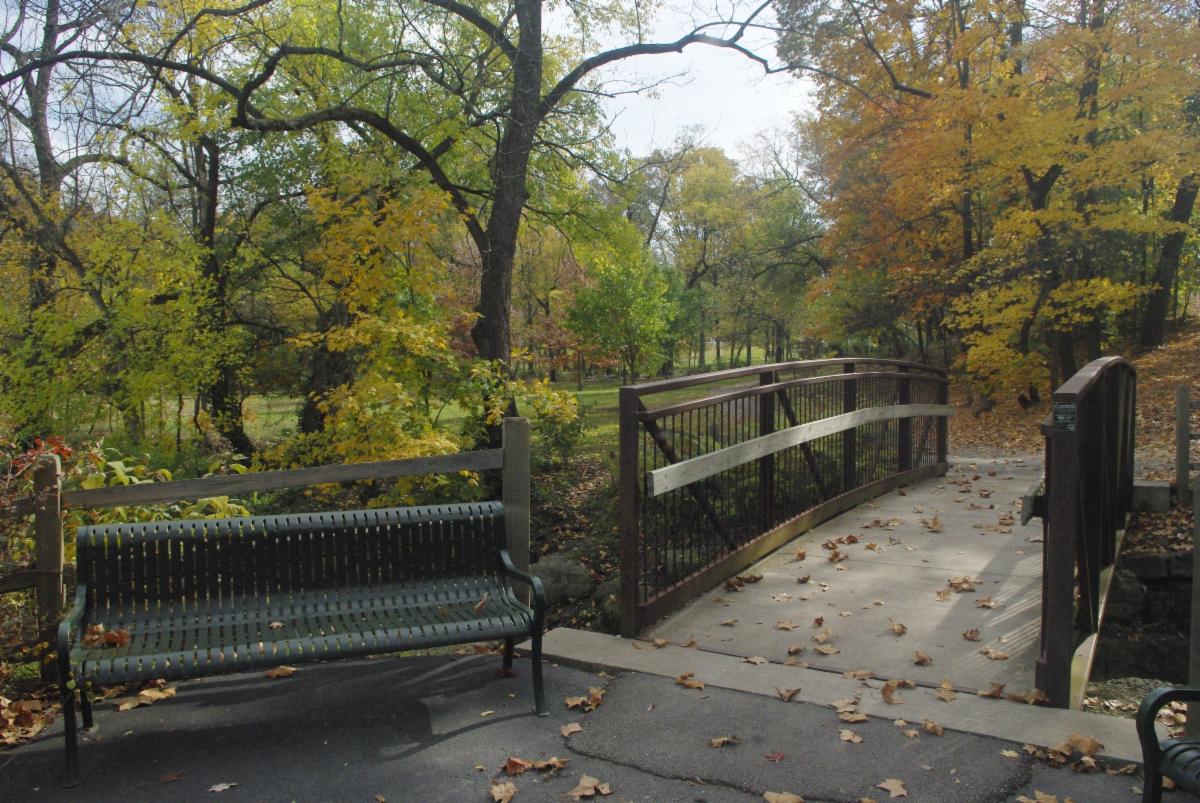
(Photo courtesy of PennDOT)
| |
Michigan allocates $91 million for water infrastructure upgrades | |
|
As part of its efforts to upgrade water infrastructure, ensure healthy drinking water and protect the environment, officials in Michigan have awarded $91.4 million in grants to communities statewide.
The grants are administered by the Michigan Clean Water Plan, which has awarded more than $4 billion since January 2019 to upgrade drinking water, stormwater and wastewater facilities across the state.
Click here to learn more about Michigan’s upcoming projects
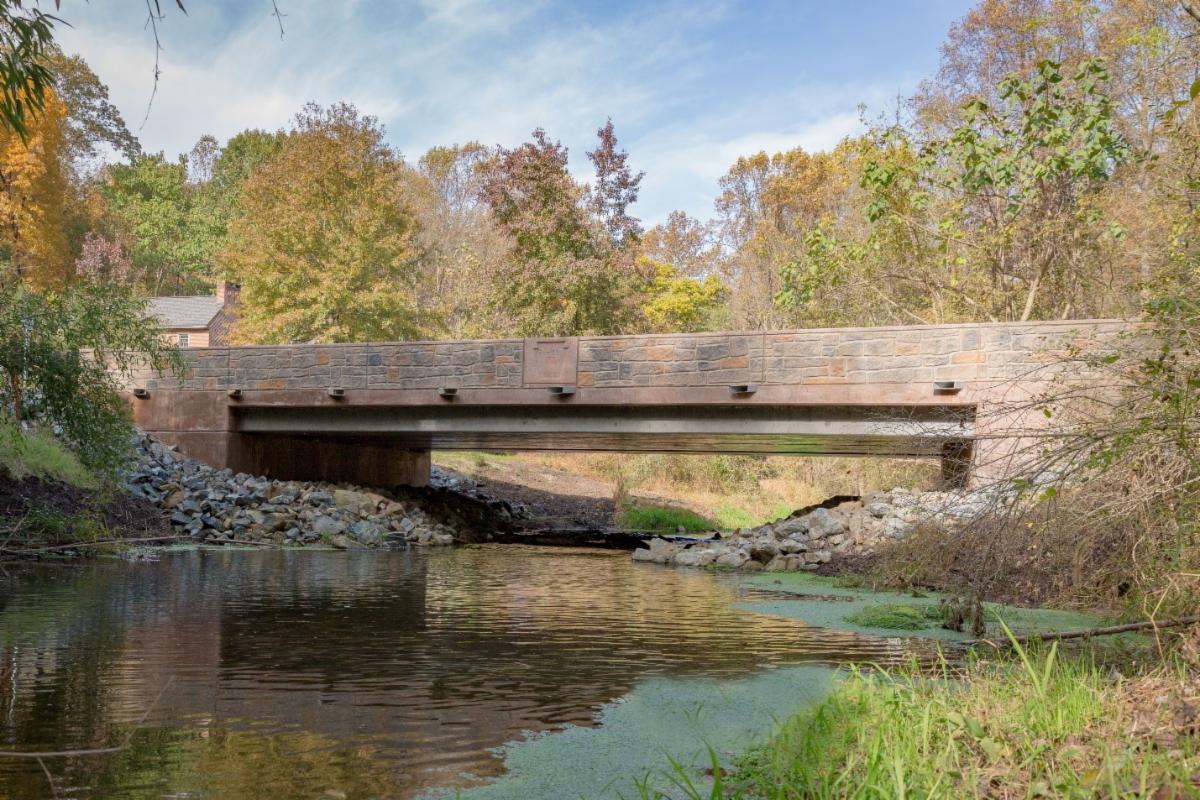
(Photo courtesy of the state of Michigan)
| |
Florida expressway will allow EVs to charge while driving | |
|
Florida has started construction on a toll road that will allow some electric vehicles to power up while driving. The project undertaken by the Central Florida Expressway Authority, known also as CFX, is one of the first in the nation to incorporate a system that utilizes electromagnetic induction that charges EVs while travelling at highway speeds.
The $546 million Lake/Orange Expressway, also known as State Road 516, is a 4.4 mile expressway that will link Lake and Orange counties west of Orlando. The wireless charging system will be installed on a three-quarter mile stretch of one of the vehicle lanes. The expressway is expected to open in 2027.
Click here for more information about Florida’s EV-charging roadway
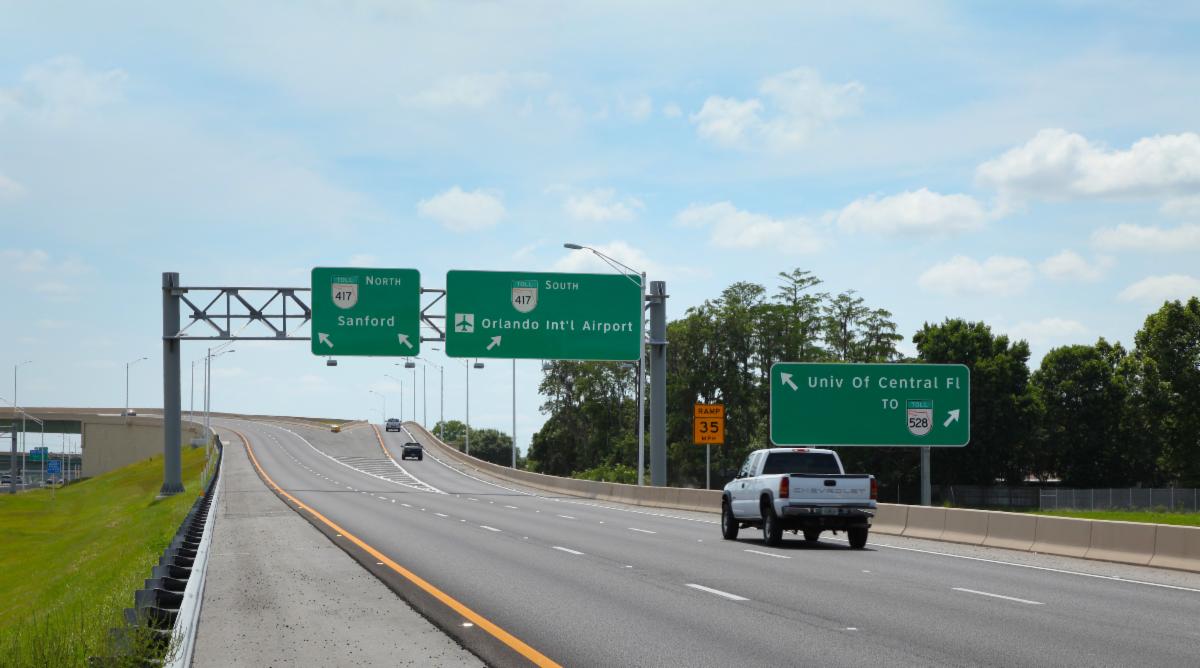
(Photo courtesy of the Central Florida Expressway Authority)
| |
|
Florida – Panama City Beach residents have elected Stuart Tettemer as mayor. Tettemer is a graduate of Cornell University, where he earned a Master’s of Engineering degree in Computer Science.
Louisiana - Justin Cayless has been appointed chief transit officer for the New Orleans Regional Transit Authority (RTA). Cayless previously served as the New Orleans RTA director of operations and then senior director of operations from 2021-2022. He most recently served as the COO overseeing HNS Management Inc. throughout Hartford, New Haven and Stamford, Connecticut.
Louisiana - The Delta Regional Authority (DRA) has named Joshua McNemar as Chief Administrative Officer, effective April 8. A native of Vidalia, Louisiana, McNemar previously worked as Chief of Staff and Operations for the Louisiana Housing Corporation.
Ohio - The city of Hilliard has hired Kyle Kridler as Assistant City Manager to oversee the Operations and Recreation & Parks departments. Kridler has served as Assistant City Manager in Delaware, Ohio, since 2019, will join the City of Hilliard’s leadership team in his new role on April 29.
Arkansas - The Rogers Board of Education has approved Paul Wilson as athletic director for Rogers Public Schools. Wilson has been athletic director in Gulf Shores, Alabama.
New York - Sean Mahar has been named interim commissioner of the Department of Environmental Conservation. Mahar, who had been the department’s executive deputy commissioner, took over from Basil Seggos, who announced his retirement in February. Mahar has worked in several positions at the DEC, including as assistant commissioner of public affairs and chief of staff. He is a graduate of Siena College in Loudonville.
Pennsylvania - Michael R. Resnick has been named the commissioner of the Philadelphia Department of Prisons. Resnick served as the acting Philadelphia Prisons Commissioner in 2016 after his role as the city's Director of Public Safety for five years.
Florida - Gov. Ron DeSantis chose Commissioner James Satcher to lead Manatee County’s Supervisor of Elections office, which has been vacant since the beginning of March. Satcher fills the position that former Supervisor of Elections Michael Bennett held for over a decade.
Connecticut – New Haven’s mayor Dorinda Borer has appointed Michael Gormany as the city’s new finance director. Since 2004, Gormany has served the city of New Haven in various financial roles, including accounts payable auditor, policy analyst and controller. In his most recent role, since 2017, he has served as the Elm City’s budget director.
California - Port of Long Beach Director of Survey Kimberley Holtz has been appointed to the Hydrographic Services Review Panel, a federal advisory committee for the National Oceanic and Atmospheric Administration. The panel advises NOAA on the agency’s underwater surveying and charting programs as well as the nation’s navigational safety needs.
Florida – The Destin City Council has appointed Louis Zunguze as City Manager. Zunguze has been serving as the interim city manager since January and previously held the position of Community Development Director for the city.
North Carolina - Guilford County named Natalie Craver as Deputy Director of the Department of Health and Human Services. She most recently served as the Deputy Director for the Office of Thriving Families at the District of Columbia Child and Family Services Agency (CFSA).
| | |
|
Connect with SPI
Check out our social media links!
| |
About Government Contracting Pipeline | |
|
Strategic Partnerships, Inc.
Publisher: Mary Scott Nabers
Editors: Adam Rollins
Dave Doolittle
www.spartnerships.com
| |
Government Contracting Pipeline, a publication of Strategic Partnerships, Inc., is a free, weekly newsletter detailing important happenings nationwide and the premier source for federal, state, and local government news and contracting opportunities. | |
Help us share this message.
To ensure delivery and proper formatting of the newsletter, be sure to add editor@spartnerships.com to your safe senders list.
Otherwise, the newsletter may be flagged as spam and automatically routed to your junk e-mail folder.
| | | | |