Volume 16, Issue 14 - Wednesday, April 3, 2024 | |
Federal funding supports historical preservation projects nationwide | |
By Mary Scott Nabers, CEO of Strategic Partnerships, Inc. | |
|
Historical preservation projects are being launched throughout America for two primary reasons: funding is abundantly available, and public assets are treasures that communities like to rescue. The projects create jobs, boost local economies, raise property values and please citizens. Dozens of federal programs provide ample funding support.
The National Park Service, which oversees much of the available funding, estimates that the Historic Preservation Tax Incentives Program spurred $34 billion of investments in historic preservation projects over the past several years — an average of $8.5 billion per year.
The old passenger rail depot in Fresno, California, will soon be renovated and repurposed at a cost of $33 million. When completed, the facility will provide a gathering place for public events. The 130-year-old building is a nationally registered historic site that will be enhanced by a park and plaza with green space and shade, along with transit and electric vehicle charging stations. Currently in the design stage, the project is expected to be ready for launch by 2025.
The Noyes Cultural Arts Center in Evanston, Illinois, was first built as an elementary school in 1892, and city leaders plan to overhaul the building’s mechanical and electrical systems. Plans include eliminating the use of natural gas by replacing the system with a geothermal unit at a cost of approximately $29 million. This project is in the pre-design phase, and work is expected to begin in 2025. It has not been decided whether to stagger the work phases or launch a larger project in which all phases are done simultaneously. The first effort will include installing a geothermal field under Tallmadge Park. Phase 2 will cover the renovation of the building’s basement and the installation of a dedicated outdoor air system for temperature control. Phases 3 and 4 will renovate the first and second floors, respectively. A final fifth phase will remove the old electric system and install a photovoltaic solar panel array.
The State of Washington’s old Capitol Building in Olympia, initially built in 1892, will undergo a $22 million comprehensive roof replacement. The replacement project will prevent future interior and structural damage. The work will include rigid insulation, self-adhered roofing membrane and standing seam roofing in-kind. The low-slope PVC roofing will also be replaced, and fall protections and arrest anchors will be upgraded to ensure secure access to steep-sloped roofs. Roof leaks will be mitigated to prevent future damage to the building, and a fall restraint and fall arrest system will be installed, informing the facility administrators of any ongoing maintenance needs. The project's design phase began in 2023 and will be ongoing through 2025. Construction is expected to start immediately after the design phase, and a project completion date is set for 2027.
Click here for more.
| |
|
Most states and territories have taken the necessary steps to receive federal funds designed to provide high-speed internet access nationwide. The funds – more than $42.45 billion – come from the Broadband, Equity, Access and Deployment (BEAD) program.
States and territories are required to create an initial proposal for how each will use their share of the funds. The initial proposal is broken down into two volumes, both of which must receive approval from the National Telecommunications and Information Administration (NTIA) before eligible entities can begin their final proposal.
Initial proposals identify areas that most need affordable broadband and detail a five-year plan for use of the funds. The NTIA will distribute funds, which come from the Bipartisan Infrastructure Law (BIL).
As of last month, all states have submitted both volumes for approval, and some are already working on the challenge process, which allows governments, nonprofits and service providers to challenge the eligibility of BEAD funding candidates. According to the BEAD progress tracker, 32 eligible entities are waiting for volume II approval, and 23 eligible entities are waiting for both volume I and II approval.
Louisiana has been a leader in the process, becoming the first state to receive approval on their Internet for All Plan and start the timer on their one-year deadline to develop a final proposal that will show how they awarded funds to sub-projects.
“As of today, the state of Louisiana is on the shot clock to allocate our funding to all of the different eligible entities over the next eight months or so,” Thomas Tyler, the deputy director of ConnectLA, said on “The Connection: Partnering Private and Public Entities,” a companion podcast of Government Market News. “We are quickly moving into the preliminary start of our grant round.”
To hear more about Louisiana’s approach to ensuring broadband access and allocating federal grants, listen to Episode 7 of The Connection.
(Photo courtesy of Kabiur Rahman Riyad on Unsplash.)
| |
SANDAG’s $1.3 billion FY 2025 draft budget covers more than 200 projects | |
|
The $1.3 billion San Diego Association of Governments (SANDAG) draft budget for Fiscal Year 2025 includes 219 projects and almost $240 million to improve streets, roads and transit operations. The SANDAG board of directors will meet May 10 to approve the final FY 2025 budget. If approved, the budget will take effect July 1, 2024.
The draft budget emphasizes key projects and programs that will benefit the region:
The Airport Transit Connection will connect the San Diego International Airport to SANDAG's regional transit system. SANDAG will integrate the connection with travel options such as regional rail, trolley, rapid and local bus services, shuttles and biking and walking areas. The project emphasizes convenience and reducing traffic without relying on cars.
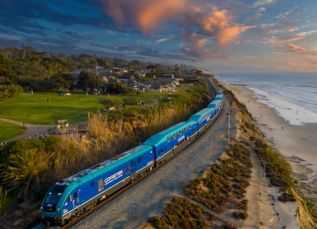
The Los Angeles-San Diego-San Luis Obispo (LOSSAN) Corridor is a 351-mile rail line moving passengers, freight and military along one of the busiest intercity rail corridors in the nation. SANDAG is making short- and long-term improvements to protect the rail line from landslides, erosion and seismic activity. This includes stabilizing the Del Mar Bluffs and realigning the LOSSAN Corridor. Plans include moving the tracks away from the bluffs by 2035.
The Otay Mesa East Port of Entry (OME POE) is an upcoming project to enhance trade and commerce between California and Mexico. SANDAG, in collaboration with the California Department of Transportation (Caltrans), will improve regional mobility, air quality and border crossing wait times. Plans include building a four-lane toll road along State Route 11 connecting OME POE to a commercial vehicle enforcement facility.
SANDAG will make improvements to the Blue Line Trolley, speeding up trip times and increasing access for riders. Plans include adding additional rapid transit options between South County and downtown San Diego, upgrading the San Ysidro Transit Center’s stop and deploying more rapid buses.
Rapid transit plans also include building the high-speed, high-capacity Purple Line. The line will connect some of the region’s most populated areas with major destinations for jobs, health care, education and more. SANDAG is working on two studies to determine the best way to build the line.
SANDAG represents the federal, state and local interests for 18 cities, 17 Tribal governments and San Diego County. This includes serving as the San Diego region’s Metropolitan Planning Organization (MPO), Regional Transportation Planning and Fund Allocation Agency and the Regional Consolidated Agency among other designations.
(Photo: The LOSSAN Corridor. Courtesy of SANDAG.)
| |
UDOT to build underpasses that will connect underserved neighborhoods with critical amenities | |
|
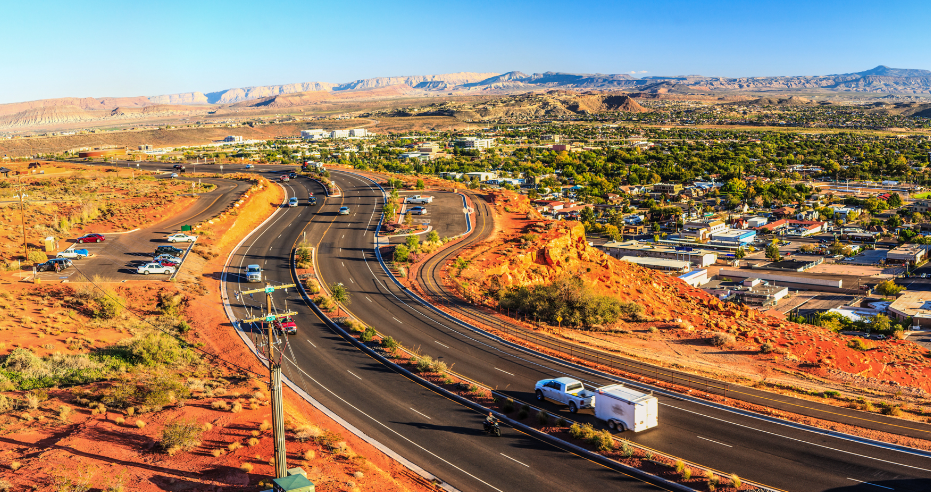
The Utah Department of Transportation (UDOT) will use $194.7 million to build two underpass crossings across Interstate 15 in the city of St. George. The crossings will provide low-income, disadvantaged communities with safe access to parks, schools, hospitals and more. The project will increase connectivity, decrease greenhouse gas emissions and enhance safety for local neighborhoods.
The U.S. Department of Transportation (USDOT) recently delivered $87.6 million to UDOT to support the 400 East and 900 South Interstate Crossings Project. The funds come from the Neighborhood Access and Equity (NAE) grant program. UDOT has not released construction start dates.
The NAE program is designed to improve walkability, safety and affordable transportation access in disenfranchised communities. The 400 East and 900 South Interstate Crossings Project is one of 132 projects that will receive a portion of the $3.3 billion USDOT awarded for Fiscal Year 2023.
The underpasses will provide pedestrians and cyclists easier access to social and cultural amenities. The current crossing options have annual average daily traffic (AADT) counts above 25,000 and have no bike infrastructure. The project will provide improved multimodal travel connections for bikes, pedestrians and motor vehicles.
The project will coincide with an I-15 widening project that includes building additional lanes. As part of the project, UDOT will raise the highway to accommodate the underpasses. The city of St. George is located 120 miles northeast of Las Vegas.
(Photo courtesy of Murray Foubister.)
| |
Ohio school district to build high school, improve existing campuses | |
|
The Kings Local School District (KLSD) in Kings Mill, Ohio, will use $142 million to build a high school, expand an intermediate school and improve campus structures. The district is currently overcrowded and must repurpose facilities and temporary structures to accommodate a growing student body. Construction is expected to begin in early 2025.
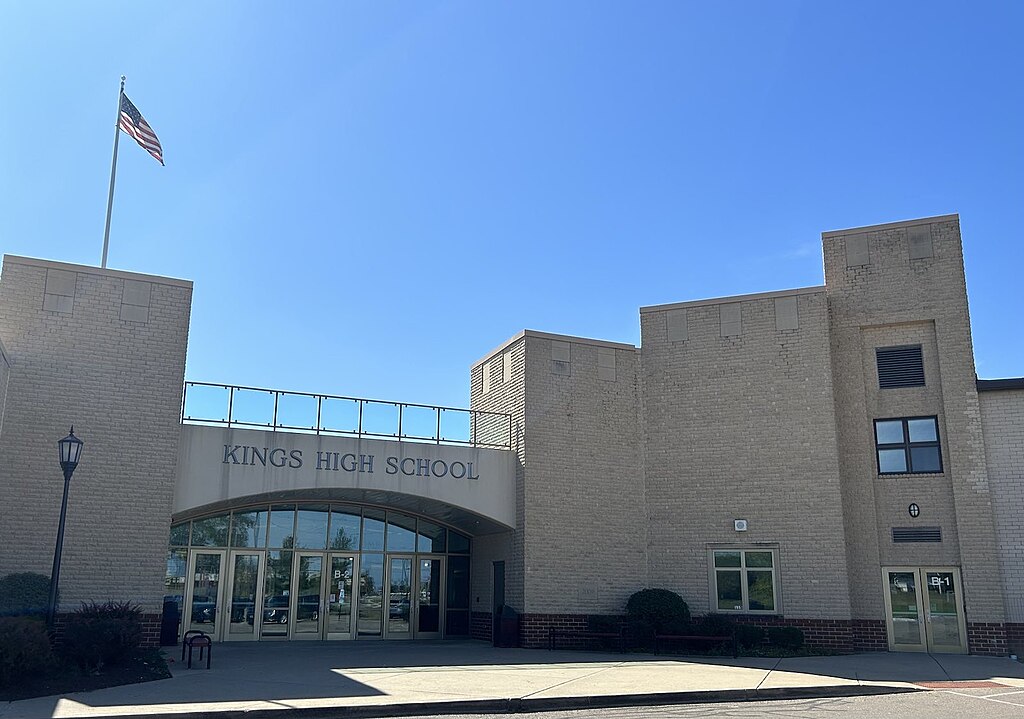
The district will use a majority of the bond to build Kings High School. The campus will provide a modern learning environment serving ninth- through 12th-grade students. The school will incorporate cutting-edge amenities designed to maximize academic, artistic and athletic potential.
Plans for the high school include building academic spaces designed to support critical life skills, media rooms and a large dining space. KLSD will also install modern athletics spaces, including a competition gym, auxiliary physical education spaces and locker rooms. In addition, the district will convert the current high school building into a middle school serving grades six through eight.
KLSD will expand Columbia Intermediate School to serve fourth- through fifth-grade students. The district's remaining three elementary schools will become kindergarten through third-grade campuses, removing a grade level from each building. Plans also include right-sizing and improving the elementary buildings.
(Photo courtesy of AviationEnzo.)
| |
Arkansas city building community center, improving sports complex, parks | |
|
The city of Searcy, Arkansas, will use $93 million to expand and improve community amenities, athletics facilities and parks. Residents approved the My Searcy Master Plan on March 5 to support a community center, outdoor water park, bike trails and improvements to city parks and a sports complex.
The city will use $51 million to build the community center on a 125-acre site. The center will feature an indoor walking trail, climbing wall, exercise spaces, basketball, pickleball and volleyball courts. The city will also build community meeting rooms for maker spaces, cooking classes, robotics and more. Plans also include a senior center, community cafe, an outdoor amphitheater and trailers.
A $19 million sports complex will include five baseball fields with turf infields. The city will improve the existing baseball and softball complex and fix drainage issues at the existing soccer complex. The city will allocate dedicated space for a sports organization, an inclusive playground and a veteran’s memorial.
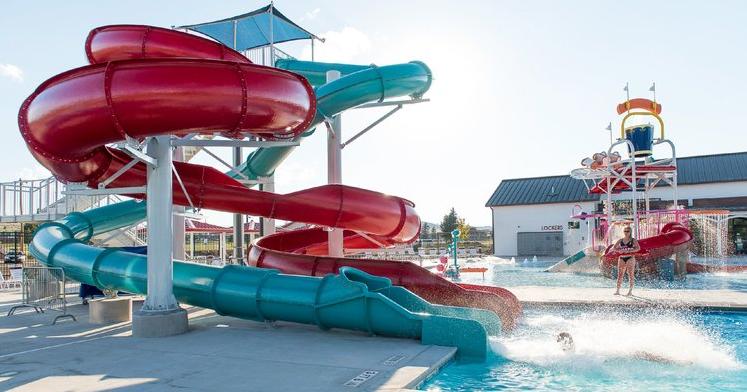
The project will include $10 million for an outdoor water park next to the existing indoor swim center. The water park will feature a zero-entry pool, a shallow-entry play pool, tower slides, a lazy river and diving boards. In addition, the city will use $5 million to install paved bike trails and underpasses that will connect parks and the community center.
The city will leverage $5 million to improve Riverside Park with 10 miles of single-track mountain bike trails and a kids pump track. Plans include a park entrance connected to Highway 13, parking, restrooms, pavilions, picnic areas, lighting and improved safety features. Finally, the city will spend $3 million to add a playground, splash pad and food truck court to Berryhill Park.
(Photo courtesy of the city of Searcy.)
| |
Tribal communities receive $72 million to build clean energy infrastructure | |
|
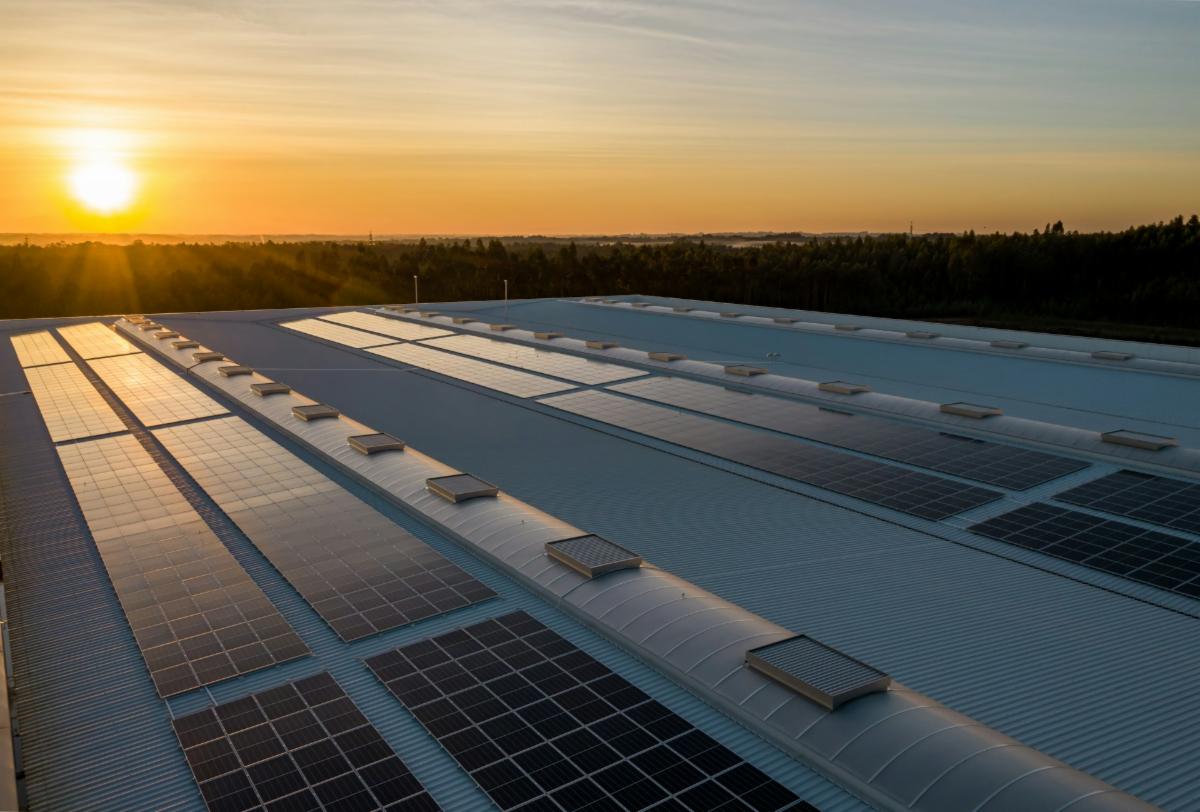
The Department of the Interior (DOI) will deliver $72 million to connect 21 Tribal communities with zero-emissions electricity.
The funding comes from the Office of Indian Affairs’ (OIA) Tribal Electrification Program’s (TEP) as part of a first round of awards investing in clean energy sources and achieving a carbon pollution-free electricity sector by 2035. The DOI expects to announce the second round of funding availability in spring 2024.
The TEP will use $145.5 million from the Inflation Reduction Act (IRA) to increase the number of Tribal homes with access to renewable energy sources. The funds will help support Tribal communities with clean energy transmission and distribution, transition homes to zero-emissions energy systems and repair and retrofit homes for system installation.
Notable projects that received funding include:
The Pueblo of Santa Ana, New Mexico, received $14.5 million to develop a community solar project that will generate nearly 12.6 million kilowatt hours (kWh) per year. The project will provide approximately 1,813 homes with zero-emissions electricity. In addition, the Tribe will export electricity to the Public Service Company of New Mexico (PNM) for credits to reduce or eliminate Tribal electric bills.
The Navajo Tribal Utility Authority – located across Arizona, New Mexico and Utah - will use $10 million to provide electricity to 400 homes. The electricity will help around 2,400 residents light their homes, power their devices and ensure food and medicines are properly stored.
The Tanana Chiefs Conference in Alaska will leverage $9.9 million to build high-penetration solar photovoltaic and battery storage systems. These systems will offset 100% of residential electricity usage, improve grid resiliency and significantly reduce greenhouse gas emission.
(Photo courtesy of Nuno Marques on Unsplash.)
| |
New Jersey school district plans to restructure, renovate, improve campuses | |
|
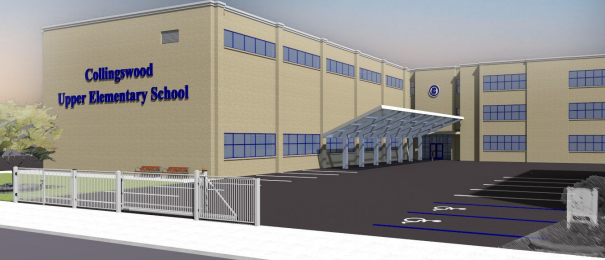
Residents in Collingswood, New Jersey, will vote on Collingswood Public Schools’ (CPS) $44.5 million plan to convert schools, decommission buildings and redesign a stadium complex. The district will hold the bond election September 2024. Construction will begin June 2025.
If approved, CPS would spend $25 million to buy and convert the Good Shepherd building into Collingwood Upper Elementary School. The three-story, 43,000-square-foot campus would serve fourth- and fifth-grade students. The existing building includes a gymnasium, large outdoor blacktop, cafeteria and library.
The district would improve all existing building amenities, renovate classrooms and add office space and teacher workrooms. Plans would include improving ADA accessibility, installing a three-story elevator and fixing bathrooms. CPS would also replace the roof, HVAC, boiler, windows, doors, masonry and front canopy. The district would upgrade the building’s security, update the fire alarm system and remove hazardous materials throughout the school.
CPS would use $11.8 million to reorient the existing stadium complex’s fields, add multi-sport artificial turf fields and convert the existing track to an eight-lane, 400-meter rubber surface running track. In addition, the district would build a 1,500-spectator grandstand featuring a concession stand, bathrooms, press box, storage and locker rooms.
Plans include installing a cutting-edge lighting system, upgrading the sound system and placing chain link fencing around the entire stadium site. CPS would also improve ADA and emergency vehicle access to the stadium.
CPS would use $7 million to add six classrooms to Zane North Elementary School. Plans include building a teacher workroom, small group instruction room, speech room, bathrooms, a security vestibule and an ADA-compliant playground. The district would spend an additional $700,000 to make the outdoor playgrounds at Newbie and Tatem elementary schools ADA-compliant.
The district’s Sharp and Garfield elementary schools are over a century old and are too small to adequately serve the student bodies’ needs. CPS will decommission those buildings and transfer the students to other schools. The district will sell Garfield and use the funds to convert Sharp into a community recreation center and address long-standing maintenance needs.
(Photo courtesy of Collingswood Public Schools.)
| |
Kansas State University making $33 million investment for aerospace education hub | |
|
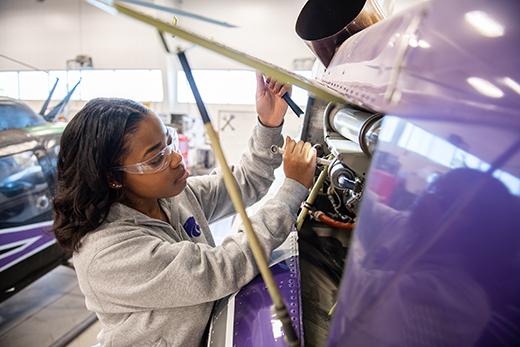
An aerospace education center in Kansas has received a multimillion-dollar federal grant to upgrade and expand its services and facilities to train the next generation of pilots and aerospace professionals.
The Kansas State University Salina Aerospace and Technology Campus will receive $28 million in federal funds and another $5.5 million grant from the National Oceanic and Atmospheric Administration for aviation equipment, the university said.
The investments will allow the the university to double the size of its aviation maintenance training center, further establishing the campus as an aerospace education hub. The grants will also fund composite materials research and training.
With the funding from NOAA for enhanced training, the university program will also prepare pilots to join the NOAA Commissioned Officer Corps, a uniformed officer service that flies planes to collect data on the earth’s atmosphere and chase down developing hurricanes to gather information that will be used for emergency response decisions.
(Photo courtesy of Kansas State University.)
| |
Orlando-area city to build replacement library to provide more space, accommodate future growth | |
|
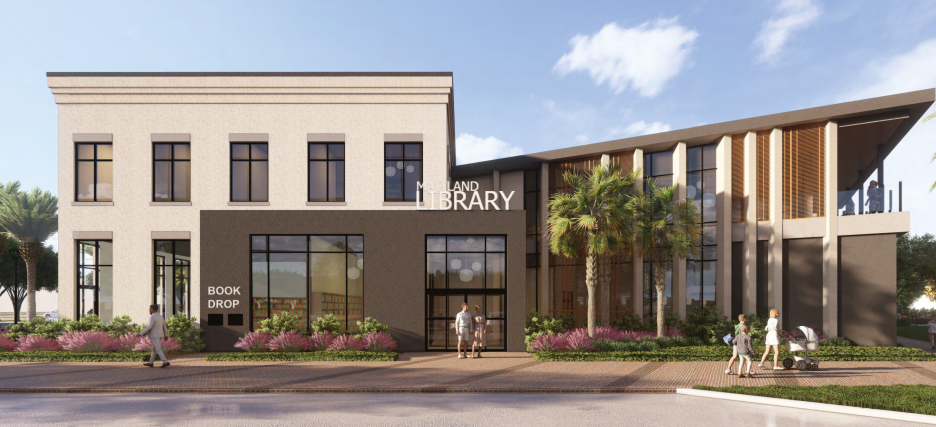
The city of Maitland, Florida, will replace its current library with an $18.7 million facility that will provide more space, larger outdoor areas and improved amenities. Voters recently approved $14 million to support the project. The city will contribute an additional $4.7 million from existing funds to fully finance the project. Construction is expected to begin in late 2025 or early 2026.
The city will build a two-story, 20,000-square-foot replacement library at Quinn Strong Park and repurpose the existing library for other public uses. The building provides an additional 7,700 square feet of space for meeting and activity rooms, collection spaces and reading areas.
Plans include outdoor patios, staff offices and landscaped grounds providing access to the rest of Quinn Strong Park. The library will have two entry vestibules and include programming space for children, teens and adults. The building will also feature a public computer room, elevators, classrooms, study rooms, maker spaces, storage areas, a kitchen, a pantry and a bookstore.
The design features expansive greenspace, including a multi-purpose lawn, outdoor gathering area and lawn terraces. The library offers a dedicated performance space, Mayan Calendar-inspired sensory garden, shade structures and water features. Plans include building a stormwater pond with an accompanying deck.
The city will build a parking lot with 82 spaces, designated delivery areas, an event pad and a dumpster enclosure. The library will also feature seating areas with coffee tables, sculptures throughout the park and a screening wall.
(Photo courtesy of the city of Maitland.)
| |
|
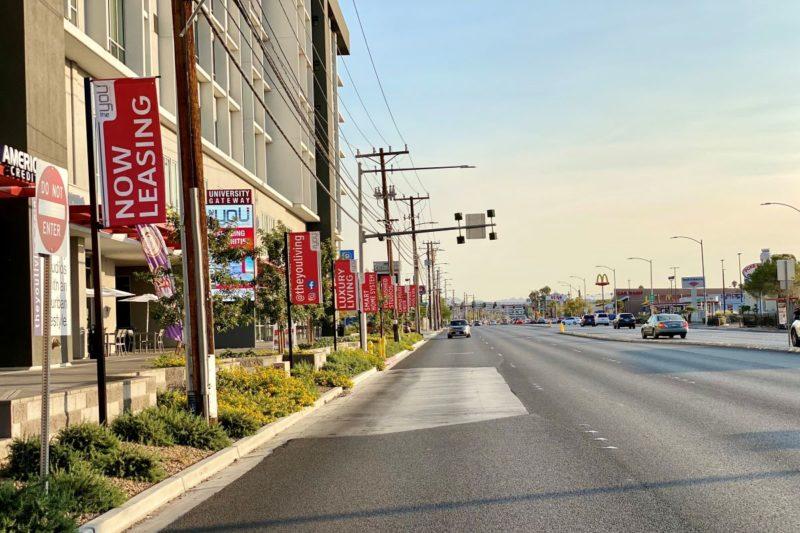
The Department of Transportation has made $150 million available to the city of Las Vegas to add rapid bus lines connecting destinations such as downtown, the University of Nevada campus and Harry Reid International Airport.
The improvements will center on a 12.5-mile route along Maryland Parkway, where 7.2 miles of dedicated bus lanes will be added from downtown heading south through the university district to the airport. Some traffic stops will also be redesigned to give buses priority.
Click here to learn more about how Las Vegas will use the funds
(Photo courtesy of RTC.)
| |
|
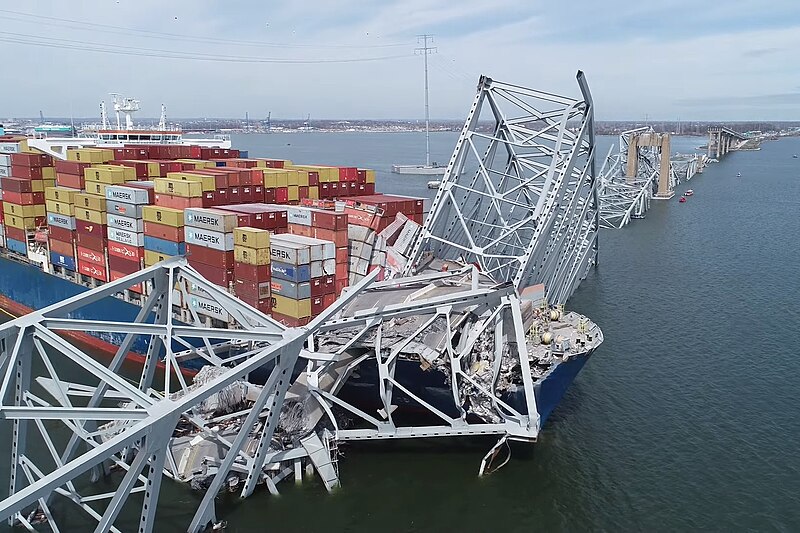
The U.S. Department of Transportation’s Federal Highway Administration (FHWA) has made $60 million in “quick release” emergency relief funds available to the Maryland Department of Transportation to rebuild the Francis Scott Key Bridge after a cargo container ship struck the bridge March 26.
The funds will serve as a down payment toward initial costs. Additional FHWA Emergency Relief Program funds will be made available as work continues, the DOT said. The DOT made the money available within hours of receiving the request.
Click here to stay updated on the latest developments on the Francis Scott Key Bridge
(Photo courtesy of NTSBgov.)
| |
|
The Department of the Interior (DOI) has released a final rule from the Bureau of Land Management on a plan to curb excessive methane emissions from oil and gas production on federal and tribal land.
The final rule modernizes regulations that are more than 40 years old, requiring oil and gas companies to find and fix leaks while paying royalties to taxpayers and tribal mineral owners, the DOI said. The rule is separate from an EPA final rule issued in December 2023.
Click here for more information on DOI’s work to regulate gas emissions
(Photo courtesy of the Clean Air Task Force.)
| |
|
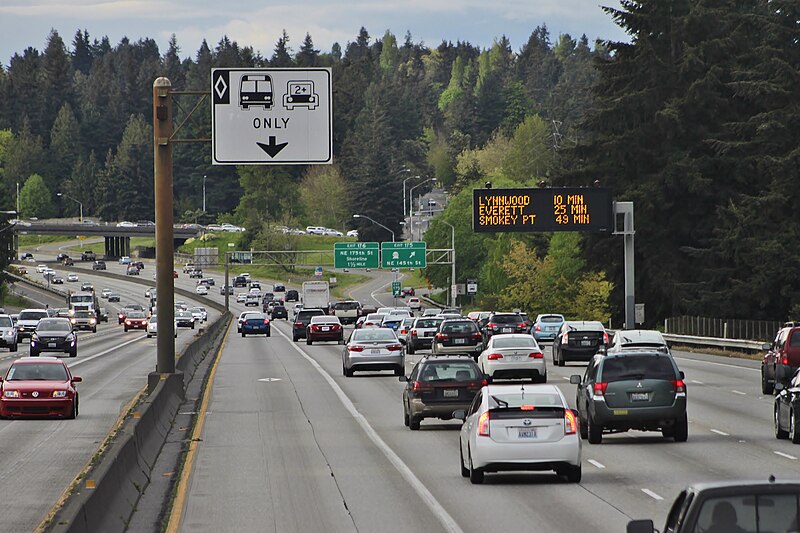
The Tennessee Department of Transportation (TDOT) is set to begin partnering with private entities on highway expansion projects designed to mitigate traffic congestion in some of the state’s most congested corridors.
The Volunteer State is the latest to plan to use “choice lanes” — a highway model that involves building variably priced paid lanes while keeping existing free lanes — as a solution to improving transit times during peak traffic hours. With choice lanes, drivers can choose whether they want to pay a toll to access the new lanes or use the existing free lanes.
Click here to learn more about Tennessee’s P3 highway projects
(Photo courtesy of SounderBruce.)
| |
|
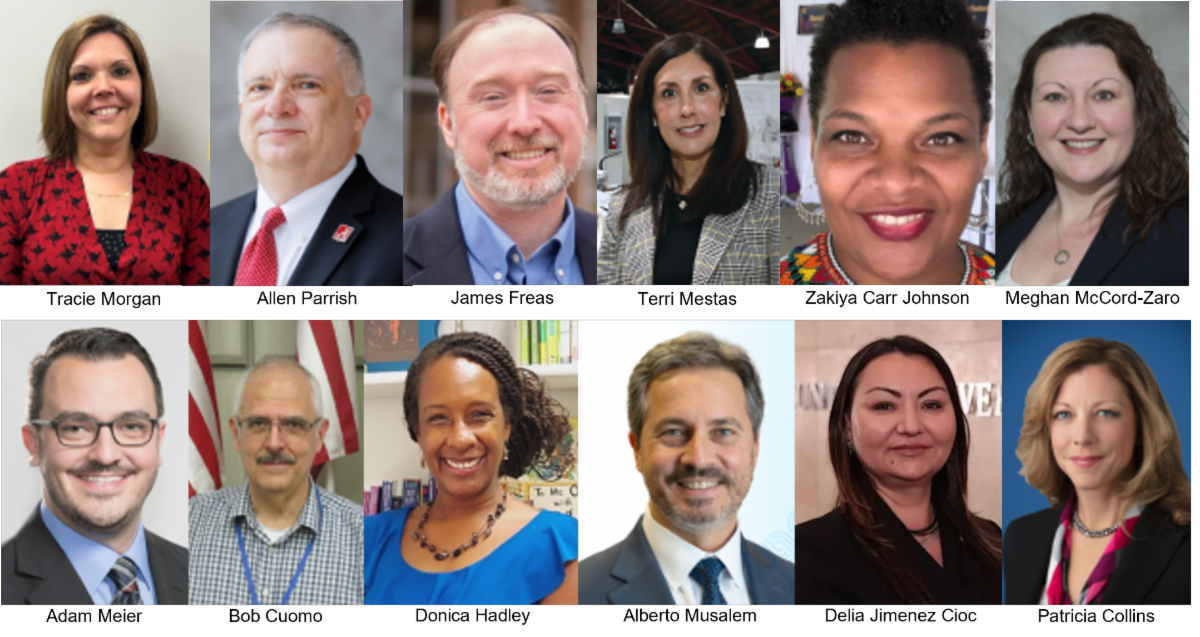
Virginia – The town of Amherst promoted Treasurer and Office Manager Tracie Morgan to deputy town manager March 22. She has served Amherst since 2016. She previously worked as the finance director for Cumberland County, Virginia, and assistant director of accounting for Amherst County, Virginia.
Alabama – The University of Alabama has named Allen Parrish executive director of the Alabama Cyber Institute. Parrish has been serving as the vice president for research and economic development since 2023. Previously, he was an associate vice president for research at Mississippi State University and taught at the U.S. Naval Academy. His career spans 34 years.
Virginia - The city of Charlottesville has promoted James Freas to deputy city manager for operations. Freas has served as director of neighborhood development services for the city since September 2021. He brings 15 years of public service experience to the role.
Washington - Sound Transit has appointed Terri Mestas as deputy CEO for megaproject delivery. Mestas has more than 30 years of experience leading large, complex infrastructure programs for space exploration, military installation and more. She most recently served as chief development officer for the Los Angeles World Airports’ (LAWA) $30 billion capital improvement program.
District of Columbia – Zakiya Carr Johnson has been appointed chief diversity and inclusion officer (CDIO) at the U.S. Department of State. She took over responsibilities from Acting CDIO Conny Mayer. Carr Johnson previously worked for the State Department from 2010 to 2017.
New Jersey – Meghan McCord-Zaro was appointed vice president of quality and risk management at Robert Wood Johnson University Hospital Hamilton on April 1, 2024. McCord-Zaro brings more than 25 years of healthcare experience to the role. She has served in hospital and ambulatory settings, surgical office practice, surgical and neurocritical care, peri-operative services and endoscopy.
Kansas - The University of Kansas Health System St. Francis Campus has appointed Adam Meier chief nursing officer April 1, 2024. He has worked with the University of Kansas Health System for 11 years. He most recently served as director of nursing for ambulatory operations at the health system's main campus.
New York – Putnam County has welcomed Bob Cuomo as director of emergency medical services. This is the second time Cuomo has held the position, previously serving from 1997 to 2018. He brings more than four decades of emergency medical service experience to the role.
Virginia - The James Madison University College of Education has named Donica Hadley first executive director of the Lab School for Innovation and Career Exploration. She is a veteran educator with almost 25 years of experience in the P-12 public school system. She previously served as an assistant professor for the university’s Department of Early, Elementary and Reading Education.
Missouri – On April 2, Alberto Musalem began his role as the Federal Reserve Bank of St. Louis’ president and chief executive officer. Musalem has more than 27 years of public and private sector experience in economic policy, finance and markets.
California – Riverside County has hired Delia Jimenez Cioc as the first female Agricultural Commissioner/Sealer of Weights and Measures. She has two decades of experience working with Riverside County's Agricultural Commissioner's Office. She replaced Ruben Arroyo in the position.
District of Columbia – Patricia Collins has been chosen as director for the Bureau of Engraving and Printing. She had served as deputy director of the Government Publishing Office since May 2020. Before joining the Government Publishing Office, she led a 24-year-long career in the U.S. Army.
| | |
|
Connect with SPI
Check out our social media links!
| |
About Government Contracting Pipeline | |
|
Strategic Partnerships, Inc.
Publisher: Mary Scott Nabers
Editors: Adam Rollins
Dave Doolittle
www.spartnerships.com
| |
Government Contracting Pipeline, a publication of Strategic Partnerships, Inc., is a free, weekly newsletter detailing important happenings nationwide and the premier source for federal, state, and local government news and contracting opportunities. | |
Help us share this message.
To ensure delivery and proper formatting of the newsletter, be sure to add editor@spartnerships.com to your safe senders list.
Otherwise, the newsletter may be flagged as spam and automatically routed to your junk e-mail folder.
| | | | |