Volume 16, Issue 10 - Wednesday, March 6, 2024 | |
By Mary Scott Nabers, CEO of Strategic Partnerships, Inc. | |
|
Damage repairs from earthquakes in the U.S. typically cost taxpayers approximately $15 billion a year. Considering that, funding to stabilize or prevent as much damage as possible is a good and prudent effort. According to FEMA and a recent geological survey, the cost of post-earthquake repair can be as much as three times higher than the cost of investing in earthquake-resilient infrastructure upgrades.
Local government officials are regularly encouraged to enforce up-to-date building codes with seismic guidelines. The need to address the vulnerabilities of older construction is critical because these are the structures most vulnerable to earthquakes.
Seismic retrofitting is often used to address the vulnerabilities of all types of structures. This process involves using modern engineering techniques to reinforce and fortify structures so they can withstand the tremors of earthquakes. Reinforcement components include improving foundation stability and strength and adding seismic retrofits. Then, damages are reduced, and citizens' safety is upgraded significantly. The upcoming projects described in this column are similar to those currently being readied for nationwide launch.
The Guadalupe Dam Seismic Retrofit Project is a $75 million initiative that will be overseen by the Santa Clara Valley Water District. The project will be designed to improve the seismic resilience of the Guadalupe Dam, which is located in San Jose, California. An independent engineering study revealed that in the event of a large earthquake, the dam could face substantial damage, and there is danger of an uncontrollable release of reservoir water. To mitigate that risk, the state Division of Safety and Dams has imposed restrictions until corrective measures can be taken.
The project will include reconstructing and thickening the dam, building new outlets and improving emergency access. The improvements will also increase the dam's capacity and remove the reservoir's operating restrictions. Normal water supply will be restored. The project is currently in the design phase, but the permitting process has not started, which may delay construction until 2028.
Click here for more.
| |
|
The Wisconsin State Building Commission (SBC) has approved $370 million for 16 construction projects, several of which will go out for bid in 2024.
The University of Wisconsin-Madison (UW-Madison) will build a $285 million indoor football practice facility, one of the largest approved state projects. The facility will replace the existing Camp Randall Sports Center and McClain Athletic Facility. The space will house a 100-yard synthetic turf field, a strength and conditioning center, team meeting rooms, a dining hall, sports medicine rooms, locker rooms and offices. The university will complete the project by December 2026.
The SBC will allocate $7.4 million to renovate Birge Hall, Brogden Hall and the Integrative Biological Research Building at UW-Madison. The project’s scope calls for addressing HVAC deficiencies, updating finishes, replacing doors with water-resistant alternatives and building dirty and clean cage washrooms in each structure. Construction will begin July 2024.
UW-Madison will use $14.5 million to modernize the Wisconsin Veterinary Diagnostics Laboratory-Barron (WVDL-Barron). Plans include building separate Biosafety Level 2 and 3 labs (BSL -2 and BSL -3) to study infectious agents or toxins.
BSL -2 and -3 labs typically include equipment for decontaminating laboratory waste, such as incinerators and autoclaves. WVDL-Barron was designated as a core laboratory in the United States Department of Agriculture’s (USDA) National Animal Health Laboratory Network in 2022.
Wisconsin will also direct $7 million to help build a Regional Forensics Science Center on the Northcentral Technical College campus in Wausau. The 19,981-square-foot facility will serve as a resource for medical examiner and coroner offices statewide. The project’s scope includes landscaping, parking and a Memorial Garden.
The college will use the facility to offer training and education opportunities for coroners and medical examiners, emergency medical and health services providers, law enforcement and district attorney offices. The project will cost approximately $14.8 million. Wausau is 143 miles north of Madison.
Other projects include replacing a hangar door at the Army Aviation Support Facility 2 in Madison, renovating the Health Science Laboratory and building a Public Entrance Visitor Station at Potawatomi State Park.
Click here to read this story on Government Market News
(Photo courtesy of the University of Wisconsin.)
|  | |
|
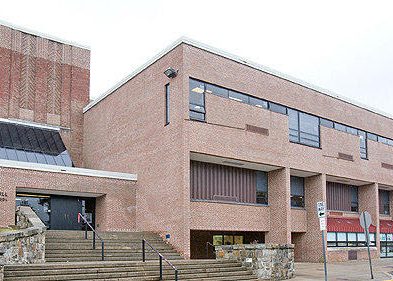
The Bethlehem Area School District (BASD) in Allentown, Pennsylvania, will replace Fountain Hill Elementary School with a $62.2 million facility. The district will demolish the 87-year-old school and build its replacement at the current site. The project is in the design phase. Construction will begin June 2025.
The BASD Steering Committee chose the first of three options for the school’s design. The three-story, 85,780-square-foot facility will connect to Church Street on the first floor and to Moravia Street on the second floor. The design also includes an access driveway below the second-level connection to Moravia Street.
The building features a 223-foot-long single corridor, classroom pods with shared support space and secured community spaces separate from academic areas. The first floor will include four kindergarten rooms, four first-grade classrooms, a pre-K space, a special education room and a guidance space. It will also feature a food pantry and a multipurpose room/daycare.
The school will have a gymnasium that doubles as a cafeteria with an adjoining kitchen and storage space. The gymnasium will have a stage, a music room, practice rooms and a mechanics shed. Other first-floor features include an English-as-a-Second Language (ESL) and Large Group Instruction (LGI) room, a Learning PAWS space, a reading room, an International Primary Curriculum (IPC) space, a health suite and admin offices.
The second floor will have four third-grade classrooms, four second-grade classrooms, a psychiatrist’s office and an art room. Other spaces include a resource room, a special education area, as well as two rooms dedicated for students who speak multiple languages, a Small Group Instruction (SGI) room, a gifted student space and an education support room.
The third floor will feature four fifth-grade classrooms, four fifth-grade classrooms, a Spanish classroom, an LGI room and two SGI spaces. Plans also include a guidance room, a special education space, an OT/SP room, a grade education support room and a library.
The district will install more efficient HVAC and electrical systems, larger windows and overall larger rooms. The district will also feature a playground, a basketball half-court, a wide outdoor landscape and 51 additional parking spaces.
Click here to read this story on Government Market News
(Photo courtesy of Bethlehem Area School District.)
| |
|
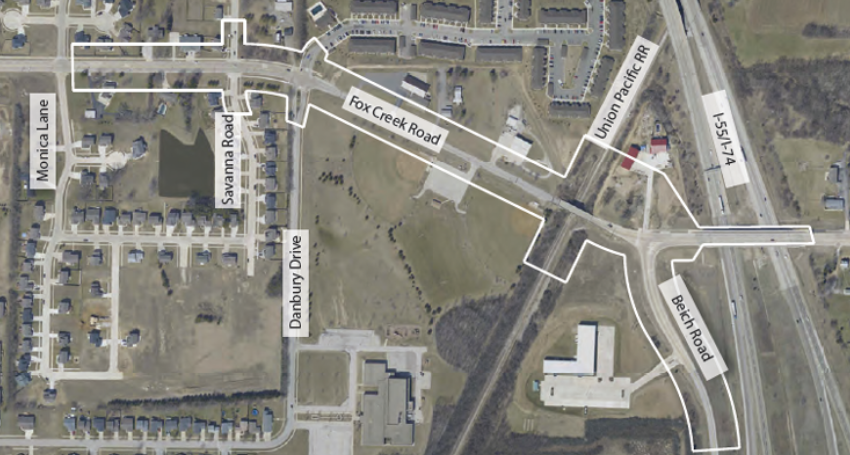
The city of Bloomington, Illinois, will use $14.6 million to replace a bridge over Union Pacific Railroad (UPRR) tracks. The Fox Creek Road and Bridge project will increase safety and allow for multi-modal access over the tracks. The project is in its final design stages, with bids opening in fall 2024. Construction will begin in late 2024.
The replacement bridge will have the same cross-section as the rest of the road, including two lanes in each direction with a bi-directional center turn lane, totaling five travel lanes. The city will install traffic signals at the intersections of Fox Creek Road at Danbury Drive and Fox Creek Road at Beich Road.
The city will also build a 10-foot-wide multi-use trail north of the road, connecting the existing trail east and west of the project limits, and a sidewalk south of the road.
A Chicago-based engineering firm began designing the bridge project in 2014. In 2016, Bloomington city council approved the project, but UPRR asked that the bridge accommodate the existing railroad track, two future tracks and two access roads, citing new standards. At that time, these changes would have cost an additional $800,000.
Bloomington city staff believed this requirement was unreasonable, considering that UPRR did not have any known plans to expand railroad infrastructure under the bridge and that the proposal was submitted under the proper standards at that time. After negotiations with UPRR failed to resolve the issue, Bloomington filed a petition with the Illinois Commerce Commission (ICC) in April 2017.
The petition requested that the city not be required to pay the additional $800,000 for an oversized bridge. It suggested that UPRR pay for the oversizing or that the city could be allowed to build the originally proposed bridge.
In June 2018, an ICC judge said UPRR would have to pay the difference between Bloomington’s proposed bridge and UPRR’s required bridge. Following the decision, UPRR withdrew its objection to the city’s original design.
Bloomington City Council approved moving the project forward during its Feb. 26 meeting, establishing a construction timeline for the long-delayed project. Bloomington must still obtain an agreement with UPRR to build a bridge on the railroad’s property.
Funding for the project will come from Illinois’ motor fuel tax fund. Half of the bridge’s replacement cost is eligible for reimbursement from the ICC’s Grade Crossing Protection Fund. Bloomington officials expect the reimbursement to be under $2 million.
Click here to read this story on Government Market News
(Photo courtesy of the city of Bloomington.)
| |
|
As part of its efforts to promote roadway safety, the U.S. Department of Transportation's (USDOT) Federal Motor Carrier Safety Administration (FMCSA) announced the availability of more than $180 million in grants this week.
Under the 2021 Infrastructure Investment and Jobs Act, the grants are available to nonprofit organizations, local governments, academic institutions and other training programs. Funding opportunities are available through five discretionary grant programs.
The High Priority Innovative Technology Deployment Grant Program (HP-ITD) will support projects that advance the technological capability and deployment of intelligent transportation systems for truck parking management and other commercial motor vehicle (CMV) operations. Priority will be given to projects that link federal motor carrier safety information systems to state CMV systems. These projects should also improve safety and productivity of commercial drivers and reduce costs associated with CMV operations and regulatory requirements.
The FMCSA had $43 million available for HP-ITD grants in FY 2023. The agency gave 28 awards worth $23.8 million in FY 2021 and $37.7 million to 35 jurisdictions in FY 2022.
Of these awards, FMCSA funded grants in a dozen states that focused on rural roads as a component of safety efforts under the HP-ITD and CMV program. The FMCSA limits funding to a total amount of $2 million per award.
The High Priority Commercial Motor Vehicle (HP-CMV) Safety Grant Program funds CMV safety-related activities. These projects help increase public awareness and education about CMV safety, target unsafe driving in high-risk crash corridors, demonstrate technologies to improve CMV safety, improve safety data and support other CMV safety projects.
Between FY 2021 and FY 2022, the HP-CMV program awarded $64.6 million across 99 projects. Eleven recipients got $1.3 million for rural road safety issues, including education and outreach, highway safety enforcement, high-visibility efforts and technology deployment.
The Commercial Motor Vehicle Operator Safety Training (CMVOST) Grant Program funds organizations that provide CMV operator training to current and former members of the U.S. Armed Forces and their families. Underserved and refugee communities may also receive funding.
The Commercial Driver's License Program Implementation (CDLPI) Grant Program helps implement and enhance the national Commercial Driver's License (CDL) program. CDL ensures each driver has only one driving record and licensing document. This is commonly referred to as “One Driver — One License — One Record.” In 2022, the FMCSA awarded $3.1 million from this program mostly to community colleges and driving schools.
High Priority Enforcement Training and Support Grants (HPETS) help develop and deliver motor carrier safety training to non-federal employees conducting CMV enforcement activities. These activities must comply with Federal Motor Carrier Safety Regulations (FMCSR), Hazardous Materials Regulations (HMR) and the Commercial Vehicle Safety Alliance’s (CVSA) Out-of-Service criteria.
Projects to develop related training materials to increase awareness and education on CMV safety and otherwise improve CMV safety are also eligible for grants. This program provides three awards totaling $5 million annually. The maximum amount for a single award is $5 million.
Grant applications for Fiscal Year 2024 cycle are due April 19, 2024.
Click here to read on Government Market News
(Photo courtesy of Dmitriy Zub on Unsplash.)
| |
|
The U.S. Department of Agriculture’s (USDA) Natural Resource Conservation Service (NRCS) is investing $25 million to help farmers in corn ethanol-producing states gain access to clean fuel markets and tax incentives. The initiative will help states adopt climate-smart farming practices that reduce greenhouse gas (GHG) emissions.
Led by the American Coalition for Ethanol (ACE), the Regional Conservation Partnership Program (RCPP) will provide funding to help farmers reduce tillage and improve nutrient management. The 10-state project spans 100,000 acres of crops spread across 167 counties surrounding 13 ethanol facilities. The facilities will team up with ACE to harvest data on how conservation practices affect GHG production in different soil types and climates.
The project could potentially remove more than 2.7 metric tons of carbon dioxide annually, the equivalent of taking 596,346 cars off the road, coalition officials said.
The expansion will allow RCPP partners to make the most of USDA resources to reduce the farm carbon footprint. ACE indicated there is a renewed focus on dropping the carbon intensity of transportation fuels that account for nearly 30% of annual GHG emissions nationwide. Harvard and MIT researchers recently verified that average corn ethanol reduces GHGs by about 50% compared to gasoline, according to the coalition’s overview of the program.
The initiative builds off a successful 2021 South Dakota-based project to give corn ethanol producers access to new markets by offering a 45Z Clean Fuel Production Credit. The credit is applicable for qualifying transportation fuel produced between 2024 and the end of 2027. Starting Jan. 1, 2025, the Treasury Department will offer tax credits for producing and selling low-emission fuels.
The South Dakota project involved compensating farmers for adopting climate-smart practices that sequester carbon, reduce GHG emissions and improve soil health. Project partners then quantified the resulting soil health and GFG benefits, correlated them with existing models and developed a non-proprietary verification system. The project allowed farmers to secure access to clean fuel markets based on GHG benefits of USDA climate-smart practices.
SDSU is one of five members of the South Dakota RCPP that includes South Dakota Corn Utilization Council, Dakota Ethanol, Cultivating Conservation and the American Coalition for Ethanol.
The $25 million investment provides an opportunity to build off earlier successes and ensure corn ethanol plays a meaningful role in reducing the presence of GHG.
The RCPP expansion includes offering a suite of incentives for farmers to adopt conservation practices in Indiana, Illinois, Iowa, Kansas, Minnesota, Missouri, Nebraska, Ohio, South Dakota and Wisconsin. Program eligibility extends to specific counties and is not statewide, with payment rates varying by conservation practices.
Click here to read this story on Government Market News
(Photo courtesy of the USDA.)
| |
|
Residents in Exeter, New Hampshire, will vote on four bond articles totaling $24.7 million to build a public safety structure, reconstruct school streets, upgrade a pump station and design a surface water treatment plant. Voting will take place March 14.
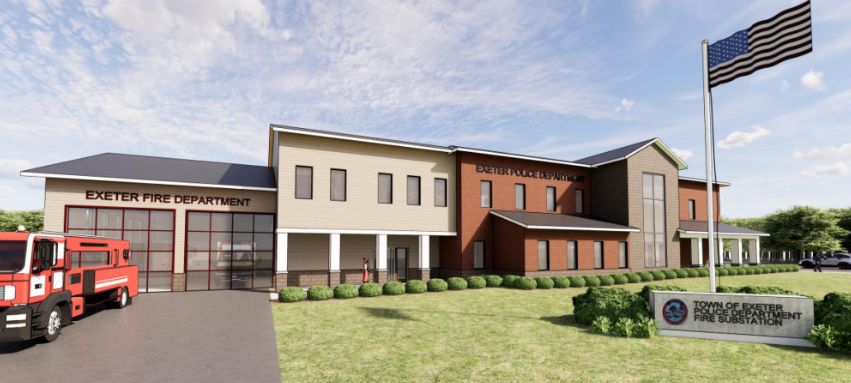
If approved, the bond would provide $17.5 million to build a combined police department and fire substation. The police and fire departments have outgrown the current public safety complex, resulting in security concerns, slower fire and emergency medical service (EMS) response time and a need for more space. The two-story replacement building would cover 23,165 square feet of space. The police department would cover 16,285 square feet, while the fire substation would be 6,880 square feet.
The public safety complex would feature secure parking, an auto impound and a trash enclosure. The town would build a 60-foot apparatus apron connecting the fire department substation bays directly to the street. The building would include a main lobby on the east side of the building for visitors, while police officers, fire crew and staff would use a secure rear entrance.
Other features include a two-stall sally port providing a secure entrance to the rear of the police department building. The town would also provide secure parking for vehicles and staff, a two-bay apparatus floor to accommodate fire and emergency response vehicles and decontamination spaces in the fire substation. Construction will conclude by fall 2026.
The town would use an additional $6.5 million to reconstruct water, sewer and drainage infrastructure in the School Street area. The current water mains lack the capacity needed to provide sufficient water for firefighting. The sewer piping is also aged and in poor condition. The town would replace the water mains with larger piping and update the sewer mains with modern materials. In addition, the town would also upgrade the road and sidewalks to make them ADA-accessible.
The bond would allocate $213,300 in supplemental funding to complete a sewer pump station project. Voters approved $5.7 million in 2022 to replace and modernize the pump station. The town would upgrade and increase the station’s flow capacity from 800 gallons per minute (gpm) to 1,200 gpm. The town would also deepen the wet well to expand pumping capacity, install a 12-inch, 1,940-foot force main and integrate a flow meter and force main shut-off valves with drain-back piping.
The town would leverage $500,000 to design and engineer a surface water treatment plant (SWTP). Currently, the three existing groundwater supplies have insufficient capacity to handle the town’s water demands. The current SWTP is susceptible to flooding, with the risk of future flooding rising due to climate change and sea level rise. After finishing design, the town would build an SWTP on a separate site. The bond funding would allow the town to evaluate potential future construction sites and determine how to repurpose the existing SWTP.
Click here to read this story on Government Market News
(Photo courtesy of the town of Exeter.)
| |
|
The state of New York has awarded more than $45 million to make seven locations in the state’s Southern Tier attractive to large employers and high-tech manufacturing companies.
The funds are available through New York’s Focused Attraction of Shovel-Ready Tracts (FAST NY) grant program, which supports pre-development activities and infrastructure investments designed to attract large-scale employers.
Click here for more information on the development projects
(Photo courtesy of Oneida County Tourism.)
| |
|
Rhode Island Gov. Dan McKee has signed an executive order that creates an Artificial Intelligence Task Force to assess the risks and benefits to state uses of AI. The order also creates a governance program known as the AI Center of Excellence within the Rhode Island Department of Administration to establish guidelines for implementing AI technology.
Because AI depends on large amounts of accurate data to train algorithms, the governor also directed the Department of Administration to ensure various state data libraries are ready for the adoption of more AI technology. The department will manage data collection and facilitate data sharing across various Rhode Island agencies.
Click here for details on the state’s AI plan
(Photo courtesy of Emiliano Vittoriosi on Unsplash.)
| |
|
The three federal agencies responsible for regulating housing, the environment and health have signed two Memoranda of Understanding (MOUs) to combat lead poisoning in housing and better inform communities about potential toxin exposure.
The U.S. Department of Housing and Urban Development (HUD), the Environmental Protection Agency (EPA) and the Department of Health and Human Services (HHS) recently signed the agreements to support commitments in each agency’s strategic plan. The commitments include reducing lead exposure in underserved communities and promoting environmental justice to protect those localities from hazardous waste.
Lead paint is present in 34 million homes nationwide. Approximately 3.3 million homes – including 2 million low-income households - have children younger than 6 who face at least one lead-based paint hazard.
The MOUs will support commitments made through the 15-step Lead and Paint Action Plan to deliver clean drinking water and protect family health. The plan calls for increasing collaboration between local, state and federal partners and allocating $3 billion to states, Tribes, and territories to replace lead service lines.
The first MOU between the EPA and HUD expands, updates and reaffirms a 1997 agreement to coordinate enforcement efforts tackling lead-based paint hazards in housing. The agreement will improve communication between the two agencies and create a framework for consultation, information-sharing and enforcement effort coordination.
While the memorandum does not require the agencies to carry out all enforcement, it offers an outline of how both agencies expect to work together in various stages of enforcement, according to the MOU.
Lead-based paint hazards in rundown housing are the most common causes of elevated lead levels in children. An estimated 500,000 children in the United States have blood lead levels values above 3.5 micrograms of lead per deciliter of blood, according to the Centers for Disease Control and Prevention (CDC), a division of HHS. The CDC recommends case management to address lead exposure health effects starting at that level.
The EPA, HUD and the CDC signed the second MOU to enhance interagency collaboration, clarify information sharing and boost regular communication. The agencies will launch a pilot program across a five-state region. The program will establish a regional interagency workgroup to improve lead outreach and create a combined government approach toward reducing lead exposure.
The effort will span the EPA’s Region 3, including Delaware, Maryland, Pennsylvania, Virginia, West Virginia and the District of Columbia. It will be a first step toward developing a national framework for cooperation, federal officials said.
The CDC will share blood lead surveillance data as part of the agreement. The EPA’s Region 3 will create an annual Regional Lead Action Plan supporting the EPA Strategy to Reduce Lead Exposures and Disparities in U.S. Communities. The strategy seeks to identify communities with high lead exposures, communicate more effectively with the public and reduce community exposure to lead.
In addition, the EPA will share information identifying geographic areas –especially children and underserved communities— where exposure risk is the greatest. HUD will also share data from assisted housing.
Click here to read this story on Government Market News
(Photo courtesy of Nathan Dumlao on Unsplash.)
| |
|
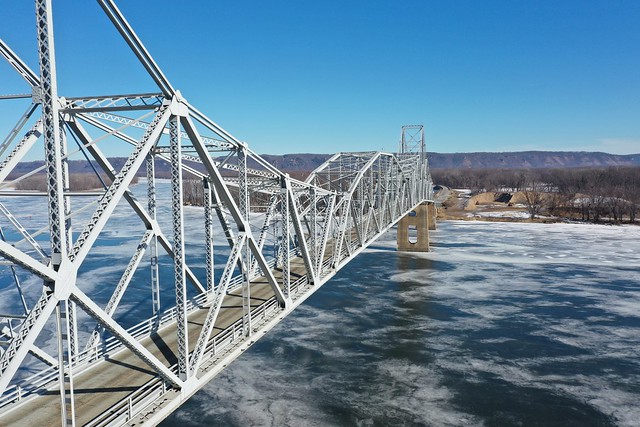
The structural failure of a 93-year-old bridge connecting Iowa and Wisconsin over the Mississippi River was due to sand that had moved, according to a project manager with the Iowa Department of Transportation.
The bridge connecting Iowa Highway 9 and Wisconsin Highway 82 has been closed since Feb. 25, following a call made to the Allamakee County Sheriff’s Office expressing concern about the bridge deck. Prior to the structural failure, the bridge had remained open to traffic during a project to build a new one right next to it.
Click here for more information about the failure
(Photo courtesy of the Iowa DOT.)
| |
|
Pennsylvania - The Board of Trustees of Washington & Jefferson College (W&J) announced Elizabeth MacLeod Walls, Ph.D., will become the college’s 14th president. Dr. Walls currently serves as president of William Jewell College in Liberty, Missouri. She will succeed Dr. John C. Knapp, who announced that he will retire June 30, 2024.
Oregon - Dan Blair and John Weston have been appointed to the Tri-County Transportation District of Oregon’s (TriMet) executive leadership team. Blair will join as executive director of the agency’s newly developed transit systems and asset support division. Weston will be executive director of maintenance operations.
Weston comes to TriMet with nearly 40 years of experience in the transit industry, including extensive work on and management of systems in Washington, D.C., Miami and Seattle. Most recently, Weston served as corridor operations director for Sound Transit.
Blair has been growing his career with TriMet for the past 30 years. He started as a light-rail vehicle (LRV) apprentice mechanic and graduated from TriMet’s apprenticeship program. He served as the agency’s interim executive director since early 2023.
New Jersey - The Felician University Board of Trustees unanimously appointed Dr. Mildred Mihlon as the seventh president of Felician University. Dr. Mihlon has been serving as acting president since April 2023. She brings nearly 25 years of higher education leadership experience to the position. Dr. Mihlon joined Felician University as the dean of the School of Arts and Sciences in September 2020.
Ohio - Worthington City Council has named Robyn Stewart city manager. Stewart has served as acting city manager for over a year since the departure of Matt Greeson in December 2022. Prior to coming to Worthington in 2008, Stewart served local governments in the Kansas City metro area, including the cities of Leavenworth and Overland Park, Kansas.
New Mexico - Dana Flannery, a health care professional, will lead New Mexico’s Medicaid program. Flannery will serve as director for the program following Nicole Comeaux’s January departure. She previously served as assistant director and senior policy advisor for Arizona’s Medicaid agency.
Virginia - Laszlo Palko has been selected by the Fairfax City Council as city manager. Palko will assume his duties April 29. He comes to Fairfax after serving as city manager of Manassas Park, Vermont, since 2017.
Tennessee - The Memphis Area Transit Authority (MATA) has appointed Erik Stevenson chief of strategic partnerships and programs while promoting Chundra Smith to public information officer.
Stevenson most recently served as the first director of diversity, equity and inclusion for the Greater Memphis Chamber of Commerce.
MATA has promoted Smith from her previous role as community engagement manager.
Pennsylvania – Dr. Christina Clark, former provost at Marywood University in Scranton, Pennsylvania, has been named the eighth president of La Roche University. She brings more than 20 years of university experience with her to the role.
Florida – The Coral Gables City Commission voted 3-2 to hire Amos Rojas Jr. as city manager. Rojas will take over the position from Peter Iglesias. In 2013, Rojas was nominated by President Barack Obama and sworn in as the U.S. Marshal for the Southern District of Florida. Before becoming a U.S. Marshal, Rojas worked for the Miami-Dade State Attorney’s Office and served as the deputy director of the South Florida Money Laundering Strike Force.
Maine – On Feb. 26, the Ellsworth City Council appointed Charles Pearce as incoming city manager. Pearce brings a management background with the Massachusetts state government to the role. He will begin his tenure April 1, 2024. Pearce will replace Glenn Moshier.
| | |
|
Connect with SPI
Check out our social media links!
| |
About Government Contracting Pipeline | |
|
Strategic Partnerships, Inc.
Publisher: Mary Scott Nabers
Editors: Adam Rollins
Dave Doolittle
www.spartnerships.com
| |
Government Contracting Pipeline, a publication of Strategic Partnerships, Inc., is a free, weekly newsletter detailing important happenings nationwide and the premier source for federal, state, and local government news and contracting opportunities. | |
Help us share this message.
To ensure delivery and proper formatting of the newsletter, be sure to add editor@spartnerships.com to your safe senders list.
Otherwise, the newsletter may be flagged as spam and automatically routed to your junk e-mail folder.
| | | | |