Volume 14, Issue 27 - Wednesday, July 6, 2022 |
|
By Mary Scott Nabers, CEO of Strategic Partnerships, Inc. |
|
Microgrids are designed to harness renewable energy and make it available for all kinds of reasons. Often microgrids are used when disasters cause larger utility grids to falter or shut down completely. They also are used as backup power for hospital systems, school campuses, and other governmental entities. Microgrids are a critical component of the resilience movement.
The federal government has allocated funding from dozens of new programs for projects that support resilience. Microgrid projects have become attractive targets for funding. An abundance of new microgrid projects is almost guaranteed because of the $17 billion in funding that is now available through the US Department of Energy, as a part of the Bipartisan Infrastructure Law.
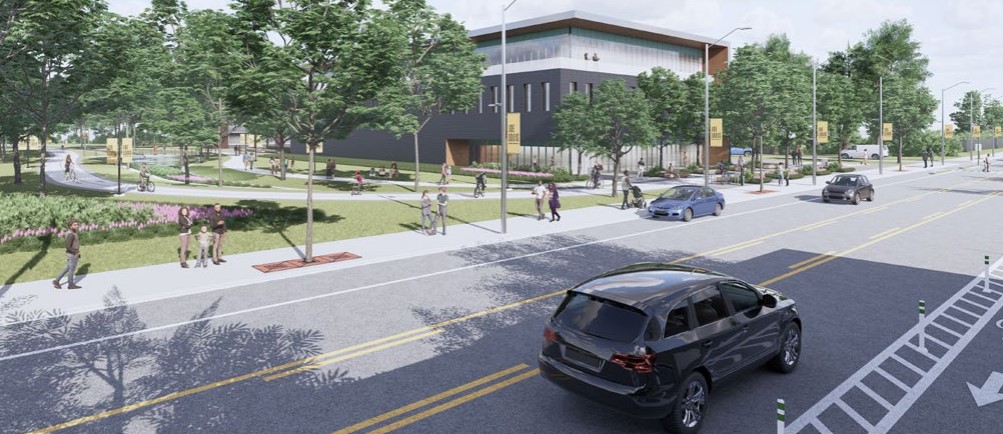
In Rockingham County, New Hampshire, plans have been announced for a new county complex that include a microgrid that will be the largest solar grid in the state. It will be located on thirteen acres adjacent to the site of a new complex. The project’s overall cost will be approximately $68 million and is set to launch in 2022.
|
|
California governor signs largest budget in state history |
|
California - The governor on June 30, signed a $308 billion state budget for the fiscal year that started July 1.
The budget includes $4.2 billion for the completing of a 171-mile section of electrified rail between Merced and Bakersfield, while establishing an independent inspector general to oversee the project. The state can now move forward purchasing trains, building tracks, and fully electrifying over 100 miles of right of way. This funding is a final portion of funds from the $9.9 billion bond measure approved by voters in 2008. The high-speed rail funds are part of an $8 billion in commitment to public transit statewide.
California leaders are uncertain about future funding for rail but plans continue moving forward on making it a reality. In June, the California High-Speed Rail Authority released the final environmental impact statement for the 43-mile San Francisco to San Jose project section in North California. If approved by the authority's board in August, it completes the full environmental clearance for high-speed rail in Northern California.
Other transportation projects funded by the California budget include:
- $7.7 billion General Fund over four years to invest in high-priority transit and rail infrastructure projects throughout the state. Funding will be administered through the Transit and Intercity Rail Capital Program (TIRCP).
- $1.2 billion for port-related high-priority projects that increase goods movement capacity on rail and roadways serving ports and at port terminals, including railyard expansions, new bridges, and zero-emission modernization projects.
- $1 billion General Fund for Active Transportation Program projects that encourage the increased use of active modes of transportation, such as walking and biking, and increase the safety and mobility of non-motorized users.
- $350 million General Fund to support critical high priority grade separation safety improvements throughout the state.
- $150 million to establish the Reconnecting Communities: Highways to Boulevards Pilot Program, which will inform the future conversion of key underutilized highways into multimodal corridors that serve existing residents.
|
|
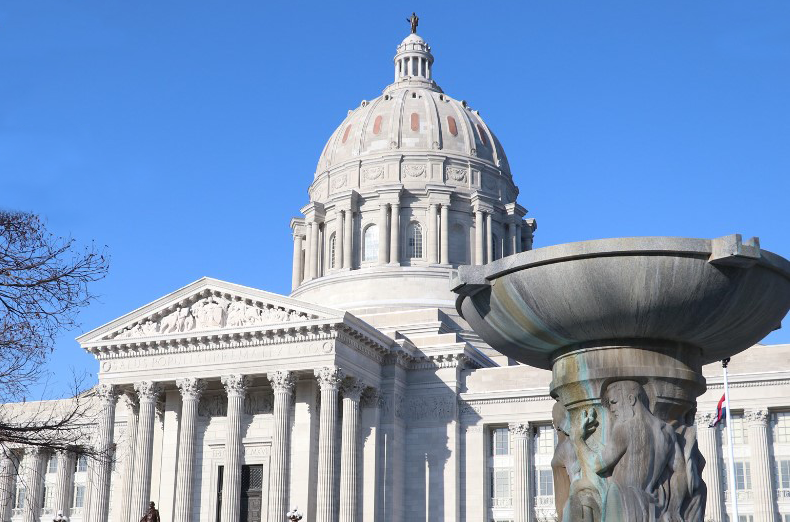
Missouri governor approves 2023 budget |
|
Missouri - The governor signed Fiscal Year 2023 state operating budget bills on June 30.
The budget is approximately $47.5 billion, including $12.5 billion in general revenue. Missouri is going into FY 2023 with a nearly $3 billion surplus in general revenue. Public higher education institutions will receive $460.1 million for capital improvement projects.
Some of the requests for funding from higher education institutions included the University of Missouri wanting $115 million to develop a new research complex in Columbia centered on nuclear medicine and the campus research reactor. Southeast Missouri State University in Cape Girardeau asked for $11 million for an expanded performing arts center, and the State Technical College of Missouri in Linn requested $20 million to renovate its engineering and welding technology centers.
In addition to higher education, hundreds of millions of dollars in the FY 2023 budget bills were allotted for infrastructure projects to include the following:
- $608 million for investments in drinking water, wastewater, and stormwater infrastructure.
- $356.5 million for broadband expansion projects.
- $160 million for efficient and innovative transportation projects across the state.
- $100 million for rural route repair projects.
- $75 million for the Transportation Cost-Share program.
- $8.5 million for rural health telehealth access.
- $12.9 million for public transit.
- $20 million to upgrade and improve Missouri’s 57 area career centers.
- $104.7 million for a new public safety crime lab that will assist local law enforcement agencies.
- $78.6 million for the construction of a new multidisciplinary state health lab.
In addition, the Missouri governor issued 32 line-item vetoes, totaling nearly $644 million.
|
|
ALDOT's Interstate 10 plan has new price tag after $600M increase |
|
Alabama - The Interstate 10 Mobile River Bridge and Bayway project’s costs have increased to $2.7 billion under a project that state officials are targeting for completion by 2028.
The project will include a new six-lane Mobile River bridge, a new Bayway built to current safety and longevity standards, and appropriate interchanges in Mobile and Baldwin counties. The project’s construction is expected to begin late next year.
The newest updates were revealed in a report from the Alabama Department of Transportation (ALDOT) to the Eastern Shore and Mobile Metropolitan Planning Organizations. Both organizations are charged with approving whether the I-10 project should be part of the region’s short-and long-term transportation priorities.
The project’s overall price tag has increased by $600 million from three years ago. A 2019 estimate puts the project at $2.1 billion. The increase is attributed to inflation-driven cost increases on highway projects across the state.
ALDOT is asking for public comment on the plan, which significantly reduces tolls to $2.50 for passenger vehicles and $18 or less for trucks. It also includes a $40 dollar per month unlimited use option for Mobile and Baldwin county commuters.
The plan leaves free routes like the Causeway, Wallace and Bankhead tunnels, and Africatown Bridge in place, while keeping the infrastructure owned and operated by the state. Officials said tolling will pay for the project's debt and will be removed once the debt is paid off.
The project is getting a contribution of at least $250 million in state funding, as well as $125 million in federal funding through an Infrastructure for Rebuilding America (INFRA) Grant.
|
|
Michigan approves $76.9B budget for Fiscal Year 2023 |
|
Michigan - The state’s budget of $76.9 billion will go into effect this fall after receiving approval by the House and Senate on July 1.
Benefiting from the new state budget is the Detroit Center for innovation that will receive $100 million for an academic research building. Wayne State University in Detroit gets $100 million for a Cancer Institute project, and $130 million goes to the University of Michigan for an electric vehicle teaching training and development center.
The Grand Rapids amphitheater will receive $30 million, the Maritime passenger ferry will get $14 million, and $28 million will go to business incubators in Oakland and Ottawa counties.
The Joe Louis Greenway will spend $40 million for a 29-mile recreational greenway project. The plan is intended to connect multiple different greenways and provide easier access to natural walking space. The project is slated to cost more than $200 million and has an estimated completion time of 2030.
Sturgis Hospital has had to consider closing its doors in the past weeks but now is expected to receive $11 million in funding from the state budget. State funding would allow the hospital to stay open and become a rural emergency hospital in January 2023, when the new federal law takes place allowing small hospitals to be recognized as a rural emergency hospital.
The Port of Monroe will receive $5 million which will go towards construction of a containerized cargo scanning facility. The Opportunity Center at Arthur Lesow Community Center (ALCC) in Monroe is slated to receive $7.8 million in funding, which will go towards facility improvements and continued programming.
There also will be $15 million for upgrades and an expansion of the Magnus Center skilled trades facility in Harrison, $25 million for a new community health and recreation center in Clare, and $800,000 for repairs to the Lake Forest Dam.
Other funding includes $2.3 billion to help fix local roads and bridges, $1.7 billion to fix state highway roadways and bridges, and $325 million for a new state psychiatric hospital complex.
Fiscal year 2023 begins Oct. 1, 2022, and lasts until Sept. 30, 2023.
|
|
Greenville-Spartanburg Airport looks to future growth with master plan |
|
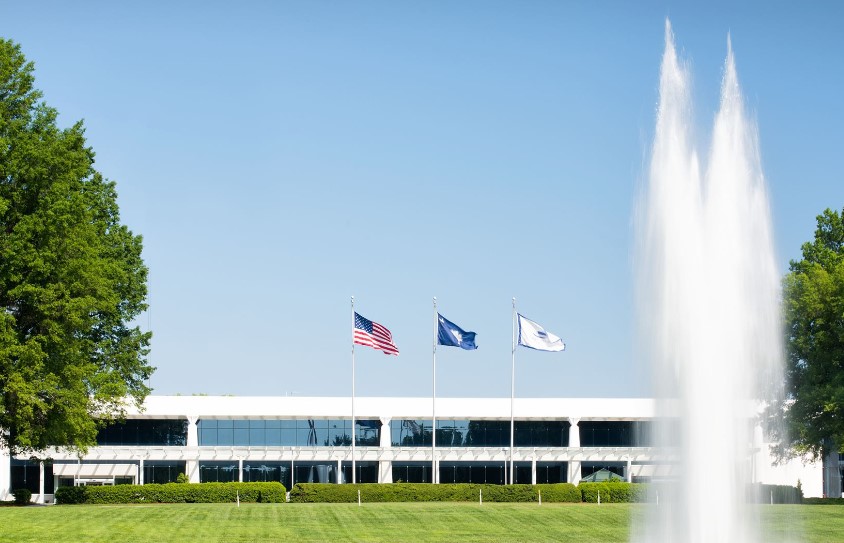
South Carolina - Based off its current master plan, the Greenville-Spartanburg International Airport (GSP) has an assortment of projects identified as taking place within the next five years.
The GSP is in its design phase for a $240 million terminal expansion that will add five or six gates to Concourse B. The expansion will also include an additional baggage claim facility and a federal inspection station for potential international flights.
The airport is seeking grant funding to build an additional 173,000 square feet of cargo-handling facilities and has received a $5.2 million federal grant that will fund construction of taxiway and parking to accommodate another three aircraft.
Taking place this fall is a $10.5 million project to realign roadways and improve the curbside drop-off area in front of the main terminal. This will alleviate some of the traffic backups that have occurred with rebounding passenger numbers and is a precursor project to the terminal expansion.
Other upcoming improvements planned by GSP include the following:
- $240 million terminal expansion that will add at least five new gates, an additional baggage claim facility, and a new federal inspection station.
- $10.5 million roadway realignment and curbside improvements to ease traffic congestion and prepare for the terminal expansion.
- $7.5 million for a 25,000-square-foot general aviation hangar facility with 5,000 square feet of related office space.
- $5.2 million for additional taxiway and parking aprons to double the number of cargo aircraft the airport can serve simultaneously.
|
|
GVEA agrees to close coal plant by 2024, replace with wind energy |
|
Alaska - On June 27, Golden Valley Electric Association (GVEA) announced plans to shut down the newer Healy Unit 2 power plant due to its unreliability and cost. The board voted to formulate a plan within 90 days to shut down Healy 2 by the end of 2024.
GVEA wants to solicit proposals for a large-scale wind project purchase agreement in 60 to 90 days. The goal is also to upgrade its battery storage system to 46-megawatts. Newer and more powerful battery technology could regulate the intermittent wind power by providing electricity when the air is calm. Finally, the GVEA will secure a purchase agreement with one or more Southcentral utilities, gas producers, or suppliers for 30 to 50 megawatts of additional energy.
A decision was also made to upgrade the aging Healy Unit 1, the smaller coal plant, by 2024 with a new $26 million pollution-control system and keep it operating.
GVEA serves 100,000 residents in communities from Healy to Fairbanks and Delta Junction.
|
|
Brown University evaluating space needs for future development |
|
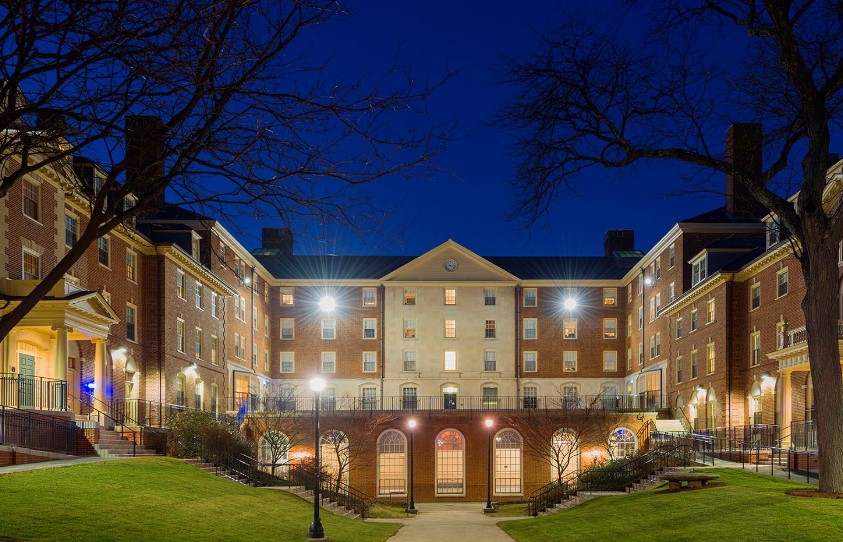
Rhode Island - Brown University plans to buy 10 properties in the Jewelry District from the Care New England health care system for $16.4 million. The university will build a new laboratory in the vicinity. With the purchase of these lots, Brown will own all but four lots in that block of the Jewelry District, bounded by Ship and Elm streets and Richmond, Elbow, and Chestnut streets.
The university is in the process of selecting an architect for the new laboratory, which will take three to six months. The new lab will include wet and dry lab space, an animal care facility, and space for researchers from different Brown departments.
Brown has also released a draft plan for growing its research capabilities with up to $800 million in renovation and new construction. According to the university’s draft plan, a space study will begin soon for the Physical Sciences Departments facility. The School of Engineering and most of the physical science departments are near the limits of their existing research space on campus. The study will evaluate the state of usage of existing facilities and identify potential options for renovation and construction of new facilities.
A space study is already underway for the Department of Computer Science, which is near capacity in the 35-year-old Thomas J. Watson Sr. Center for Information Technology. Space need studies are also taking place for Department of Economics, Haffenreffer Museum Research Center, and the Annenberg Institute.
|
|
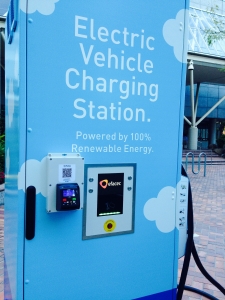
County exploring options for electric vehicles and charging stations |
|
California - Kern County and the General Services Division are soliciting for a response to a request for information (RFI) to evaluate products and services available in the marketplace to assist the county in planning for the future electric vehicle fleet requirements and the necessary EV charging infrastructure to support the fleet. As California pursues a future free of gas or diesel engine car purchases by 2035, the county is seeking the following information:
- Current electric vehicle availability within the market, by class type/size including expected battery life, driving range, charging time, and annual maintenance costs.
- Expected future additions to the electric vehicle market.
- Existing charging infrastructure based on current and future vehicle availability and known limitations, including technology surrounding route-planning for mid-trip charging needs.
- Vendor-produced or -partnered charging infrastructure.
- Known or expected technological advances that reduce charging time, increase battery life, extend driving range, advancements in route-planning to account for planned charging, and time frames for implementation.
Submittals must be received by July 29, 2022 5 p.m. PST.
|
|
Maricopa County leaders make adjustments on $4.46B budget |
|
Arizona - The 2023 budget year for Arizona municipal governments started July 1. After some last-minute department adjustments to the budget, the Maricopa County Board of Supervisors signed off on a new year of spending as well as a 2023-2027 capital improvement plan. Some of the larger projects on the list to begin in 2023 include the following:
- Maricopa County Tabulation and Election Center renovations at $67,400,000.
- Public Health Human Services building at $57,200,000.
- Southeast Juvenile Facility remodel at $29,292,358.
- Downtown Court Plaza remodel at $23,500,000.
- Maricopa County Sheriff’s Office substation - District 1 Mesa at $16,000,000.
- East Valley Animal Care and Control facility at $15,800,000.
- Tenth floor of the Superior Court Central building at $11,100,000.
The Maricopa County Board has a budget of $4.46B, about $950 million larger than the previous one, and includes another $435 million in federal funding from the American Rescue Plan Act. Nearly half of the budget was targeted for public safety at 46 percent. The next biggest chunk, 32 percent, was to cover health, welfare, and sanitation.
|
|
New York Environmental Facilities Corporation awards $70M to improve water quality |
|
New York - The New York State Environmental Facilities Corporation has approved nearly $70 million to help 11 municipalities advance critical infrastructure projects that protect or improve water quality.
Of the project funding announced in June, nearly $40 million in financial assistance will support a $352 million project for Oneida County in the Mohawk Valley to upgrade a water pollution control plant and pump stations.
The Town of Catskill in Greene County will receive more than $10.2 million to plan, design, and construct a wastewater collection and conveyance system to serve the newly formed Leeds and Jefferson Heights Sewer District, and to install mechanical screening at the village-owned wastewater treatment plant.
Other water projects that will receive funding include the following:
-
Village of Marcellus in Onondaga County - $4.4 for upgrades at the village's wastewater treatment plant.
-
Village of Garden City in Nassau County - $3.7 million to install Advanced Oxidation Processes (AOP) and Granular Activated Carbon (GAC) equipment to treat emerging contaminants at the water treatment facility.
-
Town of Dryden in Tompkins County - $3 million for collection system improvements in the Hamlet of Varna.
-
Village of Depew in Erie County - $3 million for sanitary sewer improvements to reduce inflow and infiltration in the village's collection system.
-
City of Middletown in Orange County - $2.6 million for pump replacement.
|
|
Montana seeking input on $43M EV station plan |
|
Montana - The Montana Department of Environmental Quality (DEQ) and the Montana Department of Transportation are requesting feedback on a draft plan through July 18 to build electric vehicle (EV) charging stations on key travel corridors. According to the draft plan, DEQ and the Montana Department of Transportation want to deploy fast-charging facilities no more than 50 miles apart that are located within one mile of established travel corridors and within walking distance of amenities.
It is estimated that there will be 30,000 electric vehicle drivers in the state by 2030, along with 100,000 EV drivers from other areas traveling Montana roadways annually.
The final plan will detail how Montana will spend $43 million in federal funds from the National Electric Vehicle Infrastructure Formula Program, which was established by the Bipartisan Infrastructure Law. The plan must be delivered to the Federal Highway Administration by August 1.
DEQ will submit requests for proposals to begin building the charging stations after the Federal Highway Administration has approved the state’s plan and will start scoring those proposals in the winter or spring.
|
|
New cybersecurity law to help states recover, prevent attacks |
|
Washington, DC - On June 21, President Biden signed into law the State and Local Government Cybersecurity Act. The new law directs the U.S. Department of Homeland Security (DHS) to share information and resources with state, local, and Tribal and territorial (SLTT) governments to help them prevent and recover from cyberattacks.
The entities are responsible for ensuring residents’ personal information, historical records, and critical infrastructure are adequately protected, recoverable, and secured in the event of a breach. Over the past few years local governments have faced hundreds of cyberattacks, with incidents often threatening to expose sensitive information or shut down critical infrastructure such as 911 call centers and water treatment facilities.
Under the new law, the Cybersecurity and Infrastructure Security Agency (CISA) is directed to increase the coordination of cybersecurity response with SLTT governments. The following CISA responsibilities to support SLTT governments are listed in the bill:
- Providing operational and technical assistance to address cyber incidents.
- Increasing situational awareness by sharing cyber threat indicators, defensive measures, and cybersecurity risks.
- Providing notifications of specific incidents.
- Creating a platform to share best practices and other cybersecurity standards and policies.
- Working with chief information officers, senior election officials, and others to coordinate effective implementation of tools, policies, and guidelines to ensure system resiliency.
- Assisting in developing policies and procedures for coordinating vulnerability disclosures.
- Promoting cybersecurity education and awareness.
The law codifies a sustained relationship between CISA and the Multi-State Information Sharing and Analysis Center (MS-ISAC). MS-ISAC is a coalition of governments and organizations created in 2022 that is dedicated to improving cybersecurity for SLTT governments. Membership includes all 56 states and territories, all 50 state capitals, all 79 Fusion Centers, hundreds of local governments, and more than 2,500 organizations.
MS-ISAC maintains a 24/7 watch and warning center as well as a Computer Emergency Response Team that helps members with cyber incident response and provides malware, log, and forensic analysis along with reverse engineering and vulnerability assessments.
|
|
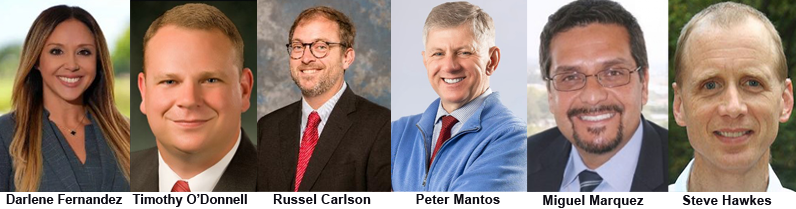
Florida - Darlene Fernandez started her new position on May 2 as the executive director of the Miami-Dade Expressway Authority (MDX). Fernandez was formerly the assistant director of Miami-Dade County’s Department of Transportation and Public Works. She succeeded Javier Rodriguez who retired from MDX after serving 15 years as executive director.
Ohio - The Toledo-Lucas County Port Authority has selected Timothy O’Donnell to oversee operations at Eugene F. Kranz Toledo Express Airport. In June, O’Donnell became the permanent successor to Steve Arnold, who retired in February. He also will oversee port operations at Toledo Executive Airport. O’Donnell was formerly the deputy director of airfield compliance for the Wayne County Airports Authority. His 20-year aviation career includes previous administrative postings in Indiana and California, and he also has four years of active duty in the Marines as part of a 22-year military career.
Georgia - The Georgia Department of Community Health (DCH) announced July 1 that Russel Carlson has joined the agency as Chief Health Policy Officer. In this role, he will lead the agency’s health policy initiatives and provide oversight to the Medicaid and State Health Benefit Plan programs. Carlson most recently served as vice president of government relations with the Georgia Health Care Association.
New Mexico - The governor of New Mexico has named Peter Mantos as the state’s new IT secretary. Mantos will lead IT strategy and modernization efforts from within the New Mexico Department of Information Technology, which provides services across the state government. Mantos is a private-sector IT industry veteran who’s held roles with state’s land and game agencies. Mantos replaces Raja Sambandam, the state’s chief information security officer, who’d been serving as acting IT secretary. Sambandam will continue as chief information security officer (CISO), according to the state’s announcement. New Mexico’s last full-time IT secretary was John Salazar, who stepped down last summer, citing family issues.
California - The Pasadena City Council has announced the selection of former Justice Miguel Márquez to serve as the city's next city manager. Márquez currently serves as the chief operating officer of the County of Santa Clara. Prior to his current role in Santa Clara, he served as an associate justice of the California Sixth District Court of Appeal, as the county counsel for the County of Santa Clara, as the general counsel of the San Francisco Unified School District, and as a deputy city attorney in the San Francisco City Attorney’s Office
Virginia - The city of Charlottesville has promoted Steve Hawkes to the position of director of information technology. The IT department is responsible for overseeing the city government’s information technology infrastructure, working to supply the IT solutions and services required to meet various technology needs. Hawkes has served as the interim director of information technology since November 2021 and prior to that served as applications manager with the city of Charlottesville since 2011.
|
|
|
|
Connect with SPI
Check out our social media links!
|
|
About Government Contracting Pipeline |
|
Strategic Partnerships, Inc.
Ph: 512-531-3900
|
|
Government Contracting Pipeline, a publication of Strategic Partnerships, Inc., is a free, weekly newsletter detailing important happenings nationwide and the premier source for federal, state, and local government news and contracting opportunities.
|
|
Help us share this message.
To ensure delivery and proper formatting of the newsletter, be sure to add editor@spartnerships.com to your safe senders list.
Otherwise, the newsletter may be flagged as spam and automatically routed to your junk e-mail folder.
|
|
© 2022 Strategic Partnerships, Inc. All rights reserved.
|
|
|
|
|
|
|
|