Volume 14, Issue 18 - Wednesday, May 4, 2022 |
|
By Mary Scott Nabers, CEO of Strategic Partnerships, Inc. |
|
Public officials in government are asking difficult questions about how to deliver critical infrastructure projects. Their concern is real, and their questions are valid because the trend of delivering large projects through public-private partnerships (P3s) is becoming more compelling every day. Government leaders are feeling pressure to consider P3s as a new delivery method for large projects.
The questions public officials are asking themselves include:
- Should we embrace this trend of collaborating with private-sector partners?
- Do we need private-sector capital for infrastructure projects?
- Can we trust the P3 model and is it better?
- What are the best practices for success?
- Are we ready to test the model? If so, how and where do we begin?
The questions are good because their dilemma is genuine. Public officials should definitely understand the P3 model for project delivery. They need to know exactly how a P3 model works, and where and how to get help before launching a project. Only when they have all the answers will government leaders be comfortable enough to step away from the norm and launch big initiatives in a new way.
|
|
Alabama targets Mega project grant funds for Mobile River Bridge |
|
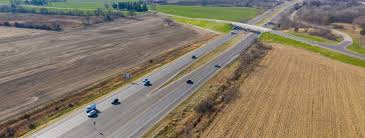
Alabama – The Alabama Department of Transportation (ALDOT) will request a portion of the S5 billion Mega grant funding from the U.S. Department of Transportation to fund the Interstate 10 Mobile River Bridge and Bayway.
The competitive grant program is known as the “National Infrastructure Project Assistance program.” It supports projects that would be difficult to fund and are likely to generate national or regional economic, mobility, and safety benefits. This grant is part of the $1.2 trillion bipartisan infrastructure bill.
In 2019 the I-10 project was estimated to cost $2.1 billion. That concept entailed a new six-lane bridge, a new Bayway, and associated interchange improvements. ALDOT is updating its cost estimates prior to applying for the Mega grant later this month.
The federal government has helped fund the I-10 project before. In 2019 ALDOT received a $125 million Infrastructure for Rebuilding America (INFRA) grant. According to ALDOT officials, this is the largest amount the federal government has given to a single project under the INFRA program. The project has also received $250 million in a non-federal state subsidy and $300 million from a federal loan.
ALDOT will own and operate the latest plan for the I-10 project. The project does not have a planned start date.
|
|
High-speed rail board advances key San Jose-Merced section |
|
California – In conjunction with certifying federal environmental reviews, the board of directors at the California High-Speed Rail Authority approved the 90-mile section linking San Jose to Merced.
Directors selected Alternative 4 as the approved project alignment among the four alignment alternatives studied. This alternative modernizes and electrifies the existing rail corridor between San Jose and Gilroy, allowing for both high-speed rail and Caltrain service.
The board’s certification of the San Jose to Merced environmental impact statement and approval of the project segment is a critical milestone that moves the section closer to being “shovel ready” for when pre-construction and construction funding becomes available.
This project section will connect the existing construction in the Central Valley to San Jose’s Diridon Station, slashing travel times and improving mobility in both regions. The high-speed rail system will make the trip from Fresno to San Jose in just one hour, compared to three hours by car currently.
Nearly 400 miles of the proposed 500-mile Phase 1 alignment from San Francisco to Los Angeles/Anaheim have gained environmental clearance – including a contiguous stretch between Merced and Palmdale plus January’s clearance of the Burbank to Los Angeles section.
|
|
Authority moves new John Glenn airport terminal project forward |
|
Ohio – The Columbus Regional Airport Authority (CRAA) recently selected a firm to design a new terminal for John Glenn Columbus International Airport.
Solicitation documents indicated a desire for a more than 900,000-square-foot terminal accommodating 35 to 40 narrow body gates, a 5,000-plus space parking garage, supporting apron and taxiway infrastructure, hydrant fueling system, and landside access.
More than six decades ago, the existing terminal opened. Now, it is reaching the end of its useful life. As investments in aging infrastructure are being strategically evaluated, the airport authority can plan for a new terminal.
Existing terminal capacity is 10 million annual passengers, which the airport is expected to surpass by 2025. In addition, multiple assets and systems require replacement by 2032.
The conceptual design phase is scheduled to begin this month, and a design concept is expected to be presented to the CRAA board of directors in late 2022. Future phases of the project will be determined through design analysis and subject to CRAA board approval.
Construction is scheduled to begin in 2024 and conclude by 2027.
|
|
Department of Energy launches $2.3B grid resilience program |
|
Washington, D.C. – The U.S. Department of Energy (DOE) launched a $2.3 billion program on April 27 to strengthen and modernize the nation’s power grid against wildfires, extreme weather, and other natural disasters.
Through a request for information (RFI), the department is seeking public input on the program administered through DOE’s new Building a Better Grid Initiative to assist states and tribal nations with projects.
Power outages from severe weather have doubled over the past two decades across the U.S., and the frequency and length of power failures reached their highest levels since reliability tracking began in 2013.
Infrastructure investments will help address these concerns by improving grid reliability and increasing resilience in the face of extreme weather events and natural disasters.
The Bipartisan Infrastructure Law’s program, Preventing Outages and Enhancing the Resilience of the Electric Grid, will provide grants based on a formula that includes, among other things, population size, land area, probability and severity of disruptive events, and a locality’s historical expenditures on mitigation efforts.
Grid modernization activities could include:
- Implementing monitoring, controls, and advanced modeling for real-time situational awareness.
- Integrating distributed energy resources such as microgrids and energy storage.
- Improvements to make the grid resistant to extreme weather.
- Increasing fire-resistant components.
- Utility pole upkeep and removal of trees and other vegetation affecting grid performance.
- Undergrounding electrical equipment.
- Relocating or reconductoring powerlines.
The new program will ask applicants to describe the concrete outcomes they intend to seek and commit to specific progress metrics like reducing or shortening outages from severe events or by reducing risks to health and safety from such outages.
DOE is requesting feedback on the formula grant program Notice of Intent, draft application and award requirements, and draft award formula allocation. Comments must be received by June 27.
The department will host a public webinar from 2 to 3 p.m. EDT May 5 to provide additional information. Registration is required. |
|
Wisconsin legislators approve $283M infrastructure spending plan |
|
Wisconsin – The Wisconsin Department of Transportation (WisDOT) has received approval from the Legislature’s Joint Committee on Finance for the $282.9 million Bipartisan Infrastructure Law (BIL) for infrastructure improvements.
This spending plan is based on allocations from the previous two budgets, according to Wisconsin’s governor who pointed to the resulting improvements to more than 1,700 miles of roads and almost 1,300 bridges.
In fall 2021, WisDOT started working with organizations across the state to receive project applications so that funding could be obligated by the federal deadline of September 30, 2022.
The plan and estimated funding for this fiscal year includes:
- Local roads: $83.8 million.
- Local bridges: $60.7 million.
- State highways: $123.5 million.
- Bike and pedestrian facilities: $10.5 million.
- Congestion, mitigation, and air quality: $4.2 million.
Part of the funding for this plan came from the bipartisan federal infrastructure bill, with the rest coming from the federal funding bill passed in March.
|
|
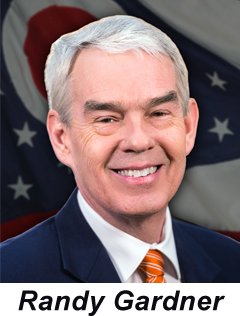
Randy Gardner
Chancellor of the Department of Higher Education
State of Ohio
|
|
Public career highlights, education, and current responsibilities: I was a history and government teacher, a member of the Ohio House of Representatives and Senate with 19 years in elected leadership positions. I now serve as Chancellor of the Ohio Department of Higher Education, a member of Gov. Mike DeWine’s cabinet. I earned my bachelor’s and master’s degrees at Bowling Green State University.
What I like best about public service: Public service has come in several ways to me, first as a teacher, then as a state legislator, and now as Ohio’s Higher Education Chancellor. What I like best is the opportunity to make a difference in a student’s or family’s life. It’s not been about the headlines or speeches but about a unique position to make government work for people in need.
The best advice I’ve received: No matter what occupation or job you have, family must come first. Of all the titles I’ve had, the most important title is “dad.” Strong families are the cornerstone of a healthy society, and parents are at the forefront of that mission. As hard as I’ve worked as a public official, I always said, “If you’re too busy to fulfill your responsibilities as a parent, then you’re too busy.”
My favorite way to de-stress: When I’m not visiting Ohio colleges, my stress reliever is a basketball workout. An hour or so in the gym allows me to be in fair shape while doing something I love to do. My occasional game of golf has never been the best strategy to “de-stress” as I’m not a very good putter. Having said all of this, I get the most enjoyment and reduced stress by playing with my first grandchild, Bailey Kate.
Any upcoming project that I want to mention: Ohio is tackling the challenge of college attainment in new ways. Our “Ohio College Comeback” strategy focuses on former students who have stopped out and want to return for a college degree or credential. We offer a $2,000 Second Chance Grant to encourage re-enrollment, and several of our colleges and universities are supporting students with some level of debt forgiveness and other incentives. We are an emerging national leader in supporting students and college attainment with Ohio College Comeback.
One thing I wish more people knew about the Ohio Department of Higher Education is: Ohio champions an “all of the above” approach. We support those looking for a technical career attending one of our Ohio Technical Centers or apprenticeship programs, and we have 23 community colleges, 14 public, and 74 independent colleges and universities. Higher education can be much more affordable than many assume because there are so many options.
|
|
Joliet awarded $308M for water system improvements |
|
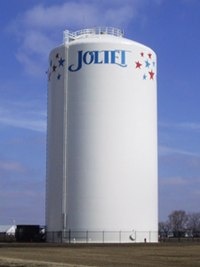
Illinois – The U.S. Environmental Protection Agency (EPA) will invest $308 million in financial assistance to the city of Joliet to support the planning, design, and program management costs for the Alternative Water Source Program and the modernization of the city’s existing water distribution system.
Joliet will receive $87 million for the first phase of the program and $220.98 million to build new pumping facilities and replace deteriorating and undersized water mains.
These projects will enable a new connection to Lake Michigan as a primary water source. Additionally, the city will identify and replace lead service lines and reduce the system’s water loss from over 30 percent to under 10 percent — saving 2.5 million gallons per day. An Illinois State Water Survey projection has indicated that local aquifers will be unable to support the city’s maximum daily water demand by 2030.
|
|
Local government, legal experts strengthen SPI Consulting Team |
|
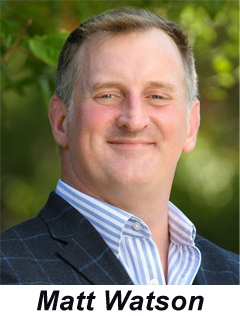
Strategic Partnerships Inc. (SPI) Consultant Matt Watson served as Metropolitan Council member for the city of Baton Rouge, Louisiana, and the Parish of East Baton Rouge from 2017 to 2020. In that position, Matt worked with fellow elected officials to create public policy, vote on land usage changes, and approve public contracts and spending. This includes an annual municipal budget of $1 billion for a city/parish of 456,000.
In addition to his regular duties as councilmember, Matt served on the Industrial Tax Exemption Committee, which created the local guidelines for the state’s most effective industrial tax incentive. Matt also served on the Baton Rouge Film Commission, which allowed him to work with producers to bring films and television series to the Baton Rouge metropolitan area.
His work in the construction industry as lead sales for a concrete manufacture and delivery firm doing business with residential and commercial builders across the nine-parish capital area has allowed Matt to build relationships with industry partners and regulatory organizations.
In 2021, he served as executive director of Building Hope Louisiana, an organization that assists victims of residential fires. Through the years, he has served on numerous boards.
Matt holds a bachelor’s degree from the Louisiana Scholars’ College at Northwestern State University in Natchitoches, Louisiana.
|
|
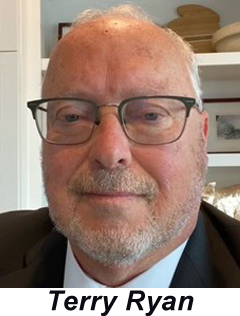
Terry Ryan spent 30 years representing universities, colleges, and health-care institutions. He has extensive litigation experience in many areas including education, civil rights, employment, healthcare, and contractual matters.
Early in Terry’s career, he engaged in civil litigation with a Tacoma, Washington, law firm. He later moved to the Pierce County Prosecutor’s Office where he gained valuable trial experience. Over the course of his career, Terry has tried hundreds of cases to successful conclusions.
Terry joined the Washington State Attorney General’s Office in 1990. By 1994, he was serving as counsel for the State Hospital. He provided client advice for over 10 years for the hospital and various other health-care organizations.
In 2001, he shifted his focus to education law. He represented numerous community and technical colleges, the Office of Superintendent of Public Instruction, the Northwest Athletic Conference, and the Public Educator Standards Board.
Regarding his most recent client, Washington State University, Terry advised on topics ranging from employment to intellectual property. His employer recognized him and his many years of excellent service when he received the designation as senior counsel. Terry retired from his senior counsel position and now looks forward to helping Strategic Partnerships clients achieve their goals.
|
|
Proposition funds to expedite school construction in California |
|
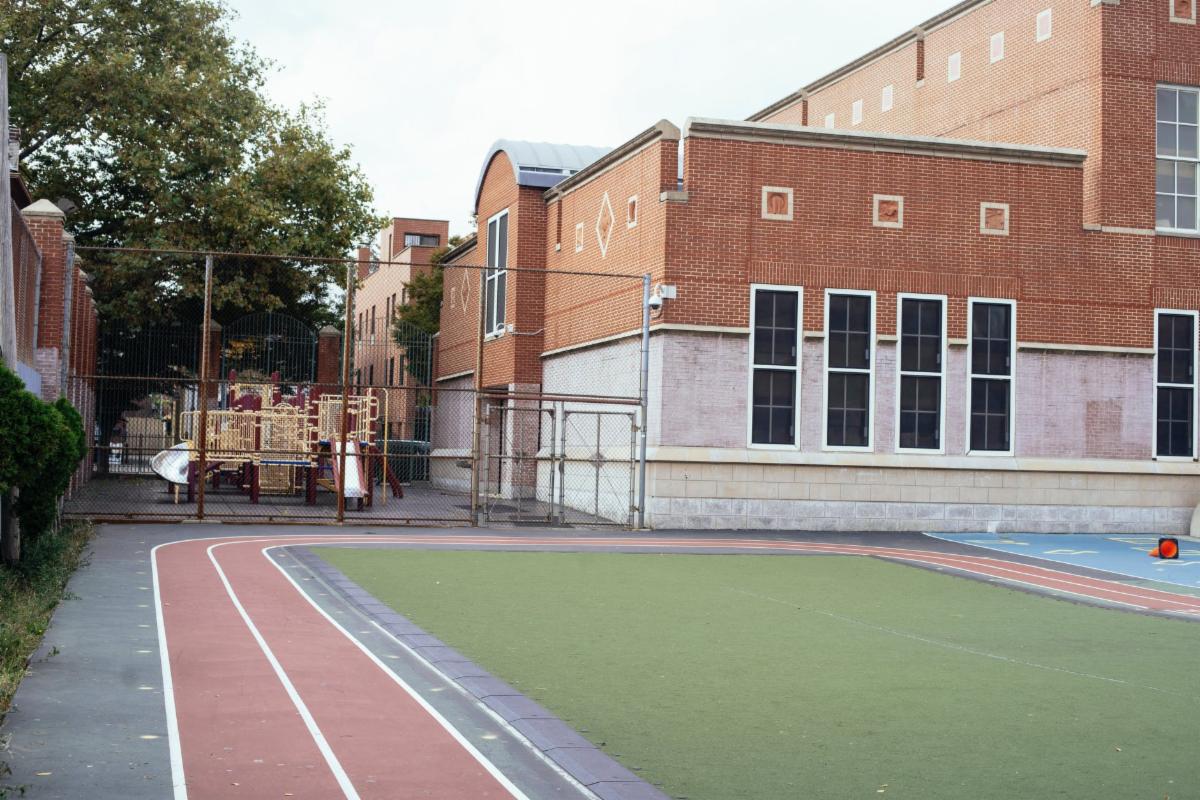
California – More than $652.61 million in state funding was awarded to 216 school construction and modernization projects across California on April 27.
The State Allocation Board of the Department of General Services approved the distributions to help finance shovel-ready school construction projects or reimburse school districts for projects already completed using local funds.
State funding for projects is provided by bonds authorized under Propositions 1A, 1D, 47, 55, and 51. The Office of Public School Construction will distribute the bond funds to eligible school districts within 90 days so local school construction projects can move forward quickly.
Under Proposition 51, Dinuba Unified School District is set to receive the largest allocation of $72.68 million for new construction. The district serves the community southeast of Fresno.
Corona-Norco Unified School District will get $21.25 million for new construction. The district is located at the intersection of Interstate 15 and State Route 91 halfway between Anaheim and Riverside.
|
|
Virginia county weighing renewable energy alternatives |
|
Virginia – Loudon County is considering options for pursuing renewable energy agreements as precursor to a potential solicitation with power providers with the county’s board of supervisors recently directing staff to assess the merits of power purchase agreements (PPAs) and community choice aggregation (CCA).
Their action followed a county committee recommendation that the board instruct staff to develop a request for proposals (RFP) to investigate renewable energy PPA opportunities on county properties and further evaluate CCA possibilities.
PPAs most commonly involve the construction of a renewable energy generating facility on a property owner’s property by a separate entity to generate power directly for the facility with the excess energy delivered to the grid.
Regarding CCAs, under a Municipal Aggregation model, local governments can purchase and manage their community’s electric power supply from a preferred mix of traditional and renewable energy sources while an investor-owned utility continues to provide distribution, billing services, and outage management.
In two December 2020 meetings, the board expressed interest in investigating the potential for executing PPAs as a potential method to expand the local use of renewable energy sources such as solar, and the ability to sell any excess power generated back to the power supply for the region or grid.
Board members also sought more information on how the county could establish CCA, which would allow the county to aggregate power supply needs and buy directly from power supply providers rather than as a bundled customer of an investor-owned utility.
|
|
Town in Connecticut to expand Wi-Fi, surveillance systems |
|
Connecticut – The town of Old Saybrook is seeking information on providing the public with internet access at various town facilities and to extend municipal surveillance capabilities.
To gather feedback, the town released a request for information (RFI) regarding the possibility of entering into an agreement with a vendor to provide the installation, and potentially management, and maintenance of a wireless Wi-Fi Internet access solution at various town locations.
Not only do Old Saybrook officials wish to establish public Wi-Fi accessibility but they also want to expand the town’s existing municipal surveillance capabilities to include any chosen locations via remote access to IP cameras. The town’s existing surveillance system is managed by a third-party support partner.
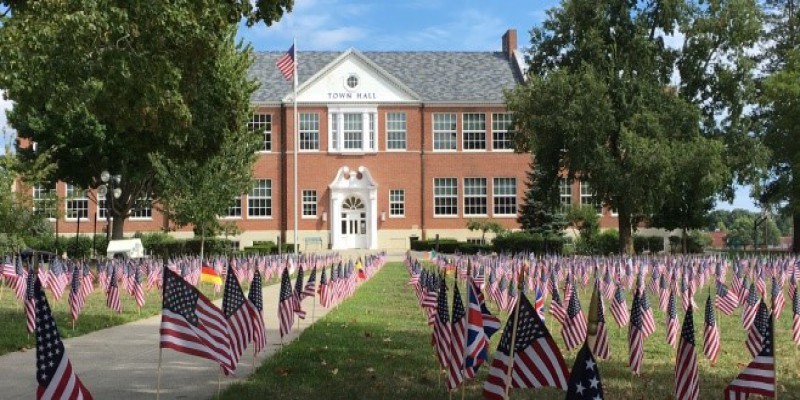
Candidate locations include Town Hall as well as parks, beaches, green spaces, docks, and school athletic fields and playgrounds.
A hybrid (virtual and in-person) information and question and answer session is scheduled for 11 a.m. May 5, with follow-on site visits for in-person participants if requested.
The deadline for RFI submissions is May 18. The town of Old Saybrook desires to deliver initial implementations prior to summer 2022.
|
|
Voters pass $197M bond for Kalamazoo Public Schools |
|
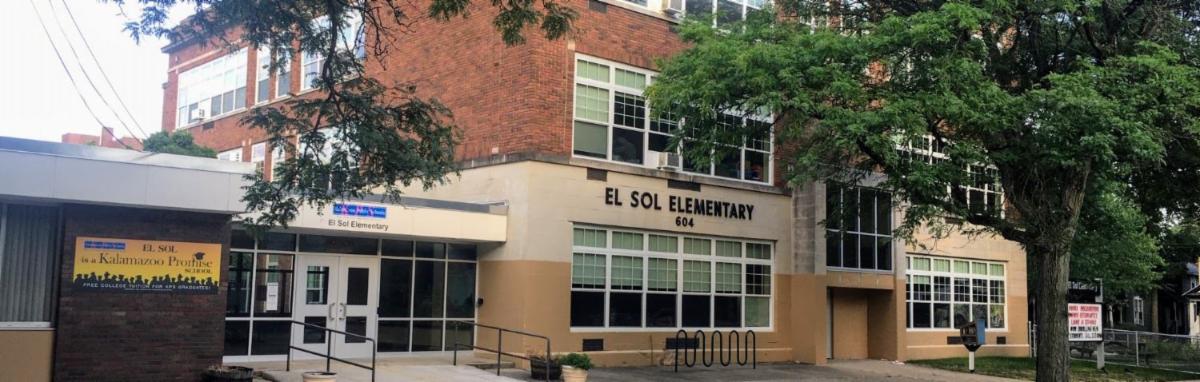
Michigan – Voters approved a $197.1 million bond election on May 3 for Kalamazoo Public Schools to build a new elementary school and undertake safety and security measures, provide healthy environments, and replace and upgrade technology. Election results had not been canvassed as of publication deadline.
The district plans to replace the existing El Sol Elementary School built in 1924 with a new campus in the Vine neighborhood, which is near the existing school.
Bond funds also will support upgrades to school safety and security including creation of secure double-door entrances at those schools without them, improve camera systems, and replace aging school buses.
The bond program will provide funds for safe, healthy learning environments by improving air quality, installing cooling, and replacing boilers. It also will finance construction of permanent classrooms to replace outdated portable classrooms and replacement of older infrastructure including roofing, paving, and playground equipment. In addition, the district will install energy-efficient LED lighting and solar panels and improve and replace fine arts equipment and athletic facilities.
Technology purchases will include increased student access to laptops both in and out of school, upgrades to classroom and large space audiovisual systems in schools, refreshes to computer labs and/or media centers, and replacements of technology infrastructure.
|
|
Pennsylvania awards $47M for local multimodal projects |
|
Pennsylvania – Improvements to safety, mobility, and local economies are at the core of 56 multimodal projects set to receive $47.8 million in funding from the Pennsylvania Department of Transportation (PennDOT).
The department evaluated the applications and made selections based on such criteria as safety benefits, regional economic conditions, the technical and financial feasibility, job creation, energy efficiency, and operational sustainability.
Reflecting PennDOT’s commitment to improving locally owned infrastructure, several of the projects will also help local governments address bridges and roadways in need of repair or replacement.
Lebanon County will receive $3 million for construction of a roundabout at the intersection of Route 934 and Clear Spring Road in North Annville Township and improvements along Killinger Road in South Annville Township to support development of a logistics park.
Blair County Commissioners were awarded $2 million to improve a section of the Blair County Road 101 corridor for vehicular, bicycle, and pedestrian use from Railroad Street north to Hickory Street in Claysburg. Improvements include correcting drainage issues, replacing existing curbs and sidewalks with accessible ramps, and relocating overhead utilities.
The city of Pittsburgh will receive $1.76 million to reopen a portion of Sylvan Avenue to pedestrian and bicycle traffic as a public trail parallel to SR 885 that will connect the Hazelwood and Greenfield neighborhoods to job centers in Oakland.
In Carbon County, the state will commit $2.4 million to construct a right-in/right-out intersection along Route 248 and a lighted intersection along Delaware Avenue at the future Palmerton Business Park in Palmerton.
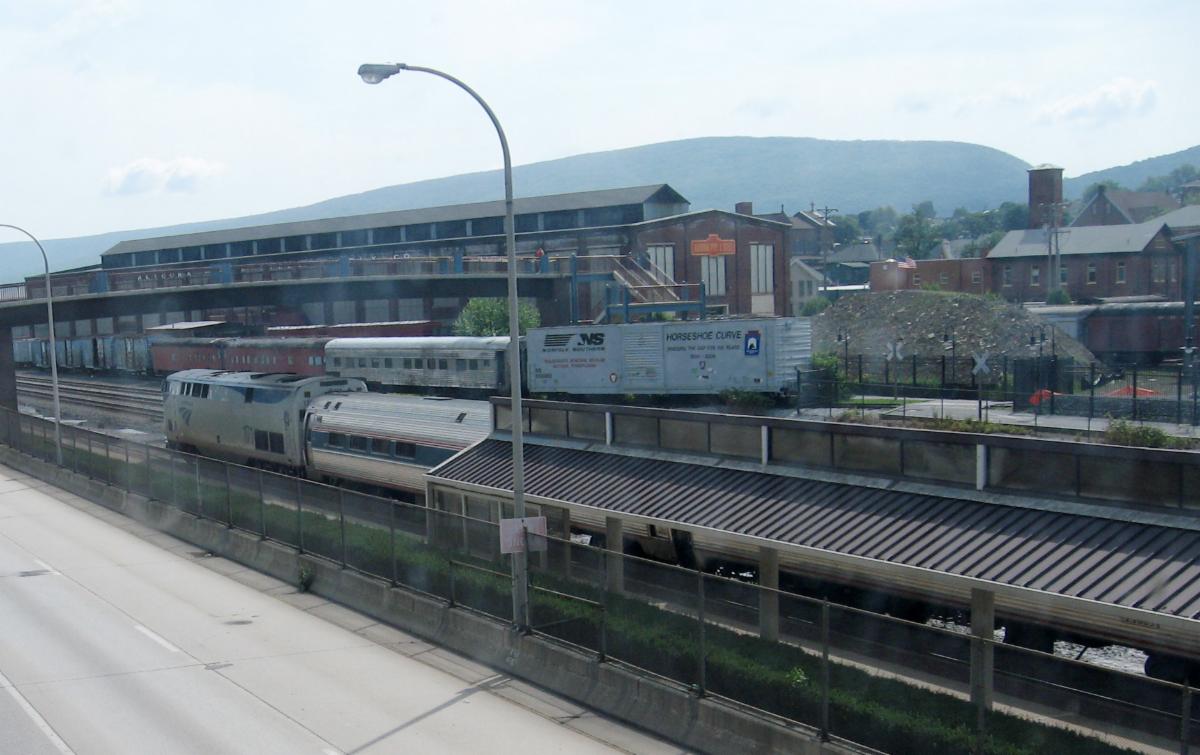
The city of Altoona will get $1.29 million to revitalize the Altoona Transportation Center, a multimodal transportation hub for passenger rail and local and regional bus services, by completing public safety and connectivity improvements, renovating utilities, installing new wayfinding and access signage, updating passenger spaces and transfer areas, and providing more reliable passenger access.
|
|
New York promoting clean energy projects at K-12 schools |
|
New York – Schools in New York can now access $59 million in funding through the Clean Green Schools initiative. The Clean Green Schools initiative will be included in the $4.2 billion Clean Water, Clean Air, and Green Jobs Environmental Bond Act.
This initiative will advance clean energy and energy efficiency solutions to improve indoor air quality and reduce emissions for more than 600 under-resourced K-12 schools. Public schools named high priority by the New York State Education Department will be eligible for the program.
The New York State Energy Research and Development Authority (NYSERDA) is offering two tracks for resources from the Clean Green Schools initiative.
Track I will provide schools with professional services to help reduce energy use, decarbonization, environmental sustainability, and indoor air quality improvements. This track is available for open enrollment. Track II will provide schools with the funding needed for construction projects. This track is available on a competitive basis.
New York state is also looking to buy new electric school buses through the New York Truck Voucher Incentive program. The state budget will provide $500 million through the Bond Act to support school districts purchasing zero-emissions buses and related charging infrastructure.
|
|
Maryland county touts affordable housing in library-based project |
|
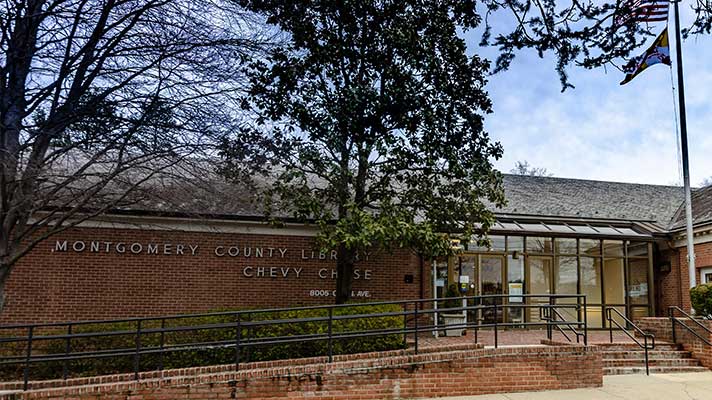
Maryland – Montgomery County’s building analysis of the Chevy Chase library branch, which has spanned more than two years, is leading to an exploration of affordable housing options in a proposed mixed-use development.
The two-story 16,300-square-foot library, which was built in 1965, is in need of major repairs and upgrades. Given the extensive renovations required, the County decided to explore the possibility of leveraging the property for residential development thereby offsetting the costs of a replacement library on site.
County officials incorporated public input into one possible scenario of a full-scale renovation of the existing library. A second scenario would have included a newly constructed 20,000-square-foot library achieved through a public-private partnership and a mixed-use project to include residential development to offset the costs of a replacement library on site.
On April 28, the county executive indicated the next steps would be to solicit more detailed proposals based on the parameters the county has used in recent agreements leveraging county-owned land for affordable housing in Bethesda, Twinbrook, and Emory Grove.
|
|
University of Utah seeking budget system input |
|
Utah – The University of Utah issued a request for information (RFI) for budget system solutions.
Approaches are desired that support long range planning, personnel planning, variance reporting, operational budgeting, and business forecasting at all levels of the organizational hierarchy.
The solutions must be comprehensive to include:
|
|
- Human resources integrated budget planning.
- Operational budget planning.
- Roll-up hierarchy reporting at multiple organizational levels.
- Multi-dimensional chart of account usage.
|
|
- Access control.
- Reporting.
- Configuration and customization options.
|
|
RFI submissions are due by 2 p.m. MDT May 24. |
|
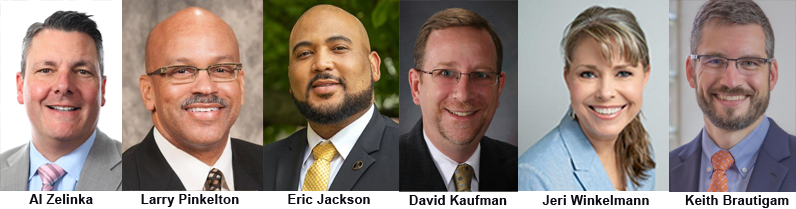
California – The Huntington Beach City Council appointed Al Zelinka as city manager, effective June 27. He will take over from Interim City Manager Sean Joyce who filled the position since former City Manager Oliver Chi accepted the position of city manager for the city of Irvine. Zelinka currently serves as the city manager of Riverside. Before that, he was Riverside’s assistant city manager and director of community and economic development.
Ohio – The Southwest Ohio Regional Transit Authority selected Larry Pinkelton as chief financial officer (CFO). Pinkelton most recently served as CFO of a Greater Cincinnati nonprofit agency. Prior to that, he held senior financial leadership positions in the corporate and financial services sectors and served as vice president of finance and administration for Chicago State University.
West Virginia – Eric Jackson has been appointed as vice president and chief of staff for West Virginia State University (WVSU), effective July 1. Jackson had been serving as the university’s interim chief of staff since fall 2021. Most recently, he was WVSU’s director of Title III Programs and the Budget Office.
Florida – Port of Fernandina commissioners selected David Kaufman as the port’s new executive director. He will succeed former Executive Director Chris Ragucci. Kaufman is the president of a seaport consulting firm. Before that, he was director of business development for a maritime company and senior planning director at the Jacksonville Port Authority.
Nebraska – The Lincoln Airport Authority has named Jeri Winkelmann as director of administration and finance. Winkelmann most recently was the chief financial officer for Community Action Partnership of Lancaster and Saunders counties in Nebraska. Previously, she served as executive director for an Omaha physicians’ association.
Pennsylvania – Penn State University named Keith Brautigam as chief information security officer (CISO). Brautigam had been serving as interim CISO since the departure of previous interim CISO Richard Sparrow. Brautigam had previously served as director of identity and access management (IAM) at Penn State University and was a member of the CISO leadership team. He came to Penn State after departing his IAM role at the University of Iowa.
|
|
|
|
Connect with SPI
Check out our social media links!
|
|
About Government Contracting Pipeline |
|
Strategic Partnerships, Inc.
Ph: 512-531-3900
|
|
Government Contracting Pipeline, a publication of Strategic Partnerships, Inc., is a free, weekly newsletter detailing important happenings nationwide and the premier source for federal, state, and local government news and contracting opportunities.
|
|
Help us share this message.
To ensure delivery and proper formatting of the newsletter, be sure to add editor@spartnerships.com to your safe senders list.
Otherwise, the newsletter may be flagged as spam and automatically routed to your junk e-mail folder.
|
|
© 2022 Strategic Partnerships, Inc. All rights reserved.
|
|
|
|
|
|
|
|